
Ranked Non-Dairy Creamer Picks: Foaming, Vegan, Low-Sugar, Whipping and High-Fat Models
Six non-dairy creamer models from the Cograin range, ranked by documented application fit, with the fat, protein, moisture, carbohydrate and trans fat figures that actually decide a project brief.
When a non-dairy creamer project underperforms, the cause is usually a mismatch between the model and the application rather than a defective powder. Foam that will not hold on a cappuccino, a milk tea that drinks thin, a whipping powder that gives no structure in a bakery filling, or a powder that scatters instead of dissolving in a cold beverage are all selection problems. They surface after the purchase order, when changing specification is most expensive.
This shortlist ranks six models from the range produced by Cograin, the non-dairy creamer and food-ingredient brand of Jiahe Foods Industry Co., Ltd., a manufacturer founded in 2001 and headquartered in Suzhou, Jiangsu Province, China. Every specification below is taken from the published product data for that model. The ranking order reflects application coverage and documented fat level; it is not a judgement about which powder is best in general, because the correct powder depends entirely on the end product.
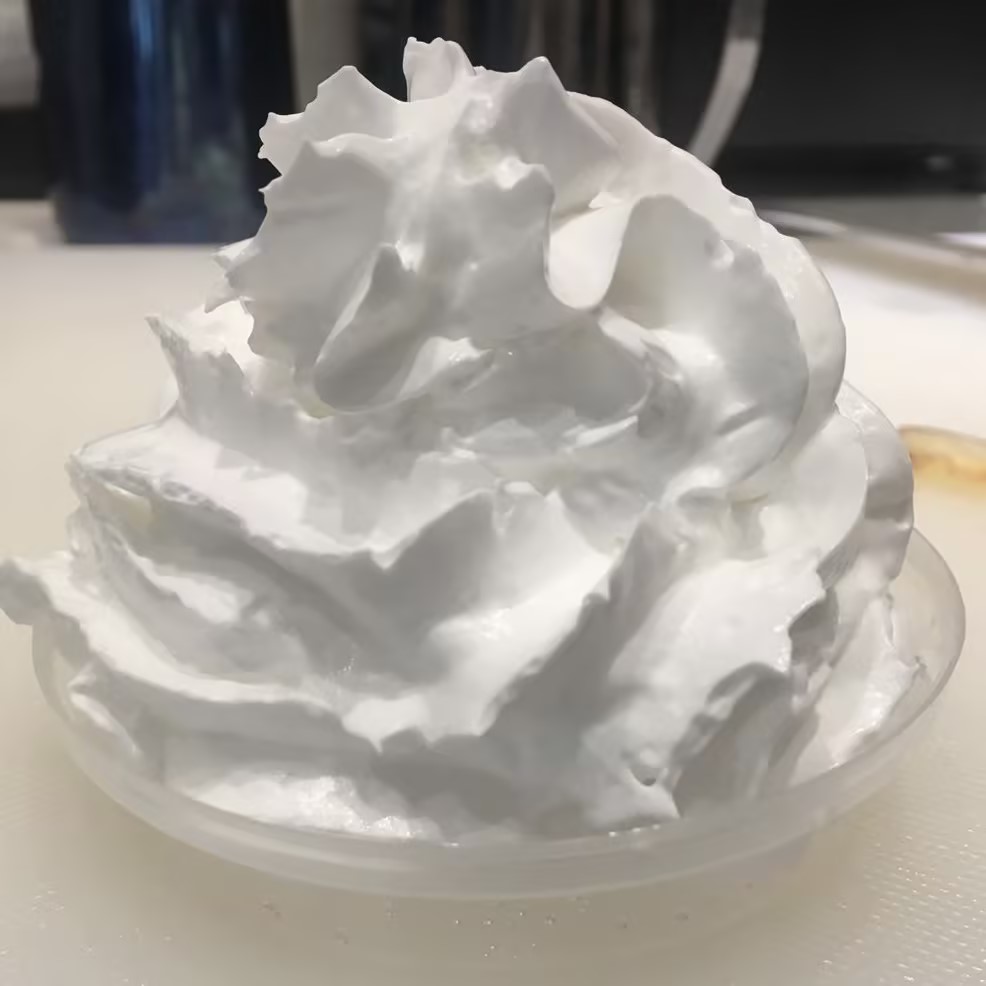
The real problem: one-line spec sheets hide the differences that matter
Most non-dairy creamer quotations arrive with the same three numbers on them: fat, protein and moisture. That is enough to compare price per kilogram, but not enough to compare performance. Two powders can both show roughly 32 g of fat per 100 g and behave completely differently in a hot cup, a chilled dessert or a bake, because the variables that drive behaviour sit in the ingredient list and the application list rather than the headline fat figure.
Four attributes separate the models in this shortlist:
- Fat level — the six models here range from 22.0 g per 100 g to 60.0 g per 100 g, which changes body, mouthfeel and how the powder behaves when whipped or diluted.
- Protein level — from 0 g to 7.2 g per 100 g. Protein level interacts with dairy-free positioning as well as with foam and structure.
- Ingredient list — whether milk powder, sodium caseinate or a starch component appears, and therefore whether the model can sit inside a dairy-free, vegetarian or allergen-controlled brief.
- Published application list — the applications the manufacturer actually documents for that model, which is the most reliable starting filter a buyer has.
A buyer who selects on fat percentage alone will usually end up with a workable powder for beverage use and a poor one for whipping or baking, or the reverse. The practical fix is to treat the application list as the first screen and the fat figure as the second.
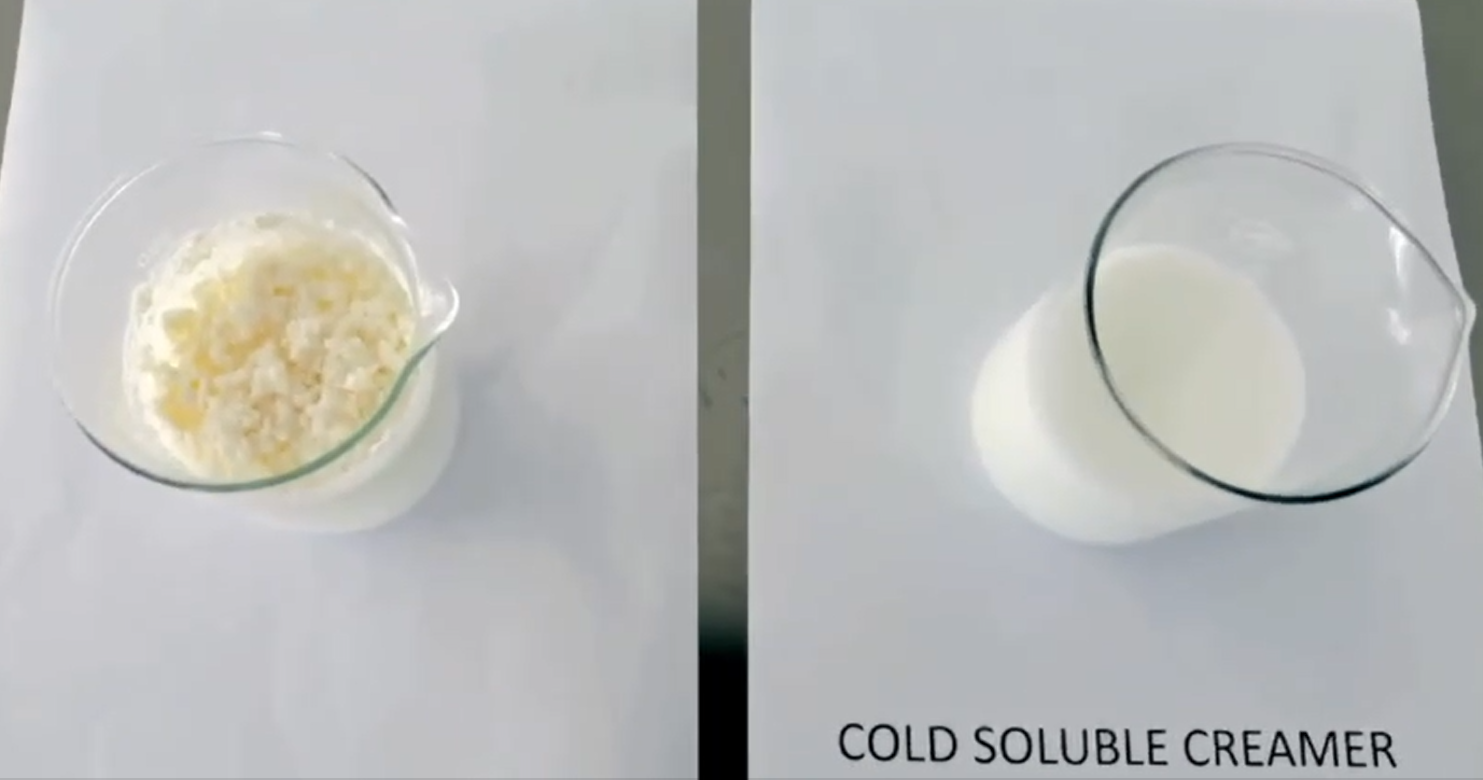
Industry background: why application-specific models exist at all
Non-dairy creamers are lactose-free liquid or granular products generally used as substitutes for milk or cream, particularly in hot beverages. That definition is broad, and the manufacturing process explains why the range of models is so wide: instant non-dairy creamer powders can be produced through emulsification, spray drying and agglomeration to make highly dispersible powders. Each of those steps can be adjusted, and the adjustments move the finished powder toward one application and away from another.
Market research on the category points in the same direction. Market.us estimates the global non-dairy creamer market at about USD 2.4 billion in 2024, forecast to reach about USD 4.4 billion by 2034 at a CAGR of 6.2%, and reports that medium-fat non-dairy creamer held a dominant share of 43.6% in 2024. Other providers publish different baselines — Market Data Forecast estimates USD 2.61 billion in 2025 rising to USD 4.27 billion by 2034, and Data Bridge Market Research estimates USD 2.88 billion in 2025 rising to USD 5.33 billion by 2033 at a CAGR of 8.00%. Because the providers do not disclose full methodology or product scope, these figures should be read as directional rather than as a single validated market size.
Two structural facts matter more to a buyer than the size of the category. First, non-dairy creamer is handled as a regulated food product: the USDA Agricultural Marketing Service maintains a Commercial Item Description covering dry non-dairy creamer packed in commercially acceptable containers, and a U.S. Customs ruling classified imported non-dairy coffee creamer under HTS subheading 2106.90.9975. Second, demand is not only industrial. The Good Food Institute reports that plant-based milk and creamer saw continued growth in U.S. foodservice and are established categories there, which pushes buyers toward models with explicit vegan positioning rather than generic powders.
The result is a category where the portfolio, not the commodity, carries the value. A supplier with six or eight distinct models can match a brief; a supplier with one powder has to talk the buyer out of the requirement.
How this ranking was built
The ranking uses two verifiable criteria and nothing else:
- Primary criterion: the number of application areas documented in the published product data for each model. More documented applications means a broader fit across project briefs.
- Tie-break: where two models cover the same number of applications, the model with the higher documented fat content is placed first.
'Fit' here means only that the model's published application list and specifications line up with a stated end use. No model on this list is described as superior to another, and no pricing, performance test result or certificate is claimed unless it appears in the product data.
The six ranked models, with the reason for each inclusion
Rank 1S35 (Vegan) — the widest application coverage in the set
Documented applications: vegetarian products, alcoholic beverages, milk tea, coffee, baking. Five areas, the broadest coverage of any model here.
Specifications: fat 35.0 g per 100 g; protein 0 g; trans fat 0 g.
Ingredients: glucose syrup, hydrogenated vegetable oil, emulsifier, oxidized hydroxypropyl starch, anti-caking agent.
Why it is included: S35 is the only model in this shortlist positioned explicitly as a vegan non-dairy creamer, and its published ingredient list contains neither milk powder nor sodium caseinate. That combination makes it the natural first sample for plant-based beverages, vegetarian desserts and reformulation projects where a dairy-derived protein cannot appear. Its application list also reaches alcoholic beverages, which is unusual in a creamer range and relevant to ready-to-drink and liqueur-style products where emulsion stability under alcohol is a known constraint.
What to watch: protein is listed at 0 g per 100 g, so S35 contributes no dairy-protein functionality. Formulators who rely on protein for body or browning will need to build that back into the recipe. The presence of oxidized hydroxypropyl starch in the ingredient list should also be checked against the labelling rules of the destination market. Ingredient lists are a starting point, not a certificate: a vegan claim still needs document-level confirmation from the supplier.
Rank 260A — the high-fat benchmark for body and dessert work
Documented applications: beverage, dessert, baking, animal feed. Four areas.
Specifications: fat 60.0 g per 100 g; protein 3.0 g per 100 g; trans fat 0 g per 100 g.
Ingredients: hydrogenated vegetable oil, glucose syrup, sodium caseinate, emulsifier, stabilizer.
Why it is included: at 60.0 g of fat per 100 g, 60A sits at the top of the fat range alongside C960, and it carries a documented trans fat value of 0 g per 100 g. High fat drives creaminess and body, which is why the model appears across beverages and desserts as well as baking. It is also the model tied to the clearest published customer evidence in the range: Cograin reports an animal feed production plant in Singapore using its high fat product at roughly 4,000 to 5,000 metric tons per year over a three-year relationship, with quality consistency and pricing given as the stated reasons for continuation.
What to watch: sodium caseinate appears in the ingredient list, so 60A is not suitable for dairy-free or vegan briefs. For animal feed use, the buyer's own feed regulations govern what is acceptable, and those should be checked before the first order rather than after.
Rank 3DT35 — the low-sugar option for milk tea and beverage lines
Documented applications: milk tea, coffee, beverage, baking. Four areas.
Specifications: fat 35.0 g per 100 g; protein 2.5 g per 100 g; carbohydrate 4.3 g per 100 g.
Ingredients: glucose syrup, hydrogenated vegetable oil, emulsifier, stabilizer, anti-caking agent (551), food flavor.
Why it is included: DT35 is the low-sugar positioned model in the range, and the published carbohydrate figure of 4.3 g per 100 g is the concrete expression of that. Of the two models in this shortlist with a published carbohydrate value, DT35 is dramatically lower than C960 at 28.8 g per 100 g, which is exactly the gap a beverage developer designing to a sugar target needs to see. Milk tea, coffee and general beverage use are all documented, and the powder also appears in baking applications.
What to watch: DT35 carries a food flavor in the ingredient declaration, which matters for clean-label briefs and for markets that require flavour declaration. Its ingredient list does not name sodium caseinate or milk powder, but DT35 is not positioned as a vegan product, so dairy-free status should be confirmed in writing rather than assumed from the ingredient list.
Rank 4Kosher k80 — the dessert and hot-beverage generalist
Documented applications: beverage, dessert, milk tea, coffee. Four areas.
Specifications: fat 32.0 g per 100 g; protein 2.5 g per 100 g.
Ingredients: glucose syrup, hydrogenated vegetable oil, sodium caseinate, emulsifier, stabilizer, anti-caking agent.
Why it is included: k80 is listed in the portfolio as a kosher product type, and its application spread covers the two highest-volume use cases in the category — hot beverages (coffee, milk tea) and chilled desserts — with a mid-range 32.0 g per 100 g fat level that suits operators who want one powder across several menu items. It is the model to shortlist when a single warehouse line has to serve both a coffee programme and a dessert programme.
What to watch: 'kosher product' in a product listing is a positioning statement, not proof. Buyers should request the certificate itself — certifying body, certificate scope, production site coverage, expiry date and whether it applies to the specific lot — before the claim goes on packaging. The same discipline applies to any religious-certification claim across the range. The published data for k80 does not include a trans fat figure, so that should also be requested if the destination market requires a declared value.
Rank 5FC22 (Foaming) — the specialist for foam and froth
Documented applications: milk tea, coffee, baking. Three areas.
Specifications: protein 7.2 g per 100 g; fat 22.0 g per 100 g; trans fat 0 g per 100 g; moisture 6.0 g per 100 g maximum.
Ingredients: glucose syrup, hydrogenated vegetable oil, milk powder, emulsifier, stabilizer, salt, flavoring.
Why it is included: FC22 is the foaming creamer of the range and carries the highest protein figure in this shortlist at 7.2 g per 100 g, more than double the next model. Protein content at that level, combined with a controlled moisture maximum of 6.0 g per 100 g, is what makes a foaming powder behave differently from a standard whitener. Its documented uses — milk tea, coffee and baking — map directly onto the applications where a visible foam head is part of the product experience rather than a side effect. Its lower rank in this list reflects narrower documented application coverage, not weaker foaming performance: if foam volume is the first line of your brief, FC22 is the first sample to request.
What to watch: milk powder appears in the FC22 ingredient list, so this model does not fit a dairy-free or vegan brief regardless of its other strengths. The added flavoring also needs checking against the target market's labelling rules.
Rank 6C960 (Whipping Cream) — the structure builder for bakery and beverage topping
Documented applications: baking, beverage. Two areas.
Specifications: protein 5.2 g per 100 g; fat 60.0 g per 100 g; carbohydrate 28.8 g per 100 g; moisture 6.0 g per 100 g maximum.
Ingredients: glucose syrup, hydrogenated vegetable oil, emulsifier, sodium caseinate, stabilizer, salt.
Why it is included: C960 is a whipping cream powder rather than a whitener, and its numbers show it: 60.0 g of fat per 100 g paired with 5.2 g of protein, the second-highest protein level in the shortlist, plus a published moisture ceiling of 6.0 g per 100 g. Whipping applications need fat and protein together to build and hold structure, which is why this model is the right shortlist entry for bakery fillings, toppings and whipped beverage finishes. It sits last here only because its documented application list is the narrowest — two areas — not because it performs worse within those two areas.
What to watch: sodium caseinate is present, so C960 is not a dairy-free option, and its carbohydrate figure of 28.8 g per 100 g is the highest published value in this set — relevant if the finished product carries a sugar claim.
Comparison table: the six models side by side
| Rank | Model | Type | Fat (g/100 g) | Protein (g/100 g) | Moisture (g/100 g) | Trans fat (g/100 g) | Carbohydrate (g/100 g) | Documented applications |
|---|---|---|---|---|---|---|---|---|
| 1 | S35 (Vegan) | Vegan non dairy creamer | 35.0 | 0 | Not published | 0 | Not published | Vegetarian products, alcoholic beverages, milk tea, coffee, baking |
| 2 | 60A | High fat | 60.0 | 3.0 | Not published | 0 | Not published | Beverage, dessert, baking, animal feed |
| 3 | DT35 | Low sugar | 35.0 | 2.5 | Not published | Not published | 4.3 | Milk tea, coffee, beverage, baking |
| 4 | Kosher k80 | Kosher product | 32.0 | 2.5 | Not published | Not published | Not published | Beverage, dessert, milk tea, coffee |
| 5 | FC22 (Foaming) | Foaming creamer | 22.0 | 7.2 | 6.0 max | 0 | Not published | Milk tea, coffee, baking |
| 6 | C960 (Whipping) | Whipping creamer | 60.0 | 5.2 | 6.0 max | Not published | 28.8 | Baking, beverage |
Step-by-step: matching a model to your project brief
The ranking above is a starting point. The selection itself follows five steps, and the order matters because the first two steps eliminate models before price is ever discussed.
- Write the application before the specification. State the end product, the process temperature, whether the product is served hot or cold, whether alcohol is present, the target sweetness, whether a foam head is required, and whether a dairy-free or religious-certification claim will appear on pack. Each of these eliminates models: a dairy-free claim removes FC22, 60A and C960 from the shortlist immediately because their ingredient lists name milk powder or sodium caseinate.
- Screen on the disqualifying attribute, not the average one. For a vegan brief, S35 is the only model here positioned for it. For a foam-led coffee or milk tea programme, FC22 is the model with 7.2 g of protein per 100 g and a foaming designation. For a whipping or filling application, C960's 60.0 g fat with 5.2 g protein is the relevant combination. Don't average these away.
- Shortlist two models, not one. Application lists overlap — both DT35 and k80 cover milk tea and coffee, for example — and overlap is useful. Running two samples through the same bench trial gives a performance comparison and a second source inside one supplier relationship.
- Request the model, not the category, as a sample. Specify the model code, the application and the process conditions in the sample request. A sample of the right powder tested in the wrong process produces a misleading result in both directions.
- Lock the commercial terms and the documents together. Once the model is chosen, confirm specification sheet, certificate of analysis, certification scope where a claim is planned, packaging specification and lead time in the same conversation. Cograin quotes a lead time of around 7 to 15 working days after order confirmation, with MOQ negotiable depending on product type and packaging.
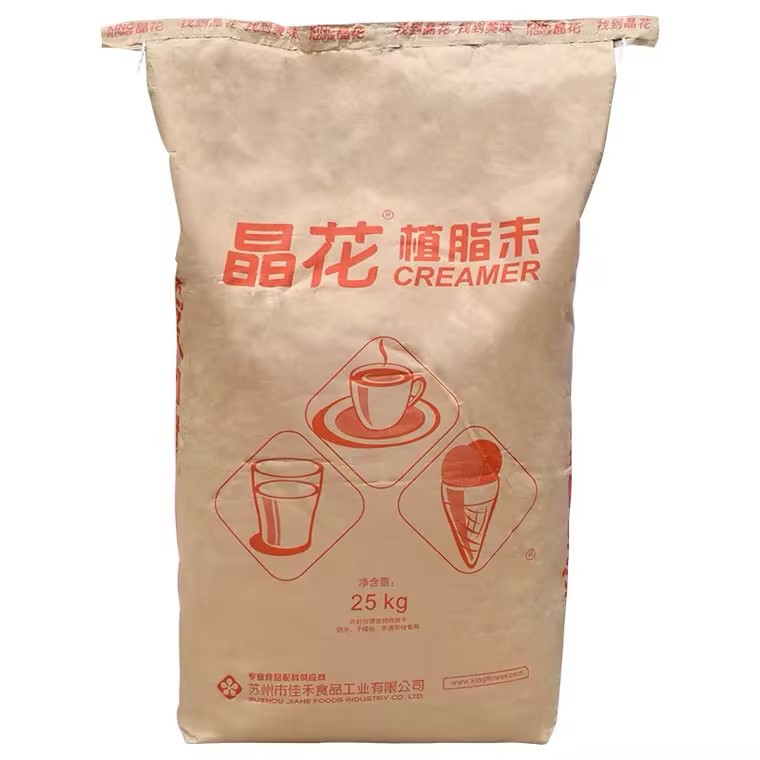
Use cases: what each application actually needs
Bubble tea and coffee shop chains. The dominant requirement is consistency across hundreds of outlets, where a single powder has to deliver the same cup in every store. Cograin reports a bubble tea chain operating in Singapore, Vietnam and the United States at around 1,000 metric tons over a three-year relationship, with the portfolio models used spanning k80, C960, cold-soluble and K60. For this channel the practical split is DT35 or k80 for the everyday cup and FC22 where a foam finish is part of the signature drink.
Instant beverage manufacturers. Spray-dried instant powders are blended into dry mixes, so the creamer has to survive dry blending and then disperse in the cup. Cograin reports a 3-in-1 coffee manufacturer operating across Singapore, Malaysia, Indonesia, the Philippines, Kazakhstan, the UAE, Ukraine and Russia at around 9,000 metric tons over five years, supplying applications that include 3-in-1 instant coffee powder, instant oatmeal and instant milk tea.
Bakery and dessert production. Here the requirement is structure and fat rather than whitening. C960's 60.0 g fat with 5.2 g protein and 60A's 60.0 g fat both address that, and the published application lists for S35, DT35, FC22 and k80 each include baking — so a bakery brief can be served by a vegan, low-sugar or foaming model as well, depending on which claim the finished product carries.
Animal feed. 60A is the model with a documented animal feed application, and the published case evidence matches: an animal feed production plant in Singapore using the high fat product at roughly 4,000 to 5,000 metric tons per year across three years. Feed applications have their own regulatory framework, which should be confirmed locally before qualification.
Alcoholic beverages. S35 is the only model in this shortlist whose published application list includes alcoholic beverages. Cograin also reports a beverage production factory in South Africa using its creamers for alcoholic beverages at around 1,000 metric tons over five years, describing stable performance as the reason the business continued.
Frequently asked questions
Is the Kosher k80 actually kosher-certified, and what should I request before I rely on it?
Kosher k80 is listed in the Cograin portfolio as a kosher product type, and its published application list covers beverage, dessert, milk tea and coffee. A product type listing is not the same as a certificate. Before the claim appears on packaging or in a tender document, request the certificate itself and check four things: the certifying body, the scope of the certificate, whether the specific production site and line are covered, and the expiry date. Ask as well whether the certificate applies to the lot you will receive. The same approach applies to vegan and Halal positioning across the range, including S35's vegan positioning: ingredient lists support a claim, but they do not replace the document.
Can one supplier cover both a vegan line and an animal feed line, or do I need two suppliers?
The published portfolio spans both ends. S35 (Vegan) is positioned for vegetarian products, alcoholic beverages, milk tea, coffee and baking, with a published ingredient list that names neither milk powder nor sodium caseinate. 60A is the high fat model with a documented animal feed application alongside beverage, dessert and baking. Between them the range also covers low sugar (DT35), foaming (FC22), whipping (C960) and kosher positioning (K60 and Kosher k80). Whether one supplier can serve both lines in practice depends on your own allergen and cross-contamination controls, which should be discussed in the qualification audit rather than assumed from the catalogue.
How should I compare cost across models with different fat levels?
Compare on cost per finished unit, not cost per kilogram of powder. A 60.0 g fat model such as 60A or C960 and a 22.0 g fat model such as FC22 are not interchangeable inputs, so the cheaper powder is only cheaper if it delivers the required body, foam or structure at the use rate your recipe needs. Cograin does not publish a price list: MOQ is negotiable depending on product type and packaging, and pricing is quoted per project. The useful comparison is therefore landed cost at the validated use rate, calculated after a bench trial on at least two models, with packaging specification fixed across both quotes so the numbers are comparable.
What is the fastest way to validate a model before committing to a volume order?
Request the specific model as a sample and test it in your own process rather than in a generic dispersion test. Set the trial to answer the questions your brief actually asks: does the powder disperse at your process temperature, does the foam or whip hold for the required time, does the body hold in the finished product, and does the ingredient list clear your labelling rules. Run two models side by side where the application lists overlap — DT35 against Kosher k80 for milk tea and coffee, for instance, or 60A against C960 for bakery. Sample requests and technical guidance are handled through Cograin's contact channels listed at the end of this article.
What lead time and capacity should I plan around?
Cograin quotes a lead time of around 7 to 15 working days after order confirmation, with MOQ negotiable based on product type and packaging. Documented monthly capacity for non-dairy creamer is 16,700 tons, within a production base reported at more than 300,000 tons of annual capacity across three production bases and five factories in Suzhou, Nantong and Singapore. For a new project, plan the sample and bench trial first and the volume order second, since the lead time clock starts at order confirmation rather than at sample approval. To start that process, send your application, target specification and packaging requirement to davidqi@cograin.cn or request a sample and quotation through WhatsApp on +6596809996.
Conclusion: choose the model by the brief, then confirm it with a sample
The six models in this shortlist are not competing for the same job. S35 answers a vegan and vegetarian brief across five documented applications. 60A answers a high-fat brief across beverage, dessert, baking and animal feed, with trans fat published at 0 g per 100 g. DT35 answers a sugar-reduction brief with a documented carbohydrate figure of 4.3 g per 100 g. Kosher k80 covers hot beverages and desserts from one mid-fat powder. FC22 answers a foam brief with the highest protein level in the set at 7.2 g per 100 g. C960 answers a whipping and structure brief with 60.0 g of fat and 5.2 g of protein.
Ranked by documented application coverage, the order runs S35, 60A, DT35, Kosher k80, FC22 and C960. Read that order as a map of how broadly each specification fits, not as a verdict on quality: a project that needs foam should start at FC22 regardless of where it sits on this page, and a project that needs whip should start at C960.
The reliable sequence is short, and it does not change between markets: write the application, screen on the disqualifying attribute, shortlist two models, test both on your own process, then confirm specification, certification scope, packaging and lead time in writing before the volume order.

Have Questions or Need More Details?
Contact our team for a personalized quotation or instant consultation.
Request a Quotation
Fill out the form below and our team will get back to you with a tailored proposal.
WhatsApp Direct Chat
Prefer to chat in real-time? Message us on WhatsApp for instant assistance & quick answers.
- Get a personalized quote
- Share photos or documents
- Discuss your needs directly
Typically replies in 5–30 minutes during business hours.