Top 6 Non-Dairy Creamer Types Global Buyers Prefer in 2026
The global non-dairy creamer market was valued at USD 2.4 billion in 2024 and is expected to reach USD 4.4 billion by 2034, according to Future Market Insights. Powdered formats account for 68.4% of the market, and coffee applications represent roughly 41% of global demand. For buyers moving into a formal supplier evaluation, the practical question is not whether to use non-dairy creamer, but which non-dairy creamer profile fits the application and which supplier can deliver it consistently.
This article ranks the six most preferred non-dairy creamer profiles for 2026 using verified market data and Cograin’s documented supply records. It also provides a comparison table, an evaluation checklist, and answers to common buyer questions.
Why Buyers Need a Non-Dairy Creamer Selection Framework
Non-dairy creamer is not a single ingredient. Fat content, protein content, solubility, foaming ability, and dietary status all change how a creamer performs in coffee, milk tea, bakery, beverage, alcoholic beverage, or animal feed formulas. Choosing the wrong profile can lead to weak texture, poor emulsion stability, label compliance issues, or unnecessary raw material cost.
A structured framework is especially important during the Evaluation stage. Buyers who compare suppliers without first defining product specifications often collect samples that cannot be used in the final recipe. The framework below reduces that risk by aligning the product profile with the intended application and the required compliance evidence.
Industry Background: Non-Dairy Creamer Demand in 2026
Four market signals help explain why buyers are focusing on specific creamer types this year.
- Powder continues to dominate. Powdered non-dairy creamers hold 68.4% of the market in 2024, driven by long shelf life and ease of storage.
- Coffee is the largest application. Coffee accounts for approximately 41% of global non-dairy creamer utilization, according to Business Research Insights.
- Medium-fat variants are the most common. Products with 21–50% fat hold a 43.6% to 46% market share because they balance texture and flavor.
- Functional ingredients are gaining attention. The global MCT powder market was valued at USD 585 million in 2024 and is projected to grow at a 5.7% CAGR, according to Intel Market Research. This is a related category to watch in functional formulations.
At the supplier level, the market includes global players such as Nestlé (Coffee-Mate), Danone (Silk), FrieslandCampina Kievit, and Kerry Group. These companies are useful reference points for brand recognition. However, food manufacturers and formulators often evaluate specialized production partners based on product specs, certification coverage, and supply reliability.
How Cograin Approaches Non-Dairy Creamer Supply
Cograin is the export brand used by Jiahe Foods Industry Co., Ltd., a manufacturer headquartered in Suzhou, Jiangsu Province. Jiahe was founded in 2001 and listed on the Shanghai Stock Exchange in 2021 under stock code 605300. The company operates 3 production bases and 5 factories in Suzhou, Nantong, and Singapore, with an annual production capacity above 300,000 tons. Its product lines include non-dairy creamer, starch syrup, cane syrup, flavored syrup, and powdered fat products.
From an evaluation standpoint, the relevant facts are measurable. Cograin’s total staff is 310 people, the R&D team includes 22 engineers, and exports represent about 50% of its output, with Southeast Asia as a main market. The company also supports OEM/ODM and customized production, including adjustments to syrup DE value, creamer formula, packaging specification, and product flavor.
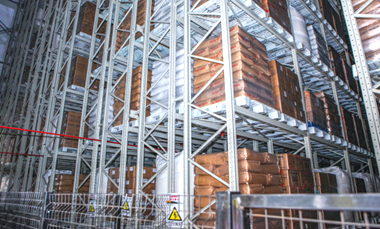
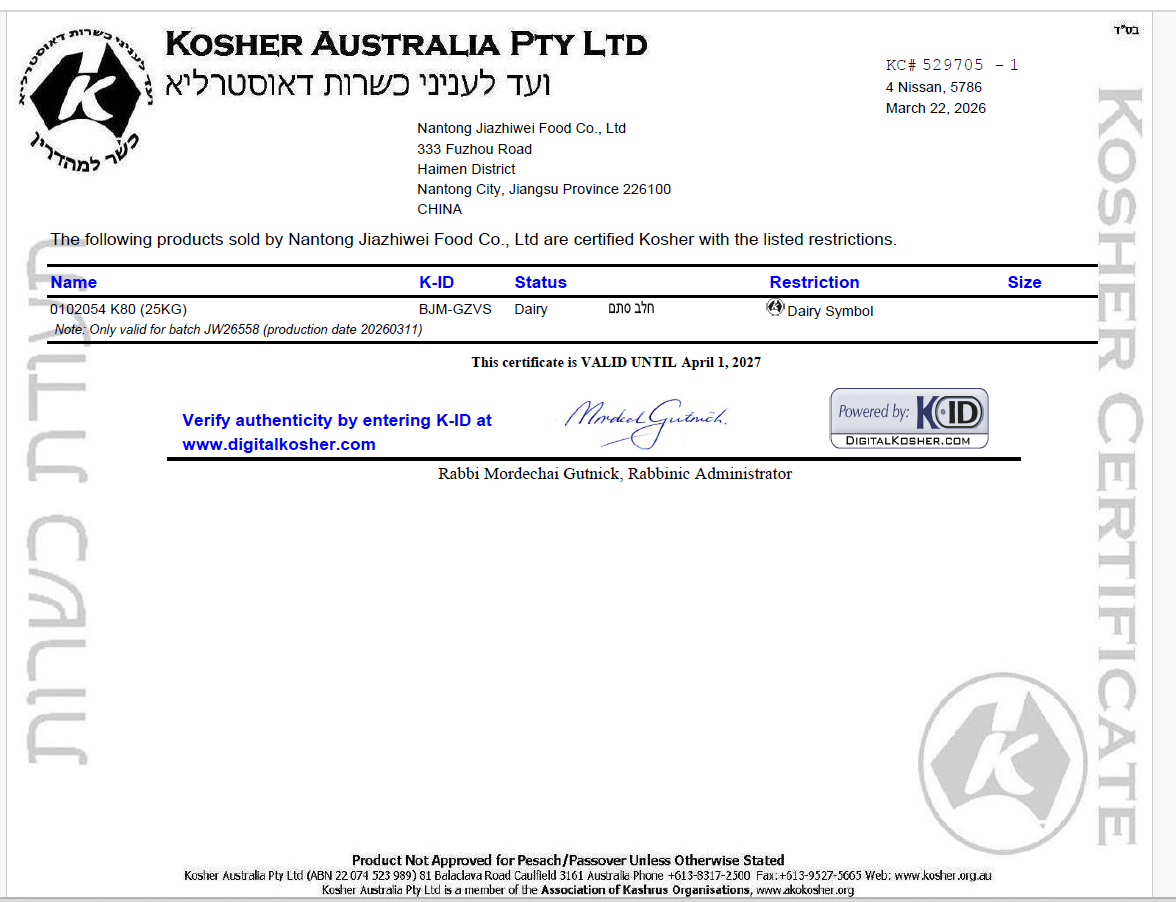
On compliance, the manufacturing entity Nantong Jiazhiwei Food Co., Ltd. holds an ISO 9001:2015 quality management certificate (certificate no. 00125Q32624R1M/3200) issued by CQC, and is registered with the U.S. FDA as a food facility (Registrar Corp no. 13348058524, valid through December 31, 2026). The corporate profile also lists HALAL certification. For specific products, a Kosher certificate is available for non-dairy creamer model K80 (certificate no. KC#529705-1, authority KOSHER AUSTRALIA PTY LTD, valid to April 1, 2027).
Top 6 Non-Dairy Creamer Types to Evaluate
The list below is based on market demand patterns, application requirements, and Cograin’s product portfolio. It is not a claim that any single supplier is best; it is a shortlist of formulations that globally active buyers commonly evaluate in 2026.
1. Coffee-Grade Creamer (Standard and Kosher)
Coffee remains the largest application segment for non-dairy creamer. Buyers producing instant coffee mixes, liquid coffee, or café beverages typically start with a stable medium-fat creamer that dissolves quickly and provides a balanced mouthfeel.
Cograin’s K60 profile fits this use case. It contains 32.0g fat per 100g, 2.6g protein per 100g, 0g trans fat, and moisture not exceeding 5.0. It is positioned for milk tea, baking, and coffee applications. For buyers that need a Kosher-certified version, the Kosher-certified non-dairy creamer model kosher k80 has 32.0g fat per 100g and 2.5g protein per 100g, with a separate Kosher certificate.
2. Foaming Creamer for Milk Tea and Toppings
Foaming creamers are designed for milk tea, toppings, and coffee drinks that need a stable foam layer. Cograin’s FC22 (Foaming) model is a foaming creamer with 7.2g protein per 100g and 22.0g fat per 100g. It contains no trans fat, has moisture below 6.0, and is used in milk tea, coffee, and baking. The higher protein level helps support the foam structure that many bubble tea and café products require.
3. Cold-Soluble Creamer for Iced Beverages
Cold-soluble creamers are a separate functional category because they must dissolve in cold water or iced drinks without forming lumps. Cograin’s Cold-soluble creamer has 32.0g fat per 100g, 3.5g protein per 100g, and moisture below 5.0. It is made with refined vegetable oil, sodium caseinate, emulsifier, stabilizer, and anti-caking agent, and is intended for coffee, milk tea, and beverage applications.
4. High-Fat and Whipping Cream Powders
High-fat creamers are used when a richer body, higher overrun, or bakery performance is needed. Cograin’s C960 (whipping cream) product contains 5.2g protein, 60.0g fat, and 28.8g carbohydrate per 100g, with moisture below 6.0. It is used in baking and beverages. The 60A high-fat model contains 3.0g protein and 60.0g fat per 100g, with 0g trans fat. It is used in beverage, dessert, baking, and animal feed applications.
5. Vegan and Plant-Based Creamer
Plant-based demand continues to influence ingredient decisions. Cograin’s S35 (Vegan) model is a vegan non-dairy creamer with 35.0g fat per 100g, 0g protein, and 0g trans fat. Its ingredients include glucose syrup, hydrogenated vegetable oil, emulsifier, oxidized hydroxypropyl starch, and anti-caking agent. It is used in vegetarian products, alcoholic beverages, milk tea, coffee, and baking.
6. Low-Sugar and Balanced Profiles
Not every coffee or tea brand wants a standard sugar load. Cograin’s DT35 is labeled as a low-sugar product, with 35.0g fat, 2.5g protein, and 4.3g carbohydrate per 100g. It is used in milk tea, coffee, beverage, and baking applications. For buyers exploring reduced-fat or functional formulas, the same evaluation logic applies: define the fat-to-protein ratio first, then ask for a formulation trial.
Comparison Table: Key Non-Dairy Creamer Profiles at a Glance
| Product Profile | Fat (per 100g) | Protein (per 100g) | Key Applications | Notable Features |
|---|---|---|---|---|
| K60 | 32.0g | 2.6g | Milk tea, baking, coffee | 0g trans fat, moisture ≤5.0 |
| kosher k80 | 32.0g | 2.5g | Beverage, dessert, milk tea, coffee | Kosher certified |
| FC22 (Foaming) | 22.0g | 7.2g | Milk tea, coffee, baking | Foaming, moisture ≤6.0 |
| Cold-soluble creamer | 32.0g | 3.5g | Coffee, milk tea, beverage | Cold-soluble |
| C960 (whipping cream) | 60.0g | 5.2g | Baking, beverage | Whipping cream powder |
| 60A (High fat) | 60.0g | 3.0g | Beverage, dessert, baking, animal feed | 0g trans fat |
| S35 (Vegan) | 35.0g | 0g | Vegetarian, alcoholic beverages, milk tea, coffee, baking | Vegan, 0g trans fat |
| DT35 (Low sugar) | 35.0g | 2.5g | Milk tea, coffee, beverage, baking | Low sugar, carbohydrate 4.3g |
Use this table as a starting point. Actual selection must be validated with a sample because texture, flavor, and emulsion stability can only be judged in the finished product matrix.
Step-by-Step Evaluation Process for 2026 Buyers
- Define the application and process conditions. Start with the final product: hot coffee, iced milk tea, bakery filling, alcoholic beverage, or animal feed. Note the temperature, pH, mixing method, and shelf life requirement. If the final beverage is acidic, ask the supplier whether an acid-resistant formulation is available.
- Shortlist fat and protein ranges. Use the comparison table to identify two or three profiles. For standard coffee, a 32g fat profile is a common starting point. For high-overrun bakery use, a 60g fat whipping powder may be more appropriate.
- Verify compliance requirements. Check which destination market regulations apply. If the buyer serves the U.S. market, confirm the supplier’s FDA facility registration. If Kosher or HALAL status is required, request the current certificate and confirm the certificate scope covers the specific model and batch.
- Audit supplier capability. Confirm production capacity, monthly capacity, lead time, and quality control. Cograin reports a monthly capacity of 16,700 tons for creamer, a lead time of around 7–15 working days after order confirmation, and quality control that includes full-process inspection, 100% metal/weight check, and third-party testing.
- Request samples and run a pilot. The sample should be tested in the buyer’s own recipe, not in water only. This is the step that reveals whether the creamer dissolves, foams, or holds texture under the buyer’s actual conditions.
- Compare landed cost and lead time. Price per kilogram matters less than the amount of creamer needed to reach the target texture and the total logistics cost. Use the supplier’s formal quotation to compare on a delivered, usable basis.
Use Cases: How Global Buyers Apply These Products
Cograin’s supply records contain four cases that illustrate real application patterns. The examples below are presented as evaluation evidence, not as a ranking of customers.
- Bubble tea chains. Cograin supplied 1,000 metric tons of non-dairy creamer over three years to bubble tea chain clients in Singapore, Vietnam, and the United States. The client reported consistent sales performance and a strong market reputation.
- 3-in-1 coffee manufacturers. Clients in Asia Pacific, the Middle East, and Eastern Europe applied the product in 3-in-1 instant coffee, instant oatmeal, and instant milk tea. The total supplied volume was 9,000 metric tons over a five-year relationship.
- Alcoholic beverage production. A beverage production factory in South Africa used 1,000 metric tons of non-dairy creamer over five years in alcoholic beverage formulations. The client reported steady sales and a good reputation among its customers.
- Animal feed production. A production plant in Singapore used a high-fat non-dairy creamer (60A) for animal feed at 4,000–5,000 metric tons per year for three years. The buyer cited consistent quality and good pricing.
FAQ
What certifications should I check when evaluating a non-dairy creamer supplier?
Verify certifications against the destination market and the specific product model. Cograin's manufacturing entity Nantong Jiazhiwei Food Co., Ltd. holds ISO 9001:2015 (certificate no. 00125Q32624R1M/3200), is registered with the U.S. FDA (Registrar Corp no. 13348058524, valid through December 31, 2026), and has a Kosher certificate for non-dairy creamer model K80 (certificate no. KC#529705-1, issued by KOSHER AUSTRALIA PTY LTD, valid to April 1, 2027). The corporate profile also lists HALAL certification. Since certificates can change, always request current documents before order confirmation.
Can Cograin produce custom non-dairy creamer formulas?
Yes. Cograin supports OEM/ODM and customized production. The company can adjust syrup DE value, creamer formula, packaging specification, and product flavor. Reported monthly capacity is 16,700 tons for creamer, plus additional capacity for syrup and beverage lines. Lead time is around 7–15 working days after order confirmation, and MOQ is negotiable based on product type and packaging.
What cost factors affect non-dairy creamer purchasing?
The main cost factors are fat content, protein content, formulation complexity, packaging specification, and order volume. High-fat products such as 60A and C960 (whipping cream) contain 60g fat per 100g, which increases raw material input. Buyers should compare the dosage required in their recipe, not just the price per kilogram. A formal quote that includes packaging and logistics provides a more reliable basis for budget planning.
Can I request a sample before placing a bulk order?
Yes. Buyers can request samples and quotations through Cograin's export team. Send your target application, required certifications, packaging format, and estimated annual volume to davidqi@cograin.cn or WhatsApp +65 9680 9996. The team can also provide the 2025 Cograin Brochure for a full product overview.
What is the typical lead time for non-dairy creamer orders?
Cograin's standard lead time is around 7–15 working days after order confirmation, depending on formula, packaging, and volume. Large custom orders may require additional scheduling. Confirm your production plan and required delivery date with the supplier before placing the order.
Conclusion and Next Steps
Buyers evaluating non-dairy creamer in 2026 should select a product profile based on application, compliance, and process fit. The market evidence points to powder formats, coffee demand, and medium-fat variants as the most common starting points. Cograin provides a verifiable example of a supplier with specific models, certifications, and application records across coffee, milk tea, bakery, alcoholic beverage, and animal feed segments.
Ready to compare specifications for your project?
Request a sample or quote today: davidqi@cograin.cn or WhatsApp.
Download the 2025 Cograin Brochure
Have Questions or Need More Details?
Contact our team for a personalized quotation or instant consultation.
Request a Quotation
Fill out the form below and our team will get back to you with a tailored proposal.
WhatsApp Direct Chat
Prefer to chat in real-time? Message us on WhatsApp for instant assistance & quick answers.
- Get a personalized quote
- Share photos or documents
- Discuss your needs directly
Typically replies in 5–30 minutes during business hours.