Top-Rated Non-Dairy Creamers for 2026: Buyer-Focused Recommendations
Top-Rated Non-Dairy Creamers for 2026: Buyer-Focused Recommendations
Answer first: the five non-dairy creamer models most worth shortlisting for 2026 projects are K60, FC22, S35, DT35 and C960. K60 is the multi-application grade documented for milk tea, baking and coffee. FC22 is the foaming grade with the highest protein level in the group at 7.2 g per 100 g. S35 is the vegan grade with 0 g protein and 0 g trans fat per 100 g. DT35 is the low-sugar grade with 4.3 g carbohydrate per 100 g. C960 is the whipping grade with 60 g fat per 100 g.
This shortlist is ranked on documented ingredient and nutrition data — not on price, popularity or slogan. Every rationale below traces back to a stated fat, protein, trans fat, carbohydrate or ingredient value, so a buyer can verify the recommendation against a specification sheet before requesting a sample.
The Real Buying Problem: One Category Name, Many Specifications
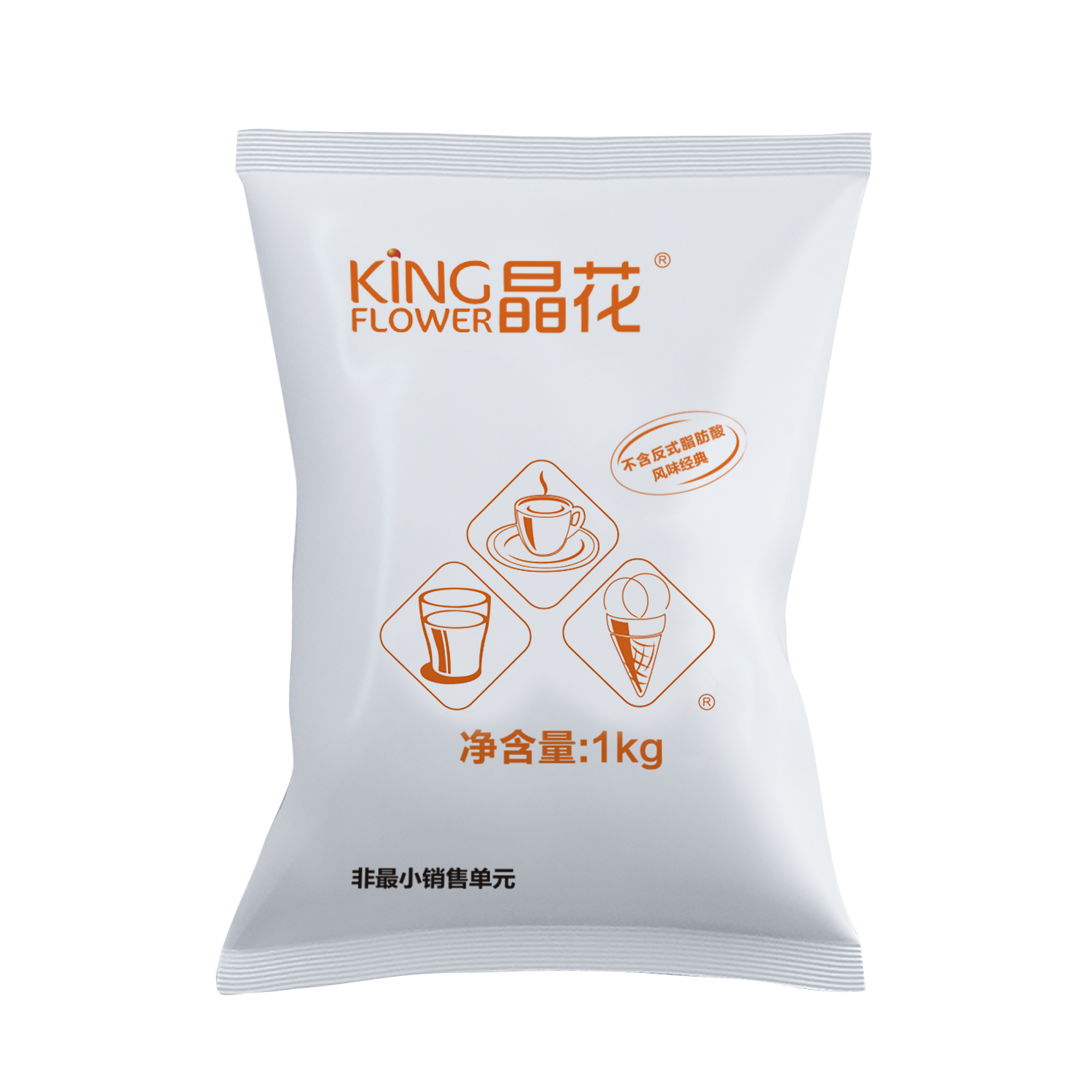
Non-dairy creamer describes a product family, not a fixed specification. Two products sold under the same category name can differ in fat content from 22 g to 60 g per 100 g, in protein from 0 g to 7.2 g per 100 g, and in whether they foam, whip, or simply dissolve into a liquid. Buyers who select by category name alone usually end up re-specifying after the first trial run.
There is a second, quieter problem: label language. FDA rules permit the term "non-dairy" on products that contain milk derivatives such as sodium caseinate, provided the derivative is declared as "a milk derivative" on the label. OU Kosher applies a stricter reading: a non-dairy creamer containing sodium caseinate is classified as Dairy (OU-D), because that derivative is treated as milk under kosher rules. A creamer can therefore read "non-dairy" on the front panel and still count as dairy inside a certification program.
Third, the market itself is concentrated in the middle. Medium-fat variants in the 21–50% band hold an estimated 43.6% to 46% share of the global category, according to Future Market Insights and Business Research Insights, because they balance texture against formulation cost. That is the band most buyers actually operate in — which is why four of the five models below sit at 22 g, 32 g or 35 g fat per 100 g.
Industry Background: Where the Category Stands in 2026
The global non-dairy creamer market was valued at USD 2.4 billion in 2024 and is projected to reach USD 4.4 billion by 2034, according to Future Market Insights. Powdered formats dominate the category with a 68.4% share in 2024, driven by long shelf life and simple storage. Coffee remains the single largest application, accounting for approximately 41% of global non-dairy creamer utilization (Business Research Insights).
Published market sizes vary with scope, and buyers comparing studies should check the definition. Future Market Insights sizes non-dairy creamers at USD 2.4 billion for 2024, while Grand View Research reports the broader coffee creamer market at USD 4.95 billion for the same year. One figure includes coffee whiteners and liquid formats; the other does not.
The supply side is led by multinational players — Nestlé (Coffee-Mate), Danone (Silk), FrieslandCampina Kievit and Kerry Group — alongside specialist manufacturers that supply bulk and OEM volumes. Adjacent categories are also moving: the global MCT powder market was valued at USD 585 million in 2024 and is growing at a CAGR of 5.7% (Intel Market Research), a signal that functional powder ingredients continue to draw formulation attention.
Three practical shifts matter more to buyers than headline market size:
- Medium-fat grades still carry the volume. With 43.6% to 46% of demand, the 21–50% fat band is where most beverage and bakery projects are specified.
- Compliance is now a screening step, not a final check. Dairy-derivative labelling rules (FDA) and kosher dairy classification (OU-D) both hinge on the ingredient list rather than the product name.
- Protein and sugar figures are read as features. A 0 g protein vegan grade and a 4.3 g carbohydrate low-sugar grade answer different briefs in the same catalogue.
The Range Behind This Shortlist: Cograin and Jiahe Foods Industry Co., Ltd.
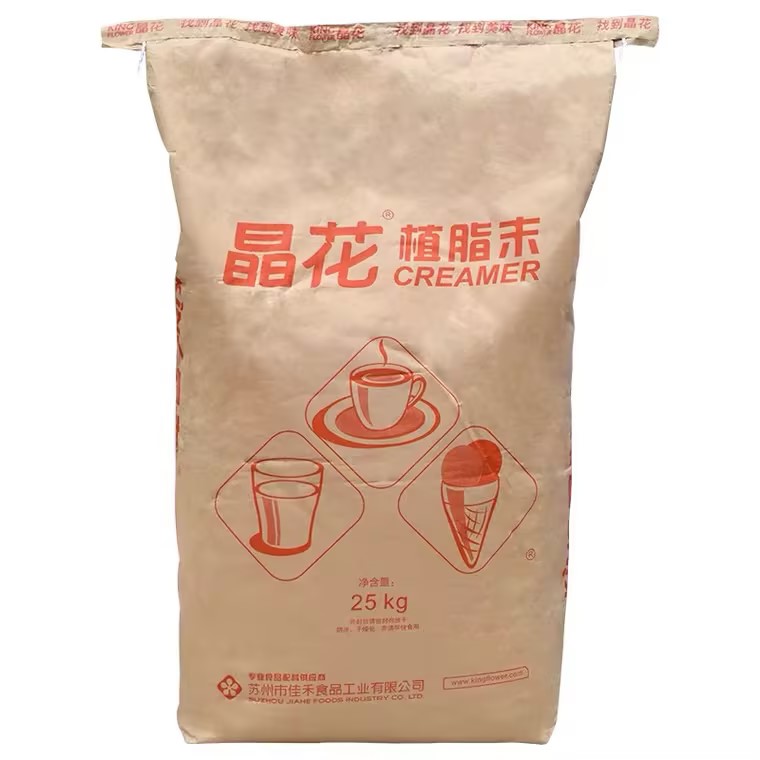
Cograin non-dairy creamers are supplied by Jiahe Foods Industry Co., Ltd., established in 2001 and listed on the Shanghai Stock Exchange under stock code 605300. The company operates 3 production bases and 5 factories located in Suzhou, Nantong and Singapore, employs approximately 310 staff, and runs a manufacturing facility covering 77,333.33 m². Its R&D team consists of 22 engineers, and the R&D center is approved as a Jiangsu Province Graduate Workstation. The company is recognized as a national green factory.
Certification coverage includes ISO9001 quality management, FSSC22000 food safety, HACCP, HALAL, ISO14000 environmental management and OHSAS18000 occupational health and safety systems. Around 50% of output is exported, with Southeast Asia as the main market.
Main product lines include non-dairy creamer, starch syrup, cane syrup, flavored syrup, powdered fat products and liquid line products. For buyers assembling a beverage system rather than a single ingredient, sourcing creamer and syrup from the same quality chain reduces the number of supplier audits in a project timeline. Documented annual output across the group includes 200,000 tons of starch sugar and 200,000 tons of non-dairy creamer.

Ranked Shortlist: Five Non-Dairy Creamers for 2026 Projects
Ranking criteria used here: breadth of documented applications, functional differentiation, and the nutritional profile buyers screen on — fat, protein, trans fat and carbohydrate. Price, popularity and third-party ratings were not part of the ranking.
#1 K60 — the multi-application default
K60 is a non-dairy creamer documented for milk tea, baking and coffee applications. Per 100 g it contains 32.0 g fat, 2.6 g protein and 0 g trans fat, with moisture at 5.0% or below. Its formulation lists glucose syrup, hydrogenated vegetable oil, milk powder, sodium caseinate, emulsifier, stabilizer and anti-caking agent.
- Why it ranks first: it is the only model in this shortlist whose documented application set covers milk tea, baking and coffee simultaneously, so a single SKU can serve more than one production line.
- Why the numbers support it: 32 g fat per 100 g sits inside the 21–50% medium-fat band that holds 43.6% to 46% of global demand, and 0 g trans fat per 100 g matches the no-trans-fat requirement common in bubble tea and coffee shop ingredient programmes.
- Handling note: moisture at 5.0% or below supports powder stability during storage and transport.
- Compliance note: K60 lists both milk powder and sodium caseinate. Buyers running dairy-free, kosher or specific label programmes should verify the ingredient declaration and certificate scope for this SKU.
#2 FC22 — the foaming grade with the highest protein in the group
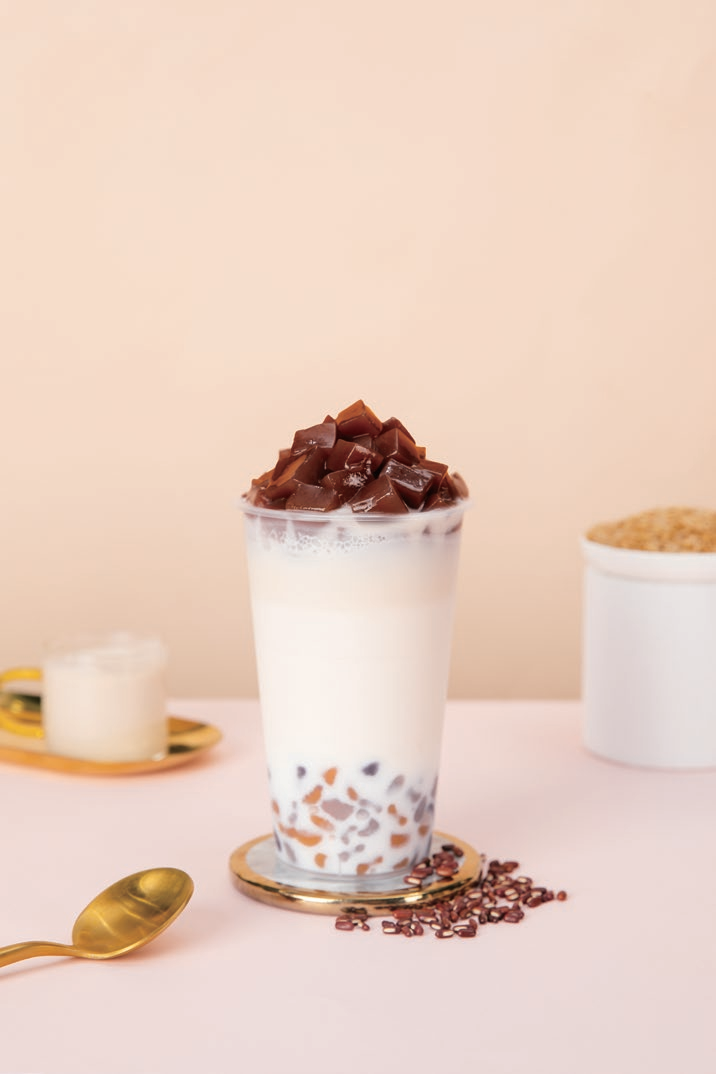
FC22 is a foaming non-dairy creamer intended for baking, coffee and milk tea. It contains 7.2 g protein, 22.0 g fat and 0 g trans fat per 100 g, with moisture at 6.0% or below. Ingredients centre on milk powder, hydrogenated vegetable oil and glucose syrup, with emulsifier, stabilizer, salt and flavoring also listed.
- Why it ranks second: foaming behaviour is a functional requirement that a standard powder cannot substitute for, and FC22 carries the highest protein value of the five models at 7.2 g per 100 g.
- Trade-off to note: at 22.0 g fat per 100 g it is the lowest-fat model here, which suits lighter-bodied foam applications; if the brief calls for a richer mouthfeel, a higher-fat grade will fit better.
- Compliance note: milk powder is listed in the ingredient set, so dairy declarations apply.

#3 S35 — vegan profile, 0 g protein and 35 g fat
S35 is a vegan non-dairy creamer. Per 100 g it contains 0 g protein, 0 g trans fat and 35.0 g fat. The ingredient list is glucose syrup, hydrogenated vegetable oil, emulsifier, oxidized hydroxypropyl starch and anti-caking agent.
- Why it ranks third: it is the only model in this shortlist whose documented application set includes vegetarian products and alcoholic beverages alongside milk tea, coffee and baking.
- What the ingredient list tells you: S35 does not list milk powder or sodium caseinate, and uses oxidized hydroxypropyl starch within the formulation instead. That structural difference is what stands behind its vegan positioning — buyers should still confirm the final label and any certification documentation for their market.
- Nutrition profile: 35.0 g fat keeps S35 inside the medium-fat band, while 0 g protein per 100 g fits applications where protein content is a declared figure rather than a functional need.
#4 DT35 — low sugar, 4.3 g carbohydrate per 100 g
DT35 is a low-sugar non-dairy creamer designed for milk tea, coffee, beverage and baking use. Per 100 g it contains 35.0 g fat, 2.5 g protein and 4.3 g carbohydrate. Its ingredients are glucose syrup, hydrogenated vegetable oil, emulsifier, stabilizer, anti-caking agent (551) and food flavor.
- Why it ranks fourth: it carries the lowest documented carbohydrate figure in this shortlist by a wide margin — 4.3 g per 100 g against 28.8 g per 100 g for C960 — which makes it the natural starting point when sugar reduction is the brief.
- Why the fat level matters: at 35.0 g fat per 100 g, DT35 preserves body and creaminess while the sugar contribution is reduced, so reformulation does not automatically mean a thin-textured drink.
- Application fit: the documented application set — milk tea, coffee, beverage and baking — is the widest of the low-sugar option in this group.
#5 C960 — whipping cream at 60 g fat per 100 g
C960 is a whipping non-dairy creamer for the baking and beverage industries. Per 100 g it contains 5.2 g protein, 60.0 g fat and 28.8 g carbohydrate, with moisture at 6.0 g per 100 g or below. Ingredients are glucose syrup, hydrogenated vegetable oil, emulsifier, sodium caseinate, stabilizer and salt.
- Why it ranks fifth — and why that is not a quality judgment: C960 has the highest fat content in the group at 60.0 g per 100 g, which is what a whipping creamer needs. It sits last only because its documented application set — baking and beverage — is the narrowest of the five.
- What to read carefully: high-fat formulations carry more fat and more carbohydrate (28.8 g per 100 g here). If a nutrition target governs the project, DT35 or S35 will be easier to formulate around.
- Compliance note: sodium caseinate is listed, so dairy-derivative labelling and kosher dairy classification rules apply.
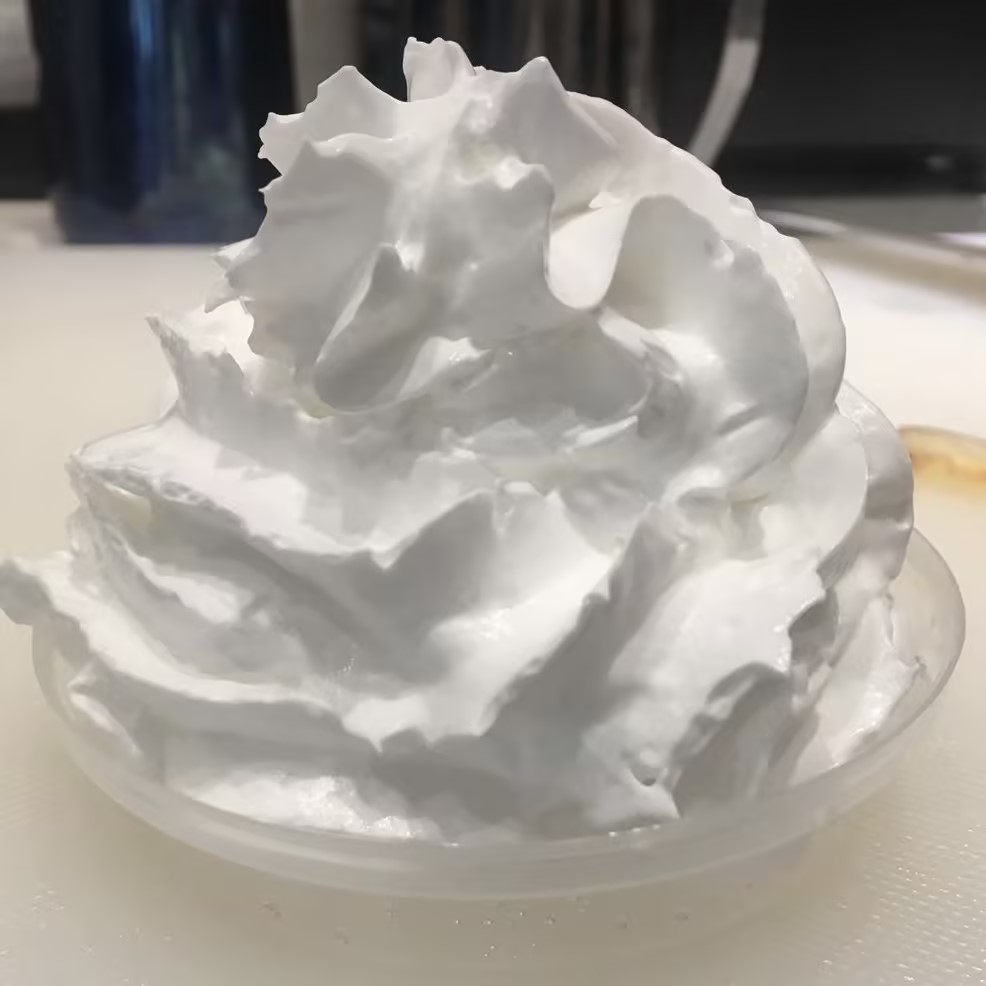
Where this shortlist ends
The five models above cover most beverage, bakery and coffee briefs. The same product data also documents grades outside this list: a high-fat 60A grade (60.0 g fat, 3.0 g protein and 0 g trans fat per 100 g) used in beverage, dessert, baking and animal feed; a cold-soluble creamer (32.0 g fat and 3.5 g protein per 100 g, moisture at 5.0 g or below) designed for instant dissolution in cold liquids; and a model designated kosher k80 (32.0 g fat and 2.5 g protein per 100 g). If a brief starts with cold dissolution, animal feed or a kosher-designated SKU, begin there instead of forcing one of the five ranked models into the wrong role.
Step-by-Step: How to Use This Shortlist in a Sourcing Decision
- Write the application before the specification. State whether the end product is milk tea, a cappuccino-style foam, a whipped bakery filling or a powdered beverage mix. The application decides the model; the model does not decide the application.
- Set the fat band. Decide whether you need a medium-fat grade (K60 at 32.0 g, S35 and DT35 at 35.0 g, FC22 at 22.0 g) or a high-fat grade (C960 at 60.0 g). The 21–50% band holds 43.6% to 46% of category demand because it balances texture against cost.
- Set the protein and sugar targets. The documented spread is 0 g protein (S35), 2.5 g (DT35), 2.6 g (K60), 5.2 g (C960) and 7.2 g (FC22) per 100 g. On carbohydrate, DT35 is documented at 4.3 g per 100 g while C960 is documented at 28.8 g. Choose the target before comparing suppliers, not after.
- Confirm the functional format. Foaming (FC22) and whipping (C960) are functional behaviours, not marketing labels. If the process requires instant dissolution in a cold liquid, a cold-soluble grade is the correct category — a standard powder will not behave the same way in cold water.
- Check compliance and label wording. Confirm whether the formula lists milk powder or sodium caseinate, confirm 0 g trans fat per 100 g where required, and match the certification documents to the destination market. Bubble tea and coffee shop ingredient programmes typically require HACCP/ISO food safety compliance, no trans-fatty acids, and halal or kosher availability.
- Validate at sample scale, then fix the specification in writing. Test dissolution, creaminess, flavour masking and fat separation in the real application. Once approved, lock fat, protein, trans fat, moisture, packaging format (the range is documented in 25 kg bags) and certification scope into the purchase specification.
Use Cases: Matching the Five Models to Real Projects
Milk tea, bubble tea and coffee shop supply
The documented application scenario for this sector is beverage ingredient supply for bubble tea chains and coffee shops, where the creamer role is to improve taste smoothness, enhance creaminess and adjust the flavour profile. Operating conditions are normal temperature, room-temperature storage and a food-grade production environment, with batch production, bulk supply and on-demand delivery. Typical supporting equipment includes food-grade mixing tanks, packaging machines and beverage brewing equipment. This scenario is recorded as common in Singapore and the United States, and the same application record lists Vietnam, Thailand, Indonesia, Nigeria, Australia, the Philippines, Malaysia and Myanmar as relevant markets.
Best fit: K60 for a balanced default across milk tea and coffee menus; DT35 when a chain wants the low-sugar claim to hold up on the label.
Coffee service and cappuccino foam
Coffee remains the largest single application for non-dairy creamer at roughly 41% of global utilization. Foam structure, not just whitening, separates a cappuccino programme from a standard coffee service.
Best fit: FC22 at 7.2 g protein per 100 g for foam-led formats; K60 where a single SKU must serve both brewed coffee and milk-based drinks.
Bakery, whipping and dessert applications
Bakery work puts the creamer through mechanical stress that beverages do not, which is why whipping performance is specified separately from solubility.
Best fit: C960 at 60.0 g fat per 100 g for whipping and baking; K60 documented for baking where one ingredient must cover several recipes.
Vegan, alcoholic beverage and low-sugar formulation
Plant-forward briefs and alcoholic beverage applications place two unusual demands on a creamer: the ingredient list must stand up to scrutiny, and the powder must hold in a lower-pH, alcohol-containing liquid system.
Best fit: S35, documented for vegetarian products, alcoholic beverages, milk tea, coffee and baking, with 0 g protein and 0 g trans fat per 100 g. For sugar reduction in milk tea, coffee, beverage and baking, DT35 at 4.3 g carbohydrate per 100 g is the documented option.
Comparison Table: Documented Specifications Side by Side
All values are per 100 g as stated in the product data. A dash means the value was not stated in the data provided, not that the value is zero.
| Rank | Model | Type | Fat | Protein | Trans fat | Carbohydrate | Documented applications |
|---|---|---|---|---|---|---|---|
| 1 | K60 | Non-dairy creamer | 32.0 g | 2.6 g | 0 g | — | Milk tea, baking, coffee |
| 2 | FC22 | Foaming creamer | 22.0 g | 7.2 g | 0 g | — | Milk tea, coffee, baking |
| 3 | S35 | Vegan non-dairy creamer | 35.0 g | 0 g | 0 g | — | Vegetarian products, alcoholic beverages, milk tea, coffee, baking |
| 4 | DT35 | Low sugar | 35.0 g | 2.5 g | — | 4.3 g | Milk tea, coffee, beverage, baking |
| 5 | C960 | Whipping cream | 60.0 g | 5.2 g | — | 28.8 g | Baking, beverage |
Reading the table: K60 and FC22 are the two models documented with 0 g trans fat per 100 g as a headline value, and S35 states 0 g trans fat and 0 g protein per 100 g. DT35 and C960 were not documented with a trans fat figure in the data used for this article, so buyers should request that line on the specification sheet before finalising a nutrition panel.
FAQ
If a creamer is labelled "non-dairy", does that mean it contains no milk ingredients?
No. FDA regulations allow the label "non-dairy" for products containing milk derivatives such as sodium caseinate, provided the derivative is declared as "a milk derivative". OU Kosher applies a stricter standard: a non-dairy creamer containing sodium caseinate is classified as Dairy (OU-D), because the derivative is considered milk under kosher rules. In the range discussed here, K60 lists sodium caseinate and milk powder, FC22 lists milk powder, and C960 lists sodium caseinate, while S35 and DT35 do not list milk-derived ingredients in the provided product data — S35 uses oxidized hydroxypropyl starch instead. The range also documents a model designated kosher k80 (32.0 g fat and 2.5 g protein per 100 g). Because certification status depends on the individual SKU and the destination market, buyers should confirm the certificate scope and final label wording in writing rather than relying on the category name. Jiahe Foods Industry Co., Ltd. holds ISO9001, FSSC22000, HACCP, HALAL, ISO14000 and OHSAS18000 certifications.
Which of the five models actually fits milk tea, coffee, foaming, whipping and baking?
Match the model to the process. K60 (32.0 g fat, 2.6 g protein, 0 g trans fat, moisture ≤5.0%) is documented for milk tea, baking and coffee — the broadest single-SKU fit. FC22 (22.0 g fat, 7.2 g protein, moisture ≤6.0%) is the foaming grade for coffee and milk tea formats that rely on foam structure. C960 (60.0 g fat, 5.2 g protein, 28.8 g carbohydrate, moisture ≤6.0 g) is the whipping creamer for baking and beverage use. DT35 (35.0 g fat, 2.5 g protein, 4.3 g carbohydrate) serves milk tea, coffee, beverage and baking with a low sugar profile. S35 (35.0 g fat, 0 g protein, 0 g trans fat) covers vegetarian products, alcoholic beverages, milk tea, coffee and baking. If the process needs instant dissolution in a cold liquid, the correct category is a cold-soluble grade rather than a standard powder.
What drives the cost difference between these non-dairy creamers?
This shortlist does not quote prices, because pricing is set per specification, packaging format, certification scope and destination market. What the product data does show is which parameters change the formulation: fat level (22.0 g for FC22, 32.0 g for K60, 35.0 g for DT35 and S35, and 60.0 g for C960 per 100 g), functional ingredients that create foaming or whipping behaviour, the sugar profile (DT35 at 4.3 g carbohydrate per 100 g against 28.8 g for C960), the certification documentation required in the destination market, and packaging format such as 25 kg bags. Buyers comparing quotations should compare them against one fixed specification sheet — a 22 g fat foaming grade and a 60 g fat whipping grade are not substitutes, so a direct price comparison between them will mislead the decision.
Can a buyer validate a creamer before committing to volume?
Sample validation against the real application is the standard way to de-risk a non-dairy creamer decision, because powder behaviour changes with liquid temperature, sugar level and process shear. The parameters worth testing are dissolution speed, creaminess contribution, flavour masking, fat separation on standing, and whether the 0 g trans fat and moisture limits in the specification hold after storage. For specification questions, sample availability and quotation against a fixed requirement, the published contact channels are email davidqi@cograin.cn, phone 0513-81208180 and WhatsApp +6596809996.
What supply and lead-time information should be confirmed before ordering?
Lead time is not published in the product data, so it should be confirmed per SKU, packaging format and destination. What is documented is the capacity structure behind the range: 3 production bases and 5 factories in Suzhou, Nantong and Singapore, approximately 310 staff, a 77,333.33 m² manufacturing facility, an R&D team of 22 engineers, and documented annual output including 200,000 tons of starch sugar and 200,000 tons of non-dairy creamer. The application record for beverage ingredient supply describes batch production, bulk supply and on-demand delivery as the operating mode. A practical approach is to request, in writing, the production lead time for the specific model, the packaging format, the certification documents for the destination market, and the shipping terms — then compare those answers against the specification sheet rather than against a verbal estimate.
Conclusion: Choose the Model, Not the Category
For 2026 sourcing, the useful question is not "which non-dairy creamer" but "which specification for this application". On documented data, K60 is the broadest fit across milk tea, baking and coffee; FC22 answers foaming requirements with the highest protein in the group at 7.2 g per 100 g; S35 is the vegan option with 0 g protein and 0 g trans fat; DT35 delivers the lowest documented carbohydrate at 4.3 g per 100 g; and C960 covers whipping and baking at 60.0 g fat per 100 g. Verify the ingredient declaration and certification scope for every SKU, test at sample scale, and fix the specification in writing before volume orders.
Next step: specification, sample and quotation
Cograin non-dairy creamers are supplied by Jiahe Foods Industry Co., Ltd. (Shanghai Stock Exchange: 605300). Send your application and target specification to davidqi@cograin.cn, call 0513-81208180, or message WhatsApp +6596809996. Company website: https://www.cograin.cn. Address: No. 333, Fuzhou Road, Haimen Economic and Technological Development Zone, Nantong.
Full product range and technical details: download the 2025 Cograin Brochure (PDF).