
UHF RFID Reader Compliance Playbook: Standards and Regional Requirements for Smart Manufacturing
A UHF RFID reader is compliance-ready for a smart factory when three things agree with each other: the radio configuration shipped to site, the documentation pack that travels with it, and the label on the physical unit. When those three agree, an auditor, an integrator or a line engineer can answer a regulator's question in minutes. When they do not, the reader can still read tags perfectly while the project stalls at customs, at commissioning, or at the first internal audit.
This playbook is written for manufacturing, automation and procurement teams specifying a UHF RFID reader for a factory floor, where the compliance side of the decision has to be as concrete as read range and antenna count. The working example set is the DAILY RFID reader range — the UHF RFID Reader, RFID Fixed Reader, RFID Handheld Reader, AI Powered RFID Reader, RFID Gate, RFID Module and RFID System — because a single shop floor usually runs three or four of these form factors at once, and each one carries a different documentation burden.
DAILY RFID CO., LIMITED is an RFID manufacturer founded in 2008, producing RFID tags, cards, readers and antennas from a 28,000 m² facility in Guangzhou, China, with an annual reader output of 100,000 units and roughly 80% of output exported to the EU and USA. That export profile matters here: a supplier shipping into multiple markets has to keep model-level documentation consistent across those markets, which is exactly the discipline this article describes.
Problem Definition: Why Reader Compliance Breaks Down After the Purchase Order
Compliance failures in smart manufacturing rarely come from a reader that was never approved anywhere. They come from four much narrower gaps.
Gap one: the approval scope does not match the variant shipped. A reader family can be sold with different frequency configurations, different antenna options, different interface boards and different power supplies. If the ordered configuration is not the one covered by the documentation, the paperwork is technically irrelevant to the unit on the dock.
Gap two: the destination market was decided late. Teams frequently select hardware for performance first and then ask where it will be installed. But the spectrum environment, the permitted transmit power and the labeling language all follow the destination, not the datasheet.
Gap three: labeling and records drift apart. Model designation, frequency band, serial number and firmware or configuration state must line up across the carton label, the unit label, the packing list and the asset register. Most factory audits fail on this alignment, not on the technical performance of the reader.
Gap four: form factor changes the scope. A fixed reader powered by Power over Ethernet, a handheld carried through the plant, a gate installed at a doorway and a module embedded inside a cabinet do not present the same compliance questions. Treating them as one category produces either over-documentation that slows the rollout, or under-documentation that stops it.
The short answer: build one compliance dossier per reader model, not per project. Then for each site, record which dossier applies, which frequency band and power setting were configured, and which label format was applied. That single practice removes most deployment delays.
Industry Background: What Regional Requirements Actually Change for a Reader
Regional requirements are often described as a list of certificates. In practice they change six engineering and administrative variables, and each one is visible on the datasheet of the hardware being evaluated.
1. Frequency band availability
Spectrum use for UHF RFID is set market by market. The reader families used as examples here are built around three ISM band groups — 860–868 MHz, 902–928 MHz and 920–925 MHz — with frequency customization available across the 860–960 MHz span. A fixed reader such as the AI Powered RFID Reader DL921 lists those three groups explicitly with customization optional; the RFID Smart Cabinet Component lists the same three groups plus the wider 860–960 MHz customization range; the WIFI RFID Reader DL920Plus is specified across 860–960 MHz.
2. Permitted transmit power
Radiated power is the second variable, and it is the one most often left unrecorded. The DL921 has a maximum transmit power of 26 dBm. The DL920Plus reaches 30 dBm with software adjustment from 20 dBm to 30 dBm. The embedded Smart Cabinet Component also reaches 30 dBm but can be software-adjusted down to 20 dBm for partitioned near-field control. Adjustability is a compliance asset: it allows one hardware platform to be configured conservatively for a market or a zone without changing the bill of materials.
3. Environmental and ingress claims
A factory environment claim is only useful if it is stated as a rating tied to a configuration. The corpus values for the example readers are IP65 for the DL921, IP64 for the DL920Plus and IP54 for the embedded Smart Cabinet Component. Operating temperature ranges differ accordingly: −20 °C to +60 °C for the DL921, −30 °C to +70 °C for both the DL920Plus and the Smart Cabinet Component.
4. Electrical and interface configuration
Power and interface choices determine what has to be declared and what has to be installed. The DL921 accepts Power over Ethernet or DC +9 V to +24 V with 12 W consumption. The DL920Plus runs on DC +9 V, 4 A at 6 W. The Smart Cabinet Component accepts DC +9 V to +24 V with PoE optional at roughly 6 W. Interface sets differ too — RS232, RJ45, GPIO, USB and, on the DL920Plus, RS485 and Wiegand 26/34.
5. Labeling and importer obligations
Most markets place obligations on whoever places the equipment on the market, not only on the manufacturer. That usually means a local entity, a label in a required language, a retained technical file and a defined support contact. These obligations are administrative, and they are the ones most easily lost between a Chinese production line and a European or North American warehouse.
6. Lifecycle and change control
A reader installed for a decade will see firmware updates, spare-part substitutions and possibly a new antenna. Each change is a chance for the configuration on the floor to diverge from the configuration in the file. Compliance for smart manufacturing is therefore a maintenance activity, not a one-time purchase step.
DAILY RFID reports 38 engineers, an annual output of 50 million RFID tags, 30 million RFID cards and 100,000 RFID readers, and main markets in the EU and USA. Those are the operational facts that make a documentation-first approach practical: the same model designation has to survive customs in two different regulatory regions.
Detailed Solution: A Five-Layer Compliance Dossier for Every Reader Model
The most efficient structure for a smart manufacturing program is a dossier that is assembled once per model and then referenced by every site. Five layers are enough.
Layer 1 — Radio scope record
State, in one page, which frequency groups the model supports, which group the ordered unit is configured for, and what the maximum transmit power is. For the DL921 that reads: ISM 860–868 MHz, 902–928 MHz or 920–925 MHz, customization optional, maximum 26 dBm. For the DL920Plus: 860–960 MHz, 30 dBm maximum, software-adjustable 20–30 dBm. For the embedded Smart Cabinet Component: the same three groups with 860–960 MHz customization, adjustable down to 20 dBm. This page is what customs and the site integrator will ask for first.
Layer 2 — Electromagnetic and electrical safety evidence
Request test evidence that names the exact model and variant, not the product family. If a reader is offered with several interface boards — USB as a customizable option on the DL921, for example, or RS485 and Wiegand on the DL920Plus — confirm that the evidence covers the interface combination actually purchased.
Layer 3 — Environmental and ingress evidence
Match the rating to the zone. A wash-down area, a cold room and a clean assembly cell do not need the same protection level, and paying for IP65 everywhere is as poor a decision as specifying IP54 in a wet zone. Record the rating, the operating temperature range and the storage range on the same page as the installation location.
Layer 4 — Labeling and traceability
Define the label content before production: model designation, frequency group, serial format, manufacturer identification and the local importer where required. Then verify that the same identifiers appear on the packing list and in the customer asset register. Serial-level traceability is also the fastest way to answer a field question about which configuration a specific unit carries.
Layer 5 — Configuration control
Freeze the settings that matter: band, transmit power, working mode and firmware baseline. The DL921 offers active mode, answer mode, trigger mode and password mode; the embedded module supports dense inventory modes. Any of these settings can be changed on site, so the dossier should record the approved value and the commissioning step that verifies it.

How Compliance Scope Changes Across Reader Form Factors
RFID Fixed Reader
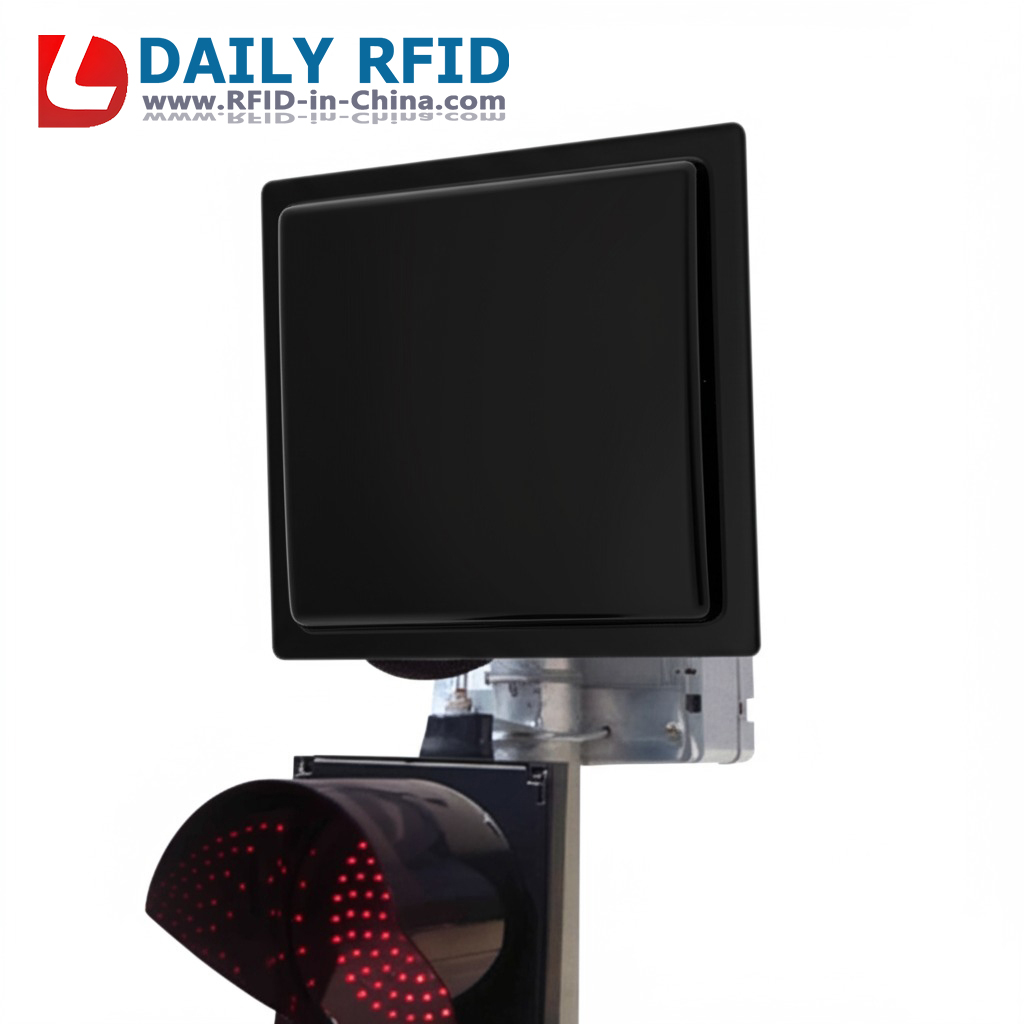
Fixed readers are installed, powered continuously and connected to a network, so the dossier emphasis falls on power supply, cabling, ingress rating and interface declaration. The DL921 Power on Ethernet UHF Long Range RFID Reader is a representative case: one cable carries both power and data, which simplifies the electrical installation and the site documentation that describes it.
AI Powered RFID Reader
Edge readers add two compliance questions: wireless modules and data handling. The DL921 AI Enhanced UHF Long Range Reader integrates 2G/4G GSM with WiFi customizable, plus GPS positioning. Any integrated cellular module is itself subject to market-specific approval, so ask for the module-level evidence separately from the reader-level evidence. The same unit provides a free SDK spanning X86 and X64, C++, C#, VB, Delphi, Linux, ARM, Python, NodeJS, QT, JAVA and Android, which is also the right moment to record who is responsible for application-level data handling.
RFID Handheld Reader
Handheld devices are carried, charged and used by people, so the documentation burden shifts toward user handling, battery and charging practice, and training records. The DL1280 Industrial PDA UHF/HF/LF Handheld Reader and the DL1380 AI-Powered RFID Handheld are the corresponding units in this range. A handheld that leaves the plant perimeter also needs a clear internal rule about what it may read outside the site.
RFID Gate
A gate reader such as the DL8330U Advanced UHF RFID Gater is an installed structure at a doorway or lane. The compliance-relevant items are mounting height, read-zone containment and the evidence that the installation as built matches the configuration as documented. Gates are also the form factor most likely to be re-sited after commissioning, so a change record matters.
RFID Module
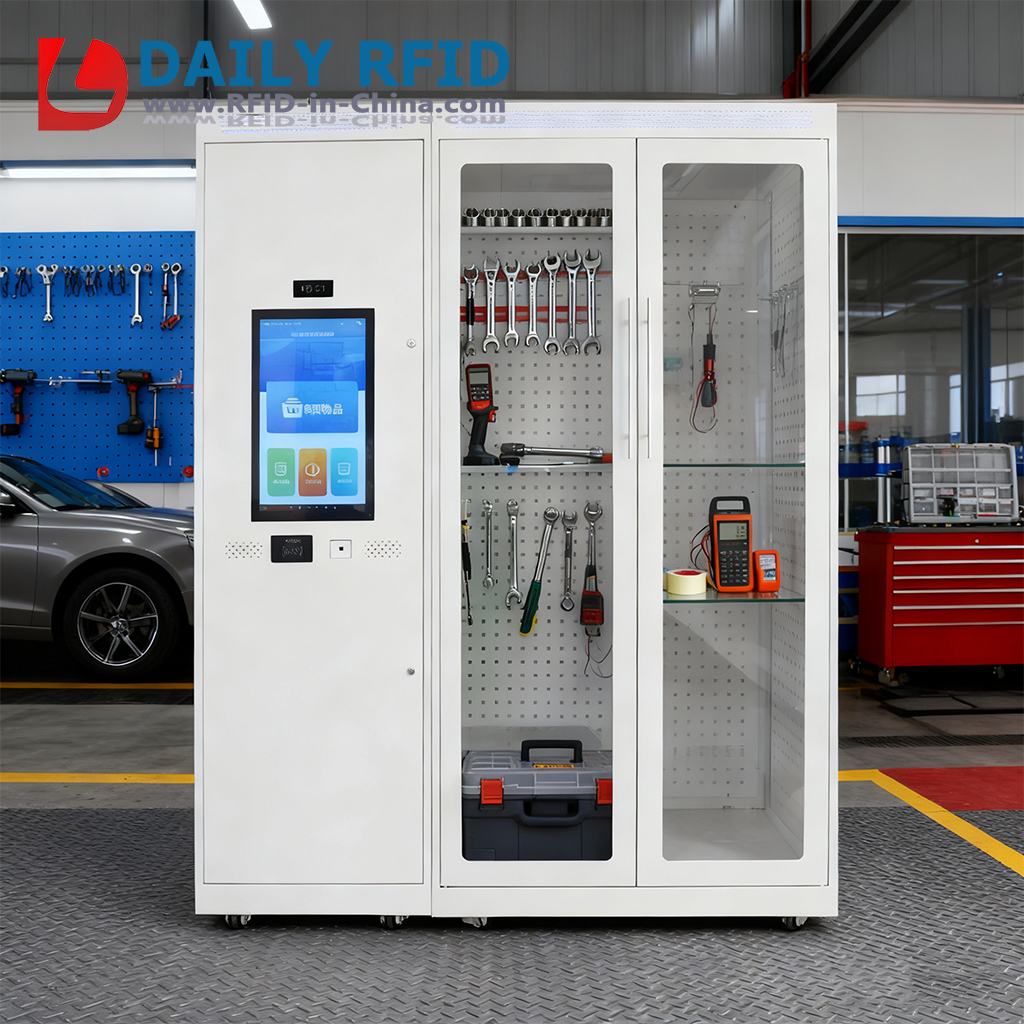
Modules are embedded into another product — a cabinet, a tray reader, a mobile sled. The DL228 Type-C UHF Mobile Reader and DL213 Type-C UHF Reader Module sit in this category. When a reader module becomes part of a machine, the machine builder usually becomes the party responsible for the combined declaration, which means the module supplier must hand over module-level evidence early. The embedded Smart Cabinet Component illustrates the pattern: 0.1–5 m working range, more than 500 tags per partition area, IP54, and a 180 × 140 × 30 mm footprint suited to backboard mounting.
RFID System
Systems assembled from readers, antennas, tags and software — for example the Parking Management RFID Development Kit or the Jewelry Management RFID Development Kit — need a top-level document that maps each component to its own evidence file. Without that map, a site audit becomes a search exercise across four suppliers.
Step-by-Step Breakdown: A Deployment-Readiness Sequence
- Define the radio scope per site, before the model is chosen. Record the destination market, the band group the site will operate in, and the maximum transmit power permitted. Only then compare candidate readers. If two sites are in different markets, expect two configurations of the same model rather than one compromise configuration.
- Map form factors to locations. List every read point — dock door, station, cabinet, gantry, yard — and assign a form factor to each. A dock door usually takes a fixed reader with external antennas; a tool crib takes an embedded module; an airside walkdown takes a handheld.
- Assemble one dossier per model. Use the five layers above. Keep it in a controlled location and reference it from every purchase order rather than attaching it to each order.
- Lock the configuration in writing. Band, power, working mode, interface set and firmware baseline. For adjustable platforms this is essential: the DL920Plus can be set anywhere between 20 dBm and 30 dBm, and the embedded module can be reduced to 20 dBm, so the approved setting must be recorded rather than assumed.
- Verify labeling against records. Check carton label, unit label, packing list and asset register against the dossier. Resolve mismatches before goods are booked in, not during the audit.
- Validate with a sample and a formal acceptance test. Run the sample through the same checklist that will be used at final acceptance, so the acceptance criteria are proven before volume production. DAILY RFID operates a Factory Acceptance Test for UHF fixed readers and a Full System Burn-in for UHF handheld readers, which gives the checklist a defined counterpart on the supplier side.
- Plan the lifecycle. Record who updates the dossier after a firmware change, a spare-part substitution or a re-sited gate, and how long records are retained. Compliance in a factory is a maintenance task that runs for the life of the line.
Use Cases: Three Deployment Patterns and the Documentation Each One Needed
Automotive parts warehouse, Spain — fixed readers at dock doors
A DAILY RFID deployment of 420 sets of the DL6980 4-Port Long Range Reader covered inbound pallet reading, dock-door verification and returnable container tracking, running for at least five years. Inbound receiving became 40%–70% less manual, missed pallet scans dropped 30%–60%, and container reconciliation became faster. The compliance load sat in the fixed installation: four antenna ports meant four cable runs and a documented read zone per door, and the power and interface plan had to be signed off before commissioning.
Cold storage and food logistics, Malaysia — PoE fixed reading for cold-room pallets
A deployment of 160 sets of the DL950S-PoE UHF Reader handled fixed-door reading for cold-room pallets and insulated returnable boxes over at least five years. Cold-chain checkpoint movement capture exceeded 90%, and separate power-adapter installation was reduced by 30%–50%. Here the documentation question was environmental: an ingress and temperature claim that genuinely matched a cold room, plus a single-cable power design that removed adapter hardware from the record.
Airport ground services, Turkey — handheld readers for asset audits
A deployment of 90 sets of the DL1083 Industrial Long Range Handheld Reader supported baggage cart tracking, ground equipment checks and airside asset audits for at least four years. Baggage cart and ground-equipment search time dropped 40%–70%, and turnaround readiness improved by about 20%–40%. The compliance load here was human and administrative: device assignment records, charging practice and the rule set for reading assets outside the terminal building.
Comparison Table: Specification Review for Compliance-Relevant Attributes
The table below compares the attributes that appear repeatedly in compliance conversations, using only documented values from the DAILY RFID reader range.
| Attribute | AI Powered RFID Reader (DL921) | WIFI RFID Reader (DL920Plus) | RFID Smart Cabinet Component |
|---|---|---|---|
| Supported protocol | ISO18000-6C, EPC Class 1 Gen 2, ISO18000-6B | ISO18000-6B, ISO18000-6C EPC Gen2 | ISO18000-6C, EPC Class 1 Gen 2 |
| Frequency configuration | ISM 860–868 MHz, 902–928 MHz or 920–925 MHz; customization optional | 860–960 MHz | 860–868 MHz, 902–928 MHz or 920–925 MHz; customization 860–960 MHz |
| Maximum transmit power | 26 dBm | 30 dBm, software-adjustable 20–30 dBm | 30 dBm, software-adjustable down to 20 dBm |
| Ingress protection | IP65 | IP64 | IP54 |
| Operating temperature | −20 °C to +60 °C | −30 °C to +70 °C | −30 °C to +70 °C |
| Power and consumption | PoE or DC +9 V to +24 V, 12 W | DC +9 V, 4 A, 6 W | DC +9 V to +24 V, PoE optional, approx. 6 W |
| Interface set | RS232, RJ45 with PoE, GPIO trigger and relay, USB customizable, 2G/4G GSM, WiFi customizable | RS232, RJ45, USB, RS485, Wiegand 26/34, GPIO | RS232, RJ45, GPIO, USB 2.0, optional wireless expansion |
| Typical compliance focus | Integrated cellular module plus edge data handling | Installation power, cabling and interface declaration | Module evidence handed to the machine builder |
| Form factor (example models) | Evidence to collect | Configuration to lock | Label and record to verify |
|---|---|---|---|
| RFID Fixed Reader (DL921 Power on Ethernet, DL950S-PoE, DL6980) | Model-level radio and electrical evidence; installation power and cabling plan | Band group, transmit power, port and antenna mapping | Model designation, serial, port assignment, site read zone |
| AI Powered RFID Reader (DL921 with GPS/GSM/PoE) | Reader-level evidence plus separate evidence for the integrated wireless module | Wireless module enablement, data retention policy, firmware baseline | Module variant, IMEI-level record where applicable, asset ID |
| RFID Handheld Reader (DL1280, DL1380, DL1083) | Portable device handling and charging instructions; user training record | Application set, reading mode, firmware version | Device assignment record, checkout log |
| RFID Gate (DL8330U) | As-built installation record; read-zone containment evidence | Mounting height, power setting, alarm linkage | Gate ID, lane mapping, commissioning sign-off |
| RFID Module (DL228 Type-C, DL213 Type-C, Smart Cabinet Component) | Module-level evidence for handover to the machine builder | Antenna port layout, power ceiling, interface mode | Module serial, host machine serial, declaration owner |
| RFID System (development kits) | Component-to-evidence map covering readers, antennas, tags and software | System-level configuration and version set | Bill of components, software version, support contact |
FAQ
Which compliance documents should a smart manufacturing team request before a UHF RFID reader ships?
Request a single pack that covers the destination market and the exact variant ordered: radio-scope documentation for the frequency configuration being shipped; electromagnetic compatibility and electrical safety evidence naming the model; a statement of ingress protection and operating temperature tied to the tested configuration — IP65 for the AI Powered RFID Reader DL921, IP64 for the WIFI RFID Reader DL920Plus, IP54 for the RFID Smart Cabinet Component; a restricted-substance declaration; and a labeling sheet showing model designation, frequency group and serial format. Insist that every document references the same model designation that appears on the purchase order, because a document for a sibling variant will not survive an audit.
Can the frequency band and transmit power be adjusted to match local spectrum rules?
On the documented reader platforms, yes — and the adjustment should be recorded rather than assumed. The AI Powered RFID Reader DL921 supports ISM 860–868 MHz, 902–928 MHz or 920–925 MHz with frequency customization optional, at a maximum transmit power of 26 dBm. The WIFI RFID Reader DL920Plus is specified across 860–960 MHz, with 30 dBm maximum and software adjustment from 20 dBm to 30 dBm. The RFID Smart Cabinet Component offers 860–960 MHz customization with 30 dBm adjustable down to 20 dBm. Ask the supplier to state the configured value in writing and verify it at commissioning.
What drives the cost of a compliant reader deployment?
Cost is driven less by the reader unit than by documentation scope, form factor, interface customization, ingress and temperature grade, and integration effort. DAILY RFID's manufacturing data gives a practical view of where the variables sit: UHF Fixed Reader ODM/OEM work covers antenna gain and interface customization with a minimum order of 1 unit and a lead time of 15~45 days; UHF Handheld Reader customization covers operating system, software and housing with a minimum order of 1 unit, a 15~30 day lead time and 2,000 units per month of capacity; RFID Smart Tool Cabinet projects run at 300 units per month with a 20~45 day lead time. Budget for the dossier work as a line item, because retrofitting documentation after shipment is always the more expensive path.
Can we validate a sample before committing to a full rollout?
Yes. Both the UHF Fixed Reader and the UHF Handheld Reader programs accept a minimum order of 1 unit, which makes single-unit validation practical before a multi-site rollout. Pair the sample with the supplier's quality gates: Factory Acceptance Test for fixed readers, Full System Burn-in for handheld readers, and System Integration Test for cabinet-level projects. Run the sample through the same acceptance checklist that will be applied to the production batch, so any documentation or configuration gap surfaces while one unit is on site rather than after the full quantity arrives.
What lead times should be planned for, and how do they interact with compliance work?
Plan 15~45 days for ODM/OEM UHF fixed reader builds, 15~30 days for UHF handheld reader customization, and 20~45 days for RFID smart tool cabinet or tray reader projects. Compliance work should run in parallel rather than after the order: confirm the destination market and band group before release, collect the model-level evidence pack during production, and schedule labeling verification at packing. Teams that sequence documentation before shipment typically commission faster, because the integrator is not waiting for paperwork while the readers are already mounted.
Conclusion: Compliance Is a Configuration Discipline
For a smart manufacturing team, the practical meaning of UHF RFID reader compliance is narrow and testable: the band and power settings on the unit match the site, the documentation pack names the exact model shipped, the ingress and temperature claims match the environment, and the labels agree with the asset records. Every one of those items can be checked with a one-page form.
The reader range used as the example set here shows how the discipline plays out across form factors. A PoE fixed reader simplifies installation documentation; an edge reader with integrated cellular connectivity adds a module-level evidence question; an embedded module shifts declaration responsibility toward the machine builder; a handheld moves the burden to handling and training records. One dossier per model, referenced by every site, is what keeps those threads from tangling.
Used this way, compliance stops being a purchasing obstacle and becomes an engineering asset: it shortens commissioning, reduces the number of field questions, and gives the operations team a defensible answer when the question finally comes.
Next step for your compliance dossier. If you are specifying readers across several sites, start with one unit and one checklist. DAILY RFID supplies UHF fixed readers, handhelds, gates, modules and systems with a minimum order of 1 unit for reader customization programs, plus Factory Acceptance Test and Full System Burn-in quality gates.
Request a sample or a quotation for your configuration, or download the company profile for the full product and capability overview.
Download the DAILY RFID company profile (PDF)
Website: www.rfid-in-china.com | Email: sales@rfid-in-china.com | WhatsApp / Tel: +86 15817191372
Have Questions or Need More Details?
Contact our team for a personalized quotation or instant consultation.
Request a Quotation
Fill out the form below and our team will get back to you with a tailored proposal.
WhatsApp Direct Chat
Prefer to chat in real-time? Message us on WhatsApp for instant assistance & quick answers.
- Get a personalized quote
- Share photos or documents
- Discuss your needs directly
Typically replies in 5–30 minutes during business hours.