
UHF RFID Reader Sourcing in China: A Playbook for Long-Term Supply Partnerships
UHF RFID Reader Sourcing in China: A Playbook for Long-Term Supply Partnerships
For buyers moving from evaluation to execution, a UHF RFID reader is not a one-time purchase. The practical question is whether the manufacturer can support repeat orders, regional compliance, integration, and post-sales service over multiple years. This playbook defines the qualification criteria and shows how DAILY RFID CO., LIMITED supports long-term UHF RFID reader supply partnerships in smart manufacturing and related industries.
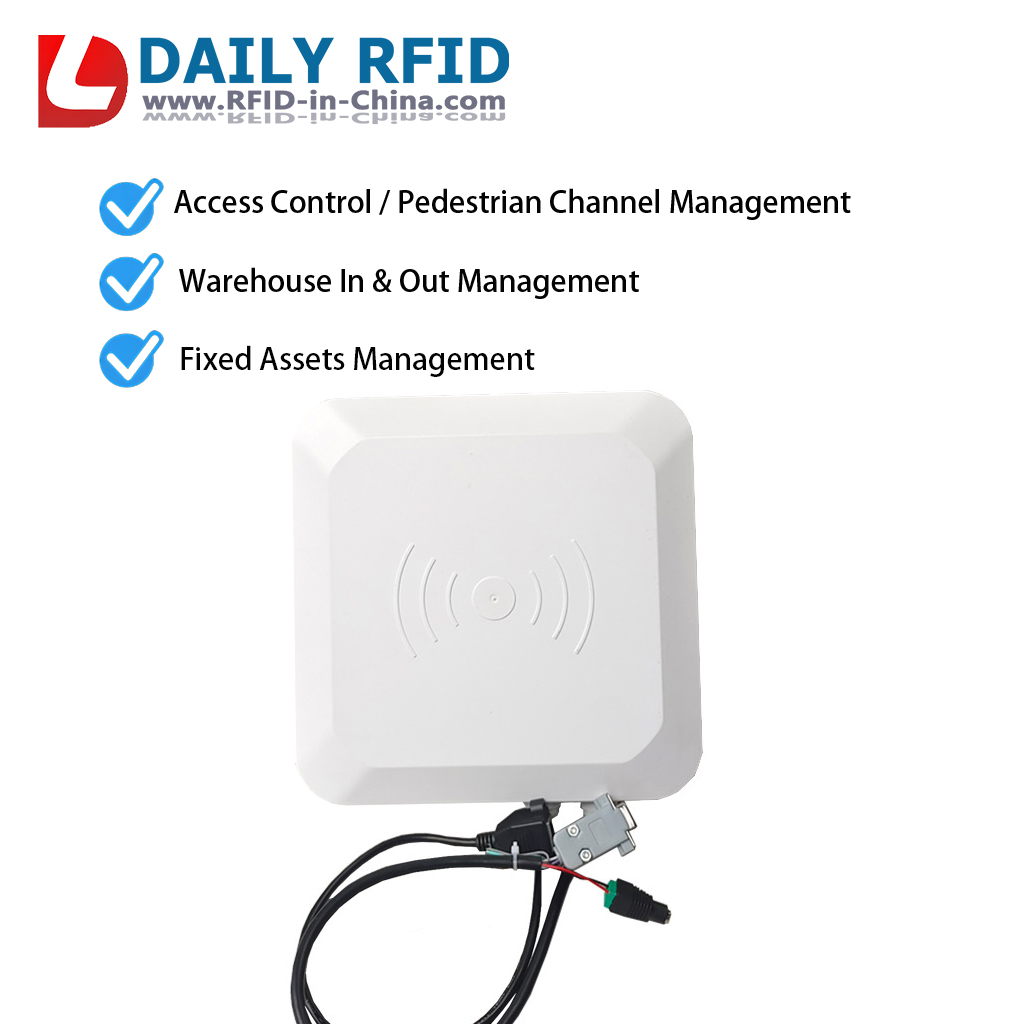
Why Long-Term UHF RFID Reader Sourcing Needs a Different Playbook
Single-order sampling evaluates whether a reader works in a demo. A long-term supply partnership has to evaluate whether the manufacturer can deliver consistent products across batches, adjust frequency bands for different destinations, support OEM requests, maintain production capacity, and resolve integration issues after handover.
Buyers that select a supplier only on sample price and read distance often face re-qualification when production scales. Hidden friction appears in areas such as firmware customization, antenna tuning, test procedures, export documentation, and replacement parts.
Industry Background: Why UHF RFID Reader Sourcing Is Becoming Strategic
The UHF RFID reader market is expanding, and procurement decisions are becoming more structured. According to Dataintelo, the global UHF RFID reader market is valued at approximately USD 4.8 billion in 2025 and is projected to reach USD 11.2 billion by 2034. Mordor Intelligence estimates that UHF RFID technology captured 40.72% of total RFID market revenue in 2025, supported by retail inventory cycles and multi-item read capabilities. IDTechEx reports that the Americas account for over 60% of global UHF tag usage, while ABI Research expects Asia Pacific to be the fastest-growing region for UHF RFID hardware, with an 11.8% shipment CAGR through 2031.
The technology itself is standardized. Most UHF RFID readers and tags follow the EPCglobal Gen2 protocol, also known as ISO/IEC 18000-6C. This creates a more predictable base for multi-year sourcing, as long as the supplier can correctly configure frequency, power, and certification for each market.
Detailed Solution: What a Long-Term UHF RFID Reader Partner Should Provide
DAILY RFID CO., LIMITED, established in 2008 and based in Guangzhou, China, is an RFID manufacturer with a 28,000 m² factory, around 180–200 employees, and 38 R&D engineers. The company produces RFID tags, readers, antennas, cards, and related hardware. According to company profile data, annual output includes 50 million RFID tags, 30 million RFID cards, and 100,000 RFID readers, with about 80% of production exported to the EU and USA.
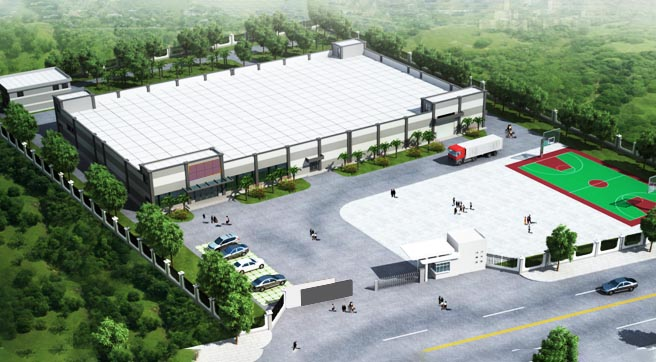
For long-term UHF RFID reader supply, the following capabilities matter.
1. Frequency and Protocol Coverage
A long-term partner should cover the main frequency ranges used by buyers. DAILY RFID products operate at UHF (860MHz~960MHz) and HF (13.56MHz) or LF (125KHz) frequencies depending on the product line. UHF fixed readers and handhelds support ISO/IEC 18000-6C / EPC Gen2 and ISO/IEC 18000-6B in many models. Frequency versions can be configured for EU, US, China, and other export markets.
2. OEM/ODM and Customization
Buyers at the execution stage often need modifications. DAILY RFID provides ODM/OEM production services across multiple product lines, with minimum order quantities starting from 1 unit for certain products. UHF handheld readers can be customized in OS, software, and housing. UHF fixed readers can be customized in antenna gain and interface options. HF RFID readers offer logo and software customization. Beyond readers, DAILY RFID also customizes RFID cards, fabric and silicone wristbands, asset tags, and UHF metal-mount labels, which supports projects that need a broader RFID ecosystem.
3. Quality Control and Testing
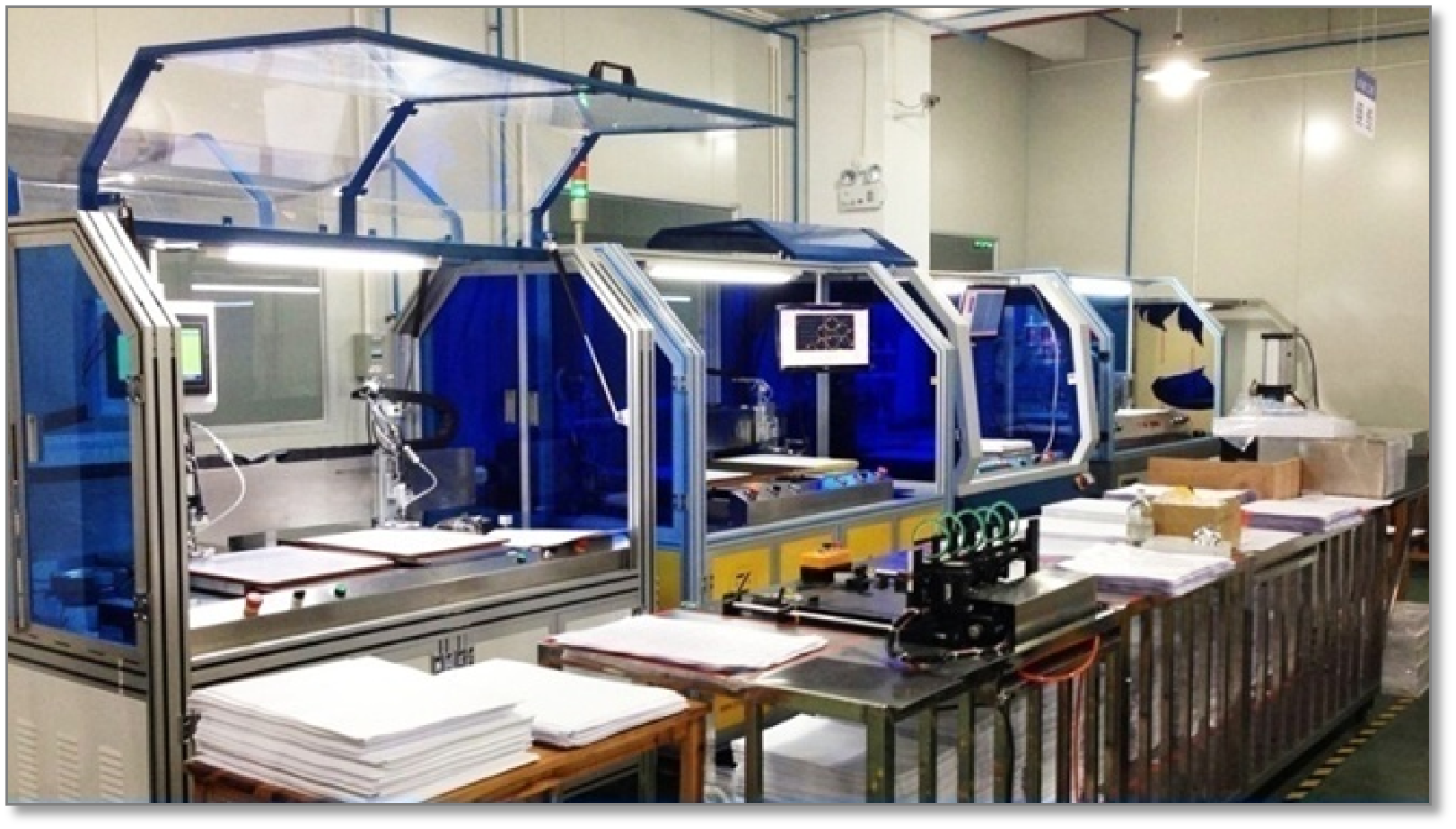
Supply continuity depends on repeatable quality. DAILY RFID uses 100% functional tests for many products, signal testing for tags, peel tests for labels, batch sampling for cards and wristbands, full system burn-in for handheld readers, and Factory Acceptance Test for UHF fixed readers. The exact test procedure depends on product type, but the presence of documented test methods is a practical requirement.
4. Production Capacity and Lead Times
DAILY RFID publishes monthly capacities across product lines: up to 2,000 UHF handheld readers, 1,000 UHF fixed readers, 5,000 HF RFID readers, and tag capacities ranging from 200,000 to 1,000,000 units depending on product type. Typical lead times are 3–15 days for HF reader customization, 15–30 days for UHF handheld readers, and 15–45 days for UHF fixed readers. For long-term planning, these numbers help buyers calculate buffer stock and rollout pace.
5. After-Sales Support and Export Coverage
After-sales service is a core part of long-term supply. DAILY RFID provides remote and on-site technical support, replacement warranty, and technical assistance across markets including EU, Asia, Middle East, and global regions. For UHF fixed readers, remote support is available after Factory Acceptance Test. This matters when deployment spans multiple sites or when the buyer's technical team needs help during startup.
Comparison Table: Supplier Qualification Snapshot
| Evaluation Area | What to Confirm | Example: DAILY RFID |
|---|---|---|
| RFID standards and frequency | Which protocol and frequency bands will ship with the order? | UHF models support ISO/IEC 18000-6C / EPC Gen2 and ISO/IEC 18000-6B; UHF bands include 860–928 MHz depending on destination and product. |
| Customization and OEM | Can the reader be modified for your hardware and software workflow? | Handheld reader OS/software/housing customization; fixed reader antenna gain and interface customization; ODM/OEM production available. |
| Quality control | What test is performed on each unit or batch? | 100% functional test, signal test, peel test, batch sampling, full system burn-in, and Factory Acceptance Test depending on product. |
| Commercial terms | Can you start with a small order before scale-up? | MOQ starts at 1 unit for UHF handheld and fixed readers; 2 units for HF reader customization; lead times typically 3–45 days. |
Use Cases That Stress-Test a Supplier
Long-term partners are easier to evaluate when the reader family covers different deployment styles. The following examples show how DAILY RFID hardware is used across warehouse, gate, outdoor, retail, and tire lifecycle scenarios.
Warehouse Inventory with a Handheld Scanner
For high-rack warehouse inventory, the DL1380 AI-Powered RFID Handheld supports UHF 860–960MHz, an adjustable transmit power up to 33dBm, a reading range from 0.1m up to 20m, and simultaneous reading of more than 200 tags. It has a dual battery system with 4500mAh plus 6700mAh, IP65 protection, 1.5m drop resistance, 5G/4G, dual-band Wi-Fi, Bluetooth 5.0, and multi-GNSS. An Android SDK is included for custom inventory applications.
Gate and Portal Tracking
The DL8330U Advanced UHF RFID Gater uses four built-in transmit/receive antennas and supports a 4m to 7m walkthrough reading channel. It is compatible with ISO/IEC 18000-6C and ISO/IEC 18000-6B, and provides RS232, RJ45, and GPIO interfaces. It is suitable for warehouse gates, library exits, and exhibition entrances where goods or people pass through a fixed checkpoint.
Remote Outdoor Fixed Reading
The DL921 UHF Long Range RFID Reader with GSM combines a built-in circular polarized antenna with a 2G/4G GSM module. It supports a reading range from 0.1m to 15m, reads up to 50 tags simultaneously, and has an IP65 housing with an operating temperature range of -20°C to +60°C. The reader is designed for logistics yards, parking gates, and other locations where installing Ethernet is not practical.
Retail Self-Checkout and POS Integration
The Self-Checkout RFID Reader uses a low-profile flat-panel near-field antenna and can read 80–100 tags at the same time. It supports ISO/IEC 18000-6C, IP66 protection, RSSI proximity filtering, and standard interfaces including RS232, RJ45, GPIO, and USB. This is a useful option for unattended stores and retail counters that need to connect reader data to a POS system.
Tire Lifecycle and Rental Use
RFID Tire Tag Gen 2 operates at UHF (860MHz~960MHz) and follows ISO/IEC 18000-6C EPC Gen2. It has a reading distance of 0.1m to 3.5m and an operating temperature range of -25°C to +85°C. It is used for tire manufacturing quality control, commercial fleet management, mining and OTR logistics, retreading, and rental services. This use case is a reminder that readers and tags should be selected as a combined system, not as separate purchases.
Step-by-Step: How to Qualify and Onboard a Long-Term UHF RFID Reader Supplier
Step 1: Define the read environment and success criteria
Specify read distance, object speed, tag density, surface material, temperature range, and integration target. This determines whether you need a fixed reader, gate, handheld, module, or a combination. For example, a near-field module like the DL213 Type-C UHF Reader Module is designed for desktop tag encoding, while the DL921 long-range reader is for vehicle and asset gates.
Step 2: Lock regional compliance before ordering
UHF frequency bands are not identical worldwide. DAILY RFID configures UHF readers, modules, and tags according to regional frequency bands such as EU, US, China, and other export markets. Frequency version, hopping parameters, and certification requirements should be locked in the BOM before shipment to reduce compliance risk.
Step 3: Run a structured sample and POC
A sample is more useful when it is tested inside a real workflow. DAILY RFID can provide matched sample tags, readers, antennas, and demo software for structured POC testing. Validate read distance, mounting environment, interface protocol, and expected ROI before bulk production.
Step 4: Audit quality control and production capacity
Ask the supplier which tests are performed on every unit and which tests are performed on a batch basis. DAILY RFID applies 100% functional test, signal test, peel test, batch sampling, full system burn-in, and Factory Acceptance Test depending on the product. Confirm monthly capacity and typical lead time for the reader model you plan to scale.
Step 5: Plan the integration path
For ERP, WMS, MES, or custom software, integration time can be reduced by working with standardized interfaces. DAILY RFID provides SDKs, serial and TCP/IP protocol documents, demo software, and development kits. A practical approach is to complete single-device read/write tests first, then scale to multi-reader and multi-node workflows.
Step 6: Agree on commercial terms with a scale-up view
MOQs vary by product: 1 unit for UHF handheld readers and UHF fixed readers, 2 units for HF RFID reader customization, 50 units for some anti-metal tags, 100 units for selected tags and wristbands, 500 units for many card and tag products, and 1,000 units for certain laundry or label products. Typical lead times range from 3 to 45 days depending on product complexity. Delivery can be EXW, FOB, or CIF, and payment options include T/T, D/P, and Sight L/C. Acceptance methods include Sample Approval, Factory Functional Test, Network Connection Test, or Factory Acceptance Test according to product type.
Frequently Asked Questions
Does DAILY RFID support country-specific UHF frequency configuration?
Yes. DAILY RFID configures UHF readers, modules, and tags according to regional frequency bands such as EU, US, China, and other export markets. The frequency version, hopping parameters, and certification requirements are locked in the BOM before shipment to reduce compliance risk.
What customization and OEM/ODM options are available for UHF RFID readers?
UHF handheld readers can be customized in OS, software, and housing. UHF fixed readers can be customized in antenna gain and interface options. HF RFID readers support logo and software customization. ODM/OEM production services are available, with MOQs starting from 1 unit for UHF handheld and fixed readers, and from 2 units for HF reader customization.
What are the MOQ, lead time, and payment terms for UHF RFID readers?
MOQs start at 1 unit for UHF handheld readers and UHF fixed readers. HF RFID reader customization starts at 2 units. Typical lead time is 15–30 days for UHF handheld readers and 15–45 days for UHF fixed readers. Delivery can be EXW, FOB, or CIF. Payment terms include T/T, D/P, and Sight L/C, and are negotiated based on order quantity and customization requirements.
Can I run a sample or POC before committing to volume orders?
Yes. DAILY RFID provides matched sample tags, readers, antennas, and demo software for structured POC testing. The goal is to validate read distance, mounting environment, interface protocol, and expected ROI before bulk production. For many reader products, acceptance is based on Sample Approval, Factory Functional Test, or Factory Acceptance Test.
What after-sales support should I expect for a long-term partnership?
After-sales support includes remote and on-site technical support, replacement warranty, and technical assistance across global markets including EU, Asia, and Middle East. For UHF fixed readers, remote support is available after Factory Acceptance Test. A practical next step is to request a sample kit or quote for your planned UHF RFID reader configuration, then use the POC results as the basis for a long-term supply agreement.
Conclusion
Long-term UHF RFID reader sourcing in China should be treated as a system decision, not a transaction. The supplier needs to demonstrate regional frequency compliance, customization depth, quality control, production capacity, integration support, and after-sales service. DAILY RFID CO., LIMITED provides a broad base for such a relationship, with reader, tag, antenna, card, and related hardware production under one company.
To evaluate the supplier against your own requirements, download the company profile and contact the team through the official channels below.
DAILY RFID CO., LIMITED
Email: sales@rfid-in-china.com
Phone / WhatsApp: +86 15817191372
Website: www.rfid-in-china.com
Company profile: Download PDF