
UHF RFID Reader Supplier Criteria for Smart Manufacturing
UHF RFID Reader Supplier Criteria for Smart Manufacturing
An ultra-high frequency (UHF) RFID reader is the fixed or handheld device that powers contactless identification across a facility. In smart manufacturing, the reader is not a standalone purchase; it is part of a data chain connecting tags, antennas, controllers, software, and operational workflows. Buyers evaluating suppliers in the awareness and research stage need to understand what a UHF RFID reader does, which capabilities matter for production environments, and how to assess a manufacturer before shortlisting. This guide explains those criteria using verifiable product and company facts from DAILY RFID, a manufacturer established in 2008 with a 28,000 square meter facility in Guangzhou, China.
What Is a UHF RFID Reader and Why It Matters in Smart Manufacturing
A UHF RFID reader operates in the 860–960 MHz band and follows the EPCglobal Gen2 protocol, also known as ISO/IEC 18000-6C. This standard defines how the reader communicates with passive UHF RFID tags. In a manufacturing setting, the reader enables batch identification of items moving on conveyors, through dock doors, or inside storage areas, without line-of-sight scanning.
The global UHF RFID reader market is valued at approximately USD 4.8 billion in 2025 and is projected to reach USD 11.2 billion by 2034, according to Dataintelo. UHF RFID technology captured 40.72% of total RFID market revenue in 2025, driven by retail inventory cycles and multi-item read capabilities, as reported by Mordor Intelligence. These figures indicate that UHF RFID is not a niche experiment; it is a core infrastructure investment for modern production and logistics operations.
Problem Definition: What Buyers Need to Verify Before Selecting a Supplier
A purchasing team researching UHF RFID readers often faces several unknowns. First, reader specifications vary widely: some integrated readers combine antenna and reader in one housing, while others use external antenna ports. Second, environmental conditions on a shop floor—dust, moisture, metal racks, vibration, or wide temperature swings—directly affect reader performance. Third, integration requirements differ: a fixed reader may need TCP/IP, RS232, RS485, GPIO, or Wiegand interfaces to connect to an MES, ERP, or PLC system. Fourth, supply-chain reliability matters: a supplier with strong manufacturing capacity and OEM/ODM flexibility can support pilot projects and later scale-up.
A common mistake is to compare only maximum read range or transmit power without checking protocol support, anti-collision performance, protection rating, and available software development kits. The more useful approach is to evaluate the supplier's product range, production capability, and documented technical specifications against the specific use case.
Industry Background: UHF RFID Standards and Market Direction
ISO/IEC 18000-6C is the baseline air interface standard for UHF RFID readers. Readers that comply with this standard can interoperate with tags from multiple chip vendors, including Impinj Monza series, NXP UCODE series, and Alien Higgs series. In smart manufacturing, this interoperability reduces the risk of being locked into a proprietary tag ecosystem.
Regional demand also affects supplier selection. IDTechEx noted that the Americas lead UHF tag usage with over 60% of global volume as of 2025, partly due to retail mandates. ABI Research has identified Asia Pacific as the fastest-growing region for UHF RFID hardware shipments, with an expected CAGR of 11.8% through 2031. Buyers sourcing from China should therefore evaluate whether the supplier has export experience and multi-regional compliance capability. DAILY RFID reports an export ratio of 80%, with main markets in the EU and USA, which indicates familiarity with international frequency requirements.
Detailed Solution: DAILY RFID UHF Reader Portfolio for Smart Manufacturing
DAILY RFID supplies multiple UHF RFID reader form factors. These include fixed integrated readers, handheld industrial readers, mobile Type-C readers, tray readers, and multi-antenna AI-powered readers. Each product has documented specifications that buyers can match to their operational constraints.
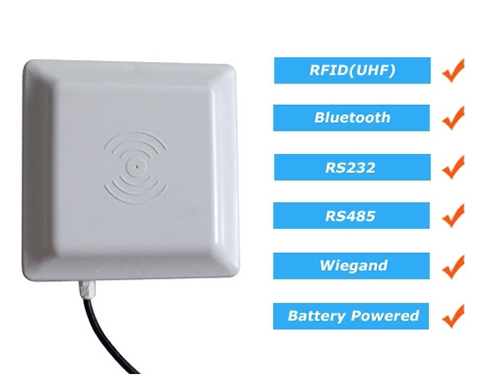
DL930B UHF Bluetooth RFID Reader is an integrated reader with a built-in circular or linear polarized antenna. It supports ISO18000-6C EPC Gen2 and ISO18000-6B protocols, operating at 902–928 MHz or 920–925 MHz, customizable to 860–960 MHz. Its reading range is 4–8 meters, with an average single-card read time under 10 ms per 64 bits. The enclosure is rated IP65/IP66, and the operating temperature range is -30°C to 70°C. Interfaces include RS232, RJ45, GPIO, USB, and Wiegand 26/34. The Bluetooth version is suited for mobile handheld and field temporary operations, such as retail inventory checking or in-vehicle cargo inspection.
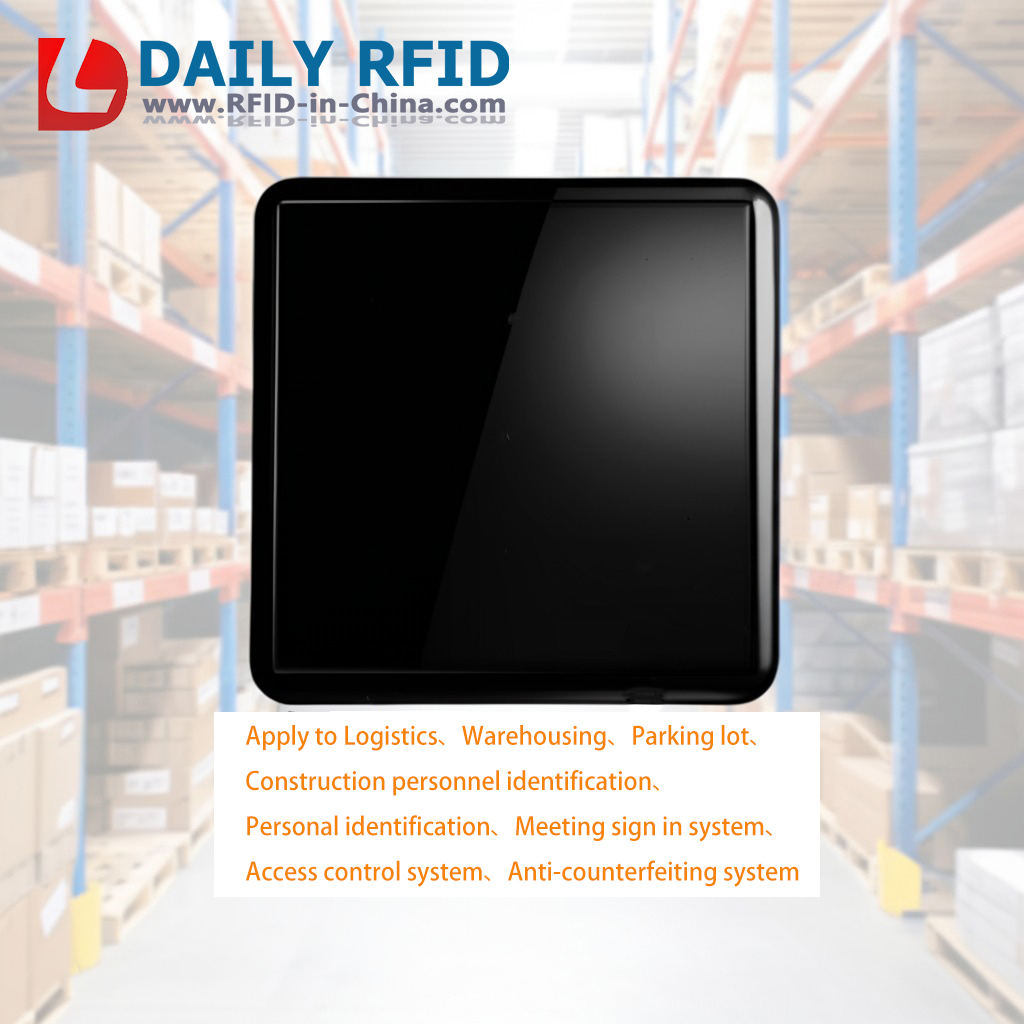
DL921 UHF Long Range RFID Reader with GSM is a fixed integrated reader designed for remote outdoor or scattered-site use. It supports ISO18000-6C, EPC Class 1 Gen 2, and ISO18000-6B, and has a reading range of 0.1–15 meters. It includes a 2G/4G GSM cellular module, allowing tag data to be uploaded without physical Ethernet installation. The enclosure is IP65 rated with an operating range of -20°C to 60°C. This reader is used in electronic toll collection, commercial parking, open-air logistics yards, and intelligent waste management.
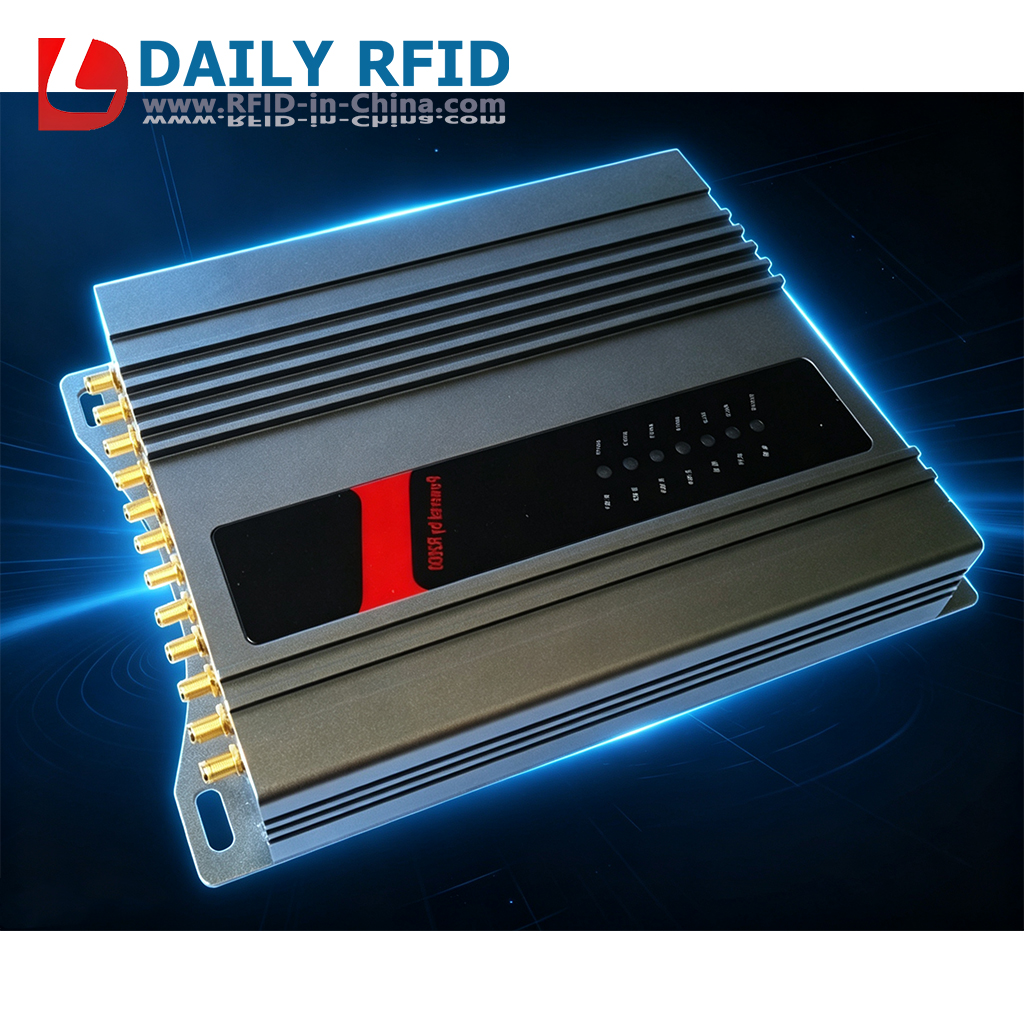
DL6940/6960 AI Multi-Antenna 4-Port UHF Reader supports AI-driven adaptive dense read mode and software-customizable fixed frequency mode. It operates at 860–960 MHz and offers a reading range up to 25–30 meters. The anti-collision capability supports up to 1000 tags simultaneously, with a read speed described as 16 times faster than ordinary mainstream readers. It has four external TNC/SMA antenna ports, supporting multi-zone scanning, and consumes 5 W. Power and data interfaces include RS232, RJ45 TCP/IP, GPIO, and USB. The operating temperature range is -30°C to 70°C. This reader is intended for large distribution centers, smart warehouses, highway toll stations, and automated manufacturing lines.
DL1280 Industrial PDA UHF/HF/LF Handheld Reader is a tri-frequency all-band terminal. It supports UHF 860–960 MHz, HF 13.56 MHz, and LF 125 kHz, making it suitable for mixed-tag environments. The UHF reading range is 0.1–20 meters, and anti-collision reads up to 100 tags simultaneously. It runs on Android 12 with an 8-core 2.0 GHz processor, 4 GB RAM, and 64 GB ROM. The device has IP65 protection, dual batteries (4500 mAh host and 6700 mAh handle), and a free SDK for Android development. This handheld is used in warehousing, manufacturing line tracking, asset inspection, and cold chain logistics.
Other UHF reader options include the DL228 Type-C UHF Mobile Reader, a pocket-sized module with USB HID keyboard simulation for smartphone or tablet use, and the DL6993 RFID Tray Reader, a flat-panel device supporting 80–100 tags simultaneously for POS, library, or surgical instrument counting.
Step-by-Step Breakdown: How to Evaluate a UHF RFID Reader Supplier
Buyers can use a repeatable sequence to move from awareness to a confident shortlist.
Step 1: Define the identification task. Determine whether you need fixed portal reading, handheld counting, tray-based verification, or mobile spot checks. Different form factors are not interchangeable.
Step 2: Confirm protocol and frequency. Ensure the reader supports ISO18000-6C EPC Gen2 and can be configured for the regional frequency band (ETSI 865–868 MHz, FCC 902–928 MHz, or other national bands). DAILY RFID products list customizable frequency options.
Step 3: Check environmental durability. Look for IP rating and operating temperature range that match the shop floor or outdoor environment. For example, the DL930B offers IP65/IP66 and -30°C to 70°C; the DL921 provides IP65 and -20°C to 60°C.
Step 4: Review interface and SDK support. Confirm that the reader can connect to your PLC, MES, ERP, or database. Fixed readers often need RS232, RJ45, GPIO, or Wiegand. Handheld readers need Wi-Fi, Bluetooth, and cellular options. A free SDK reduces integration cost. DAILY RFID supplies SDKs and demo programs across many products.
Step 5: Evaluate supplier production capacity and OEM/ODM capability. A supplier without manufacturing depth may struggle with consistent quality or customization. DAILY RFID operates a 28,000 square meter factory with 180–200 employees and 38 R&D engineers. It reports annual output of 100,000 RFID readers, 50 million RFID tags, and 30 million RFID cards, with 80% exported to EU and USA markets.
Step 6: Request a sample or pilot kit. Before bulk purchase, test the reader in your actual environment. A supplier offering OEM and ODM support can adjust housing, interfaces, or frequency configuration for your specific project.
Use Cases in Smart Manufacturing
UHF RFID readers support several manufacturing workflows. In a general asset management project, a combination of fixed readers and handheld readers centralizes equipment records and improves visibility. In automotive assembly, a fixed UHF reader can trigger the next workstation when a tagged workpiece passes, supporting process control. In cement quality testing or dusty shop-floor conditions, a rugged handheld reader paired with on-metal tags enables daily inventory checks and provenance tracking.
The DAILY RFID DL1280 handheld reader appears in multiple manufacturing scenarios because of its 20-meter UHF read range, IP65 rating, and tri-frequency support. In one documented use case for manufacturing inventory management, the goal was to reduce inventory variance to under 1% using DL1280 handheld readers and customized UHF tags, with offline cache and daily batch sync to ERP. In an automotive assembly use case, the DL6940/6960 AI reader supports high-speed workpiece identification and MQTT event streaming to MES.
Comparison Table: DAILY RFID UHF Reader Options
| Model | Form Factor | Typical UHF Read Range | Protection | Notable Interface | Operating Temp |
|---|---|---|---|---|---|
| DL930B | Integrated Bluetooth reader | 4–8 m | IP65/IP66 | RS232, RJ45, GPIO, USB, Wiegand | -30°C to 70°C |
| DL921 with GSM | Fixed integrated reader | 0.1–15 m | IP65 | 2G/4G GSM, RS232, GPIO | -20°C to 60°C |
| DL6940/6960 | AI multi-antenna 4-port | 25–30 m | IP64 | RS232, RJ45, GPIO, USB | -30°C to 70°C |
| DL1280 | Industrial PDA handheld | 0.1–20 m | IP65 | USB Type-C, Wi-Fi 2.4G+5G, 4G, Bluetooth 5.0 | -20°C to 60°C |
FAQ
1. What compliance standards should a UHF RFID reader supplier meet?
The core standard is ISO/IEC 18000-6C, also known as EPCglobal Gen2. Most DAILY RFID UHF readers support ISO18000-6C EPC Gen2, and several also support ISO18000-6B. Buyers should confirm that the supplier can configure frequency bands for the target region, such as 902–928 MHz for FCC or 860–868 MHz for ETSI, because regional compliance is part of responsible deployment.
2. What UHF RFID reader capabilities matter most for smart manufacturing?
For production environments, the priority is not only maximum read range but also anti-collision performance, environmental protection, connectivity, and software support. A reader must read multiple tags simultaneously without missed reads. For example, the DL6940/6960 AI reader supports up to 1000 tags simultaneous reading, while the DL1280 handheld reads up to 100 tags at once. IP65 or higher protection and wide operating temperature ranges are also typical requirements on a shop floor.
3. What UHF RFID reader products does DAILY RFID offer?
DAILY RFID provides fixed integrated readers, handheld industrial readers, Bluetooth/Wi-Fi/GSM variants, multi-antenna AI readers, Type-C mobile modules, and tray readers. Specific models include DL930B, DL921, DL6940/6960, DL1280, DL228, and DL6993. The company also manufactures RFID tags, antennas, cards, chips, and labels, allowing buyers to source a complete hardware set from one supplier.
4. Can I get a sample or OEM/ODM support for a UHF RFID reader project?
Yes. DAILY RFID lists OEM and ODM support for many of its readers, including customizable housing, interfaces, frequencies, and dimensions. Buyers can request a sample before committing to bulk production. For evaluation, the company's SMB and PDF are available on request. The contact is David at sales@rfid-in-china.com or +86 15817191372.
5. How long does the inquiry or sampling process typically take for a UHF RFID reader supplier?
The timeline depends on whether the product is standard or customized. DAILY RFID has a factory in Guangzhou, China, with a reported annual reader output of 100,000 units, which supports both standard and OEM projects. For a specific lead time, you can contact sales directly. To start, you can access the company profile PDF via the link at the end of this article.
Conclusion
UHF RFID readers are a foundational component of smart manufacturing data collection. Evaluating a supplier requires more than comparing a single specification; it means checking standards compliance, environmental durability, connectivity, software development support, and manufacturing capacity. DAILY RFID presents documented specifications across multiple reader form factors and a production base that includes 28,000 square meters of manufacturing space, 180–200 employees, and 38 R&D engineers. For buyers in the awareness-to-research stage, the next step is to map the operational requirements to the reader portfolio and request a sample or pilot kit.
For detailed product specifications and company background, download the official DAILY RFID company profile PDF.