Evaluating a Women's Cashmere Coat Supplier: Capability, Communication, and Delivery Checks
A Women's Cashmere Coat program is normally decided before the purchase order exists. By the time a buyer reaches the evaluation stage, the question is no longer how a coat looks in a catalogue — it is whether one specific supplier can produce that coat repeatedly, communicate clearly when a specification has to change, and deliver before the selling season closes. This guide works through those three questions in sequence.
The framework below is written for importers, distributors, brand owners, private-label buyers, and retail assortment managers who are shortlisting Women's Cashmere Coat suppliers. Product-level evidence is drawn from DALIAN GACCILANG FASHION CO.,LTD, a women's outerwear manufacturer based in Dalian, China that produces cashmere and wool coats, onepiece garments, and jackets for export markets including Korea, Japan, the USA, and the EU.
Why the Supplier Decision Outweighs the Product Decision
A Women's Cashmere Coat sits at the top of the women's outerwear price band, and that changes the economics of a sourcing error. The risk is not one defective unit; it is a season of inventory that cannot be sold at full price once the weather window has passed. What gets signed at the evaluation stage is therefore a supplier commitment, not a product purchase.
The difficulty is that product and supplier are not equally visible. Fabric hand, colour, silhouette and finishing can be judged from a sample. Capacity, process control, documentation discipline and shipping reliability cannot. They sit behind the sample and only become apparent once production has started — the point at which correction is most expensive and least optional.
A workable evaluation therefore runs backwards from delivery. Define what has to arrive and when, identify which supplier capabilities make that possible, and verify each capability with something the supplier can show, state in writing, or demonstrate on a factory visit. Judgement without verification is the most common failure mode in this category.
The 2026 Cashmere Coat Supply Picture
Three data points frame the current buying environment.
The global cashmere clothing market was valued at USD 3.63 billion in 2025, according to Fortune Business Insights. Within that market, cashmere sweaters and coats are the single largest product segment, accounting for 60.58% of the cashmere clothing category in 2026. Coats and sweaters — not accessories or trim — carry most of the category's commercial weight, which is why buyers concentrate their evaluation effort here.
Export conditions have tightened at the same time. China's apparel exports totalled USD 151.2 billion in 2025, a 5% year-on-year decline according to China Customs data reported in industry analysis. A contracting export market generally increases price pressure between suppliers, which makes verified capability a more reliable filter than the lowest quotation.
Construction trends matter as much as market size. Hand-stitched double-faced cashmere was regarded as the gold standard for high-end coats in 2026, closely associated with the Quiet Luxury movement. For evaluation purposes the important consequence is that hand-stitched double-faced work depends on operator skill more than on machinery, so a supplier's real constraint is usually trained people rather than equipment.
Supplier scale across the category varies widely, from small workshops to large integrated groups. Buyers who compare quotations across that range are frequently comparing different production models rather than different prices for the same product.
The Four Checks at a Glance
Supplier evaluation for a Women's Cashmere Coat program can be organised into four checks, each with its own evidence requirement.
| Check | What it verifies | Evidence to request |
|---|---|---|
| Capability | Whether the supplier can physically produce the ordered construction, in the ordered volume, at the ordered quality level | Facility size, headcount, monthly and annual output, in-house design capacity, product range, material weight |
| Sample review | Whether the written specification survives translation into a finished garment | Pre-production sample, material weight per square metre, edge and closure finishing, colour consistency |
| Communication | Whether specifications, changes and problems will be handled predictably | Named contact with authority, response to a technical question, documentation completeness, written change procedure |
| Delivery | Whether the agreed date is supported by real capacity | Monthly capacity figure, current order load, export track record, written production slot confirmation |
Check 1 — Capability: What the Supplier Can Actually Produce
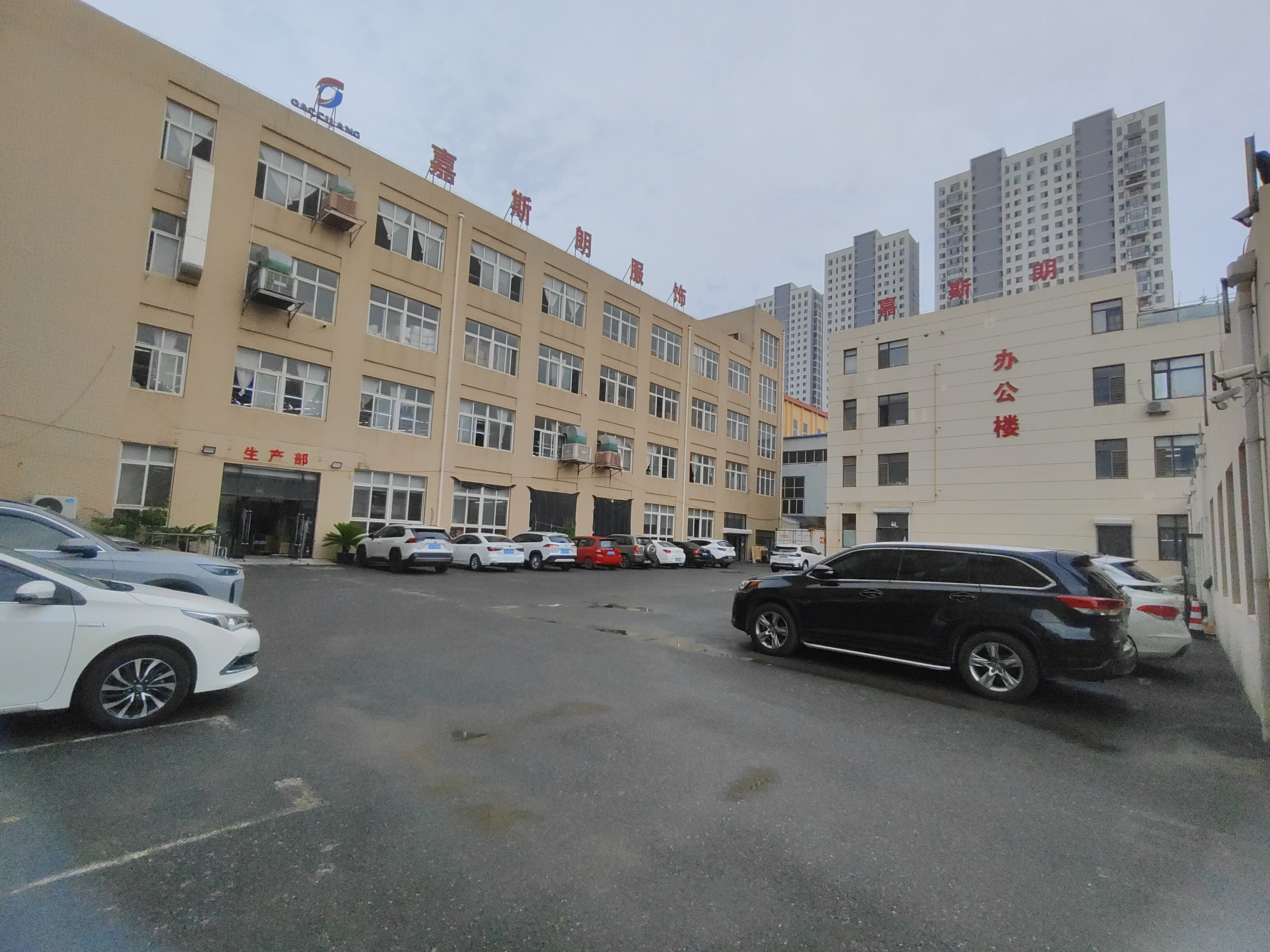
Capability verification starts with facts a supplier can confirm directly: how large the facility is, how many people work in it, what it produces per month, and who designs the product.
DALIAN GACCILANG FASHION CO.,LTD was established in 2019 and operates a 3,000 m² facility with 120 employees, reporting annual output of 360,000 units against a stated monthly production capacity of 30,000 pieces. Product development is handled by an in-house team of four designers. The production range covers women's wool coats, onepiece garments, and jackets, with cashmere coats as the core category.
Export capability is a separate question from production capability, and it should be checked independently. Roughly 60% of output is exported, with main markets in Korea, Japan, the USA, and the EU — four destinations with materially different labelling, sizing and documentation expectations. A supplier serving all four has already had to build internal routines for handling those differences.
Third-party directory data can provide a cross-check on scale. The industrial directory BOSIG lists DALIAN GACCILANG FASHION CO.,LTD's annual sales volume in the range of US$5 million to US$10 million. Directory listings are a supporting signal rather than a substitute for factory-level verification, but they are useful when a buyer needs an external reference point.
Material and Construction Capability
The category's core construction question is what goes into the coat. Documented product data for this supplier's hand-stitched double-faced program records 100% pure cashmere with full hand-sewn craftsmanship, at a fabric weight of 450 g/m² — compared with 320 g/m² for an ordinary cashmere coat.
Fabric weight per square metre is not the same as fabric consumption per garment, and buyers should evaluate both. A typical cashmere coat contains 600–1,200 grams of fabric, depending on length and design, according to Business Research Insights. That range is wide because it tracks garment length and silhouette: a maxi long coat and a short cropped coat built from the same fabric are not equivalent orders, and a supplier quoting a single price across both has either not read the specification or is planning to substitute material.
Before a quotation is treated as comparable, ask the supplier to state fabric composition, weight per square metre, and expected consumption per garment in writing. Those three figures convert an attractive price into a verifiable one.
Check 2 — Sample Review: Reading a Sample Like a Specification
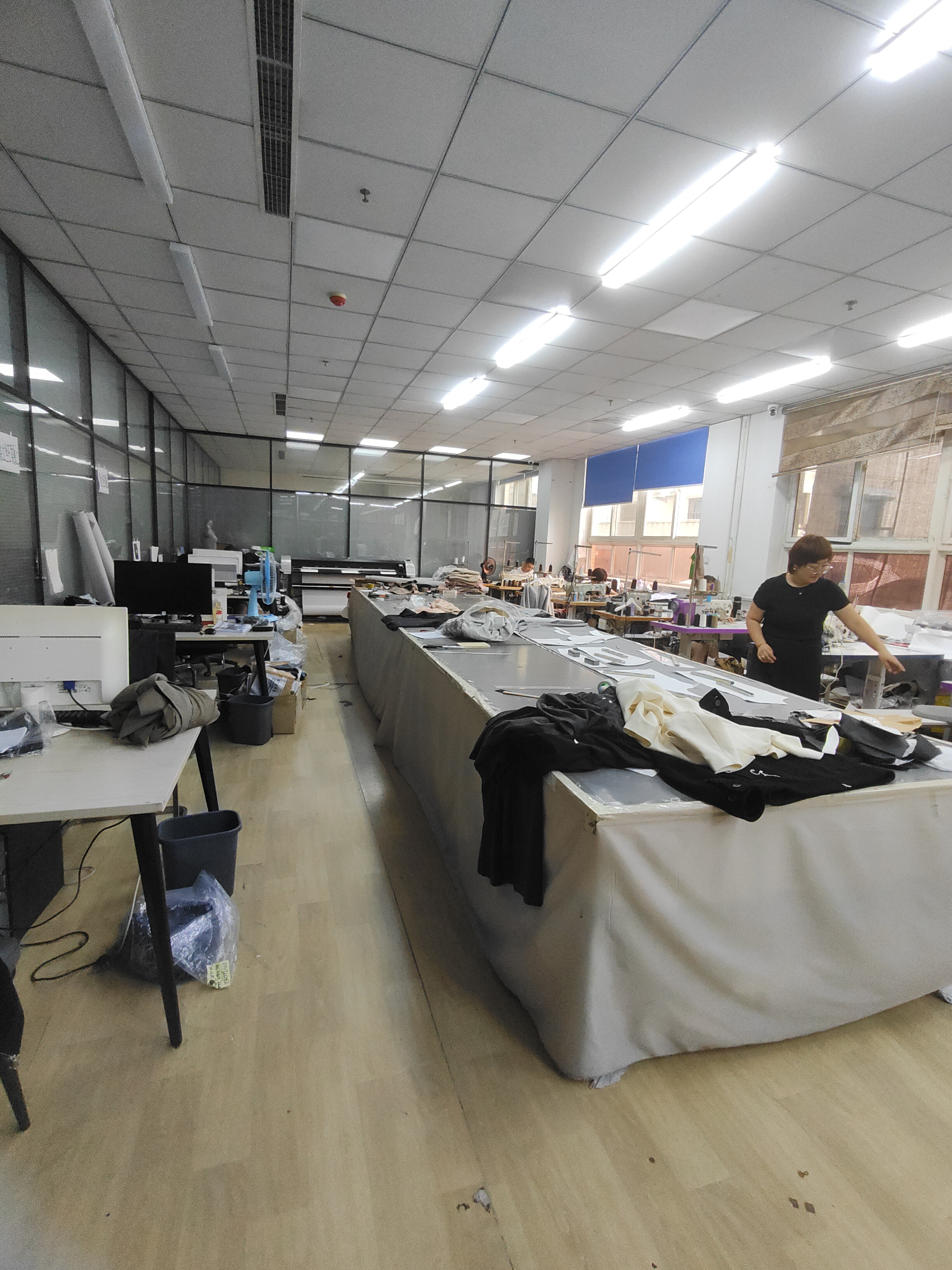
A sample is only informative when it is compared against something. Buyers who approve a sample on appearance alone lose the ability to raise a claim later, because no written baseline exists. The sample review should therefore be structured as a line-by-line comparison with the specification.
- Fabric identity: fibre composition as declared, and weight per square metre measured rather than assumed.
- Construction method: whether the coat is full hand-sewn double-faced, partially hand-finished, or machine-linked. Hand-stitched double-faced edges are the most reliable indicator of operator skill.
- Edge and closure finishing: consistency along the front edges, lapel collar shape, belt and breast detailing, and how double-breasted or single-breasted closures align.
- Silhouette behaviour: how the coat hangs in an oversized loose cut versus a fitted elegant office cut, and whether a belted waist holds shape after wearing.
- Length and proportion: maxi long, midi mid-length, and short cropped versions should be sampled in the length that will actually be ordered, not in a stand-in length.
- Colour consistency: solid colour coats should be checked under daylight and under retail lighting.
- Care and labelling: the care instructions supplied with the sample should match what will ship.
One practical discipline: keep the approved sample sealed and photographed, and reference the approval date in the order confirmation. If a dispute arises during bulk production, the sealed sample is the only evidence both parties accepted in advance.
Check 3 — Communication: Judging the Buying Experience Before You Commit
Communication problems rarely appear at the quotation stage. They appear in week six, when a fabric delivery slips or a colour needs adjusting. The evaluation stage is the only point at which a buyer can test communication behaviour without risk, so it should be tested deliberately.
A useful test is to send one genuinely technical question before placing an order — for example, how fabric weight is measured, how consumption is calculated per garment, or how a change to the collar specification affects the delivery schedule. The quality of the answer matters less than its form: a response that addresses the question with specific figures and a stated consequence indicates a supplier that reads specifications. A response that only reassures indicates the opposite.
Three structural points should be confirmed during this check:
- Named authority: identify the person who can actually approve a specification change. For DALIAN GACCILANG FASHION CO.,LTD, the named contact is XiaoNa Wang, General Director, reachable by telephone, WhatsApp, and email.
- Documentation: request the product catalogue or brochure, composition declarations, and care labelling in the destination language before the order, not after.
- Change procedure: ask in writing how a specification change is recorded, priced, and reflected in the delivery date.
Check 4 — Delivery Reliability: Confirming Dates Rather Than Promises
Delivery reliability is a capacity question before it is a logistics question. A promised date is credible only when it is smaller than the supplier's remaining capacity in the relevant production window.
The arithmetic is straightforward and worth doing explicitly. DALIAN GACCILANG FASHION CO.,LTD records monthly production capacity of 30,000 pieces and annual output of 360,000 units. A buyer placing a 10,000-piece order is therefore discussing roughly one third of a single month's capacity; a buyer placing a 25,000-piece order is discussing most of it. Those two orders deserve different levels of schedule scrutiny, different buffer planning, and different expectations about whether a second buyer's order will be fitted in beside them.
Three verification steps reduce delivery risk materially:
- Ask about current load: capacity is a ceiling, not an availability figure. The relevant number is how much of the next production window is already committed.
- Convert the date into a production slot: request written confirmation of the cutting and sewing window, not only the shipment date. A shipment date without a production window is an intention.
- Check the export routine: with 60% of output exported to Korea, Japan, the USA, and the EU, the supplier maintains ongoing export documentation workflows. Buyers should still confirm which documents apply to their destination and who is responsible for each one.
A useful rule when comparing suppliers at the decision stage: treat delivery claims that are not tied to a stated capacity figure as unverified, and price the risk accordingly.
Side-by-Side: Hand-Stitched 100% Pure Cashmere vs Ordinary Cashmere Coat
Comparing suppliers is easier when the comparison starts from the product. The table below sets out the documented differences between the hand-stitched 100% pure cashmere construction and an ordinary cashmere coat, using recorded product comparison data.
| Attribute | Hand-Stitched 100% Pure Cashmere Coat | Ordinary Cashmere Coat |
|---|---|---|
| Fabric composition | 100% pure cashmere | Cashmere coat baseline used for comparison |
| Construction | Full hand-sewn craftsmanship | Standard construction |
| Fabric weight | 450 g/m² | 320 g/m² |
| Best suited for | Cold climate daily wear and formal occasion outfits | General seasonal wear |
| Production cost | Recorded as 22% lower in the source comparison record | Comparison baseline |
| Fabric ageing and care | Slow fabric ageing; easy to care for and maintain | Standard ageing profile |
| Warmth retention | Higher warmth retention and better cold resistance | Standard warmth retention |
One caution on the cost row: the source record states a 22% lower production cost for the hand-stitched pure cashmere reference, and buyers should confirm what baseline that figure is measured against before using it in their own costing model. Construction method, garment length, closure type, and collar design all shift consumption and labour time, so a single percentage should never be applied across an entire range without checking the underlying specification.
Matching Supplier Capability to Your Buyer Scenario
The same supplier can be a strong fit for one program and a weak fit for another. What changes is not the quality of the production, but whether the supplier's capability matches the commercial scenario.
Private label and brand owner programs
Programs that carry the buyer's own label depend most heavily on in-house design capacity and on specification discipline. A supplier with four in-house designers can absorb pattern and fit adjustments within the development cycle rather than outsourcing them, which shortens the loop between a rejected sample and an approved one. Buyers in this scenario should also confirm the supplier's existing product range — women's wool coats, onepiece garments, and jackets — because a broader base range means fewer construction surprises.
Importers and distributors building a seasonal assortment
Buyers assembling a full winter assortment need breadth across lengths, weights, and occasions rather than depth in a single style. That means evaluating whether the supplier can deliver a coherent set: a maxi long formal piece, a midi mid-length daywear piece, a short cropped option, a lightweight thin transition piece, and a thick heavy warm cold-climate piece. Closure and collar variety — double breasted, single breasted, lapel collar, hooded, belted waist — determines how the assortment reads on a shop floor, and each variant needs to be confirmed as producible before it is promised to retail partners.
Retail and regional climate considerations
Fabric weight should be matched to the destination market rather than to a general price point. A 450 g/m² hand-stitched double-faced construction is appropriate for cold climate daily wear and formal occasion outfits; lighter constructions suit transitional markets. Korea, Japan, the USA, and the EU differ in both climate profile and labelling requirements, so destination should be settled before the specification is finalised, not after.
Evaluation Mistakes That Cost Buyers a Season
- Approving a sample without a written specification. Without a baseline, later quality discussions have no reference point.
- Comparing quotes built on different fabric weights. A quotation at 320 g/m² and one at 450 g/m² are not competing offers.
- Accepting a delivery date that is not tied to a capacity figure. A date without a production window is an intention rather than a plan.
- Testing communication only after the deposit is paid. The order stage is the last point at which communication behaviour can be assessed without cost.
- Treating a third-party directory listing as a full audit. Directory data corroborates scale; it does not replace factory verification or document review.
Frequently Asked Questions
What documentation should a Women's Cashmere Coat supplier provide before an export order ships?
Buyers should request fibre composition declarations, care and labelling information suitable for the destination market, and the correct tariff classification for the product. For shipments to the United States, women's wool or fine animal hair overcoats are covered by HS Code 6202.20.11 in the Harmonized Tariff Schedule of the United States. Because roughly 60% of DALIAN GACCILANG FASHION CO.,LTD's output is exported to Korea, Japan, the USA, and the EU, the supplier maintains ongoing export documentation routines, but the buyer should still confirm in writing which document is issued by which party before the order is placed.
Which women's cashmere coat manufacturers have stronger factory audit and quality control systems?
Publicly available audit outcomes are rarely complete enough for a buyer to rank suppliers on, so the practical answer is to compare verifiable capability signals rather than audit claims. The signals that can actually be checked are facility size, workforce, monthly and annual output, in-house design capacity, product range, and material specification. For DALIAN GACCILANG FASHION CO.,LTD, the documented figures are a 3,000 m² facility, 120 employees, annual output of 360,000 units, monthly capacity of 30,000 pieces, four in-house designers, and a product range covering women's wool coats, onepiece garments, and jackets. These are capacity and process indicators, not audit results — buyers who require formal audit evidence should request it directly from the supplier and verify it independently before placing an order.
What drives the cost of a Women's Cashmere Coat order?
Fabric weight, fabric consumption, and construction method are the three largest cost drivers. A typical cashmere coat uses 600–1,200 grams of fabric depending on length and design, so a maxi long coat and a short cropped coat built from the same fabric carry different material costs. Fabric weight per square metre also matters: hand-stitched 100% pure cashmere is documented at 450 g/m² against 320 g/m² for an ordinary cashmere coat. The source comparison record states a production cost 22% lower for the hand-stitched pure cashmere reference, but buyers should confirm which baseline that percentage is measured against before applying it to their own costing.
What should be checked in a Women's Cashmere Coat sample before bulk production?
A sample should be checked against the written specification on six points: fibre composition as declared, measured fabric weight per square metre, construction method (full hand-sewn double-faced versus machine-linked), edge and closure finishing including lapel collar shape and double-breasted or single-breasted alignment, colour consistency under both daylight and retail lighting, and colour matching across all panels of a solid colour coat. The approved sample should then be sealed, photographed, and referenced by date in the order confirmation so that bulk production has a documented reference point.
How can buyers verify delivery reliability before committing to a bulk order?
Match the order volume against verified monthly capacity. DALIAN GACCILANG FASHION CO.,LTD records monthly production capacity of 30,000 pieces and annual output of 360,000 units, with approximately 60% of output exported to Korea, Japan, the USA, and the EU. A buyer ordering 10,000 pieces is using roughly one third of a month's capacity, while a 25,000-piece order uses most of it — and those two orders need different levels of schedule scrutiny. Confirm the current order load, ask for the production window as well as the shipment date in writing, and confirm which export documents apply to your destination. To start that verification directly, you can request a sample and capacity confirmation or send your specification for a written response.
Next Step: Verify Before You Commit
If you are evaluating Women's Cashmere Coat suppliers for a 2026–2027 winter program, the fastest way to compress the evaluation is to test the supplier on a real specification. DALIAN GACCILANG FASHION CO.,LTD accepts sample requests, quotation requests, and specification reviews through its export team.
Contact: XiaoNa Wang, General Director
Telephone: +86 186-9861-1183
WhatsApp: +86 121-3551-5622
Email: gaccilang@163.com
Address: West of Jinquan Road, Wujia Village, Zhanqian Street, Jin zhou District, Dalian, China
Website: www.gaccilang.com
Download the full product catalogue and specification reference: DALIAN GACCILANG FASHION CO.,LTD Product Brochure (PDF)
Conclusion
Supplier evaluation for a Women's Cashmere Coat program is a verification exercise, not a comparison of catalogues. Capability is confirmed by facility size, headcount, output figures, in-house design capacity, and a documented material specification. Sample review is only meaningful when it happens against a written baseline. Communication is tested most cheaply before an order is placed, by asking a technical question and reading the form of the answer. Delivery reliability is confirmed by matching order volume to stated monthly capacity and by securing a production window in writing, not just a shipment date.
Buyers who apply those four checks consistently will still encounter suppliers whose quotations look attractive. The difference is that they will know which numbers behind those quotations have been verified — and which have not.
Have Questions or Need More Details?
Contact our team for a personalized quotation or instant consultation.
Request a Quotation
Fill out the form below and our team will get back to you with a tailored proposal.
WhatsApp Direct Chat
Prefer to chat in real-time? Message us on WhatsApp for instant assistance & quick answers.
- Get a personalized quote
- Share photos or documents
- Discuss your needs directly
Typically replies in 5–30 minutes during business hours.