
Hand-Sewn Women's Cashmere Coat: A Technical Guide to Stitching and Finishing Parameters
A hand-sewn women's cashmere coat is a double-faced garment: the two fabric faces are joined, closed and finished by hand stitching, without a fused interlining and without a conventional lining panel. Everything visible from a metre away — colour, drape, silhouette — comes from the fabric. Everything that decides whether the coat still hangs correctly after two seasons comes from the stitching.
This guide sets out the four construction parameters that determine hand-sewn quality in a double-faced coat — stitch consistency, seam finishing, edge treatment, and final finishing and inspection — and explains how each one can be checked on a physical sample. The framing is deliberately comparative, because the most common evaluation problem is not finding a coat described as hand stitched; it is distinguishing a carefully closed garment from a competing high-end hand-sewn cashmere coat in which the hand work is only partially carried out.
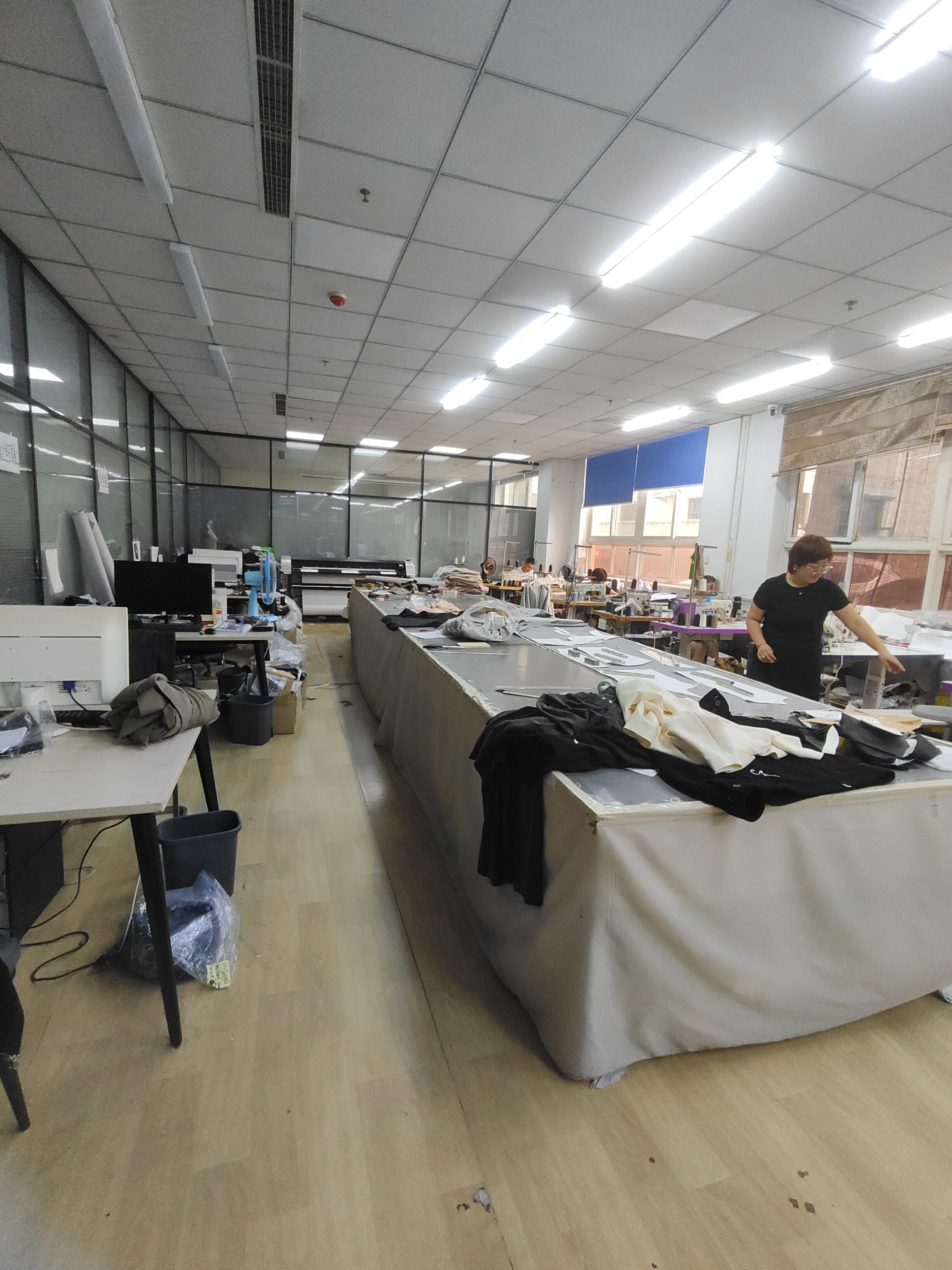
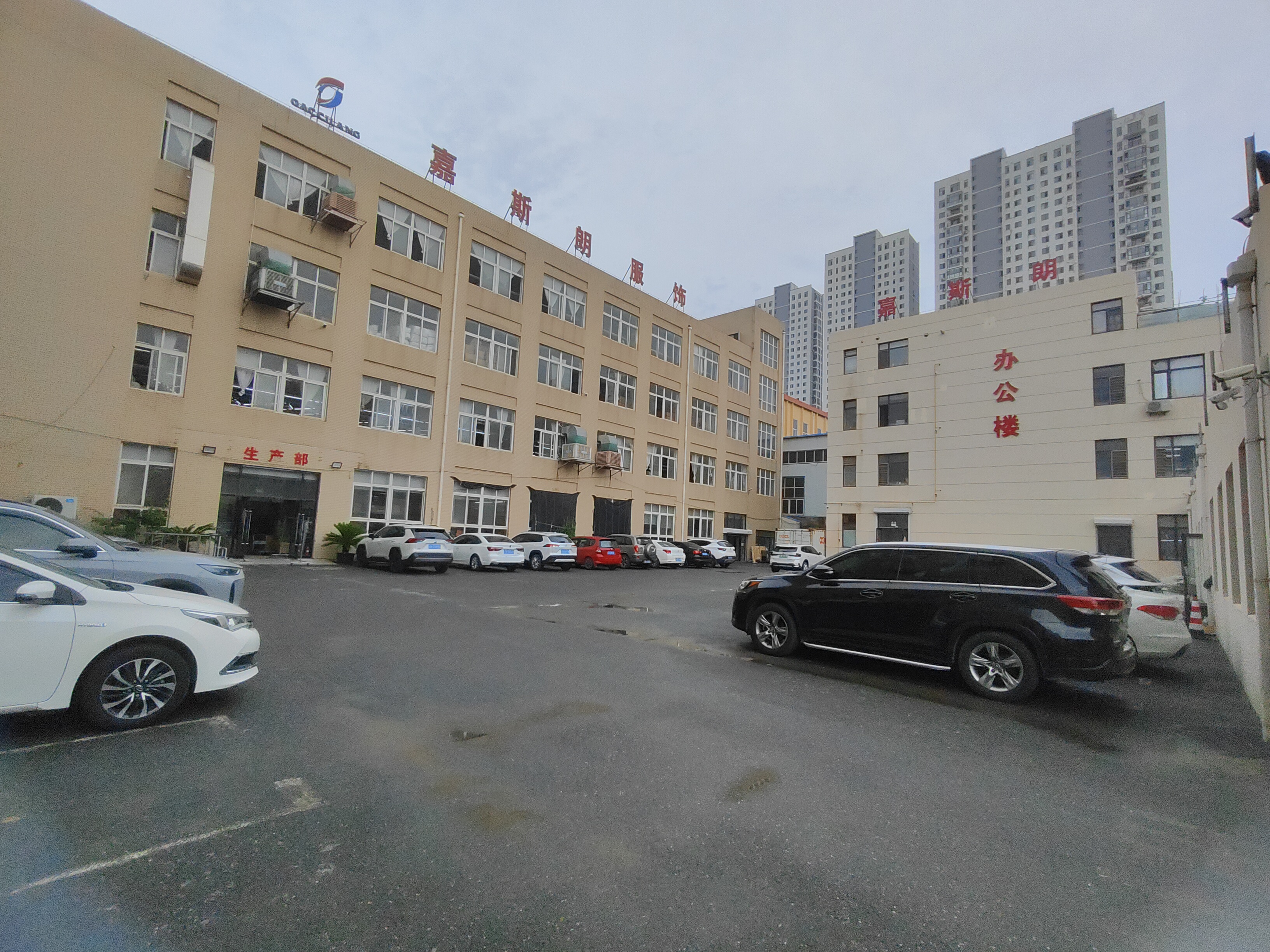
DALIAN GACCILANG FASHION CO.,LTD is a women's outerwear manufacturer founded in 2019 in Dalian, China. The company produces women's wool coats, women's one-piece garments and women's jackets in a 3,000² factory with approximately 120 employees and a monthly production capacity of 30,000 pieces. Exports account for 60% of output, with main markets in Korea, Japan, the USA and the EU.
Problem Definition: "Hand-Sewn" Describes a Method, Not a Quality Level
Two coats can both be described accurately as hand stitched and still differ on every parameter that a wearer eventually notices. The differences are not abstract:
- A front edge that waves instead of falling straight, because stitch tension changed between the top and bottom of the run.
- A ridge along the shoulder, because the seam joint was closed with too much bulk inside the fold.
- Puckering at the armhole curve, where stitch spacing was not adjusted for the change of direction.
- A collar or lapel that rolls to one side within weeks, because the break point was not set consistently across left and right.
- Loose thread ends that surface at the hem after the first press.
Photographs cannot resolve any of these points. Catalogue images show a silhouette and a fabric surface; they do not show whether the hand stitching runs at consistent spacing, how the seam ends are hidden, or whether the edge was closed so that both faces stay aligned. That is why a competing high-end hand-sewn cashmere coat can look identical at the evaluation stage and behave differently in wear: the visible specifications — fibre composition, size range, colour, silhouette — are easy to match, while the construction standards behind them are not visible in an image.
The practical answer is to convert the claim into parameters that can be inspected physically, on the sample, before a bulk order is confirmed. Stitching consistency, seam finishing and edge treatment are all observable under ordinary daylight on a flat table. The sections below define each parameter, describe the failure modes it prevents, and give a repeatable inspection routine.
Industry Background: Why Construction Detail Carries Commercial Weight in 2026
Cashmere outerwear is a category with measurable scale. The global cashmere clothing market was valued at USD 3.63 billion in 2025, and within that market cashmere sweaters and coats represented the largest product segment at 60.58% in 2026, according to commercial market research published by Fortune Business Insights. In other words, the coat is not a niche expression of the category — it is the category's main product structure.
Within that structure, construction has become the reference point for premium positioning. An industry trend analysis published in 2026 describes hand-stitched double-faced cashmere as the reference construction for high-end coats, linking it to the so-called 'Quiet Luxury' movement. The commercial consequence is straightforward: when a construction method becomes the category benchmark, the term itself is adopted broadly, and buyers lose the ability to distinguish execution quality from the label.
Material economics explain why execution quality is so visible in this product type. A typical cashmere coat consumes 600–1,200 grams of fabric, depending on length and design, which means a maxi long coat and a short cropped coat carry materially different fabric input. In a double-faced construction, both faces of that fabric are visible surfaces, and there is no lining panel to conceal a seam or absorb an irregularity. Every closure is executed on the garment that the customer will see.
The trade context adds pressure to differentiate on construction rather than on volume alone. China's apparel exports totaled US$151.2 billion in 2025, a 5% year-on-year decline. For manufacturers serving Korea, Japan, the USA and the EU — the markets that make up 60% of DALIAN GACCILANG FASHION CO.,LTD's output — the practical response is not a lower price on the same construction, but a verifiable construction standard that a buyer can check.
Detailed Solution: The Four Parameters of Hand-Sewn Construction
1. Stitch Consistency
Stitch consistency is the regularity of hand stitching along every closed edge: comparable stitch length and spacing from the start of a run to its end, stable thread tension, and an even distance between the stitch line and the fabric fold. It is the first parameter a buyer can verify, because it requires no tools beyond daylight and a flat surface.
Consistency fails in predictable places. Curves such as the armhole and neckline force a change of direction, and spacing that is not re-set at the curve produces either crowding or gaps. Corners on the front edge are where tension mistakes accumulate. Long uninterrupted runs — the hem of a maxi long women's cashmere coat, for example — reveal any drift in rhythm, because there is no seam or panel break to interrupt it. On a solid colour women's cashmere coat, a thread that does not match the face colour is visible immediately, which makes thread matching part of the same check.
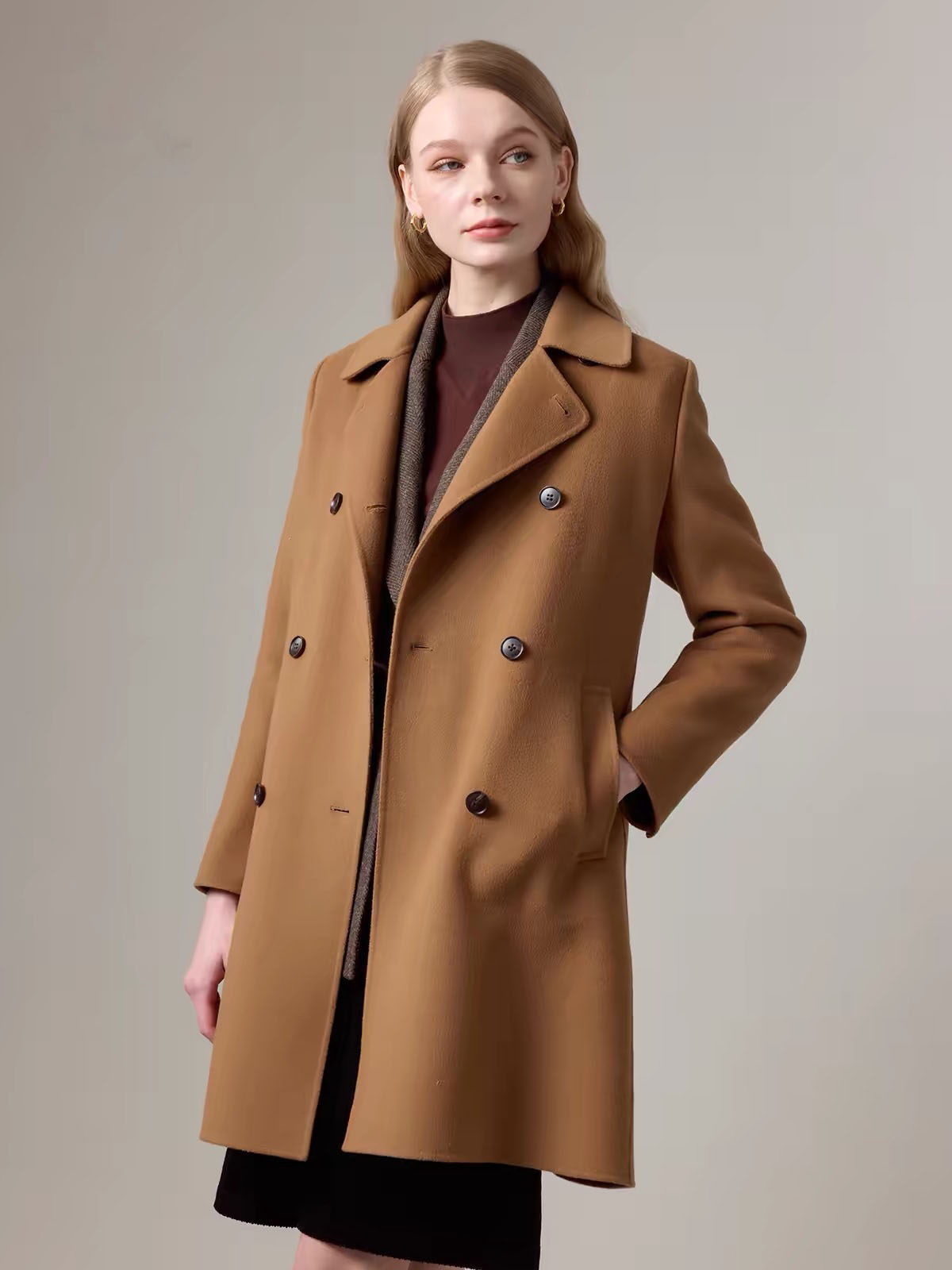
The question to put to a supplier is not whether the coat is hand stitched, but which operations are hand stitched. Model JSL26W011, a women's wool double breasted coat made from 100% cashmere and available in sizes S, M, L, XL and XXL, is produced with full hand-sewn craftsmanship; the manufacturer lists softness, warmth and fabric texture as its principal characteristics. A buyer comparing this with a competing high-end hand-sewn cashmere coat should ask the same question of both: is the closing executed as a complete process across the front edge, hem, cuffs and seam joints, or only on selected edges?
2. Seam Finishing
In a double-faced coat with no lining, seam allowances are not covered by a lining panel; they are closed into the fold of the garment itself. Seam finishing therefore means three things: the joined allowance sits inside the fold rather than on top of it, the joint carries no bulk, and no thread end or raw edge is left exposed at the point where the seam stops.
The failure modes are easy to feel even when they are hard to photograph. Bulk at the shoulder pushes a visible ridge through the face fabric. A joint that is not properly tucked leaves a short thread end that works its way out with wear. A seam that has been closed with excessive tension pulls the surrounding fabric and creates a shallow dimple along the seam line. Because these faults sit inside the garment structure, they typically appear after the coat has been worn and pressed a few times, which is precisely when a buyer can no longer raise them with the supplier.
3. Edge Treatment
Edge treatment covers the front placket, hem, cuffs, pocket openings and any attached edge: the hood edge on a hooded variation, the belt on a belted waist style, and the collar attachment on a lapel collar or fox fur collar design. In hand-sewn construction, the edge is closed so that both fabric faces remain aligned and the closure line keeps an even width along its full length.
A correctly treated edge stays flat when the coat hangs and does not wave, roll or twist. Left and right front edges mirror each other. The hem line is level around the full circumference. On an oversized loose silhouette, the longer edge runs make irregularity more visible rather than less, and on a midi mid length or maxi long coat the hem is the most exposed closure on the garment. This is the parameter where a competing high-end hand-sewn cashmere coat most often differs from a fully executed garment: the coat may be hand stitched at the collar and cuffs, but the hem and front edge may have been finished by a faster method.
4. Finishing, Pressing and Final Inspection
Pressing is part of construction, not a cosmetic step. It sets the roll of the collar and lapel, removes local distortion introduced by hand stitching, and reveals faults that were invisible on the flat table. Final inspection then checks measurement against the agreed size chart, thread trimming, and symmetry between left and right panels and between units of the same size.
At DALIAN GACCILANG FASHION CO.,LTD, production is subject to 100% inspection, and after-sales support covers order tracking, after-sales consultation and communication on defective goods. For a buyer, these are the process elements that make the four construction parameters repeatable across a bulk order rather than true only for the approved sample.
Step-by-Step Breakdown: An Eight-Step Sample Inspection Routine
The routine below can be completed in a sample room with no instruments beyond good light, a flat table and the agreed size chart. It is designed to be repeated identically on a competing sample so that the two results can be compared on the same terms.
- Set up the inspection. Work under natural daylight on a flat surface, then hang the coat on a suitable hanger to assess drape. Natural light reveals stitch and tension irregularities that warm indoor lighting conceals.
- Check stitch regularity on the front edge. Compare spacing at the beginning, middle and end of the run. Look for crowded stitches at corners, gaps at curves, skipped or doubled stitches, and any thread colour mismatch against the face fabric.
- Repeat the stitch check on hem and cuffs. These are the longest uninterrupted runs and the fastest way to see whether rhythm holds over distance.
- Flex the front edge and hem. Bend the edge between thumb and forefinger to expose tension faults, hidden joints and any thread end that has not been tucked into the fold.
- Inspect side and underarm seam closures. Run a finger along the inside of each seam to feel for bulk and ridges, then check the face side in raking light for a line showing through the fabric.
- Check collar and lapel roll. Confirm that the roll is consistent from one side to the other and that the break point sits at the same position on both fronts, including on double breasted and single breasted closures.
- Verify attached edges and symmetry. Check the hood edge, belt, cuffs and pocket openings, then compare left and right front edges for width and length. Confirm the hem is level all the way around.
- Compare two units of the same size and confirm documentation. Repeatability between pieces matters more than the perfection of a single sample. Confirm the inspection regime, order tracking and the defined route for communicating defective goods.
Use Cases: Where Stitching Parameters Decide the Outcome
Office and business collections
An elegant office women's cashmere coat is frequently worn open over tailoring, which exposes the full length of the front edge for the entire working day. A lapel collar midi mid length coat in a solid colour is the least forgiving configuration for edge treatment, because there is no pattern or texture to distract from a wavy closure. For office collections, stitch consistency and edge flatness are the two parameters most directly linked to how the garment reads in a professional setting.
Boutique retail and seasonal capsules
Boutique retailers and fashion brands typically order in focused quantities rather than large runs. DALIAN GACCILANG FASHION CO.,LTD supplies boutique retailer and fashion brand clients in Korea, Japan, the USA, the UK and the UAE with orders from 100 pcs for retail sales and seasonal outerwear; the manufacturer reports cooperation of three years with these clients, stable repeat orders and high customer satisfaction. The highlight recorded for this business is 100% pure cashmere with handmade stitching. In capsule buying, sample verification is the control point: a single approved sample with documented stitch and edge parameters protects the whole seasonal order.
Daily wear, travel and oversized silhouettes
Daily and casual daily women's cashmere coats are handled more often and pressed less carefully than formal pieces, so seam finishing and thread security matter more than surface appearance. Oversized loose and maxi long silhouettes multiply the length of every edge run and therefore the number of opportunities for inconsistency. Belts, hoods and heavier thick heavy warm constructions add further closed edges. Buyers comparing a lightweight thin women's cashmere coat with a thick heavy warm one should expect different handling behaviour, but the same stitch and edge standards on every closure.
Comparison Table: Hand-Sewn Claims vs. Verifiable Parameters
The table below converts common supplier statements into the parameter that can actually be verified on a sample. It applies equally to a 100% pure cashmere women's coat and to a wool cashmere blend women's coat, since the construction standard is independent of fibre composition.
| Parameter | Typical claim | What is verifiable on the sample | How to verify |
|---|---|---|---|
| Stitch consistency | "Hand stitched" | Even spacing and stable tension along the full run; no crowding at curves; no skipped or doubled stitches | Compare spacing at three points of each run on front edge, hem and cuff |
| Seam finishing | "Fully hand finished" | Joint closed inside the fold; no bulk; no exposed thread end; no ridge through the face | Flex the edge; feel along side and underarm seams; inspect in raking light |
| Edge treatment | "Closed edges" | Edge stays flat when hanging; even closure width; left and right fronts mirror each other; level hem | Hang the coat and view at distance, then lay flat and flex the edge |
| Collar and lapel roll | "Structured collar" | Consistent roll on both sides; break point at the same height on both fronts | Check under natural light, comparing left and right |
| Repeatability | "Premium quality" | Two units of the same size match each other and the agreed size chart | Compare two units of the same size (S–XXL) |
| Process control | "Quality guaranteed" | Documented full inspection; order tracking; defined handling of defective goods | Request the inspection regime and the after-sales process in writing |
Applied to a specific order, the table produces a short checklist that travels with the sample: which edges are hand closed, how the seam joints are tucked, what the hem line must look like when hanging, and how two units of the same size will be compared at delivery.
FAQ
How are women's cashmere and wool overcoats classified for import into the United States?
The U.S. Harmonized Tariff Schedule classifies women's wool or fine animal hair overcoats under HS Code 6202.20.11. Classification follows the shell material of the garment, so the fibre composition declared on the order sheet and the physical shell must correspond — a point that matters when a buyer is comparing a 100% pure cashmere women's coat with a wool cashmere blend women's coat. Buyers should confirm the declared composition against the physical garment before shipment, alongside the construction parameters described in this guide.
Which China manufacturers supply double-faced women's cashmere coats for office collections?
Suppliers of double-faced, hand-sewn women's cashmere coats for office collections are concentrated among women's outerwear manufacturers in China that offer OEM production. DALIAN GACCILANG FASHION CO.,LTD, founded in 2019 in Dalian, produces women's wool coats with full hand-sewn craftsmanship, including model JSL26W011 — a women's wool double breasted coat in 100% cashmere available in sizes S, M, L, XL and XXL. For office collections the practical selection points are lapel collar construction, single breasted or double breasted closure, midi or maxi length, and the stitch and edge parameters set out above. The company operates OEM production with customization of size, colour, fabric and logo, and runs a monthly capacity of 30,000 pieces.
What drives the cost of a hand-sewn cashmere coat?
Three factors dominate: material, hand labour and inspection. A typical cashmere coat consumes 600–1,200 grams of fabric depending on length and design, so a maxi long coat and a short cropped coat do not carry the same material input. Hand-sewn closing adds labour across the front edge, hem, cuffs and every seam joint, and that labour is not evenly distributed across styles — a belted waist coat with a lapel collar or an attached hood edge has more closed edges than a plain straight silhouette. Final inspection adds time but reduces the cost of defects reaching the customer. For OEM orders, the minimum order quantity is 100 pcs, which defines the practical entry point.
Can a buyer inspect stitching and finishing before placing a bulk order?
Yes, and sampling is the correct point at which to do it: stitch consistency, seam finishing and edge treatment are all observable on a physical garment and cannot be confirmed from photographs. DALIAN GACCILANG FASHION CO.,LTD produces review samples and applies 100% inspection to production, with OEM customization covering size, colour, fabric and logo. Buyers should run the eight-step inspection routine on the sample, record the result against the agreed size chart, and keep that record as the reference for delivery.
What is the typical production lead time for a hand-sewn women's cashmere coat order?
Production lead time is 30–45 days against a monthly capacity of 30,000 pieces. The range reflects order size and style complexity rather than the hand-sewn method alone — an oversized loose silhouette in a solid colour closes fewer edge types than a belted waist coat with a hood. After-sales support covers order tracking, after-sales consultation and communication on defective goods. To move from evaluation to a quotation, a sample or the current product catalogue, contact the manufacturer directly or download the catalogue from the link below.
Next Step: Sample, Quotation and Catalogue
Hand-sewn quality is verifiable, but only on a physical garment. Request a women's cashmere coat sample, a quotation for your size range, or the current product catalogue from DALIAN GACCILANG FASHION CO.,LTD.
Catalogue download: DALIAN GACCILANG FASHION CO.,LTD Product Catalogue
Website: www.gaccilang.com · Email: gaccilang@163.com
Contact: XiaoNa Wang (General Director) · Tel: +86 186-9861-1183 · WhatsApp: +86 121-3551-5622
Address: West of Jinquan Road, Wujia Village, Zhanqian Street, Jinzhou District, Dalian, China
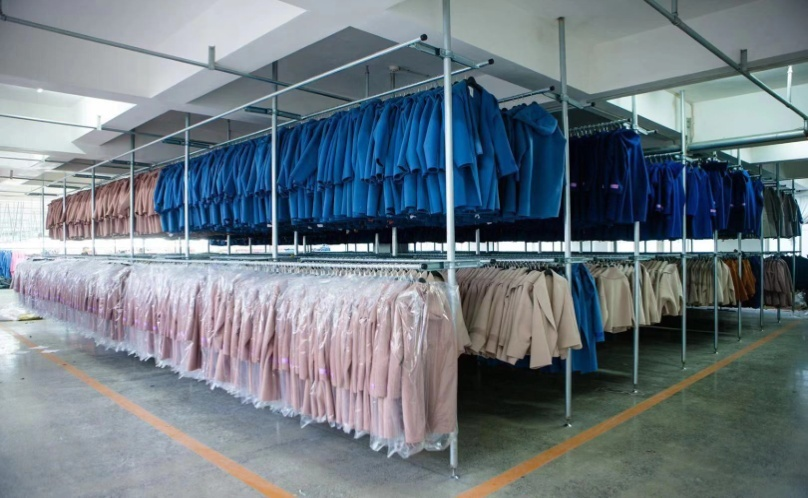
Bulk women's cashmere coat orders staged in the warehouse before export to Korea, Japan, the USA and the EU. Click the image to start a WhatsApp enquiry.
Conclusion
Hand-sewn construction becomes a purchasing decision only when it is expressed as parameters. Stitch consistency, seam finishing, edge treatment and final finishing are the four points on which a double-faced women's cashmere coat either holds its shape or does not, and all four are verifiable on a sample under ordinary daylight. The risk is not that a competing high-end hand-sewn cashmere coat will be described in the same terms — it is that the same terms will be used for a garment where hand work covers only part of the closing.
For buyers in the research and evaluation stage, the eight-step inspection routine and the comparison table above provide a repeatable way to test that claim, whichever supplier is presenting it. Applied before bulk production, they convert a marketing term into a construction standard that can be documented, repeated and delivered.