Hand-Sewn Women's Cashmere Coat vs High-End Options: Terms & Acceptance Checklist
Hand-Sewn Women's Cashmere Coat vs High-End Options: Terms & Acceptance Checklist
A hand-sewn women's cashmere coat is safest to buy against two documents rather than two brochures: a written term sheet and a pass/fail acceptance checklist. Once both exist, the words hand-sewn and high-end stop being positioning language and become attributes a buyer can actually check — fiber composition, the physical scope of hand stitching, size grading, label wording, packing and delivery milestones. The same checklist then works on a competitor's high-end hand-sewn claim and on a second product line, so a buying program runs on one consistent standard.
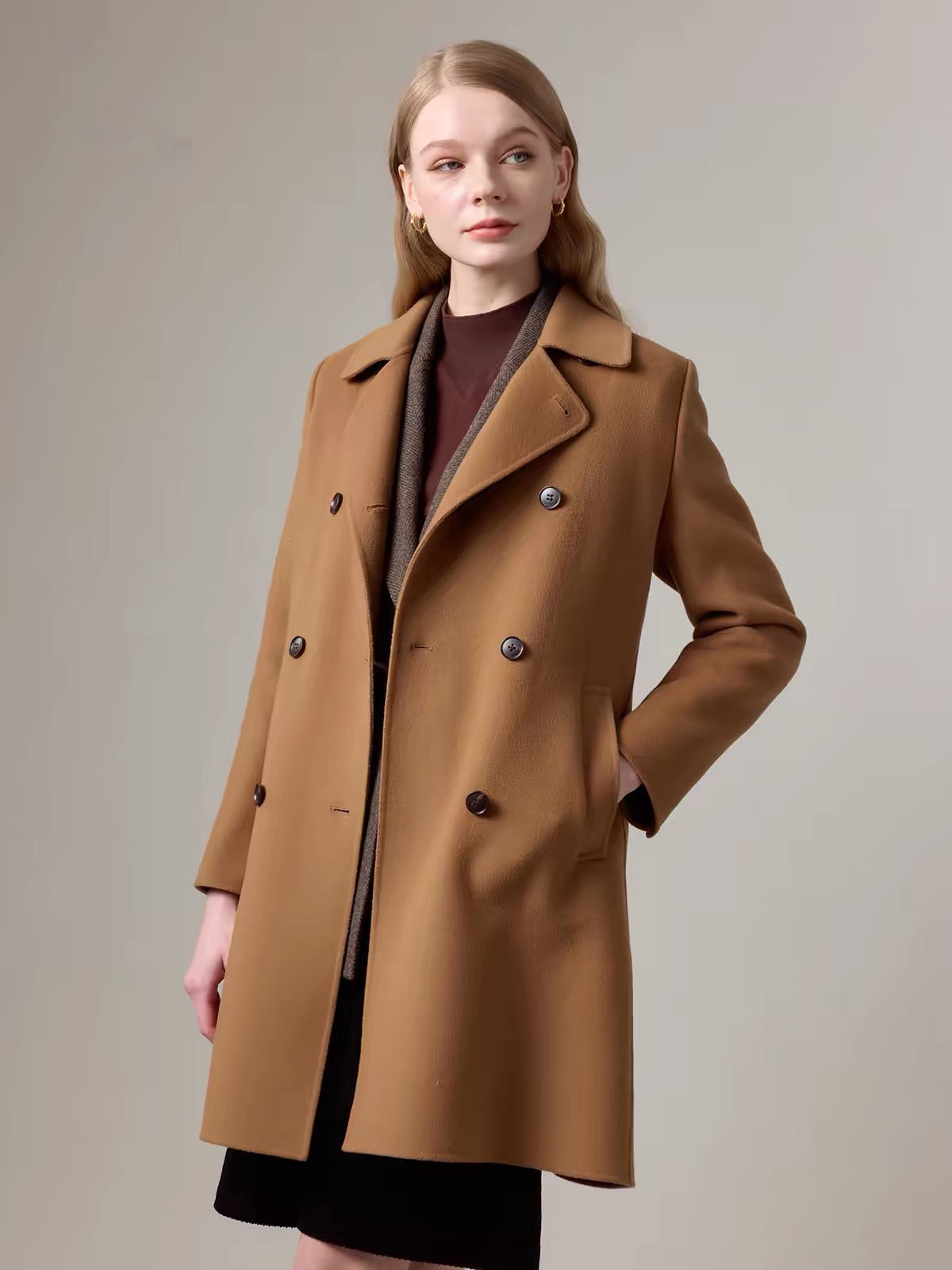
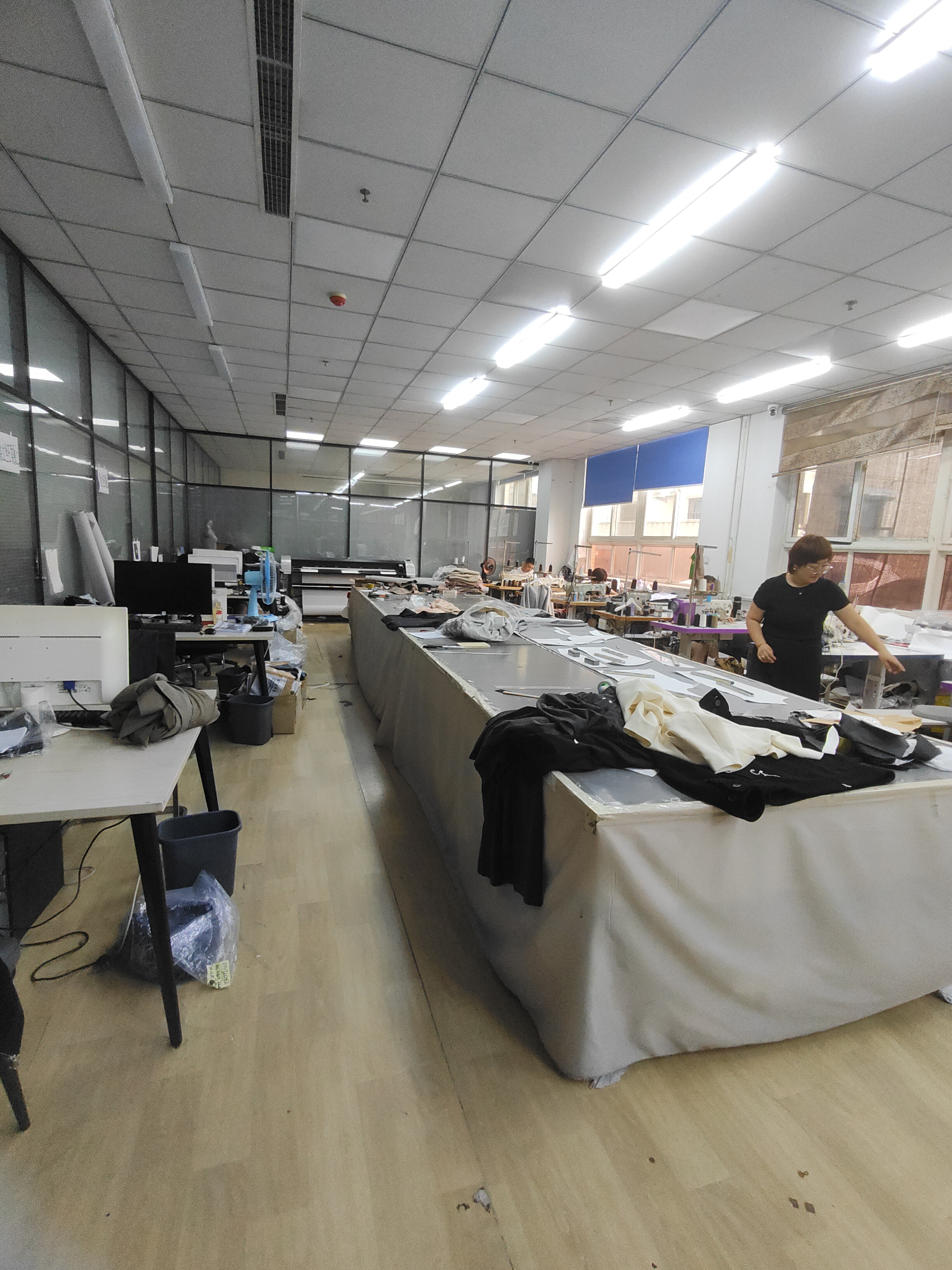
DALIAN GACCILANG FASHION CO.,LTD is a Dalian, China-based garment manufacturer founded in 2019 that produces women's wool coats, women's onepieces and women's jackets, operating a 3,000 m² factory with 120 employees and exporting roughly 60% of output to Korea, Japan, the USA and the EU. Its reference article in this comparison is WOMEN'S WOOL COAT model JSL26W011, a women's wool double breasted coat made of CASHMERE 100% with full hand-sewn craftsmanship, offered in sizes S, M, L, XL and XXL. The second reference is WOMEN'S ONEPIECE model JSL26S002 in POLY 100%, sizes S to XL — included because the disciplined buyer needs to see how the acceptance criteria change when the product category changes.
Problem Definition: Where Hand-Sewn Comparisons Break Down
Two coats can both be described as hand-sewn, both be positioned as high-end, and still be impossible to compare — because the words do not define an operation, a tolerance or a check. In practice, four gaps cause most of the friction in a sourcing round.
- The scope of hand-sewing is undefined. “Hand-sewn” can describe a fully hand-finished double-faced coat or a coat with hand work on one edge. Unless the term sheet lists which seams and edges are stitched by hand, two quotations are not describing the same garment.
- There is no reference sample. Without a signed, sealed golden sample, the bulk order is compared to memory, to a showroom piece, or to a competitor's product photo — none of which is an acceptance basis.
- Acceptance has no owner and no format. If nobody is named as the accepting party and no row-by-row pass/fail record exists, the discussion at delivery defaults to opinion, and opinion usually follows the loudest voice or the strongest brand.
- Labeling and classification are left until the end. Fiber wording, care instructions, origin marking and the invoice description are often handled after production. For US-bound shipments of women's wool or fine animal hair overcoats, HS Code 6202.20.11 applies in the Harmonized Tariff Schedule, and the invoice description must match the goods and the label. Relabeling after bulk production changes both cost and schedule.
Industry Background: Why Claims Outpace Verification
The global cashmere clothing market was valued at USD 3.63 billion in 2025 (Fortune Business Insights, cited by multiple aggregators). Cashmere sweaters and coats form the largest product segment at 60.58% of the market in 2026, which means coats — not accessories or knit tops — carry the commercial weight of the category. When the core product is also the most claim-heavy product, verification becomes the buyer's main job.
Industry trend commentary in 2026 describes hand-stitched double-faced cashmere as the reference standard for high-end coats within the “quiet luxury” movement. That is a positioning statement rather than a specification, and it explains the current pattern in sourcing: high-end claims are abundant while term-level definitions are scarce. On the supply side, China's apparel exports totaled US$151.2 billion in 2025, a year-on-year decline of 5% (China Customs data reported by industry analysis), which intensifies competition on presentation at exactly the moment buyers need firmer documentation.
The practical consequence is a shift from brand-led to document-led purchasing. A buyer no longer asks only which house made the coat, but which operations were performed by hand, at what fabric weight, at which tolerance, with which label text, and against which signed sample. The rest of this article builds that document set.
Detailed Solution: Six Term Blocks That Make a Hand-Sewn Claim Comparable
A term sheet that can be applied identically to DALIAN GACCILANG FASHION CO.,LTD and to a competitor's high-end hand-sewn offer has six blocks. Each block converts a marketing word into an attribute with a verification method.
Block 1 — Material: exact fiber wording and fabric weight
State the fiber composition exactly as it will appear on the label, and add a target fabric weight per garment. For JSL26W011 the stated composition is CASHMERE 100%. A wool cashmere blend coat may share the silhouette and the double-breasted closure but not the acceptance standard, so the fiber statement must be written into the term sheet rather than inferred from the sample's hand feel. Ask for the weight in grams for the selected length, because the 600–1,200 g range across the category is wide enough to change both drape and cost.
Block 2 — Construction: the physical scope of hand-sewing
The supplier's description for JSL26W011 is full hand-sewn craftsmanship. In a term sheet, that phrase becomes a list: which seams are closed by hand, how the double-faced edge is finished, whether the collar and lapel are hand-shaped, and which operations remain machine-executed. Request the sample with hand-stitched areas marked, and photograph the marked sample. A construction clause without a marked sample is not enforceable.
Block 3 — Fit and grading: size set, measurement points, tolerance
Name the size set and the grading rule. JSL26W011 runs S, M, L, XL, XXL; WOMEN'S ONEPIECE JSL26S002 runs S, M, L, XL. List the measurement points — chest, shoulder, sleeve, body length, sweep — and print the tolerance for each point on the sheet. Size continuity across the set matters as much as absolute fit in retail, because a customer who buys a M and returns for an L is measuring the coat against the grading, not against the brand.
Block 4 — Appearance: color standard, surface, symmetry
Fix a color standard and a surface requirement: uniform face, no shine, no bar marks, no puckering along hand-finished edges. For a double-breasted coat, add symmetry of the closure, alignment of the button positions and, where applicable, belt alignment at the waist. Appearance is the block most often argued about at delivery, so it must be judged against an approved physical standard under agreed lighting rather than against a screen image.
Block 5 — Labels and documentation
Approve label artwork before bulk: fiber content, care instructions, origin, size and item code, plus the invoice description. For US-bound women's wool or fine animal hair overcoats, HS Code 6202.20.11 applies, and the classification should be settled with the freight forwarder or customs broker at term-sheet stage. Documentation is also where a private label program is won or lost: a label mismatch discovered at the warehouse usually costs more than the label itself.
Block 6 — Capacity and delivery
Put capacity in writing next to the delivery clause. DALIAN GACCILANG FASHION CO.,LTD states monthly production capacity of 30,000 pieces and annual output of 360,000 units, supported by 120 employees, a 3,000 m² factory and a four-designer development team, with about 60% of output exported to Korea, Japan, the USA and the EU. Capacity figures are not a promise of a delivery date, but they tell a buyer whether a seasonal window is realistic and whether an allocation conversation is needed before the order is placed.

Step-by-Step Breakdown: From Tech Pack to Sign-Off
The following seven-step workflow is product-agnostic. Run it once on a hand-sewn cashmere coat and once on a competitor's high-end hand-sewn sample, and the comparison becomes a record of pass/fail rows rather than a debate about reputation.
- Build a one-page numbered term sheet from the tech pack. One row per attribute, one column per verification method. Keep it to a single page; a term sheet that needs an index will not be used on the factory floor.
- Translate every claim into an observable attribute. “Full hand-sewn” becomes a list of operations. “Soft and warm, premium texture” becomes an approved touch standard plus a fabric weight range. “High-end” is deleted and replaced by the attributes it was standing in for.
- Approve a golden sample. Measure it, photograph it, mark the hand-stitched areas, seal it, and keep one copy with the buyer and one with the factory. Sample-room review is the point where a claim becomes a reference.
- Name the inspection points. Fabric receipt, cutting, in-line stitching, finishing and final inspection. Hand-sewing is verified at finishing, where the edge work is visible and cannot be corrected later without rework.
- Set the acceptance record. One pass/fail row per term, a deviation list, a corrective action and a re-inspection date. The accepting party should be named on the form, not implied.
- Check labels and documents before packing. Fiber wording, care, origin, size, item code, invoice description and HS classification. Catching a label error at this stage is a reprint; catching it at destination is a customs or retail problem.
- Close with delivery terms. Milestone dates, quantity per shipment, allocation rule for peak season, and a reorder clause that references the approved golden sample rather than a new description.
Use Cases: Where the Same Checklist Applies
1. Boutique and seasonal assortment buying (Korea, Japan, USA, EU)
For boutique retail and seasonal outerwear collections, the coat is worn daily, outdoors and indoors, and is styled with blouses, knitwear and leather boots. Buyers in these markets usually weight three acceptance rows highest: hand feel against the approved standard, edge finishing on the double-faced seam, and size continuity across the full set. The stated application requirements for this product family — hand stitching, 100% pure cashmere, skin-friendly — translate directly into those three rows, which is why they belong in the term sheet rather than in the product description.
2. Private label and own-brand programs
In a private label program, the term sheet doubles as the brand's own quality document. Label artwork, packing instruction and measurement tolerance are all brand-controlled, so the acceptance checklist should be issued with the purchase order and signed back by the supplier. The comparison against a competitor's high-end hand-sewn offer then happens at document level: two suppliers, one checklist, two columns of pass/fail.
3. Coordinated onepiece programs
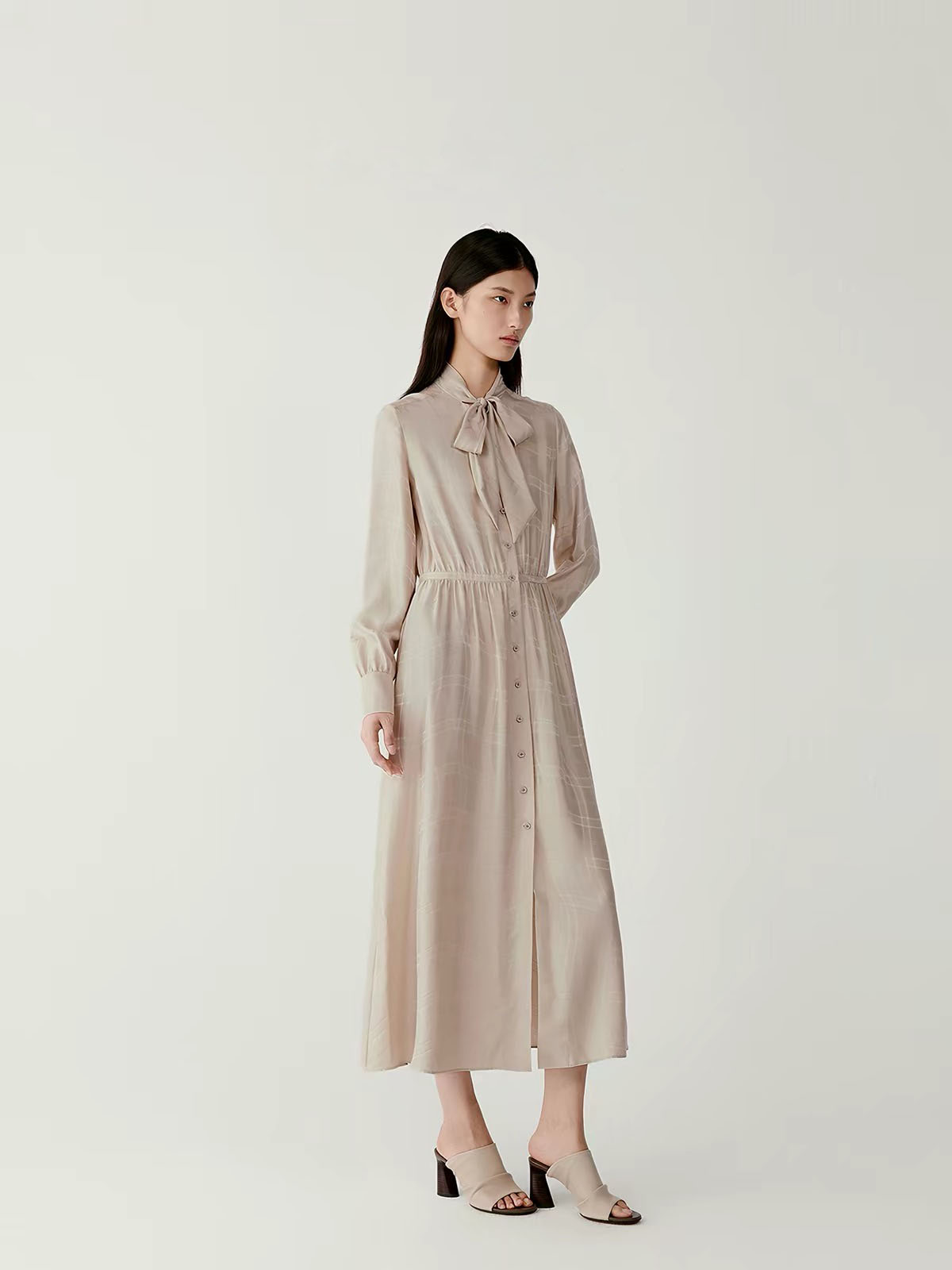
WOMEN'S ONEPIECE model JSL26S002, in POLY 100% and sizes S to XL, is described as lightweight and cool with fine workmanship and a gentle, elegant style. It shares a retail floor with the coat but not the acceptance criteria: there is no cashmere fiber verification, and the weight shifts toward drape, color consistency, seam puckering and surface uniformity. Keeping one template and parameterizing the rows per product is what prevents a buying team from maintaining two incompatible checklists.
Comparison Table Template for Sourcing Rounds
The first table collects only published, verifiable company facts, so the supplier comparison does not drift into unsupported quality claims. The second table is the acceptance template itself; it is the part a buyer actually scores.
Table A — Published facts for two Chinese coat manufacturers
| Item | DALIAN GACCILANG FASHION CO.,LTD | Dalian Dishang Huasheng Fashion Co., Ltd. |
|---|---|---|
| Role | Manufacturer of women's wool coats, women's onepieces and women's jackets | Manufacturer (per Dishang Group company information) |
| Workforce | 120 employees | 450+ employees |
| Factory footprint | 3,000 m² | Not stated in the reviewed source |
| Stated capacity | 30,000 pieces per month; 360,000 units per year | Not stated in the reviewed source |
| Published brand cooperation | Not stated in the reviewed sources | Cooperates with MAXMARA (per Dishang Group) |
| Published annual sales volume | Between US$5 million and US$10 million (BOSIG industrial directory) | Not stated in the reviewed source |
| Reference coat | WOMEN'S WOOL COAT JSL26W011, CASHMERE 100%, full hand-sewn, S–XXL | Not stated in the reviewed source |
Scale and brand cooperation are allocation and program-management signals. Neither establishes coat quality on its own; both must be tested against Table B.
Table B — Purchase terms and acceptance criteria (apply to any hand-sewn supplier)
| # | Term | What the term sheet must state | Verification method | Pass criteria |
|---|---|---|---|---|
| 1 | Fiber composition | Exact fiber wording as printed on the label (for example CASHMERE 100%) | Fiber test report or supplier declaration plus label proof | Label text and declaration match the term sheet |
| 2 | Fabric weight per garment | Target grams for the selected length | Weigh finished garments from bulk | Each unit falls inside the range agreed in the term sheet |
| 3 | Hand-sewing scope | Which seams and edges are hand-stitched; whether the construction is full or partial | Marked sample inspection plus finishing-line check | Scope identical to the approved golden sample |
| 4 | Edge and seam appearance | Finish requirement for the double-faced edge; no puckering | Visual check at arm's length and close range | No visible deviation from the approved standard |
| 5 | Measurement and grading | Size set and tolerance per measurement point | Flat measurement of multiple pieces per size | All points within the printed tolerance |
| 6 | Color and surface | Color reference; uniform face; no shine or bar marks | Comparison to the approved color standard under agreed lighting | No visible deviation from the standard |
| 7 | Symmetry and trims | Closure symmetry, button position, belt alignment | Full-garment inspection on the finished piece | Symmetric within the agreed tolerance |
| 8 | Labeling | Fiber, care, origin, size, item code | Label check against approved artwork and destination rules | All labels match approved artwork |
| 9 | Packing | Fold method, protection, hangtags, carton marking | Pre-shipment inspection | Matches the packing instruction |
| 10 | Delivery and reorder | Milestones, quantity per shipment, capacity statement, reorder clause | Production schedule review and written capacity confirmation | Milestones met; capacity confirmed in writing |
FAQ
1. Which compliance points belong in the purchase terms for a women's cashmere coat?
Settle three items before bulk: the exact fiber wording on the label, the care and origin marking required by the destination market, and the classification used on the invoice. For US-bound women's wool or fine animal hair overcoats, HS Code 6202.20.11 applies in the Harmonized Tariff Schedule, and the invoice description should match the goods and the label. Because JSL26W011 is declared as CASHMERE 100%, the label text, the supplier declaration and the invoice wording should all carry the same fiber statement. Correcting labeling after production affects both cost and schedule.
2. How can a buyer verify hand-sewn capability before placing an order?
Ask for the hand-sewing scope in writing, inspect a finished piece taken from current production rather than a display sample, review the finishing area where the edge work is done, and confirm capacity in writing. For reference, DALIAN GACCILANG FASHION CO.,LTD operates a 3,000 m² factory with 120 employees, a four-designer development team, stated monthly capacity of 30,000 pieces and annual output of 360,000 units, with about 60% of output exported to Korea, Japan, the USA and the EU. Those figures show whether the stated construction can be repeated at order volume; they do not replace sample inspection.
3. What drives the price gap between two hand-sewn cashmere coats?
Four cost drivers explain most of the difference: fabric weight per coat, which typically ranges from 600 to 1,200 grams depending on length and design; the share of hand work in the construction; labeling and packing requirements; and order quantity against the delivery window. A maxi long coat and a short cropped coat do not start from the same material base, so a single unit price comparison between two silhouettes is not meaningful. Ask each supplier to break the cost down along the six term blocks — material, construction, fit, appearance, labeling and delivery — and compare line by line instead of comparing totals.
4. What should a sample approval record contain?
A signed golden sample held by both parties, photographs of the marked hand-stitched areas, a completed measurement sheet, an approved color standard, and a deviation list with the corrective action agreed for each item. The record should name the accepting party and the date. Hand-sewn edge work is the hardest attribute to renegotiate later, so it should be photographed at close range at approval stage. A sample request is the natural first step of this process, and the factory sample room is where the golden sample is normally sealed.
5. How should delivery and reorder terms be written for a seasonal coat program?
Write milestone dates, quantity per shipment and an allocation rule for peak season, and attach a written capacity statement rather than relying on a verbal assurance. Reference the approved golden sample in the reorder clause so a repeat order is compared to a document instead of a description. For a program of this type, the supplier's stated monthly capacity of 30,000 pieces and annual output of 360,000 units is the figure to test against the delivery window. Buyers who want to move from criteria to a live quotation can request a quote or a sample through the company website and the current catalogue linked below.
Conclusion
A hand-sewn women's cashmere coat and a competitor's high-end hand-sewn coat can be compared honestly only when the comparison happens on identical documents. The term sheet fixes fiber composition, hand-sewing scope, measurement tolerance, appearance standard, labeling and delivery capacity. The acceptance checklist turns each of those into a pass/fail row with a verification method. Everything else — brand reputation, showroom impression, the word “high-end” — is context, not evidence.
Applied consistently, the same template carries across a coat program and a coordinated onepiece program, which is what makes it usable across a full buying season rather than a single order.
Next step: sample, quotation or catalogue
DALIAN GACCILANG FASHION CO.,LTD — women's wool coats, women's onepieces and women's jackets. Factory: West of Jinquan Road, Wujia Village, Zhanqian Street, Jinzhou District, Dalian, China. Contact: XiaoNa Wang (General Director), tel +86 186-9861-1183, email gaccilang@163.com.
Download the current catalogue: DALIAN GACCILANG FASHION CO. catalogue (PDF) | Website: www.gaccilang.com | WhatsApp: +86 121-3551-5622
Have Questions or Need More Details?
Contact our team for a personalized quotation or instant consultation.
Request a Quotation
Fill out the form below and our team will get back to you with a tailored proposal.
WhatsApp Direct Chat
Prefer to chat in real-time? Message us on WhatsApp for instant assistance & quick answers.
- Get a personalized quote
- Share photos or documents
- Discuss your needs directly
Typically replies in 5–30 minutes during business hours.