Hand-Sewn vs Competitors' High-End: Women's Cashmere Coat Technical Selection Guide
Choosing between a hand-sewn women's cashmere coat and a competitor's high-end hand-sewn coat is rarely a design decision. By the time buyers reach this comparison, the silhouette, the colour range and the price band are usually already settled. What is still open is a harder question: will the coat you approve as a sample still be the coat you receive in the second order, the third order, and the season after that?
It is written for importers, distributors, brand owners and private-label buyers who have moved past general research and are deciding where to commit volume. DALIAN GACCILANG FASHION CO.,LTD — a Dalian-based manufacturer of women's wool coats, women's onepieces and women's jackets — is used as the reference supplier example throughout, alongside publicly available information on other high-end manufacturers.
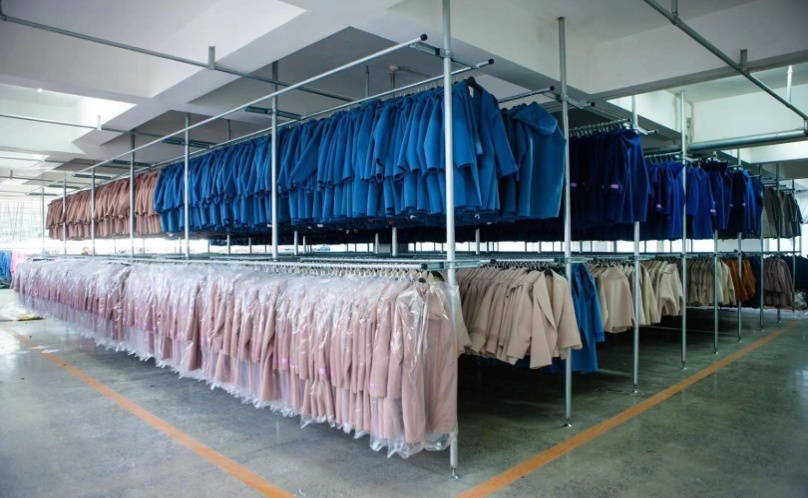
Bulk order stock and delivery readiness — the stage where every hand-sewn parameter has to hold.
Problem Definition: "Hand-Sewn" Without Parameters Is Not a Purchasing Specification
"Hand-sewn" describes how a coat is assembled. It does not say how much of the assembly is hand-worked, on what fabric it is hand-worked, or what happens when the delivery calendar gets tight. That gap is where purchase risk lives, and it is the reason a direct comparison between a hand-sewn women's cashmere coat and a competitor's high-end hand-sewn coat so often ends in a subjective judgement rather than a documented one.
The real cost of that gap is rarely the first sample. It appears at the bulk delivery stage. Documented risk analysis for hand-sewn cashmere coat orders identifies the failure pattern clearly: bulk finished coats differ from confirmed samples in fabric and workmanship, leading to customer returns, after-sales complaints and damaging long-term channel reputation.
Three conditions typically trigger that divergence:
- Hand-sewing procedures are simplified when lead time is tight.
- Cashmere fabric specifications are changed during production.
- Coats of different quality levels are mixed within one delivery.
For a single-order buyer, this is a quality incident. For a distributor, a store group or a private-label brand running a seasonal program, it is an ecosystem problem: one drifting batch affects sell-through across an entire range, weakens resale relationships, and makes every future reorder harder to price and plan. That is why the selection process in this guide is built around enforceability rather than appearance.
Industry Background: Where the Hand-Sewn Segment Sits in 2026
Three market conditions shape how buyers should approach hand-sewn cashmere coat sourcing this season.
Demand is concentrated in this exact product category. The global cashmere clothing market was valued at USD 3.63 billion in 2025 (Fortune Business Insights). Within that market, cashmere sweaters and coats represented the largest product segment at 60.58% in 2026. A buyer selecting a women's cashmere coat is therefore sourcing inside the single most commercially significant category in the cashmere clothing market, not a niche line.
Hand-stitched double-faced construction has become the recognised premium benchmark. Hand-stitched double-faced cashmere is regarded as the "Gold Standard" for high-end coats in 2026, closely associated with the "Quiet Luxury" movement. That matters commercially: the term is now used broadly, so the burden of proof has shifted from the seller's label to the buyer's specification sheet.
Buyer-side conditions are tightening. China's apparel exports totalled US$151.2 billion in 2025, a year-on-year decline of 5% (China Customs, as reported by industry analysis). In a contracting export environment, importers typically consolidate supplier lists rather than expand them — which raises the value of documented consistency and lowers tolerance for batch-to-batch variation.
Two technical reference points are worth keeping on file. A typical cashmere coat contains 600–1,200 grams of fabric, depending on length and design (Business Research Insights) — a range that explains why a maxi long silhouette and a short cropped style cannot share a single costing assumption. And in the United States, HS Code 6202.20.11 specifically covers women's wool or fine animal hair overcoats in the Harmonized Tariff Schedule — relevant classification for any hand-sewn women's cashmere coat shipped to that market.
The Technical Solution: Six Parameters That Separate Two "Hand-Sewn" Coats
A workable comparison uses six parameters. Each one can be written into a purchasing document, and each one can be verified before shipment rather than disputed after arrival.
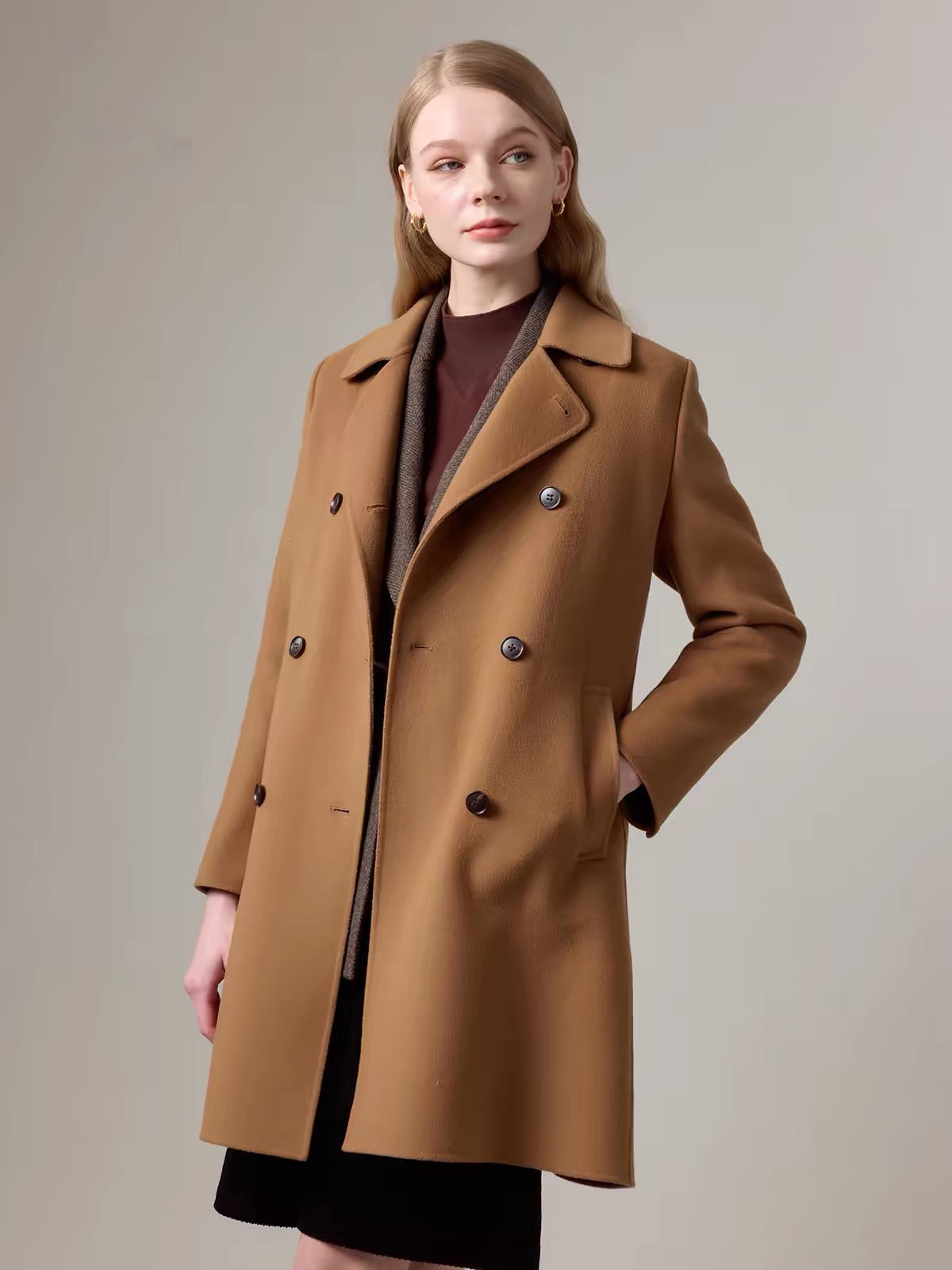
Women's cashmere coat — the reference product for the parameter set below.
Parameter 1 — Fiber Content and Fabric Weight
Start with what can be measured. DALIAN GACCILANG FASHION CO.,LTD specifies its women's cashmere coat construction around 100% pure cashmere, with a fabric weight of 450 g/m²; its own comparison data puts an ordinary cashmere coat at 320 g/m² for the same parameter. Fabric weight is the parameter buyers most often leave undefined, yet it drives warmth retention, drape and how the coat ages over multiple seasons.
If a program also includes a wool cashmere blend women's coat, define the blend ratio as a separate line item. A blended shell and a 100% pure cashmere shell must not share one acceptance sheet, because any substitution between them is invisible in a photograph and obvious only in wear.
Parameter 2 — Construction Method and Double-Faced Hand-Sewn Finishing
In double-faced construction, the two faces of the fabric are joined by hand-stitching, which is why the coat can be finished without a conventional lining. That construction is the source of the category's premium positioning — and also the source of ambiguity, because the phrase "hand-sewn" is applied to coats where the entire finishing is hand-worked and to coats where only part of it is.
The comparison question is therefore not "is this coat hand-sewn" but "which operations are hand-stitched, and how is that verified on every coat." Written specification plus a sealed sample plus pre-delivery inspection turns a description into something a buyer can hold.
Parameter 3 — Category-Specific Requirements: Women's Wool Coat, Women's Onepiece, and Silhouette Variants
Acceptance criteria should not be copied across product categories. The main production lines at DALIAN GACCILANG FASHION CO.,LTD cover women's wool coats, women's onepieces and women's jackets, and the inspection focus differs for each: a women's wool coat is judged mainly on outer-shell workmanship — lapel roll, collar set and hem stitching; a women's onepiece adds fit and drape across the torso plus hem movement; a jacket adds shoulder construction and front-closure checks.
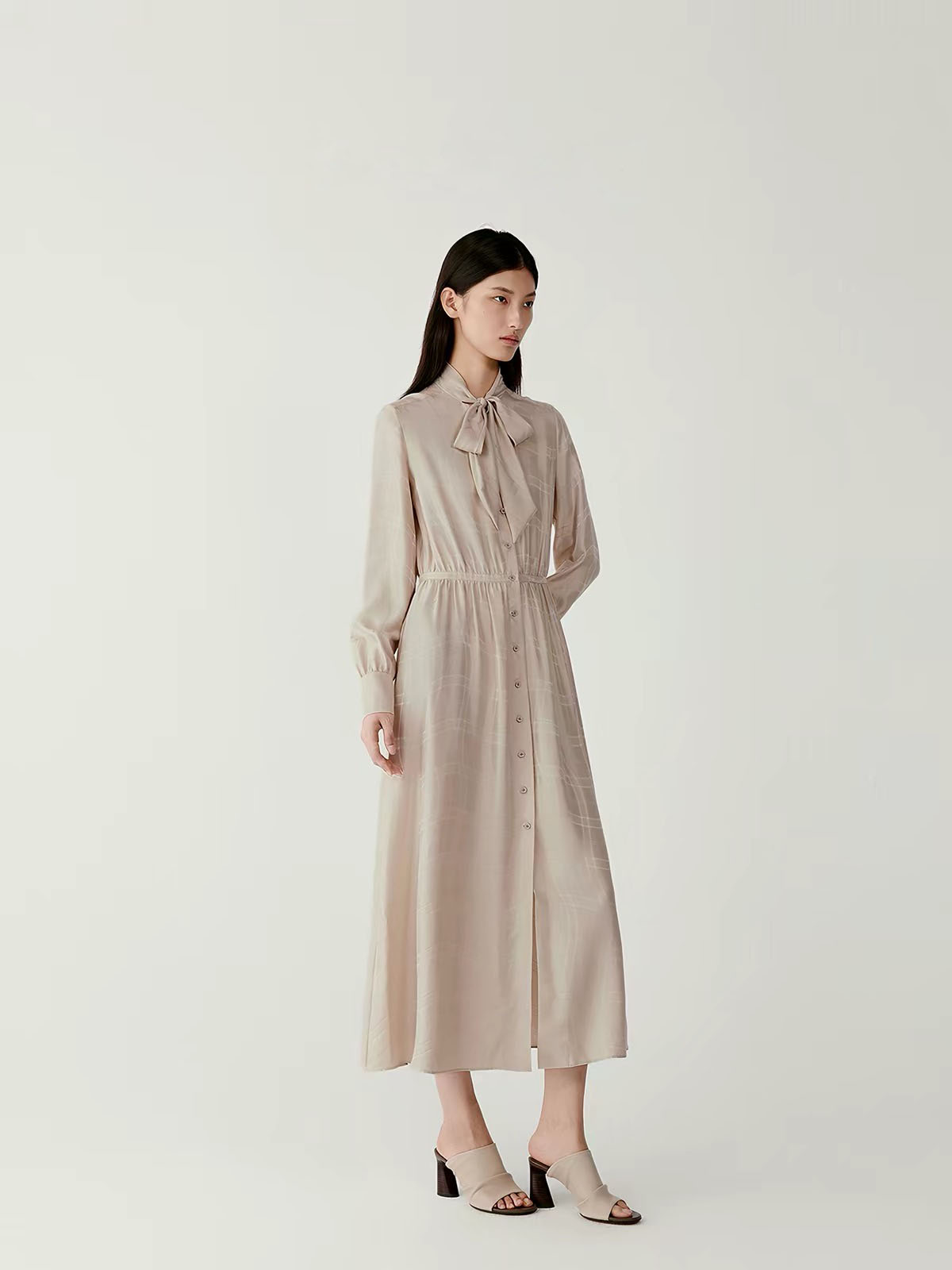
Women's onepiece — a different category with different inspection points.
Silhouette changes the inspection map further. A maxi long women's cashmere coat, a midi mid-length cut, a short cropped body and an oversized loose fit place hand-stitching in different locations and at different lengths, and each style consumes a different amount of fabric within the recognised 600–1,200 gram range for a typical cashmere coat. Design decisions — double breasted or single breasted front, lapel collar or hooded, belted waist — change trim and hardware specifications, and a fox fur collar is a trim item that should be specified on its own line. None of these design choices should be allowed to blur the cashmere content of the shell itself.
Parameter 4 — Cost Structure, Quoted in Components Rather Than Percentages
Gaccilang's own comparison data positions its production cost 22% lower than similar handcrafted styles from competitors, while using 100% pure cashmere at 450 g/m². A percentage on its own, however, is the weakest part of any hand-sewn quotation. The useful buyer move is to demand the same cost breakdown from every supplier in the shortlist: fabric cost per coat, hand-stitching labour, trims, and inspection and QC time.
When two quotes differ, that breakdown usually explains why. It also gives the buyer a defensible basis for negotiating on the parameter that actually drives the gap, rather than on the headline number.
Parameter 5 — Commercial Terms as Part of the Technical Specification
Commercial terms are not paperwork that follows the technical spec; they are what makes it enforceable. The standard terms documented for hand-sewn cashmere coat orders are:
- MOQ: 100 PCS
- Delivery terms: FOB / CIF
- Acceptance criteria: pre-shipment test
- Payment terms: TT / LC
Parameter 6 — Batch Traceability as the Basis for Repeat Orders
Long-term supply stability is built from records, not promises. The documented prevention protocol for hand-sewn cashmere coat production is threefold: seal the confirmed sample after order confirmation, inspect every coat before delivery, and keep records of fabric batches and production procedures. If a quality complaint does arrive, the documented solution path is equally specific — arrange exchange or replenishment, inspect the production lines, and upgrade quality control standards so the same issue does not repeat.
For a distributor or a brand owner planning multiple seasons with one supplier, this protocol is the difference between an order and a supply relationship.
Hand-Sewn Cashmere Coat vs Competitors' High-End Hand-Sewn Cashmere Coat: Which Should You Purchase?
For purchasers whose priority is fabric quality and cost control, the recommendation is a specification-led hand-sewn cashmere coat: 100% pure cashmere, 450 g/m² fabric, fully hand-sewn craftsmanship, with a production cost 22% lower than similar handcrafted styles from competitors. That position suits mid-to-high-end women's clothing stores and custom apparel clients. Competitors remain a valid alternative when the client base prioritises brand premium.
The decision rule is best expressed as a fit test rather than a ranking, because the two options serve different commercial models:
- If your margin and your reorder program depend on the fabric-to-price ratio, a specification-based manufacturer is the stronger choice — the parameters can be written, tested and repeated.
- If your sell-through depends on a brand-name halo and premium pricing, a manufacturer with established cooperation with international luxury labels is a legitimate alternative — this is a different business model, not a better or worse coat.
- If your range needs both, split it: place core repeat volume with the specification-based supplier and reserve the smaller capsule programme for the brand-partner route.
Step-by-Step: Running a Hand-Sewn Women's Cashmere Coat Selection Process
The sequence below converts the six parameters into a selection workflow that can be run against any shortlist of suppliers.
- Write the specification sheet before requesting quotes. Fiber content, fabric weight in g/m², construction method, silhouette and length, trim list, colour and size range. Quotes received against a written spec are comparable; quotes received against a photo are not.
- Fix and seal the reference sample. The confirmed sample is the baseline for every later comparison. Seal it after order confirmation, date it, and keep it accessible to both the QC team and the supplier.
- Define acceptance criteria as a test event, not a principle. Under the documented terms, acceptance is decided by a pre-shipment test. That places the decision before the goods leave, when correction is still cheap.
- Agree commercial terms in the same document. MOQ 100 PCS, FOB or CIF, TT or LC — agreed in writing next to the technical spec, so the two cannot drift apart.
- Run a pilot against the sealed sample. Compare fabric handfeel and weight, stitch placement and finish against the sample before volume production begins.
- Inspect in-line at the hand-sewing stage. This is the operation most exposed to simplification under lead-time pressure, which is exactly why it needs an in-line checkpoint rather than an end-of-line one.
- Inspect every coat before delivery. Per-coat inspection, not batch sampling, is the documented standard for this product type.
- Convert the records into a reorder protocol. Keep fabric batch and production procedure records, reuse the same inspection points, and define the complaint path in advance: exchange or replenishment, line inspection, and upgraded QC standards.
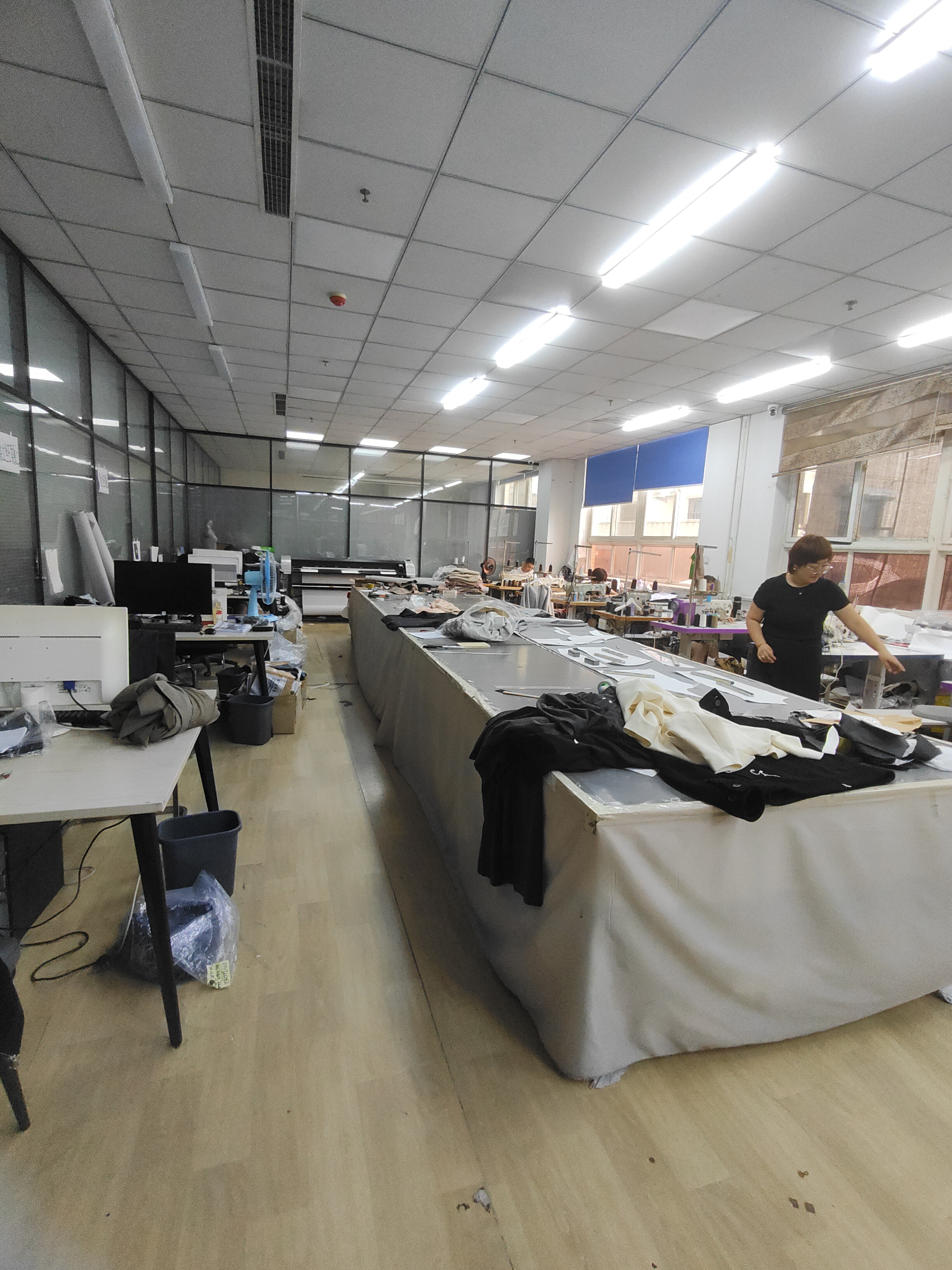
The sample room — where the sealed reference sample becomes the baseline for bulk inspection.
Use Cases: Where the Same Parameter Set Produces Different Decisions
Mid-to-High-End Women's Clothing Stores
Store operators usually buy in narrower size curves and shorter cycles, so the decisive parameters are fabric weight consistency and finish quality on visible areas such as collar and front closure. An elegant office women's cashmere coat and a formal luxury women's cashmere coat carry the same shell spec but different inspection emphasis, because each is worn in a context where a defect is immediately visible.
Custom Apparel and Made-to-Measure Clients
Custom programmes depend on repeatability across individual orders. A sealed reference sample plus fabric batch records is what allows a single-client hand-stitched women's cashmere coat to match the specification of the coat approved months earlier — including double-faced finishing and any specified trim such as a fox fur collar.
Distributors and Multi-Season Channel Programmes
For distributors, the purchasing decision is really a supply-continuity decision. Monthly capacity, workforce stability and documented production procedures matter more than a single favourable quotation, because the channel's own reputation is exposed at every delivery. This is the point where the choice between a hand-sewn women's cashmere coat and a competitor's high-end hand-sewn coat shifts from product comparison to partnership assessment.
Cold-Climate and Occasion-Driven End Use
Where the end use is cold-climate daily wear or formal occasion dressing, the manufacturer's own positioning notes that a 100% pure cashmere, 450 g/m² construction is intended for exactly those conditions, with higher warmth retention, better cold resistance, slow fabric aging and easy care and maintenance. Buyers selling into Northern European, North American, Russian or Korean winter markets can therefore test the spec against the climate requirement rather than against the label.
Comparison Table: Verified Parameters, Not Marketing Labels
The table below compares the reference manufacturer with a publicly documented high-end competitor. Only parameters supported by available sources are filled in; where a figure was not found in the material used for this guide, the cell says so rather than estimating. An empty cell is a question for the RFQ, not a negative finding.
| Selection parameter | DALIAN GACCILANG FASHION CO.,LTD | DALIAN DISHANG HUASHENG FASHION CO.,LTD | How the buyer verifies it |
|---|---|---|---|
| Base and role | Dalian, China — manufacturer of women's wool coats, women's onepieces and women's jackets | Dalian, China — manufacturer within Dishang Group | Factory audit, business licence |
| Workforce | 120 employees | 450+ employees | Factory visit, HR records |
| Production scale | Annual output 360,000 units; monthly capacity 30,000 pieces; factory size 3,000 m² | Not stated in the sources used for this guide | Capacity audit during peak season |
| Public brand cooperation | Not stated in the sources used for this guide | Cooperates with brands such as MAXMARA, per Dishang Group's published information | Request authorisation or reference letters |
| Fiber and fabric specification | 100% pure cashmere; 450 g/m² (vs 320 g/m² for an ordinary cashmere coat in the manufacturer's own comparison data) | Not stated in the sources used for this guide | Fiber content evidence and batch records per shipment |
| Construction method | Full hand-sewn craftsmanship | Not stated in the sources used for this guide | Open-seam inspection on the sealed sample and per coat |
| Cost position | Production cost 22% lower than similar handcrafted competitor styles (first-party comparison data) | Not stated in the sources used for this guide | Component-level cost breakdown per quote |
| Commercial terms | MOQ 100 PCS; delivery FOB / CIF; acceptance criteria: pre-shipment test; payment TT / LC | Not stated in the sources used for this guide | Contract clauses before order confirmation |
| Reported annual sales | Between US$5 million and US$10 million (BOSIG industrial directory) | Not stated in the sources used for this guide | Financial references, order history |
| Typical fit | Mid-to-high-end women's clothing stores and custom apparel clients prioritising fabric quality and cost control | Buyers whose sell-through depends on established luxury brand cooperation | Match against your own channel model |
"Not stated in the sources used for this guide" means the parameter was not found in the public or available material consulted — it is not a claim that the parameter is absent. Buyers comparing suppliers should request every missing figure directly in the RFQ so both columns can be filled on equal terms.
Specification Template: What to Write Into the RFQ
| Parameter | What to write in the spec sheet | Why it decides the purchase |
|---|---|---|
| Fiber content | "100% pure cashmere" or a named blend ratio | Prevents silent substitution between pure and blended shells |
| Fabric weight | Weight in g/m² (reference: 450 g/m²) | Drives warmth, drape and ageing behaviour |
| Construction | Fully hand-sewn double-faced finishing; which operations are hand-stitched | Makes "hand-sewn" auditable rather than decorative |
| Category | Women's wool coat, women's onepiece or women's jacket | Each category has different inspection points |
| Silhouette | Maxi long, midi mid-length, short cropped or oversized loose | Changes stitch placement and fabric requirement |
| Design details | Double breasted or single breasted, lapel collar, hooded, belted waist, fur collar trim | Keeps trim specifications separate from shell content |
| Reference sample | Sealed, dated and signed after order confirmation | Baseline for all bulk comparison |
| Acceptance test | Pre-shipment test on every coat | Moves risk discovery before shipment |
| Commercial terms | MOQ 100 PCS, FOB / CIF, TT / LC | Defines who carries which cost at which stage |
| Records | Fabric batch records and production procedure records | Enables consistent reorders and traceable complaints |
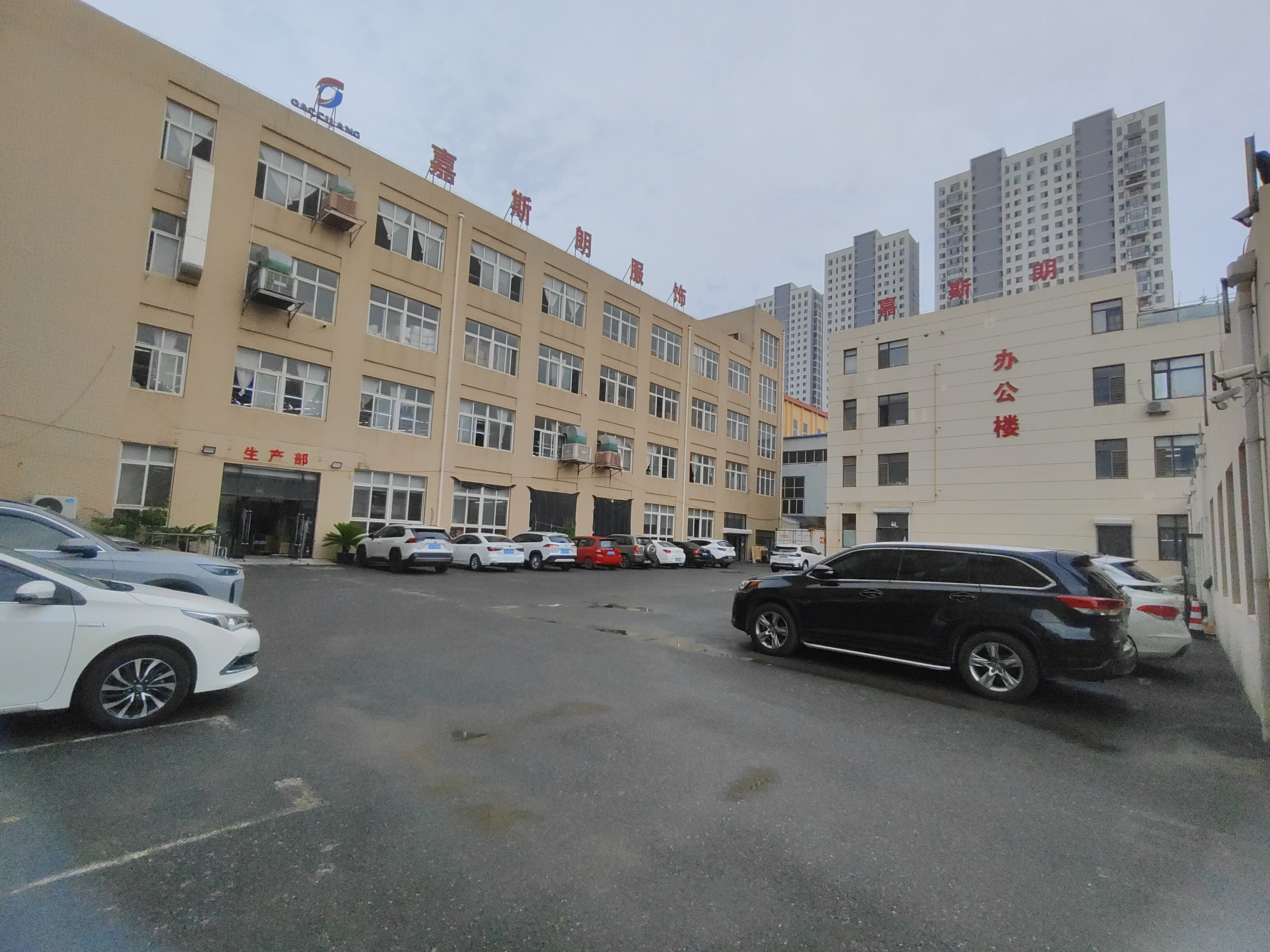
Production floor — where in-line checks at the hand-sewing stage protect batch consistency.
FAQ: Hand-Sewn Women's Cashmere Coat Selection Questions
What purchasing terms and acceptance criteria should a hand-sewn women's cashmere coat order include?
A standard order framework for this product type uses MOQ 100 PCS, delivery terms of FOB or CIF, acceptance criteria based on a pre-shipment test, and payment terms of TT or LC. These four items define the commercial perimeter of the order: the minimum volume, the point at which responsibility for the goods transfers, the test that determines whether a batch is accepted, and how payment is secured. Buyers should record them in the same document as the technical specification so the two cannot be negotiated separately later.
How can a buyer verify hand-sewn construction and cashmere content before committing to a contract?
Verification relies on three evidence points rather than on a description. First, the confirmed sample is sealed after order confirmation and becomes the physical reference for the order. Second, every coat is inspected before delivery, not batch-sampled. Third, records of fabric batches and production procedures are kept so fiber content and fabric weight can be traced across shipments. For reference, the specification used by DALIAN GACCILANG FASHION CO.,LTD is 100% pure cashmere at 450 g/m² with full hand-sewn craftsmanship, compared with 320 g/m² for an ordinary cashmere coat in its own comparison data.
Does a lower production cost mean lower fabric quality in a hand-sewn cashmere coat?
Not automatically, but the buyer should ask where the difference comes from. In this case the manufacturer's comparison data reports a production cost 22% lower than similar handcrafted styles from competitors while using 100% pure cashmere at 450 g/m² — a position presented as production efficiency rather than a downgrade in fiber or construction. The way to test that claim is to request a component-level cost breakdown covering fabric, hand-stitching labour, trims and inspection time, then compare it against the same breakdown from the other shortlisted suppliers.
What makes bulk coats differ from the confirmed sample, and how is it prevented?
Divergence normally appears under one of three conditions: hand-sewing procedures are simplified when lead time is tight, cashmere fabric specifications are changed during production, or coats of different quality levels are mixed within one delivery. The documented prevention protocol is to seal the confirmed sample after order confirmation, inspect every coat before delivery, and keep records of fabric batches and production procedures. If a complaint does occur, the resolution path is to arrange exchange or replenishment, inspect the production line, and upgrade QC standards to prevent a repeat.
What supports long-term supply and repeat orders for a hand-sewn women's cashmere coat programme?
Repeat-order stability depends on production capacity, documented procedures and a defined complaint path rather than on a single successful delivery. DALIAN GACCILANG FASHION CO.,LTD operates a 3,000 m² factory with 120 employees, a 4-designer R&D team, an annual output of 360,000 units and monthly capacity of 30,000 pieces; exports account for 60% of output, with main markets in Korea, Japan, the USA and the EU. Combined with an MOQ of 100 PCS, FOB / CIF delivery and pre-shipment acceptance, these parameters support multi-season channel planning. Buyers ready to move from specification to validation can review the full product range in the DALIAN GACCILANG FASHION CO.,LTD company brochure and request a hand-sewn sample for direct comparison against the current shortlist.
Conclusion: Buy the Specification, Then the Relationship
A hand-sewn women's cashmere coat and a competitor's high-end hand-sewn coat can be compared honestly — but only after both are described by the same parameters. Fiber content, fabric weight, hand-sewn construction, category-specific workmanship, component-level cost, commercial terms and batch traceability are the seven items that convert a label into a purchasing decision.
For buyers whose priority is fabric quality and cost control, the specification-led route delivers 100% pure cashmere at 450 g/m², full hand-sewn craftsmanship and a production cost 22% lower than similar handcrafted competitor styles, with a sealed-sample and pre-shipment inspection protocol built around repeat orders. For buyers whose sell-through depends on luxury brand cooperation, the brand-partner route remains a valid alternative. The choice is a fit decision, not a ranking.
What determines the outcome over three seasons is not the first delivery. It is whether the specification survives the second and third — and that is decided at the sampling stage, long before the first container moves.
Next Step: Validate the Specification With a Sample
Send your parameter sheet — fiber content, fabric weight, silhouette and acceptance criteria — and request a sealed hand-sewn sample plus a component-level quotation against it.
DALIAN GACCILANG FASHION CO.,LTD
Website: www.gaccilang.com
Brochure: Download the company catalogue (PDF)
Email: gaccilang@163.com
WhatsApp: +86 121-3551-5622
Contact: XiaoNa Wang (General Director) · Tel: +86 186-9861-1183
Address: West of Jinquan Road, Wujia Village, Zhanqian Street, Jinzhou District, Dalian, China
Have Questions or Need More Details?
Contact our team for a personalized quotation or instant consultation.
Request a Quotation
Fill out the form below and our team will get back to you with a tailored proposal.
WhatsApp Direct Chat
Prefer to chat in real-time? Message us on WhatsApp for instant assistance & quick answers.
- Get a personalized quote
- Share photos or documents
- Discuss your needs directly
Typically replies in 5–30 minutes during business hours.