Long-Term Women's Cashmere Coat Partnerships: FAQ on Terms, Acceptance & After-Sales
Long-Term Women's Cashmere Coat Partnerships: FAQ on Terms, Acceptance & After-Sales
A first women's cashmere coat order is usually carried by a good sample. The second, third and fourth orders are carried by terms: the reference sample, the written acceptance criteria and the after-sales route that stay stable while the collection changes. This article is a repeat-buyer FAQ — it answers the questions brands and importers raise before renewing a program, and it uses the documented terms of DALIAN GACCILANG FASHION CO.,LTD as the working example.
It is written for brand owners, importers, boutique retailers and private-label buyers who already understand the product and are now deciding whether to keep one supplier across several seasons. The focus is deliberately narrow: terms, acceptance and after-sales — the three areas where repeat programs usually break.
Why the Second Order Is the Real Test of a Cashmere Coat Supplier
A repeat order fails for administrative reasons far more often than for dramatic quality reasons. The fabric is the same, the factory is the same, and the price is the same — but nobody wrote down what "acceptable" means, so the second shipment becomes a negotiation instead of a delivery.
The four failures that appear most often in outerwear programs are predictable:
- Fiber declaration drift. The purchase order says one fiber content and the label, hangtag or customs paperwork says another. For a coat specified as CASHMERE 100%, any deviation is not a cosmetic issue — it is a compliance issue.
- Hand-finishing judged by eye. On hand-sewn coats, stitching density and edge appearance vary slightly from piece to piece by nature. Without an approved physical reference, every inspector applies a different standard.
- Size grading drift. A block re-cut between seasons can shift a size set. If the PO only names S–XXL without a measurement reference, the drift is discovered by the end customer.
- No agreed route for defective pieces. Without a named channel and a named responsible person, defective goods sit in a warehouse while both sides wait for the other to move.
None of these are craft failures in the abstract. They are missing-clause failures. A repeat order becomes predictable when three things are written down before production starts: the reference sample, the acceptance criteria that can actually be inspected, and the after-sales route including who handles defective goods communication.
The Market Context Repeat Buyers Are Operating In
Cashmere outerwear is a large, concentrated category, which is exactly why buyers consolidate suppliers instead of expanding them. The global cashmere clothing market was valued at USD 3.63 billion in 2025, according to Fortune Business Insights. Within that market, cashmere sweaters and coats form the largest product segment, accounting for 60.58% of the category in 2026, per the same source.
The supply side is under pressure. China's apparel exports totalled US$151.2 billion in 2025, a year-on-year decline of 5%, based on China Customs data reported in industry analysis. A contracting export environment pushes both buyers and factories toward fewer, longer relationships — but only where the terms make those relationships low-friction.
Product expectations have moved in the same direction. Hand-stitched double-faced cashmere was described in 2026 industry commentary as the "gold standard" for high-end coats, closely tied to the quiet-luxury movement. A typical cashmere coat consumes 600–1,200 grams of fabric depending on length and design, according to commercial market research — which means a change in length between seasons quietly changes material requirement, and therefore changes what the acceptance clause has to cover.
What this means for a renewal decision: when the category rewards construction quality and the export environment rewards stability, the supplier's paperwork becomes part of the product. A factory that can restate the same fiber content, the same size set and the same inspection routine across seasons is worth more than a marginally cheaper quote that resets the specification every season.
How DALIAN GACCILANG FASHION CO.,LTD Structures Repeat-Order Terms
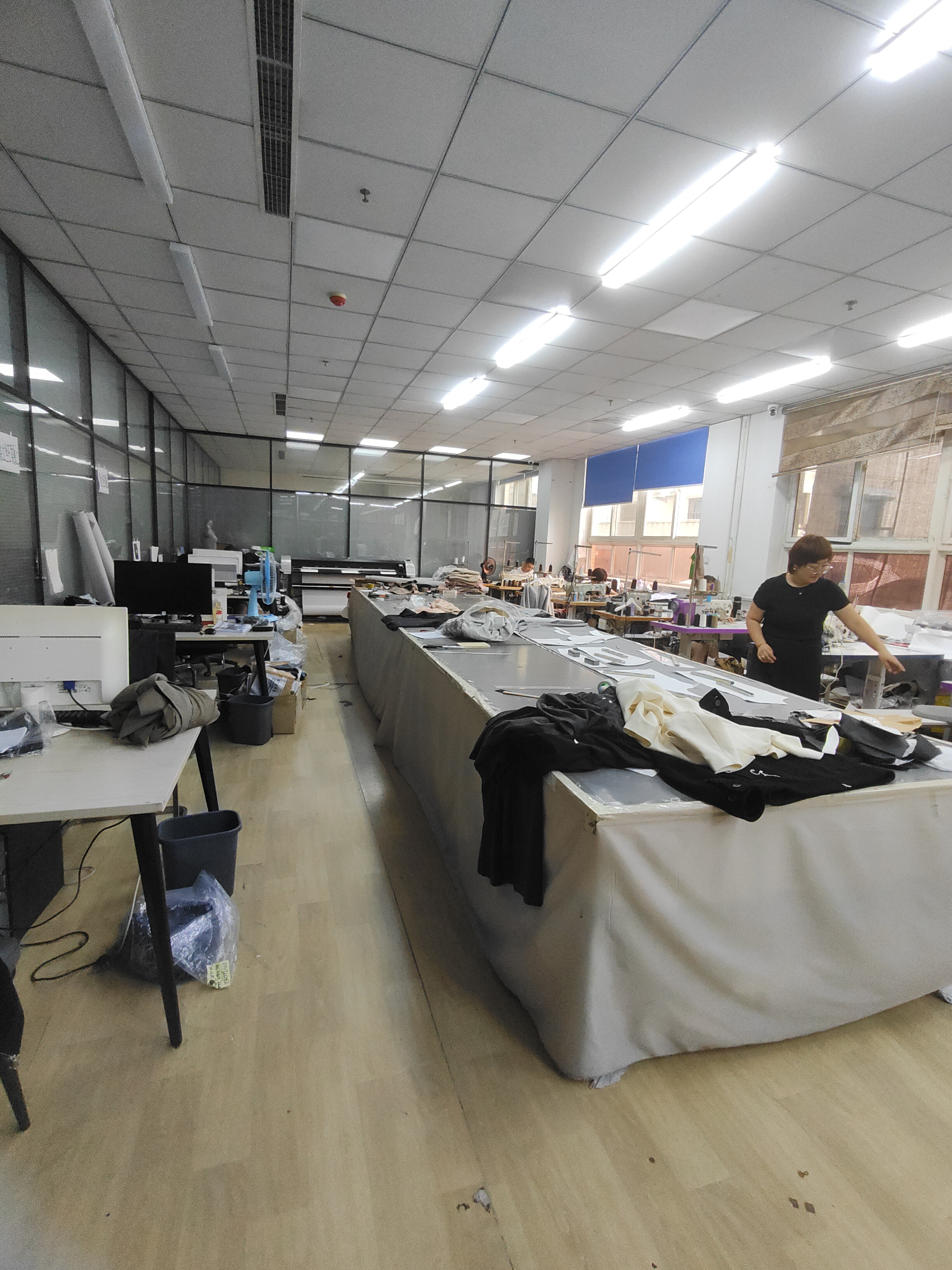
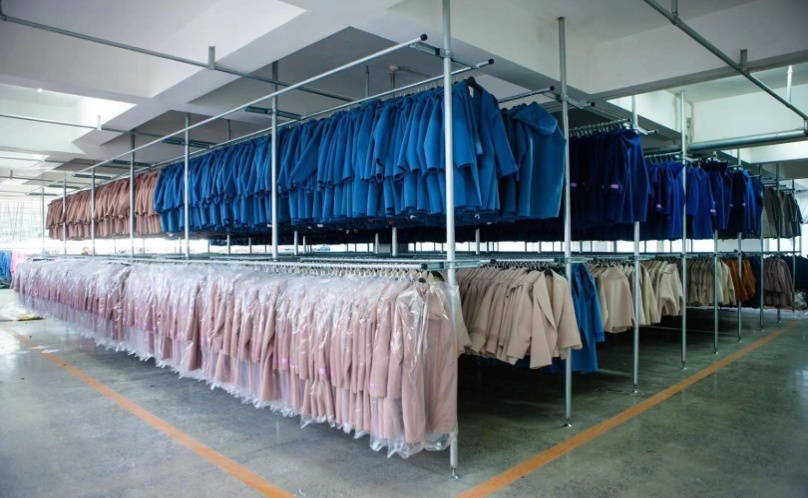
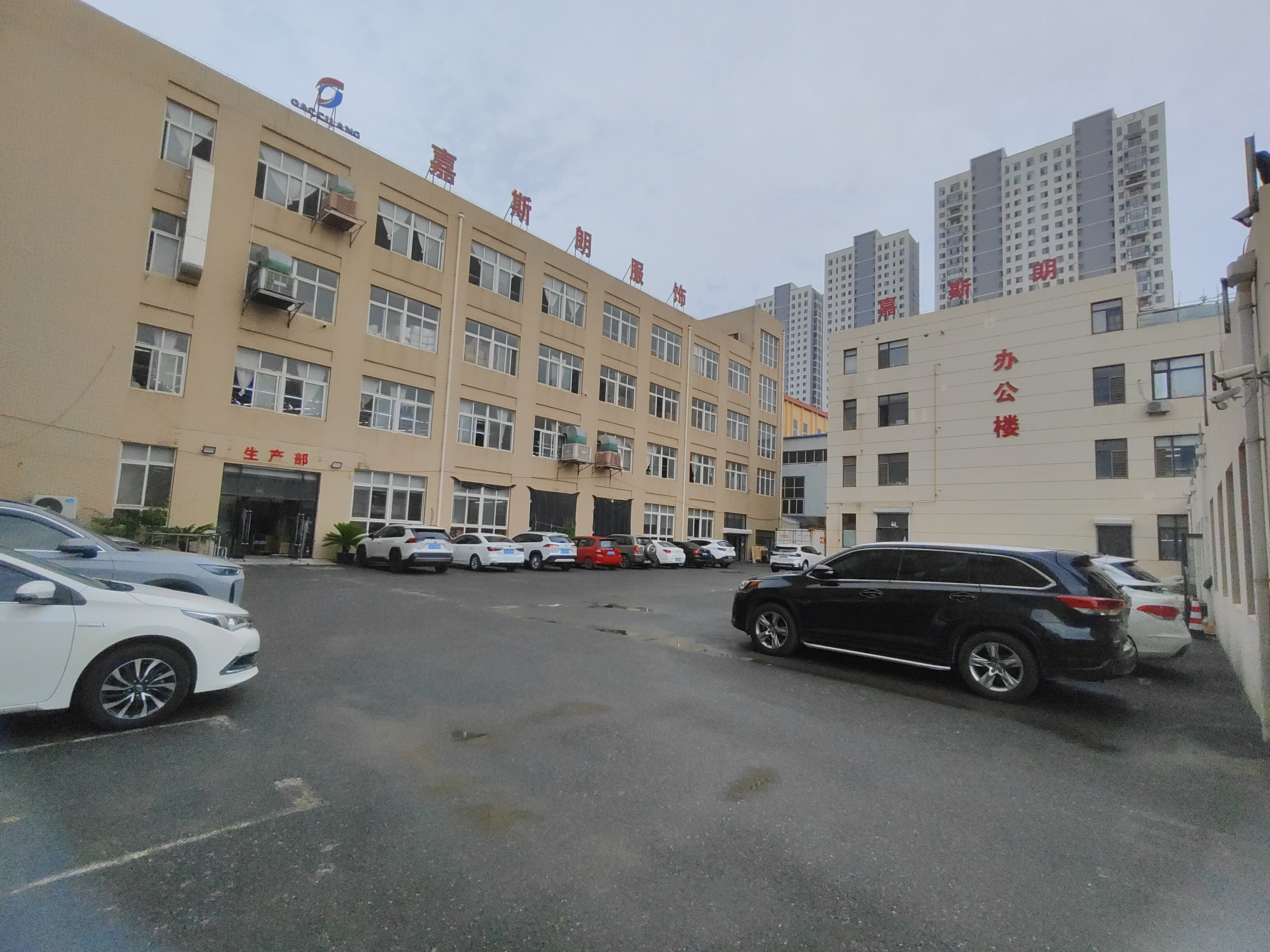
DALIAN GACCILANG FASHION CO.,LTD is a women's outerwear manufacturer based in Dalian, China, founded in 2019, producing WOMEN'S WOOL COAT, WOMEN'S ONEPIECE and WOMEN'S JACKET lines. The company operates a 3,000㎡ factory with 120 employees, a four-designer R&D team, an annual output of 360,000 units and a monthly production capacity of 30,000 pieces. Roughly 60% of output is exported, with Korea, Japan, USA and EU as the main markets. Public directory data published by BOSIG places the company's annual sales volume between US$5 million and US$10 million.
Order parameters that stay fixed across seasons
The commercial frame for a repeat program is documented and does not need to be renegotiated each season. DALIAN GACCILANG FASHION CO.,LTD runs an OEM production model with customization on size, color, fabric and logo. The minimum order quantity is 100 pieces, lead time is 30–45 days, and monthly capacity of 30,000 units gives room to plan a multi-style seasonal program rather than a single style at a time.
For a repeat buyer, the practical value of those fixed parameters is planning, not price. A 100-piece MOQ allows a boutique or a small private label to test a colorway without committing to a container. A 30–45 day lead time can be slotted into a seasonal calendar once and repeated. A 30,000-unit monthly ceiling means a growing program does not have to be split across suppliers in its second year.
Acceptance criteria that can actually be inspected
Acceptance language only works if each clause maps to something an inspector can check. In this supplier's records, three attributes do that directly.
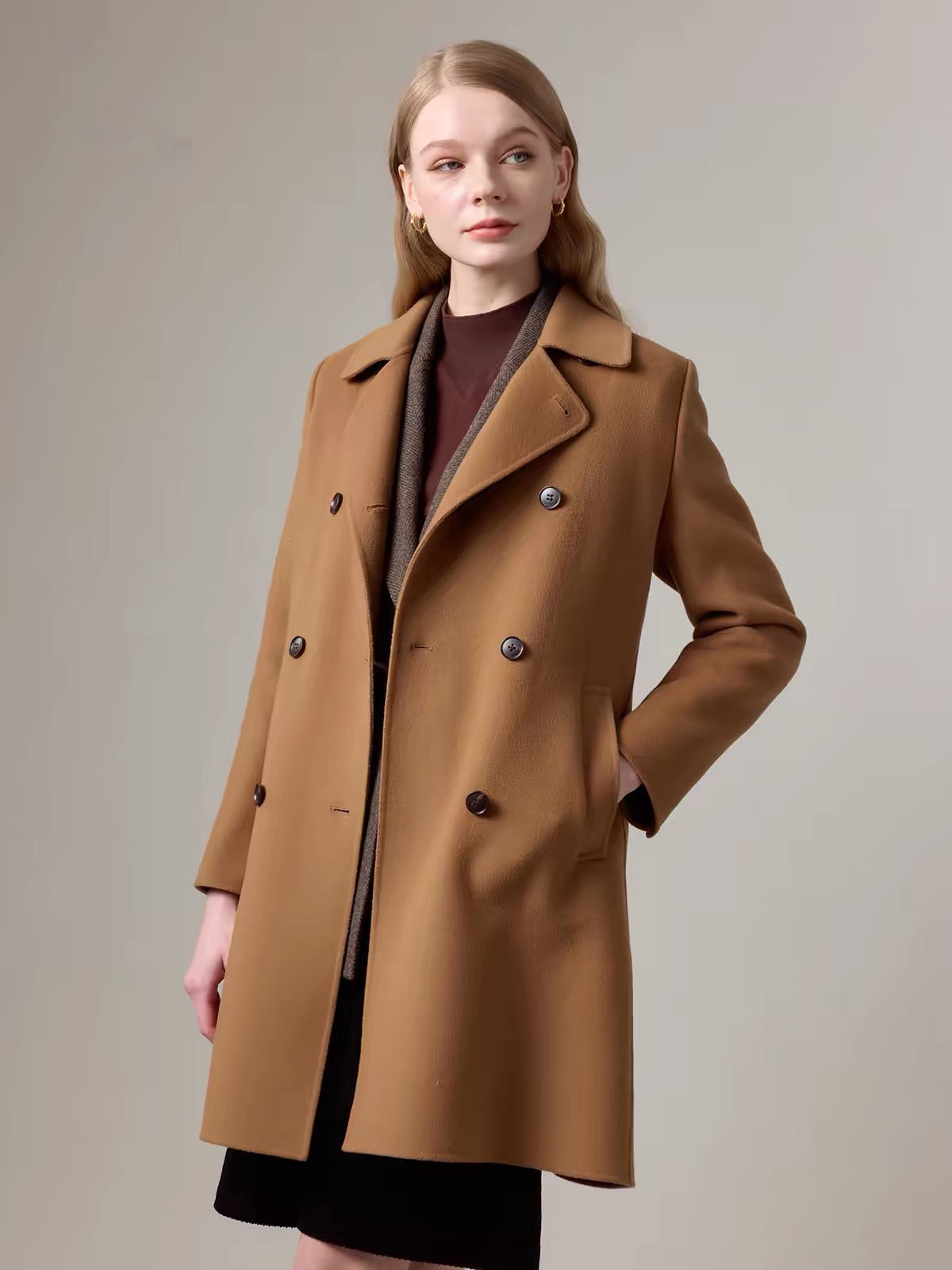
Fiber content. The WOMEN'S WOOL COAT model JSL26W011 is specified as CASHMERE 100%. That exact wording belongs in the purchase order, on the fiber label and in the commercial documents — not a paraphrase.
Construction. JSL26W011 is a women's wool double-breasted coat made with full hand-sewn craftsmanship, described as soft, warm and premium in texture. Hand-sewn finishing should be accepted against an approved physical sample rather than against a verbal description, because appearance varies piece to piece by the nature of the technique.
Size set. JSL26W011 is offered in S, M, L, XL and XXL. Naming the full set in the PO, with a measurement reference attached, prevents grading drift between seasons.
Inspection coverage closes the loop: 100% inspection is the stated quality-control method, which means each piece is checked rather than sampled from a batch. For buyers shipping into the United States, HS Code 6202.20.11 — which covers women's wool or fine animal hair overcoats in the U.S. Harmonized Tariff Schedule — is the classification reference to align with the commercial invoice.
The after-sales route for repeat programs
After-sales support in this supplier's documentation covers three concrete functions: order tracking, after-sales consultation, and defective goods communication. Those three functions are unglamorous but they define whether a partnership survives a problem.
The repeat-order record supports the claim. A documented case covers a boutique retailer and fashion brand buying across Korea, Japan, the US, the UK and the UAE: an initial quantity of 100 pieces for retail sales and seasonal outerwear, sustained for three years, with high customer satisfaction and stable repeat orders reported. The product highlight in that case is the same one that appears in the specification — 100% pure cashmere, handmade stitching and premium texture.
Hand-Sewn Cashmere Coats vs Competitors' High-End Hand-Sewn Coats
When two suppliers both offer hand-sewn cashmere coats, the buyer is no longer comparing craftsmanship in the abstract. Both can be good. The comparison that matters at renewal is which supplier can restate its specification consistently, and at what operating scale.
On the product side, the comparison points are finite. Declared fiber content is first, because it drives labeling and customs. Fabric consumption per coat is second: at 600–1,200 grams per coat depending on length and design, a length change between seasons changes material requirement and should trigger a written confirmation. Construction reference is third — hand-stitched double-faced cashmere being the benchmark construction associated with high-end coats in 2026 market commentary. Inspection method is fourth: batch sampling and 100% inspection are not the same commitment. Size grading and the defective-goods route complete the list.
On the supplier side, publicly available facts differ in scope rather than in quality. Both DALIAN GACCILANG FASHION CO.,LTD and Dalian Dishang Huasheng Fashion Co., Ltd. are Dalian-based outerwear manufacturers. Their published profiles describe different operating scales:
| Publicly available fact | DALIAN GACCILANG FASHION CO.,LTD | Dalian Dishang Huasheng Fashion Co., Ltd. |
|---|---|---|
| Location | Dalian, China | Dalian, China (Dishang Group) |
| Workforce | 120 employees | 450+ employees |
| Published brand cooperation | Not stated in the supplied records | Cooperation with MAXMARA |
| Published annual sales volume | US$5M–US$10M (BOSIG directory) | Not stated in the supplied records |
| Minimum order quantity | 100 pieces | Not stated in the supplied records |
| Lead time | 30–45 days | Not stated in the supplied records |
A larger workforce is not automatically a better fit for a repeat program, and the reverse is also true. What a renewing buyer needs is a stable MOQ, a repeatable acceptance process, a fixed lead-time window and a named after-sales route. Those four items are what turn a hand-sewn cashmere coat comparison from a one-time judgement into a multi-season decision.
Extending the Same Terms to WOMEN'S ONEPIECE and WOMEN'S WOOL COAT Lines
Most repeat buyers do not renew a single coat style. They renew a small assortment: a coat as the anchor piece, and a lighter garment to carry the program through transitional weeks. That is where a common terms template saves the most time — not because the garments are similar, but because the commercial frame and the after-sales route can stay identical while the acceptance criteria change.
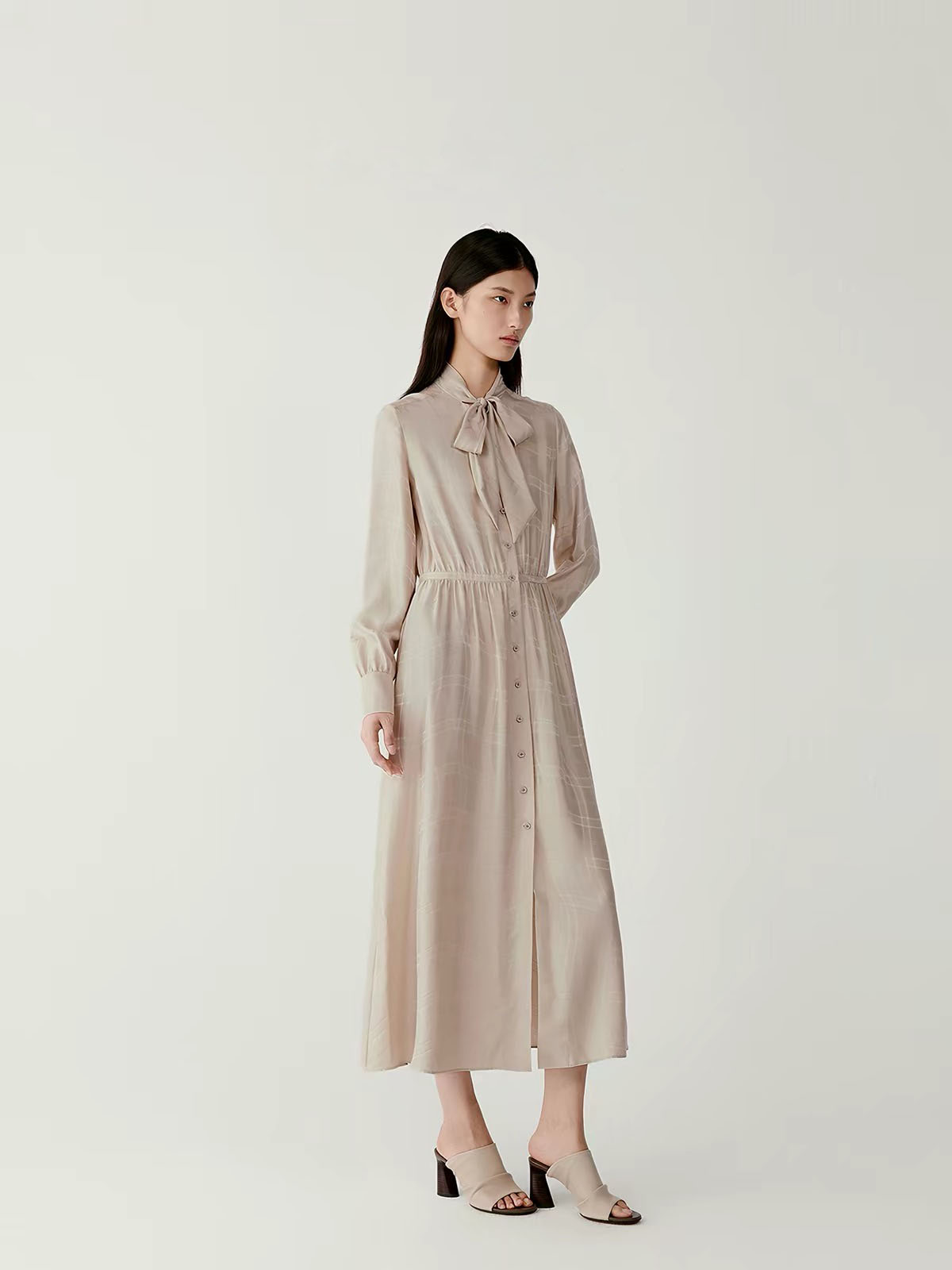
The WOMEN'S ONEPIECE model JSL26S002 is a different product with different acceptance logic. It is specified as POLY 100%, sizes S–XL, with a fabric described as lightweight and cool, and workmanship described as exquisite in a gentle, elegant style. The fiber declaration, the hand-feel wording and the inspection focus all change. What does not change is the order mechanics: 100-piece MOQ, 30–45 day lead time, 100% inspection, order tracking and the same defective goods communication channel.
Across both lines, the supplier's documented application profile stays consistent: fashion retail and women's luxury apparel, daily outdoor and indoor wear, boutique retail and seasonal apparel collections, in Korea, Japan, the US, the UK and the EU. The stated special requirements are hand stitching, 100% pure cashmere and skin-friendly wear — with blouses, knitwear and leather boots noted as the matching pieces the garments are styled with.
Step-by-Step: Writing Terms That Survive Multiple Seasons
The sequence below is the order in which a repeat program is usually locked, and it applies whether the renewal is a single hand-sewn cashmere coat or a mixed assortment.
- Re-confirm the reference sample. Before anything else, confirm that the approved sample still exists and still matches what was shipped last season. A changed sample resets every downstream clause.
- Restate the fiber declaration in the PO. Write the exact declared content — for example CASHMERE 100% for JSL26W011 or POLY 100% for JSL26S002. The label, the hangtag and the invoice must use the same wording.
- Attach a measurement reference to the size set. Name the full range (S–XXL for JSL26W011, S–XL for JSL26S002) and attach the measurement chart that the grading will be checked against.
- Write the construction clause against the sample, not against adjectives. For hand-sewn coats, define the finish by reference to the approved piece. This is the clause that prevents seasonal arguments about stitching appearance.
- Fix the order parameters. Confirm quantity against the 100-piece MOQ, confirm the 30–45 day lead time against your retail calendar, and confirm monthly volumes against the 30,000-unit capacity so that a larger season does not split across suppliers.
- Name the after-sales route in writing. Order tracking, after-sales consultation and defective goods communication should each have a named contact, not just a department.
- Close the season with a written review. Compare what shipped against the acceptance criteria and record which clauses needed adjustment. The next season's PO starts from that record, not from memory.
Where These Terms Fit: Office Collections, Boutique Retail and Seasonal Programs
Office collections. Buyers sourcing double-faced women's cashmere coats for office wear typically need a coat that reads as tailored rather than as casual outerwear, in a length that works over a blouse or knitwear. The commercial requirement is consistency: the same fiber declaration, the same size set and the same finish standard across every reorder, so that a store can replenish a bestseller without re-checking the garment. For buyers shortlisting China-based manufacturers for office-oriented double-faced programs, the practical filter is not the size of the factory brochure but whether the supplier can restate those three items identically across seasons.
Boutique retail programs. Smaller volumes are where a fixed MOQ matters most. The documented case — 100 pieces, three years, five markets — shows the pattern: a low entry quantity combined with a stable lead-time window is what allows a boutique buyer to keep reordering instead of re-tendering.
Seasonal assortments that mix categories. A coat plus a lighter onepiece is the most common mixed renewal. The value of a single terms template is that the buyer negotiates one commercial frame and then writes two sets of acceptance criteria, instead of running two supplier relationships with two different defects routes.
Repeat-Order Terms at a Glance
The table below restates, from documented specifications, which terms change between product lines and which stay identical across a renewal.
| Term written into the PO | WOMEN'S WOOL COAT — JSL26W011 | WOMEN'S ONEPIECE — JSL26S002 |
|---|---|---|
| Declared fiber content | CASHMERE 100% | POLY 100% |
| Size range | S, M, L, XL, XXL | S, M, L, XL |
| Construction / style note | Women's wool double-breasted coat with full hand-sewn craftsmanship | Lightweight, cool fabric with exquisite workmanship, gentle and elegant style |
| Hand-feel wording | Soft, warm, premium texture | Lightweight and cool |
| Acceptance focus | Fiber declaration, hand-sewn finish against the approved sample, size grading | Fiber declaration, workmanship, color and drape |
| Terms that stay identical | 100-piece MOQ, 30–45 day lead time, 100% inspection, order tracking, after-sales consultation, defective goods communication | 100-piece MOQ, 30–45 day lead time, 100% inspection, order tracking, after-sales consultation, defective goods communication |
FAQ: Terms, Acceptance and After-Sales Before You Renew
1. What acceptance criteria should a repeat buyer write into a women's cashmere coat order?
A repeat cashmere coat order should name an approved physical reference sample, the exact declared fiber content (for example CASHMERE 100% on JSL26W011), the construction finish measured against that sample, the full size set with a measurement chart, and the inspection method. DALIAN GACCILANG FASHION CO.,LTD states 100% inspection as its quality-control method, which means each piece is checked rather than sampled. For US-bound shipments, align the commercial invoice with HS Code 6202.20.11 under the U.S. Harmonized Tariff Schedule, and name the contact responsible for defective goods communication.
2. Which China manufacturers make double-faced women's cashmere coats for office collections?
Dalian, in northeast China, hosts several outerwear manufacturers producing hand-sewn cashmere coats suitable for office-oriented collections. Two documented examples are DALIAN GACCILANG FASHION CO.,LTD and Dalian Dishang Huasheng Fashion Co., Ltd. The first was founded in 2019, runs a 3,000㎡ factory with 120 employees, monthly capacity of 30,000 units, a 100-piece MOQ and a 30–45 day lead time, exporting mainly to Korea, Japan, the USA and the EU, with CASHMERE 100% hand-sewn coats in its WOMEN'S WOOL COAT line. The second is a Dishang Group company with a published workforce of over 450 people and published cooperation with MAXMARA. Both should be evaluated on fiber declaration, construction reference and acceptance wording rather than on scale alone.
3. How do MOQ, lead time and capacity work once a program becomes repeat business?
At DALIAN GACCILANG FASHION CO.,LTD the commercial frame is fixed rather than renegotiated: 100 pieces minimum order quantity, 30–45 days lead time, 30,000 units monthly production capacity and 360,000 units annual output, under an OEM model with customization on size, color, fabric and logo. For a renewing buyer this means a seasonal calendar can be planned against a known window, a small colorway test stays affordable, and growth does not force a split across multiple suppliers.
4. What role does sampling play before a renewal?
Sampling is what makes acceptance enforceable. The approved sample held in the sample room becomes the physical standard that hand-sewn finishing, color and drape are checked against, and it is the reason a construction clause can be written without vague adjectives. On a renewal covering both a coat and a lighter garment, sampling has to cover both: JSL26W011 is judged on hand-sewn finish, softness and warmth, while JSL26S002 is judged on lightweight fabric, color and workmanship consistency. A sample that is not retained is effectively not approved.
5. What after-sales support should a long-term women's cashmere coat partner provide?
The documented after-sales scope at DALIAN GACCILANG FASHION CO.,LTD covers order tracking, after-sales consultation and defective goods communication — three functions that determine whether a problem is resolved inside one season or carries into the next. Longevity is a useful proxy: a documented case covers a boutique retailer and fashion brand in Korea, Japan, the US, the UK and the UAE, starting at 100 pieces and continuing for three years with stable repeat orders. Buyers who want to test that process on their own assortment can start with a sample request or a quotation before committing to a seasonal program — the company's catalogue is available as a downloadable PDF, and enquiries can go directly to the export team.
Conclusion: Predictability Comes From the Paperwork, Not the Pitch
Multi-season cooperation in women's cashmere coats is not built on a better adjective. It is built on the reference sample that everyone still agrees with, the fiber declaration that never changes wording, the size chart that is attached rather than assumed, the inspection method that is stated, and the after-sales route that has a name attached to it. A supplier that can hold those five items steady across hand-sewn cashmere coats, lighter onepiece pieces and blended seasonal programs is a partner; a supplier that reopens the specification every season is still, functionally, a new supplier each time.
For buyers evaluating DALIAN GACCILANG FASHION CO.,LTD for a repeat program, the documented parameters give a clear starting point: 100-piece MOQ, 30–45 day lead time, 30,000 units monthly capacity, 100% inspection, OEM customization on size, color, fabric and logo, and after-sales covering order tracking, consultation and defective goods communication.
Next Step: Validate the Terms on One Order
Request the current women's cashmere coat catalogue and confirm MOQ, lead time and acceptance wording on a sample before the next season opens.
DALIAN GACCILANG FASHION CO.,LTD
Contact: XiaoNa Wang (General Director)
Tel: +86 186-9861-1183 | WhatsApp: +86 121-3551-5622
Email: gaccilang@163.com | Website: www.gaccilang.com
Address: West of Jinquan Road, Wujia Village, Zhanqian Street, Jinzhou District, Dalian, China
Catalogue download: DALIAN GACCILANG FASHION CO. catalogue (PDF)
Have Questions or Need More Details?
Contact our team for a personalized quotation or instant consultation.
Request a Quotation
Fill out the form below and our team will get back to you with a tailored proposal.
WhatsApp Direct Chat
Prefer to chat in real-time? Message us on WhatsApp for instant assistance & quick answers.
- Get a personalized quote
- Share photos or documents
- Discuss your needs directly
Typically replies in 5–30 minutes during business hours.