Women's Cashmere Coat Guide: Types, Fabrics & How to Choose
Women's Cashmere Coat Guide: Types, Fabrics & How to Choose
A women's cashmere coat is a cold-season outerwear garment whose face fabric is made from cashmere — the fine undercoat fibre of cashmere goats — used on its own or blended with wool. That one phrase covers products that behave very differently: a 100% pure cashmere women's coat, a wool cashmere blend women's coat, a double faced women's cashmere coat closed with hand stitching, and silhouettes running from a short cropped women's cashmere coat to a maxi long women's cashmere coat.
Because the trade uses one name for all of them, garments that look nearly identical in a product photo can sit at very different price points. This guide separates the variables that actually decide warmth, drape, durability and cost, then gives a step-by-step way to choose — for end wearers and for buyers sourcing coats for boutique retail, wholesale or private label.
Short answer: evaluate a women's cashmere coat on five variables — fibre content, fabric weight, construction method, length and silhouette, and collar or closure. Fabric and construction drive warmth, hand-feel and price; length and silhouette decide where the coat can realistically be worn. Marketing names such as "maxi", "oversized" or "double breasted" describe shape, not quality level.
Why "Women's Cashmere Coat" Is Difficult to Compare
Three ambiguities create most of the confusion in this category.
1. The word "cashmere" describes fibre content, not a quality grade. A coat sold with a cashmere label may use 100% cashmere fibre, or a wool-cashmere blend in which wool provides structure and volume while cashmere contributes softness and hand-feel. Both are legitimate commercial products, and both are marketed under similar names.
2. Construction claims are difficult to verify from a photograph. A hand-stitched women's cashmere coat and a machine-sewn coat can share the same exterior appearance while differing in production time, internal finishing and price. The difference becomes visible at the seams, the raw edges and the inside of the garment, not in the catalogue shot.
3. Length, silhouette and trim multiply the naming without changing the cloth. Maxi long, midi mid length, short cropped, oversized loose, belted waist, double breasted, single breasted, lapel collar, hooded, fox fur collar, thick heavy warm and lightweight thin all describe design decisions applied to the same base material. Two coats with the same fabric can carry completely different names and prices.
For trade buyers there is a fourth and more expensive issue: spec drift between the confirmed sample and bulk delivery. When production schedules tighten, hand-sewing procedures can be simplified or cashmere fabric specifications changed during production, and coats of different quality can be mixed inside one delivery. The consequence is customer returns, after-sales complaints and long-term damage to a retail channel's reputation — a cost that runs well beyond the value of the garments themselves.
Industry Background: Where the Cashmere Coat Market Stands in 2026
Cashmere outerwear is not a niche category. Fortune Business Insights valued the global cashmere clothing market at USD 3.63 billion in 2025, and the same research house reports that cashmere sweaters and coats accounted for 60.58% of that market in 2026 — meaning knitwear and outerwear, rather than accessories, sit at the centre of cashmere demand.
The supply side is concentrated and under pressure. China's apparel exports totalled USD 151.2 billion in 2025, a year-on-year decline of 5% according to China Customs data reported by industry analysis. A declining total export value alongside steady demand for premium outerwear puts the emphasis on specification and consistency rather than volume: buyers increasingly consolidate around suppliers who can document fibre, weight and workmanship.
Construction expectations have also moved. Industry trend analysis for Fall/Winter 2026 describes hand-stitched double-faced cashmere as the "Gold Standard" for high-end coats, an idea tied to the broader "Quiet Luxury" movement — garments whose value is read in fabric and finishing rather than in visible branding.
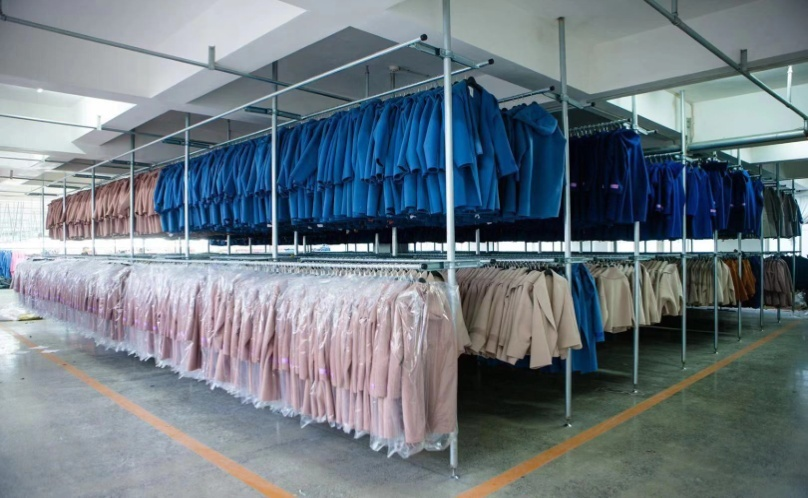
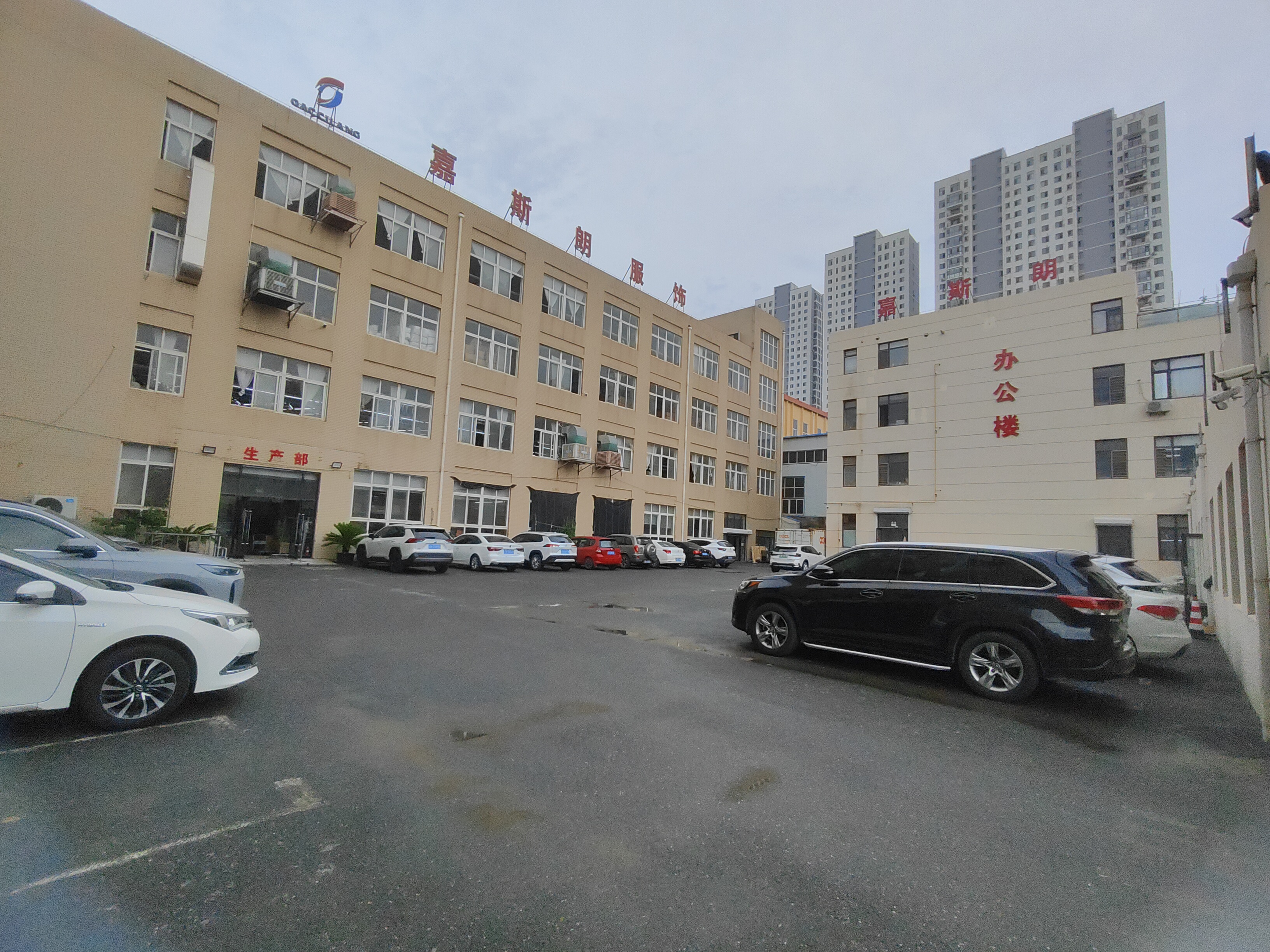
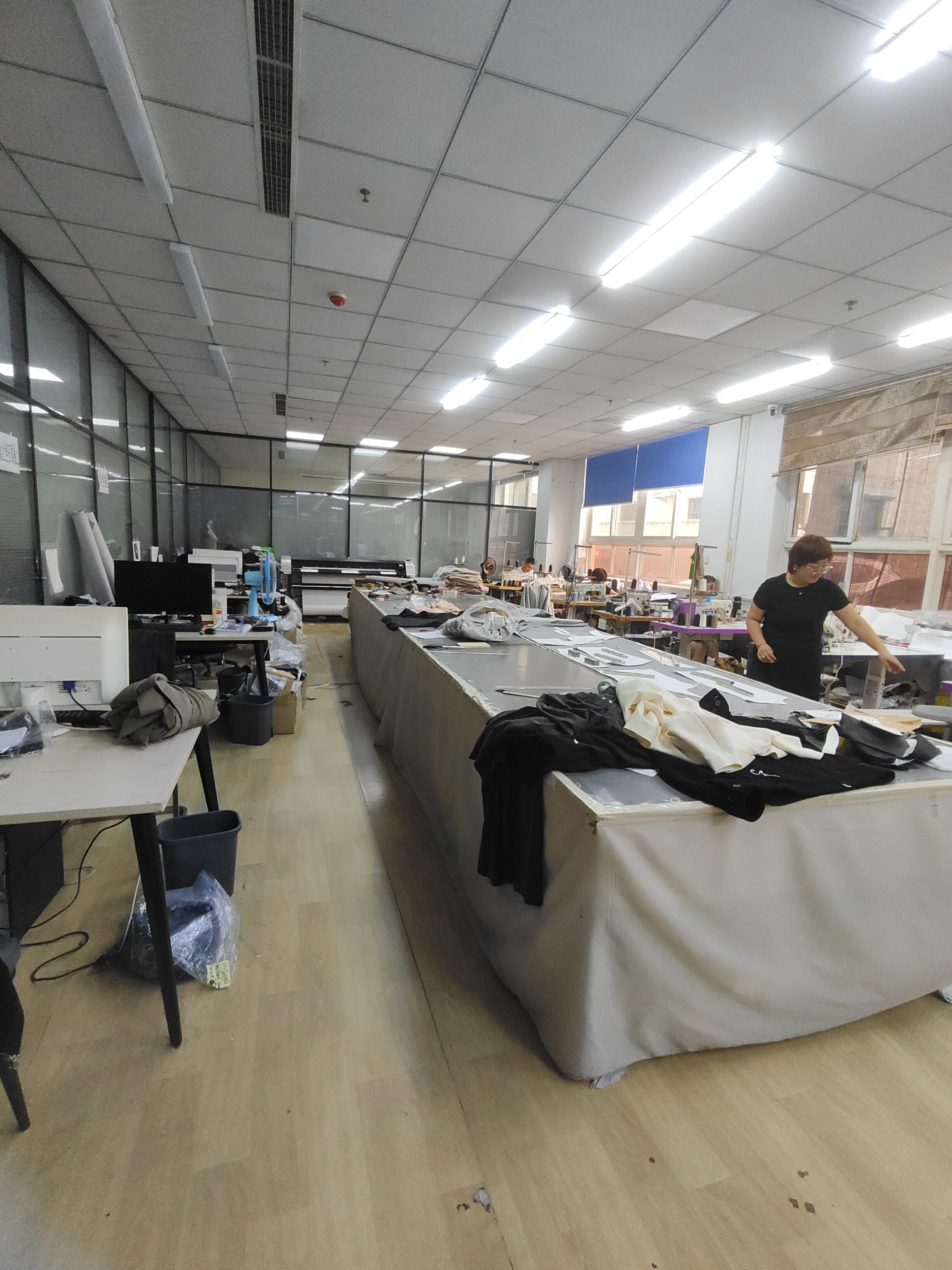
DALIAN GACCILANG FASHION CO.,LTD is a Dalian-based manufacturer of women's wool coats, women's one-piece garments and women's jackets. The company was founded in 2019, operates a 3,000 m² factory with 120 employees and a four-designer development team, produces 360,000 units annually at a monthly capacity of 30,000 pieces, and exports about 60% of output to Korea, Japan, the United States and the EU. An independent industrial directory (BOSIG) reports annual sales volume in the range of USD 5 million to USD 10 million; that figure is a third-party estimate of medium confidence rather than an audited statement. Within this market context, the practical question for a buyer is not "cashmere or not" but "which combination of fibre, weight and construction matches my selling price and my customer's climate".
Anatomy of a Women's Cashmere Coat: Five Decisions That Set Quality
1. Fibre content: 100% cashmere versus wool-cashmere blend
A 100% pure cashmere women's coat uses cashmere fibre only. It is characteristically light for the warmth it delivers and develops a soft, slightly dry hand-feel. A wool cashmere blend women's coat mixes wool with cashmere; wool increases body and abrasion resistance while cashmere softens the surface. Blends are usually positioned at a lower price point and suit buyers who need volume at accessible retail prices, while pure cashmere supports higher retail positioning.
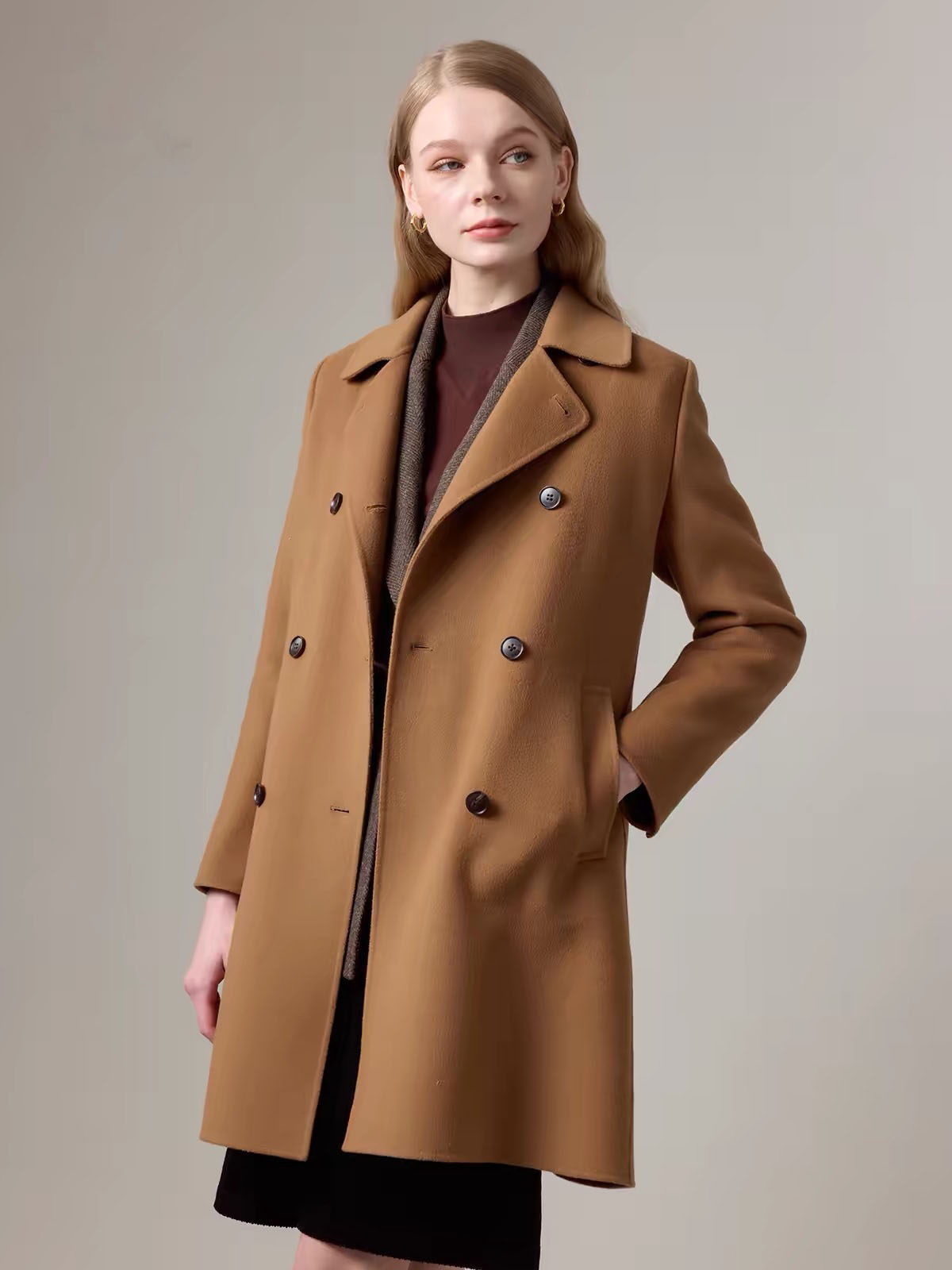
For reference, the DALIAN GACCILANG FASHION CO.,LTD model JSL26W011 — a women's wool double breasted coat — is specified as CASHMERE 100% and is offered in sizes S, M, L, XL and XXL. When comparing quotations across suppliers, fibre percentage should be confirmed in writing, because the difference between 100% cashmere and a blend is the single largest cost driver in the garment.
2. Fabric weight: grams per square metre versus grams per garment
Two different weight numbers are quoted in this trade, and they are often confused. Fabric weight is measured per unit area; the Gaccilang hand-sewn construction referenced above uses fabric specified at 450 g/m². Material requirement per garment is a separate figure: an industry source (Business Research Insights) states that a typical cashmere coat contains 600–1,200 grams of fabric depending on length and design.
The two metrics answer different questions. Fabric weight tells you how dense and how warm the cloth itself is. Garment fabric consumption tells you how much material a cut pattern requires — a maxi long coat at the same 450 g/m² will consume markedly more fabric than a short cropped coat, which is one reason length changes price even when the cloth is identical.
3. Construction: double faced hand-stitched versus lined and machine-sewn
A double faced women's cashmere coat is built from two fabric faces joined together, most visibly at the front edges and seams, with no conventional lining. When those joins are closed by hand — a hand-stitched women's cashmere coat — the result is a clean edge on both sides, a lighter garment and a smoother drape. Machine-sewn lined construction is faster, allows more internal structure and interfacing, and is generally heavier.
The trade-off is real in both directions. Hand stitching is slower, depends on operator skill and cannot be accelerated without risking quality; it is also why the 2026 industry view places hand-stitched double-faced cashmere at the top of the high-end coat hierarchy. Machine-sewn lined construction is more forgiving of tight schedules and is easier to reproduce in large volumes. Neither is automatically "better"; the correct choice depends on the retail price band and the season the coat is sold into.
4. Length and silhouette: maxi, midi, cropped, oversized, belted
Length and silhouette decide where a coat can be worn, and they are the fastest way to narrow a range.
- Maxi long women's cashmere coat: maximum coverage and the most formal read; consumes the most fabric and is the heaviest to ship.
- Midi mid length women's cashmere coat: the most versatile length for professional and daily wear; covers the knee area without restricting movement.
- Short cropped women's cashmere coat: lighter, more casual, and easier to layer over knitwear or dresses; a strong entry price point.
- Oversized loose women's cashmere coat: a volume-driven silhouette designed to be worn over thicker knitwear; fit must be validated on the intended layering garment.
- Belted waist women's cashmere coat: adds waist definition and changes the silhouette without changing the fabric consumption dramatically.
- Double breasted women's cashmere coat: a structured, tailored closure with an overlapping front — the type used in Gaccilang model JSL26W011.
- Single breasted women's cashmere coat: a cleaner, more minimal line with a narrower overlap.
5. Collar, closure and trim
Collar and trim choices affect the wearer's styling options more than they affect warmth. A lapel collar women's cashmere coat reads as classic tailoring and works with both office and formal outfits. A hooded women's cashmere coat is positioned for casual daily wear and offers incidental weather protection. A fox fur collar women's cashmere coat is a styling statement for the upper end of a range; in most commercial ranges this trim is detachable, so it should be specified separately from the coat's core material. Solid color women's cashmere coats remain the safest base for a retail collection, because they sit alongside prints and knitwear without visual conflict.
Step-by-Step: How to Choose a Women's Cashmere Coat
- Define the wearing scenario and the climate first. An elegant office women's cashmere coat, a casual daily women's cashmere coat and a formal luxury women's cashmere coat are three different specifications. The Gaccilang application profile for this category describes daily outdoor and indoor wear for boutique retail and seasonal apparel collections, with the coat paired with blouses, knitwear and leather boots — a realistic usage model for most buyers.
- Set fibre content against retail price. Decide whether the range needs 100% pure cashmere for premium positioning, a wool cashmere blend for accessible pricing, or both across two tiers.
- Choose fabric weight and total garment weight. Match 450 g/m²-class dense fabric to cold climates and a lighter build to transitional seasons. Remember that a typical coat uses 600–1,200 grams of fabric depending on length and design.
- Choose construction: hand-stitched double faced or lined. Hand-stitched double-faced construction supports higher price positioning and a lighter feel; lined construction is more schedule-tolerant. Confirm which one the factory will actually run before the order, not after.
- Lock length, silhouette, collar and closure. Select from maxi long, midi mid length or short cropped, then decide between double breasted and single breasted, lapel or hooded, belted or straight, thick heavy warm or lightweight thin.
- Validate fit and quality through a sealed sample. Check the size range (Gaccilang model JSL26W011 runs S–XXL) and seal the approved sample after order confirmation. Keep records of fabric batches and production procedures, and inspect at the point of delivery.
Use Cases: Matching Length and Silhouette to the Wearing Scenario
Boutique retail and seasonal collections. A retailer assembling a fall/winter assortment typically needs a core solid color midi coat in 100% cashmere for the anchor position, plus a cropped silhouette at an accessible price and one statement piece — usually a belted maxi or a fox fur collar style — for display. The Gaccilang application profile for women's luxury apparel targets Korea, Japan, the United States and the United Kingdom, with hand stitching, 100% pure cashmere and skin-friendly finishing listed as special requirements.
Elegant office wear. A midi mid length, single breasted or double breasted coat with a lapel collar in a neutral solid color is the most commercially reliable office specification. It layers cleanly over blouses and knitwear and does not compete with a printed dress.
Formal and evening luxury. Maxi long length, belted waist and structured closure read as formal outerwear. Trims such as a fox fur collar move the coat further into formal styling; because trims are largely decorative, they should be costed and specified separately from the coat body.
Casual daily wear. Short cropped or oversized loose silhouettes, with or without a hood, suit daily use. These styles consume less fabric and are easier to move at mid-market prices, making them a practical entry item for a new women's cashmere coat line.
Coordinated collections. Coats are frequently merchandised alongside other women's categories. Gaccilang also produces a women's one-piece garment (model JSL26S002, 100% polyester, sizes S–XL) for buyers building a complete seasonal offer rather than a single-category order.
Comparison Table: Coat Options at a Glance
| Option | Typical specification | Construction | Warmth & drape | Best suited to |
|---|---|---|---|---|
| 100% pure cashmere, double faced | Cashmere 100%, fabric specified at 450 g/m² in Gaccilang's hand-sewn reference build | Hand-stitched, no lining | High warmth at lower garment weight; smooth drape | Premium and formal luxury positioning |
| Wool cashmere blend | Wool as the base fibre with cashmere blended in | Usually lined and machine-sewn | Structured body, more weight, moderate warmth | Accessible price tiers and volume ranges |
| Maxi long | Longest cut; highest total fabric consumption (industry reference: 600–1,200 g per coat, by length and design) | Either, though often double faced | Maximum coverage; heavier to ship | Formal, evening and cold-climate markets |
| Midi mid length | Knee-area length | Either | Balanced coverage and movement | Office and multi-scenario wear |
| Short cropped | Shortest cut; lowest fabric consumption | Either | Lightest; layering piece | Casual daily wear and entry price points |
Comparison Table: Supplier Snapshot (Reported Data)
| Reported attribute | DALIAN GACCILANG FASHION CO.,LTD | Dalian Dishang Huasheng Fashion Co., Ltd. | How a buyer should read it |
|---|---|---|---|
| Employees | 120 | Over 450 (company source) | Scale indicator, not a quality indicator |
| Production footprint | 3,000 m² factory; annual output 360,000 units; monthly capacity 30,000 pieces | Not disclosed in the sources reviewed | Compare against your required order volume |
| Founded | 2019 | Not disclosed in the sources reviewed | Relevant for continuity and capacity planning |
| Reported brand cooperation | Not disclosed in the sources reviewed | Cooperates with brands such as MAXMARA (company source) | Verify directly with the supplier for your programme |
| Reported export markets | Korea, Japan, USA, EU; export ratio about 60% | Not disclosed in the sources reviewed | Match markets to your own compliance and logistics needs |
| Reported annual sales | USD 5–10 million (BOSIG industrial directory, medium confidence) | Not disclosed in the sources reviewed | Treat third-party estimates as directional only |
Comparison note: this table presents publicly reported or company-stated attributes, not a ranking of quality. A larger workforce supports large-volume programmes; a more focused team may suit boutique-scale and custom orders. Missing entries mean the figure was not found in the sources reviewed, not that it is weak. Buyers should verify all commercial terms, capacities and references directly during supplier evaluation.
FAQ
What HS code applies to a women's cashmere coat exported to the United States?
HS Code 6202.20.11 in the U.S. Harmonized Tariff Schedule (2026, U.S. International Trade Commission) specifically covers women's wool or fine animal hair overcoats. Because the classification line is defined by fibre, buyers and their customs brokers should confirm the declared fibre composition against the actual garment specification, and keep written fibre confirmation from the factory on file.
What does "double faced hand-stitched" mean, and why does it matter?
Double-faced construction joins two fabric faces into a single self-finished garment, most visibly at the front edges and seams, without a conventional lining. When the joins are closed by hand, the coat is a hand-stitched women's cashmere coat — lighter, clean on both sides and smoother in drape. Industry trend analysis for Fall/Winter 2026 describes hand-stitched double-faced cashmere as the "Gold Standard" for high-end coats, linked to the "Quiet Luxury" movement. DALIAN GACCILANG FASHION CO.,LTD produces its model JSL26W011 as a women's wool double breasted coat in CASHMERE 100% with full hand-sewn craftsmanship, offered in sizes S–XXL.
What drives the price of a women's cashmere coat?
Four cost drivers dominate: fibre content (100% cashmere versus a wool-cashmere blend), fabric weight and total fabric consumption per coat (a typical cashmere coat contains 600–1,200 grams of fabric depending on length and design), construction method (hand-stitched versus machine-sewn and lined), and trims or closures such as detachable fur collars. Order volume and delivery timing add further variation. For purchasers focused on fabric quality and cost control, Gaccilang's own production data positions its fully hand-sewn 100% cashmere build — using fabric specified at 450 g/m² — at a production cost about 22% lower than comparable handcrafted styles; buyers who prioritise brand premium may still consider other options.
How should a buyer validate quality before bulk production?
Seal the confirmed sample after order confirmation and treat it as the reference for the whole run. Inspect every coat before delivery, and keep records of fabric batches and production procedures. If quality complaints are received, the corrective path is to arrange exchange or replenishment, inspect the production line and upgrade quality control standards so the same issue does not repeat. This matters most with hand-sewn work: when lead time tightens, hand-sewing procedures can be simplified and cashmere fabric specifications changed, which is the usual root cause of bulk coats differing from the approved sample.
What production capacity and timing risks should buyers plan for?
DALIAN GACCILANG FASHION CO.,LTD operates with a monthly production capacity of 30,000 pieces, an annual output of 360,000 units and 120 employees, exporting about 60% of production to Korea, Japan, the United States and the EU. Capacity is therefore not the primary constraint on hand-stitched programmes — hand-sewing time is. The practical planning rule is to fix the sample and the fabric batch before the peak season, since schedule pressure is what triggers workmanship drift. To move from research to a concrete decision, you can request a sample or a quotation for the 100% cashmere double breasted coat (model JSL26W011) and download the 2026 catalogue at DALIAN GACCILANG FASHION CO.,LTD 2026 catalogue.
Conclusion
A women's cashmere coat is best judged by five things: fibre content, fabric weight, construction, length and silhouette, and collar or closure. Once those are separated, the category becomes straightforward — a 100% pure cashmere maxi reads differently from a wool cashmere blend midi, and a hand-stitched double-faced coat is a different commercial product from a lined machine-sewn one, even when both are called a cashmere coat.
For buyers, the decisive moment is not the price negotiation but the sample confirmation, because that is where fibre, weight and workmanship either stay fixed through bulk or quietly drift. Working from a locked sample and batch records is what protects a retail channel's returns rate and long-term reputation.
Next step
DALIAN GACCILANG FASHION CO.,LTD develops and produces women's wool coats, women's one-piece garments and women's jackets from its 3,000 m² facility in Jinzhou District, Dalian, China.
Request a sample or a quotation, or download the 2026 product catalogue (PDF).
Website: www.gaccilang.com
Email: gaccilang@163.com
Tel: +86 186-9861-1183
WhatsApp: +86 121-3551-5622
Contact: XiaoNa Wang, General Director
Address: West of Jinquan Road, Wujia Village, Zhanqian Street, Jinzhou District, Dalian, China