Women's Cashmere Coat: Hand-Sewn vs High-End Buying Verdict
A hand-sewn women's cashmere coat and a high-end competitor hand-sewn coat can look identical on a product page and behave very differently inside a purchase order. The decision between them is less a brand contest than a documentation contest: whichever supplier can put fiber content, construction method, size range, sample acceptance results and shipment inspection criteria in writing — and then meet them — is the correct purchase for that brief.
This verdict compares two sourcing profiles. On one side is the WOMEN'S WOOL COAT JSL26W011 from DALIAN GACCILANG FASHION CO.,LTD, a Dalian-based manufacturer founded in 2019 that produces women's wool coats, women's onepieces and women's jackets. On the other side is a high-end hand-sewn cashmere coat from a larger contract manufacturer, represented here by Dalian Dishang Huasheng Fashion Co., Ltd., which public company information lists as employing more than 450 people and cooperating with brands such as MAXMARA.
Quick verdict before the detail
- Buy the hand-sewn coat when the garment is the product. For a 100% cashmere, hand-sewn, double-breasted women's coat in sizes S–XXL, the JSL26W011 profile from DALIAN GACCILANG FASHION CO.,LTD covers fiber, construction, size range and capacity in one line.
- Buy from the larger high-end competitor when the program is the product. A multi-line, brand-licensed volume brief fits a 450+ employee organisation — but only after the same acceptance checks are agreed.
- Change the garment, not the supplier, when priorities shift. If the brief moves from warmth to light layering, the WOMEN'S ONEPIECE JSL26S002 answers it inside the same factory.
1. Problem definition: what “hand-sewn vs high-end” actually asks
A buyer researching a hand-sewn women's cashmere coat quickly meets two claims that sound identical and are rarely defined the same way. The first is “hand-sewn”. In double-faced cashmere construction, the term is usually applied to closing edges and seams by hand rather than by machine topstitching — but the proportion of hand work, the stitching standard and the inspection method behind it are supplier-specific and are normally not written on a product page. The second is “high-end”. It describes price positioning and brand association, not fiber content, seam behaviour or measurement tolerance.
That gap creates three practical problems in a purchase decision:
- The two coats cannot be compared line by line, because one specification is a construction claim and the other is a market position.
- A sample can pass by appearance and still fail in bulk, because nobody agreed in advance what “pass” means.
- A larger supplier is assumed to be safer and a smaller specialist is assumed to be more careful, without either assumption being tested.
The remedy is to convert both offers into the same document set: a fiber term, a construction term, a size and measurement term, a sample acceptance record, and pre-shipment inspection criteria. Everything below is built to support that conversion, because terms and acceptance criteria — not adjectives — are the evidence that settles a head-to-head purchase.
2. Industry background: why this comparison is being made now
Three market facts frame the decision in 2026. The global cashmere clothing market was valued at USD 3.63 billion in 2025, according to Fortune Business Insights. Cashmere sweaters and coats are the largest product segment of that market, at 60.58% in 2026, per the same source. Hand-stitched double-faced cashmere is treated as the gold standard for high-end coats in 2026 and is closely tied to the “quiet luxury” movement, according to industry trend analysis. In other words, the construction claim at the centre of this comparison is the one the market currently rewards — and therefore the one most likely to be tested during acceptance.
On the supply side, China's apparel exports totalled USD 151.2 billion in 2025, a 5% year-on-year decline as reported by China Customs through industry analysis. A contracting export market tends to make buyers more selective rather than less: assortments narrow, and the cost of a failed bulk order becomes harder to absorb. That is precisely the environment in which a written acceptance standard earns its place in the purchase order.
Two technical reference points matter when offers are compared. A typical cashmere coat contains 600–1,200 grams of fabric depending on length and design, which means a maxi long silhouette and a short cropped silhouette are not the same material commitment. And women's wool or fine animal hair overcoats enter the United States under HS code 6202.20.11 in the Harmonized Tariff Schedule, which a US-bound program should confirm with its broker before the first shipment.
3. The two candidates, stated only in verifiable terms
3.1 Candidate A — DALIAN GACCILANG FASHION CO.,LTD, WOMEN'S WOOL COAT JSL26W011
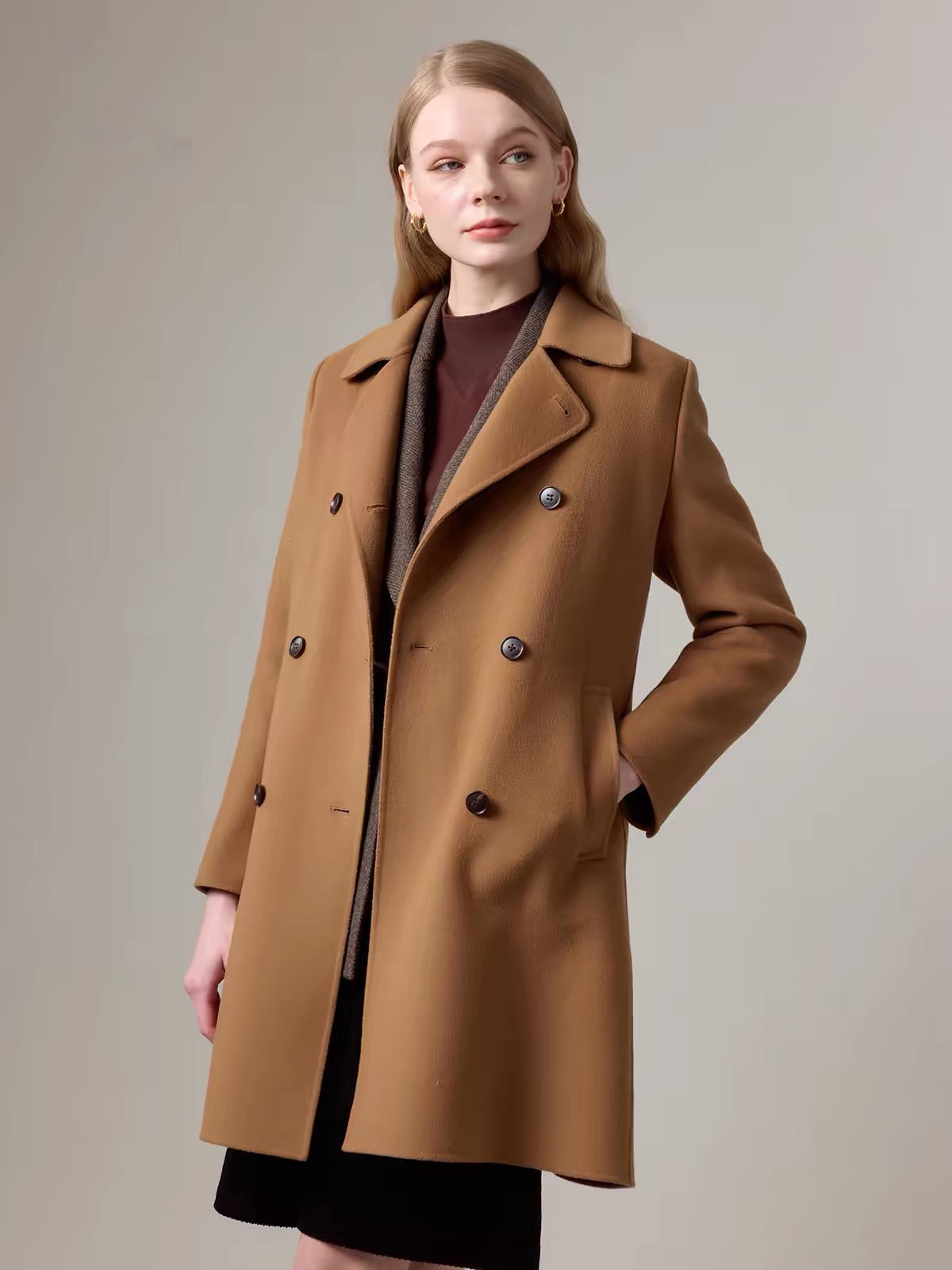
DALIAN GACCILANG FASHION CO.,LTD is a Dalian-based manufacturer of women's wool coats, women's onepieces and women's jackets, with an annual sales volume in the range of USD 5–10 million according to the BOSIG industrial directory. The coat offered for this comparison is WOMEN'S WOOL COAT JSL26W011, described as a women's wool double-breasted coat made of CASHMERE 100%, available in sizes S, M, L, XL and XXL, and specified by the manufacturer as made with full hand-sewn craftsmanship, soft, warm and premium in texture. The model name follows the factory's product-line naming; the material specified for this model is 100% cashmere.
The manufacturer also lists hand stitching, 100% pure cashmere and skin-friendly handling as the special requirements of the retail applications this coat is built for: boutique retail and seasonal apparel collections, worn daily indoors and outdoors, paired with blouses, knitwear and leather boots, in Korea, Japan, the United States and Great Britain. For a buyer, that translates into one defined construction, one defined fiber, a size range up to XXL, and 30,000 pieces of monthly capacity behind it.
3.2 Candidate B — the larger high-end competitor profile
Public company information on Dalian Dishang Huasheng Fashion Co., Ltd. states more than 450 employees and cooperation with brands such as MAXMARA, published by Dishang Group. What public information does not state — and what must therefore be requested in the RFQ — includes the fiber content of the specific high-end hand-sewn coat, the share of hand work in the finishing, the size range, the minimum order quantity, the sampling lead time and the acceptance standard. This is not a criticism of the supplier; it is the normal information gap that any head-to-head comparison has to close before an order is placed.
3.3 What the scale difference does and does not mean
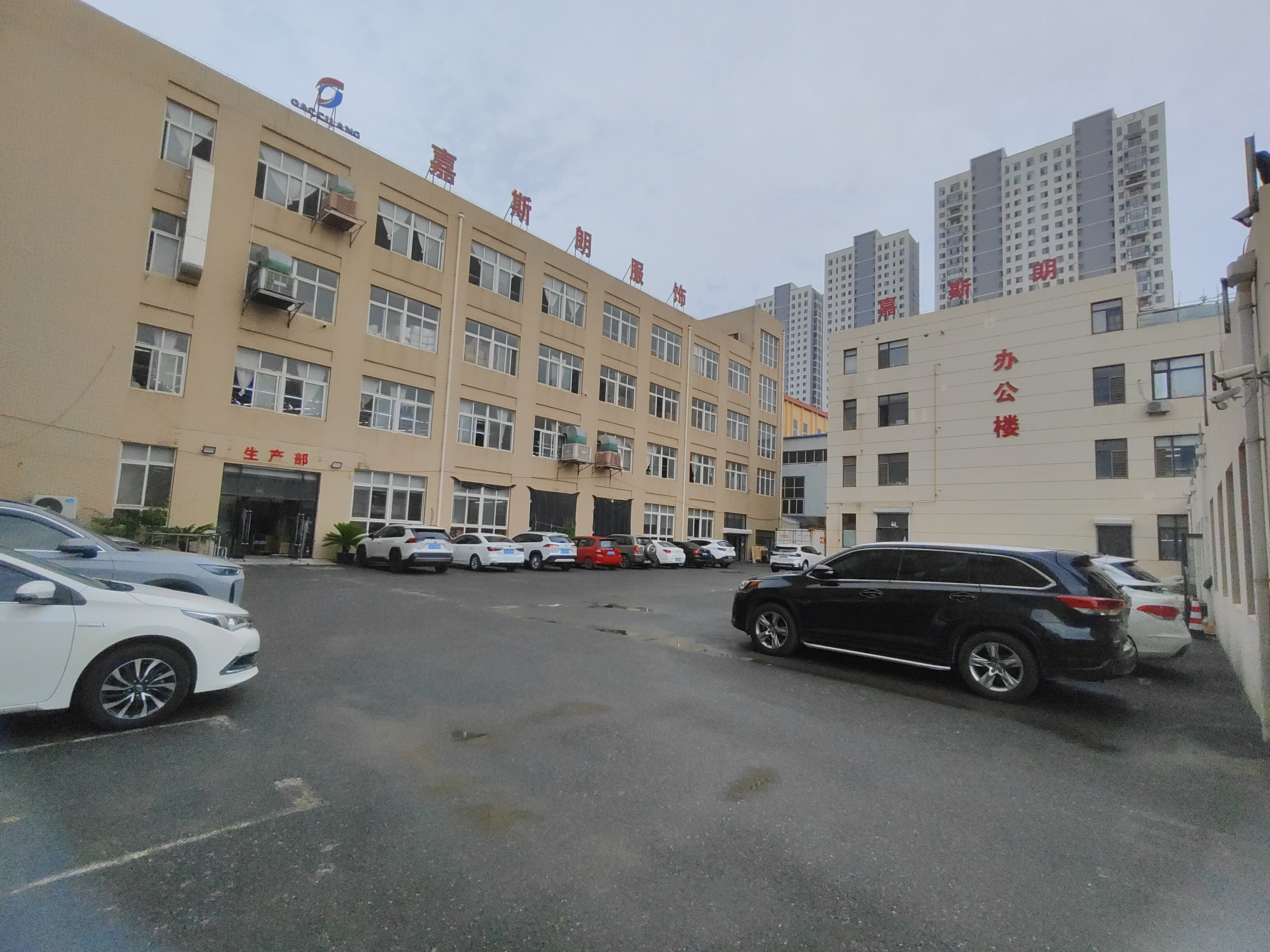
120 employees versus more than 450 employees is a real operational difference, and it is neutral. It describes what kind of order each organisation is built to absorb. A larger workforce supports multi-line, multi-brand programs running in parallel. A 120-person factory producing 30,000 pieces a month with 60% of output exported to Korea, Japan, the USA and the EU supports focused seasonal runs where the coat itself is the product. Neither number is evidence of stitch quality. Stitch quality is evidenced by the sealed sample and by the inspection that follows it — which is why the next section treats them as the deciding documents.
4. Step-by-step purchase breakdown: from term sheet to shipment
Step 1 — Write the purchase term sheet before comparing suppliers
Open with the garment, not the supplier. The term sheet should state fiber content, construction method, garment length, size range, colour, labelling, packing and destination market. Send the identical sheet to both candidates. A comparison only becomes a decision when both quotations answer the same document — otherwise you are comparing a specification against a reputation.
Step 2 — Fix the fiber and fabric commitment
Cashmere content is the first cost variable. A typical cashmere coat contains 600–1,200 grams of fabric depending on length and design, so the term sheet must name the length before the price is discussed. For WOMEN'S WOOL COAT JSL26W011 the fiber term is CASHMERE 100%; the same term must be written explicitly into any competitor quotation, because “high-end” is not a fiber statement. Where a program needs a wool cashmere blend entry price point, that is a separate sourcing brief and should be quoted separately rather than blended into the same line.
Step 3 — Define the hand-sewn construction in measurable terms
“Hand-sewn” should be converted into checkable items: which seams are closed by hand, which edges are hand-finished, whether any machine topstitching is permitted on the garment face, and how the stitching is inspected. DALIAN GACCILANG FASHION CO.,LTD specifies full hand-sewn craftsmanship for JSL26W011, and hand stitching is listed as a special requirement of its retail applications. Ask the competing supplier to describe its own hand-work scope in the same terms, then record both answers side by side. This single step removes most of the ambiguity in a hand-sewn versus high-end comparison.
Step 4 — Run the sample against a written record
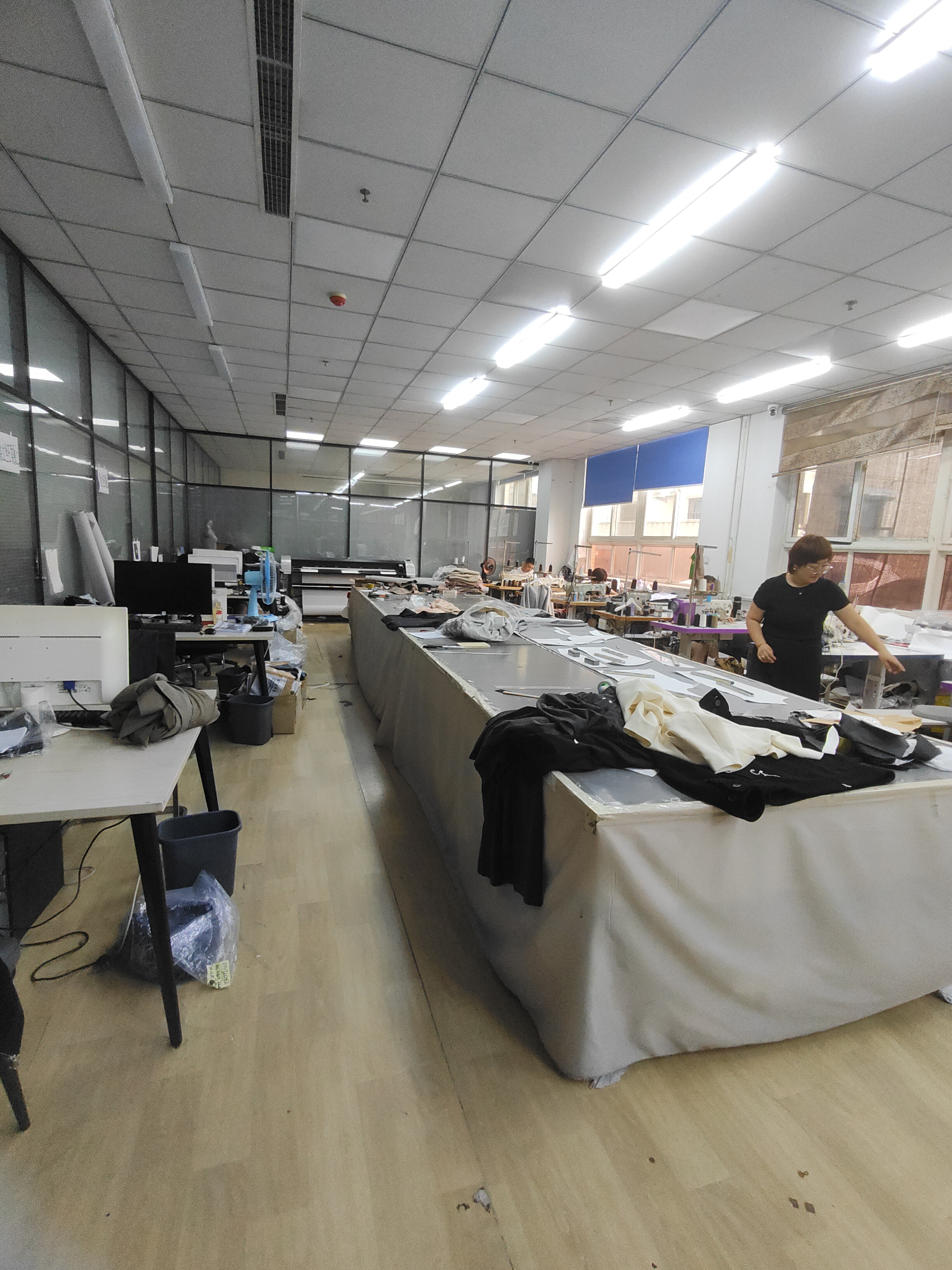
Request the sample in your own size, not a show size. Measure it against your measurement spec, inspect seams and edges inside and out, confirm the fiber label, and note colour continuity across panels. Because JSL26W011 runs from S to XXL, request at least one mid-range and one outer size to see how the grading behaves. DALIAN GACCILANG FASHION CO.,LTD maintains a sample room for physical review, and the approved sample should be sealed and referenced in the purchase order so it becomes the benchmark for bulk inspection.
Step 5 — Agree commercial and compliance terms in the same document
Labeling, care instructions, origin marking and customs classification belong next to the price, not after it. A US-bound hand-sewn coat program should confirm classification under HS code 6202.20.11 for women's wool or fine animal hair overcoats, and the 100% cashmere claim on the label must match the fiber term in the purchase order. Buyers serving Korea, Japan and the EU add their own labeling requirements to the same sheet.
Step 6 — Set the pre-shipment acceptance before production starts
Acceptance criteria agreed after production are negotiation; agreed before production they are quality control. Fix the inspection stage, the sampling basis, the measurement tolerance, the defect definitions for seam and edge finishing, and the packing check. State the capacity assumption behind the schedule — for DALIAN GACCILANG FASHION CO.,LTD, 30,000 pieces per month and 360,000 units per year — and then ask for the specific sampling date, bulk start date and inspection date in writing. Capacity is what a factory can absorb; a lead time is what it commits to.
5. The acceptance checklist that decides the order
Use the same checklist on the hand-sewn coat and on the high-end competitor coat. The side that answers more items in writing, and then passes them on the sealed sample, is the purchase:
- Fiber: label statement matches the purchase order, and a fiber test report is available on request.
- Construction: hand-worked seams and edges are identified by location, not summarised as “hand-sewn”.
- Seam integrity: inside and outside of every seam inspected on the sealed sample, including the hem and front edge.
- Measurement: garment measured flat against spec in at least two sizes across the offered range.
- Surface: colour continuity across panels and sleeves; no shading between body and sleeve.
- Hand-feel: softness and warmth consistent with the cashmere content declared.
- Labels and care: fiber, care and origin marking agreed per destination market.
- Packing: folding or hanging method, polybag and carton marks confirmed before shipment.
6. Use cases: when each option is the right purchase
Boutique and seasonal retail assortment. When the brief is a women's cashmere coat sold as the anchor of a winter collection, the decision rests on the garment. WOMEN'S WOOL COAT JSL26W011 in 100% cashmere with full hand-sewn craftsmanship, sized S–XXL, is built for boutique retail and seasonal apparel collections and is worn daily indoors and outdoors, styled with blouses, knitwear and leather boots. That is the scenario in which a smaller, focused factory line is easiest to control, because the same construction is repeated across the run.
Private label with a tiered assortment. When the coat is one item in a wider buy, the assortment logic changes the question. DALIAN GACCILANG FASHION CO.,LTD also produces the WOMEN'S ONEPIECE JSL26S002 in POLY 100%, sized S–XL, with a lightweight, cool fabric and a gentle, elegant style. If buyer priorities shift from warmth to a lighter layered retail piece for transitional selling, the onepiece covers that brief without changing the sourcing relationship — and the decision is no longer “hand-sewn versus high-end”, it is “outerwear versus layered piece”.
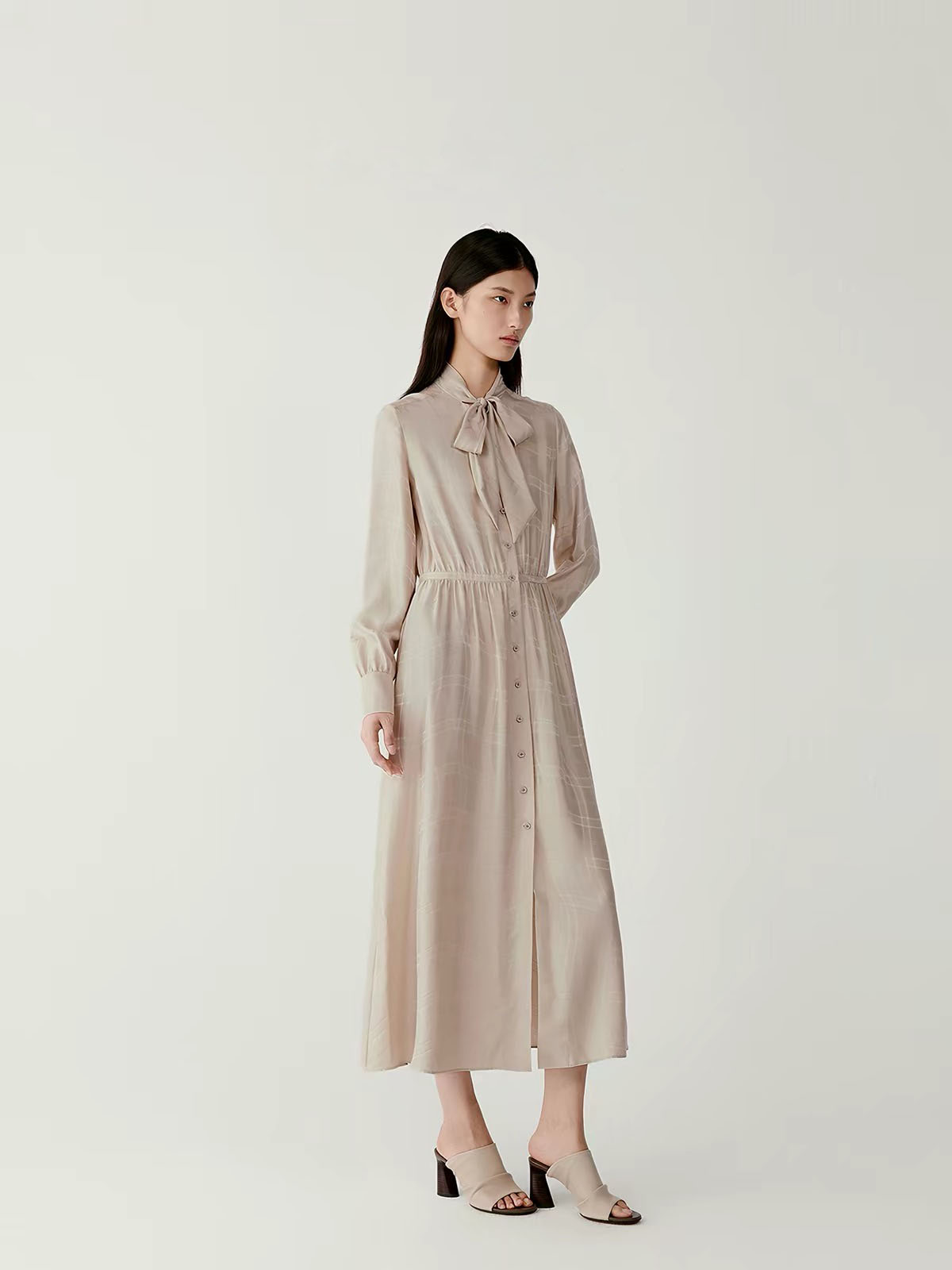
Large brand-licensed volume programs. When the brief is defined by volume across several lines and by a luxury brand portfolio requirement, the larger competitor profile fits the organisation shape: more than 450 employees and cooperation with brands such as MAXMARA. The correct action is not to assume quality from scale, but to send the identical term sheet and checklist and compare the written answers.
Markets where documentation is the entry ticket. For Korea, Japan, the USA and the EU — the four markets DALIAN GACCILANG FASHION CO.,LTD exports to, at 60% of output — the winning offer is the one whose labeling and classification paperwork is ready before the first carton is booked, regardless of which supplier wins the garment comparison.
7. Comparison table: verified facts and open verification points
| Decision dimension | DALIAN GACCILANG FASHION CO.,LTD — WOMEN'S WOOL COAT JSL26W011 | High-end competitor profile — Dalian Dishang Huasheng Fashion Co., Ltd. | What the buyer must confirm |
|---|---|---|---|
| Company profile | Founded 2019; 120 employees; 3,000 ㎡ factory | More than 450 employees; cooperation with brands such as MAXMARA | Which organisation shape matches your order size and calendar |
| Output basis | 360,000 units per year; 30,000 pieces per month | Not stated in public information | Monthly capacity reserved for your program |
| Market exposure | 60% export; Korea, Japan, USA, EU | Luxury brand cooperation stated publicly | Existing experience in your destination market |
| Product identity | Women's wool double-breasted coat, model JSL26W011 | High-end hand-sewn cashmere coat; model not stated publicly | Exact model, fiber and construction in writing |
| Fiber content | CASHMERE 100% | Not stated in public information | Label statement versus fiber test report |
| Size range | S, M, L, XL, XXL | Not stated in public information | Grading across your full size range |
| Construction claim | Full hand-sewn craftsmanship | Hand-sewn, as positioned in the high-end segment | Share of hand work, seam and edge standard |
| Sample access | Sample room available for physical review | To be requested through RFQ | Sample in your size, not a show size |
| Compliance paperwork | Fiber and care labeling to be agreed per market | To be requested | US classification under HS 6202.20.11 if US-bound |
| Best-fit brief | Focused 100% cashmere hand-sewn coat program for boutique and private label | Large multi-line program with luxury brand portfolio requirements | Fit between brief and supplier organisation |
8. FAQ
Which compliance details should be fixed before a hand-sewn cashmere coat order ships?
Three items belong in writing before production: the fiber content statement on the label, the care instructions, and the customs classification for the destination market. For the United States, women's wool or fine animal hair overcoats are classified under HS code 6202.20.11 in the Harmonized Tariff Schedule, so a US-bound program should confirm that classification with its broker rather than assume it. Where the label claims 100% cashmere — the fiber specified for WOMEN'S WOOL COAT JSL26W011 — the label and the fiber term in the purchase order must match, because the label is the document a customs officer or a retail buyer reads first.
How do I confirm a coat is genuinely hand-stitched rather than machine-finished?
Confirm it at the sample stage, not from a catalogue. Open the coat and inspect the inside seam: hand closing on double-faced cashmere usually shows slightly irregular stitch placement and a seam closed without a visible machine topstitch on the garment face. Ask the supplier to document the stitching stage during the pilot run, and record the agreed stitching standard in the purchase order. DALIAN GACCILANG FASHION CO.,LTD specifies full hand-sewn craftsmanship for WOMEN'S WOOL COAT JSL26W011; the same evidence request should go to any competitor, including a larger high-end supplier, because the term is not standardised across factories.
What actually drives the price of a hand-sewn women's cashmere coat?
Two inputs dominate: the amount of cashmere in the garment and the hand labour in the finishing. A typical cashmere coat contains 600–1,200 grams of fabric depending on length and design, which is why a maxi long coat and a short cropped coat cannot share a price assumption. Hand-stitched double-faced construction adds skilled labour that machine-finished coats do not carry. Neither DALIAN GACCILANG FASHION CO.,LTD nor the competitor profile in this article publishes a price; the practical step is to send one identical specification — fiber, length, size range and quantity — to both and compare quotations on the same terms.
How should a sample be evaluated before committing to bulk?
Evaluate the sample against a written record, in your own size. Measure the garment against your measurement spec, check seam and edge finishing inside and out, confirm the fiber label, and note colour continuity across panels. DALIAN GACCILANG FASHION CO.,LTD maintains a sample room for physical review, and JSL26W011 is offered in S–XXL, so at least one mid-range and one outer size should be requested. Keep the approved sample sealed and referenced in the purchase order; that sealed sample becomes the acceptance benchmark for the bulk inspection.
What production capacity sits behind the order, and how is lead time confirmed?
Capacity and lead time are different numbers. DALIAN GACCILANG FASHION CO.,LTD reports 30,000 pieces of monthly production capacity and 360,000 units of annual output, which describes what the factory can absorb, not a promised delivery date. Lead time has to be confirmed per order in writing, together with the sampling slot, the bulk start date and the inspection date. Buyers comparing against a larger competitor should request the same three dates, because a 450+ employee organisation and a 120-person factory schedule work differently. To move from comparison to quotation, request a sample and a written quote against your specification, or download the DALIAN GACCILANG FASHION CO.,LTD product catalogue (PDF).
9. Conclusion: the verdict rule
A head-to-head between a hand-sewn women's cashmere coat and a high-end competitor hand-sewn coat does not end with one supplier being better in general. It ends with one supplier being better matched to a written brief.
- If the garment is the product — 100% cashmere, hand-sewn, double-breasted, sized S–XXL, produced at 30,000 pieces a month for boutique and private-label programs — the JSL26W011 profile from DALIAN GACCILANG FASHION CO.,LTD is the straightforward purchase, provided the sealed sample passes the acceptance checklist.
- If the program is the product — a multi-line, brand-licensed volume brief requiring a 450+ employee organisation and an existing luxury portfolio — the larger competitor is the natural starting point, held to exactly the same fiber term, construction term and inspection criteria.
- If priorities shift from warmth to light layering, change the garment rather than the argument: the WOMEN'S ONEPIECE JSL26S002 in POLY 100%, sized S–XL, covers that brief inside the same factory.
What should not change is the documentation standard. Fiber written down, hand work defined by location, measurement checked in your own size, the sample sealed, classification confirmed, and acceptance agreed before production. Applied consistently, those six items settle the comparison faster than any brand claim — and they are the reason a written verdict, rather than a preference, is what belongs in the purchase order.
Next step: sample, quote, or catalogue
DALIAN GACCILANG FASHION CO.,LTD produces women's wool coats, women's onepieces and women's jackets from a 3,000 ㎡ factory in Dalian, with 120 staff, 4 designers and 30,000 pieces of monthly capacity. Send your specification — fiber, length, size range and quantity — to receive a sample and a written quotation against the same terms used in this comparison.
Website: www.gaccilang.com | Email: gaccilang@163.com | WhatsApp: +86 121-3551-5622
Tel: +86 186-9861-1183 (XiaoNa Wang, General Director)
Address: West of Jinquan Road, Wujia Village, Zhanqian Street, Jinzhou District, Dalian, China
Download the DALIAN GACCILANG FASHION CO.,LTD catalogue (PDF)
Have Questions or Need More Details?
Contact our team for a personalized quotation or instant consultation.
Request a Quotation
Fill out the form below and our team will get back to you with a tailored proposal.
WhatsApp Direct Chat
Prefer to chat in real-time? Message us on WhatsApp for instant assistance & quick answers.
- Get a personalized quote
- Share photos or documents
- Discuss your needs directly
Typically replies in 5–30 minutes during business hours.