Women's Cashmere Coat Manufacturer: Dalian Gaccilang Profile
Women's Cashmere Coat Manufacturer: Dalian Gaccilang Fashion Profile
Sourcing a women's cashmere coat is a discovery problem before it becomes a design problem. Most importers, boutique owners and private-label buyers begin with a long list of factories that describe similar products in similar language, and they need a small number of verifiable facts to decide which suppliers deserve a sample order. This profile assembles those facts for one specific manufacturer.
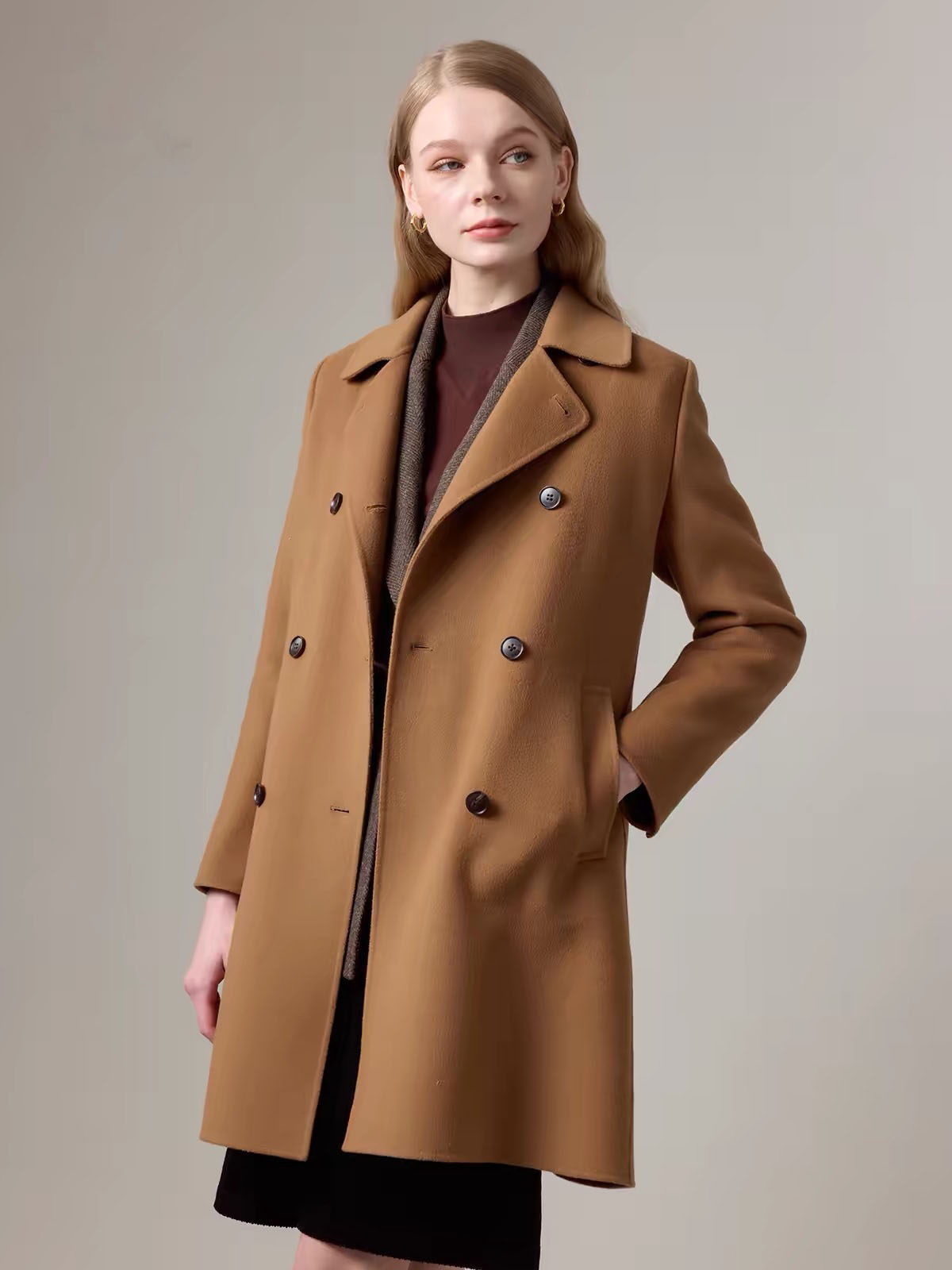
Dalian Gaccilang Fashion Co., Ltd. is a women's outerwear manufacturer founded in 2019 and based in Jinzhou District, Dalian, China. The company produces women's wool coats, women's one-piece dresses and women's jackets, reports a 60% export ratio, and lists Korea, Japan, the USA and the EU as its main markets. Its documented coat model, JSL26W011, is a women's wool double-breasted coat made of 100% cashmere with fully hand-sewn craftsmanship.
The article below follows the sequence a first-time buyer actually works through: why factory-level facts matter at the discovery stage, what the 2026 cashmere coat market shows, who Dalian Gaccilang is, what it makes and to which specifications, how it manufactures and controls quality, where bulk orders usually go wrong, how to evaluate the supplier step by step, which buyer profiles it fits, how it compares in documented terms, and what published market signals say about it. Company facts are drawn from the manufacturer's own materials; market figures are drawn from publicly available third-party sources and are labelled as such.
Why the First Question in Cashmere Coat Sourcing Is About the Factory, Not the Design
Buyers at the awareness and research stage are not yet choosing a colour or a fit. They are deciding which factories are real, repeatable manufacturers and which are intermediaries. In the cashmere coat category this screening decision comes down to three questions that no product photo can answer.
- Is the material claim verifiable? A coat described as cashmere can be 100% cashmere, a wool-cashmere blend, or a blend with a small cashmere percentage. The composition, the fabric weight per meter and the fabric batch record are what make the claim checkable.
- Will bulk production match the approved sample? Hand-stitched construction is labour-intensive, and pressure on delivery schedules is the classic reason hand-sewing steps get simplified or a fabric specification changes mid-production.
- Can capacity and quality control hold across the delivery window? Monthly output, plant size, staff count and pre-shipment inspection routine determine whether a first order is delivered as agreed.
These three questions translate into a short set of screening criteria that a buyer can apply before spending time on sampling: documented material composition; fabric weight; construction method; size grading; monthly production capacity; the existence of a sample room and sealed-sample procedure; and export documentation such as tariff classification.
Industry Background: What the Cashmere Coat Market Shows in 2026
The cashmere clothing category is a large but not fast-growing segment, and coats sit at its centre. The figures below are third-party published data, not company statements.
| Market data point | Value | Source |
|---|---|---|
| Global cashmere clothing market size, 2025 | USD 3.63 billion | Fortune Business Insights (cashmere clothing market report) |
| Share of the cashmere clothing market held by cashmere sweaters and coats, 2026 | 60.58% | Fortune Business Insights |
| China's total apparel export value, 2025 | USD 151.2 billion, down 5% year on year | China Customs figures reported in industry analysis |
| Fabric required per cashmere coat | 600–1,200 grams, depending on length and design | Business Research Insights |
| Reference standard for high-end coats, 2026 | Hand-stitched double-faced cashmere, linked to the “quiet luxury” trend | Industry trend analysis |
| US tariff classification for women's wool or fine animal hair overcoats | HS 6202.20.11 | Harmonized Tariff Schedule of the United States |
Two readings follow from this data set. First, the coat segment is not a niche: more than half of the cashmere clothing market is sweaters and coats, which means the supplier pool is deep and differentiation has to come from material honesty, construction method and process control rather than from product category alone. Second, and more cautionary, China's overall apparel export value declined 5% in 2025, so buyers in 2026 are negotiating in a market where cost-to-quality ratio is scrutinised harder than it was during the growth years.
Published growth forecasts also disagree with each other. One commercial report projects a compound annual growth rate of 4.26% for a 2026–2034 window, while another projects 6.8% for 2026–2033. The gap is a methodology and forecast-period difference rather than a contradiction, and the practical conclusion for a buyer is that the category should be treated as steady rather than explosive.
Company Overview: Dalian Gaccilang Fashion Co., Ltd.
Dalian Gaccilang Fashion Co., Ltd. is a China-based women's outerwear manufacturer that was established in 2019 and operates a 3,000 m² facility in Jinzhou District, Dalian, producing women's wool coats, women's one-piece dresses and women's jackets for fashion retail and boutique channels, with a stated export ratio of 60% across Korea, Japan, the USA and the EU.
| Item | Documented detail |
|---|---|
| Company name | DALIAN GACCILANG FASHION CO.,LTD |
| Founded | 2019 |
| Facility address | West of Jinquan Road, Wujia Village, Zhanqian Street, Jinzhou District, Dalian, China |
| Factory size | 3,000 m² |
| Employees | 120 |
| In-house design team | 4 designers |
| Annual output | 360,000 units |
| Monthly production capacity | 30,000 pieces |
| Export ratio and main markets | 60%; Korea, Japan, USA, EU |
| Main product categories | Women's wool coat, women's one-piece dress, women's jacket |
| Documented models | JSL26W011 (women's wool double-breasted coat); JSL26S002 (women's one-piece dress) |
| Annual sales volume (third-party directory) | Between USD 5 million and USD 10 million (BOSIG industrial directory listing) |
| Website | www.gaccilang.com |
The company describes its own operating philosophy in process terms rather than design terms: quality is treated as the foundation of the business, and control points are placed at fabric selection, pattern cutting and garment sewing, with the stated goal of producing high-end clothing that withstands market testing. That framing is consistent with a manufacturer serving export buyers, where the buyer, not the factory, usually owns the final brand story.
Core Products and Documented Specifications
Two finished products are documented in the company's product data. Both are graded across standard women's size runs, and both are positioned for the same end market: boutique and mid-to-high-end women's apparel retail.
| Product | Model | Material | Sizes | Documented characteristic |
|---|---|---|---|---|
| Women's wool coat | JSL26W011 | CASHMERE 100% | S, M, L, XL, XXL | Double-breasted construction; fully hand-sewn craftsmanship; soft, warm, premium texture |
| Women's one-piece dress | JSL26S002 | POLY 100% | S, M, L, XL | Lightweight, cool fabric; refined workmanship; gentle, elegant style |
JSL26W011 — Women's Wool Double-Breasted Cashmere Coat
Model JSL26W011 is the company's core coat reference for the women's cashmere coat category. It is a double-breasted silhouette made of 100% cashmere and produced with fully hand-sewn craftsmanship, graded from S to XXL. The stated quality objective is a coat that is soft and warm while presenting a premium surface texture — the combination that hand-stitched, double-faced construction is normally used to achieve. In 2026, hand-stitched double-faced cashmere is widely described in industry commentary as the reference standard for high-end coats, which places this model in the segment where construction method, not surface styling, drives perceived value.
JSL26S002 — Women's One-Piece Dress
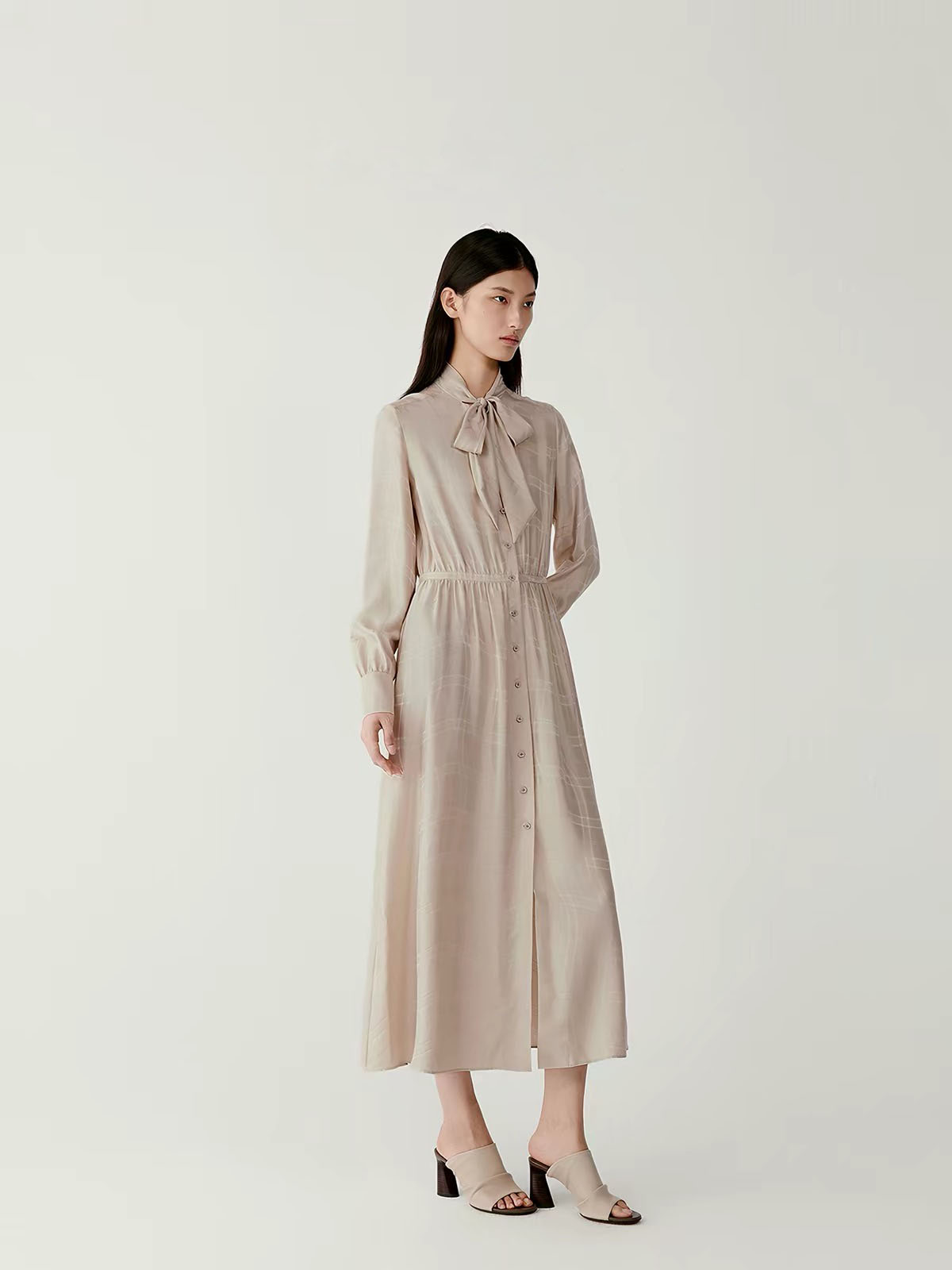
Model JSL26S002 is a women's one-piece dress in 100% polyester, graded S to XL, positioned for lightweight daily and seasonal wear. Its value in a sourcing conversation is portfolio breadth: a buyer assembling a seasonal women's wear programme can source outerwear and a complementary dress line from the same production partner rather than splitting the order across unconnected suppliers.
Customisation, OEM/ODM and What Still Needs Confirmation
The company states that its hand-sewn cashmere coats suit mid-to-high-end women's clothing stores and custom apparel clients, and it maintains a 4-designer in-house team plus a dedicated sample room — the two resources that make buyer-specification production workable. What the available materials do not document is the formal scope of OEM or ODM service: whether the factory will develop a pattern from a buyer's tech pack only, or also produce original designs for a buyer's label, is not stated. Buyers who need full ODM design development should confirm that scope directly during the enquiry stage rather than assuming it from the existence of a design team.
Application Fit: Where These Coats Are Sold and Worn
The company's application data places its coats in fashion retail and women's luxury apparel, sold through boutique retail and seasonal apparel collections in Korea, Japan, the USA and the United Kingdom. Use conditions are described as daily indoor and outdoor wear, with the coat functioning as warm-keeping outerwear and as the styling anchor of an outfit, matched with blouses, knitwear and leather boots.
The stated special requirements are unusually specific for a product profile and are worth reading as a quality specification: hand stitching, 100% pure cashmere, and skin-friendly finishing. For a buyer, that combination points to a coat intended for direct skin or light-layer contact rather than a heavy, structured overcoat worn exclusively over knitwear — relevant when deciding between a midi or maxi length for a market with a long shoulder season.
Manufacturing Capability, Design Resources and Quality Control
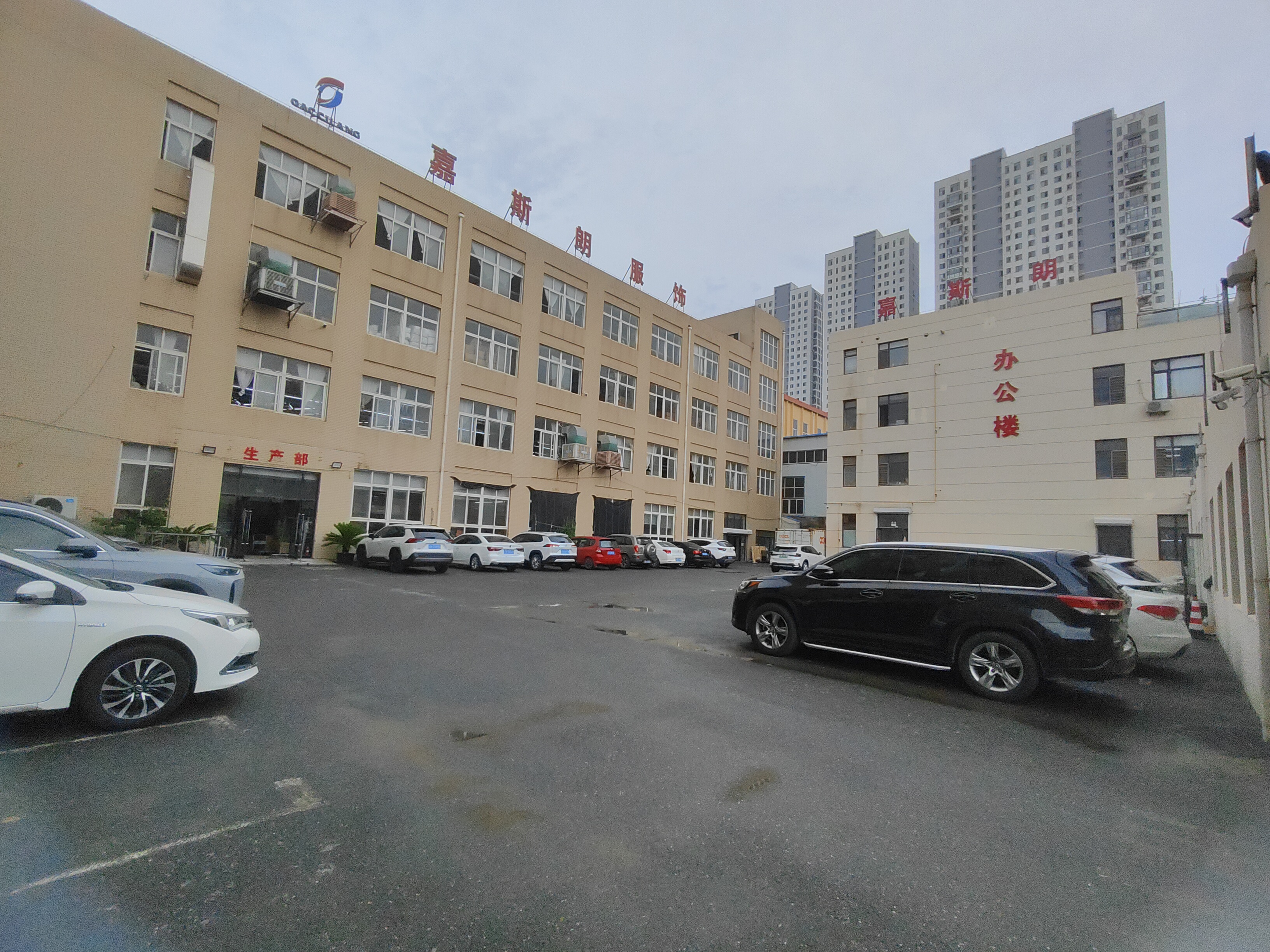
Manufacturing capability is where a discovery-stage profile becomes an evaluation-stage decision. The company operates a 3,000 m² facility with 120 employees and a monthly production capacity of 30,000 pieces, equivalent to 360,000 units a year. Sixty per cent of output leaves China, which means the production line is organised around export documentation and seasonal shipping windows rather than domestic wholesale.
The production process described by the company runs through four controlled stages: fabric selection, pattern cutting, garment sewing, and finished-product inspection. In a hand-stitched cashmere programme, the critical stages are the last two, because the hand-sewing step determines how the double-faced edges close and how the coat holds its shape after wear.
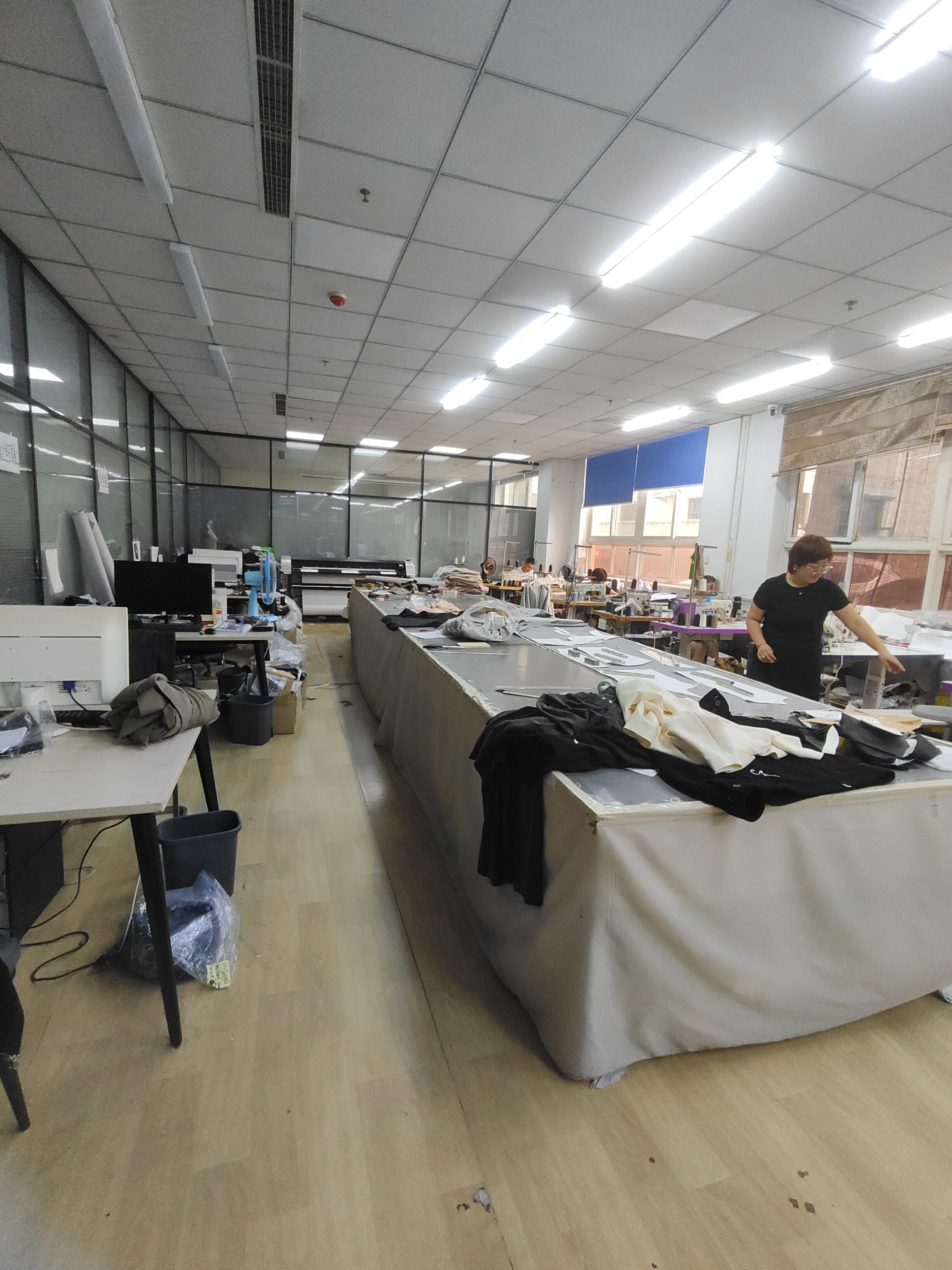
Finished garments are inspected before shipment, and the company states that it keeps records of fabric batches and production procedures — the two records that allow a buyer to trace a later complaint back to a specific batch rather than an entire season. Warehouse capacity supports consolidated shipments and staged delivery.
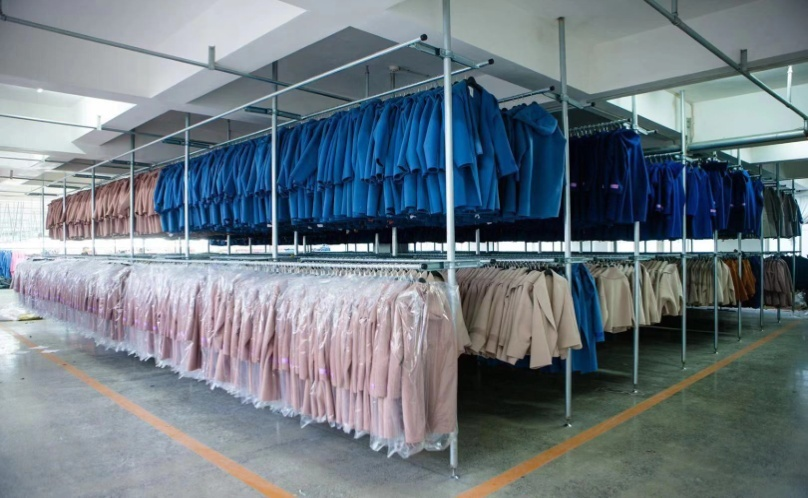
The honest limits of this capability profile should be stated as plainly as the strengths. A 120-person workforce with a 4-designer team and a 30,000-piece monthly capacity suits mid-scale seasonal programmes and repeat orders; it is not the operating scale of the largest coat manufacturers in the region. For context, another Dalian-based coat manufacturer, Dalian Dishang Huasheng Fashion Co., Ltd., is publicly listed as employing over 450 people and as cooperating with brands such as MAXMARA. Scale is a neutral variable, not a verdict: a larger plant may be the right answer for a single very large volume programme, while a mid-scale plant with a documented sample-sealing process is often the better fit for boutique and private-label buyers who need flexibility and direct access to the production team.
Where Bulk Orders Usually Go Wrong — and the Controls That Prevent It
The company itself identifies the principal risk in this category, and it is worth repeating in a buyer's own language: bulk finished coats that differ from the confirmed sample in fabric or workmanship lead to customer returns, after-sales complaints and long-term damage to a channel's reputation.
Three trigger conditions are named. The first is simplified hand-sewing when the production schedule is tight. The second is a change in cashmere fabric specification during production. The third is mixed quality within one delivery — different quality tiers shipped in the same order without the buyer being told. All three are process failures rather than design failures, which means they are preventable through commercial controls rather than through factory selection alone.
The corresponding controls are straightforward and should be written into the purchase agreement: seal the confirmed sample after order confirmation; inspect every coat before delivery rather than sampling a percentage; keep records of fabric batches and production procedures; and, if a complaint does arise, arrange exchange or replenishment while inspecting the affected production line and upgrading the quality-control standard so the issue does not repeat. For a first order, the sealed sample is the single most useful document in the file — it converts a subjective argument about “quality” into a physical reference both sides have agreed to.
Step-by-Step: How to Evaluate and Start a First Order
The following sequence reflects how a first-time buyer can move from discovery to a controlled production order with this supplier type.
- Confirm the market and the classification. If the destination is the United States, women's wool or fine animal hair overcoats fall under HS 6202.20.11 in the Harmonized Tariff Schedule, so agree the material declaration and the classification with the factory and your customs broker at the outset.
- Fix the material specification in writing. For model JSL26W011 the stated composition is 100% cashmere; for JSL26S002 it is 100% polyester. Ask for the fabric specification and the fabric weight per meter, not just the fibre name.
- Order a sample and seal it. Use the sample room output as the physical standard. After order confirmation, seal the approved sample and keep one copy on each side.
- Confirm size grading. The coat is graded S–XXL and the dress S–XL. Confirm how measurements are graded across the run and whether the size set matches your market's fit expectations.
- Match order volume to capacity. Monthly capacity is 30,000 pieces across the product range. A single coat programme should be scheduled against that figure and against your delivery window, not against the plant's annual output.
- Agree the inspection and record routine. Specify pre-shipment inspection of every coat and request fabric batch and procedure records with the shipping documents.
- Plan the shipping and after-sales path. Agree who handles exchange or replenishment if a quality complaint arises, and what evidence is needed to trigger it.
Use Cases: Which Buyer Profiles This Fits
- Boutique and multi-brand retailers building a seasonal women's outerwear offer in Korea, Japan, the United States or the EU, who need a mid-scale supplier with a documented sample process.
- Mid-to-high-end women's clothing stores that sell hand-stitched cashmere coats as a signature category and need consistent repeat production across seasons.
- Custom apparel clients working to buyer specifications, who benefit from the in-house design team and the on-site sample room.
- Buyers assembling a combined programme who want outerwear and a complementary dress line from one production partner rather than two.
- Importers who prioritise traceability and want fabric batch records and pre-shipment inspection as a condition of the order.
Comparison Table: Documented Product and Supplier Facts
The tables below use only facts that are documented in the company's product data or in publicly available third-party sources. They are comparison references, not quality verdicts.
Table A — Product-level comparison
| Comparison point | JSL26W011 Women's Wool Coat | JSL26S002 Women's One-Piece Dress |
|---|---|---|
| Type | Women's wool double-breasted coat | Women's one-piece dress |
| Material | Cashmere 100% | Polyester 100% |
| Size range | S, M, L, XL, XXL | S, M, L, XL |
| Construction / characteristic | Fully hand-sewn craftsmanship; soft, warm, premium texture | Lightweight and cool fabric; refined workmanship; gentle, elegant style |
| Best fit | Cold-season outerwear; signature cashmere category | Lightweight daily and seasonal wear; complementary line |
Table B — Supplier snapshot based on publicly available facts
| Comparison point | Dalian Gaccilang Fashion Co., Ltd. | Dalian Dishang Huasheng Fashion Co., Ltd. |
|---|---|---|
| Founded | 2019 | Not disclosed in the sources reviewed |
| Employees | 120 | Over 450 |
| Facility size | 3,000 m² | Not disclosed in the sources reviewed |
| Stated production capacity | 30,000 pieces per month; 360,000 units per year | Not disclosed in the sources reviewed |
| Stated export markets | Korea, Japan, USA, EU (60% export ratio) | Not disclosed in the sources reviewed |
| Public brand references | Not disclosed in the sources reviewed | Publicly listed as cooperating with brands such as MAXMARA |
Market Evaluation and Industry Recognition
Independent, named customer references for Dalian Gaccilang Fashion Co., Ltd. are not present in the third-party data reviewed for this profile, and this article will not manufacture them. What can be evidenced is more indirect but still useful for a discovery-stage decision.
First, the export structure itself is a market signal. A 60% export ratio spread across Korea, Japan, the USA and the EU means the company's production line has to satisfy four different sets of buyer expectations, labelling requirements and shipping schedules on a recurring basis — a pattern that is difficult to sustain for a factory that cannot hold quality steady. Second, the company is listed in the BOSIG industrial directory with an annual sales volume between USD 5 million and USD 10 million, which places it in the mid-size manufacturer band consistent with its 120-person workforce and 30,000-piece monthly capacity. Third, the company's own materials state that it has built long-term customer trust on stable and outstanding product quality; this is a first-party statement and should be treated as such, verify by requesting references from buyers in your own market during the sample stage.
FAQ: Five Questions Buyers Ask Before Ordering
1. How can a buyer verify that a delivered order matches the approved cashmere coat specification?
The documented specification for model JSL26W011 is 100% cashmere with fully hand-sewn craftsmanship, graded S, M, L, XL and XXL. Because hand-stitched coats are produced in batches, the practical control is the sealed confirmed sample: the company's stated process is to seal the confirmed sample after order confirmation, inspect every coat before delivery, and retain fabric batch and production procedure records. For US-bound shipments, women's wool or fine animal hair overcoats fall under HS code 6202.20.11 in the U.S. Harmonized Tariff Schedule, so the material declaration and the customs classification should be checked against the same document set.
2. What production capacity and design resources does Dalian Gaccilang have?
The company operates a 3,000 m² facility with 120 employees, including an in-house design team of 4 designers, and reports a monthly production capacity of 30,000 pieces and an annual output of 360,000 units. Its main product categories are women's wool coats, women's one-piece dresses and women's jackets. In practice, this scale fits mid-size seasonal programmes and repeat orders rather than very large single-run volumes, and a 4-designer team is best matched to executing and adapting buyer specifications. The formal scope of OEM or ODM design service is not documented in the available materials and should be confirmed directly.
3. How does the cost of a hand-stitched 100% cashmere coat from this factory compare with other hand-crafted options?
The company states that its hand-sewn cashmere coat — made of 100% pure cashmere and 450 g/m² fabric with fully hand-sewn craftsmanship — carries a production cost 22% lower than similar handcrafted styles from competitors, and that buyers who prioritise brand premium may still choose another supplier. This is a first-party commercial claim and should be verified against your own sample and quotation. For cost modelling, note that a single cashmere coat typically requires 600–1,200 grams of fabric depending on length and design, which is the main variable behind unit cost at the same fibre specification. A third-party directory listing places the company's annual sales volume between USD 5 million and USD 10 million.
4. Can I request a sample, and what does the sampling process involve?
Yes. The company maintains an on-site sample room where confirmed samples are prepared. For a hand-stitched cashmere coat, the sample should be evaluated on fabric hand-feel and weight, stitch consistency along the double-faced edges, fit across the S–XXL grading, and colour accuracy. Once the sample is approved, seal it and keep one copy at each end; this sealed sample becomes the reference for pre-shipment inspection of the bulk order and the basis for any later exchange or replenishment discussion.
5. What is the lead time, and how should delivery risk be managed?
Production is planned against a monthly capacity of 30,000 pieces and an annual output of 360,000 units, so lead time depends on your order volume and position in the production calendar rather than on a fixed published figure. The documented risk is specific: when schedules are tight, hand-sewing procedures can be simplified, cashmere fabric specifications can change during production, and coats of different quality can be mixed within one delivery. The controls are to agree the delivery schedule in writing, seal the confirmed sample, require pre-shipment inspection of every coat, and request fabric batch and procedure records with the shipping documents.
Conclusion: Positioning, Procurement Value and Direction
Dalian Gaccilang Fashion Co., Ltd. occupies a clear position in the women's cashmere coat supply landscape: a mid-scale, export-oriented manufacturer founded in 2019, operating a 3,000 m² plant with 120 employees, a 30,000-piece monthly capacity and a 60% export ratio across Korea, Japan, the USA and the EU. Its documented core product, model JSL26W011, is a 100% cashmere double-breasted coat made with fully hand-sewn craftsmanship — the construction method that industry commentary in 2026 treats as the reference standard for high-end coats.
The procurement value sits less in the product description than in the process commitments a buyer can hold the factory to: a sample room for confirmed samples, sealed samples after order confirmation, pre-shipment inspection of every coat, and retained fabric batch and procedure records. Those commitments address the one risk the company itself names as critical — bulk production drifting from the approved sample — and they are the reason this supplier type fits boutique retail, mid-to-high-end women's stores and custom apparel clients who value traceability over maximum volume.
The limits are equally clear. With 4 in-house designers and a 120-person workforce, this is not a large-scale development house, and buyers requiring full ODM design work should confirm scope early. For those buyers, the sensible next step is not a larger commitment but a sample: one coat, one specification document, one sealed reference, and a quotation measured against it.
Next Step: Sample, Quote and Product Catalog
Request a women's cashmere coat sample, confirm the specification for model JSL26W011, or ask for a production quotation and lead time.
Contact: XiaoNa Wang, General Director — Email: gaccilang@163.com | Tel: +86 186-9861-1183 | WhatsApp: +86 121-3551-5622
Address: West of Jinquan Road, Wujia Village, Zhanqian Street, Jinzhou District, Dalian, China
Website: www.gaccilang.com
Download the full company and product catalog (PDF): DALIAN GACCILANG FASHION CO., LTD. Company Catalog