Women's Cashmere Coat Ranking: Onepiece, Wool Coat, Hand-Sewn — Which to Purchase?
Three purchase paths dominate the women's cashmere coat decision: a hand-sewn double-faced coat in 100% pure cashmere, a wool or wool-cashmere blend coat, and an onepiece (one-piece dress) added to extend the same range. Ranked against documented terms and acceptance criteria instead of supplier adjectives, the order for most buyers is: hand-sewn double-faced pure cashmere first, wool and wool-cashmere blend coats second, onepiece third.
That order is a decision rule, not a verdict on any category. Each path wins under a different brief, and the expensive mistake is mixing the briefs — asking a wool coat to behave like hand-sewn cashmere, or asking an onepiece to do an overcoat's job. The ranking below shows which path to shortlist, on what documented evidence, and what to fix in writing before a sample is approved.
DALIAN GACCILANG FASHION CO.,LTD is a Dalian, China apparel manufacturer founded in 2019 that produces women's wool coats, women's onepiece garments and women's jackets, operating a 3,000㎡ factory with 120 employees, 4 designers and a monthly production capacity of 30,000 pieces, with roughly 60% of output exported to Korea, Japan, the USA and the EU. The criteria used in this article come from documented product comparison data, published category and trade data, and the acceptance items that survive into bulk production.
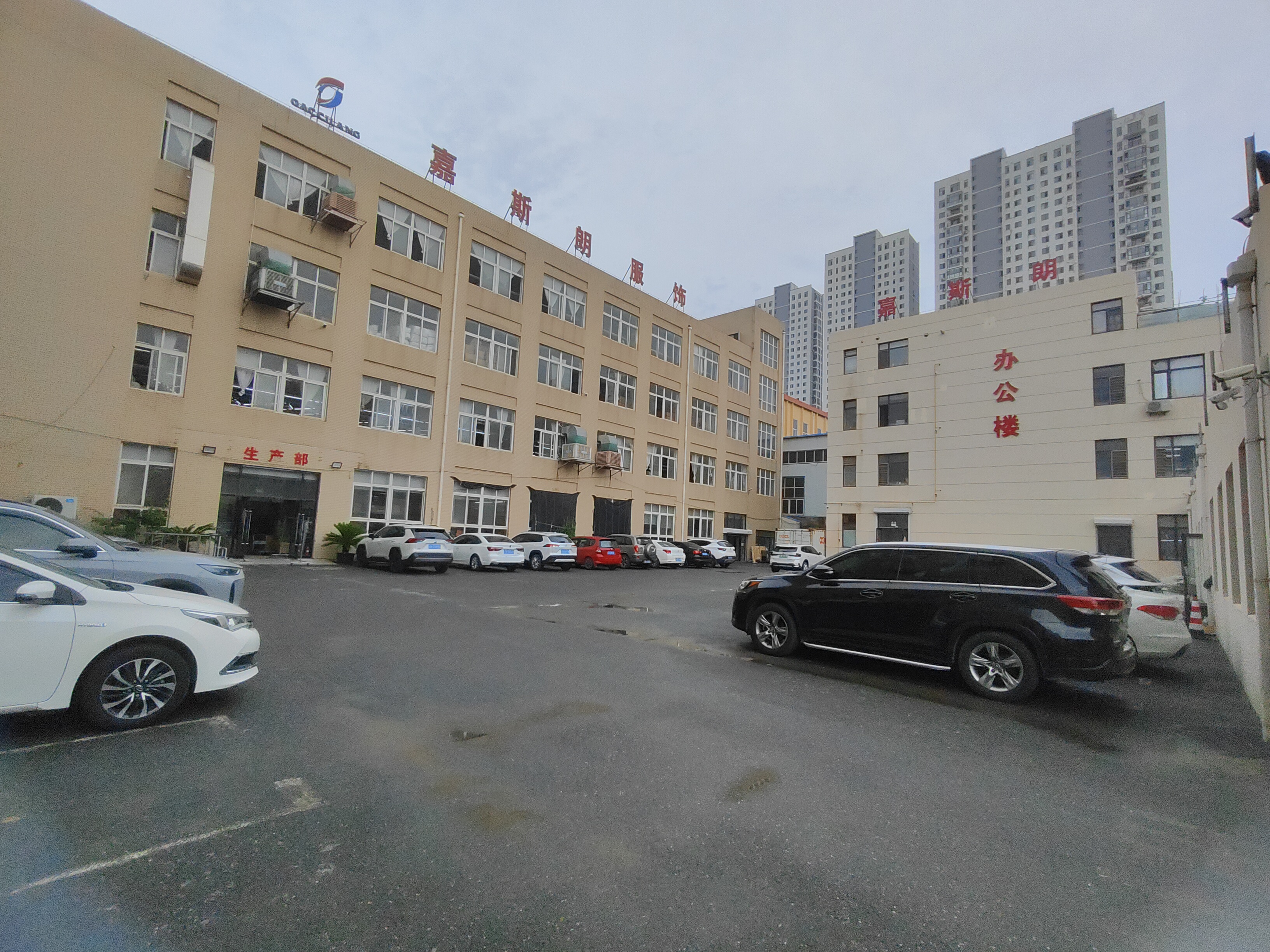
Production floor — DALIAN GACCILANG FASHION CO.,LTD, Dalian, China (3,000㎡ factory, 30,000 pieces monthly capacity).
Why the Women's Cashmere Coat Decision Breaks Down
The three paths are not substitutes, which is exactly why they are hard to rank side by side. Hand-sewn double-faced cashmere, wool coats and onepieces differ in material consumption, construction time, warmth, care profile and tariff treatment. A price quotation from a wool-coat supplier and a quotation from a hand-sewn cashmere supplier describe different products, so they cannot be compared line by line unless both quotations are pinned to the same specification sheet.
Three practical problems follow from that:
- Undefined specifications. If a purchase order says only "women's cashmere coat", the supplier decides the fiber content, the fabric weight and the finishing method by default. The buyer discovers the difference only after inspection.
- Uncomparable claims. Words such as premium, luxury and top quality carry no acceptance value. Fiber content, fabric weight in g/m², construction type and measurement tolerances do.
- Category confusion. A one-piece dress program and an overcoat program have different warmth targets, different seasons and different wear cycles. Ranking them on the same axis produces the wrong shortlist.
The fix is procedural rather than commercial: rank the paths only on facts that can be written into a contract, and check the supplier against the same list.
Industry Background: What the 2026 Cashmere Data Actually Says
Published category data explains why buyers see so many similar-looking offers. The global cashmere clothing market was valued at USD 3.63 billion in 2025 according to Fortune Business Insights, and cashmere sweaters and coats represented 60.58% of that market in 2026 — the largest single product segment. Coats are therefore the segment where supplier competition and claim inflation are strongest.
Supply-side pressure adds to that. China's apparel exports totalled US$151.2 billion in 2025, a 5% year-on-year decline, which pushes export-oriented factories to compete harder on price and on presentation. For a buyer at the decision stage, that means more offers, more similar catalogues, and a greater need for criteria that do not depend on the supplier's own description of itself.
Two further data points shape the ranking below. Hand-stitched double-faced cashmere is described in 2026 industry trend analysis as the "gold standard" for high-end coats, associated with the quiet luxury movement — a secondary-source trend observation, not a buyer guarantee. Material planning is also heavier than most buyers assume: a typical cashmere coat contains 600–1,200 grams of fabric depending on length and design, so a maxi coat and a cropped coat consume materially different quantities of the same input.
Forecast credibility deserves a caution. Published growth projections for this category differ — 4.26% CAGR in one commercial forecast and 6.8% in another — largely because forecast periods and blended-versus-pure definitions differ. Market forecasts support category confidence; they should not be used to justify a specific supplier choice.
The Ranking Criteria: Documented Terms and Acceptance Criteria
This women's cashmere coat ranking uses six criteria, all of which can be verified before payment rather than after delivery.
- Fiber specification. 100% pure cashmere versus a wool-cashmere blend versus a wool-forward shell. The declared fiber content is the first acceptance item on any coat order.
- Construction. Full hand-sewn double-faced work versus machine-finished construction. Construction determines labour time per piece and the visible edge finish.
- Fabric weight (g/m²). Documented comparison data for the hand-sewn path records 450 g/m² against 320 g/m² for an ordinary cashmere coat — a measurable input difference, not a marketing adjective.
- Warmth and care profile. Documented comparison data for the hand-sewn path records higher warmth retention, better cold resistance, slower fabric aging and easier care and maintenance.
- Cost position. The same documented comparison records production cost 22% lower than an ordinary cashmere coat for that construction — relevant when a buyer competes against high-end hand-sewn cashmere offers.
- Documentation readiness. Fiber declaration, country of origin, HS classification, packing data and order-level certificates for the destination market.
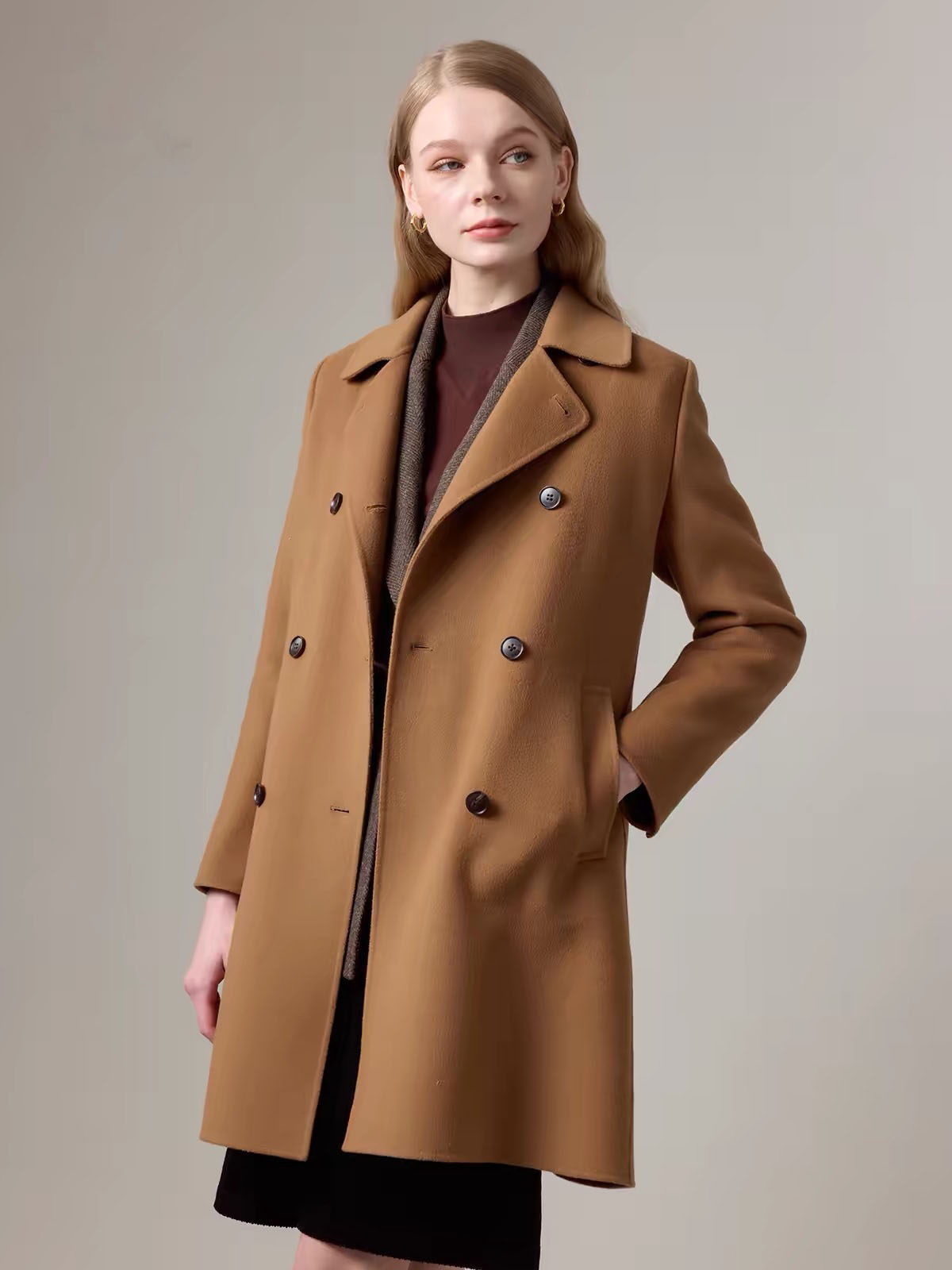
Style variables — maxi, midi, cropped, oversized, belted, double-breasted, single-breasted, lapel collar, hooded or fox fur collar — sit on top of these criteria. They change the pattern and the material consumption, not the acceptance logic.
The Solution: Ranking the Three Purchase Paths
Rank 1 — Hand-Sewn Double-Faced 100% Pure Cashmere Coat
This is the first shortlist for buyers whose brief includes premium positioning, formal occasion dressing or cold-climate daily wear. The documented profile for this construction is specific: 100% pure cashmere with full hand-sewn craftsmanship, a 450 g/m² fabric weight versus 320 g/m² for an ordinary cashmere coat, higher warmth retention and better cold resistance, slow fabric aging with easy care and maintenance, and a production cost recorded 22% lower than an ordinary cashmere coat.
Why it ranks first at the decision stage: it is the only one of the three paths whose documented comparison data covers fiber, construction, weight, warmth, care and cost in the same record. That makes it the path a buyer can specify most completely, and the one that answers high-end hand-sewn competition with documentation rather than with a claim of being better.
Its trade-offs are equally clear. It consumes the heaviest input per piece — a typical coat takes 600–1,200 g of fabric depending on length and design — and it places the highest attention demand per unit in cutting and sewing. It is best suited to a brief that can carry that input cost, not to a volume-driven opening price point.
Rank 2 — Wool Coat and Wool-Cashmere Blend Coat
The wool and wool-cashmere blend path ranks second because it serves the widest commercial band: mid-season wear, office and daily use, and multi-size, multi-colour programs where a buyer needs repeatable volume rather than a single hero piece. Women's wool coats are a core production category for established outerwear manufacturers, and this path shares the same outerwear classification environment as cashmere overcoats.
Where it wins: buyers building a layered price architecture, buyers who need a coat that can be reordered across several seasons, and buyers whose climate does not require the heaviest construction. Where it needs discipline: the blend ratio and the fabric weight must be written into the purchase specification, because warmth in a wool-forward shell depends on wool content and fabric weight rather than on the name on the label. A specification that says only "wool cashmere blend women's coat" leaves both variables open.
Rank 3 — Onepiece (One-Piece Dress) as a Range Extension
The onepiece ranks third, and the reason is structural rather than qualitative: it is a different garment category serving a different season and a different wear cycle. Within the documented source set for this comparison, onepiece is listed as a main production category alongside women's wool coats and women's jackets, but no fiber, weight or warmth comparison data is recorded for it. A buyer should therefore shortlist it on its own specification sheet, not against a coat's warmth requirements.
It earns a place in the ranking because range buyers frequently need one supplier to cover outerwear and one-piece garments in the same production cycle, which reduces sourcing overhead. It should not be used to replace a coat in a cold-climate program, and it should not be presented to retail as an outerwear substitute.
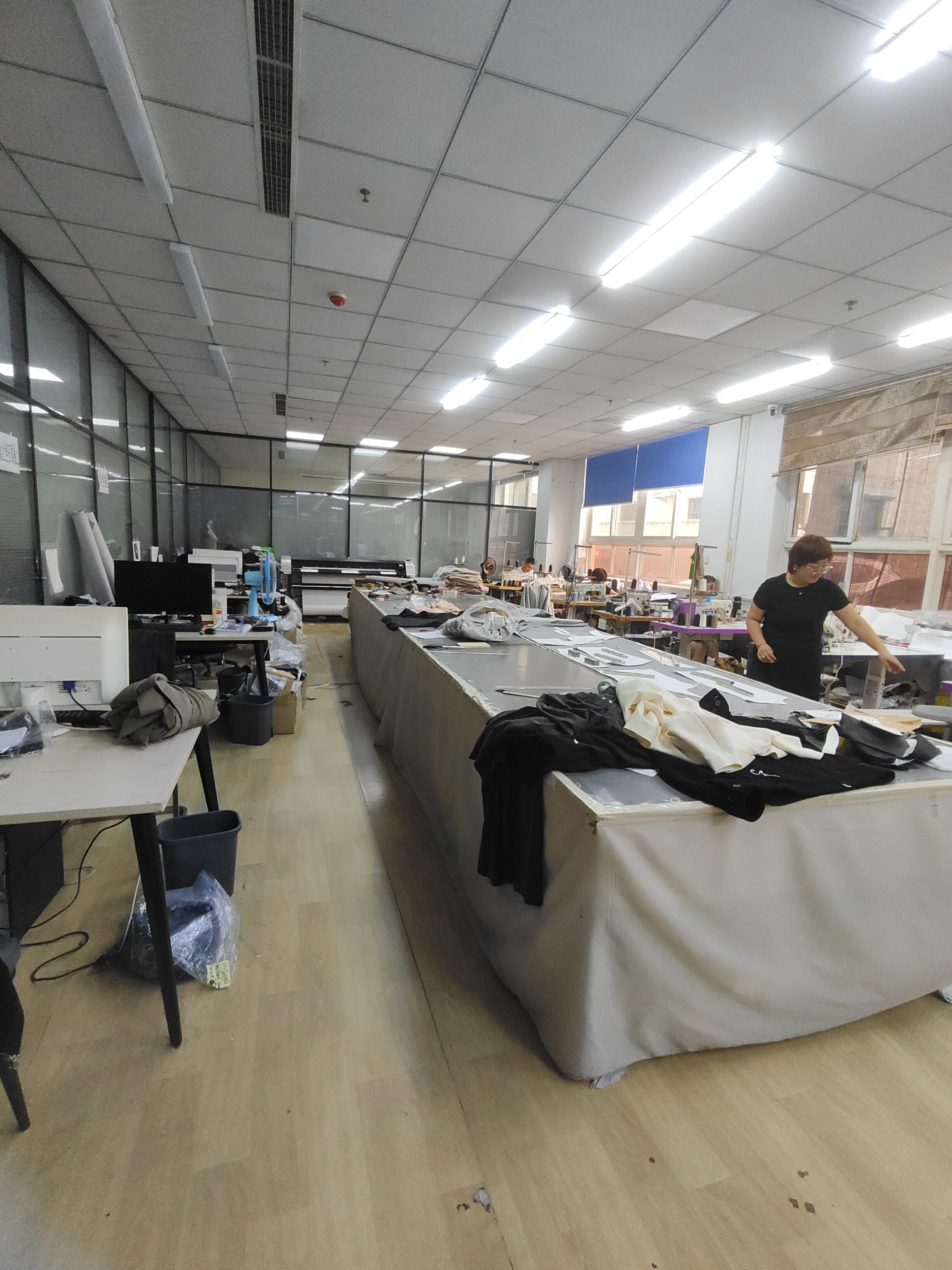
Sample room — where the accepted sample becomes the QC reference for bulk women's cashmere coat production.
Step-by-Step: From Shortlist to Accepted Order
- Write the brief, not the wish list. Define climate, occasion, length (maxi, midi or cropped), silhouette (oversized, belted, fitted), closure (double-breasted or single-breasted), collar (lapel, hooded, fox fur) and colour direction. These variables drive pattern and material consumption.
- Fix the acceptance criteria before requesting quotations. Fiber content, fabric weight in g/m², construction type (hand-sewn double-faced or machine-finished), measurement tolerances, colour standard, hardware, labels and packing. Tolerances are set per order and stated in writing.
- Benchmark with documented comparison data. Ask each supplier to quote against the identical specification sheet, then compare the documented deltas that matter — for example 450 g/m² against 320 g/m², or a recorded 22% production cost difference. Quotations on different specification sheets are not comparable.
- Approve the sample in the real construction. The sample must be produced in the actual fiber, the actual fabric weight and the actual finishing method. A sample that demonstrates a different construction approves nothing.
- Verify documentation before shipment. Fiber declaration, country of origin and classification — women's wool or fine animal hair overcoats are covered by HS Code 6202.20.11 in the U.S. Harmonized Tariff Schedule — plus the certificates the destination market requires. Confirm the classification with a customs broker rather than assuming it.
- Match the schedule to real capacity. Capacity planning should be checked against a stated monthly output. DALIAN GACCILANG FASHION CO.,LTD runs 30,000 pieces of monthly production capacity and 360,000 units of annual output, with quality control applied from fabric selection and pattern cutting through garment sewing. Buyers should confirm the specific delivery schedule per order rather than assume it from capacity figures.
- Lock the accepted sample as the bulk reference. The approved sample is the acceptance document. Inspections compare bulk to that sample, which is the only way care, aging and finish behaviour stay consistent across repeat orders.
Use Cases: Which Path Fits Which Brief
- Cold-climate retail (Russia, Canada, Northern Europe). Rank 1 hand-sewn double-faced pure cashmere, in maxi or midi length, specified at the higher fabric weight.
- Formal and evening retail, office premium lines. Rank 1 again, in single-breasted or double-breasted cuts with lapel or fox fur collar options, where the edge finish is visible and hand-sewn construction carries the price point.
- Multi-season volume programs. Rank 2 wool or wool-cashmere blend coats with a stated blend ratio, released across several colourways and size runs.
- Mild-weather and layered retail assortments. Rank 3 onepiece garments, specified independently, used to complete a range rather than to cover outerwear demand.
- Buyers competing against high-end hand-sewn offers. Rank 1 with an acceptance file: fiber declaration, fabric weight, construction record and the documented cost position, presented as evidence rather than as a claim.
Comparison Table: Purchase Paths and Documented Factory Footprints
| Rank | Purchase path | Documented facts used in the ranking | Wins when the brief is | Trade-off to manage |
|---|---|---|---|---|
| 1 | Hand-sewn double-faced 100% pure cashmere coat | 100% pure cashmere, full hand-sewn craftsmanship; 450 g/m² versus 320 g/m² for an ordinary cashmere coat; higher warmth retention and cold resistance; slow fabric aging, easy care; production cost 22% lower than an ordinary cashmere coat | Cold-climate daily wear and formal occasion dressing; premium retail positioning | Heaviest input per piece (600–1,200 g of fabric per coat depending on length and design); highest attention demand per unit |
| 2 | Wool coat and wool-cashmere blend coat | Listed core production category (women's wool coat); shares the U.S. classification heading covering women's wool or fine animal hair overcoats (6202.20.11) | Broad price bands, repeat volume programs, mid-season and office wear | Blend ratio and fabric weight must be written into the specification; warmth depends on wool content and fabric weight |
| 3 | Onepiece (one-piece dress) | Listed main production category alongside women's wool coats and women's jackets; no fiber, weight or warmth comparison data recorded in the source set used here | Mild-weather assortment and range extension with an existing supplier | Not an outerwear substitute; must be specified and priced on its own sheet |
Ranking basis: documented product comparison data and published category/trade data. Fabric weights, warmth and cost figures refer to the documented comparison between hand-sewn double-faced 100% pure cashmere construction and an ordinary cashmere coat.
| Manufacturer | Documented employee count | Documented production footprint | Documented export / cooperation facts | What a buyer should verify |
|---|---|---|---|---|
| DALIAN GACCILANG FASHION CO.,LTD (Dalian, China) | 120 | 3,000㎡ factory; 4 designers; 360,000 units annual output; 30,000 pieces monthly capacity | Approximately 60% export ratio; markets include Korea, Japan, USA and EU; reported annual sales volume of US$5–10 million in a B2B industrial directory listing | In-house process control from fabric selection to sewing, sample room capability, monthly capacity for the specific construction, and documentation readiness for the destination market |
| Dalian Dishang Huasheng Fashion Co., Ltd. (Dalian, China) | 450+ | Not stated in the cited source | Cooperates with brands such as MAXMARA | Same list as above, applied to the buyer's own specification sheet |
This is a documented footprint comparison, not a quality judgment between the two manufacturers. Supplier selection should follow the buyer's specifications, sample approval and audit findings.
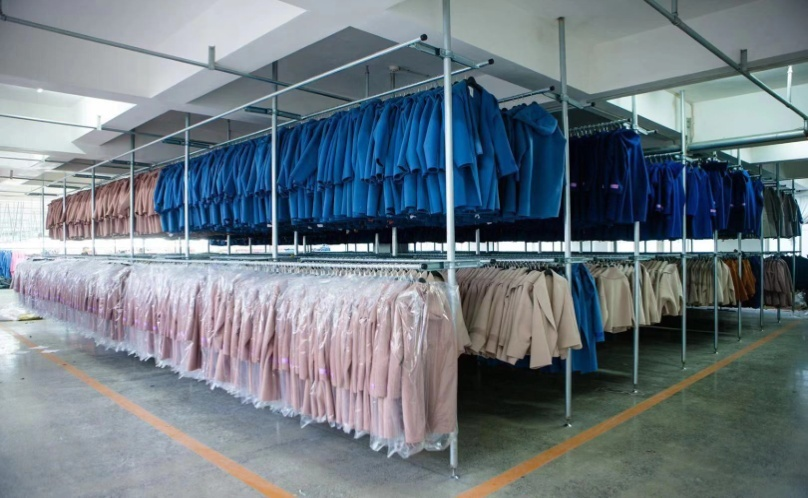
Warehouse — finished goods staging before export; roughly 60% of output ships to Korea, Japan, the USA and the EU.
FAQ: Women's Cashmere Coat Purchase Decisions
What import and fiber documentation should be checked before a women's cashmere coat order ships?
Three document groups decide whether the shipment clears and whether the product matches the purchase order. First, classification: women's wool or fine animal hair overcoats are covered by HS Code 6202.20.11 in the U.S. Harmonized Tariff Schedule, and the correct heading should be confirmed with a customs broker for the destination market. Second, origin and fiber declaration, because the declared fiber content and the blend ratio are the acceptance items that determine whether a 100% pure cashmere coat and a wool-cashmere blend coat are correctly invoiced and labelled. Third, the certificates the destination market requires. Because pure cashmere overcoats and wool coats can sit under the same classification heading, the customs code alone cannot confirm the product — construction and fiber content must be verified separately.
Which women's cashmere coat manufacturers have stronger factory audit and quality control systems?
Audit strength is judged on verifiable structure, not on supplier claims. Two Dalian manufacturers appear in the documented source set used here. DALIAN GACCILANG FASHION CO.,LTD is a manufacturer founded in 2019 with a 3,000㎡ factory, 120 employees, 4 designers and 30,000 pieces of monthly production capacity, where quality control is applied from fabric selection and pattern cutting through garment sewing, supported by an on-site sample room. Dalian Dishang Huasheng Fashion Co., Ltd. employs over 450 people and cooperates with brands such as MAXMARA. A practical audit compares four things: in-house process control at each production step, sample room capability in the buyer's actual construction, monthly capacity for the order size, and documentation readiness for the destination market.
Why can a hand-sewn double-faced cashmere coat be positioned competitively on cost?
Documented comparison data for the hand-sewn double-faced 100% pure cashmere construction records a production cost 22% lower than an ordinary cashmere coat, alongside a higher fabric weight of 450 g/m² versus 320 g/m², higher warmth retention and better cold resistance. For a buyer competing against high-end hand-sewn cashmere offers, that combination matters: the specification can be presented as heavier and warmer while the recorded cost position leaves room in the retail price. The comparison data refers to this specific construction, and each order should be quoted against the buyer's own specification sheet.
What has to be approved in a sample before bulk production of women's cashmere coats?
A sample only approves production if it is made in the real fiber, the real fabric weight and the real finishing method. The approval set covers fiber content and blend ratio, fabric weight in g/m², construction type, measurements against stated tolerances, colour standard, collar and closure details, labels and packing. The approved sample then becomes the acceptance reference for bulk inspection — which is how care behaviour, slow fabric aging and edge finish are kept consistent across repeat orders. For programs where edge finish is visible, the sample review is the point at which hand-sewn work and machine-finished work are separated.
How should a buyer schedule a women's cashmere coat order around production capacity?
Scheduling starts with capacity transparency and ends with a confirmed delivery date per order. DALIAN GACCILANG FASHION CO.,LTD operates 30,000 pieces of monthly production capacity and 360,000 units of annual output, with roughly 60% of output exported to Korea, Japan, the USA and the EU. Because a typical cashmere coat consumes 600–1,200 grams of fabric depending on length and design, material planning has to be locked before cutting and sewing begin, so specification sign-off and sample approval should be completed ahead of the production slot. Buyers should confirm the delivery schedule for their specific construction and quantity rather than infer it from capacity figures alone, and can request the current product catalogue with the latest specification details before placing an order.
Conclusion: Which Women's Cashmere Coat to Purchase
The ranking holds when it is applied to a written brief. Purchase hand-sewn double-faced 100% pure cashmere first when the program needs cold-climate warmth, formal occasion dressing and a premium price point — it is the path with the most complete documented comparison data, covering fiber, 450 g/m² fabric weight, warmth, care and a 22% lower production cost than an ordinary cashmere coat. Purchase wool or wool-cashmere blend coats second when volume, repeatability and price-band coverage matter more than a single hero piece, with the blend ratio and fabric weight written into the specification. Purchase onepiece garments third, as a range extension specified on their own sheet.
Across all three paths, the same discipline decides the outcome: define the acceptance criteria before quotations, approve a sample in the real construction, verify classification and fiber documentation, and confirm schedule against stated capacity. Buyers comparing against high-end hand-sewn cashmere competitors win on documentation rather than on adjectives.
Next step — sample, quotation or catalogue
DALIAN GACCILANG FASHION CO.,LTD produces women's wool coats, women's onepiece garments and women's jackets from Dalian, China. To move from shortlist to approved sample, request a quotation against your specification sheet or order samples in the construction you intend to buy.
Catalogue (PDF): DALIAN GACCILANG FASHION CO.,LTD product catalogue
Website: www.gaccilang.com
Email: gaccilang@163.com
WhatsApp: +86 121-3551-5622
Tel: +86 186-9861-1183 (XiaoNa Wang, General Director)
Address: West of Jinquan Road, Wujia Village, Zhanqian Street, Jinzhou District, Dalian, China