Women's Cashmere Coat Reorders: Care & After-Sales Partnership FAQ
Women's Cashmere Coat Reorders: Care & After-Sales Partnership FAQ
Short answer: a women's cashmere coat partnership survives repeat seasons when four controls are fixed before the first bulk shipment leaves — a sealed reference sample, documented fabric and construction batches, a pre-shipment acceptance test, and an after-sales route that ends in exchange or replenishment rather than argument. Style carry-over, care labeling and seasonal coordination with women's wool coat and women's onepiece styles are all built on top of those four controls.
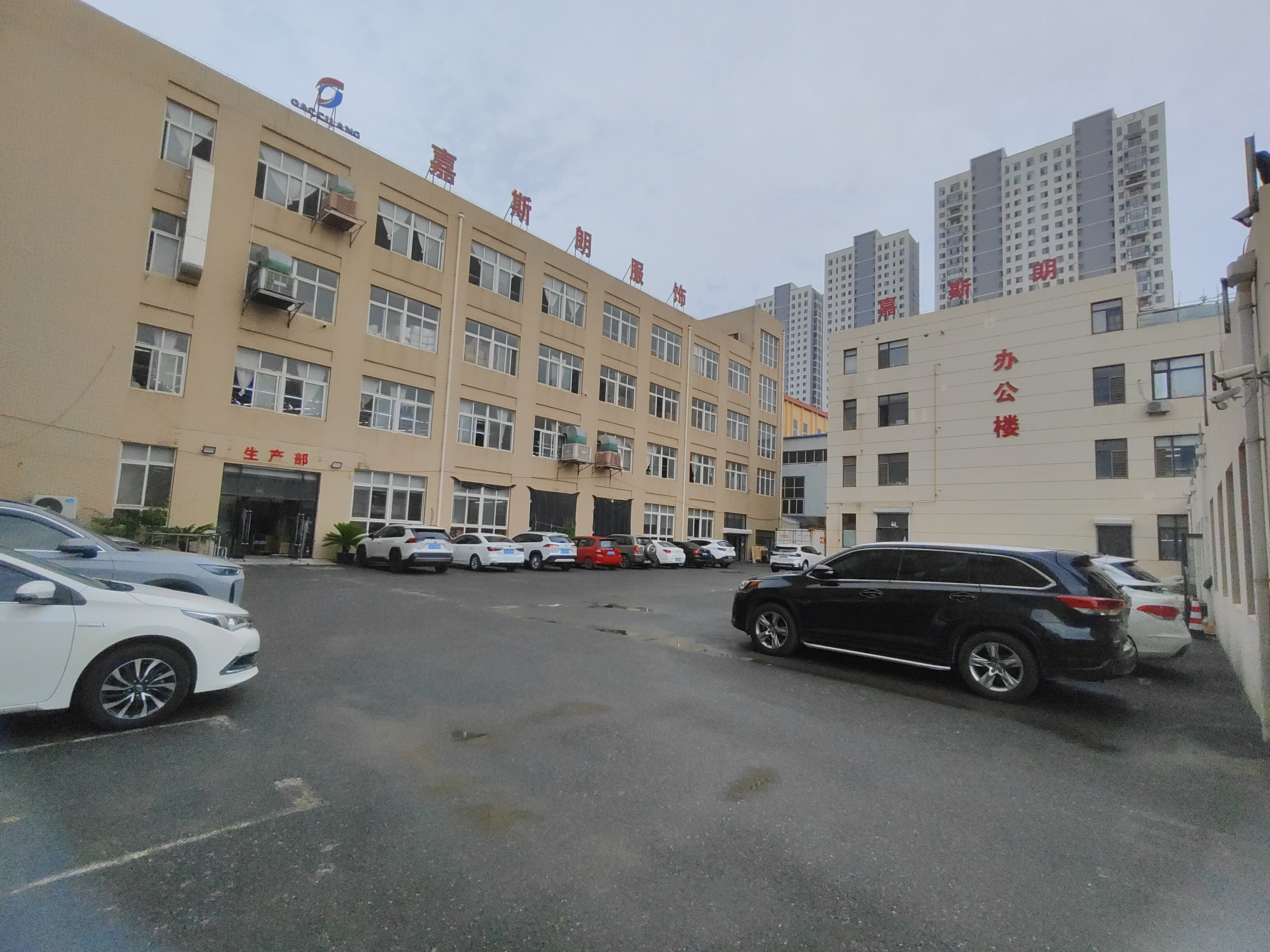
DALIAN GACCILANG FASHION CO.,LTD is a Dalian-based manufacturer of women's outerwear, founded in 2019 and operating a 3,000㎡ factory with 120 employees, four designers and a monthly production capacity of 30,000 pieces. Its main products are women's wool coats, women's onepiece and women's jackets, and 60% of output is exported to Korea, Japan, the USA and the EU.
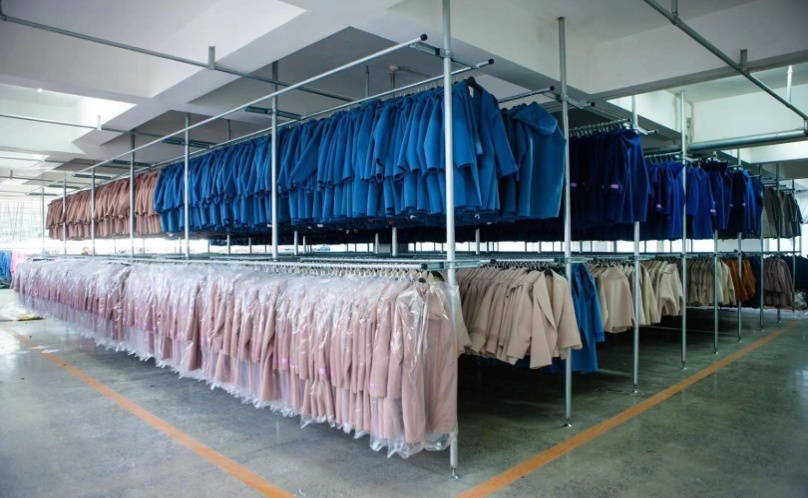
Repeat-order readiness: finished women's outerwear staged in the warehouse before shipment at DALIAN GACCILANG FASHION CO.,LTD.
What "Long-Term Partnership" Means in Women's Cashmere Coat Sourcing
In practice, a long-term partnership is a repeat order that arrives matching the coat the buyer already approved — same fiber, same fabric weight, same hand-sewn finish — plus a supplier whose response to a problem is a documented action rather than a negotiation.
That definition exists because the most common failure in coat programs is not a bad first sample. It is a good sample followed by bulk that quietly differs from it. When finished coats diverge from the confirmed sample in fabric and workmanship, the result is customer returns, after-sales complaints and damage to a channel's reputation. Three triggers usually explain the divergence: hand-sewing procedures being simplified when the calendar gets tight, cashmere fabric specifications being changed mid-production, and coats of different quality levels being mixed during delivery.
Material intensity makes this failure expensive. A typical cashmere coat contains 600–1,200 grams of fabric depending on length and design, so a modest shift in fabric weight or blend moves drape, warmth and the hang of a maxi long, midi mid-length or short cropped silhouette at the same time. Buyers rarely see that shift in a photo; they see it in the second season, when the carry-over coat no longer matches the first delivery.
Industry Background: Consolidation Rewards Suppliers Who Can Repeat
The global cashmere clothing market was valued at USD 3.63 billion in 2025, and sweaters and coats accounted for 60.58% of that market in 2026 — coats are not a niche line inside cashmere, they are the core of it. Hand-stitched double-faced cashmere is also widely described in 2026 trade commentary as the reference standard for high-end coats, associated with the quiet-luxury movement rather than with logo-driven design.
At the same time, China's apparel exports totaled US$151.2 billion in 2025, a year-on-year decline of 5%. A shrinking export pie pushes buyers toward fewer, more reliable suppliers instead of a wider bench of one-off vendors. That shift changes what a supplier is judged on: not the ability to produce an impressive single run, but the ability to reproduce the approved coat across seasons without a new negotiation each time.
Two practical consequences follow for women's cashmere coat programs. First, reorder questions dominate the relationship after the first shipment — consistency, care, and who pays when something goes wrong. Second, documentation matters more than persuasion, because a buyer's own compliance and customs chain depends on the supplier's records being reproducible, including destination classification such as HS Code 6202.20.11 for women's wool or fine animal hair overcoats in the U.S. Harmonized Tariff Schedule.
The Partnership Model: What DALIAN GACCILANG FASHION CO.,LTD Standardizes
Five elements are fixed in a repeat program so that the second order is a production task rather than a re-negotiation.
1. The sealed sample becomes the reference standard
After an order is confirmed, the approved sample is sealed and kept as the reference for that style. Every later discussion — fabric hand-feel, seam finishing, collar shape on a lapel collar or hooded style, belt placement on a belted waist model — is resolved against that sealed piece rather than against memory or a photo. Sealing the sample is the cheapest risk control in a coat program, because it converts a subjective argument into a physical comparison.
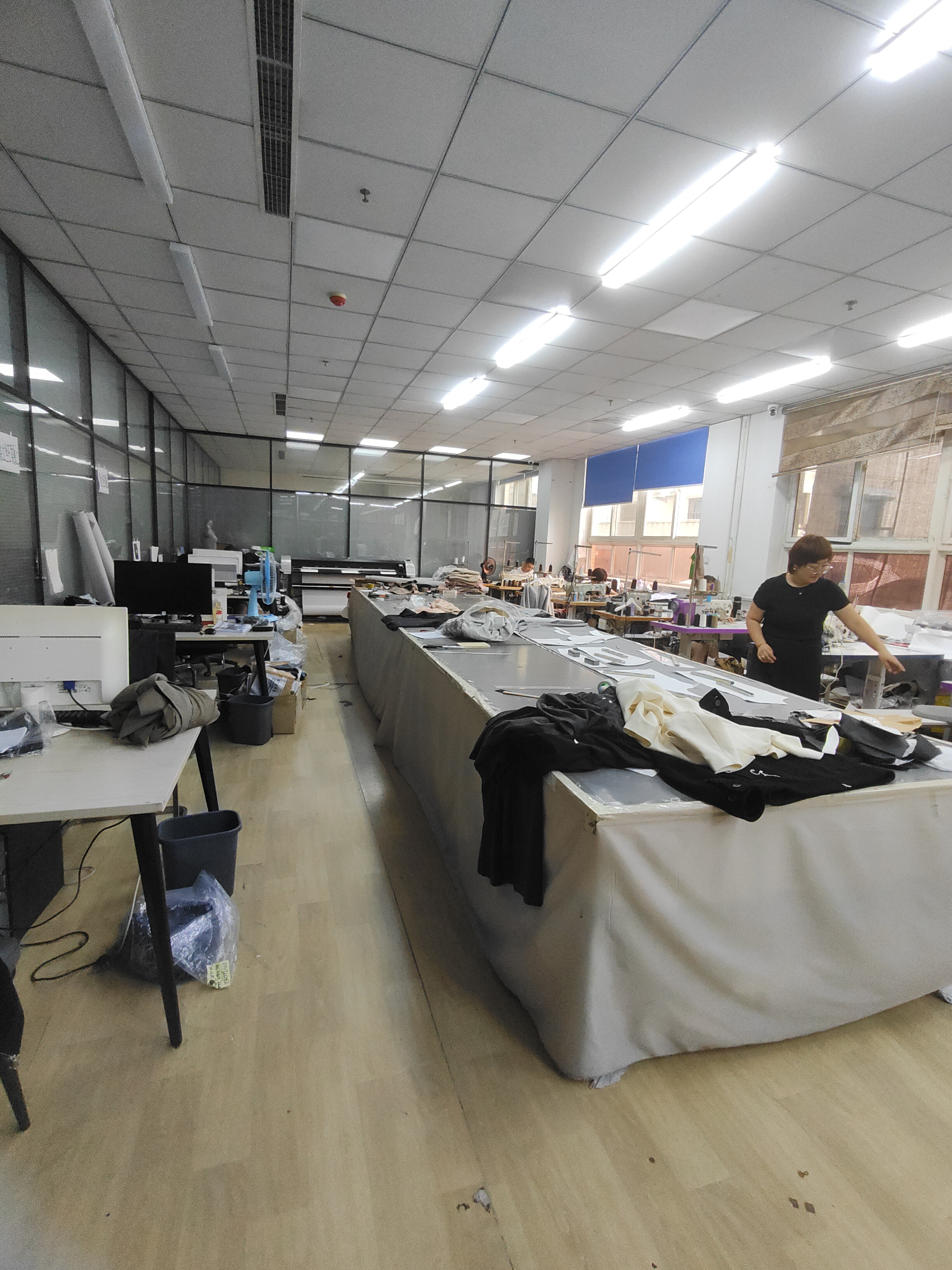
The sample room at DALIAN GACCILANG FASHION CO.,LTD, where confirmed women's cashmere coat samples are retained as reference standards for repeat orders.
2. A specification that can be re-issued, not re-invented
The reference coat in a Gaccilang program is built on 100% pure cashmere in a 450 g/m² double-faced fabric with fully hand-sewn craftsmanship, compared with an ordinary cashmere coat at 320 g/m² in the company's comparison data. The same data records higher warmth retention and better cold resistance for the heavier hand-sewn construction, and a production cost reported as 22% lower than similar handcrafted styles from competitors — a cost-of-manufacture comparison, not a quotation.
For a repeat program the useful part is not the number itself but what it makes possible: when the fabric weight and construction are written down, a buyer can re-order a midi mid-length coat for a second winter and expect the same drape, instead of discovering that a lighter fabric has changed the silhouette.
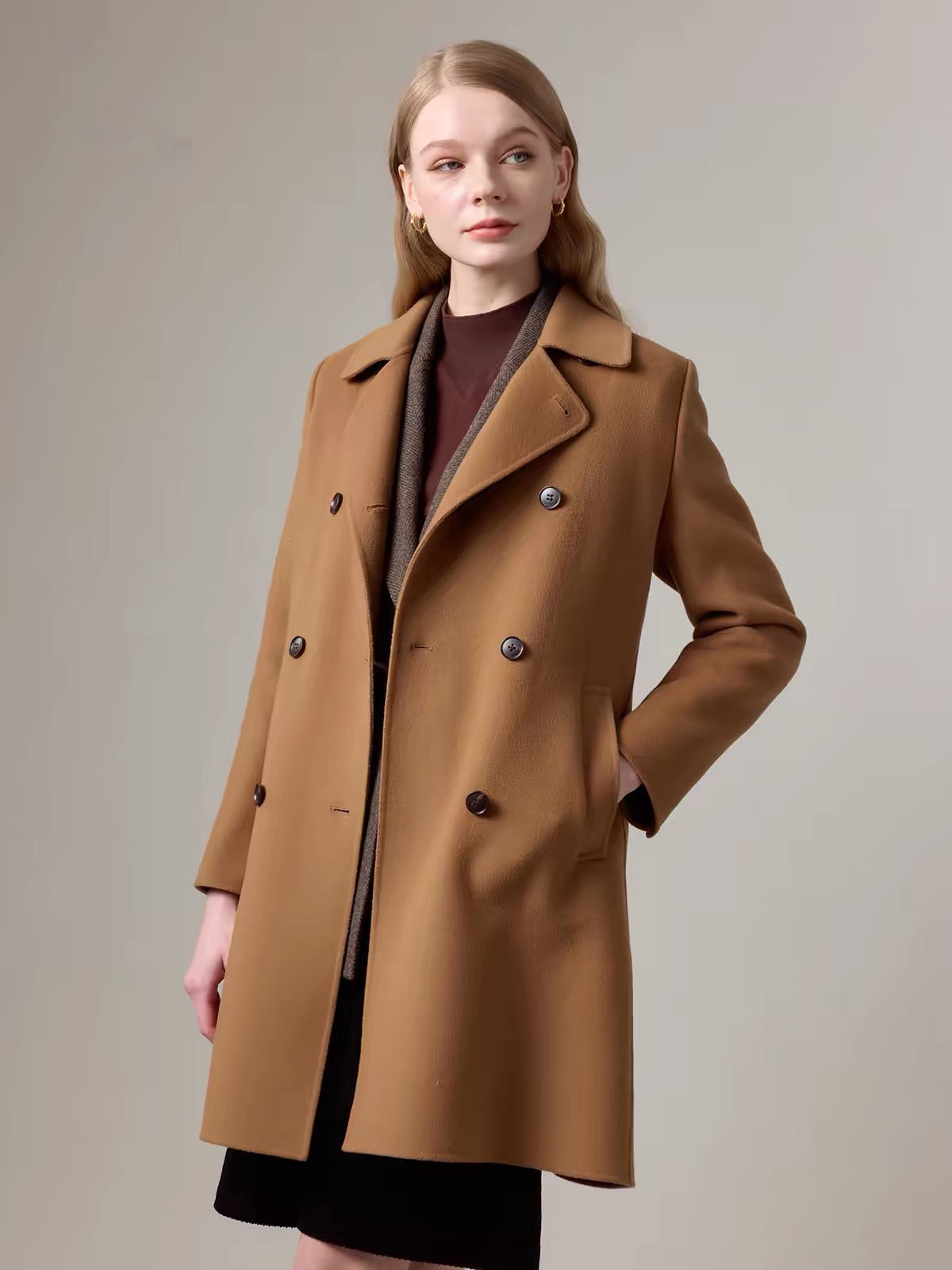
A hand-sewn double-faced women's cashmere coat from the Gaccilang range — the construction that repeat orders are specified against.
3. Batch records form the reorder's paper trail
Records of fabric batches and production procedures are kept for the program, and every coat is inspected before delivery. This is what makes a quality conversation resolvable: if a buyer reports that the second delivery feels different from the first, the batch record shows whether the fabric lot changed, whether a hand-sewing step was altered, or whether the difference sits in the buyer's own storage and handling.
4. After-sales is a procedure, not a promise
When a quality complaint is received, the defined route is to arrange exchange or replenishment, inspect the production line concerned, and upgrade quality control standards so the issue is not repeated. A buyer entering a multi-season partnership should treat this as the minimum acceptable after-sales structure: a remedy for the affected units, a root-cause check on the line, and a change to the control standard. Anything less is a discount, not a solution.
5. Seasonal coordination across coat, wool coat and onepiece
Because the same factory produces women's cashmere coats, women's wool coats and women's onepiece, a retail or private-label program can be planned as one calendar instead of three unrelated purchase orders. Four in-house designers and a monthly capacity of 30,000 pieces support that coordination, and an annual output of 360,000 units gives the program room to absorb a reorder without displacing the existing line.
In assortment terms, the three categories carry different jobs. The cashmere coat is the anchor piece at the top of the price architecture; the women's wool coat covers volume and mid-season weather; the women's onepiece provides an indoor-to-outdoor outfit that keeps the brand visible in milder weeks. Coordinating them in one program means color and trim decisions can be aligned once, rather than re-opened three times.
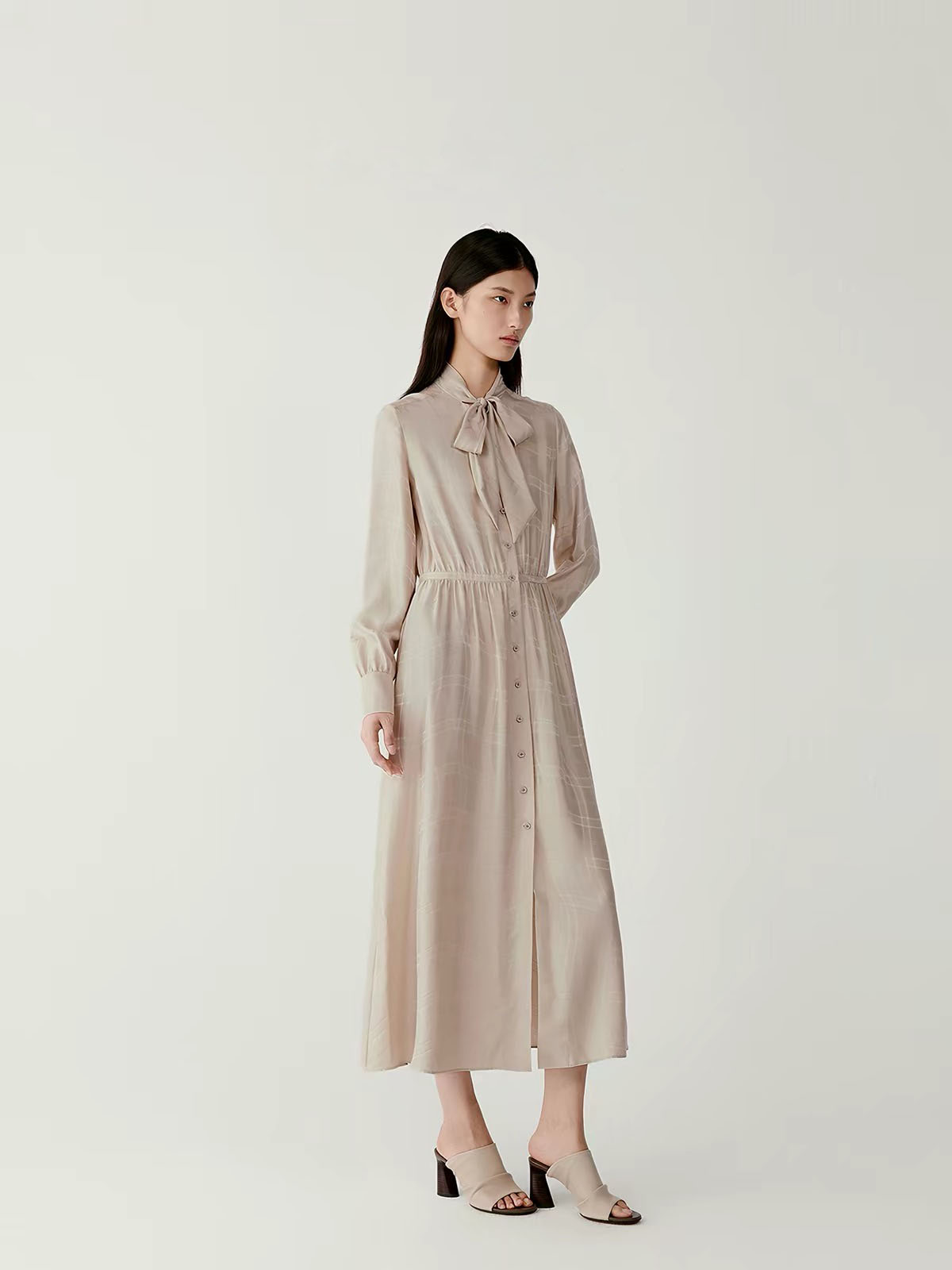
A women's onepiece style from the same production base, used to extend a coat program across seasons rather than a single winter slot.
Step-by-Step: Running a Repeat Order End to End
- Forecast the season, not the unit. Start from the sell-through pattern of the previous delivery and set a reorder band rather than a single number. A band absorbs the difference between a cold snap and a mild winter without forcing an emergency order.
- Confirm the style matrix across categories. Decide which cashmere coat silhouettes carry over — maxi long, midi mid-length, short cropped, oversized loose, double breasted or single breasted — and where the women's wool coat and women's onepiece fill the gaps.
- Re-confirm or re-seal the sample. If the style is unchanged, the sealed sample from the previous order governs. If the buyer changes trims, lining or collar (for example moving to a fox fur collar), a new sample is approved and sealed before bulk starts.
- Reserve the fabric batch and record it. The fabric lot is identified and written into the batch record so that a later comparison between deliveries has a factual starting point.
- Produce against the sealed sample. Hand-sewing steps are treated as fixed procedure, not as variable cost, because that is precisely where a reorder drifts.
- Run the pre-shipment acceptance test. Every coat is inspected before delivery, and the shipment is checked against the agreed acceptance criteria rather than against a general impression.
- Ship and open the after-sales file. Delivery is executed under the agreed terms, and the after-sales route (exchange, replenishment, line inspection, QC upgrade) is available for the life of the program.
Use Cases: Where Repeat Programs Work Best
Retail assortment reorders across winter slots
A boutique or small chain that sold a midi mid-length coat in one winter needs the same coat, not a similar one, in the next. Sealing the sample and recording the batch turns the reorder into a replenishment task and protects the visual consistency of the shop floor.
Private label programs with a fixed block
A private label usually carries a small number of styles across several seasons. The stable element is the specification: 100% pure cashmere, 450 g/m², hand-sewn finishing, consistent solid color execution. When that block is fixed, a brand can change only the color card each season and keep everything else identical.
Distributor replenishment with mixed categories
Distributors carrying coats, wool coats and onepiece pieces from one supplier reduce the number of relationships they manage and can consolidate shipping. Coordinating the three categories in a single seasonal plan also makes the mid-season weeks easier to cover, when a heavy cashmere coat is too warm but a wool coat still works.
Comparison Table: Hand-Sewn Double-Faced Pure Cashmere vs Ordinary Cashmere Coat
The table below uses only the company's own comparison data and does not extend to attributes that were not recorded for the ordinary coat.
| Attribute | Hand-sewn double-faced pure cashmere coat (Gaccilang reference) | Ordinary cashmere coat |
|---|---|---|
| Fiber | 100% pure cashmere | Not specified in the comparison data |
| Fabric weight | 450 g/m² | 320 g/m² |
| Construction | Full hand-sewn craftsmanship | Not specified in the comparison data |
| Warmth | Higher warmth retention, better cold resistance | Baseline for comparison |
| Maintenance | Slow fabric aging, easy to care for and maintain | Baseline for comparison |
| Production cost | Reported 22% lower than similar handcrafted competitor styles | Baseline for comparison |
| Suited to | Cold-climate daily wear and formal occasion outfits | Baseline for comparison |
Commercial Terms and Acceptance Rules for Reorders
Repeat programs are confirmed against the same terms as the first order, so that a second season does not reopen commercial basics.
| Term | Standard position |
|---|---|
| Minimum order quantity | 100 PCS |
| Delivery terms | FOB / CIF |
| Acceptance criteria | Pre-shipment test |
| Payment terms | TT / LC |
These are commercial terms, not a price list. Fabric and construction details are confirmed per style, and shipment scheduling is agreed per order.
Frequently Asked Questions
What acceptance criteria govern a women's cashmere coat reorder?
Acceptance is based on a pre-shipment test, with every coat inspected before delivery and compared against the sealed reference sample. Fabric batch and production procedure records are kept so that any difference reported after arrival can be traced to a specific lot or step. If a quality complaint is confirmed, the response route is exchange or replenishment of the affected units, inspection of the relevant production line, and an upgrade of quality control standards to prevent a repeat.
Can one supplier run repeat orders across women's cashmere coat, women's wool coat and women's onepiece in the same season?
At DALIAN GACCILANG FASHION CO.,LTD this is the standard production structure rather than an exception. The factory operates 3,000㎡ with 120 employees, four designers and a monthly production capacity of 30,000 pieces, and its main products are women's wool coats, women's onepiece and women's jackets alongside cashmere coats. Annual output is 360,000 units, and 60% of output is exported to Korea, Japan, the USA and the EU.
What commercial terms apply to a repeat program?
The minimum order quantity is 100 PCS, delivery terms are FOB or CIF, acceptance is based on a pre-shipment test, and payment terms are TT or LC. On cost structure, the company's comparison data records production cost for its hand-sewn double-faced pure cashmere coat as 22% lower than similar handcrafted styles from competitors. That figure describes manufacturing cost rather than a selling price, and a quotation is issued against a specific style, quantity and destination.
How is sampling handled before a reorder?
After an order is confirmed, the approved sample is sealed and kept in the sample room as the reference for that style. If a reorder keeps the same fabric, construction and trims, the sealed sample from the previous order remains the governing standard. If a buyer changes any element — collar type, belt, lining or length — a new sample is produced and approved before bulk begins, and the earlier reference is superseded.
Can a fixed lead time be guaranteed for repeat orders?
A fixed, publicly stated lead time is not published, because scheduling depends on the style, quantity, fabric availability and the season's existing load against a monthly capacity of 30,000 pieces. Scheduling is therefore agreed per order at confirmation. Buyers planning a repeat season should confirm the production slot early and keep the style matrix stable, which is the most effective way to protect the delivery window. To review specifications, fabric weights and construction details before planning a repeat, you can download the DALIAN GACCILANG FASHION CO.,LTD product catalogue (PDF) or send the style reference directly to the team.
Conclusion: A Partnership Is a Control System
Women's cashmere coat reorders are won or lost on controls that are mostly invisible in a lookbook: the sealed sample, the recorded fabric batch, the pre-shipment test, and an after-sales route that produces exchange, replenishment and a corrected control standard. Where those exist, a buyer can carry a coat, a wool coat and an onepiece program across seasons without renegotiating the basics each year. Where they do not, every season starts again from a photograph and a hope.
Planning a repeat season?
Request the current catalogue, review fabric and construction details, or arrange a sample for the style you intend to carry over. DALIAN GACCILANG FASHION CO.,LTD works with importers, distributors, brand owners and private label programs.
Catalogue: Download the Gaccilang product catalogue (PDF)
Website: www.gaccilang.com
Email: gaccilang@163.com | Tel: +86 186-9861-1183 | WhatsApp: +86 121-3551-5622
Contact: XiaoNa Wang (General Director) | West of Jinquan Road, Wujia Village, Zhanqian Street, Jinzhou District, Dalian, China
Have Questions or Need More Details?
Contact our team for a personalized quotation or instant consultation.
Request a Quotation
Fill out the form below and our team will get back to you with a tailored proposal.
WhatsApp Direct Chat
Prefer to chat in real-time? Message us on WhatsApp for instant assistance & quick answers.
- Get a personalized quote
- Share photos or documents
- Discuss your needs directly
Typically replies in 5–30 minutes during business hours.