Women's Cashmere Coat Supplier Evaluation: Verifying Onepiece and Wool Coat Delivery Capability
A women's cashmere coat supplier evaluation answers two separate questions before a purchase order is issued: can this factory make the exact WOMEN'S ONEPIECE and WOMEN'S WOOL COAT in the program, and can it deliver them on the date the retail calendar needs them? Most evaluations collapse the two into one. A supplier that presents a convincing product range but cannot evidence capacity, inspection routine and lead time is one of the most common causes of a missed winter window.
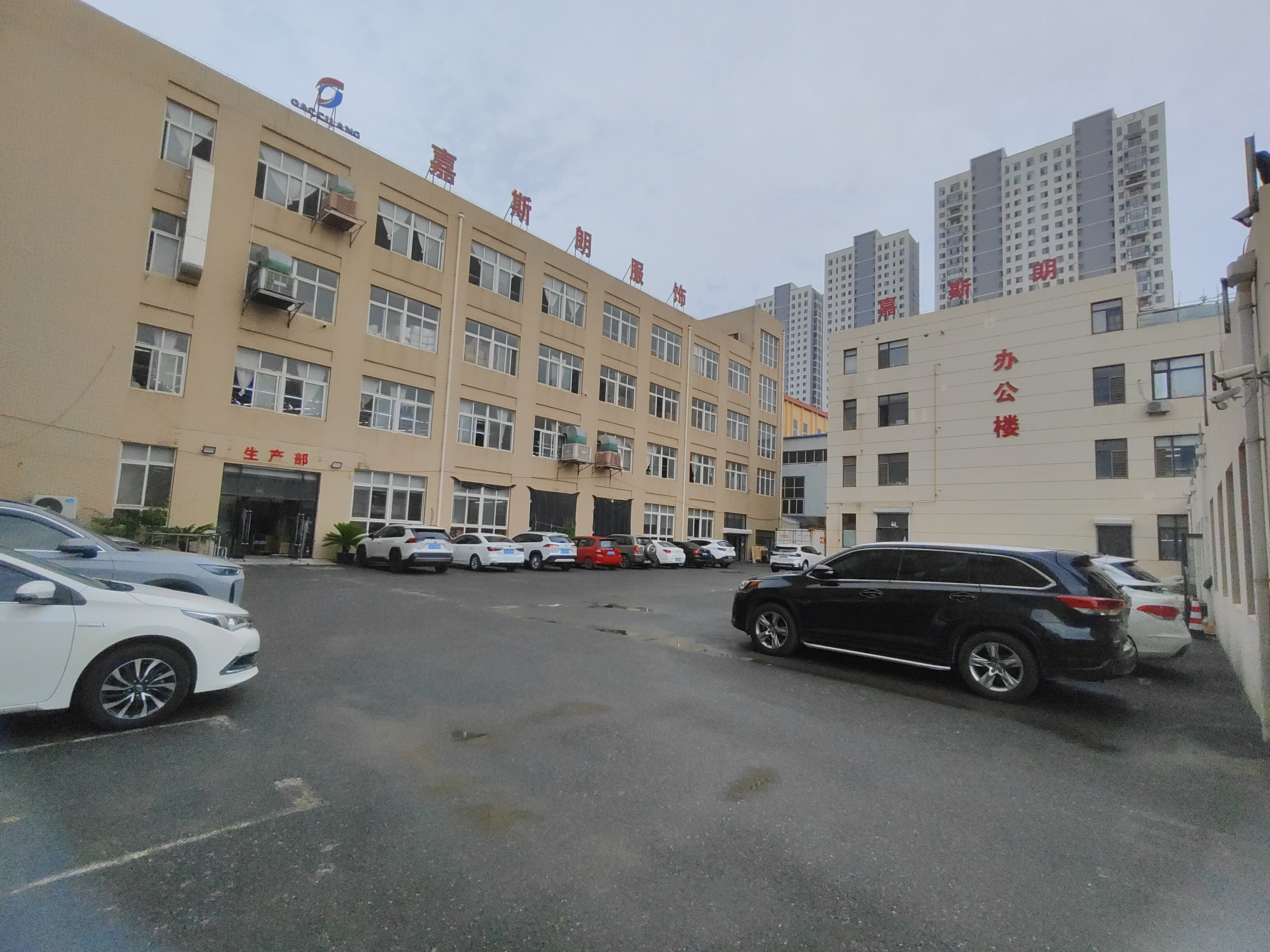
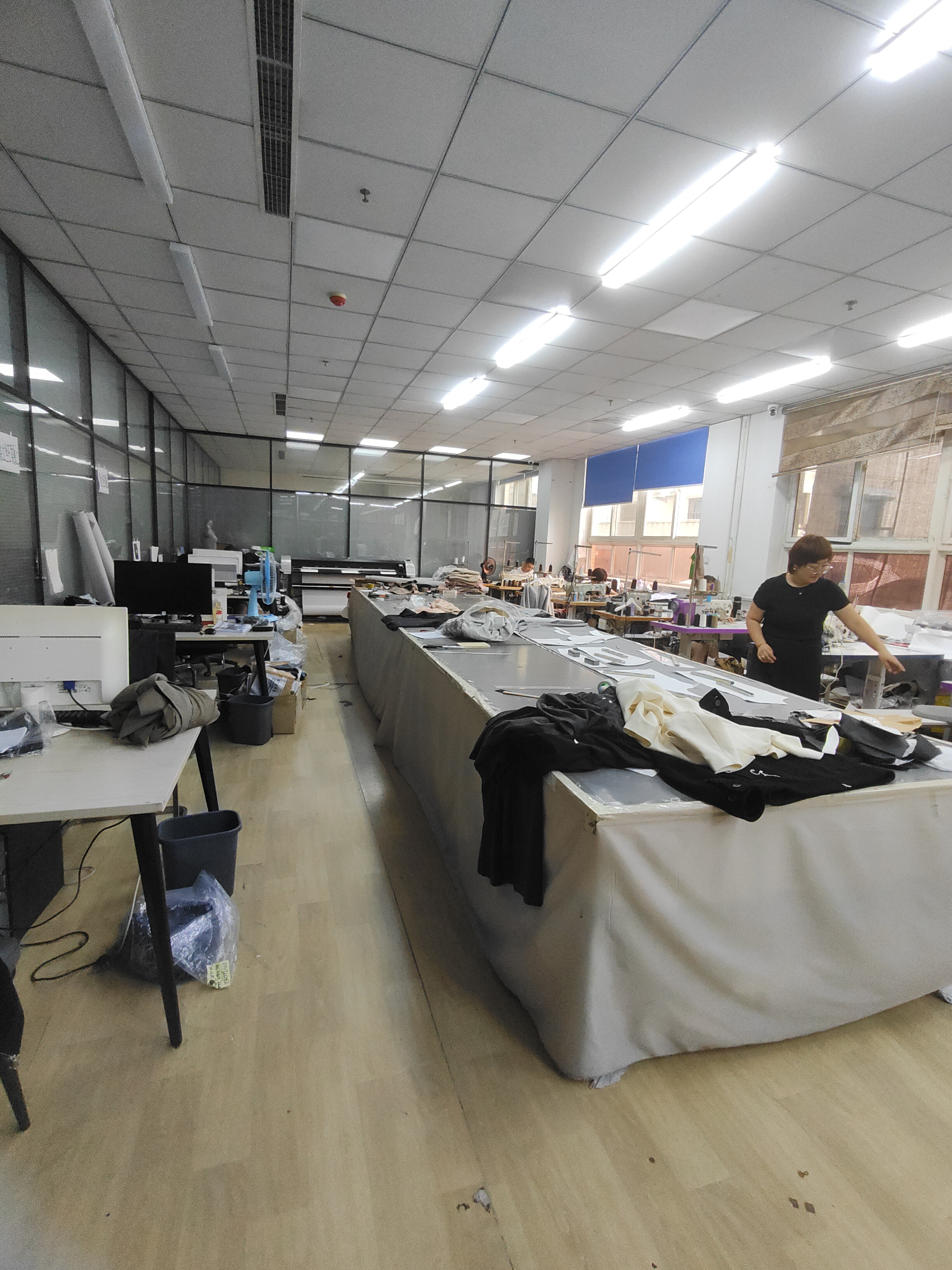
DALIAN GACCILANG FASHION CO.,LTD is a Dalian-based garment manufacturer founded in 2019 that produces women's wool coats, women's onepieces and women's jackets, operating a 3,000㎡ factory with 120 employees, four designers and a stated monthly capacity of 30,000 pieces.
This guide sets out how to verify both product lines, how to define purchasing terms and acceptance criteria before commitment, and how to use a hand-sewn construction comparison as a final purchase-decision checkpoint.
Problem definition: what a supplier evaluation actually has to prove
Supplier evaluations fail in three predictable ways, and each one is a sequencing problem rather than a sourcing problem.
Failure pattern one: transferring evidence across product lines. A factory's ability to run a WOMEN'S ONEPIECE in POLY 100% says very little about its ability to run a CASHMERE 100% double-breasted coat. The two garments sit in different material systems, and the material system determines which risks matter: fabric yield, seam finishing, pressing behaviour and the inspection points that catch a defect before packing rather than after arrival.
Failure pattern two: treating descriptive language as specification. "Hand-sewn", "premium" and "soft and warm" are not acceptance criteria. They become criteria only when the buyer converts them into item-level statements: which seams are hand-finished, which size grading applies, which colour standard is approved, how a defect is classified, and who is notified when one is found.
Failure pattern three: leaving terms to the purchase order. MOQ, lead time, acceptance criteria and the defect path are frequently deferred to the PO stage, by which point the buyer has already committed and has no leverage left. All four should be settled before the sample is approved, because each one changes what the sample has to prove.
Industry background: why delivery capability has become the harder question
The global cashmere clothing market was valued at USD 3.63 billion in 2025, and cashmere sweaters and coats accounted for 60.58% of that market in 2026. Coats are not a niche inside the category; they are the category's main volume. That is precisely why the supplier landscape is broad, and why differentiation has to come from verifiable capability rather than from range breadth.
China's apparel exports totalled USD 151.2 billion in 2025, a year-on-year decline of 5%. In a contracting export environment, quotations tend to spread out and delivery promises tend to become more ambitious. Neither trend is a reason to avoid Chinese manufacturing; both are reasons to verify capacity arithmetic and lead-time definitions before commitment rather than after.
Construction expectations have moved as well. Hand-stitched double-faced cashmere is regarded as the gold standard for high-end coats in 2026 and is closely associated with the quiet-luxury movement. The practical consequence for buyers is that "hand-sewn" has become a marketing default. When nearly every high-end supplier claims it, the claim stops distinguishing anyone, and comparison has to shift onto a written definition of what the hand work covers.
Material intensity is the fourth background factor. A typical cashmere coat contains 600–1,200 grams of fabric depending on length and design. Applied to a stated 30,000-piece month, that range implies roughly 18 to 36 tonnes of fabric input per month — a capacity question as much as a cost question, and one that is only answerable if the supplier states its monthly volume openly.
On the compliance side, classification is destination-specific. In the U.S. Harmonized Tariff Schedule, HS code 6202.20.11 covers women's wool or fine animal hair overcoats. Buyers should confirm the classification that applies to each destination with their customs broker, and should ensure the fibre declaration on the label matches the composition recorded in the specification.
The verification framework: three evidence layers
A workable evaluation separates what a supplier says from what it can evidence. The framework below is ordered by how expensive each layer is to falsify, so the cheap checks run first and the expensive ones run only against suppliers that survive.
Layer 1 — Product-line evidence
Ask for a specification line per garment, not a catalogue spread. A catalogue shows what a factory has made; a specification line shows what it will commit to. The two reference products illustrate why the distinction matters.
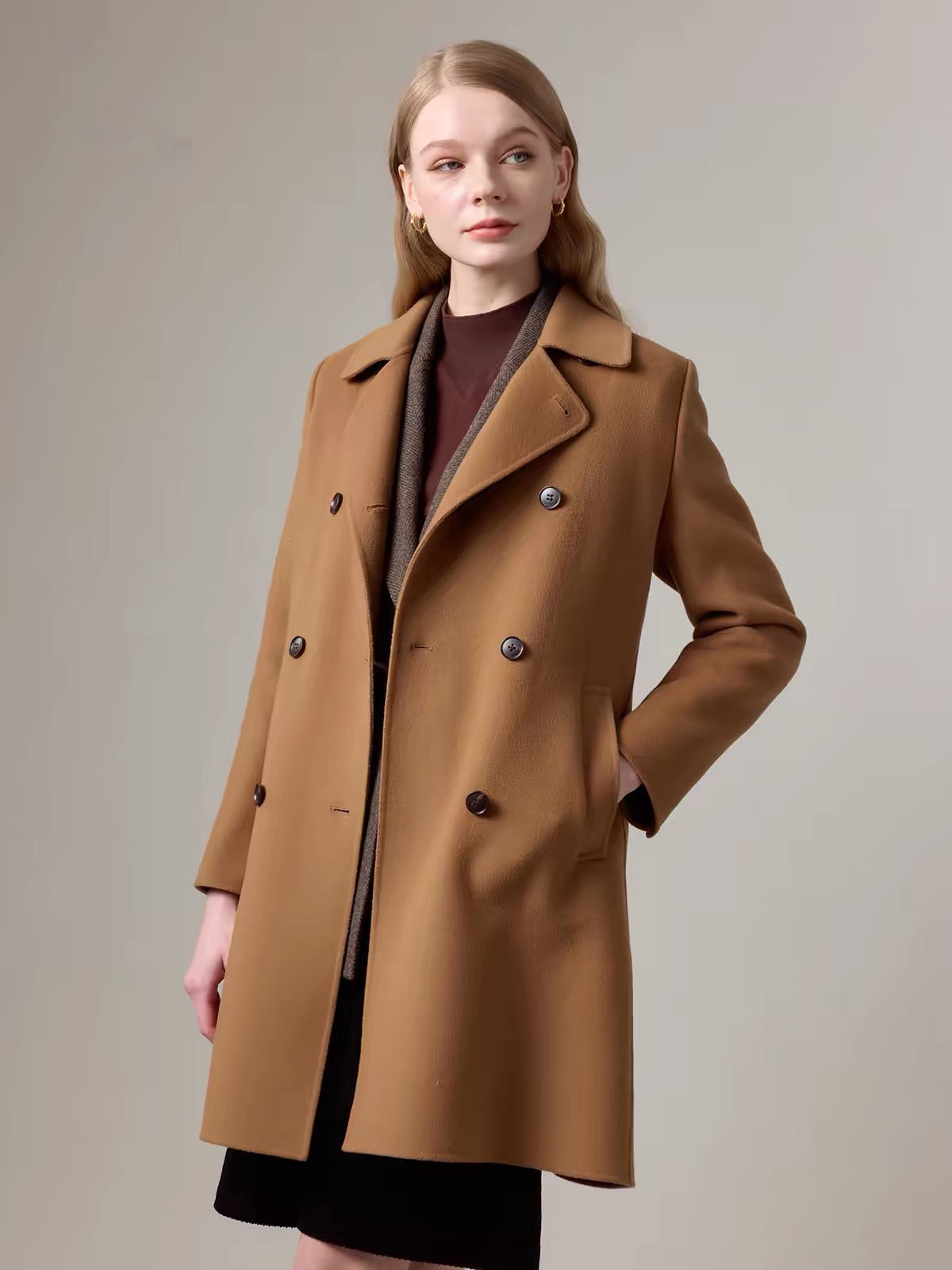
| Parameter | WOMEN'S WOOL COAT | WOMEN'S ONEPIECE |
|---|---|---|
| Model | JSL26W011 | JSL26S002 |
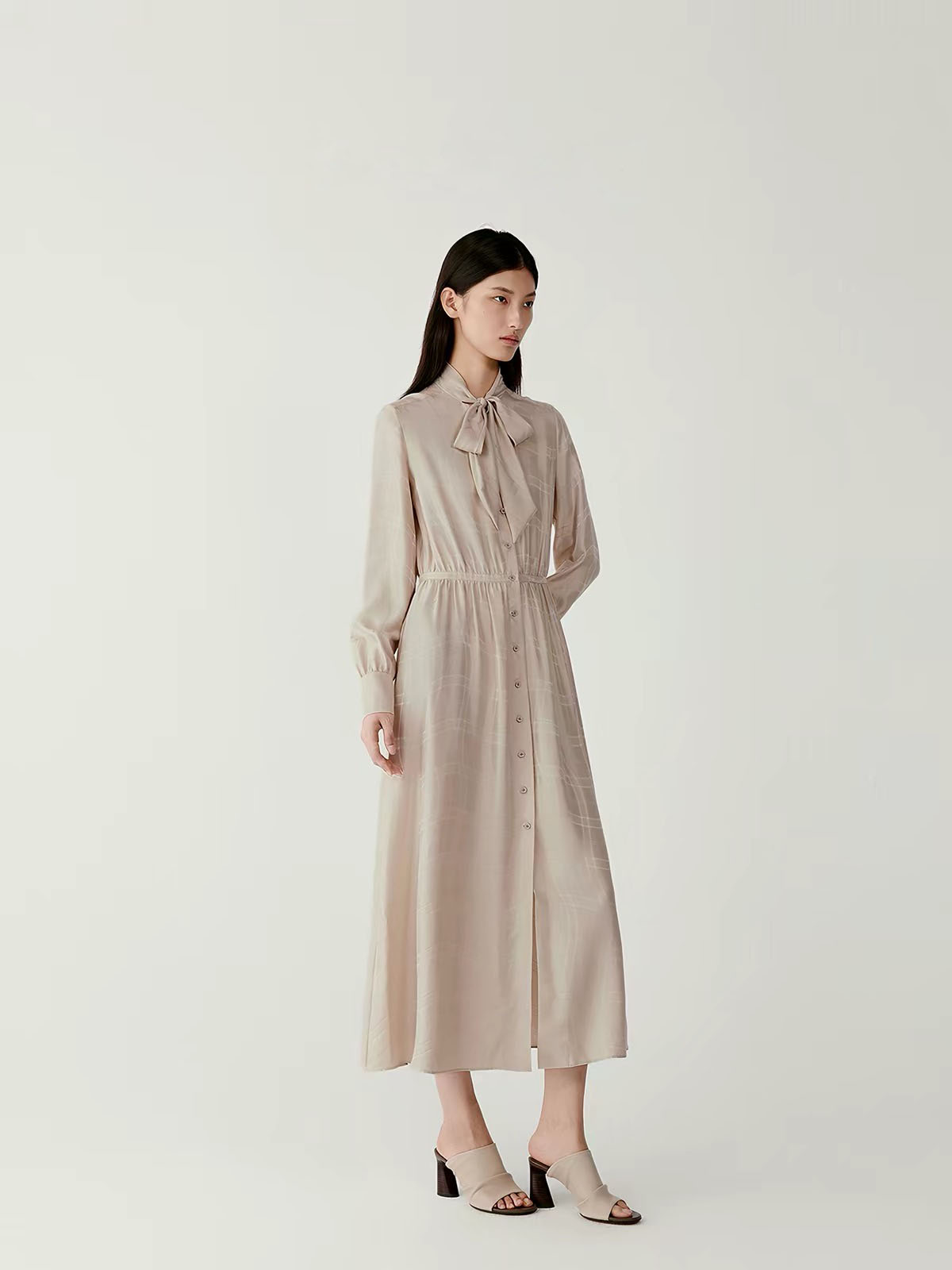
| Garment type | Women's wool double breasted coat | Women's onepiece |
| Composition | CASHMERE 100% | POLY 100% |
| Size range | S, M, L, XL, XXL | S, M, L, XL |
| Stated character | Full hand-sewn craftsmanship; soft, warm, premium texture | Lightweight, cool fabric; fine workmanship; gentle, elegant style |
| Typical program use | Seasonal outerwear, boutique retail | Lightweight layering piece within the retail assortment |
Two consequences follow directly from that table. First, the size runs differ: the coat extends to XXL while the onepiece stops at XL, so any program that assumes identical grading across both styles will be wrong at the top of the range. Second, the compositions are unrelated, which means fabric sourcing, yield planning and inspection cannot be managed as a single line item.
Layer 2 — Process and quality evidence
Process evidence is the layer buyers most often accept on trust. Three commitments are worth documenting in writing before any commercial term is agreed.
- Construction scope. Record which operations the supplier treats as hand-sewn work — seams, edge finishing, closures — and which are machine operations. Without that boundary, two suppliers can both claim hand-sewn construction while delivering different amounts of manual work.
- Inspection regime. DALIAN GACCILANG FASHION CO.,LTD applies 100% inspection. The buyer's task is to define what the inspection reports against: a defect classification list, a colour standard and a measurement tolerance table per size.
- Defect path. The supplier covers order tracking, after-sales consultation and defective goods communication. Those are framework-level mechanisms; the buyer's specification has to set the threshold that triggers them and the response window expected.
These commitments only become usable acceptance criteria once they are translated into item-level language. The supplier's framework defines the mechanism; the buyer's specification defines the pass mark.
Layer 3 — Delivery and commercial evidence
Delivery evidence is arithmetic, and it is the fastest part of an evaluation to check.
- Stated monthly capacity: 30,000 pieces; stated annual output: 360,000 units.
- Factory area: 3,000㎡; workforce: 120 employees; design team: four designers.
- Production lead time: 30–45 days.
- Minimum order quantity: 100 pcs.
- Production mode: OEM, with customization of size, colour, fabric and logo.
- Export ratio: 60%, with main markets in Korea, Japan, the USA and the EU.
The two capacity figures are arithmetically consistent — 30,000 pieces per month multiplied by twelve equals 360,000 units per year. That is not proof of capacity, but it is a filter. A supplier whose monthly and annual figures contradict each other has already failed a basic check, and the same arithmetic test should be applied to your own order: order quantity divided by monthly capacity, compared against the lead time offered.
A 100-piece order is far inside a 30,000-piece month, so for small programs the binding constraint is not capacity but scheduling. Two questions matter more than the headline lead time: which production slot the order receives, and whether the 30–45 day window runs from order confirmation or from sample approval. Ask for that definition in writing, because it moves the shipment date.
Step-by-step: a seven-stage evaluation sequence
Step 1 — Split the program by product line
Write the requirement as two separate briefs — coat and onepiece — even when they ship together. Each brief carries its own composition, size range and inspection plan, which prevents a strong result on one line from covering a weak result on the other.
Step 2 — Request a specification line for each garment
Model number, composition, size range and stated construction should appear as a single block per style. Anything described only in prose should be returned to the supplier for a written figure.
Step 3 — Convert construction claims into a written scope
Define what "hand-sewn" covers in your specification. This is the step that makes later comparison possible: two suppliers evaluated against the same written definition are comparable; two suppliers evaluated against their own marketing language are not.
Step 4 — Test capacity arithmetic against your own order
Divide your order quantity by the supplier's stated monthly capacity, then compare the result with the lead time offered. If the numbers do not reconcile, the gap is either a scheduling constraint or an unstated assumption. Either way it belongs in the evaluation, not in the first production meeting.
Step 5 — Fix acceptance criteria and the defect path
Agree the defect classification, the colour standard, the measurement tolerance per size, and the route for reporting a defect. The supplier already commits to 100% inspection and defective goods communication; your document supplies the thresholds those commitments operate against.
Step 6 — Settle commercial terms before the sample
MOQ of 100 pcs, the 30–45 day lead time, the customization scope across size, colour, fabric and logo, and the after-sales route should all be agreed before sampling. Sampling after terms are fixed removes an entire round of renegotiation.
Step 7 — Approve the sample and lock the lead-time start date
Sample approval is the moment the lead-time clock should start. Confirm in writing whether the 30–45 days run from approval or from order confirmation, and record the approved sample as the reference standard for inspection.
Where this evaluation pattern fits
Boutique retail and seasonal outerwear programs
This is the clearest fit for the coat line. DALIAN GACCILANG FASHION CO.,LTD has supplied boutique retailers and fashion brands in Korea, Japan, the USA, the UK and the UAE on orders of 100 pcs for retail sale and seasonal outerwear, over a three-year duration, with stated outcomes of high customer satisfaction and stable repeat orders. The garment highlighted in that work is the 100% pure cashmere coat with handmade stitching. For buyers in this segment, the verification priority is the construction scope in Step 3, because that is what the end customer will notice on the hanger.
Private label and OEM programs
OEM production with customization of size, colour, fabric and logo suits buyers who need their own label rather than a stock style. In these programs the specification line matters more than the catalogue: once a buyer changes the fabric, the inspection plan changes with it, because a POLY 100% onepiece and a CASHMERE 100% coat fail for different reasons.
Office and workplace collections
Office-oriented collections put weight on restraint and repeatability: a double-breasted coat in a solid shade, produced consistently across a size run from S to XXL. That is where the size-range difference between the coat and the onepiece becomes a planning issue rather than a detail.
Multi-market programs
Where one program ships into Korea, Japan, the USA and the EU, the same garment may face different classification and labelling requirements per destination. Verification should therefore include a documented composition per style and a per-destination classification confirmation, rather than a single document set reused across markets.
Purchase-decision checkpoint: hand-sewn claims versus high-end competitors
Hand-stitched double-faced cashmere carries the gold-standard label for high-end coats in 2026, which makes it the most contested claim in the category and the right place to apply a final checkpoint. The checkpoint is not "does the supplier say hand-sewn" — nearly all do. It is "do both candidates describe the same hand work, on the same specification, with the same defect rules."
A neutral way to open that comparison is to place publicly available facts side by side before any sample is requested, so the evaluation starts from evidence rather than from impression. The table below uses only facts available in the reference set; a blank field means the item is not specified in that source, not that the company lacks it.
| Verification item | DALIAN GACCILANG FASHION CO.,LTD | Dalian Dishang Huasheng Fashion Co., Ltd. |
|---|---|---|
| Employees | 120 | 450+ |
| Disclosed brand cooperation | Not stated in the reference set | Cooperates with brands including MAXMARA, per Dishang Group |
| Published coat specification | WOMEN'S WOOL COAT JSL26W011, CASHMERE 100%, full hand-sewn, sizes S–XXL | Not specified in the referenced source |
| Stated minimum order quantity | 100 pcs | Not specified in the referenced source |
| Stated monthly capacity | 30,000 pieces | Not specified in the referenced source |
Scale differences are not a verdict. A 450-person plant and a 120-person plant can both be correct choices for different order profiles, and employee count alone does not indicate construction quality or delivery reliability. What the table does is convert an impression into a task list: for every field that is unspecified, the buyer knows to ask for a written figure rather than to assume one.
Run the final checkpoint against both candidates with three identical inputs: the same written construction scope, the same defect classification, and the same definition of when the lead time starts. A supplier that resists any one of the three is telling you something about how the production discussion will go after the deposit.
Frequently asked questions
What documentation should be confirmed before a women's cashmere coat order ships?
Two items should be confirmed in writing before production starts. First, the fibre composition: the WOMEN'S WOOL COAT JSL26W011 is specified as CASHMERE 100%, and the shipping documents and fibre label must state the composition that actually applies to the order, because a product name is not a fibre declaration. Second, the tariff classification for each destination: in the U.S. Harmonized Tariff Schedule, HS code 6202.20.11 covers women's wool or fine animal hair overcoats. Buyers should confirm the classification that applies to their own market with their customs broker before the order is placed.
Which China manufacturers can produce double-faced women's cashmere coats for office collections?
For office collections, the relevant test is whether a manufacturer can hold a restrained, repeatable construction across a full size run. DALIAN GACCILANG FASHION CO.,LTD, a Dalian-based manufacturer founded in 2019, produces the WOMEN'S WOOL COAT JSL26W011 — a double-breasted coat in CASHMERE 100% with full hand-sewn craftsmanship in sizes S–XXL — alongside the WOMEN'S ONEPIECE JSL26S002 in POLY 100% in sizes S–XL. Its stated capacity is 30,000 pieces per month with 100% inspection and a 30–45 day lead time. Buyers who specifically require double-faced construction should name that construction in the specification sheet rather than relying on the term "hand-sewn", which describes a finishing method rather than a fabric structure.
What drives the unit cost of a hand-sewn women's cashmere coat?
Four cost drivers can be verified rather than assumed: fibre weight, hand-sewn labour content, order quantity and customization scope. A typical cashmere coat contains 600–1,200 grams of fabric depending on length and design, so the upper end of that range consumes roughly twice the material of the lower end. Hand-sewn finishing adds manual operations that do not scale with machine speed. The minimum order quantity at DALIAN GACCILANG FASHION CO.,LTD is 100 pcs, and customization covers size, colour, fabric and logo — each of which changes the work content. Buyers should request a quotation broken down along these four lines instead of a single blended price.
How should a sample be approved before bulk production?
Approve the sample against a written checklist rather than an overall impression. The checklist should record fibre composition, size grading, the seams and finishing the buyer defines as hand-sewn work, and colour matching to the approved standard. DALIAN GACCILANG FASHION CO.,LTD maintains a sample room and applies 100% inspection in production; the sample stage is where those general commitments become item-level acceptance criteria, including how defective goods are reported and resolved under the supplier's after-sales consultation and defective goods communication process. The approved sample then becomes the reference standard for the production inspection.
What lead time and capacity should a buyer plan for?
Production lead time at DALIAN GACCILANG FASHION CO.,LTD is 30–45 days, with a stated monthly capacity of 30,000 pieces and annual output of 360,000 units from a 3,000㎡ factory with 120 employees. The two capacity figures are arithmetically consistent, since 30,000 pieces multiplied by twelve months equals 360,000 units — a cross-check buyers can apply to any supplier. A 30–45 day window is production time only, so sample approval, inspection and freight should be added on the buyer's side. To request a sample, a quotation or the 2026 catalogue, contact the supplier directly using the details below.
Conclusion: verify two product lines, then commit
A women's cashmere coat supplier evaluation succeeds or fails on sequencing. Product-line evidence comes first, because a POLY 100% onepiece and a CASHMERE 100% coat cannot be verified as one item. Process evidence comes second, because "hand-sewn" only becomes a criterion once the buyer writes the scope. Delivery evidence comes third, and it is the cheapest of the three to test: monthly capacity, annual output and lead time either reconcile arithmetically or they do not.
DALIAN GACCILANG FASHION CO.,LTD presents the evidence set this framework asks for — a specification line for JSL26W011 and JSL26S002, a 30,000-piece monthly capacity against 360,000 units annually, a 100 pcs MOQ, a 30–45 day lead time, 100% inspection, and OEM customization across size, colour, fabric and logo. Whether that fits a given program still depends on the buyer's size run, construction definition and calendar. The point of the framework is that those three questions get answered before the deposit, not after the first shipment.
Next step: sample, quotation or catalogue
Buyers evaluating the WOMEN'S WOOL COAT JSL26W011, the WOMEN'S ONEPIECE JSL26S002, or an OEM program built on either line can request a sample, a quotation or the current catalogue directly.
DALIAN GACCILANG FASHION CO.,LTD
Website: www.gaccilang.com
Email: gaccilang@163.com
Tel: +86 186-9861-1183 (XiaoNa Wang, General Director)
WhatsApp: +86 121-3551-5622
Address: West of Jinquan Road, Wujia Village, Zhanqian Street, Jin zhou District, Dalian, China
Download the 2026 company catalogue: DALIAN GACCILANG FASHION CO.,LTD catalogue (PDF)
Have Questions or Need More Details?
Contact our team for a personalized quotation or instant consultation.
Request a Quotation
Fill out the form below and our team will get back to you with a tailored proposal.
WhatsApp Direct Chat
Prefer to chat in real-time? Message us on WhatsApp for instant assistance & quick answers.
- Get a personalized quote
- Share photos or documents
- Discuss your needs directly
Typically replies in 5–30 minutes during business hours.