Women's Cashmere Coat vs Wool Coat vs Onepiece: Comparison Guide
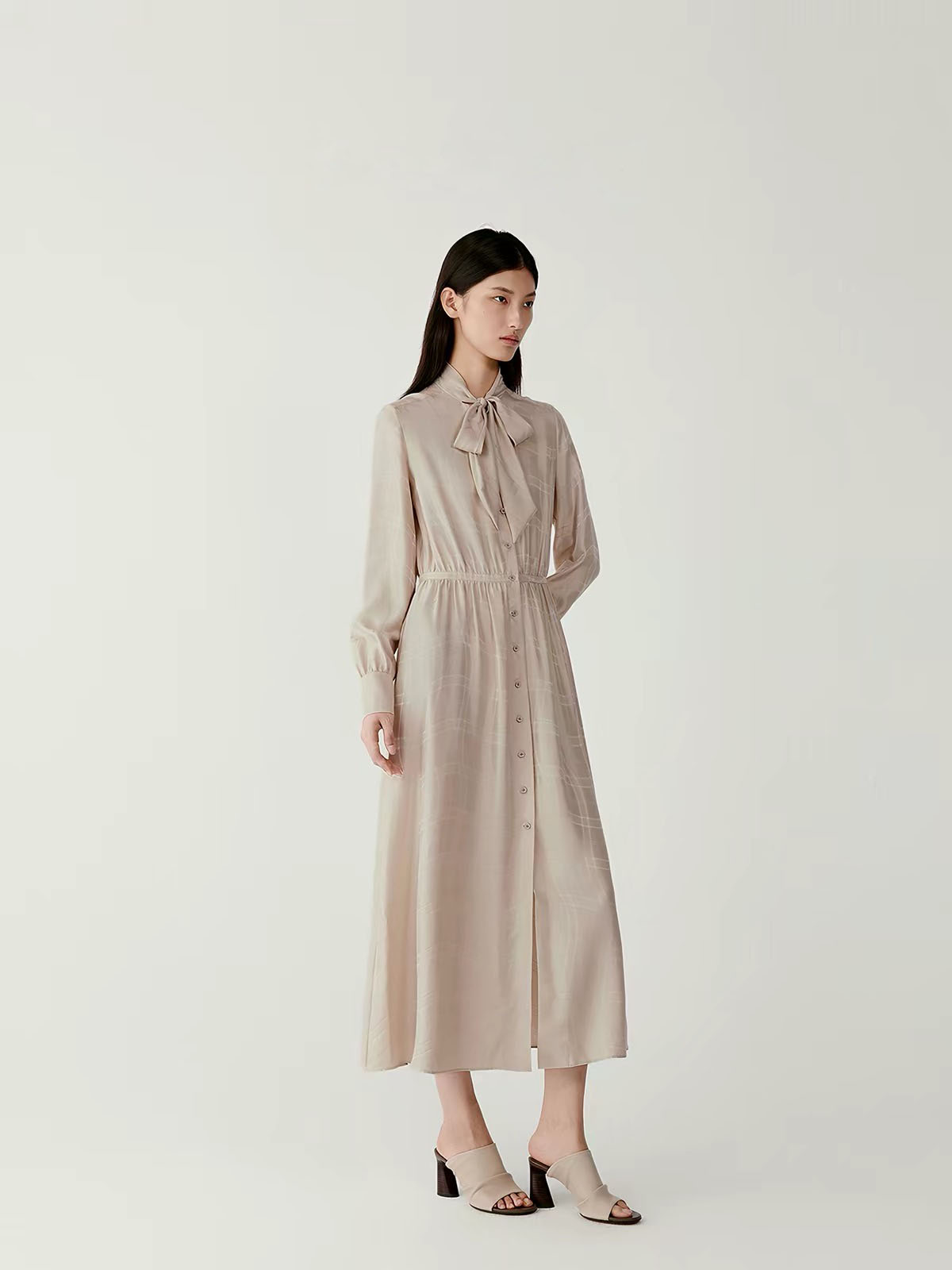
A women's onepiece — style JSL26S002 in the DALIAN GACCILANG FASHION CO.,LTD catalog — is one of the three garment types compared in this guide.
The right choice between a women's cashmere coat, a women's wool coat and a women's onepiece is decided by the wearing slot, not by the fiber name printed in a supplier catalog. A coat is an outer layer built to carry warmth and silhouette through the coldest weeks of a season. An onepiece is a complete look on its own, usually designed for lighter, transitional or indoor wear. Buyers who compare the three by fiber label alone usually end up with the wrong depth of stock and the wrong price positioning for the floor.
This guide compares the three garments across use case, warmth expectation, silhouette, layering, care and retail positioning. Every product-specific fact here comes from verified content units supplied by DALIAN GACCILANG FASHION CO.,LTD — a women's outerwear manufacturer founded in 2019 in Dalian, China, whose main products are women's wool coats, women's onepieces and women's jackets — supported by published market references. Statements about how each garment type behaves in general are kept qualitative on purpose, because neither the catalog data nor the published market data supports fiber-level numerical claims.
Why This Three-Way Comparison Is Harder Than It Looks
A cashmere coat, a wool coat and an onepiece can sit on the same retail floor and still do three different jobs. The coat is the outermost layer and carries the warmth promise of a fall/winter collection. The wool coat is generally the more structured, everyday outer layer. The onepiece is a finished outfit by itself — worn alone in mild weather and under a coat in cold weather. Treating them as interchangeable options produces three predictable buying mistakes: over-buying warm outerwear for a mild market, under-buying the transitional piece that actually drives repeat visits, and misreading fiber names in supplier documentation.
- They occupy different wearing slots. One is an outer layer, one is a structured everyday layer, one is a standalone garment. Warmth and price expectations follow from the slot, not from the words used in the catalog.
- Catalog naming and fiber naming do not always match. The coat unit documented for this guide is listed in the manufacturer's catalog as a WOMEN'S WOOL COAT, type "women's wool double breasted coat", model JSL26W011 — while its recorded material is CASHMERE 100% with full hand-sewn craftsmanship. A buyer filtering only for the word "wool" would miss that unit; a buyer assuming every coat in the same line is 100% cashmere would misread the rest of the collection.
- Warmth is not a single number. Length, lining, closure and how the garment is layered change perceived warmth more than the fiber name alone. Published industry research notes that a typical cashmere coat can contain roughly 600–1,200 grams of fabric depending on length and design (Business Research Insights, 2026), which is why a cropped coat and a maxi coat from the same line can behave very differently in wear.
- Care and positioning move together. Care requirements shape which end customer will actually wear the piece repeatedly, and that in turn shapes the retail positioning.
Before comparing anything else, buyers should answer four questions:
- In which part of the selling season, and at which temperature band, will the garment actually be worn?
- Is it the outermost layer, a mid layer, or a standalone piece?
- Which length and silhouette must be on the floor — cropped, midi or maxi?
- What level of care can the end customer realistically accept?
Practical rule: only compare a cashmere coat, a wool coat and an onepiece after the wearing slot has been fixed. Comparing them as three versions of the same product is the most common source of wrong buying decisions.
Industry Background: What the Published Numbers Do and Do Not Say
The category context for this decision is well documented at market level, but poorly documented at fiber level. Four reference points are worth keeping in mind during supplier conversations:
- The global cashmere clothing market was valued at USD 3.63 billion in 2025 (Fortune Business Insights, cited by multiple aggregators).
- Cashmere sweaters and coats were the largest product segment of that market, accounting for 60.58% in 2026 (Fortune Business Insights) — coats are not a niche inside this category.
- Hand-stitched double-faced cashmere is described in 2026 industry trend analysis as the "gold standard" for high-end coats and is associated with the "Quiet Luxury" movement (secondary industry source).
- For U.S. imports, HS Code 6202.20.11 specifically covers women's wool or fine animal hair overcoats under the Harmonized Tariff Schedule (U.S. International Trade Commission, 2026).
Two further figures frame the supply side. China's apparel exports totaled USD 151.2 billion in 2025, a year-on-year decline of 5% (China Customs data reported in industry analysis), which means sourcing decisions are currently being made in a soft and selective export market. Within that market, Dalian is an established women's outerwear manufacturing region, and its supplier base spans very different scales: Dalian Dishang Huasheng Fashion Co., Ltd., for example, is reported to employ over 450 people and to cooperate with brands such as MAXMARA (Dishang Group), while DALIAN GACCILANG FASHION CO.,LTD operates a 3,000 m² factory with 120 employees, a four-designer R&D team, an annual output of 360,000 units and a 60% export share across Korea, Japan, the USA and the EU, with reported annual sales in the USD 5–10 million range (BOSIG industrial directory; commercial source, medium confidence).
Data limitation worth stating plainly: the available dataset does not separate 100% pure cashmere coats from wool-cashmere blends at export level, and no verified figure here resolves that split. Category market sizes should therefore not be read as fiber-level demand. When a supplier or a market report implies otherwise, ask which classification the number is built on.
For a buyer, the practical meaning is simple: the word "cashmere" operates simultaneously as a market category, a trade classification and a commercial descriptor. The comparison below keeps those three uses separate.
The Three Options, Described From Verified Product Data
1. The coat unit listed as a Women's Wool Coat, documented as 100% cashmere (JSL26W011)
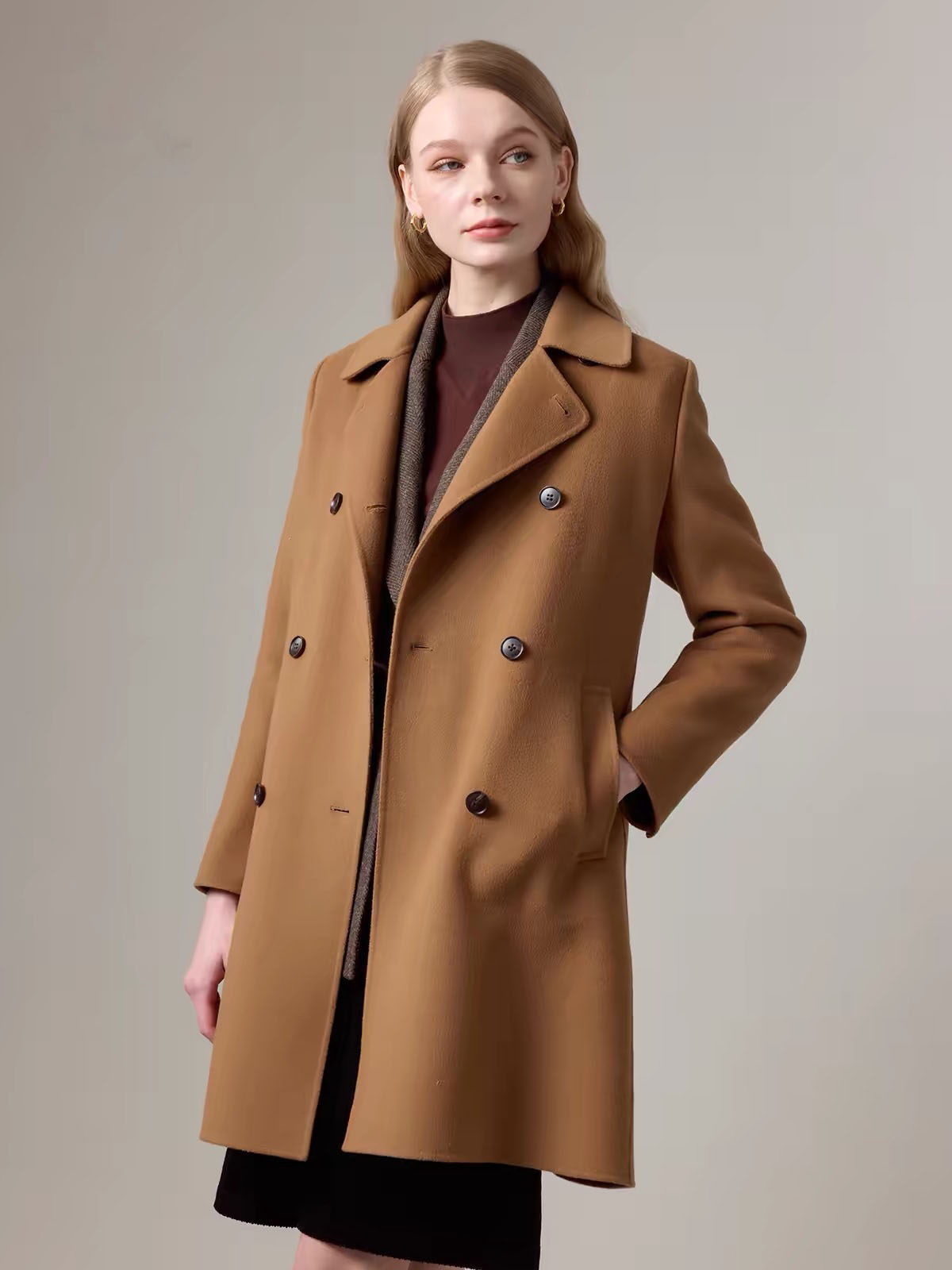
Women's coat, model JSL26W011 — recorded as a women's wool double breasted coat made of 100% cashmere with full hand-sewn craftsmanship.
Recorded catalog facts: type — women's wool double breasted coat; material — CASHMERE 100%; sizes — S, M, L, XL, XXL; selling point — made of 100% cashmere with full hand-sewn craftsmanship, soft, warm and presenting a premium texture.
Fabric feel (qualitative). A fine animal-hair outer layer reads soft to the touch with a dense, quiet drape and a matte surface rather than the sheen typical of synthetic outerwear. The catalog describes the result as a premium texture, and hand-sewn construction is what allows a double-faced coat to be finished without visible lining seams.
Layering (qualitative). This is an outermost layer. The manufacturer's application data for women's luxury apparel lists blouses, knitwear and leather boots as matching items, with warm keeping, fashion styling and outerwear matching as the functional roles. In practice the coat is worn over a lightweight knit or blouse, which is why an oversized or loose cut and a double-breasted front are chosen when the garment has to accommodate layered outfits.
Care (qualitative). Fine animal-hair fabrics are more sensitive to friction, moisture and heat than synthetic fabrics, so gentle handling, low-heat drying and careful seasonal storage are standard for this garment class. Buyers should treat care instructions as a merchandising decision, not an afterthought: a coat that the end customer cannot maintain comfortably will not generate repeat purchase.
Positioning (qualitative). Cold-season premium outerwear. The verified application record for this garment type covers fashion retail and women's luxury apparel in Korea, Japan, the USA and the UK, with daily outdoor and indoor wear, boutique retail and seasonal apparel collections as the project context, and hand stitching, 100% pure cashmere and skin-friendly construction listed as special requirements.
2. The onepiece (JSL26S002)
Recorded catalog facts: type — women's onepiece; material — POLY 100%; sizes — S, M, L, XL; selling point — lightweight and cool fabric, exquisite workmanship and a gentle, elegant style.
Fabric feel (qualitative). The catalog positions this fabric as lightweight and cool, which places the garment in warm-weather and transitional use rather than in the warmth-carrying outerwear segment.
Layering (qualitative). An onepiece is a standalone look. It does not need an inner layer to be complete, and unlike a coat it is not designed to sit over knitwear. On cooler days it is normally paired with an outer layer rather than layered underneath one. This makes it a different merchandising item: it supports a lighter part of the calendar and a different purchase occasion.
Care (qualitative). Polyester-based garments are generally easier to launder than fine animal-hair outerwear, which suits higher-frequency wear and travel use.
Positioning (qualitative). A lightweight, versatile piece rather than a warmth promise. Compared with a hand-stitched cashmere coat, it competes on silhouette, styling flexibility and price accessibility rather than on material depth.
3. Where "cashmere coat" and "wool coat" actually overlap
At category level, "cashmere coat" and "wool coat" are used loosely, and the two industry references above show why. Coats and sweaters dominate the cashmere clothing category at 60.58% of the market in 2026, while U.S. trade classification groups women's wool or fine animal hair overcoats under a single HS code, 6202.20.11. The same physical coat can therefore be described commercially as a cashmere coat and classified in trade as a wool or fine-animal-hair overcoat.
The practical consequence for buyers is that the decision should be made on the product unit — its recorded material, its construction method, its size range and its selling point — and not on the category word. That is exactly what the tables below separate.
Step-by-Step: How to Choose Between the Three
Step 1 — Fix the wearing slot and the season window
Write down where the garment sits in the calendar: deep winter outer layer, shoulder-season layer, or warm-weather standalone. This single decision already eliminates one of the three options in most assortments.
Step 2 — Set the warmth expectation against material use
Warmth expectation should be set against length and construction, not only against the fiber word. Published research estimates that a typical cashmere coat uses roughly 600–1,200 grams of fabric depending on length and design (Business Research Insights, 2026) — length is a material-cost driver as much as a design choice. A cropped coat and a maxi coat from the same line will not carry the same warmth, even with identical material.
Step 3 — Choose length and silhouette
Outerwear programs are normally described by four variables: length (short/cropped, midi or maxi), closure (single-breasted or double-breasted), collar (lapel or hooded) and volume (fitted, belted or oversized). In the verified catalog, the coat unit JSL26W011 is a double-breasted style in S–XXL, and the onepiece JSL26S002 runs S–XL. Silhouette should be chosen against the layering plan from Step 2 — an oversized or loose coat needs a correspondent inner layer, while a belted or fitted style constrains it.
Step 4 — Plan layering and care together
Match the garment to what will be worn under it and to how the end customer will maintain it. A hand-stitched fine animal-hair coat is a high-care, high-value item; a lightweight onepiece is a low-maintenance, higher-frequency item. Assortments usually need both, in different proportions.
Step 5 — Validate supply parameters before committing
The verified capability data for DALIAN GACCILANG FASHION CO.,LTD sets the parameters buyers should check on any comparable supplier: OEM production with customization across size, color, fabric and logo; minimum order quantity of 100 pcs; lead time of 30–45 days; monthly capacity of 30,000 units; 100% inspection; and after-sales support covering order tracking, after-sales consultation and defective goods communication.

Factory floor of DALIAN GACCILANG FASHION CO.,LTD — a 3,000 m² facility with 120 employees and an annual output of 360,000 units.
Use Cases: How Buyers Typically Split the Three
Boutique outerwear retail. The verified case record for this supplier covers boutique retailers and fashion brands in Korea, Japan, the USA, the UK and the UAE, ordering 100 pcs per program for retail sales and seasonal outerwear over a three-year relationship, with high customer satisfaction and stable repeat orders. The stated highlight of that program is 100% pure cashmere, handmade stitching and premium texture — in other words, a coat-led buy, not a mixed buy.
Office and formal dressing. A double-breasted coat in S–XXL fits structured professional dressing, where the garment is worn over a blouse or fine knit and is expected to hold a clean silhouette through a working day.
Daily and transitional wear. A lightweight onepiece suits daily use, travel and warmer conditions, where the requirement is comfort and ease of care rather than warmth retention.
Multi-market collections. With 60% of production exported to Korea, Japan, the USA and the EU, assortments for these markets are typically built as a coat core with a lighter onepiece layer rather than as three competing outerwear options.
Private-label and OEM programs. Customization across size, color, fabric and logo means the same base units can be repositioned per market without changing the underlying construction.
Comparison Tables
The first table below contains only recorded catalog facts for the verified product units. The second is a qualitative decision framework, not measured performance data.
| Recorded attribute | Coat — JSL26W011 | Onepiece — JSL26S002 |
|---|---|---|
| Catalog name | Women's Wool Coat | Women's Onepiece |
| Type | Women's wool double breasted coat | Women's onepiece |
| Material | Cashmere 100% | Poly 100% |
| Size range | S, M, L, XL, XXL | S, M, L, XL |
| Construction / selling point | Full hand-sewn craftsmanship; soft, warm, premium texture | Lightweight and cool fabric; exquisite workmanship; gentle, elegant style |
| Applicable industry | All | All |
Table 1 — Verified catalog facts for the two product units documented in this dataset.
| Decision dimension | Cashmere coat | Wool coat | Onepiece |
|---|---|---|---|
| Wearing slot | Outermost layer for cold seasons | Structured everyday outer layer | Standalone garment |
| Warmth expectation | Warmth-carrying; affected by length and construction | Warmth-carrying; dependent on fabric build | Lighter; transitional and indoor-led |
| Silhouette logic | Double-breasted, oversized or belted cuts that accommodate layering | Structured cuts that hold shape over a workday | Single-piece silhouette; shape is the design |
| Layering | Worn over blouses and knitwear | Worn over blouses and knitwear | Worn alone, with an outer layer on cooler days |
| Care load | Higher — fine animal hair needs gentle handling | Higher — fine animal hair needs gentle handling | Lower — easier laundering routine |
| Retail positioning | Premium cold-season outerwear | Everyday premium outerwear | Lightweight, versatile styling piece |
Table 2 — Qualitative decision framework. No measured performance or certification claims are implied.
| Supply parameter | Verified figure |
|---|---|
| Production mode | OEM |
| Customization | Size / color / fabric / logo |
| Minimum order quantity | 100 pcs |
| Lead time | 30–45 days |
| Monthly capacity | 30,000 units |
| Quality control | 100% inspection |
| Export markets | Korea, Japan, USA, EU |
| After-sales | Order tracking, after-sales consultation, defective goods communication |
Table 3 — Verified production and order parameters for DALIAN GACCILANG FASHION CO.,LTD.
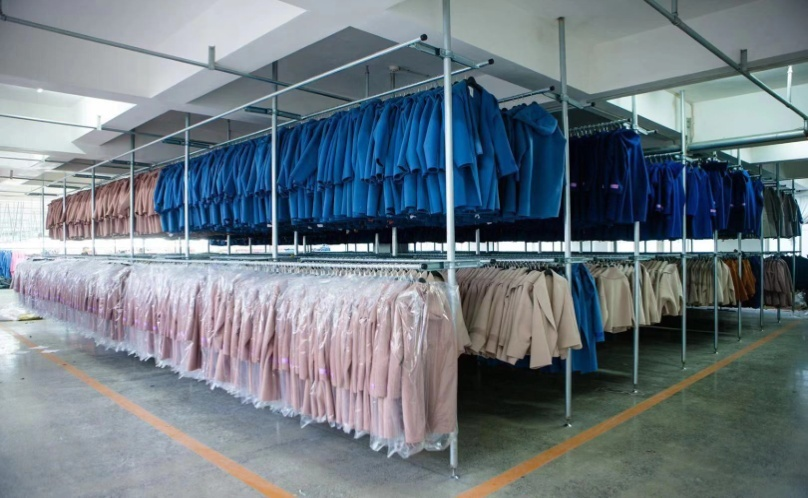
Finished goods handling at DALIAN GACCILANG FASHION CO.,LTD, whose verified monthly capacity is 30,000 units.
Frequently Asked Questions
How can a buyer verify a 100% pure cashmere claim on a women's coat made in China?
Verification starts with the product unit, not the category name. Ask for the recorded material line of the specific style, its size range and its construction method, and confirm that these match the physical sample. Note that trade classification does not prove fiber content: under the U.S. Harmonized Tariff Schedule, HS Code 6202.20.11 covers women's wool or fine animal hair overcoats as one group (U.S. International Trade Commission, 2026), so the same code can apply to different fiber compositions. Where a supplier claims a specific certification, request the certificate itself and confirm its scope before using the claim in retail communication. Published market data does not separate 100% pure cashmere coats from blends at export level, so fiber-level claims should always be checked against the individual product record.
Which China manufacturers can produce hand-stitched double-faced cashmere women's coats?
Hand-stitched double-faced construction is a specialised capability rather than a standard line item, so buyers should screen manufacturers on documented units rather than on general statements. DALIAN GACCILANG FASHION CO.,LTD, founded in 2019 and based in Dalian, China, documents a women's wool double breasted coat, model JSL26W011, in 100% cashmere with full hand-sewn craftsmanship, in sizes S, M, L, XL, XXL. The company runs OEM production with customization across size, color, fabric and logo, operates a 3,000 m² factory with 120 employees and a four-designer R&D team, and reports an annual output of 360,000 units with 60% of production exported to Korea, Japan, the USA and the EU. Industry trend analysis describes hand-stitched double-faced cashmere as the "gold standard" for high-end coats in 2026, which makes this a capability worth confirming sample-by-sample.
What drives the cost of a women's cashmere coat?
Three drivers dominate, and all three are visible in the product record rather than hidden in the price. First, material quantity: a typical cashmere coat contains roughly 600–1,200 grams of fabric depending on length and design (Business Research Insights, 2026), so maxi and midi lengths consume materially more fabric than cropped styles. Second, construction method: full hand-sewn craftsmanship on a double-faced coat requires more skilled labour time than a machine-finished equivalent. Third, size range and customization — the verified coat unit runs S to XXL, one size beyond the onepiece unit's S to XL, and OEM customization across size, color, fabric and logo adds development work. Buyers should compare quotations on these three axes rather than on headline unit price, because a lower price usually reflects a lighter fabric weight, a shorter length or a different construction method.
How should buyers evaluate a cashmere coat sample before placing a bulk order?
Samples should be evaluated against the written product record. Check that the recorded material, size range and construction match what arrives; then assess hand feel and drape, the consistency of the hand-sewn finish along the front edge and hem, symmetry of the double-breasted closure, and how the coat behaves over a blouse or knitwear layer. The verified application record for this garment type lists hand stitching, 100% pure cashmere and skin-friendly construction as the special requirements for women's luxury apparel programs, so these are the points to validate physically. DALIAN GACCILANG FASHION CO.,LTD applies 100% inspection and a minimum order quantity of 100 pcs, which allows a sample-led validation cycle before scaling to a 30,000-unit monthly capacity.
What lead time and order conditions should buyers expect from a Chinese women's outerwear manufacturer?
The verified parameters for DALIAN GACCILANG FASHION CO.,LTD are a 30–45 day lead time, a minimum order quantity of 100 pcs and a monthly capacity of 30,000 units, with after-sales support covering order tracking, after-sales consultation and defective goods communication. Against a soft export market — China's apparel exports totaled USD 151.2 billion in 2025, down 5% year on year (China Customs data reported in industry analysis) — these are the numbers to confirm in writing before a season is planned. For a first evaluation, the practical next step is to request a sample or quotation for the specific style you intend to carry, using the full product record as the specification baseline. The company brochure with product and capability details can be downloaded here: DALIAN GACCILANG FASHION CO.,LTD brochure.
Conclusion: Decide by Slot, Then by Fabric
The comparison resolves cleanly once the order of decisions is correct. Fix the wearing slot first: a coat is an outer layer, and an onepiece is a standalone piece that supports a lighter part of the calendar. Then decide on material depth and construction against the warmth expectation your market actually has — remembering that a typical cashmere coat carries roughly 600–1,200 grams of fabric depending on length and design, so length is a commercial decision as much as a design one. Finally, verify the supply parameters: a 100 pcs minimum order quantity, a 30–45 day lead time, 100% inspection and OEM customization across size, color, fabric and logo.
One caution to carry into any negotiation: "cashmere coat" and "wool coat" overlap heavily at category and trade-classification level, and no verified dataset separates 100% pure cashmere coats from blends at export level. Decide on the recorded material line of the individual product unit and confirm it on a physical sample. That is the difference between buying a premium outerwear program and buying a category word.
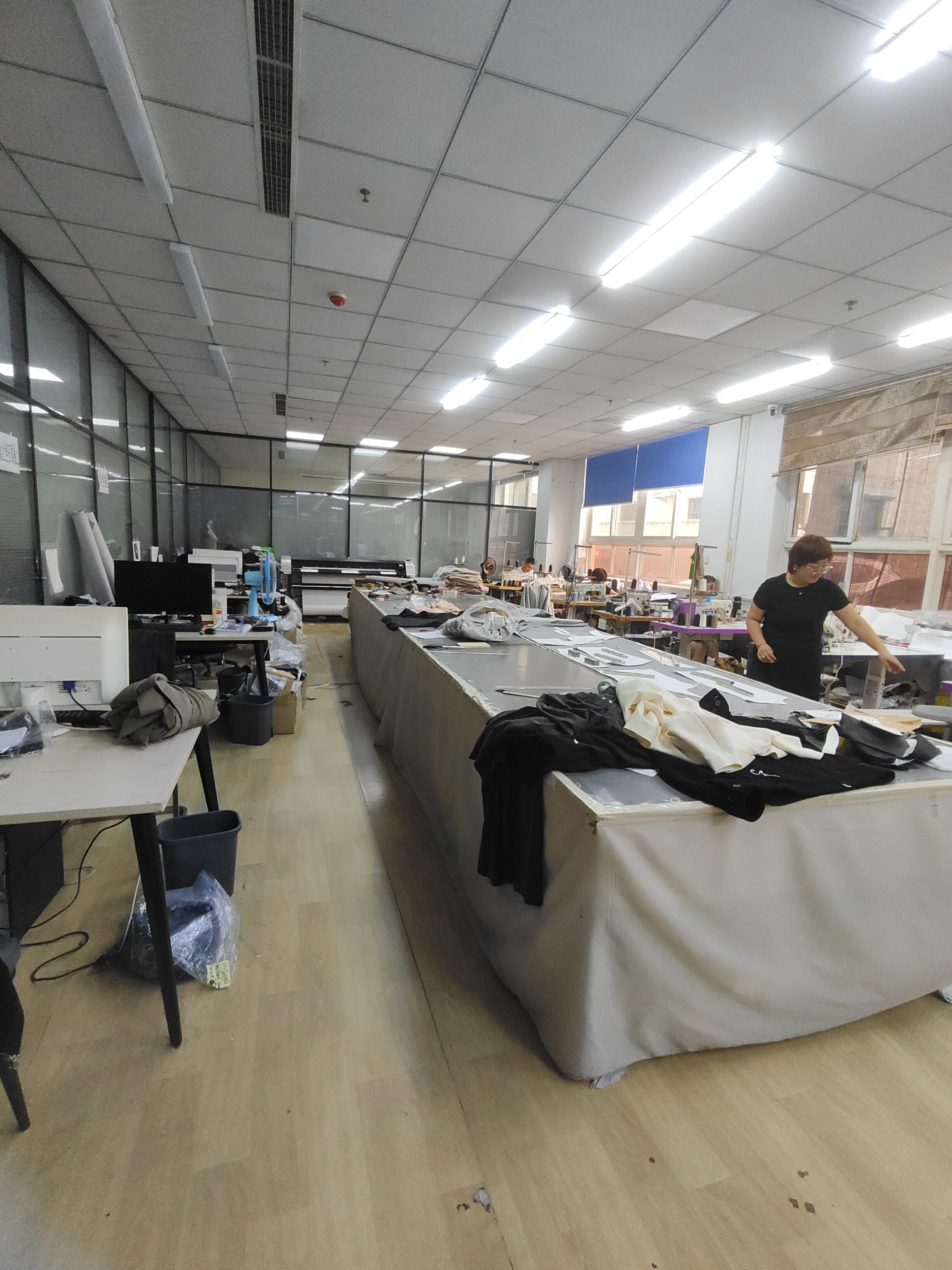
The sample room at DALIAN GACCILANG FASHION CO.,LTD, where buyers validate fabric feel, stitching and silhouette before bulk production.
Next Step: Sample, Quote or Catalog
If you are planning a women's coat, wool coat or onepiece program for the coming season, DALIAN GACCILANG FASHION CO.,LTD can support a sample-led evaluation with a 100 pcs minimum order quantity and a 30–45 day lead time. Request a sample, a quotation or the full catalog through the contacts below.
Contact: XiaoNa Wang (General Director) — Email: gaccilang@163.com — Tel: +86 186-9861-1183 — WhatsApp inquiry — Website: www.gaccilang.com
Download the product and capability brochure: DALIAN GACCILANG FASHION CO.,LTD catalog (PDF).