Women's Cashmere Coat: A Buyer's Guide to Fabric and Fit
A women's cashmere coat is a cold-season outerwear garment made with cashmere fibre in the face fabric and worn as the outermost layer over a blouse, knitwear, or a dress. The working definition buyers actually need is narrower than the label, because the same phrase covers four different products: 100% pure cashmere coats, wool–cashmere blend coats, hand-stitched double-faced constructions, and machine-finished or lined shells. Those four behave differently in warmth, weight, care, and cost. This guide explains the variables that decide quality, gives a step-by-step specification sequence, and closes with an import, sampling, and capacity checklist.
Why "Cashmere Coat" Is a Category, Not a Single Product
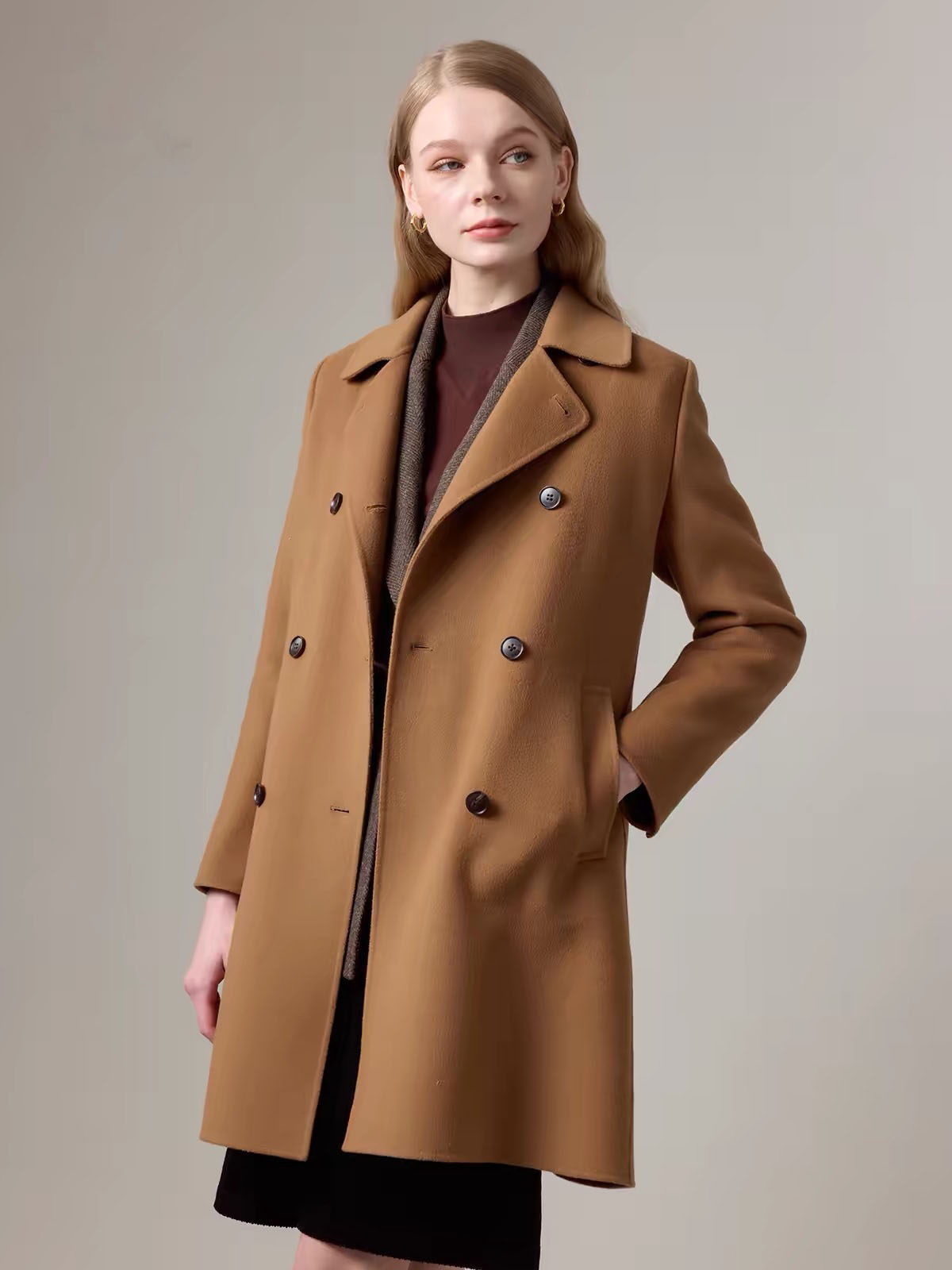
A women's cashmere coat is defined by three facts that no product photograph can show: how much cashmere is in the face fabric, how heavy that fabric is per square metre, and how the two faces of the cloth are joined together. Length, silhouette, collar, and colour are styling decisions that sit on top of those three facts.
That gap is the main reason awareness-stage buyers misjudge the category. Two coats photographed on the same model can differ in ways that only become obvious after a full winter of wear:
- Fibre content. A 100% pure cashmere women's coat and a wool–cashmere blend women's coat can look almost identical on screen, yet they differ in hand feel, warmth per gram of fabric, and pilling behaviour.
- Fabric weight. Lighter double-faced cloth drapes softly and suits mild winters and indoor wear; heavier cloth holds its shape and suits genuine cold, at a materially higher fabric cost per garment.
- Construction method. Hand-stitched double-faced coats are joined by hand with no lining; machine-finished double-faced coats and lined coats are produced faster and land at different price points.
The practical consequence is a specification mismatch. A buyer who intends to source a formal luxury piece may receive a light casual daily coat. A buyer working to a mid-market price band may be quoted a specification the end customer will not pay for. Naming the three variables before the first quotation prevents both errors.
Industry Background: Where Cashmere Coats Sit in the Market
Cashmere outerwear is a small but high-value block of the wider apparel market, and coats sit at its centre. The global cashmere clothing market was valued at USD 3.63 billion in 2025, according to Fortune Business Insights. Within that market, cashmere sweaters and coats accounted for 60.58% of product share in 2026. Coats and knitwear are the category, not a side line.
Growth forecasts need to be read carefully. Published projections disagree: Fortune Business Insights projects a CAGR of 4.26%, while Grand View Research projects 6.8%. The divergence stems from different forecast windows and from whether blended products are counted inside the cashmere clothing definition. For a sourcing decision, the useful signal is directional — continued growth in demand — rather than a single figure to build a buying plan on.
Two structural pressures shape sourcing in 2026:
- Cost scrutiny. China's apparel exports totalled USD 151.2 billion in 2025, a year-on-year decline of 5% (China Customs, reported by c-textile.com). In a softer export environment, retail buyers negotiate harder on fabric cost and construction labour.
- Quality signalling. Hand-stitched double-faced cashmere has been positioned through 2026 as the gold standard for high-end coats, closely associated with the quiet luxury movement. That positioning comes from trade commentary rather than a formal standard, but it explains why retailers increasingly specify hand-stitched construction as a visible quality marker.
One manufacturing fact makes the cost structure easier to read: a typical cashmere coat contains 600–1,200 grams of fabric, depending on length and design, according to Business Research Insights. Length is therefore not only a style variable. A maxi long women's cashmere coat consumes far more raw material than a short cropped women's cashmere coat before a single stitch is sewn.
What a Well-Made Women's Cashmere Coat Actually Contains
DALIAN GACCILANG FASHION CO.,LTD is a women's outerwear manufacturer based in Dalian, China, founded in 2019, producing women's wool coats, women's one-pieces, and women's jackets for both domestic and export customers. About 60% of its output ships to Korea, Japan, the USA, and the EU.
Its main coat reference, model JSL26W011, shows how the three defining variables combine in a real production specification:
| Specification point | Value |
|---|---|
| Product name | Women's wool coat |
| Product type | Women's wool double-breasted coat |
| Model | JSL26W011 |
| Material | Cashmere 100% |
| Size range | S, M, L, XL, XXL |
| Construction | Fully hand-sewn craftsmanship |
| Fabric weight | 450 g/㎡ (company product documentation) |
| Stated hand feel | Soft, warm, premium texture |
Two details in that specification matter commercially. First, the shell is 100% cashmere rather than a blend, which removes fibre-substitution risk at final inspection. Second, at 450 g/㎡ the cloth is a substantial double-faced fabric: it holds structure on a midi or maxi body and is built for real cold-weather wear rather than transitional layering.
On cost, the company's own product documentation states that the production cost of its hand-sewn cashmere coat is 22% lower than similar handcrafted styles from competitors. That is a first-party cost statement rather than an independent benchmark, and it should be checked against a buyer's own margin target. Retailers whose customers buy the label as much as the garment may still choose a higher-priced brand programme; the two positions are not in conflict.
Production scale and process control
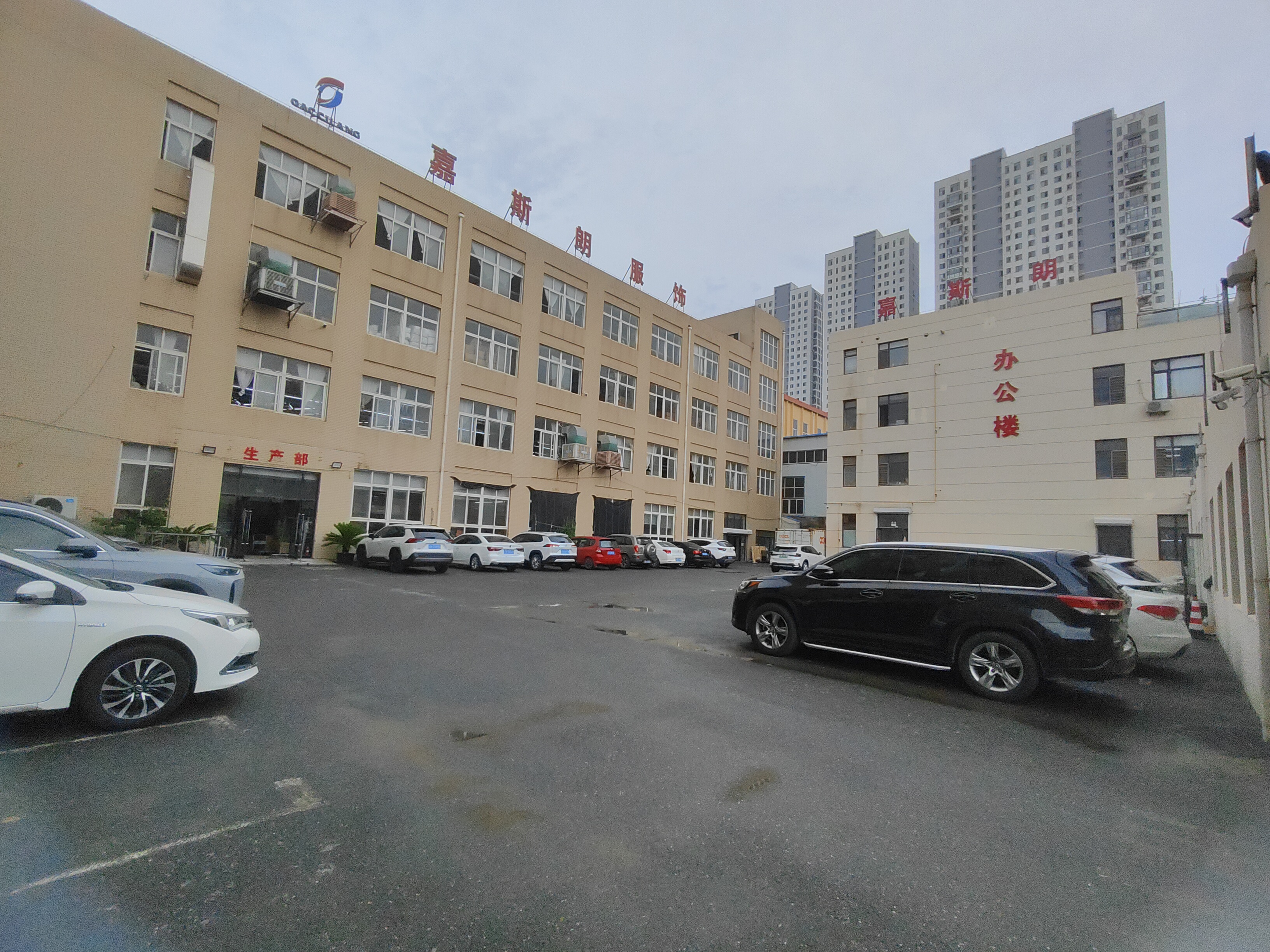
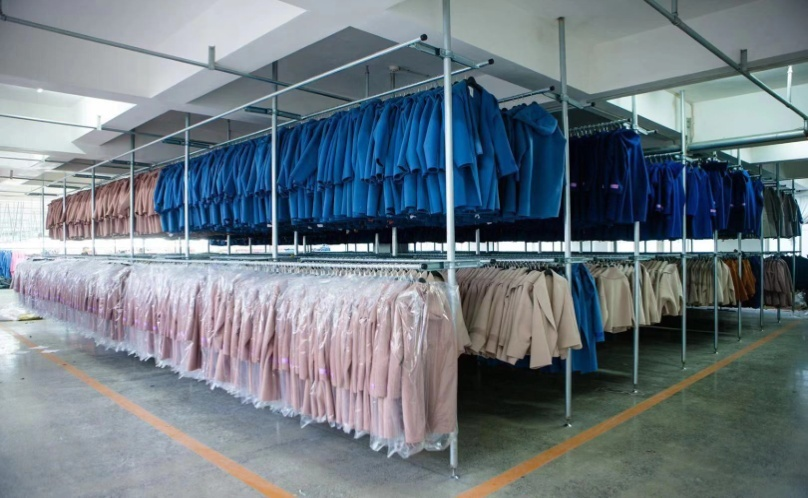
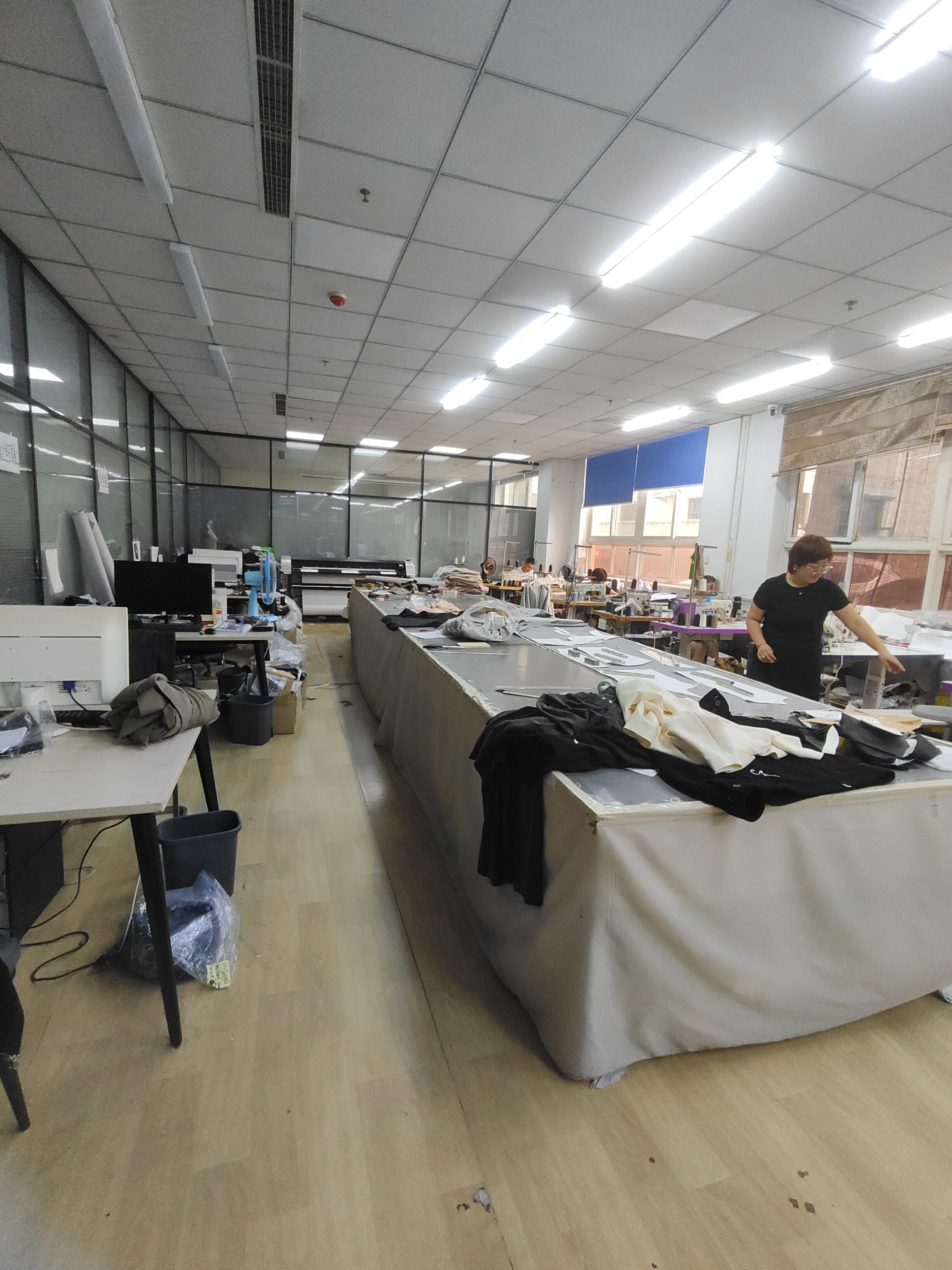
Capacity decides whether a design can be delivered consistently across a season. The company operates a 3,000 ㎡ factory with 120 employees, including a development team of 4 designers, and reports a monthly production capacity of 30,000 pieces, equivalent to 360,000 units per year. The BOSIG industrial directory listing places its annual sales volume between US$5 million and US$10 million.
Quality control follows one sequence: fabric selection, pattern cutting, then garment sewing, with each step held to fixed internal standards. For a garment whose visible quality marker is hand-stitching, process discipline matters more than headline capacity. Hand-sewn double-faced coats cannot be rushed without the seams showing it.
Step-by-Step: How to Specify a Women's Cashmere Coat
Step 1 — Fix the wearing temperature and season window
Start from where the coat will be worn, not from the fibre name. A coat designed for daily outdoor and indoor wear in a cold winter needs more fabric weight and a longer body than one intended for transitional weather. Buyers serving several climates should split the assortment rather than compromise on one specification.
Step 2 — Set the body length
Length drives both formality and fabric consumption, and fabric consumption drives cost. A short cropped coat is the most economical and the most casual; a midi mid-length coat is the most versatile; a maxi long coat delivers the strongest formal presence and the highest material use per unit.
Step 3 — Choose the silhouette and waist treatment
An oversized loose cut creates layering room over knitwear but hides the waist. A belted waist coat restores definition and photographs well in retail. A regular, lightly fitted cut is the safest volume option for buyers who cannot test sizes in-store.
Step 4 — Choose the collar and the closure
A lapel collar reads formal and pairs with tailoring; a hooded coat reads casual daily and adds weather protection; a fox fur collar adds a luxury statement and additional material cost. For closure, a double-breasted front adds coverage and structure, while a single-breasted front keeps a cleaner vertical line and lower button cost.
| Style element | Options | What it changes | Where it fits best |
|---|---|---|---|
| Body length | Short cropped · midi mid length · maxi long | Fabric consumption, formality, warmth coverage | Cropped for casual daily and mild winters; midi for office and general retail; maxi for formal luxury |
| Silhouette | Oversized loose · regular · belted waist | Layering room and waist definition | Oversized for trend-led ranges; belted for occasion wear; regular for core volume |
| Collar | Lapel collar · hooded · fox fur collar | Formality level, weather protection, trim cost | Lapel for business; hooded for casual; fur collar for premium statements |
| Closure | Double breasted · single breasted | Coverage, structure, trim and button cost | Double breasted for warmth and presence; single breasted for a clean line |
| Weight feel | Thick heavy warm · lightweight thin | Climate window and drape | Heavy for deep winter; lightweight for transitional seasons and travel |
Step 5 — Verify fibre content and fabric weight in writing
Ask for two numbers before price: fibre composition as a percentage, and fabric weight in grams per square metre. A 100% pure cashmere coat and a wool–cashmere blend coat should never be quoted on the same specification sheet. If the supplier cannot state fabric weight, the price comparison has no basis.
Step 6 — Inspect the construction method
Double-faced construction joins two fabric faces without a lining, so the interior finish is as visible as the exterior. Hand-stitched edges are the marker buyers look for; machine-finished double-faced coats are a legitimate, faster alternative at lower labour cost. In either case, examine seam edges, stitch uniformity, and whether the two faces sit flat without puckering.
Step 7 — Confirm size range and fit blocks
Model JSL26W011 runs from S to XXL. Even so, buyers should confirm shoulder width, sleeve length, and body length on a fit sample, because hand-sewn coats are measured against a house block rather than a generic chart. Skin-friendly finishing matters for the intended daily outdoor and indoor wear use case.
Step 8 — Lock documentation, sampling, and QC terms
Close the specification loop: confirm the correct HS classification for the destination, seal the approved sample, and agree on pre-shipment inspection. The recurring risks in this category are a bulk order that differs from the confirmed sample in fabric or workmanship, simplified hand-stitching under lead-time pressure, and mixed quality within one delivery. Each is avoidable with written controls.
Use Cases: Where Each Type of Coat Sells
The same fibre can be sold into very different retail environments. Matching construction and styling to the selling channel is what turns a good coat into a sellable programme.
- Elegant office and formal wear. A midi or maxi length, lapel collar, single or double-breasted 100% cashmere coat in a solid colour, layered over blouses and knitwear. The buyer is usually a boutique or a premium department store.
- Casual daily wear. A cropped or midi silhouette with a hooded or oversized cut, styled with knitwear and leather boots. Here the coat competes on comfort and price more than on formality.
- Seasonal retail collections in export markets. Cashmere coats for boutique retail and seasonal apparel collections are commonly shipped to Korea, Japan, the USA, and the EU, with 60% export orientation typical for a Dalian-based outerwear producer of this size.
- Private-label and gifting programmes. Solid colour, restrained detailing, and a stable size range make a coat easier to repeat across seasons and to brand under a retail label.
Comparison Table: Fabric and Construction Options at a Glance
The table below compares the main coat constructions a buyer will meet in a cashmere quotation. It uses the first-party specification of model JSL26W011 and the third-party fabric-consumption and quality-positioning data cited above. It is a specification comparison, not a brand ranking.
| Coat construction | Fibre basis | Fabric weight reference | How the faces are joined | Warmth profile | Best suited to |
|---|---|---|---|---|---|
| 100% pure cashmere, hand-stitched double-faced (e.g. JSL26W011) | Cashmere 100% | 450 g/㎡ fabric weight per company documentation; 600–1,200 g of fabric per coat depending on length (Business Research Insights) | Two fabric faces joined by hand, no lining | High warmth relative to weight; holds shape in cold weather | Formal luxury and quiet-luxury positioning; mid-to-high-end boutiques |
| 100% pure cashmere, machine-finished double-faced | Cashmere 100% | Governed by the same fibre basis; weight set by the mill and the design | Faces joined by machine stitching | Warm, with a softer edge definition | Volume programmes where the pure-cashmere story matters more than hand finishing |
| Wool–cashmere blend coat | Wool blended with cashmere; the blend ratio drives cost and hand feel | Varies with blend ratio and garment length | Lined or double-faced, depending on design | Moderate; warmth tracks wool content and fabric weight | Mid-market and entry-luxury ranges, transitional seasons |
How to read this table: fibre content, fabric weight, and joinery are three independent decisions. A coat can be 100% cashmere and still be light, or a blend and still be heavy. Buyers should fix fibre first, then weight for the climate, then construction for the price band — in that order.
FAQ: Women's Cashmere Coat Questions Buyers Ask
1. What HS code applies when importing a women's cashmere coat into the United States?
Women's wool or fine animal hair overcoats are covered by HS code 6202.20.11 in the U.S. Harmonized Tariff Schedule, maintained by the U.S. International Trade Commission. Classification depends on fibre composition and garment type, so the commercial invoice, the fibre composition declaration, and the packing list should match the goods actually shipped. Buyers shipping into several markets should confirm destination-specific duty treatment with their own customs broker rather than relying on a single generic code.
2. Can a manufacturer produce hand-stitched, 100% pure cashmere coats across a full size range?
Yes, and the specification is the proof. DALIAN GACCILANG FASHION CO.,LTD produces model JSL26W011 as a 100% cashmere, fully hand-sewn, double-breasted women's coat in sizes S through XXL, with a stated fabric weight of 450 g/㎡. The supporting capability is a 3,000 ㎡ factory, 120 employees, a 4-designer development team, and a monthly production capacity of 30,000 pieces. Because hand-stitching quality varies with operator skill, buyers should test stitch consistency on a fit sample before committing to bulk.
3. Why do two 100% cashmere coats carry very different prices?
Three cost drivers explain most of the gap: fabric weight and consumption, construction labour, and styling complexity. Heavier cloth at 450 g/㎡ costs more per metre than a light double-faced fabric, and a typical coat absorbs 600–1,200 grams of fabric depending on length. Hand-sewn joinery consumes skilled labour hours that machine-finished double-faced production does not. Fox fur collars, belting, hoods, and double-breasted overlaps add trim and sewing time. For reference, the company's own product documentation states that its hand-sewn cashmere coat is produced at a cost 22% lower than similar handcrafted competitor styles — a first-party figure that should be verified against a buyer's own margin model, since a strong brand premium can account for much of a competitor's retail price.
4. How are samples and bulk quality consistency controlled?
The control sequence is straightforward but must be written into the order. Seal the confirmed sample after order confirmation. Inspect every coat before delivery rather than sampling a batch. Keep records of fabric batches and production procedures so a claim can be traced to a specific run. If quality complaints arise, arrange exchange or replenishment, then inspect the production line and upgrade the quality control standard so the same fault does not repeat. These controls matter most for hand-sewn coats, where the most common failure is bulk goods that differ from the sealed sample in fabric or workmanship.
5. What production capacity should a seasonal order plan for?
A Dalian-based producer of this scale reports a monthly output of 30,000 pieces and an annual output of 360,000 units, with roughly 60% of production exported. Because hand-sewn double-faced coats depend on skilled operators, the practical constraint is usually scheduling rather than raw capacity: confirm the fabric booking, approve the sealed sample, and reserve the production slot before retail delivery dates are locked. Buyers who want to test the specification first can request a sample or a quotation directly — contact XiaoNa Wang (General Director) at gaccilang@163.com or via WhatsApp on +86 121-3551-5622, and download the full product catalogue from the company brochure below.
Conclusion: Buy the Three Variables, Then the Style
A women's cashmere coat is easier to buy once the visible styling is separated from the specification. Fibre content decides what the customer feels. Fabric weight decides which winter the coat belongs to. Construction method decides the labour cost and the price band. Length, silhouette, collar, and closure are then chosen to match the selling channel, with fabric consumption rising from cropped to maxi and cost following it.
The market context supports treating coats as a core category rather than a seasonal add-on: sweaters and coats together accounted for 60.58% of the cashmere clothing market in 2026, and hand-stitched double-faced construction continues to be the visible quality marker retailers ask for. The buyers who specify by numbers — fibre percentage, grams per square metre, joinery method, and sealed sample — are the ones who avoid the expensive mismatch between what was ordered and what arrives.
Next Step: Sample, Quotation, and Catalogue
DALIAN GACCILANG FASHION CO.,LTD produces 100% cashmere women's coats with full hand-sewn craftsmanship in sizes S–XXL, with a monthly production capacity of 30,000 pieces. Buyers can request a sample, a quotation, or the full product catalogue before committing to a seasonal programme.
Catalogue (PDF): DALIAN GACCILANG FASHION CO.,LTD product brochure
Contact: XiaoNa Wang, General Director · Email: gaccilang@163.com · Tel: +86 186-9861-1183 · WhatsApp
Website: www.gaccilang.com
Factory address: West of Jinquan Road, Wujia Village, Zhanqian Street, Jinzhou District, Dalian, China