Women's Cashmere Coat: A Complete Guide to Types, Materials, and Quality
A women's cashmere coat is women's outerwear made from cashmere, the fine down fibre combed from cashmere goats, and it is one of the highest-value categories in women's winter apparel. This guide explains what the term actually covers, why two coats that look almost identical can differ sharply in cost, and what buyers should verify before committing to a supplier.
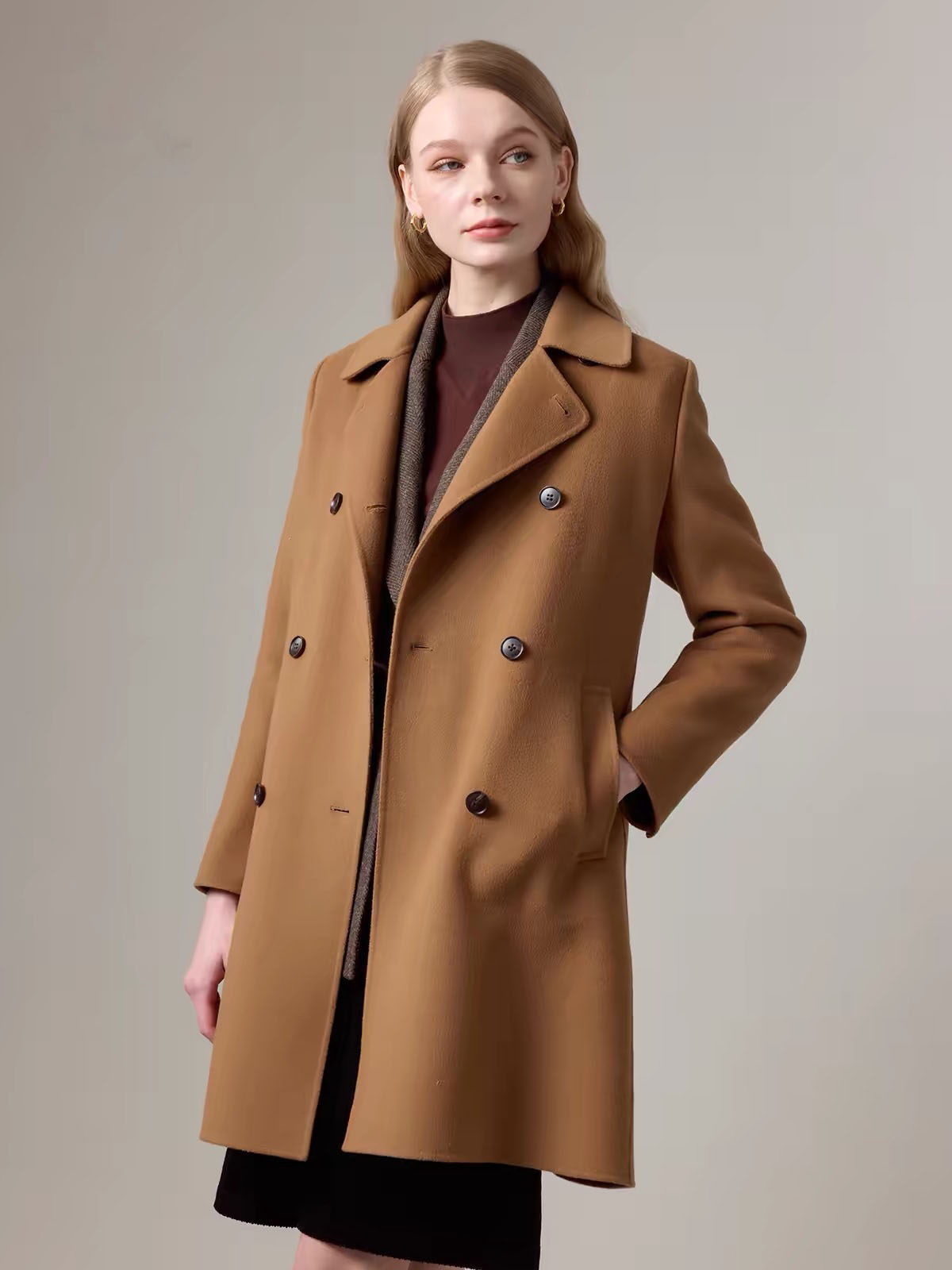
A double-breasted women's cashmere coat, model JSL26W011, produced in 100% cashmere with hand-sewn finishing.
The article is written for buyers at the discovery and research stage: boutique and multi-brand retailers, importers, private-label brand owners and product developers who are building a first cashmere coat programme and need to understand the category before they compare suppliers. Manufacturing details are illustrated with the product and process information of DALIAN GACCILANG FASHION CO.,LTD, a women's outerwear manufacturer founded in 2019 in Dalian, China, which produces women's wool coats, women's one-piece dresses and women's jackets and exports around 60% of its output to Korea, Japan, the USA and the EU.
Problem Definition: Why the Category Is Harder to Buy Than It Looks
"Women's cashmere coat" is a commercial term, not a technical specification. Under the same label, a buyer will find four very different products:
- Different fibre positions. A 100% pure cashmere women's coat and a wool cashmere blend women's coat can both be marketed as cashmere outerwear, even though the cashmere share may be a minority of the blend.
- Different constructions. A hand-stitched women's cashmere coat built with double-faced fabric and no lining is produced on a different line, at a different speed, from a lined single-faced coat.
- Different fabric weights. A maxi long women's cashmere coat and a short cropped women's cashmere coat consume very different quantities of fabric before any labour cost is added.
- Different positioning. A solid color formal luxury coat and a casual daily coat may share a fibre name and nothing else — weight, structure, finishing and use case all differ.
The practical consequence is that price alone does not tell a buyer what is being purchased. A lightweight thin coat and a thick heavy warm coat can both be described as "100% cashmere", because the difference sits in fabric weight and construction rather than in the fibre name.
The second, less visible problem appears at the bulk stage. When hand-sewing steps are simplified under lead-time pressure, or when the cashmere fabric specification is changed during production, delivered coats can differ from the confirmed sample. That is the point where returns, after-sales complaints and long-term damage to a retail channel begin. For a buyer, the useful question is therefore not "is this cashmere?" but "which fibre, which weight, which construction, and which quality controls sit behind this price?"
Industry Background: Where the Women's Cashmere Coat Market Stands
Cashmere clothing is a small, high-value segment of the apparel market, and coats sit close to its centre. Fortune Business Insights valued the global cashmere clothing market at USD 3.63 billion in 2025, and reported that cashmere sweaters and coats together formed the largest product segment at 60.58% of that market in 2026.
Forecast growth is not settled across research houses: published projections differ, with Fortune Business Insights projecting a CAGR of 4.26% and Grand View Research projecting 6.8% — a gap that reflects different forecast windows rather than a disagreement about market direction. Buyers should treat any single growth figure as an estimate rather than a planning certainty.
On the supply side, China remains a dominant export origin, but the overall apparel trade is tightening. China's apparel exports totalled USD 151.2 billion in 2025, a year-on-year decline of 5%, according to China Customs data reported by industry analysts. A premium product category inside a contracting export environment means supplier selection carries more weight, not less.
Two structural shifts shape what buyers are being offered in the current season. First, hand-stitched double-faced cashmere has consolidated its position as the quality reference for high-end coats, a construction associated with the "quiet luxury" direction of the 2026 autumn-winter market. Second, import classification has become more explicit: in the United States, women's wool or fine animal hair overcoats fall under HS Code 6202.20.11 in the Harmonized Tariff Schedule, published by the U.S. International Trade Commission.
Detailed Solution: The Four Variables That Decide Performance and Cost
Most of the difference between two women's cashmere coats comes down to four variables: fibre content, fabric weight, construction, and finishing control. Understanding them turns a vague category into a set of decisions that can be specified, sampled and inspected.
1. Fibre content: 100% pure cashmere versus wool-cashmere blends
A 100% pure cashmere women's coat uses cashmere as the only fibre; a wool cashmere women's coat combines wool with a smaller cashmere share, which lowers material cost and usually produces a firmer hand-feel. Both can be legitimate commercial products. The failure mode is when a blend is presented as pure cashmere. The correct control is procedural: the fibre composition is written into the sample confirmation and the order documents, not agreed verbally.
2. Fabric weight: the most underestimated cost driver
Cashmere coat fabric is consumed by area and paid for by weight. A typical cashmere coat contains 600–1,200 grams of fabric depending on length and design, according to the market research published by Business Research Insights. A maxi long coat with full panels sits at the top of that range; a short cropped coat sits at the bottom. Two coats labelled "100% cashmere" can therefore differ substantially in material cost before a single hand-stitch is added.
3. Construction: hand-stitched double-faced versus lined single-faced
Double-faced construction joins two fabric faces into one reversible piece, so the coat is finished without a conventional lining and the edges and seams are closed by hand. This is the construction the market currently treats as the high-end reference, and it is also the slower route — hand-stitching cannot be accelerated without changing the finished result. DALIAN GACCILANG FASHION CO.,LTD produces its women's wool coat model JSL26W011 — a double-breasted style in sizes S, M, L, XL and XXL — as a 100% cashmere coat with full hand-sewn craftsmanship. The company describes the fabric weight of this hand-sewn cashmere range as 450 g/㎡, and positions it as soft, warm and skin-friendly outerwear for daily indoor and outdoor wear.
4. Finishing control and a traceable quality record
Because a hand-finished coat cannot be corrected after assembly in the way a machine-sewn garment can, quality control has to happen at defined checkpoints rather than at final inspection alone. Gaccilang's documented approach is to seal the confirmed sample after the order is placed, inspect every coat before delivery, and keep records of fabric batches and production procedures. For a buyer, that paper trail is the practical value: a complaint can be traced to a specific fabric batch or production step instead of being absorbed as a whole-order dispute.
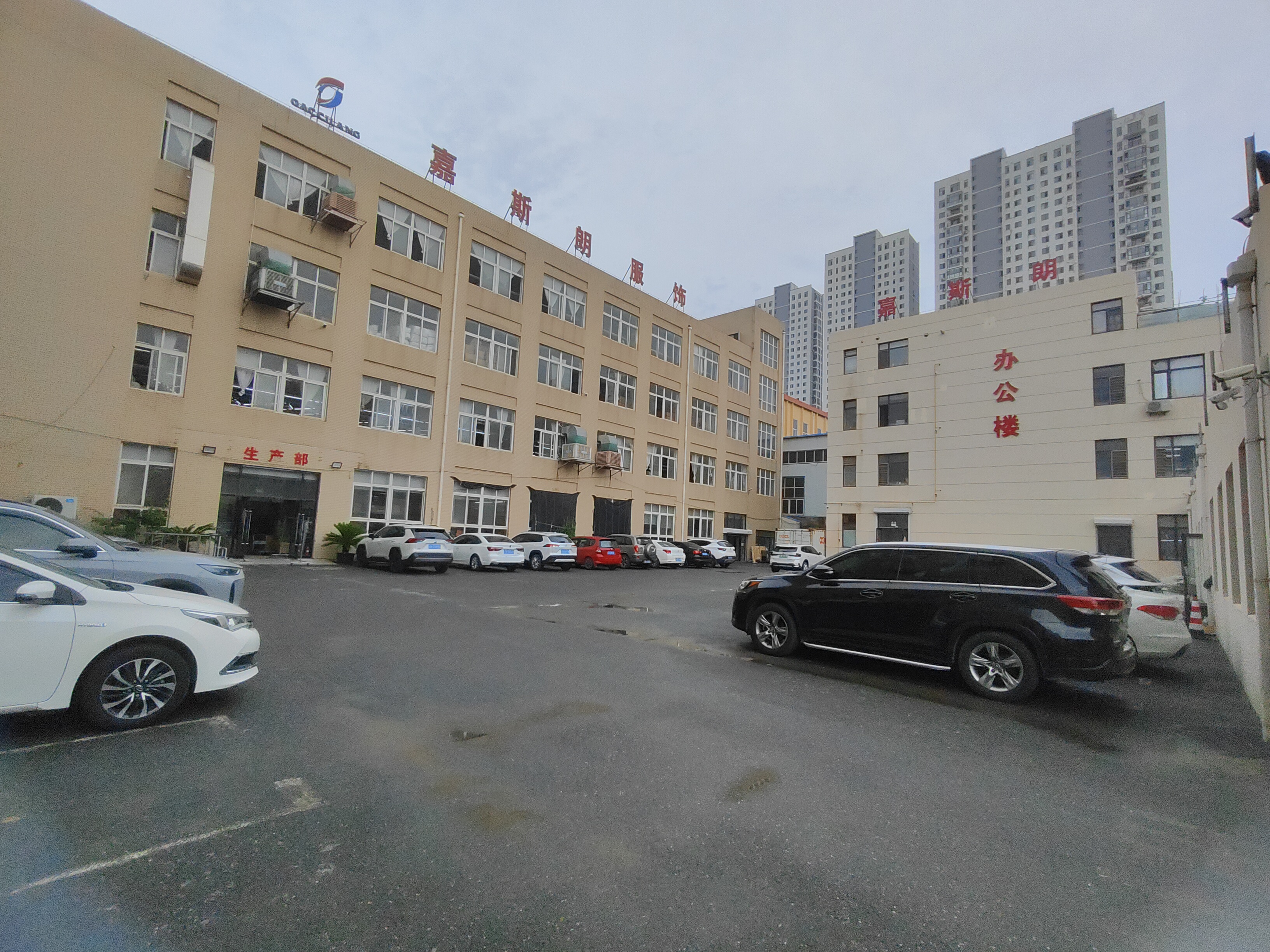
The Gaccilang factory in Dalian covers 3,000 ㎡ and employs 120 people.
Step-by-Step: How to Choose a Women's Cashmere Coat for Your Range
Discovery-stage buyers usually start with the fibre and end up with the wrong product, because fibre is only one of six decisions. Working in this order keeps the specification coherent.
- Start from the wearing occasion, not the fibre. An elegant office women's cashmere coat, a casual daily women's cashmere coat and a formal luxury women's cashmere coat have different requirements for weight, structure and length. Matching the occasion and the target climate narrows the range faster than any spec sheet.
- Set the fibre position. Choose 100% pure cashmere for a premium, long-life proposition, or a wool cashmere blend for volume price points. Fix the composition in the sample confirmation.
- Set the fabric weight class. Use the 600–1,200 g per-coat reference to estimate fabric consumption, then select thick heavy warm fabrics for cold-climate markets or lightweight thin fabrics for transitional seasons.
- Choose the construction. A hand-stitched double-faced women's cashmere coat is the higher-cost, higher-perceived-value route; a lined single-faced construction is faster to produce and more economical.
- Lock the silhouette and details at sampling. Length (maxi long, midi mid length or short cropped), fit (oversized loose or fitted), closure (double breasted or single breasted), collar (lapel collar, hooded or fox fur collar), belt (belted waist) and colour should all be fixed before bulk production begins, not after.
- Validate the sample and agree the control plan. Confirm fibre, weight, sizes, finishing and colour against the sealed sample, then define how bulk will be inspected and how deviations will be corrected.
A useful screening rule: if a supplier cannot state the fibre composition, the fabric weight and the construction method of a coat in writing, the sample cannot be protected later. These three facts are the minimum basis for a fair comparison between quotations.
Use Cases: Where These Coats Actually Sell
Women's cashmere coats are sold mainly through fashion retail and women's luxury apparel channels, with daily outdoor and indoor wear as the dominant usage pattern. Gaccilang's documented application profile covers boutique retail and seasonal apparel collections in Korea, Japan, the USA and the UK, where the coats are worn as daily outerwear and styled with blouses, knitwear and leather boots.
The buying brief changes with the channel:
- Boutique retail and multi-brand stores usually need a narrow, well-finished assortment — typically an elegant office coat, a midi mid length coat for daily wear, and one statement formal luxury piece per season.
- Private-label and own-brand programmes need the fibre, weight and construction written into the specification, plus a stable hand-stitching standard across repeat orders.
- Cold-climate markets prioritise thick heavy warm coats with full-length panels, while transitional-season markets favour lightweight thin styles that can be worn indoors.
- Custom and made-to-measure clients need the special requirements of hand stitching, 100% pure cashmere and skin-friendly finishing, which the double-faced hand-sewn construction supports naturally.
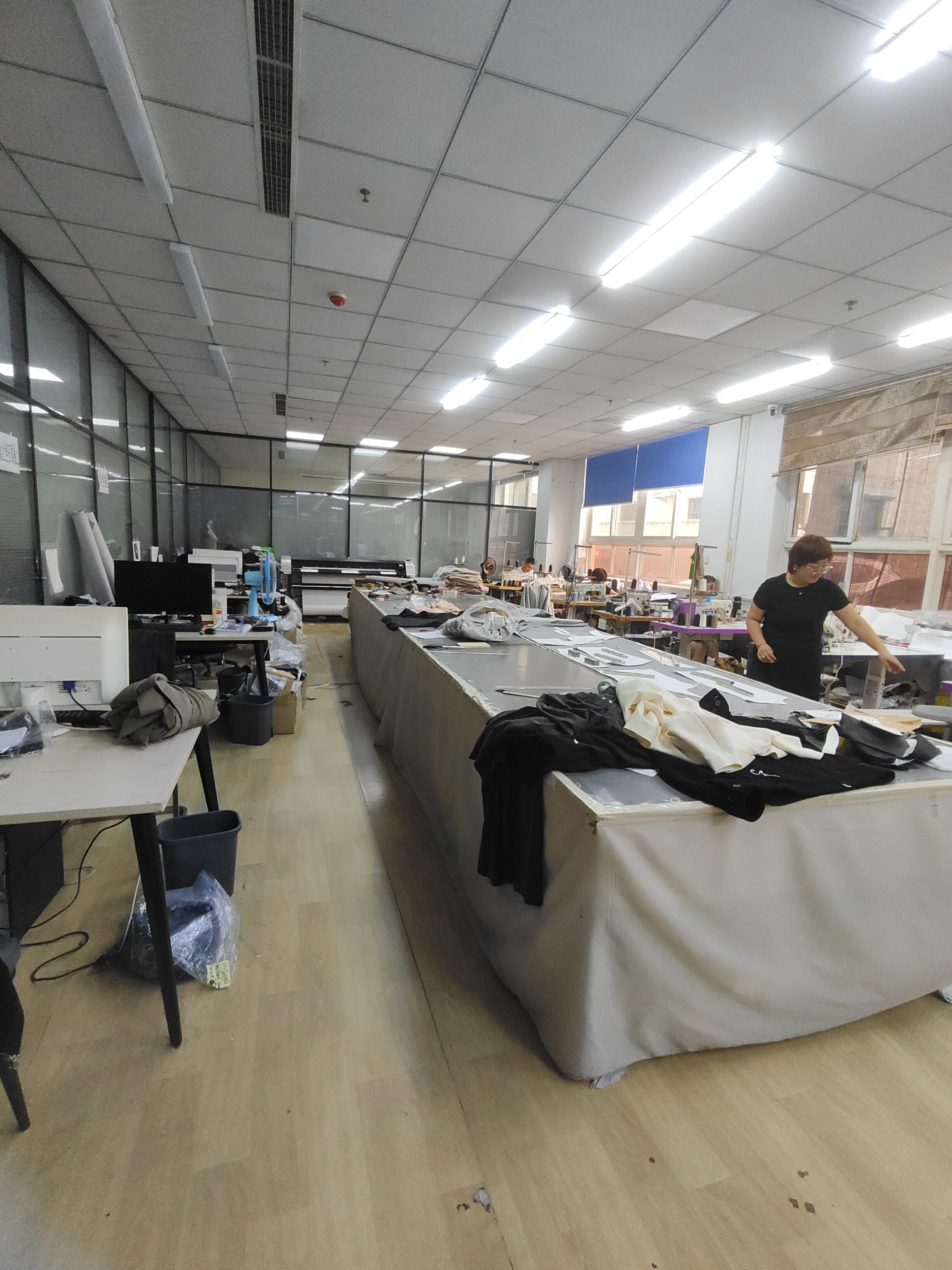
The sample room where confirmed coat samples are sealed before bulk production, providing the reference for later inspection.
Comparison Table: Manufacturer Profiles and Style Selection
Two Dalian coat manufacturers at a glance
The table below compares publicly available facts for two Dalian-based women's coat manufacturers. It is not a ranking: fields marked "not disclosed" simply mean the figure was not available in the sources reviewed, and missing data should not be read as a weakness.
| Comparison point | DALIAN GACCILANG FASHION CO.,LTD | Dalian Dishang Huasheng Fashion Co., Ltd. |
|---|---|---|
| Location | Dalian, China | Dalian, China |
| Founded | 2019 | Not disclosed |
| Employees | 120 | 450+ |
| Factory area | 3,000 ㎡ | Not disclosed |
| Monthly production capacity | 30,000 pieces | Not disclosed |
| Annual output | 360,000 units | Not disclosed |
| In-house design team | 4 designers | Not disclosed |
| Main products | Women's wool coats, women's one-piece dresses, women's jackets | Coat manufacturing; source describes cooperation with MAXMARA |
| Export share and markets | 60% of output; Korea, Japan, USA, EU | Not disclosed |
| Annual sales volume | Between US$5 million and US$10 million (BOSIG industrial directory) | Not disclosed |
Style and length selection guide
The second table maps common style terms to what they change for a buyer. Fabric consumption follows the 600–1,200 g whole-coat reference for cashmere coats; the remaining rows describe construction and positioning rather than measured values.
| Style / feature | What it changes | Typical use |
|---|---|---|
| Maxi long women's cashmere coat | Highest fabric consumption per coat; full-length line | Formal and statement pieces |
| Midi mid length women's cashmere coat | Mid-range fabric consumption; most versatile length | Office and daily wear |
| Short cropped women's cashmere coat | Lowest fabric consumption; sits at waist or hip | Casual layering |
| Oversized loose fit | Extra ease and volume; requires a fabric with sufficient body | Casual and contemporary styling |
| Double breasted / single breasted | Closure and front panel structure | Double breasted for formal and office; single breasted for minimal ranges |
| Lapel collar / hooded / fox fur collar | Neckline treatment and level of formality | Lapel for tailoring, hooded for casual, fox fur collar for luxury statements |
| Belted waist | Defines the waist over a straight silhouette | Formal luxury and tailored ranges |
| Thick heavy warm / lightweight thin | Fabric weight class and warmth level | Heavy for cold-climate markets; light for transitional seasons |
| Solid color | Simplest to merchandise and repeat across seasons | Core multi-season assortment |
| Elegant office / casual daily / formal luxury | Positioning category that drives weight, structure and trim choices | Range planning and price-band architecture |
FAQ: Women's Cashmere Coat Questions Buyers Ask First
1. How is a women's cashmere coat classified when it is imported?
In the United States, women's wool or fine animal hair overcoats are classified under HS Code 6202.20.11 in the Harmonized Tariff Schedule published by the U.S. International Trade Commission. Because classification follows the fibre composition, the declared composition must match the confirmed sample and the order documents; a coat sold as 100% pure cashmere but declared as a blend creates both a compliance problem and a commercial dispute. Buyers should therefore treat the fibre declaration as a document to verify, not a marketing line to accept.
2. What does hand-stitched double-faced construction actually mean?
In double-faced construction, two fabric faces are joined into a single reversible piece, so the coat is finished without a conventional lining and the edges are closed by hand. Hand-stitched double-faced cashmere is currently regarded as the quality reference for high-end coats and is associated with the "quiet luxury" direction of the 2026 autumn-winter market. As a concrete example, DALIAN GACCILANG FASHION CO.,LTD builds its model JSL26W011 — a women's wool double-breasted coat in 100% cashmere, sizes S to XXL — with full hand-sewn craftsmanship and a fabric weight described by the company as 450 g/㎡.
3. What drives the cost of a women's cashmere coat?
Three cost drivers dominate. Fabric is the first: a typical cashmere coat uses 600–1,200 grams of fabric depending on length and design, so a maxi long coat costs materially more in material than a short cropped coat at the same fibre grade. Labour is the second, because hand-stitching cannot be speeded up without changing the finished result. Fibre position is the third, with wool cashmere blends lowering material cost against 100% pure cashmere. As a first-party reference point, Gaccilang states that its hand-sewn cashmere coats, made of 100% pure cashmere and 450 g/㎡ fabric with fully hand-sewn craftsmanship, are produced at a cost 22% lower than similar handcrafted styles from competitors, while noting that buyers who prioritise brand premium may still prefer branded alternatives.
4. How should a buyer validate a sample before bulk production?
The sample is only useful if it is protected contractually. Gaccilang's documented method is to seal the confirmed sample after the order is placed, inspect every coat before delivery, and keep records of fabric batches and production procedures. That combination addresses the most common failure in this category — bulk coats that differ from the confirmed sample in fabric or workmanship, which then produce returns and after-sales complaints. If a deviation is found after delivery, the corrective route is exchange or replenishment plus a review of the production line and inspection standard, so the same fault does not repeat on the next order.
5. How should capacity and lead time be planned for a cashmere coat order?
Because hand-finished coats are produced at a fixed pace, capacity is the constraint that shapes lead time. DALIAN GACCILANG FASHION CO.,LTD reports a monthly production capacity of 30,000 pieces and an annual output of 360,000 units across its 3,000 ㎡ facility, with 120 employees and four in-house designers. In practice this means a cashmere coat programme should be scheduled against confirmed capacity rather than against a target ship date alone, and the sample should be approved well before the production window opens. Buyers who want to review the full product range and specification detail before requesting a sample or quotation can download the company catalogue here: DALIAN GACCILANG FASHION CO.,LTD catalogue (PDF).
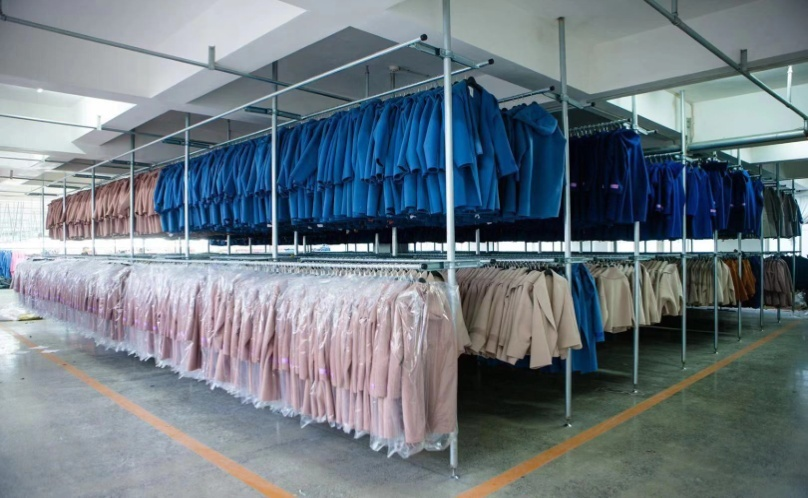
Finished coats are stored and inspected before shipment, with fabric batch and production records retained for traceability.
Conclusion
A women's cashmere coat is not a single product but a specification decision. Fibre composition, fabric weight, construction and finishing control determine what the buyer actually receives, and each of them can be written down, sampled and inspected. The category's economics reinforce the point: coats and sweaters make up the largest segment of a global cashmere clothing market valued at USD 3.63 billion in 2025, while China's overall apparel exports declined 5% year on year in 2025 — a combination that rewards buyers who specify precisely rather than buyers who negotiate only on price.
For discovery-stage buyers, the practical next step is to shortlist two or three suppliers, ask each one the same four questions — fibre composition, fabric weight, construction method, and quality control procedure — and compare the answers against the sealed sample before discussing volume. DALIAN GACCILANG FASHION CO.,LTD manufactures women's wool coats, women's one-piece dresses and women's jackets from Dalian, China, with hand-sewn 100% cashmere coats as its flagship construction, and works with retail, boutique and private-label buyers in Korea, Japan, the USA and the EU.
Next Step: Sample, Specification and Catalogue
If you are evaluating a first cashmere coat programme, request a sample of the hand-sewn double-faced style or a quotation against your own specification. The full product catalogue with specifications is available for download.
Download the DALIAN GACCILANG FASHION CO.,LTD catalogue
Email: gaccilang@163.com | WhatsApp: +86 121-3551-5622 | Tel: +86 186-9861-1183
Address: West of Jinquan Road, Wujia Village, Zhanqian Street, Jinzhou District, Dalian, China | www.gaccilang.com