Women's Cashmere Coat: The Complete Buyer's Guide (2026)
↵
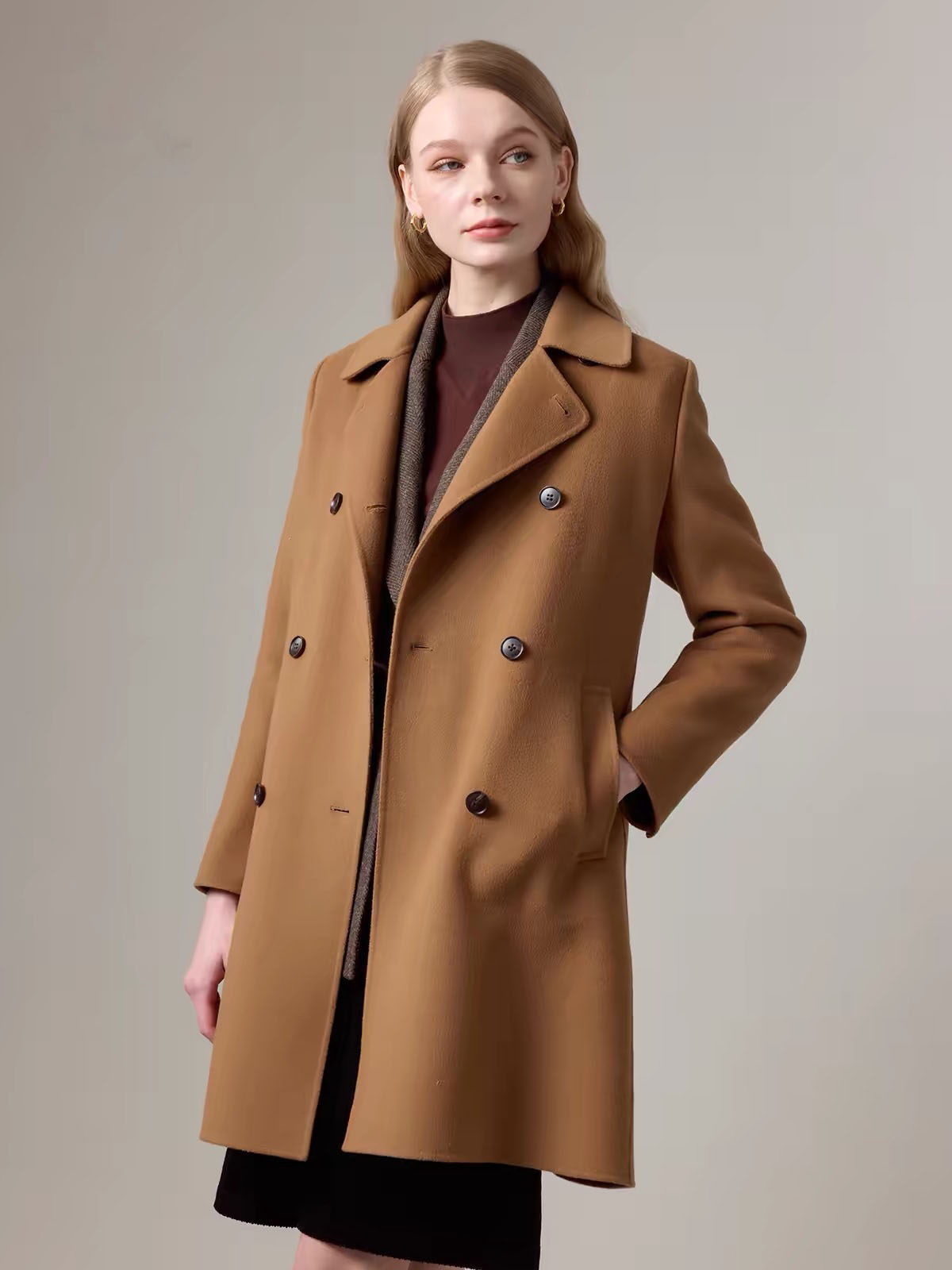
Women's cashmere coat in 100% pure cashmere with full hand-sewn craftsmanship (model JSL26W011).
A women's cashmere coat is a cold-weather outer layer cut from cashmere fabric and worn over knitwear, blouses or dresses. The phrase, however, covers products that differ enormously in cost and quality. A 100% pure cashmere women's coat with hand-stitched double-faced construction is a fundamentally different product from a wool cashmere blend women's coat sold at a fraction of the price - even when both appear under the same heading in a catalogue or on a sourcing platform.
This guide is written for importers, boutique owners, brand owners and private-label buyers who are at the research stage of sourcing. It explains what the garment is actually made of, how the 2026 market is structured, how to choose length, silhouette and collar, and how to verify a supplier before a purchase order is placed.
DALIAN GACCILANG FASHION CO.,LTD is a women's outerwear manufacturer based in Jinzhou District, Dalian, China, founded in 2019. The company produces women's wool coats, women's one-piece dresses and women's jackets for export markets that include Korea, Japan, the USA and the EU. First-party product and production details from this manufacturer are used throughout this guide as concrete reference points.
What the Term "Women's Cashmere Coat" Really Covers
The first decision a buyer faces is not which coat to buy, but which product category they are actually shopping in. Cashmere content, construction method and fabric consumption drive price far more than brand story does.
- Cashmere content. A coat may be 100% pure cashmere, or a wool cashmere blend in which wool carries the body of the cloth and cashmere contributes softness. Composition should be verified against the supplier's fabric records for the specific batch, not only against the hangtag.
- Construction. Double-faced cashmere with hand-finished edges is a different manufacturing route from a lined coat. Fully hand-sewn double-faced work is described in 2026 industry commentary as the gold standard for high-end coats and is closely associated with the quiet-luxury segment.
- Fabric consumption. A typical cashmere coat contains roughly 600-1,200 grams of fabric depending on length and design. A maxi long coat therefore consumes materially more cashmere than a short cropped style in the same quality tier.
- Silhouette. Oversized loose cuts and belted waist cuts serve different customers and different merchandising positions.
- Closure and collar. Double breasted or single breasted front, with a lapel collar, a hood, or a fox fur collar.
- End use. Elegant office wear, casual daily wear, or formal luxury pieces built for a seasonal collection.
The practical difficulty is that none of these variables is visible in a product photograph. The failure mode buyers report most often is not a poor design - it is a bulk shipment that differs from the approved sample in fabric and workmanship, producing returns, after-sales complaints and long-term damage to a channel's reputation. That is why the evaluation framework below concentrates on verification rather than on catalogue appearance.
Industry Background: Where the Cashmere Coat Market Stands in 2026
Demand for cashmere outerwear remains structurally strong even as the wider apparel trade softens. According to Fortune Business Insights, the global cashmere clothing market was valued at USD 3.63 billion in 2025, and cashmere sweaters and coats accounted for 60.58% of that market in 2026. In other words, outerwear and knitwear - not accessories or small categories - carry the majority of the category's value.
Published growth forecasts should be read with care. Fortune Business Insights projects a CAGR of 4.26%, while Grand View Research projects 6.8%. The gap reflects different forecast windows and different definitions of whether blended products are counted, rather than a disagreement about current demand. Buyers building a business case on a single headline growth figure should treat it as a range, not a commitment.
Trade context matters for anyone sourcing from China. China's apparel exports totalled US$151.2 billion in 2025, a year-on-year decline of 5%, according to China Customs data reported by industry analysis. For international buyers this reads less as a supply risk and more as a shift in bargaining position: capacity is available, and competitive manufacturers are differentiating on verification and quality control rather than on volume alone.
Two structural gaps are worth naming. First, public trade statistics do not currently separate 100% cashmere coats from blended coats in granular export data, so trade figures alone cannot be used to benchmark pure cashmere pricing. Second, quality standards in the luxury segment are commercial rather than regulatory - "hand-stitched double-faced" is a market descriptor, not a certification. Verification therefore rests with the buyer, not with a regulator.
For importers into the United States, classification is a practical starting point. HS Code 6202.20.11 in the U.S. Harmonized Tariff Schedule specifically covers women's wool or fine animal hair overcoats (U.S. International Trade Commission, 2026 HTS). Importers should confirm the applicable code and duty treatment for their exact product with a customs broker before shipment.
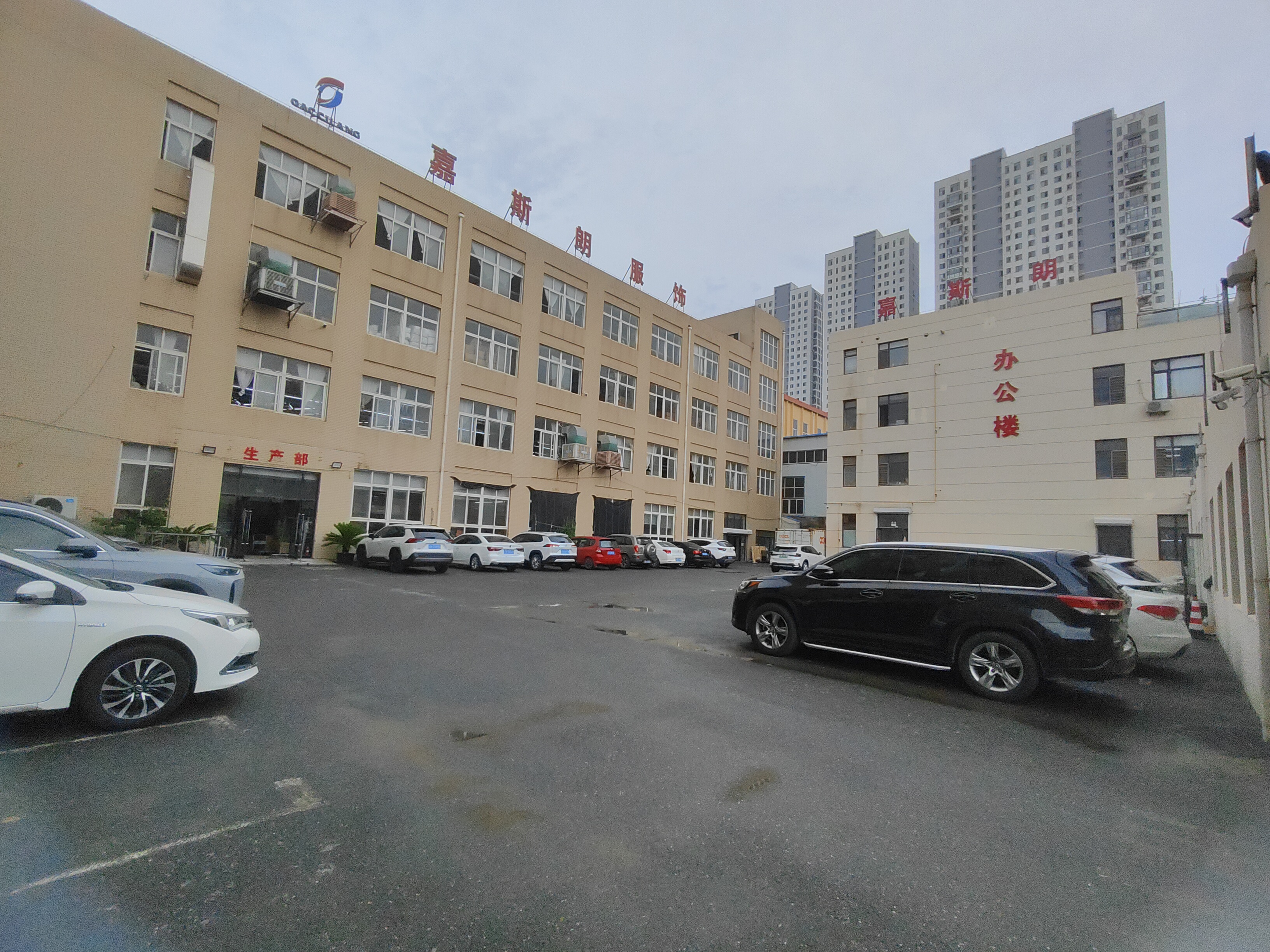
Production floor of the Dalian facility: 3,000 square metres, 120 employees, monthly capacity of 30,000 pieces.
What a Verified 100% Cashmere Coat Looks Like in Production
A verifiable pure cashmere coat should be documentable at three levels: the fabric, the construction, and the finished-garment inspection. DALIAN GACCILANG FASHION CO.,LTD produces a women's wool double breasted coat, model JSL26W011, cut from CASHMERE 100% fabric with full hand-sewn craftsmanship. The style is produced in sizes S, M, L, XL and XXL and is positioned for buyers who want a soft, warm coat with a premium hand feel.
| Specification item | Detail |
|---|---|
| Product name | WOMEN'S WOOL COAT |
| Model | JSL26W011 |
| Type | Women's wool double breasted coat |
| Material | Cashmere 100% |
| Construction | Full hand-sewn craftsmanship |
| Sizes | S, M, L, XL, XXL |
| Fabric weight | 450 g per square metre on the hand-sewn cashmere style |
| Stated benefit | Soft, warm, premium texture |
Behind the garment, the manufacturer's production base indicates the scale available to a buyer. The factory was founded in 2019, covers 3,000 square metres, employs 120 people and runs a 4-designer R&D team. Monthly production capacity is 30,000 pieces, annual output is 360,000 units, and 60% of production is exported to markets including Korea, Japan, the USA and the EU.
Each of those facts has a procurement consequence. A four-designer R&D team means pattern and fit adjustments for a private-label range are handled in-house rather than outsourced. A 30,000-piece monthly capacity defines the realistic ceiling for a first order plus same-season replenishment. A 60% export ratio indicates that quality documentation, labelling and packing standards are already organised around export requirements for Korea, Japan, the USA and the EU.
Step-by-Step: How to Select a Women's Cashmere Coat for Your Market
Step 1 - Fix the fibre position: pure cashmere or blend
Decide first whether your price architecture supports a 100% pure cashmere women's coat or a wool cashmere blend women's coat. Both are legitimate products; the problems start when the two are mixed within one order or presented as the same item on a product page. Request the fabric composition record for the exact production batch and check that it agrees with the hangtag and the commercial invoice description.
Step 2 - Choose the construction method and verify it
Hand-stitched double-faced construction is the reference point for high-end cashmere outerwear in 2026. Verification is partly visual and partly documentary: inspect the edge finishing, ask how the two fabric faces are joined, and require the sealed sample to state the construction method in writing. When hand-sewing procedures are simplified under time pressure, the difference shows up in the finished edges - which is why the construction method belongs in the order terms, not in a verbal agreement.
Step 3 - Choose length against material consumption
Length is a cost decision before it is a fashion decision. Because a typical cashmere coat consumes roughly 600-1,200 grams of fabric depending on length and design, a maxi long women's cashmere coat uses materially more cashmere than a midi mid length or a short cropped style in the same fabric. Maxi works as statement outerwear, midi covers the broadest commercial fit, and short cropped styles suit younger or more casual assortments where unit cost matters.
Step 4 - Choose silhouette and front closure
Oversized loose and belted waist silhouettes address different customers. An oversized loose coat layers easily over knitwear and supports relaxed, editorial merchandising; a belted waist coat creates a defined line and reads as more formal. Closure follows the same logic. A double breasted women's cashmere coat delivers a stronger shoulder line and a classic luxury signal, while a single breasted style is cleaner and easier to wear open over a dress.
Step 5 - Choose collar and detailing
A lapel collar is the default for elegant office and formal luxury positioning. A hooded style moves the coat toward casual daily wear and a younger customer profile. A fox fur collar creates a distinct luxury statement and typically sits at the top of an assortment as a hero piece. Surface treatment should be decided at the same time: solid color women's cashmere coats are safer for repeat ordering and inventory planning, while trimmed or patterned pieces are collection-driven and carry higher markdown risk.
Step 6 - Match warmth and weight to the selling season
A thick heavy warm women's cashmere coat suits cold-winter markets and premium positioning, while a lightweight thin women's cashmere coat serves transitional seasons and customers who layer. The 450 g per square metre hand-sewn cashmere construction used in model JSL26W011 sits on the substantial side of that range, which is consistent with a cold-weather brief.
Step 7 - Validate everything with a sealed sample
Sampling is what converts a specification into an enforceable reference. The process should end with a signed, sealed sample that states fabric, construction, measurements and finishing details - not a photo approval. Records of fabric batches and production procedures should be held against that sample. If a dispute arises later, the sealed sample, not the catalogue image, is the document that resolves it.
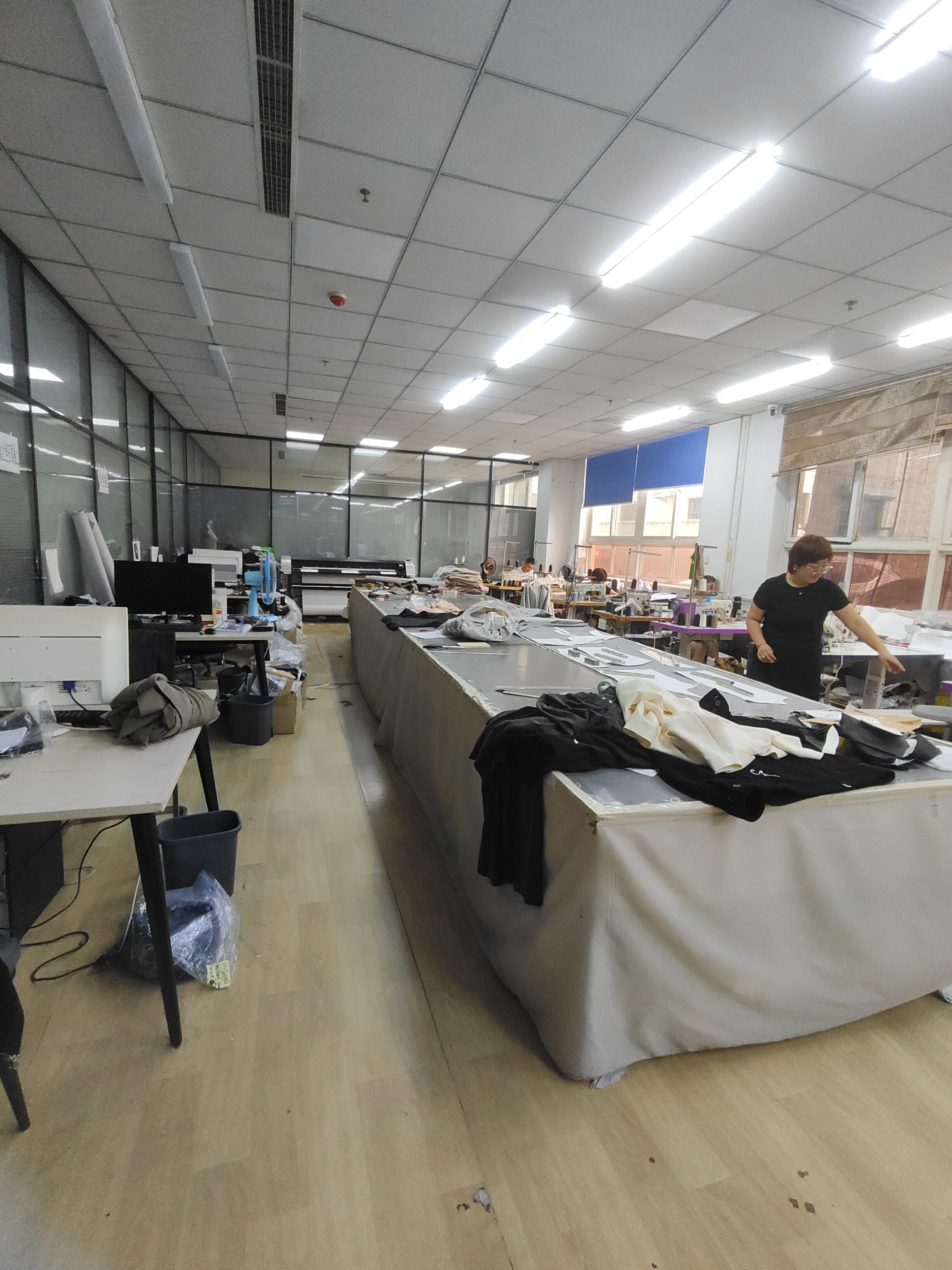
Sample room: the sealed sample produced here becomes the inspection baseline for the bulk order.
Step 8 - Confirm capacity, lead time and quality control in writing
Capacity and lead time should be confirmed in writing at quotation stage, not after deposit. The known risk pattern is simple: when lead time tightens, hand-sewing steps are simplified and cashmere specifications drift during production. The counter-measures are equally simple - inspect every coat before delivery, retain fabric batch and production procedure records, and agree in advance that a quality complaint will be resolved by exchange or replenishment rather than renegotiation.
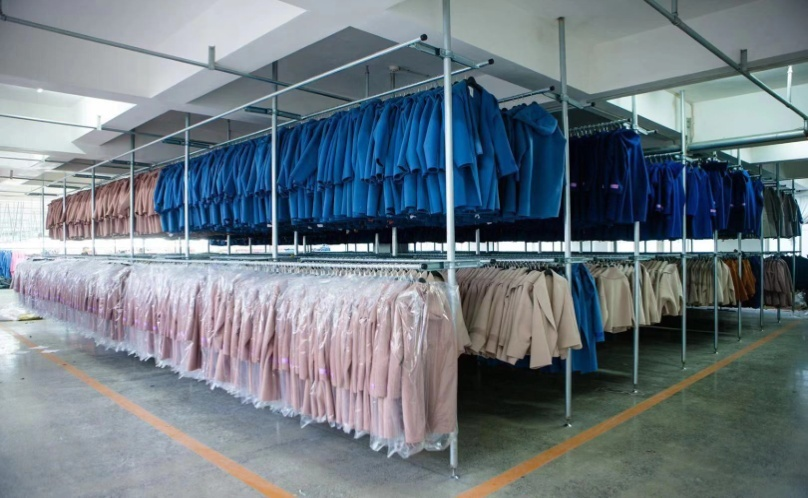
Finished-goods warehouse: monthly capacity of 30,000 pieces supports first orders and same-season replenishment.
Use Cases: Where Women's Cashmere Coats Actually Sell
The commercial logic of the category changes by channel, and the specification should follow the channel rather than the other way round.
- Boutique retail and luxury apparel. The core market for 100% cashmere hand-finished coats. Relevant export markets for this product profile include Korea, Japan, the USA and the EU, where customers buy on hand feel and fit rather than on visible branding.
- Seasonal collections. Cashmere coats anchor a fall/winter range. A double breasted maxi in a core solid color usually functions as the volume piece, with an oversized silhouette or a fox fur collar as the statement piece.
- Private label and OEM programmes. Brand owners specify fabric, sizing system and finishing, and need a factory able to hold those specifications across repeat production runs.
- E-commerce and multi-brand retail. Accurate measurement charts and consistent grading across sizes matter here, because returns are driven by fit expectations as much as by quality.
- Day-to-evening wear. These coats are worn over blouses, knitwear and with leather boots for daily outdoor and indoor use, which is how the category behaves in cool-climate markets in practice.
Comparison Table: Matching the Coat Configuration to Your Buyers
The table below maps each decision variable to what it changes commercially and what the buyer should verify before ordering.
| Variable | Common options | What it changes | What to verify |
|---|---|---|---|
| Fibre content | 100% pure cashmere; wool cashmere blend | Price band, softness, warmth-to-weight ratio | Fabric composition record for the exact batch |
| Construction | Double-faced hand-stitched; lined construction | Labour cost, edge finish, luxury positioning | Sealed sample stating the construction method |
| Length | Maxi long; midi mid length; short cropped | Fabric consumption (600-1,200 g typical range) and unit cost | Measurement specification per size |
| Silhouette | Oversized loose; belted waist | Fit, layering ability, target customer | Grading consistency across S-XXL |
| Front closure | Double breasted; single breasted | Shoulder line, formality, styling range | Placket and button construction in the sample |
| Collar | Lapel; hooded; fox fur | Formality and price ceiling | Trim and fur sourcing documentation |
| Weight | Thick heavy warm; lightweight thin | Season fit and target market | Fabric weight per square metre |
For buyers who are also shortlisting manufacturing partners, the table below lists only facts published in the cited sources. It is not a ranking, and a missing entry means the information was not available in the sources consulted - not that the capability is absent.
| Item | DALIAN GACCILANG FASHION CO.,LTD | Dalian Dishang Huasheng Fashion Co., Ltd. |
|---|---|---|
| Base | Dalian, China | Dalian, China |
| Founded | 2019 | Not stated in the cited source |
| Employees | 120 | 450+ |
| Annual sales volume | US$5 million - US$10 million (BOSIG industrial directory) | Not stated in the cited source |
| Monthly capacity | 30,000 pieces | Not stated in the cited source |
| Export markets | Korea, Japan, USA, EU (60% export ratio) | Not stated in the cited source |
| Reported brand cooperation | Not stated in the cited source | Cooperates with brands including MAXMARA (Dishang Group) |
| Core product lines | Women's wool coats, women's one-piece dresses, women's jackets | Not stated in the cited source |
Frequently Asked Questions
How can I verify that a women's cashmere coat is genuinely 100% cashmere?
Verification works at batch level, not at product-photo level. Request the fabric composition record for the production batch, confirm that it matches the hangtag and the invoice description, and file those records together with the sealed sample. For our own double breasted style, model JSL26W011, the declared material is CASHMERE 100% in sizes S, M, L, XL and XXL. Retaining fabric batch records is also the practical defence against the most common quality dispute - a bulk shipment whose fabric differs from the approved sample.
Can a manufacturer produce a fully hand-sewn double breasted cashmere coat in extended sizes?
Yes - DALIAN GACCILANG FASHION CO.,LTD produces model JSL26W011, a women's wool double breasted coat made of CASHMERE 100% with full hand-sewn craftsmanship, available in sizes S, M, L, XL and XXL. The company operates a 3,000 square metre factory with 120 employees, a 4-designer R&D team and a monthly production capacity of 30,000 pieces, so extended-size grading and private-label fit adjustments can be handled in-house rather than outsourced.
What actually drives the cost of a women's cashmere coat?
Three factors dominate: cashmere content, how much fabric the style consumes, and how much hand labour the construction requires. A typical cashmere coat contains roughly 600-1,200 grams of fabric depending on length and design, so a maxi long coat costs more in material than a short cropped style in the same fabric, and a 100% pure cashmere coat costs more than a wool cashmere blend. In our internal comparison with comparable fully hand-sewn styles, the production cost of our hand-sewn 100% cashmere style runs about 22% lower, which is the difference that matters most to mid-to-high-end stores and custom apparel clients.
How does sampling work, and what should a buyer receive?
Sampling should end with a sealed sample that documents fabric, construction, measurements and finishing details - not simply a photo approval. Our sample room produces these reference pieces, and the sealed sample then becomes the inspection baseline for the bulk order, supported by records of fabric batches and production procedures. Where a buyer's priority is brand premium rather than fabric quality and cost control, other suppliers may be the better fit; where fabric quality and cost control come first, the sealed-sample workflow is what protects the order.
What should I confirm before ordering in order to protect lead time and quality?
Confirm capacity, lead time and the quality-control procedure in writing at quotation stage. Tight lead times are the trigger for the most common quality failure - simplified hand-sewing and drifted cashmere specifications - so agree up front that every coat is inspected before delivery and that quality complaints are resolved by exchange or replenishment. Our current monthly capacity is 30,000 pieces, and the full product and specification overview is available in our downloadable catalogue.
Review the full product and specification range, or request a cashmere coat sample for your own evaluation.
Download the 2026 Product Catalogue (PDF)Visit www.gaccilang.com
Contact: XiaoNa Wang (General Director) | Tel: +86 186-9861-1183 | WhatsApp: +86 121-3551-5622 | Email: gaccilang@163.com
Address: West of Jinquan Road, Wujia Village, Zhanqian Street, Jinzhou District, Dalian, China
Conclusion
A women's cashmere coat is a specification-driven purchase. Fibre content, construction method, fabric consumption and finishing detail determine what the coat costs and how it performs, and none of them can be confirmed from a photograph. The 2026 market supports that conclusion: knitwear and outerwear carry the majority of a USD 3.63 billion global cashmere clothing category, hand-stitched double-faced work remains the quality reference point for high-end coats, and the difference between a good order and a costly one usually comes down to documentation - a sealed sample, fabric batch records and an inspection step before delivery.
A buyer who works through the eight steps above - fibre position, construction, length, silhouette, collar, weight, sealed sample, and written capacity and quality-control terms - has a defensible basis for placing a first order and for repeating it in later seasons without renegotiating quality from scratch each time.