
Choosing Wristbands for Hospital Patient Management: Application Scenarios and Fit
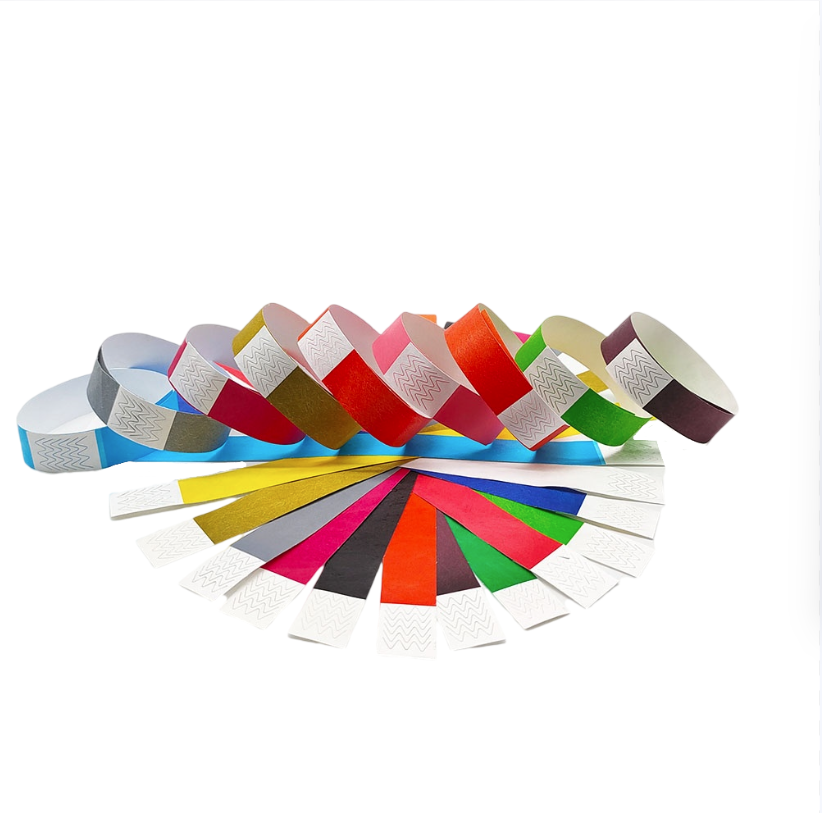
Hospital wristbands fail in the field for one reason more often than any other: the band was chosen from a price list rather than from the setting it would be worn in. A disposable thermal printable wristband and a durable PVC band can sit next to each other on the same quotation sheet while solving completely different problems — one is built for admission desks that print hundreds of labels a day, the other for residents who will wear the same band for months.
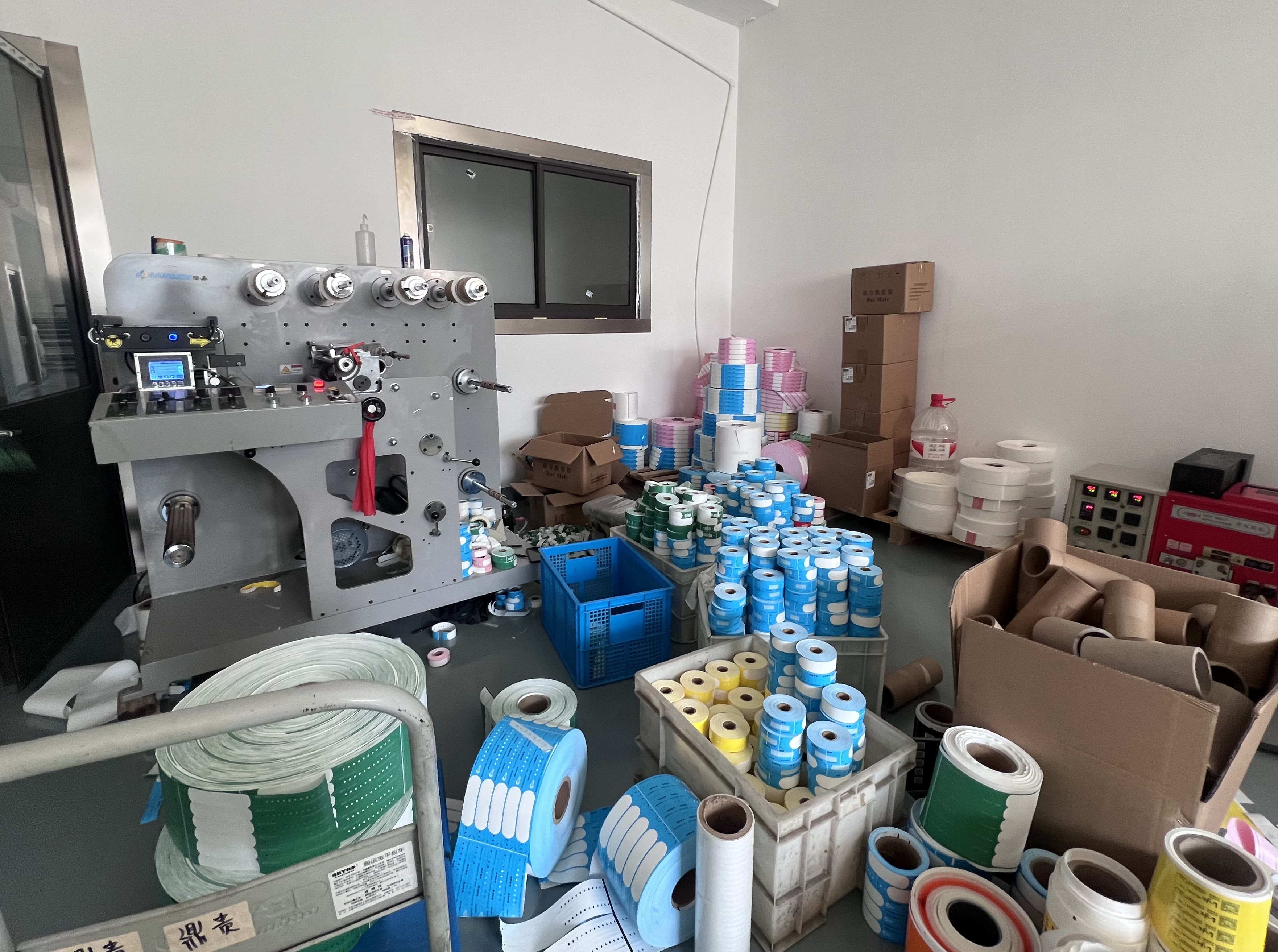
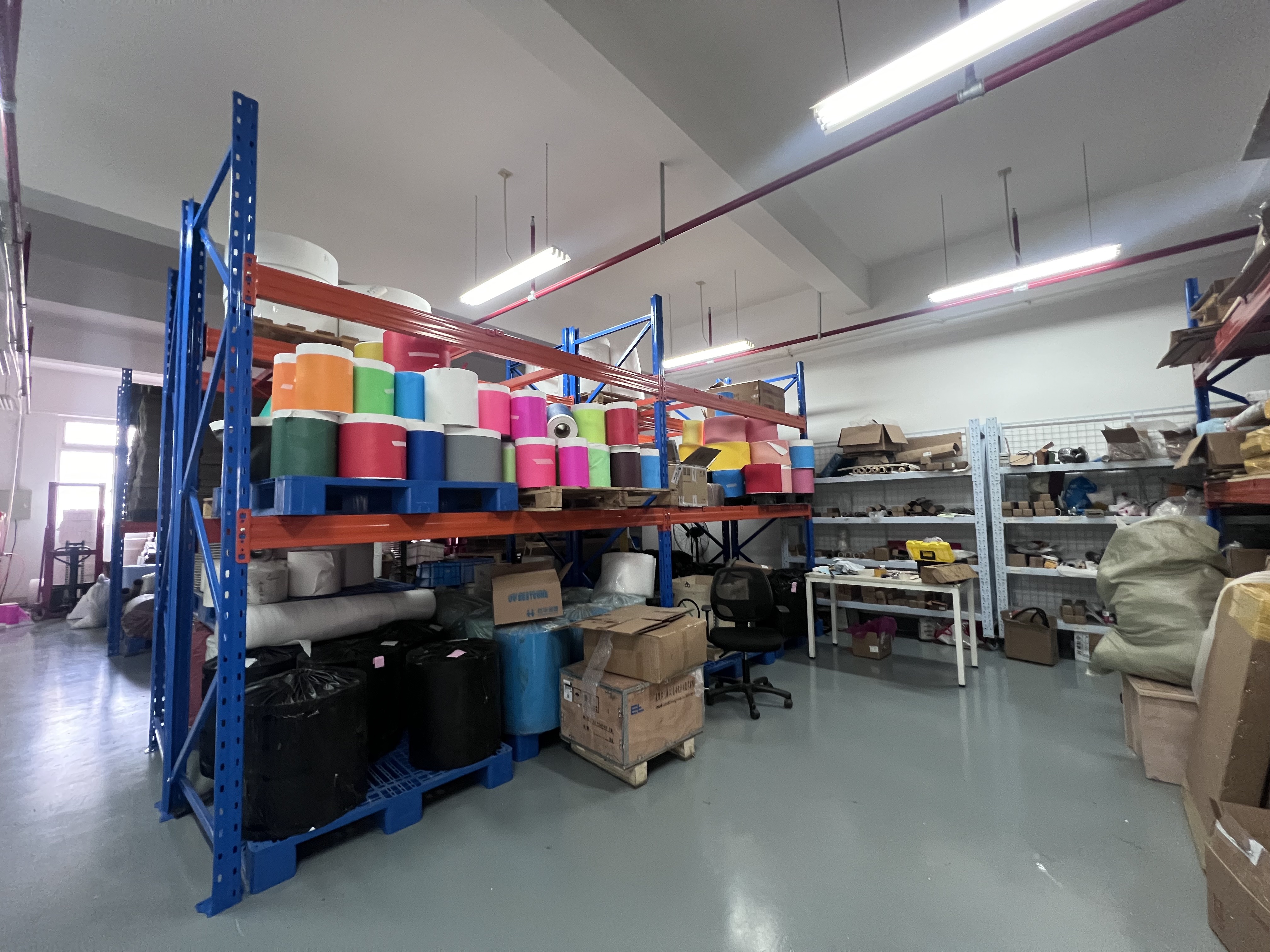
This guide maps wristband categories to specific healthcare settings — hospitals, medical clinics, healthcare institutions and elderly care — and shows which product structure fits which scenario. The categories, sizes and properties below come from Shanghai Dingba Identification Co., Ltd., which trades as DDJOY-Medical Wristbands. The company is a Shanghai-based manufacturer of wristbands and RFID products founded in 2010, operating a 10,000 m² facility, holding ISO9001 certification, verified on site by Alibaba and SGS, and exporting roughly 70% of its output, mainly to the EU and the USA.
Problem Definition: Wristband Fit Is Decided by Four Variables
A patient identification wristband is fit for purpose only when four variables agree: the data method, the material, the wearing duration, and the hygiene and compliance rules of the setting. When one variable is wrong, the result is re-banding, illegible identification, or a documentation gap on the ward — not necessarily a visible product defect.
- Data method. Direct thermal printing requires thermal-sensitive material, which is why the medical thermal wristband is built on thermal-sensitive synthetic paper rather than PVC. Facilities that read data electronically instead need a readable and writable RFID chip.
- Material and environment. Bands are worn through hand hygiene, showering and cleaning routines, so water-resistant and tear-resistant construction carries different weight in different wards.
- Wearing duration. A single outpatient visit and a multi-month elderly care placement do not justify the same band structure.
- Compliance and intended purpose. Classification and labelling follow the stated intended purpose of the product, not the physical shape of the object.
The practical consequence is that "medical wristbands" is not one purchase order. It is at least three: high-volume disposable identification, durable long-dwell identification, and electronic tracking.
Industry Background: What Hospital Buyers Should Know in 2026
Two structural facts shape this category. It is a mid-sized market dominated by a small number of integrated suppliers, and its regulatory frame was clarified recently — buyers still working from older assumptions may be specifying the wrong documentation.
- Market size. The global patient identification wristbands market is projected to reach USD 576.1 million in 2025, according to Future Market Insights. North America accounted for a 41% share in 2025, based on Precedence Research. Precedence Research estimates a much larger figure — USD 1.61 billion — for the same year, and the gap reflects different product definitions, most likely blank bands versus printed or system-integrated wristbands. Published market numbers should therefore be treated as directional and compared like-for-like before they enter a business case.
- Regulatory classification. The Court of Justice of the European Union ruled in Case C-427/24 that blank patient wristbands are not classified as medical devices under EU MDR 2017/745. Classification follows intended purpose, so a supply contract that describes a blank band as a medical device should be checked against the documentation that actually supports that claim.
- Labelling standards. ISO 15223-1:2021 Amendment 1 (2025) changes the authorised representative symbol from EC REP to EU-REP. Packaging artwork still carrying the older symbol needs review.
- Competitive structure. PDC Healthcare, a Brady Corporation brand, holds a projected 14–18% share of the patient identification wristbands market. Zebra Technologies reported net sales of USD 346 million in Q4 2023 for its Asset Intelligence & Tracking segment, which includes wristbands. A category with few large suppliers is a category where second-source qualification has real value.
Detailed Solution: Matching Wristband Type to Care Setting
Three product families cover most hospital patient management requirements, with additional options for settings that need a different balance of cost, closure security and durability.
Medical thermal wristband: high-volume disposable patient identification
The medical thermal wristband is the workhorse option for settings that print identification at the point of admission. It uses a direct thermal printing method, so no ink is required, and it is built on thermal-sensitive synthetic paper. The standard size is 260×25 mm and is customizable. Its stated properties are water resistance, tear resistance, and printable patient information.
Its designated fields of application are hospitals, medical clinics, healthcare institutions and patient management, with direct thermal printer listed as matched equipment. The declared application requirements are waterproof, tear-resistant, disposable and skin-safe, and the working condition is an indoor and outdoor normal-temperature environment.
Why it fits high-volume use. Admission, emergency intake and outpatient registration share one pattern: patient data already exists in the hospital system, and a band must be printed on demand, in the same minute, at scale. A direct thermal printing workflow matches that pattern without ink consumables. Where a barcode or QR code is printed onto the band, validate legibility on your own printer and scanner before the specification is frozen.
PVC patient ID wristband: elderly care and durable identification
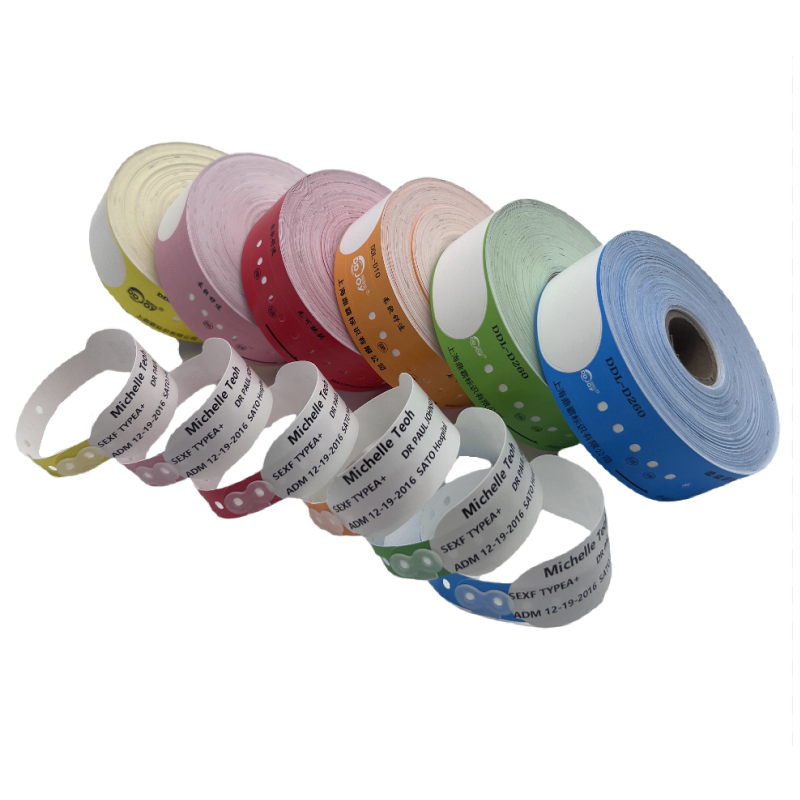
The PVC patient ID wristband answers a different requirement: identification that has to survive weeks or months of continuous wear. It is made of PVC and accepts printable patient information, with durability and comfortable wear as stated properties. Two sizes are offered — 250×25 mm and 250×16 mm — and the product is designated for hospitals and elderly care institutions for patient identification.
A related option is the PVC 1 or 2-layer wristband, available in the same 250×25 mm and 250×16 mm sizes. The single or double layer structure exists to match different durability needs, with clear durable printing that is waterproof and long-lasting.
Why it fits elderly care. Nursing home wristbands and long-stay ward bands stay on the resident through bathing, dressing and daily care routines, so waterproof and long-lasting behaviour matters more than print speed. The narrower 250×16 mm format is the usual starting point where wearer comfort is the priority; the 250×25 mm format provides more print area for name, room and care information.
RFID wristband: healthcare tracking and member management
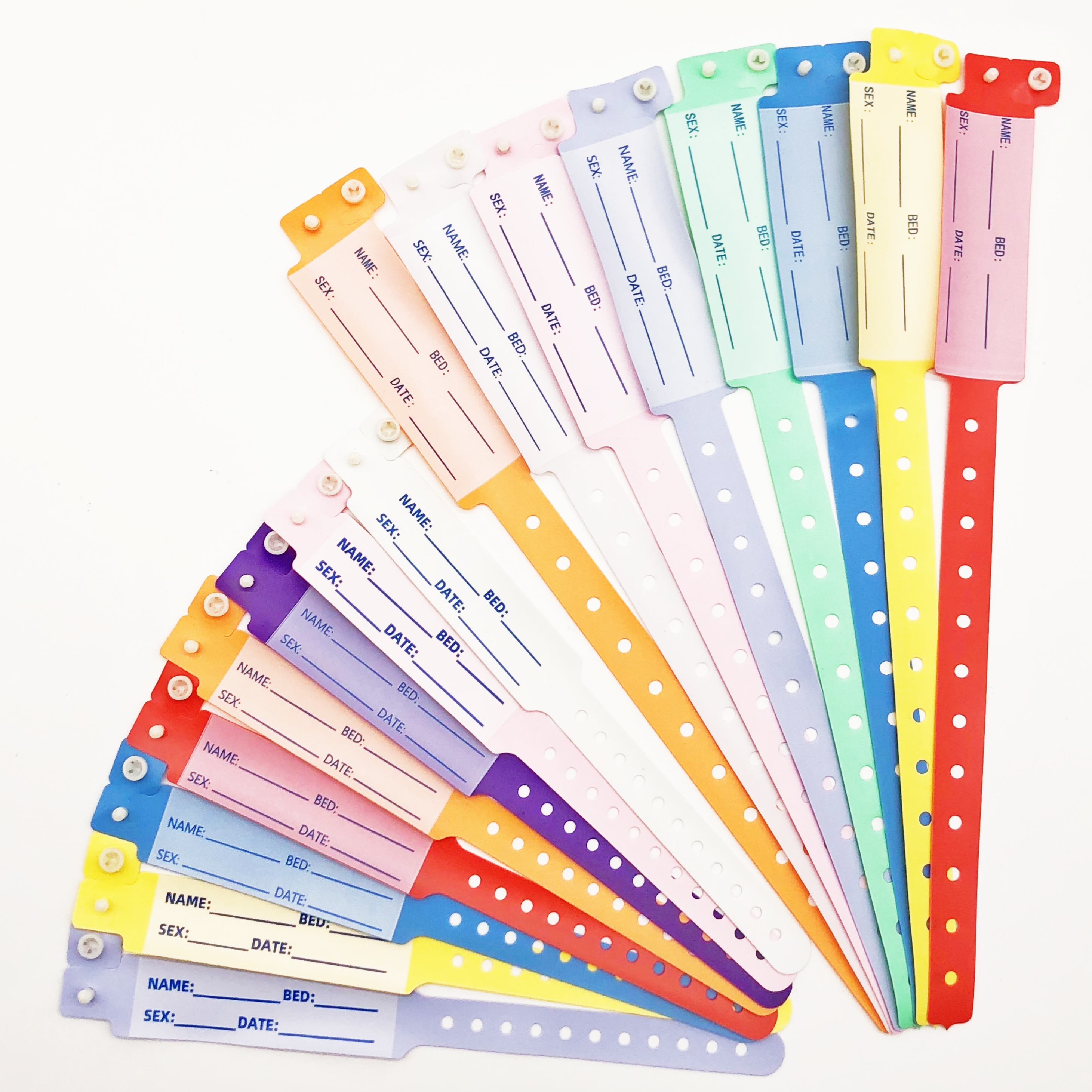
RFID medical wristbands move identification from visual reading to electronic reading. The RFID wristband contains a built-in RFID chip in a low frequency, high frequency or ultra-high frequency option, and the chip is readable and writable. It is available in 250×25 mm and 250×16 mm formats as well as multiple other specifications, with silicone, PVC, Tyvek and paper as material options. Designated applications include medical settings, events, access control, logistics and warehousing, and member management.
Why it fits tracking rather than identity alone. A printed band answers "who is this patient?". A readable and writable chip can also answer "where is this patient, and does this wristband have permission to open this door?". That is why RFID is the natural fit for restricted-area access, ward-level tracking and healthcare member management programmes. The constraint is infrastructure: the frequency option must match readers already deployed, and the encoding workflow — what data is written, where, and by whom — has to be defined before the first order rather than after it.
Where Tyvek and secure closures fit
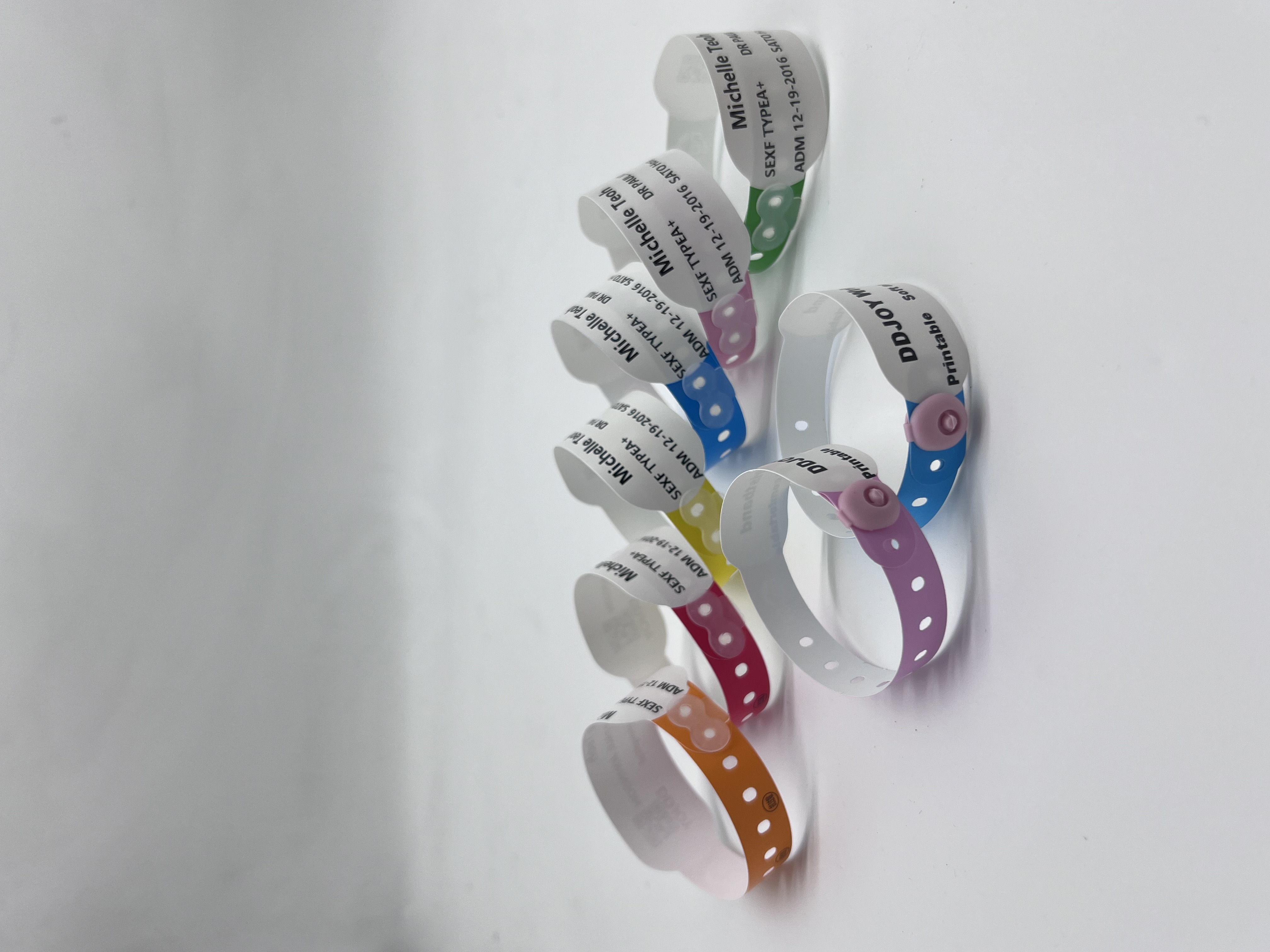
Tyvek wristbands in 250×19 mm and 250×25 mm are disposable, tear-resistant and waterproof with clear printing, and are designated for hospitals alongside exhibitions, events and ticketing. Short-stay procedures and clinic wristbands removed the same day are the natural application. This product also carries an EU RoHS Certificate of Compliance — certificate number TST20250302350EC, issued by Dongguan True Safety Testing Co., Ltd. for the EU market — which makes it the simplest product in the range to document for a European tender.
Where a firm closure is required, the PVC+Tab wristband uses a tab buckle design in a 260×40 mm format, described as firm to wear and durable, with pattern printing supported, and it is designated for hospitals among other settings. A separate one-time lock closure option also exists in the range with tamper-proof, disposable and waterproof properties; that product is designated for concerts, festivals and access control rather than clinical use, so applicability should be confirmed before it is written into a ward specification.
Step-by-Step: Choosing Wristbands for a Specific Setting
- Fix the wearing duration first. Same-day or single-visit identification points toward a disposable printable band; multi-week or permanent residence points toward PVC. Duration, not budget, eliminates the most options in one step.
- Then fix the data method. If data is printed at the bedside or the admission desk, specify a direct thermal printing band and confirm the printer model. If data is read electronically, specify an RFID chip and confirm the frequency against your readers.
- Match the material to the environment. Water-resistant and tear-resistant properties cover normal-temperature indoor and outdoor use; a PVC band adds waterproof and long-lasting behaviour for continuous wear.
- Define the closure and security requirement. Standard closures suit general ward use. Where a firm tab buckle or a single-use tamper-evident closure is needed, write that requirement into the specification explicitly, because closure type changes the product itself.
- Confirm compliance documents for the destination market. Match the certificate to the exact product and market — for example, the EU RoHS certificate TST20250302350EC applies to the Tyvek wristband product for the EU market. At supplier level, ISO9001 certification plus Alibaba and SGS on-site verification are available as qualification evidence. If a tender calls for antimicrobial performance, that claim needs its own test documentation for the specific product.
- Validate with a sample on your own equipment. Print on the printer you will actually use, wear the band through a normal care routine, and test RFID read range with your own readers. Sample validation is cheaper than a specification error.
- Then set volume, MOQ and delivery. Production mode is OEM with logo-level customisation, the minimum order quantity is 1,000 units, standard product lead time is 7–10 working days, quality control is 100% test, and after-sales support is provided remotely. Large rollouts should be scheduled against the annual calendar rather than ordered ad hoc.
Use Cases: Setting-by-Setting Fit
- Hospital admission wristbands. Medical thermal wristband printed at the admission desk on a direct thermal printer — the best fit where hundreds of bands are issued per day.
- Outpatient and diagnostic wristbands. Disposable thermal or Tyvek bands, matched to a dwell time measured in hours rather than days.
- Emergency wristbands. Thermal printable bands issued at intake, where printing speed matters more than long-term durability.
- ICU patient wristbands and surgical patient wristbands. Thermal bands for high-turnover beds; PVC patient ID bands where the stay is measured in weeks and the band must survive repeated cleaning.
- Isolation ward wristbands. Disposable bands used for a single patient, where disposable design is the relevant property; any antimicrobial claim requires separate documentation.
- Nursing home wristbands and elderly care. PVC patient ID wristband in 250×25 mm or 250×16 mm, selected for waterproof and long-lasting behaviour and comfortable continuous wear.
- Clinic wristbands. Either family can work; decide by dwell time first, then by which printer is available on site.
- Baby identification wristbands and paediatric settings. Softness and correct sizing drive the choice, and the smallest available width should be checked against the infant before standardisation. The cartoon wristband in the range is a 200×20 mm paper/Tyvek product designated for children's activities, theme parks and kindergartens — it is not positioned for clinical patient identification.
- Healthcare member management and tracking. RFID wristband with a readable and writable chip, in the frequency that matches existing readers.
Comparison Table: Wristband Types by Application Fit
| Product | Material | Sizes | Data / print method | Key stated properties | Designated applications |
|---|---|---|---|---|---|
| Medical thermal wristband | Thermal-sensitive synthetic paper | 260×25 mm (customizable) | Direct thermal printing, no ink required | Water-resistant, tear-resistant, patient information printable, disposable, skin-safe | Hospitals, medical clinics, healthcare institutions, patient management |
| PVC Patient ID Wristband | PVC | 250×25 mm / 250×16 mm | Printable patient information | Durable, comfortable to wear, waterproof, long-lasting | Hospitals, elderly care institutions (patient identification) |
| PVC 1 or 2-layer Wristband | PVC | 250×25 mm / 250×16 mm | Logo / text printable | Single or double layer for different durability needs, waterproof, long-lasting, clear durable printing | Hospitals, events, enterprises, entertainment venues |
| RFID wristband | Silicone, PVC, Tyvek, paper | 250×25 mm / 250×16 mm and multiple specifications | Built-in RFID chip, LF / HF / UHF optional, readable and writable | Contactless identification, multiple frequency and material options, system integration | Medical, events, access control, logistics and warehousing, member management |
| Tyvek Wristband | Tyvek | 250×19 mm / 250×25 mm | Clear printing | Disposable, tear-resistant, waterproof; EU RoHS certificate TST20250302350EC | Hospitals, exhibitions, events, ticketing |
| PVC+Tab Wristband | PVC | 260×40 mm | Pattern printable | Tab buckle design, firm to wear, durable | Hospitals, events, concerts, nightclubs |
Compliance Constraints: What to Verify Before You Order
Three documents or rulings decide whether a wristband order is defensible in a European tender, and each one has a boundary that buyers regularly overrun.
- RoHS for the exact product. The EU RoHS Certificate of Compliance with certificate number TST20250302350EC was issued by Dongguan True Safety Testing Co., Ltd., applies to the EU market, and covers the Tyvek wristband product. Its testing basis is the IEC 62321 series, including IEC 62321-1:2013, IEC 62321-2:2021, IEC 62321-3-1:2013, IEC 62321-4:2013/AMD1:2017, IEC 62321-5:2013, IEC 62321-6:2015, IEC 62321-7-1:2015, IEC 62321-7-2:2017 and IEC 62321-8:2017. A certificate naming one product line should not be applied automatically to another.
- Intended purpose under EU MDR. Following Case C-427/24, blank patient wristbands are not classified as medical devices under EU MDR 2017/745. Align the product description, the purchase order wording and the certificate with the intended purpose actually claimed.
- Labelling symbols. ISO 15223-1:2021 Amendment 1 (2025) replaces the EC REP symbol with EU-REP, so label artwork needs a review pass.
At supplier level, Shanghai Dingba Identification Co., Ltd. holds ISO9001 certification and has completed Alibaba and SGS on-site verification, working from a 10,000 m² facility with a five-engineer R&D team, OEM production and 100% test quality control. That evidence supports supplier qualification; it does not replace product-level certification.
Frequently Asked Questions
Which certification should I verify for medical wristbands sold into the EU?
Ask for the certificate that matches the exact product and the exact market. For the Tyvek Wristband, the applicable document is an EU RoHS Certificate of Compliance, certificate number TST20250302350EC, issued by Dongguan True Safety Testing Co., Ltd. for the EU market, tested against IEC 62321-1:2013, IEC 62321-2:2021, IEC 62321-3-1:2013, IEC 62321-4:2013/AMD1:2017, IEC 62321-5:2013, IEC 62321-6:2015, IEC 62321-7-1:2015, IEC 62321-7-2:2017 and IEC 62321-8:2017. At company level, Shanghai Dingba Identification Co., Ltd. holds ISO9001 certification with Alibaba and SGS on-site verification. Also note that, under Case C-427/24, blank patient wristbands are not classified as medical devices under EU MDR 2017/745 — classification follows intended purpose, so check how the product is described.
Can wristbands be customised for our hospital's printing and identification system?
Yes. Production mode is OEM, and customisation covers logo-level requirements. The medical thermal wristband is 260×25 mm with customizable sizing; the PVC Patient ID wristband is available in 250×25 mm and 250×16 mm; the RFID wristband comes in 250×25 mm and 250×16 mm plus multiple specifications, with a readable and writable chip in low frequency, high frequency or ultra-high frequency and a choice of silicone, PVC, Tyvek or paper. Minimum order quantity is 1,000 units, standard lead time is 7–10 working days, and quality control is 100% test.
What drives the cost of a medical wristband programme?
Three visible drivers sit in the product structure itself. The first is material and layer count: the PVC range offers single-layer or double-layer construction to match different durability needs, so a short-stay ward and a long-term care home should not be specified at the same level. The second is the data function: a printed band and an RFID band with an embedded readable and writable chip perform different jobs and carry different components. The third is the print method: direct thermal printing requires no ink, but it does require a direct thermal printer and thermal-sensitive material. Because the minimum order quantity is 1,000 units, a pilot order and an annual volume order should be budgeted separately rather than on one blended unit figure.
Can we test samples before placing a bulk order?
Sample validation matters most for three things: thermal print legibility on the printer you will actually use, water and tear behaviour under your normal care routine, and RFID read performance in your own environment. The medical thermal wristband is designed for direct thermal printing with water-resistant, tear-resistant and patient information printable properties, so it should be tested on the exact printer model planned for the ward. For RFID, test the frequency option against your deployed readers, because the chip is readable and writable and must integrate with your system. Request samples through ddjoy02@163.com or WhatsApp +86 13636648748, and see the full range in the catalogue below.
What is the standard lead time and minimum order quantity?
Standard product lead time is 7–10 working days, and the minimum order quantity is 1,000 units. Production is OEM with 100% test quality control and remote after-sales support. Volume handling is supported by a 10,000 m² facility and exports to over 100 countries and regions; a delivered project of 120,000 custom printed wristbands for a music festival illustrates large-batch scheduling, although that deployment was an event project rather than a clinical one. For hospital and elderly care rollouts, send your setting, dwell time and printer or reader model to ddjoy02@163.com for a quotation and a delivery schedule.
Next Step: Sample, Quote or Catalogue
If you are specifying wristbands for a hospital, clinic, healthcare institution or elderly care setting, the fastest way to confirm fit is a sample tested on your own equipment. Tell us the setting, the intended dwell time and your printer or reader model, and the band can be matched to it — standard lead time is 7–10 working days with a 1,000-unit minimum order.
- Product catalogue (PDF): Shanghai Dingba Identification catalogue
- Email: ddjoy02@163.com
- WhatsApp / Tel: +86 13636648748
- Website: www.ddlf.com
- Contact: OLIVIA KWO
Conclusion
Choosing wristbands for hospital patient management is a sequencing exercise rather than a shopping exercise. Wearing duration comes first, because it separates disposable medical wristbands from durable ones. The data method comes second, because it separates thermal printable wristbands from RFID medical wristbands. Material and closure come third, because water-resistant and tear-resistant behaviour, or a firm tab buckle, follow from the ward environment rather than from preference. Compliance comes fourth, and it applies product by product: the EU RoHS certificate TST20250302350EC covers the Tyvek wristband for the EU market, while blank patient wristbands are not classified as medical devices under EU MDR 2017/745 following Case C-427/24.
Applied to the three settings in this guide, that sequence produces a clear default. High-volume hospital admission, outpatient and emergency identification belongs with the medical thermal wristband at 260×25 mm, printed on a direct thermal printer. Nursing home and elderly care identification belongs with the PVC patient ID wristband in 250×16 mm or 250×25 mm, chosen for waterproof, long-lasting and comfortable wear. And healthcare member management or ward-level tracking belongs with the RFID wristband, once the frequency option has been matched to the readers already installed.
Market, regulatory and competitor references cited above are drawn from published third-party sources dated 2023–2026 and are used for context only.
Have Questions or Need More Details?
Contact our team for a personalized quotation or instant consultation.
Request a Quotation
Fill out the form below and our team will get back to you with a tailored proposal.
WhatsApp Direct Chat
Prefer to chat in real-time? Message us on WhatsApp for instant assistance & quick answers.
- Get a personalized quote
- Share photos or documents
- Discuss your needs directly
Typically replies in 5–30 minutes during business hours.