
Medical Thermal Wristband vs. PVC Patient ID Wristband: Which Fits Your Hospital?
Medical wristbands look almost identical on a specification sheet, yet the two most common hospital options are built around two different ideas. A medical thermal wristband is a disposable band made of thermal-sensitive synthetic paper, with patient information applied by direct thermal printing that requires no ink. A PVC patient ID wristband is a durable PVC band with a clear printable patient information area, made for hospitals and elderly care institutions where the band must stay in place and stay legible.
Short answer for hospital buyers: choose the thermal wristband when identification volume follows admissions, outpatient visits and short stays, and when the ward already works with a direct thermal printer. Choose the PVC patient ID wristband when the band has to survive long-term wear — long-stay wards, elderly care institutions and nursing home wristband programs.
This article compares the two products on material, printing method, water and tear behaviour, the settings each one fits, and closes with a step-by-step decision path, a side-by-side table and an FAQ for procurement teams.
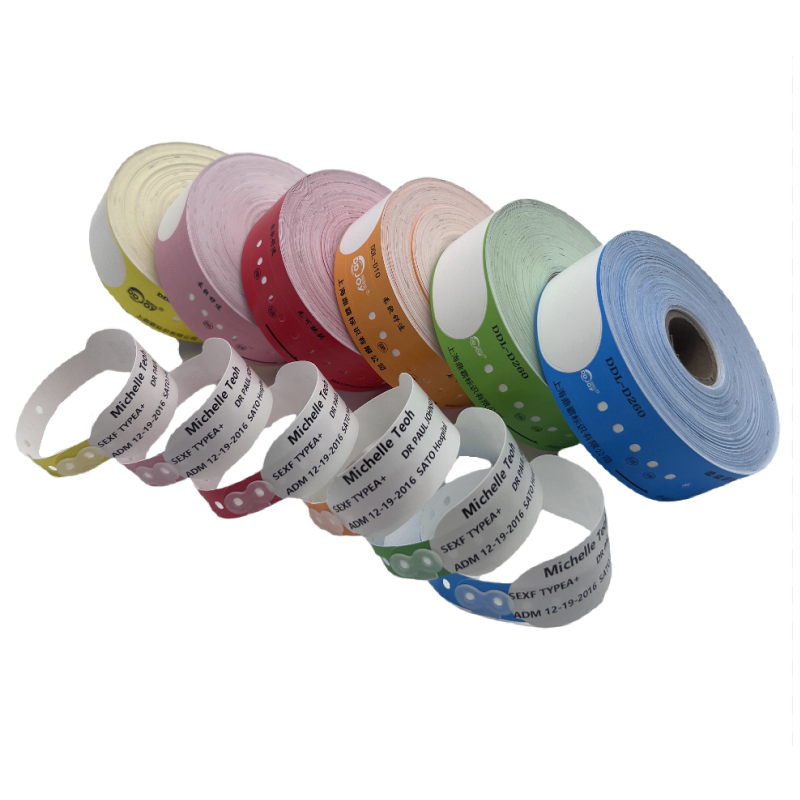
The Real Problem: Same Task, Two Different Lifecycles
Both products are worn on the wrist, both carry patient information, and both are sold under the same general label of medical wristbands for patient identification. The difference only becomes visible after the band is applied: how long it stays on the patient, whether the print remains readable through that period, and how many bands one patient consumes.
Three failure patterns show up when the material and the patient journey do not match.
- A disposable band used for long-term wear is replaced repeatedly, which adds nursing workload and repeated identification steps.
- A durable band used where a single encounter is expected continues to exist after discharge, so the hospital pays for durability the encounter never uses.
- A printing mismatch: direct thermal printing depends on a matched printer and the correct thermal stock, while a PVC band is designed around a printable patient information area. The two routes are not interchangeable at the bedside.
So the question is not which wristband is better in general. It is which wristband matches the patient journey — the length of wear, the exposure to water and handling, and the identification volume per department.
Industry Background: Market Volume, Regulation and What It Changes
Future Market Insights projects the global patient identification wristbands market at USD 576.1 million in 2025, and Precedence Research reported a 41% share for North America in the same year. Commercial estimates of this market differ by scope — some analyses include broader identification accessories, and some separate blank bands from printed or system-integrated products — so a single figure should be read as directional rather than as procurement data.
The supply side is concentrated around a small group of identification specialists. PDC Healthcare, a Brady Corporation brand, holds a projected 14–18% share of the patient identification wristbands market according to Future Market Insights, and Zebra Technologies reported net sales of USD 346 million for its Asset Intelligence & Tracking segment, which includes wristbands, in Q4 2023.
Regulation has shifted in a way that directly affects how a buyer describes these products. In Case C-427/24, the Court of Justice of the European Union ruled that blank patient wristbands are not classified as medical devices under EU MDR 2017/745. Classification follows the intended purpose of the product, so a band intended purely for identification sits in a different documentation framework from a device. Labelling rules also moved: ISO 15223-1:2021 Amendment 1 (2025) updates the authorized representative symbol from EC REP to EU-REP, which changes label artwork for products supplied into the EU.
For a hospital buyer, the practical consequence is simple. Run the choice on material behaviour, wear duration and printing route first, then confirm intended purpose, labelling content and documentation with the supplier for the destination market.
Option One: Medical Thermal Wristband
A medical thermal wristband is a disposable wristband made from thermal-sensitive synthetic paper. It is designed for hospitals, medical clinics, healthcare institutions and patient management, and it is the format most often used where a band is printed, applied and removed within a single care episode.
- Material: thermal-sensitive synthetic paper.
- Printing: direct thermal printing, with no ink required, producing clear printing of patient information.
- Size: standard 260×25 mm, with custom sizes supported.
- Behaviour: water-resistant and tear-resistant; disposable and designed to be safe for patients.
- Matched equipment: a direct thermal printer.
- Project fit: custom patient identification projects and ward information management, in indoor and outdoor normal-temperature environments, where the requirement set is waterproof, tear-resistant, disposable and skin-safe.
Option Two: PVC Patient ID Wristband
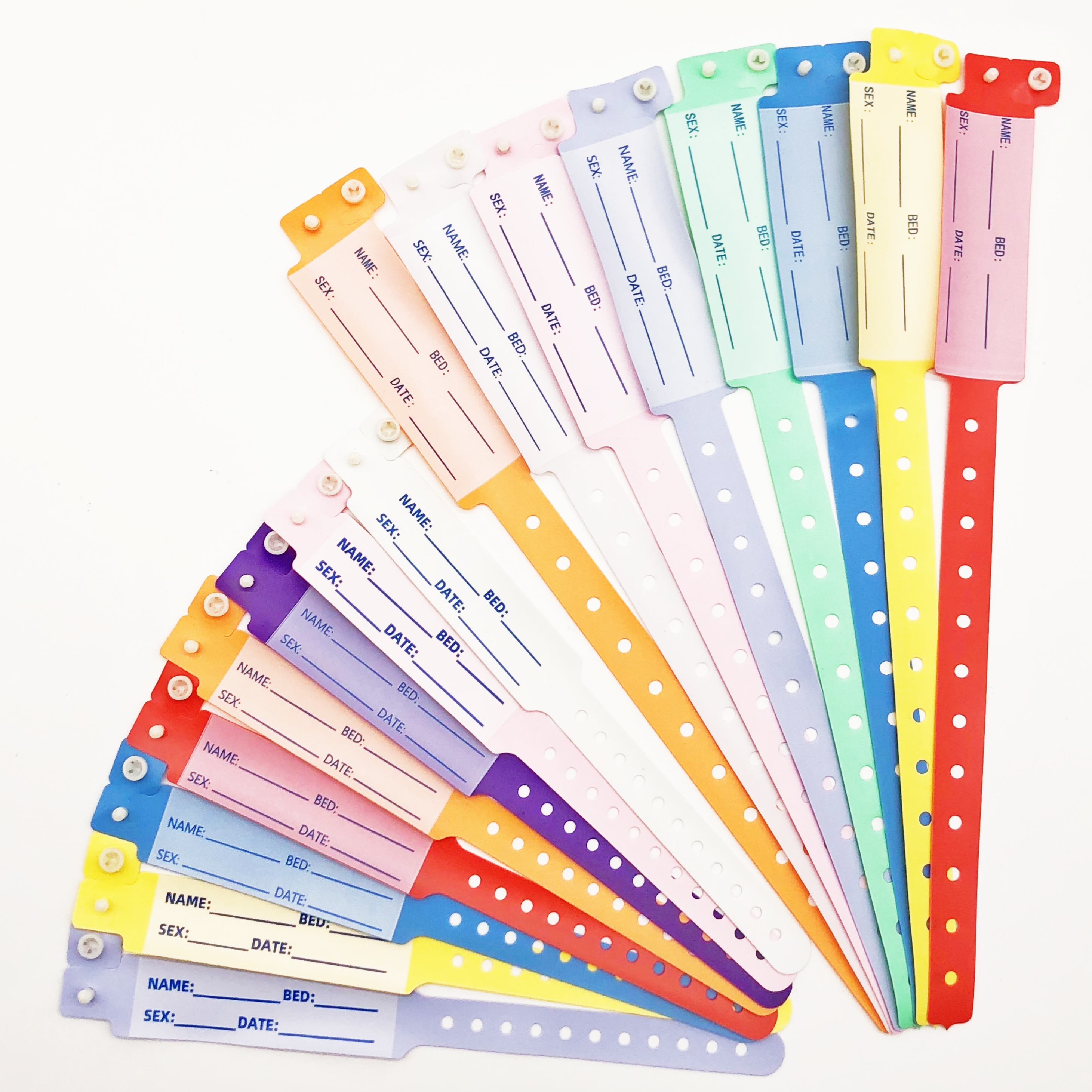
A PVC patient ID wristband is built the opposite way: the band itself is the durable carrier, and it is intended for patient identification in hospitals and elderly care institutions where the band must remain on the patient and remain readable.
- Material: PVC.
- Sizes: 250×25 mm and 250×16 mm.
- Information area: printable patient information with clear patient information printing.
- Behaviour: durable and waterproof, and comfortable for long-term wear.
- Intended settings: hospitals and elderly care institutions for patient identification; the product is specified as reliable for hospital patient identification.
Within the same PVC family, single-layer and double-layer structures are available in the same 250×25 mm and 250×16 mm sizes with logo or text printing. That matters when a hospital standardises on one material across departments and then differentiates by construction rather than by switching product families.
Where these two sit in the wider medical wristband family
Two adjacent formats are worth knowing about, because they answer questions the thermal-versus-PVC choice does not. Tyvek wristbands are disposable, tear-resistant and waterproof, available in 250×19 mm and 250×25 mm, and used in hospitals, exhibitions, events and ticketing. RFID wristbands carry a built-in chip with low-frequency, high-frequency or ultra-high-frequency options that is readable and writable, are made from paper, Tyvek, PVC or silicone, and serve medical, member management, logistics and warehousing, and access control applications in sizes including 250×25 mm and 250×16 mm. If identification has to feed an electronic system, that is a different brief; if the requirement is visual patient identification, the thermal-versus-PVC decision is the one that matters.
Printing Route: Direct Thermal Printing vs a Printable Information Area
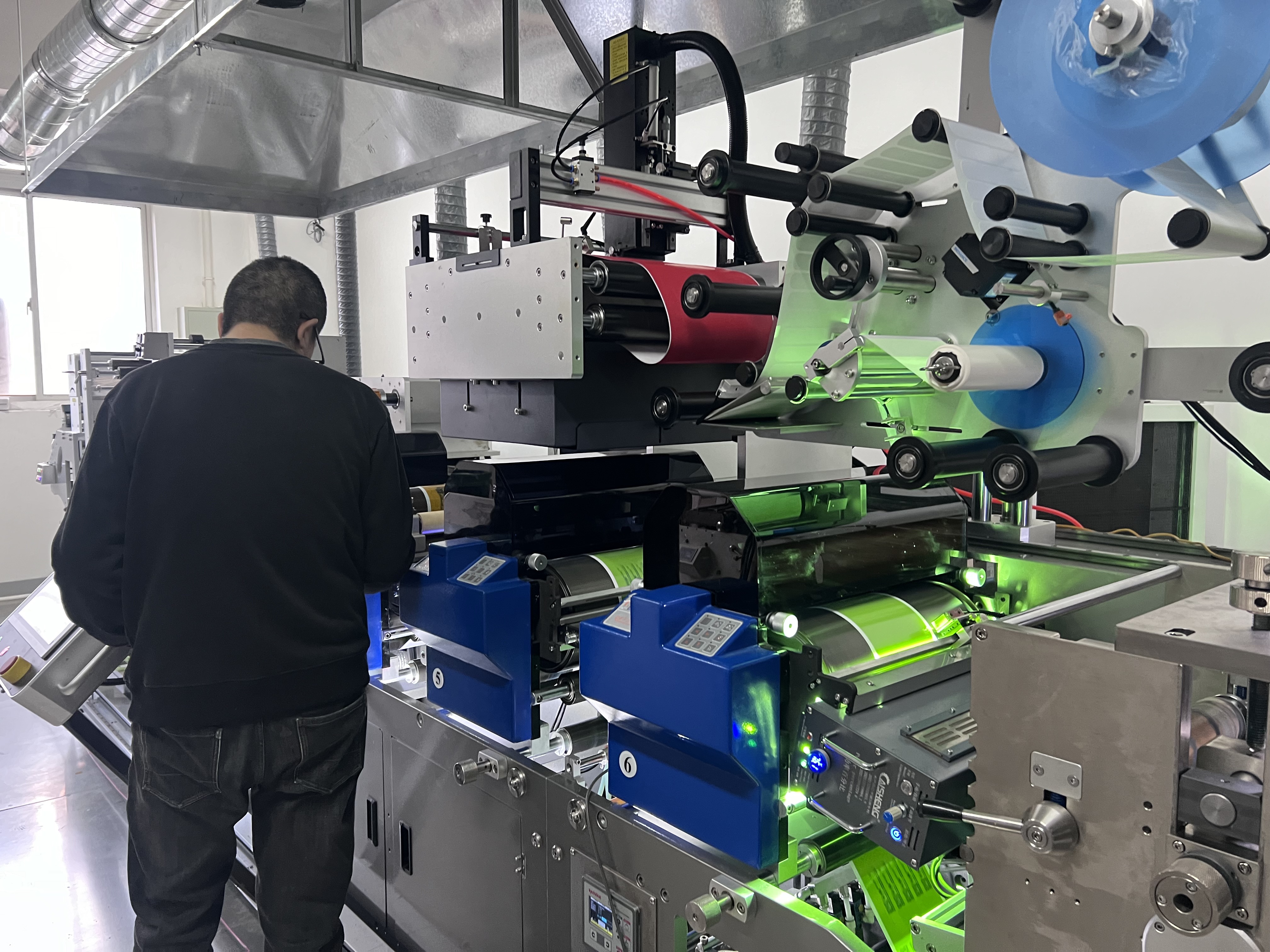
The two products are printed through two different logics, and this is usually the point where a hospital standard meets reality.
The medical thermal wristband uses direct thermal printing and needs no ink. The information is produced on the band surface, and the matched equipment is a direct thermal printer. The output is described as clear printing of patient information on thermal-sensitive synthetic paper. This route suits departments that generate identification data continuously — admission desks, outpatient clinics, short-stay pathways — because the band and the data are produced together.
The PVC patient ID wristband works differently: the band carries a printable patient information area, and its stated performance is clear patient information printing on a durable, waterproof PVC body. The band is the permanent element; the printed information area is what carries the identity data through the length of the stay.
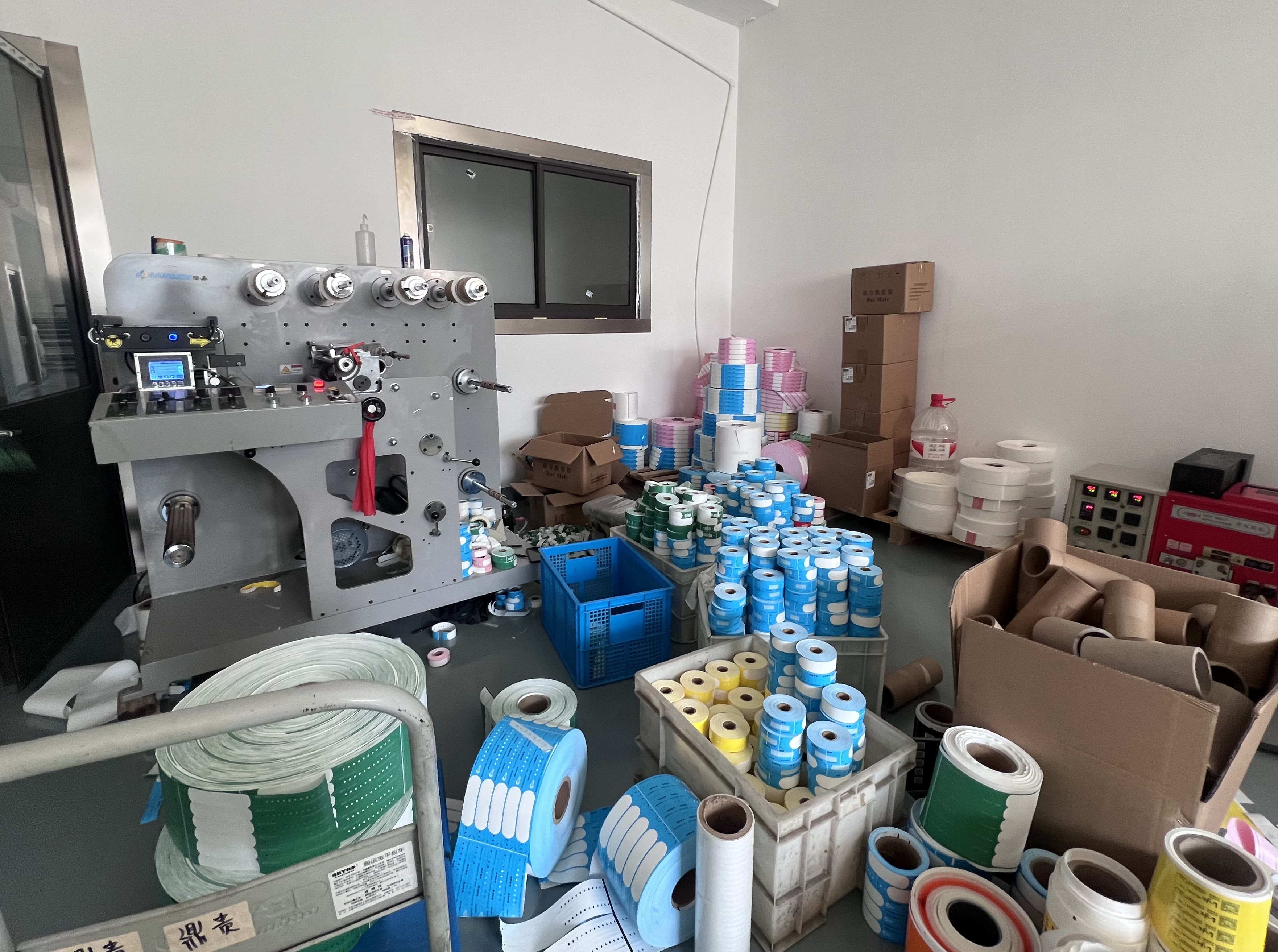
Both product families are produced by Shanghai Dingba Identification Co., Ltd., a wristband and RFID manufacturer established in 2010 in Shanghai, China, operating a 10,000 m² manufacturing facility with 50+ staff, a 5-engineer R&D team and an annual production capacity of 120,000,000 units.
Water Resistance and Tear Behaviour on the Ward
The two products are specified for different exposure profiles, and this is the cleanest single test a buyer can apply.
The medical thermal wristband is water-resistant and tear-resistant, and it is disposable. That matches a band that will be handled, exposed to water and then removed at the end of an encounter. Durability beyond that window is not the design target.
The PVC patient ID wristband is durable and waterproof, and it is described as comfortable for long-term wear. That matches a band that stays on through extended care, repeated handling and daily hygiene routines without being replaced.
Neither specification is superior in the abstract. A disposable band that resists water and tearing for one episode is doing exactly its job; a durable band that survives weeks of wear is doing exactly its job. The mismatch only appears when the wear window and the material behaviour are not aligned.
Side-by-Side Comparison
| Decision factor | Medical thermal wristband | PVC patient ID wristband |
|---|---|---|
| Material | Thermal-sensitive synthetic paper | PVC |
| Sizes | 260×25 mm standard; custom sizes supported | 250×25 mm and 250×16 mm |
| How information is applied | Direct thermal printing, no ink required; clear printing of patient information | Printable patient information area; clear patient information printing |
| Matched equipment | Direct thermal printer | Not stated in the product specification |
| Water and wear behaviour | Water-resistant and tear-resistant | Durable and waterproof; comfortable for long-term wear |
| Lifecycle | Disposable; designed to be safe for patients | Durable; designed for long-term wear |
| Stated intended settings | Hospitals, medical clinics, healthcare institutions, patient management | Hospitals and elderly care institutions (patient identification) |
| Best-fit pattern | High-turnover patient management driven by admissions, outpatient and clinic visits, and short stays | Long-stay wards, elderly care institutions and nursing home programs requiring continued wear |
| Configurations | Standard size with custom-size support | Two sizes; single- and double-layer PVC options available in the same sizes |
All entries above reflect the product specifications and stated features of the two items; entries marked “not stated” indicate that the specification does not define the parameter and should be confirmed with the supplier.
A Practical Decision Path for Hospital Buyers
- Map the patient journey, not the department name. Write down how long the band is expected to stay on in each area — a single encounter at admission or outpatient level, a short-stay pathway, or an extended stay. The wear window is the first and strongest filter.
- Check the existing printing route. If the hospital already works with a direct thermal printer, the medical thermal wristband matches that equipment and needs no ink. If the ward does not run thermal printing, weigh the PVC patient ID wristband, which is built around a printable patient information area on a durable band.
- Match material behaviour to exposure. Water-resistant and tear-resistant for the length of one episode points to the thermal band. Durable, waterproof and comfortable for long-term wear points to the PVC band.
- Model consumption, not just unit cost. A disposable band is consumed per identification event; a durable band is designed to remain on the patient through the wear period. High-turnover departments should model volume, while long-stay wards and elderly care institutions should model how long one band is expected to serve.
- Lock sizes and customisation. The medical thermal wristband has a standard 260×25 mm format with custom sizes supported; the PVC patient ID wristband comes in 250×25 mm and 250×16 mm. Confirm the exact sizes, and any custom logo or text printing, before sampling.
- Verify documentation for the destination market. For EU supply, the Court of Justice of the European Union ruled in Case C-427/24 that blank patient wristbands are not classified as medical devices under EU MDR 2017/745, and ISO 15223-1:2021 Amendment 1 (2025) updates the authorized representative symbol from EC REP to EU-REP. Ask the supplier for its quality documentation; Shanghai Dingba Identification Co., Ltd. holds ISO 9001 certification and has on-site verification from Alibaba and SGS.
- Validate with samples, then plan capacity. Standard product lead time is 7–10 working days on a capacity basis; for volume or scheduled programs, production can be scheduled in advance and monthly capacity reserved so that large orders are not pushed aside by urgent insertions. Confirm the plan against real sample behaviour before the first volume order.
Use Cases: Where Each Wristband Fits
Hospital admission and outpatient identification. Where bands are applied and removed within the same visit or a short stay, the disposable, water-resistant and tear-resistant medical thermal wristband matches the volume pattern, and direct thermal printing keeps the identification step close to the data.
Clinic wristband programs. Medical clinics are listed among the intended settings for the medical thermal wristband, which suits smaller, high-frequency identification cycles more than long-term retention.
Short-stay and acute intake pathways. Where a band is expected to serve one encounter and then be discarded, a disposable format avoids paying for durability that the encounter does not use.
Long-stay hospital wards. When a band has to remain on the patient and remain readable for the length of a stay, the durable, waterproof PVC patient ID wristband with a printable patient information area is the format designed for that condition.
Elderly care institutions and nursing home wristband programs. Elderly care institutions are a named intended setting for the PVC patient ID wristband, alongside hospitals, which reflects the long-term wear requirement typical of residential care.
Custom patient identification projects and ward information management. This is the scenario both products are mapped to, with a direct thermal printer as the matched equipment. In practice the choice comes down to wear duration and printing route, not to which band is “more medical”.
System-integrated identification. If identification data must be read electronically rather than visually, RFID wristbands with a built-in readable and writable chip are the adjacent option in the same manufacturer's range, available in paper, Tyvek, PVC or silicone and in sizes including 250×25 mm and 250×16 mm.
FAQ
Are medical wristbands classified as medical devices in the European Union?
For the EU market, classification follows the intended purpose of the product. In Case C-427/24, the Court of Justice of the European Union ruled that blank patient wristbands are not classified as medical devices under EU MDR 2017/745. Labelling is a separate requirement: ISO 15223-1:2021 Amendment 1 (2025) changes the authorized representative symbol from EC REP to EU-REP, which affects label artwork for products supplied into the EU. Buyers selecting either a medical thermal wristband or a PVC patient ID wristband should confirm intended purpose and label content with the supplier before purchase.
Can a medical thermal wristband be printed with a direct thermal printer, and does it need ink?
No ink is required. The medical thermal wristband is made of thermal-sensitive synthetic paper and supports direct thermal printing, which produces clear printing of patient information, with a direct thermal printer as its matched equipment. The standard size is 260×25 mm, custom sizes are supported, and the band is specified as water-resistant, tear-resistant, disposable and designed to be safe for patients. It is intended for hospitals, medical clinics, healthcare institutions and patient management.
Which option costs less to run — a disposable thermal wristband or a durable PVC patient ID wristband?
The product data does not publish unit prices, and running cost depends on order volume, size, customisation and printing requirements. The cost driver to model is lifecycle rather than unit price. The medical thermal wristband is disposable and is consumed per identification event, so consumption follows patient turnover. The PVC patient ID wristband is durable and comfortable for long-term wear, so it is designed to remain on the patient through the wear period rather than be replaced during it. High-turnover departments should model volume; long-stay wards and elderly care institutions should model wear duration.
How should a hospital validate samples of both wristband types?
Request samples of both products and run them through the conditions they will meet in use. Print the thermal wristband with the direct thermal printer the ward actually uses and check print clarity on thermal-sensitive synthetic paper, then wear the PVC patient ID wristband for the length of a typical stay and check print legibility, water exposure and comfort. Because the two bands differ in material and in size — 260×25 mm standard with custom options versus 250×25 mm and 250×16 mm — sample validation should use the exact sizes and custom printing the departments require. Shanghai Dingba Identification Co., Ltd. produces both product families and can be contacted at DDJOY02@163.com, on WhatsApp at +86 13636648748, or through https://www.ddlf.com/ to arrange samples.
What is the standard lead time for medical wristband orders?
The standard product lead time is 7–10 working days on a capacity-unit basis. For volume or scheduled hospital programs, production can be arranged in advance and monthly capacity reserved so that large orders are not disrupted by urgent insertions. Medical thermal wristbands and PVC patient ID wristbands are produced by Shanghai Dingba Identification Co., Ltd. at a 10,000 m² facility in Shanghai with an annual production capacity of 120,000,000 units. To plan your next order, send your sizes, quantities and required delivery window to DDJOY02@163.com or request a quotation at https://www.ddlf.com/.
Conclusion: Decide by Wear Window, Not by Category
Both products are correct choices — for different patient journeys. The medical thermal wristband is a disposable, water-resistant and tear-resistant band made of thermal-sensitive synthetic paper, printed by direct thermal printing with no ink, in a standard 260×25 mm size with custom sizes supported. It fits high-turnover patient management in hospitals, clinics and healthcare institutions, where the band serves one encounter.
The PVC patient ID wristband is a durable, waterproof PVC band in 250×25 mm and 250×16 mm with a clear printable patient information area, intended for hospitals and elderly care institutions where the band remains on the patient for long-term wear.
Applied as a rule: if the band leaves with the encounter, use the thermal wristband; if the patient leaves with the band still on, use the PVC patient ID wristband. Confirm sizes, documentation and capacity with the supplier, then validate both with samples before the first volume order.
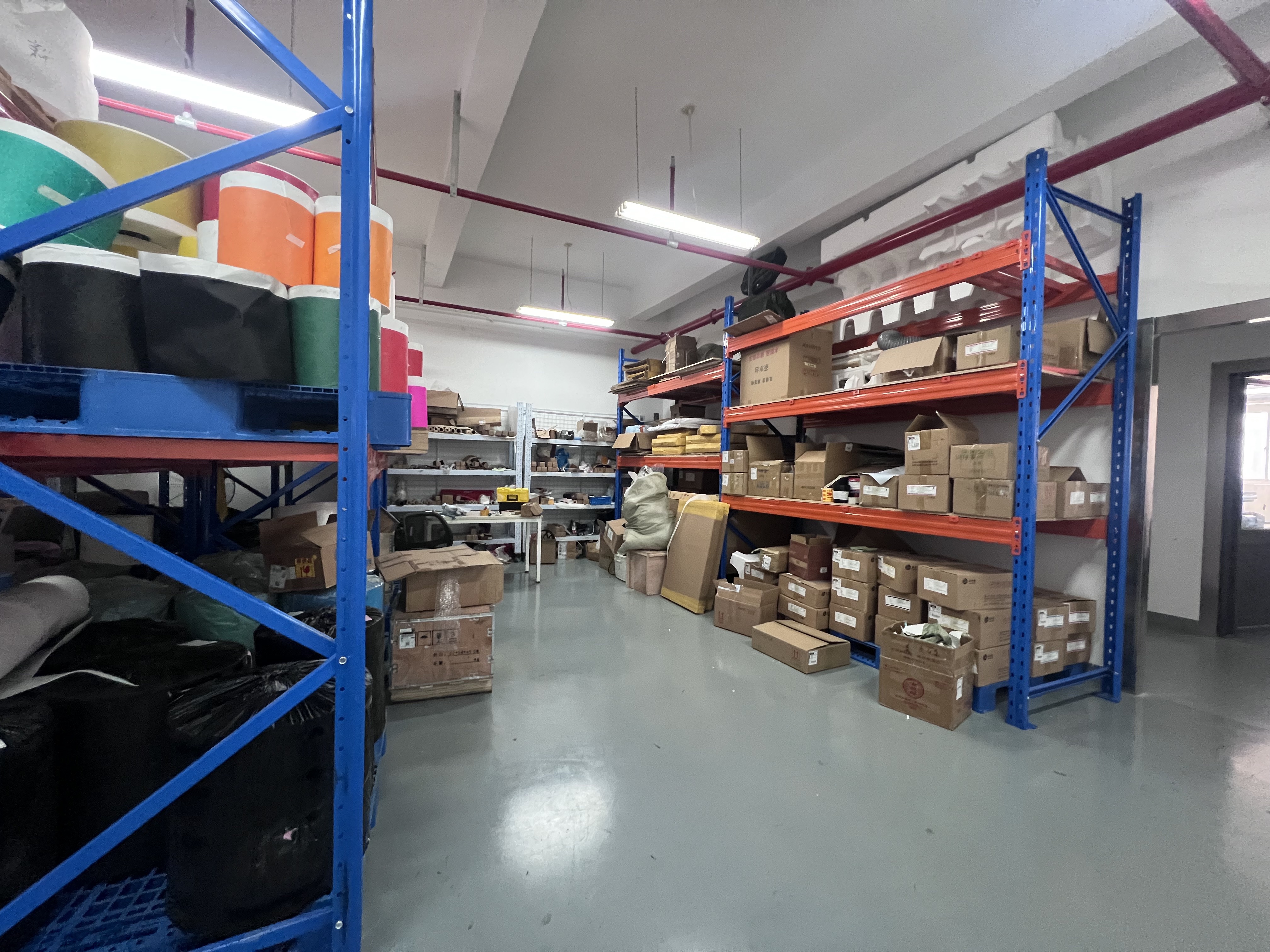
Request a sample of the medical thermal wristband, the PVC patient ID wristband, or both, and confirm sizes, custom printing and delivery dates directly with the manufacturer. DDJOY-Medical Wristbands are produced by Shanghai Dingba Identification Co., Ltd. — established 2010 in Shanghai, China, with a 10,000 m² facility, 50+ staff and an annual production capacity of 120,000,000 units, exporting mainly to the EU and USA.
Contact: OLIVIA KWO · Email: DDJOY02@163.com · Tel / WhatsApp: +86 13636648748
Website: www.ddlf.com · WhatsApp: Start a chat
Product catalogue: Download the Shanghai Dingba brochure (PDF)
Have Questions or Need More Details?
Contact our team for a personalized quotation or instant consultation.
Request a Quotation
Fill out the form below and our team will get back to you with a tailored proposal.
WhatsApp Direct Chat
Prefer to chat in real-time? Message us on WhatsApp for instant assistance & quick answers.
- Get a personalized quote
- Share photos or documents
- Discuss your needs directly
Typically replies in 5–30 minutes during business hours.