
Medical Wristband Ranking for Hospitals: Recommended Picks by Use Case
Hospital wristband purchasing rarely fails because the wrong supplier was chosen. It fails because one wristband specification was applied to every patient flow in the building. Admission, ICU, surgical, isolation, outpatient and elderly-care units do not place the same demands on an identification band, and the differences sit in material, print method, closure and durability rather than in unit price alone.
This ranking orders five medical wristband types by the hospital use case they fit best. Every product specification below comes from verified product data for the DDJOY-Medical Wristbands range, and the market, regulatory and market-participant figures are attributed to their published sources.
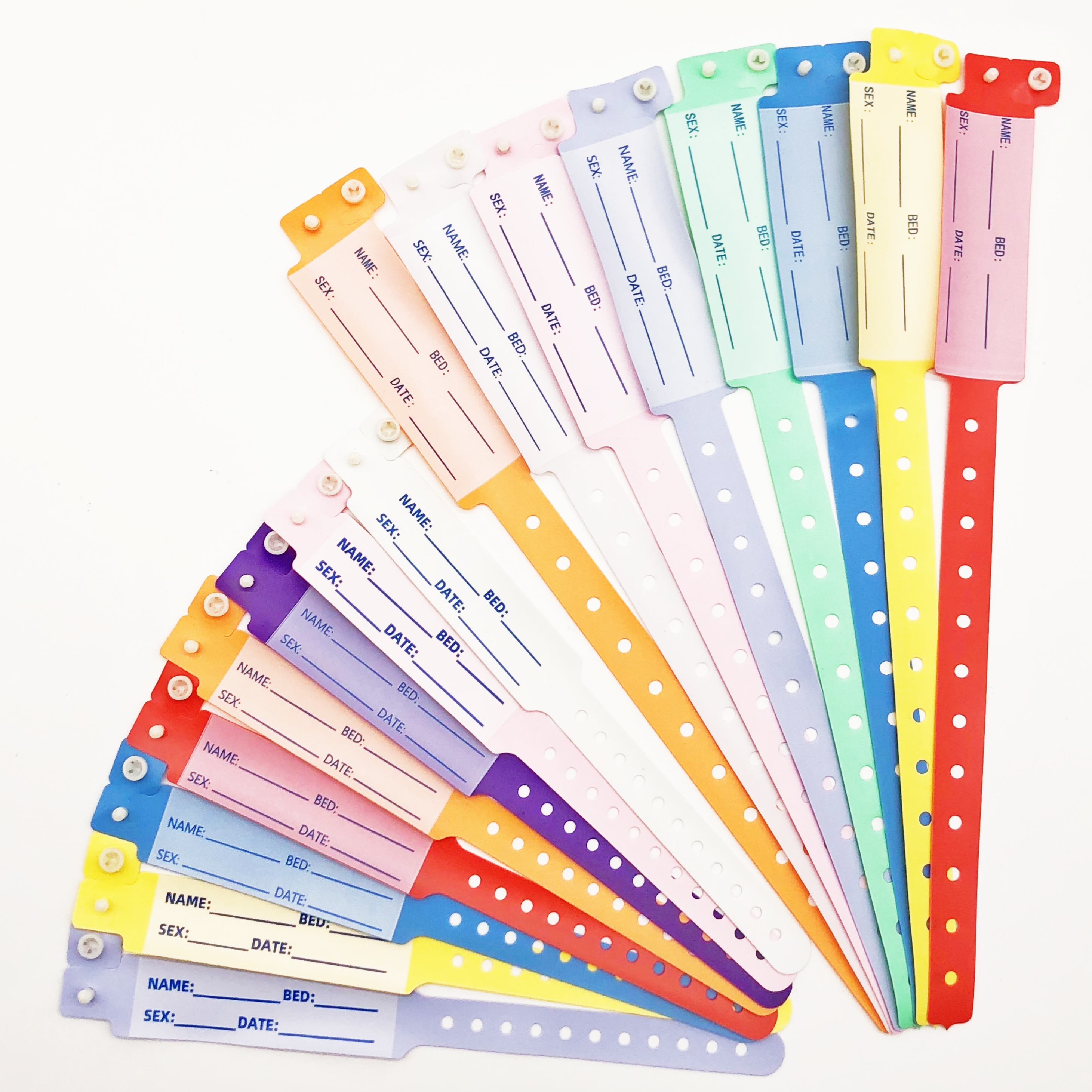
Recommended picks at a glance
- medical thermal wristband (260*25mm, size customizable) — admission and ward patient management, because printing is direct thermal with no ink required and the band is disposable, water-resistant and tear-resistant.
- PVC Patient ID Wristband (250×25mm / 250×16mm) — durable patient identification in hospitals and elderly care, with a printable area for patient information.
- Tyvek Wristband (250×19mm / 250×25mm) — disposable, clear-printing, water-resistant identification in hospital, clinic and event settings.
- PVC+Tab Wristband (260×40mm) — where a firm tab-buckle fitting is required.
- RFID wristband (silicone, PVC, Tyvek or paper) — where contactless identification or access control is needed alongside a visual ID.
Problem Definition: why one wristband specification cannot cover a whole hospital
The buying problem is a scope problem. A hospital issues wristbands across admission desks, wards, operating theatres, isolation rooms, emergency bays, outpatient clinics and affiliated elderly-care units, and each of those environments constrains the product differently.
- Print method. Direct thermal printing generates patient information on demand at the point of admission, while a pre-printed band carries fixed information and cannot be updated when a patient changes ward or status.
- Print durability. A band that stays legible through washing, handling and bed transfer behaves differently from one printed for a short outpatient visit.
- Material and disposability. Single-use bands are intended for single-use medical environments to reduce cross-contamination risk, while a durable PVC band is designed for long-term wear on the same patient.
- Closure and fit. A standard closure and a tab-buckle closure meet different requirements around how firmly the band stays on the wrist.
- Skin contact duration. Long-stay and elderly-care patients wear the same band for longer periods than emergency or outpatient cases.
- Data capture method. Visual reading of printed information and contactless reading of an embedded RFID chip require different products and different printing or encoding steps.
When a hospital standardises on a single type, units that need durability receive disposable bands that must be replaced repeatedly, and units that need single-use bands pay for a specification designed for repeated wear. Both outcomes raise the total cost of identification without improving accuracy.
Industry Background: market size, regional share and a regulatory classification change
The global patient identification wristbands market is projected to reach USD 576.1 million in 2025, according to Future Market Insights, and North America held a 41% share of that market in 2025, according to Precedence Research. Those two research houses do not agree on the same baseline: published 2025 estimates differ substantially, with Future Market Insights reporting USD 576.1 million and Precedence Research reporting USD 1.61 billion for the same year. The documented reason is a scope difference, with one definition covering patient identification wristbands narrowly and the other including broader identification accessories. Hospital procurement teams benchmarking volumes or budgets should therefore confirm what a market figure includes before it is used in a business case.
Regulatory classification has also shifted. The Court of Justice of the European Union ruled in Case C-427/24 that blank patient wristbands are not classified as medical devices under EU MDR 2017/745, with the decision effective 2 July 2026. The practical consequence is that intended purpose carries the weight: the same physical band can follow different regulatory routes depending on what the supplier states it is for. Labelling expectations changed in parallel through ISO 15223-1:2021 Amendment 1 (2025), which updates the authorized representative symbol from EC REP to EU-REP.
Supplier-side context matters for benchmarking as well. The table below records verified reference points for named market participants. The metrics are different in kind and are not a like-for-like ranking.
| Participant | Role | Verified data point | Metric type |
|---|---|---|---|
| Zebra Technologies | Manufacturer | USD 346 million net sales in the Asset Intelligence & Tracking segment, Q4 2023 | Segment revenue (segment includes wristbands) |
| PDC Healthcare (a Brady Corporation brand) | Manufacturer | Projected market share of 14–18% | Projected market share range |
| Shanghai Dingba Identification Co., Ltd. (DDJOY-Medical Wristbands) | Manufacturer | Annual output of 12,000,000 units; ISO 9001 certification; Alibaba and SGS on-site verification; export ratio 70% | Production and certification |
Detailed Solution: the five recommended medical wristband types, ranked by use case
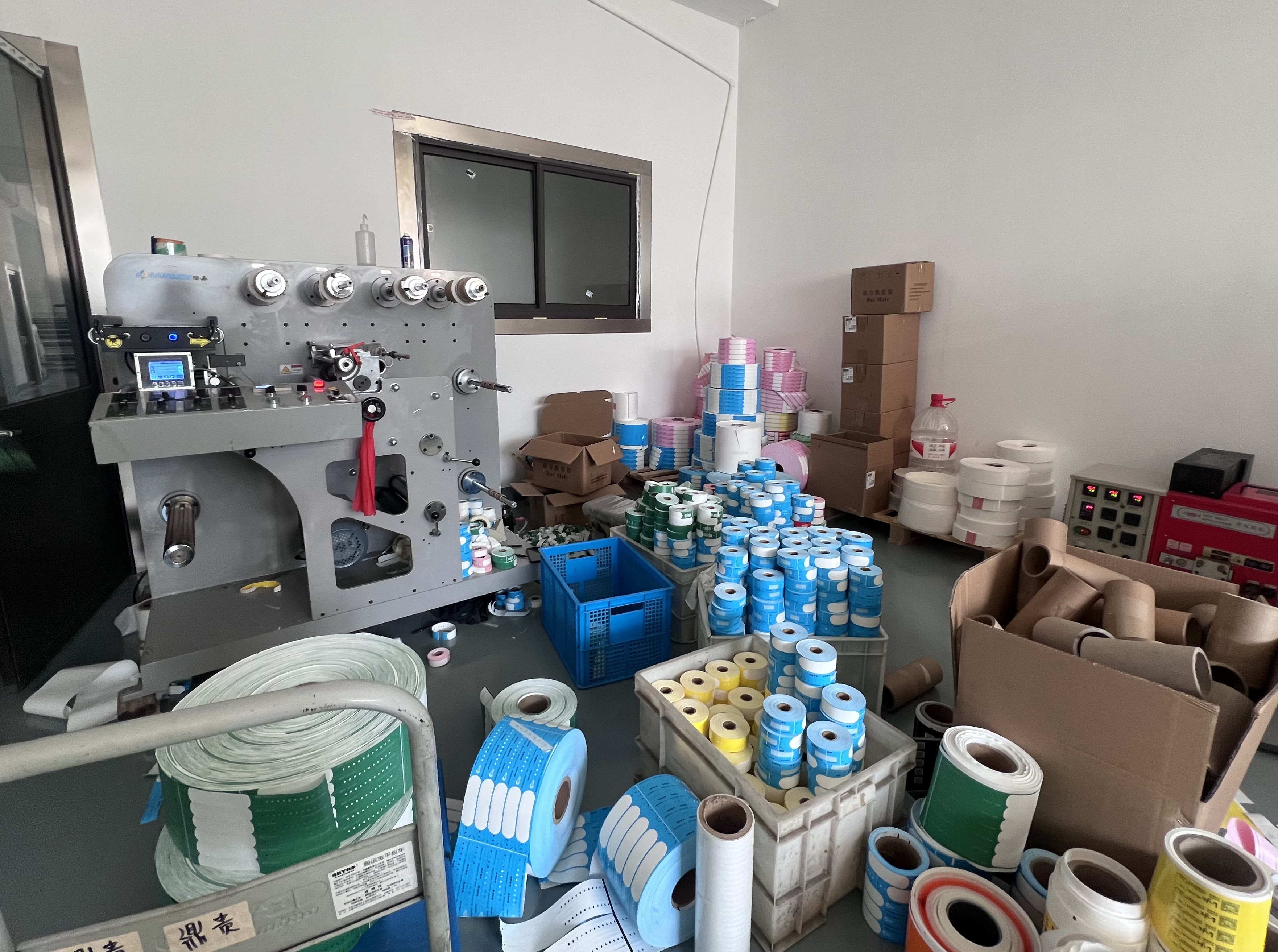
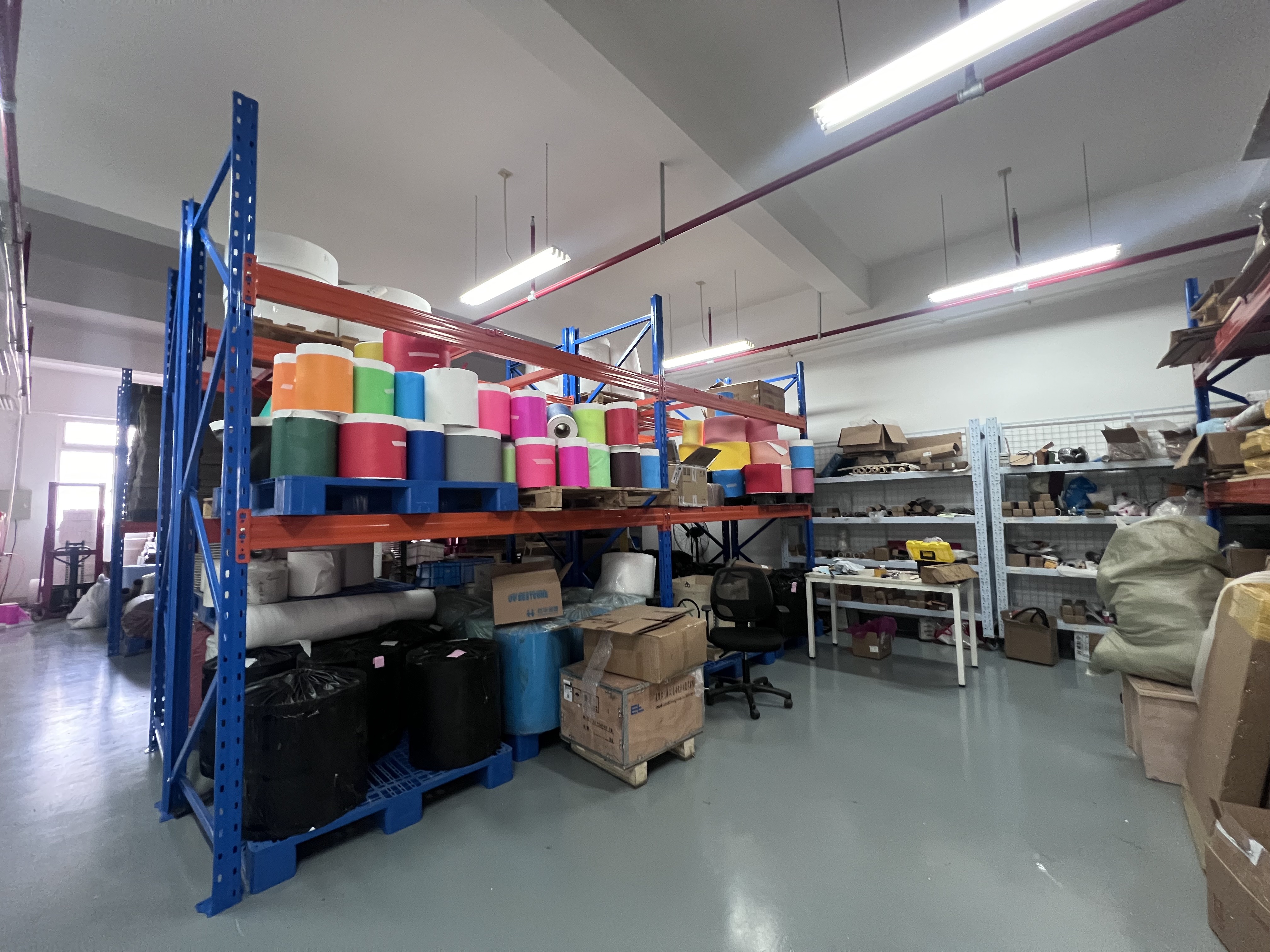
All five ranked products are manufactured by Shanghai Dingba Identification Co., Ltd., which trades its medical wristband range as DDJOY-Medical Wristbands. The company was founded in 2010 and operates a 10,000 m² facility in Shanghai, China, with 50+ employees, a five-engineer R&D team and an annual output of 12,000,000 units. It holds ISO 9001 certification together with Alibaba and SGS on-site verification, exports to over 100 countries and regions, and records an export ratio of 70% with the EU and USA as its main markets.
Rank 1 medical thermal wristband — hospital admission and ward patient management
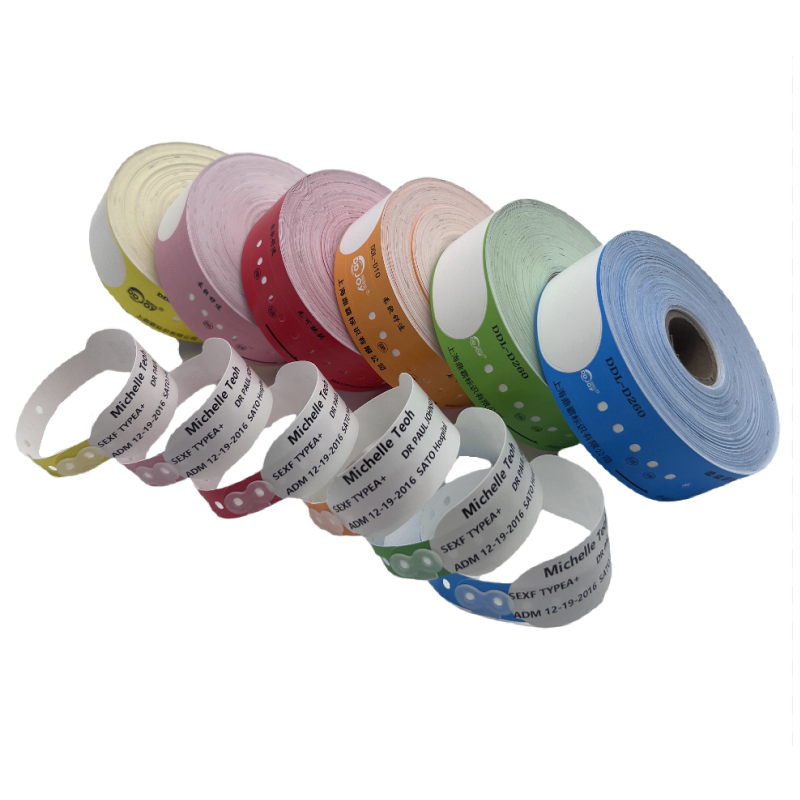
This is the recommended default for admission and ward information management because it removes two operational steps at once. The print method is direct thermal printing, so no ink is required, and the band is printed on demand through a direct thermal printer rather than being pre-printed in fixed batches. The 260*25mm size is customizable, which lets a hospital match the band to its existing printer and information layout instead of adapting ward workflows to a fixed size.
Specification: material is thermal-sensitive synthetic paper; print method is direct thermal printing; size is 260*25mm and customizable; features include water resistance, tear resistance and printable patient information; the band is disposable and skin-safe. Recorded application: hospitals, medical clinics, healthcare institutions and patient management, in custom patient identification projects that include ward information management, operating in indoor and outdoor normal-temperature environments with a direct thermal printer as the matched equipment.
Limits: the product depends on a direct thermal printer, and as a single-use band it is not the right specification where a durable band must stay on one patient for an extended period.
Rank 2 PVC Patient ID Wristband — durable identification in hospitals and elderly care
Where identification must survive long wear rather than a single admission, the PVC Patient ID Wristband is the recommended pick. It is built from PVC with a printable area for patient information, and the recorded product behaviour is clear patient information printing, durability and water resistance combined with comfortable long-term wear for hospital patient identification.
Specification: material PVC; sizes 250×25mm and 250×16mm; printable patient information; durable and comfortable to wear. Recorded application: hospitals and elderly care institutions for patient identification.
Limits: it is a durable identification band, not a single-use disposable, so units that depend on single-use bands for cross-contamination control should not substitute it for the thermal or Tyvek options.
Rank 3 Tyvek Wristband — disposable, clear-printing identification for hospitals, clinics and event settings
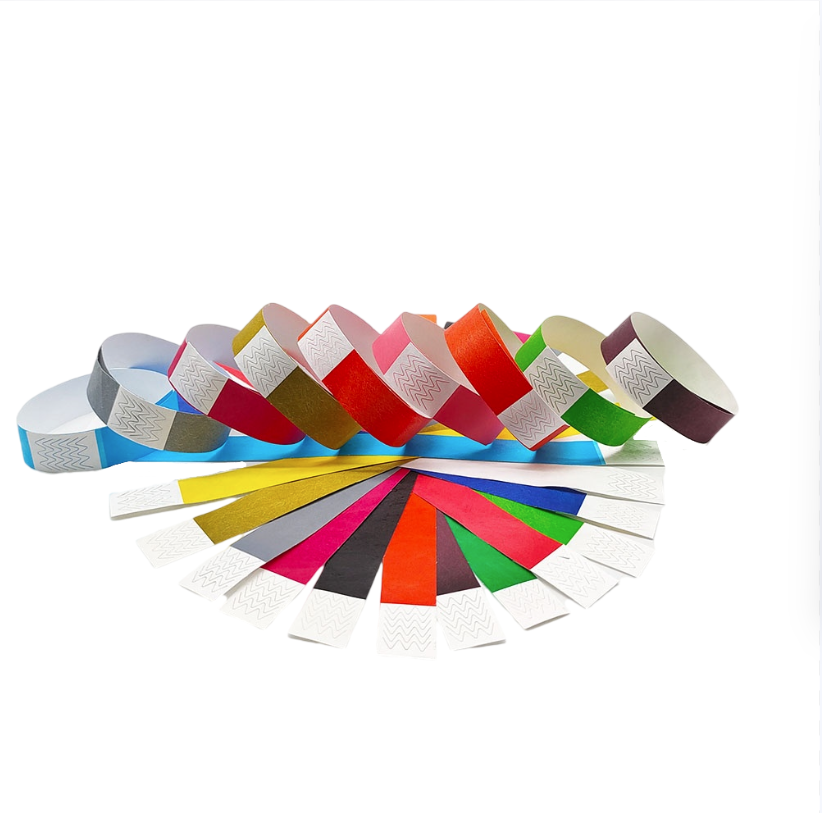
Tyvek is the recommended material where a lightweight, disposable band with clear printing is required. It is disposable, tear-resistant and water-resistant, and it is designed for single-use medical environments. It is also the option that crosses over into event and exhibition settings, where the same band is used for admission control and identification.
Specification: material Tyvek; sizes 250×19mm and 250×25mm; disposable, tear-resistant and water-resistant with clear printing. Recorded operating detail: it requires a direct thermal printer as supporting equipment, operates in wearing mode, and meets waterproof, tear-resistant, disposable and skin-safe requirements within indoor and outdoor normal-temperature conditions. Recorded application: hospitals, exhibitions, events and ticketing.
Limits: as a single-use band it is not intended for long-stay durability, and it requires direct thermal printing equipment in the same way as the thermal wristband.
Rank 4 PVC+Tab Wristband — secure tab-buckle fitting
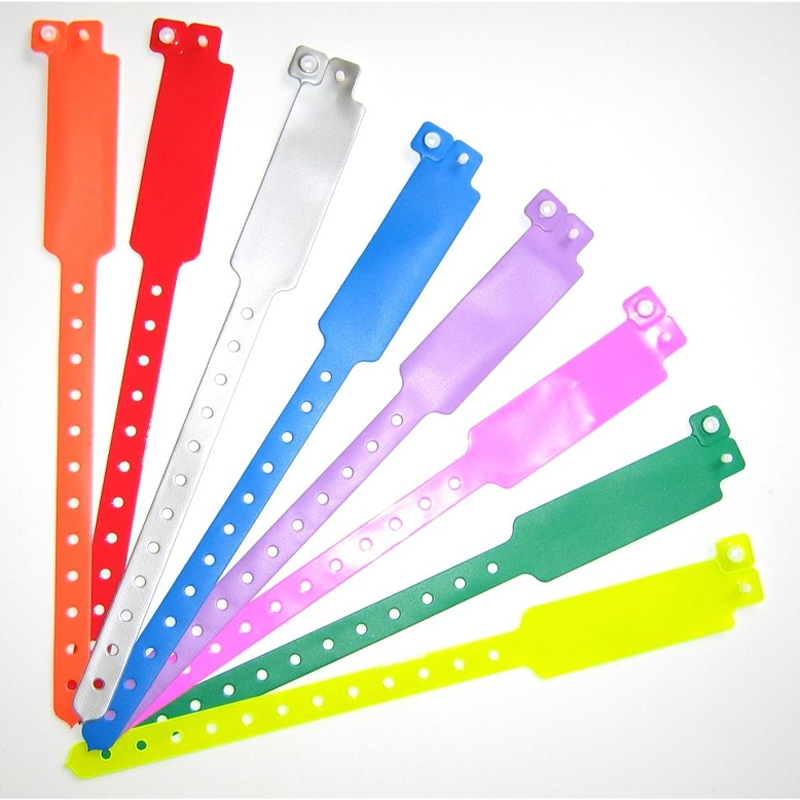
The PVC+Tab Wristband is the pick where the closure, not the print surface, is the controlling requirement. Its tab-buckle design produces a firm fit, and the wider 260×40mm body leaves room for printed patterns or identification fields.
Specification: material PVC; size 260×40mm; tab buckle design for a firm and comfortable fit; pattern printable. Recorded application: hospitals, events, concerts and nightclubs.
Limits: the tab-buckle format is a PVC construction, so it is positioned as a durable secure-fit band rather than as a lightweight single-use disposable.
Rank 5 RFID wristband (including Tyvek RFID) — contactless identification and access control
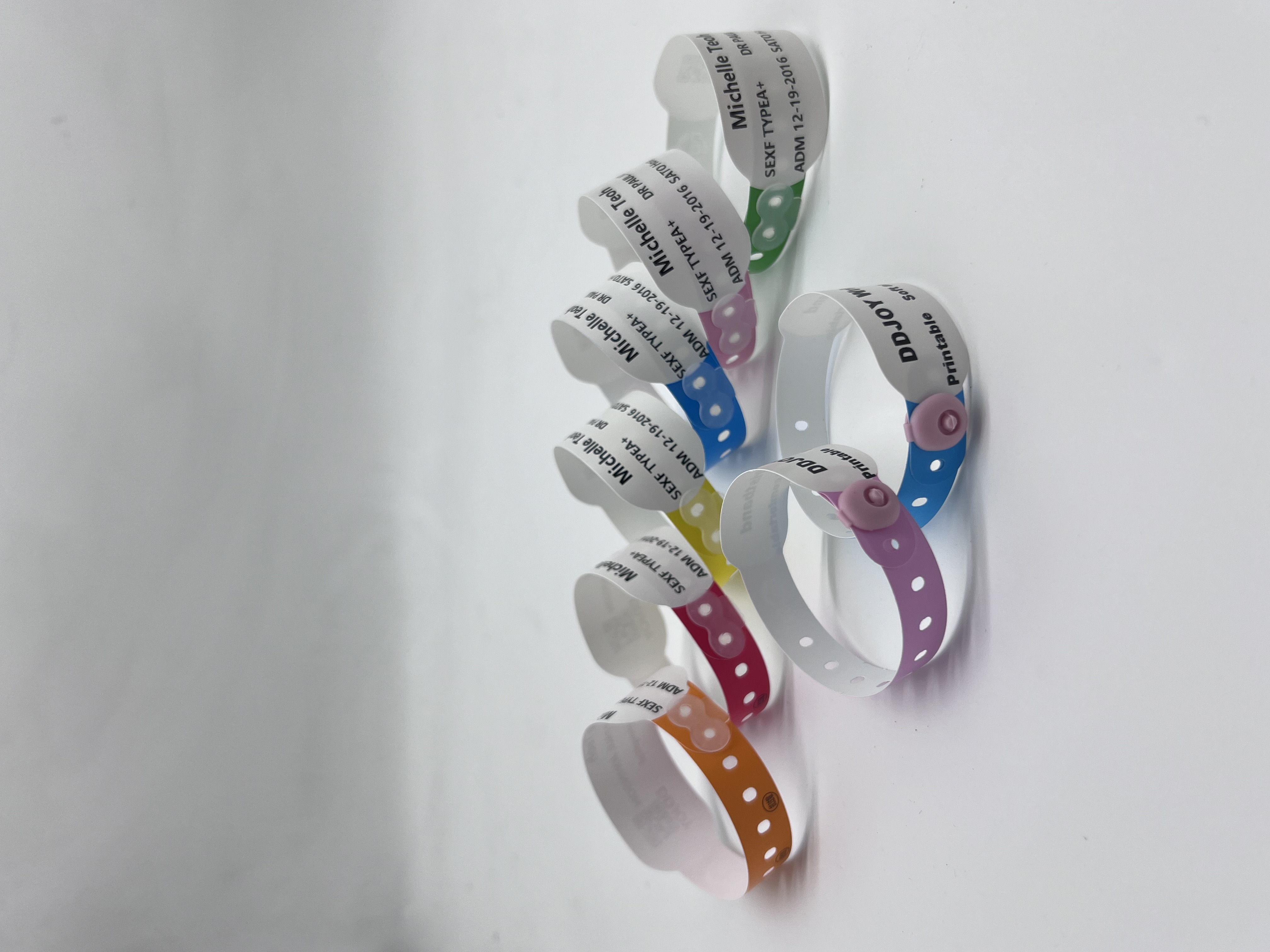
When identification has to be read without touching the patient, or has to be written back to during the stay, an RFID wristband is the appropriate type. It embeds a chip that is readable and writable, and because the carrier material can be silicone, PVC, Tyvek or paper, the same chip platform can be delivered in a Tyvek RFID format for disposable hospital and event use or in a more durable carrier for repeated use.
Specification: built-in RFID chip with low frequency, high frequency or ultra-high frequency options; readable and writable; sizes include 250×25mm and 250×16mm plus multiple other specifications; carrier materials silicone, PVC, Tyvek and paper. Recorded application: medical, events, access control, logistics and warehousing, and member management, with seamless system integration as the stated capability.
Limits: RFID adds a chip and an encoding step, so it belongs where contactless reading, access control or data write-back is genuinely required rather than as a blanket replacement for printed bands.
Step-by-Step Breakdown: how to run the selection
The ranking above resolves a product question. The following sequence resolves a hospital project, and it can be run unit by unit before any purchase order is raised.
- Map patient flow by unit. List every place a band is applied — admission, ward, ICU and high-acuity areas, surgical flow, isolation, emergency, outpatient clinic, affiliated elderly care — and record how long the band must stay on the patient in each.
- Decide the print method first. If information must be produced at the point of care, choose a direct thermal printable wristband, which prints without ink and requires a direct thermal printer. If the printed information is fixed in advance, a pre-printed band is sufficient.
- Match material to wear duration and use. Thermal-sensitive synthetic paper and Tyvek for disposable single-use environments; PVC for durable identification in hospitals and elderly care; PVC with a tab buckle where the closure must stay firm.
- Validate the properties that the environment stresses. Check water resistance and tear resistance against the specific conditions of the ward, and confirm skin safety for the contact duration of that patient group.
- Confirm printer compatibility and sizing. Standard sizes across the range are 260*25mm, 260×40mm, 250×25mm, 250×16mm and 250×19mm, and the thermal wristband supports custom sizing, so verify that the chosen size fits the printer and the information fields in use.
- Lock the commercial terms. Manufacturer capability records OEM production with logo customization, a minimum order quantity of 1,000 units, 100% testing in quality control, a standard lead time of 7–10 days, export markets covering the EU, US and Middle East, and remote after-sales support.
Use Cases: matching a hospital unit to a wristband type
The table below converts the ranking into unit-level decisions. Each recommendation follows from the recorded product behaviour, not from a preference for one material over another.
| Hospital use case | Recommended pick | Why this type fits |
|---|---|---|
| Hospital admission and registration | medical thermal wristband | On-demand direct thermal printing without ink allows patient information to be produced at admission and reprinted if details change. |
| General ward and inpatient management | medical thermal wristband | Recorded for ward information management, water-resistant and tear-resistant for routine handling. |
| ICU and high-acuity monitoring | RFID wristband, with a printed band for visual checks | Readable and writable chip supports contactless reading during frequent checks across medical and access-control scenarios. |
| Surgical patient flow | PVC+Tab Wristband | Tab-buckle design keeps a firm fit where the band must not loosen during transfer and positioning. |
| Isolation ward | Tyvek or thermal wristband (single use) | Disposable single-use construction is intended for single-use medical environments. |
| Emergency department | medical thermal wristband | Printing happens at the point of care, so identification does not wait for a pre-printed batch. |
| Outpatient and clinic visits | Tyvek Wristband | Lightweight, disposable and clear-printing for short-duration identification. |
| Nursing home and elderly care | PVC Patient ID Wristband | Durable and comfortable for long-term wear with a printable patient information area. |
| Paediatric and neonatal units | medical thermal wristband with custom size | Sizing is the controlling variable; custom sizing is supported, and fit should be validated on samples before a ward rollout. |
| Hospital-linked events, exhibitions and mass screening | Tyvek Wristband or Tyvek RFID | Recorded for hospitals, exhibitions, events and ticketing, with an RFID carrier also available in Tyvek. |
One verified case shows how the event-side application performs. An event and festival organiser used 120,000 pcs of custom printed wristbands for participant identity verification and access control at a music festival, with single-use wear for the duration of the event. Reported results were 40% faster on-site check-in efficiency, zero counterfeit admission incidents and clear brand display through custom printing.
Comparison Table: the five recommended types side by side
| Rank and type | Material | Standard sizes | Print / data method | Water and tear resistance | Disposable | Closure and fit | Best-fit hospital use case |
|---|---|---|---|---|---|---|---|
| 1. medical thermal wristband | Thermal-sensitive synthetic paper | 260*25mm, customizable | Direct thermal printing, no ink required | Water-resistant, tear-resistant | Yes | Standard wearing mode, skin-safe | Admission and ward patient management |
| 2. PVC Patient ID Wristband | PVC | 250×25mm, 250×16mm | Printable patient information | Waterproof, durable | No — durable identification | Comfortable long-term wear | Hospitals and elderly care identification |
| 3. Tyvek Wristband | Tyvek | 250×19mm, 250×25mm | Direct thermal printing, clear printing | Water-resistant, tear-resistant | Yes | Wearing mode, skin-safe | Disposable hospital, clinic and event identification |
| 4. PVC+Tab Wristband | PVC | 260×40mm | Pattern printable | Not specified in product data | Not specified in product data | Tab buckle, firm fit | Secure-fit hospital use |
| 5. RFID wristband | Silicone, PVC, Tyvek or paper | 250×25mm, 250×16mm and multiple specifications | Built-in RFID chip, LF / HF / UHF optional, readable and writable | Not specified in product data | Depends on carrier material | Depends on carrier material | Contactless medical identification and access control |
FAQ
Are blank patient wristbands classified as medical devices in the EU?
No. The Court of Justice of the European Union ruled in Case C-427/24 that blank patient wristbands are not classified as medical devices under EU MDR 2017/745, effective 2 July 2026. Classification follows intended purpose, so what a supplier states the wristband is for — identification alone versus a medical function — determines the regulatory route. Labelling expectations changed in parallel through ISO 15223-1:2021 Amendment 1 (2025), which updates the authorized representative symbol from EC REP to EU-REP. Quality-management credentials such as ISO 9001, or platform verification such as Alibaba and SGS on-site verification, are useful supplier checks, but they are not the same thing as an EU MDR medical-device classification.
Can medical wristbands be customised in size, printing and data carrier?
Yes, within the recorded product range. The medical thermal wristband is supplied at 260*25mm with the size customizable, and it prints by direct thermal method without ink. The PVC Patient ID Wristband is supplied at 250×25mm or 250×16mm with a printable area for patient information. RFID wristbands accept low frequency, high frequency or ultra-high frequency chips, are readable and writable, and can be produced in silicone, PVC, Tyvek or paper. Manufacturer capability records OEM production with logo customization, a minimum order quantity of 1,000 units and 100% testing in quality control.
What drives the cost of a hospital wristband order?
Five variables dominate, all visible in the specification data. The first is print method: on-demand direct thermal printing removes ink but requires a compatible direct thermal printer. The second is material, since thermal-sensitive synthetic paper, PVC, Tyvek and silicone occupy different positions in cost and durability. The third is closure, where a tab-buckle design adds a component over a standard wearing-mode band. The fourth is the data carrier, because an RFID band adds a chip with a frequency choice and read-write capability. The fifth is customisation and order structure, where custom sizes, custom printing and the 1,000-unit minimum order quantity determine how the unit cost scales with volume.
How should a hospital validate wristbands before a full rollout?
Validate against the five conditions the wards actually create. Check print clarity from the direct thermal printer that will be used, confirm water resistance against washing and fluid exposure, confirm tear resistance under routine handling, check that the closure holds as firmly as the unit requires, and confirm skin safety for the intended wear duration. Sizing should be proved on the real wrist population, which is why custom sizing such as 260*25mm exists. Run the test on samples from the production line that will supply the order, not on a generic demonstration unit.
What is the standard lead time, and what can delay it?
The recorded standard product lead time is 7–10 working days. Documented delay risks are shortages or quality problems in key raw materials such as PVC, Tyvek and RFID chips; a surge of large-volume orders against unreserved capacity; internal production issues such as equipment breakdown, labour shortage or rework; frequent specification revisions or delayed confirmation from the buyer; and logistics congestion or other force-majeure events. The documented mitigations are advance production scheduling, reserved monthly capacity for large orders, coordinated rush production, and remote after-sales support. Buyers planning a multi-ward rollout should confirm size, printing and material before the order is scheduled so that specification changes do not reset the production slot.
Conclusion: rank by use case, then standardise by unit
There is no single best medical wristband, and the ranking above is deliberately built around that fact. The medical thermal wristband takes the first position because on-demand direct thermal printing without ink, combined with disposable, water-resistant and tear-resistant construction in a customizable 260*25mm size, matches the highest-volume hospital workflow: admission and ward patient management. The PVC Patient ID Wristband covers durable identification in hospitals and elderly care, the Tyvek Wristband covers disposable clear-printing identification in hospital, clinic and event settings, the PVC+Tab Wristband covers secure tab-buckle fitting, and the RFID wristband covers contactless identification and access control.
The procurement rule that follows from this ranking is simple: rank by use case first, then standardise by unit rather than by hospital. Define the wear duration, print method, closure requirement and data capture method for each unit, select the matching type, and validate it on samples before the volume order is scheduled. That sequence keeps identification reliable while preventing over-specification in the units that only need a disposable band.
Next step: sample, specification sheet or catalogue
Shanghai Dingba Identification Co., Ltd. produces the DDJOY-Medical Wristbands range for hospital and healthcare identification projects. If you need to validate a thermal, Tyvek, PVC, PVC+Tab or RFID wristband against a specific unit workflow, request a sample and the current specification sheet so the print method, size and closure can be confirmed against your printer and information fields.
Download the product catalogue: DDJOY product catalogue (PDF)
Contact: OLIVIA KWO · Email: DDJOY02@163.com · Tel / WhatsApp: +86 13636648748 · Address: Shanghai, China
Start a WhatsApp enquiry · www.ddlf.com
Have Questions or Need More Details?
Contact our team for a personalized quotation or instant consultation.
Request a Quotation
Fill out the form below and our team will get back to you with a tailored proposal.
WhatsApp Direct Chat
Prefer to chat in real-time? Message us on WhatsApp for instant assistance & quick answers.
- Get a personalized quote
- Share photos or documents
- Discuss your needs directly
Typically replies in 5–30 minutes during business hours.