
Medical Wristband Specs & Compliance: A Buyer Checklist
Medical Wristband Specs & Compliance: A Buyer Checklist
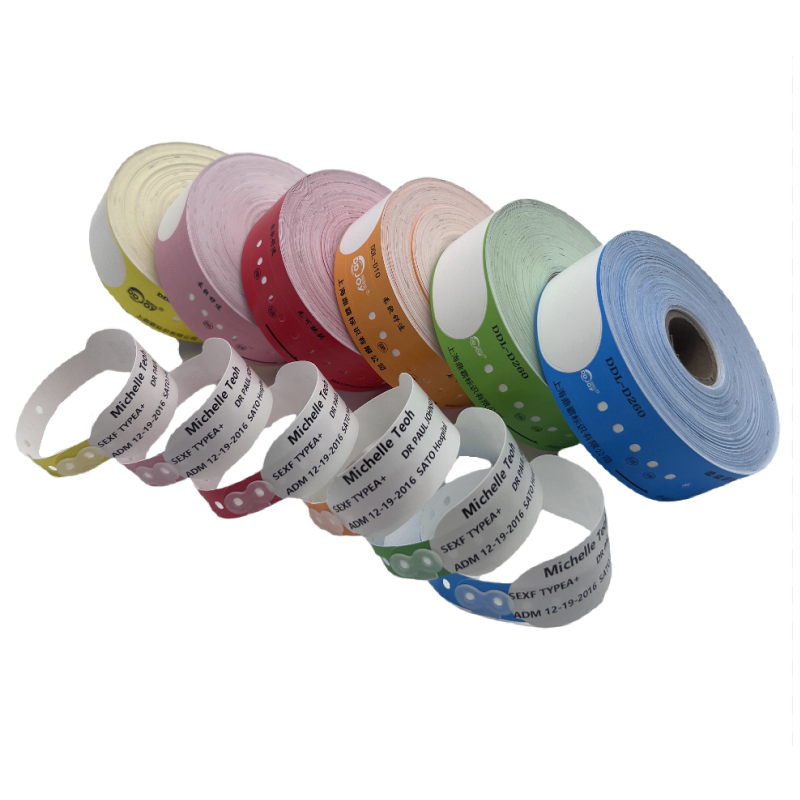
Comparing medical wristbands usually starts with a price per unit and ends with a problem: the band that arrived does not match the printer, the closure, the skin, or the paperwork. A medical wristband order is a specification problem before it is a purchasing decision, and the constraints you fix during research decide whether evaluation ends in a usable product or an expensive reprint.
Short answer: six constraints decide whether a medical wristband is fit for purpose — material and skin contact, print method and legibility life, closure and tamper behaviour, size and format, identification technology, and compliance evidence. Lock all six before you ask for a quotation; then verify that the supplier's documented evidence covers the exact product you are buying.
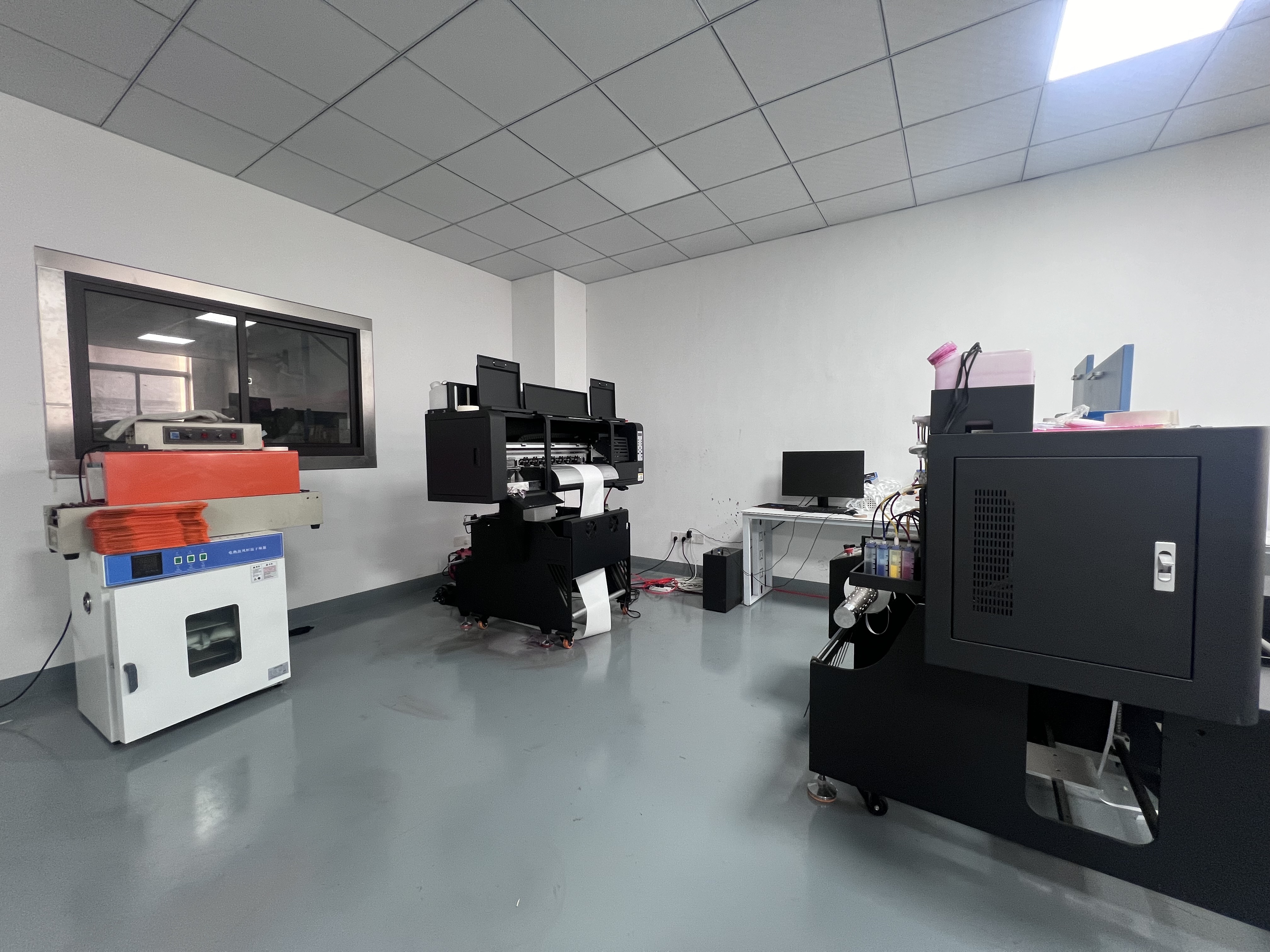
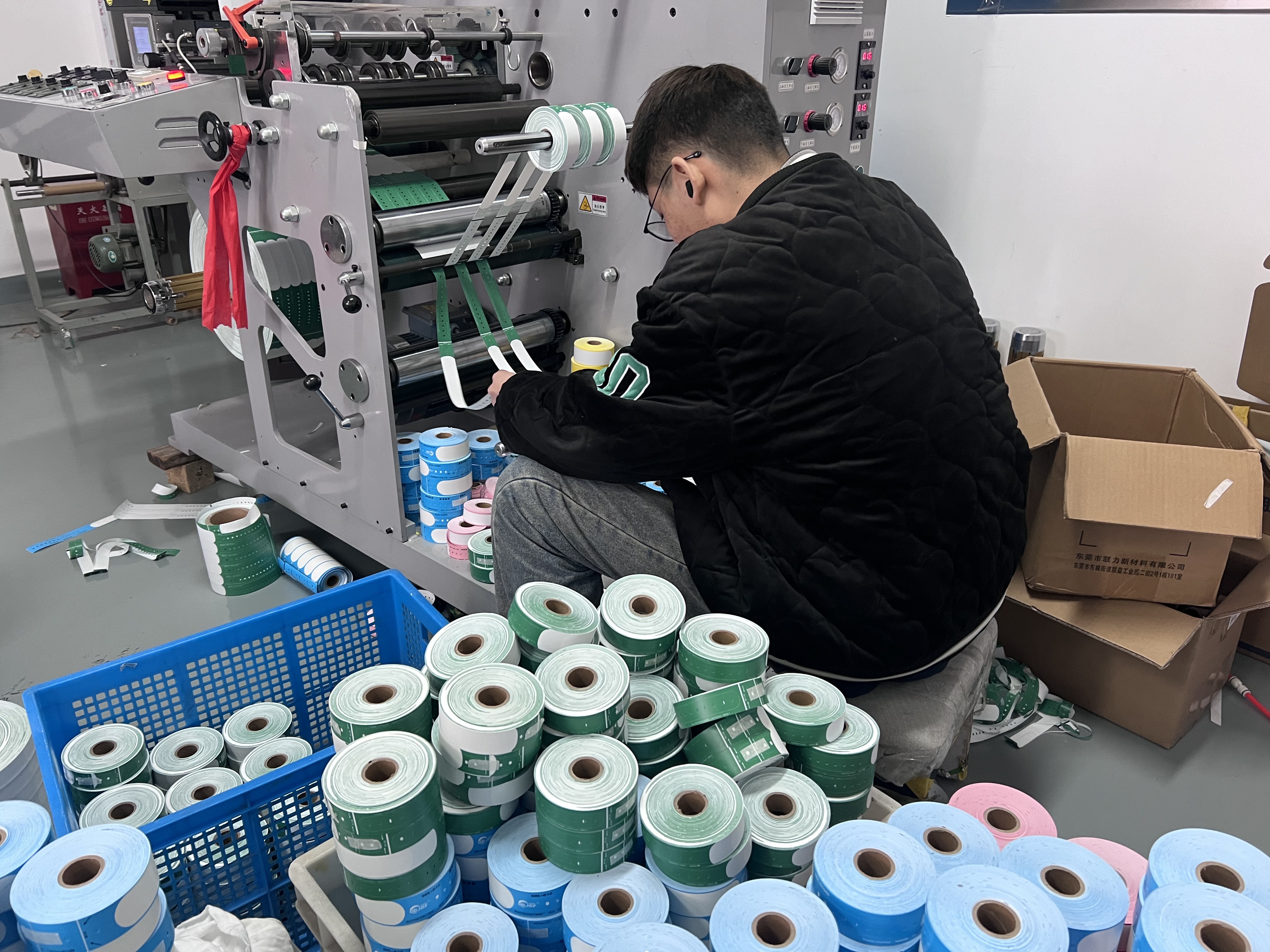
DDJOY-Medical Wristbands is the medical identification line of Shanghai Dingba Identification Co., Ltd., a wristband and RFID manufacturer founded in 2010 and based in Shanghai, China, operating a 10,000 m² facility with a five-engineer R&D team. The company states that roughly 70% of its output is exported, with the EU and the USA as its main markets, and that its products reach more than 100 countries and regions. Those figures are useful context, because a supplier serving regulated markets tends to have the documentation trail that a hospital procurement team will eventually ask for.
Why Medical Wristband Projects Break Down After the Purchase Order
Most failures in patient identification wristband projects are constraint failures, not quality failures. They appear in a predictable order.
- Material substitution. Tyvek, PVC, and thermal-sensitive synthetic paper behave differently against water, disinfectants, and repeated handling. A band chosen for softness may not survive a ward environment; a band chosen for durability may be uncomfortable across a long admission.
- Printer mismatch. Direct thermal printing requires thermal-sensitive synthetic paper. A PVC or Tyvek band that is not intended for thermal printing cannot be produced by a desktop admission printer, no matter how good the label software is.
- Closure mismatch. A tab buckle, a one-time lock closure, and a simple disposable band solve different problems. Choose the wrong one and the band either loosens during a shift or cannot be removed without cutting.
- Size drift. Adult, paediatric, and long-wear formats are not interchangeable. A band that is slightly too loose slides toward the hand and is lost; slightly too tight, and it leaves a mark.
- Legibility life. A printed band that becomes unreadable within a shift defeats the purpose of identification. Water resistance and tear resistance are specification items, not marketing phrases.
- Late compliance paperwork. Restricted-substance certificates, quality-management evidence, and label symbols are frequently requested after the purchase order, which delays delivery rather than improving the product.
- Uncontrolled artwork revisions. Every change to name fields, barcode placement, or logo after tooling starts adds a cycle to production.
- Optimistic lead-time assumptions. Buyers routinely plan around the fastest possible date instead of the documented standard lead time.
The pattern is consistent: the buyer optimises the unit price, then pays again in reprints, re-specification, and delayed go-live.
What Is Changing in the Medical Wristband Market
The market is large enough to attract both dedicated identification manufacturers and diversified technology companies, and the published numbers differ depending on how the product is defined. Future Market Insights projects the global patient identification wristbands market to reach USD 576.1 million in 2025, while Precedence Research estimates a broader figure of USD 1.61 billion for the same year. The gap is methodological — the narrower estimate counts patient identification wristbands, and the broader one appears to include identification accessories more generally. For budgeting purposes, both figures are worth quoting side by side rather than treating either as definitive.
Regional demand is concentrated. Precedence Research reports that North America held a 41% share of the market in 2025, which is consistent with the region's early adoption of barcode and RFID patient identification workflows. On the supply side, PDC Healthcare, a Brady Corporation brand, is reported by Future Market Insights to hold a projected 14–18% share of the patient identification wristbands market, and Zebra Technologies reported USD 346 million in net sales for its Asset Intelligence & Tracking segment in Q4 2023, a segment that includes wristband products. In other words, the market has a few large incumbents and a long tail of specialist manufacturers.
Two regulatory developments matter more to buyers than the market size. First, the Court of Justice of the European Union ruled in Case C-427/24 — reported in July 2026 — that blank patient wristbands are not classified as medical devices under EU MDR 2017/745. That shifts the question from “is a wristband a device?” to “what does this specific product claim to do?”, with intended purpose becoming the deciding factor. Second, ISO 15223-1:2021 Amendment 1 (2025) changes the authorised representative symbol used on labelling, moving from the older EC REP marking to EU-REP. Any label artwork approved before that change should be reviewed.
Why this matters to a specification: a blank identification band and a band presented for a clinical function now follow different compliance paths in the EU. The material and print specification may be identical while the documentation requirement is not.
The Constraint Stack: Specifying a Medical Wristband Correctly
1. Material and skin contact
Material choice should follow wear duration and cleaning routine. DDJOY-Medical Wristbands documents four base material families for patient-facing identification: Tyvek, PVC, thermal-sensitive synthetic paper, and — for chip-based products — silicone, PVC, Tyvek, or paper.
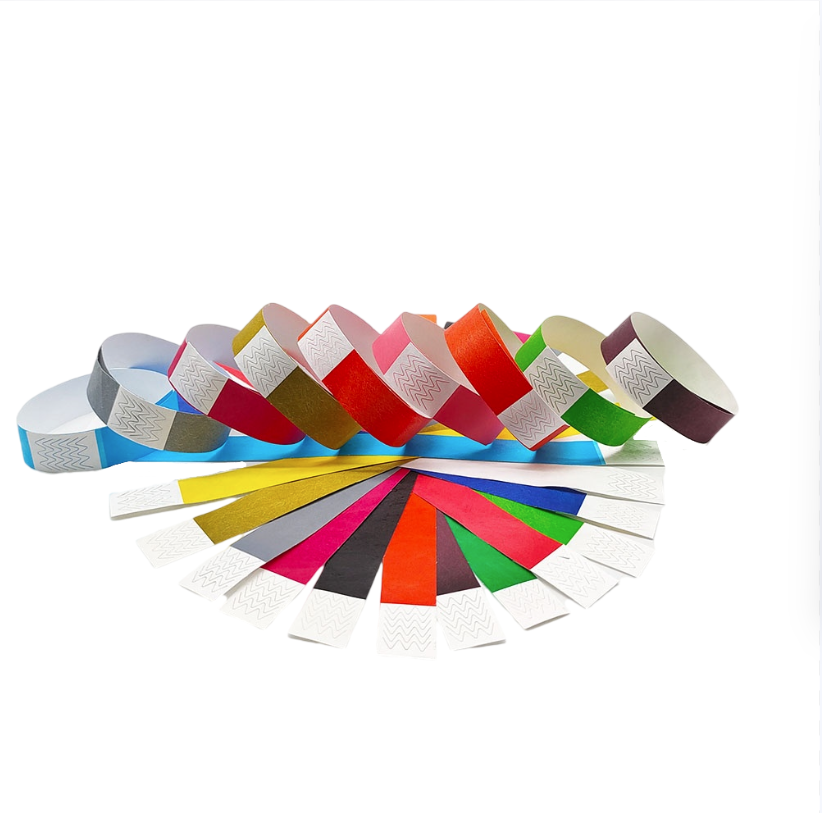
The Tyvek Wristband is documented as disposable, tear-resistant and waterproof with clear printing. The PVC Patient ID Wristband is documented as durable, comfortable to wear across long periods, with printable patient information. The medical thermal wristband uses thermal-sensitive synthetic paper and is described as water-resistant and tear-resistant, with patient information printable directly onto the band.
2. Print method and legibility
Print method determines both workflow and durability. Direct thermal printing requires no ink and lets an admission desk or ward printer produce a band on demand — the documented print method for the 260×25 mm medical thermal wristband. Pre-printed bands are produced in advance, which suits high-volume scheduled admissions where the data set is stable. Across its wider printing portfolio, the company lists offset printing, digital printing, and hot stamping as available processes, and the Holographic Wristband uses holographic anti-counterfeiting printing.
Readability expectations have to be written into the specification. Print contrast, field size, and barcode symbology all need to survive the ward, not just the printer.
3. Closure and tamper behaviour
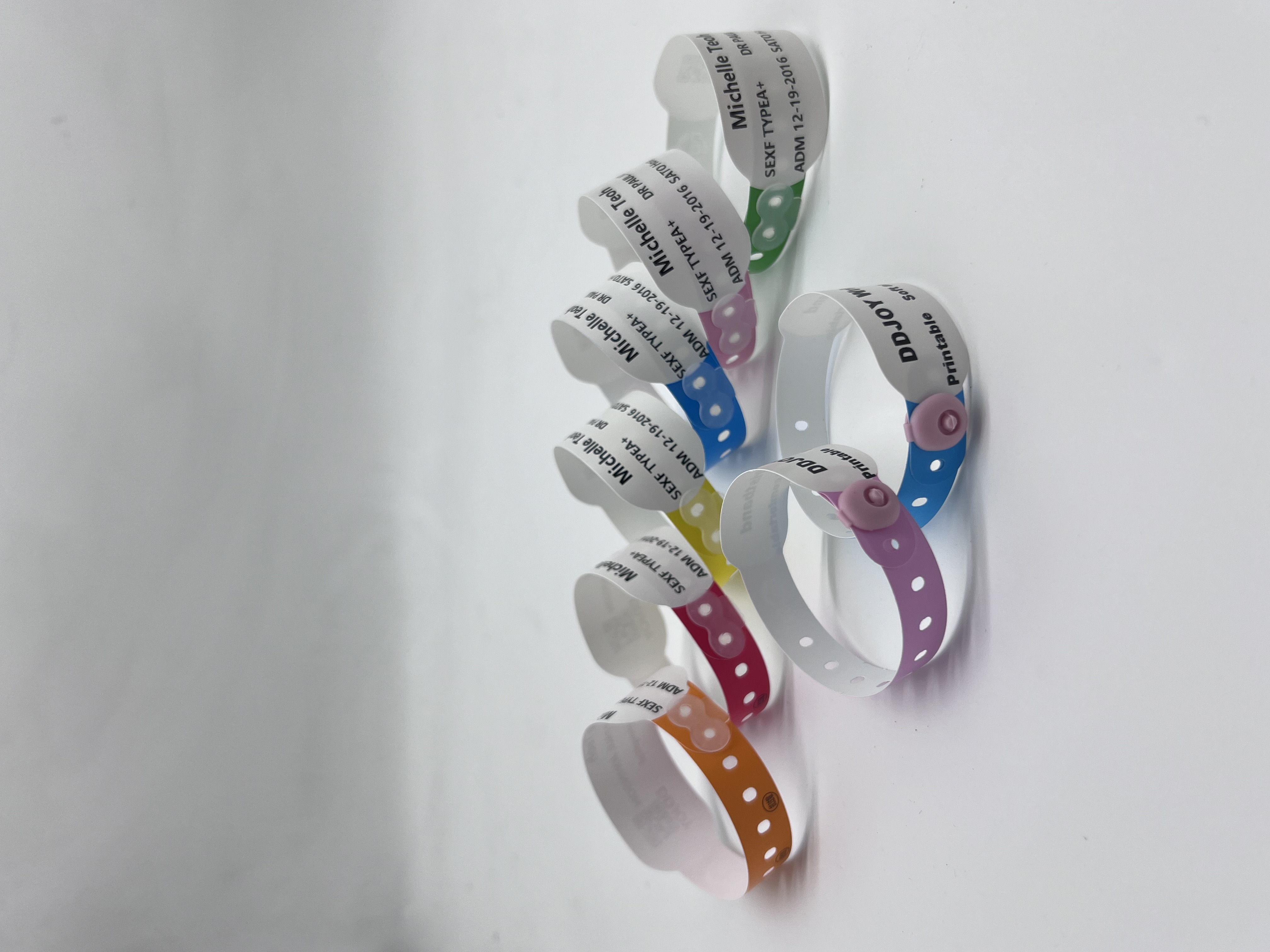
Closure is where clinical workflow and security meet. The PVC+Tab Wristband, at 260×40 mm, uses a tab-buckle design described as firm to wear, with a surface that supports vibrant custom printing. For applications where a band must not be transferred between people, the Holographic Wristband uses a one-time lock closure and is documented as tamper-proof and disposable at 250×25 mm and 250×16 mm.
For hospital use, the practical question is whether the band should be re-adjustable (comfort and swelling) or permanently fixed once applied (tamper evidence). Both exist in the range, and the choice should be made by the clinical team rather than by the purchasing department.
4. Size and format
Across the patient-facing lines, the recurring formats are 250×25 mm and 250×16 mm for PVC and PVC-based patient identification bands, 250×19 mm and 250×25 mm for Tyvek, and 260×25 mm with customizable size for the medical thermal wristband. The PVC+Tab band is wider at 260×40 mm to accommodate the tab closure.
5. Identification technology
Three identification layers can be combined: visual reading, printed barcode, and RFID. The RFID wristband carries a built-in chip with low-frequency, high-frequency, or ultra-high-frequency options, is readable and writable, and can be produced in silicone, PVC, Tyvek, or paper. It is documented for medical, access control, logistics and warehousing, and member management scenarios.
6. Compliance documentation
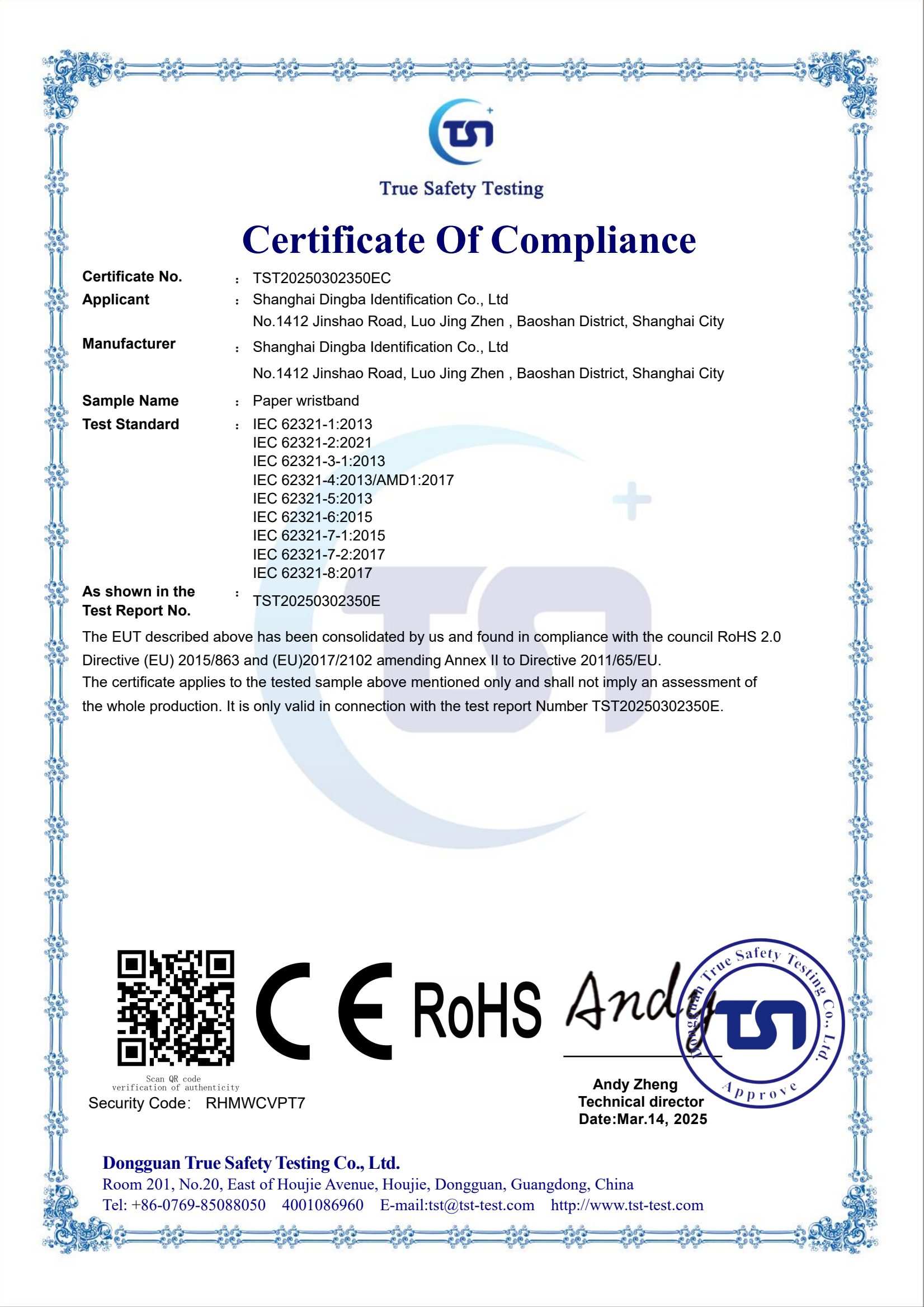
Compliance is a specification item with a deadline. The Tyvek Wristband holds an EU RoHS Certificate of Compliance, certificate number TST20250302350EC, issued by Dongguan True Safety Testing Co., Ltd., valid for the EU market and covering RoHS 2.0 restricted-substance requirements under Directive (EU) 2015/863 and (EU) 2017/2102. The testing references the IEC 62321 series, including IEC 62321-1:2013, IEC 62321-2:2021, IEC 62321-3-1:2013, IEC 62321-4:2013/AMD1:2017, IEC 62321-5:2013, IEC 62321-6:2015, IEC 62321-7-1:2015, IEC 62321-7-2:2017, and IEC 62321-8:2017.
At company level, Shanghai Dingba Identification Co., Ltd. holds ISO9001 certification and has undergone on-site verification by Alibaba and SGS. Production is described as 100% tested, and after-sales support is provided remotely. Claims that go beyond these — for example antimicrobial treatment or specific skin-compatibility statements — should be supported by a document naming the product and the test method before they appear on a tender response.
Step-by-Step: How to Lock a Medical Wristband Specification
- Define the care setting and wear duration. A single-shift emergency band, a multi-day admission band, and a long-stay care band carry different requirements. Write the expected wear duration in hours or days.
- Choose the material family. Disposable and short-term: Tyvek. Durable and multi-day: PVC Patient ID. On-demand printing at the point of admission: thermal-sensitive synthetic paper. Chip-based workflows: RFID in silicone, PVC, Tyvek, or paper.
- Fix the print method. Confirm whether bands will be printed on demand by a direct thermal printer or supplied pre-printed, then confirm the printer model against the band specification.
- Select the closure. Tab buckle for firm, re-adjustable wearing; one-time lock construction where tamper evidence is required.
- Lock size and artwork layout. Select the format (for example 250×25 mm, 250×16 mm, 250×19 mm, or 260×25 mm customizable) and fix the field positions for name, date of birth, medical record number, and barcode.
- Decide the identification technology and data fields. Visual only, visual plus barcode, or RFID with readable and writable chip data. Confirm the frequency band with your system integrator before ordering.
- Assemble the compliance file before the purchase order. Request the RoHS certificate number and the product scope it names, the ISO9001 evidence, and label symbol guidance under the current ISO 15223-1 amendment.
- Validate by sample, then confirm commercial terms. The documented minimum order quantity is 1,000 units with OEM and logo customization available, and the standard lead time is 7–10 working days.
Use Cases: Matching Constraints to Care Settings
Hospital admission wristbands. The highest-volume scenario, usually printed on demand at the point of admission. Direct thermal printing onto a 260×25 mm medical thermal wristband keeps the workflow inside the hospital's existing printer infrastructure.
Emergency wristbands. Speed matters more than permanence. Temporary identifiers are printed immediately and replaced once identity is confirmed, so a disposable thermal format is usually the right starting point.
ICU patient wristbands. Longer wear and more handling, which raises the value of consolidating identification and device or sample tracking. RFID wristbands with readable and writable chips support contactless reading without removing the band.
Isolation ward wristbands. Single-patient use and straightforward disposal dominate. Tyvek bands, documented as disposable with tear-resistant and waterproof properties, fit this requirement profile.
Nursing home wristbands. Comfort across weeks of wear is the binding constraint, which points to the PVC Patient ID Wristband, documented for hospitals and elderly care institutions with comfortable long-term wear.
Clinic and outpatient wristbands. Lower volumes with repeated short sessions. Printable PVC or thermal formats keep the same band standard across departments.
Surgical patient wristbands. The band must remain readable through preparation, transfer, and recovery, and must not interfere with the surgical site. Field placement and band width are the constraints to review first.
Diagnostic wristbands. Cross-department movement makes barcode readability the priority; barcode size and contrast should be specified rather than left to default settings.
Baby and paediatric identification. Softness and secure closure matter most, with smaller formats and low-irritation materials. The company also produces a 200×20 mm paper/Tyvek cartoon wristband used in children's activities and kindergartens, though paediatric clinical identification should be specified against the patient identification lines rather than event formats.
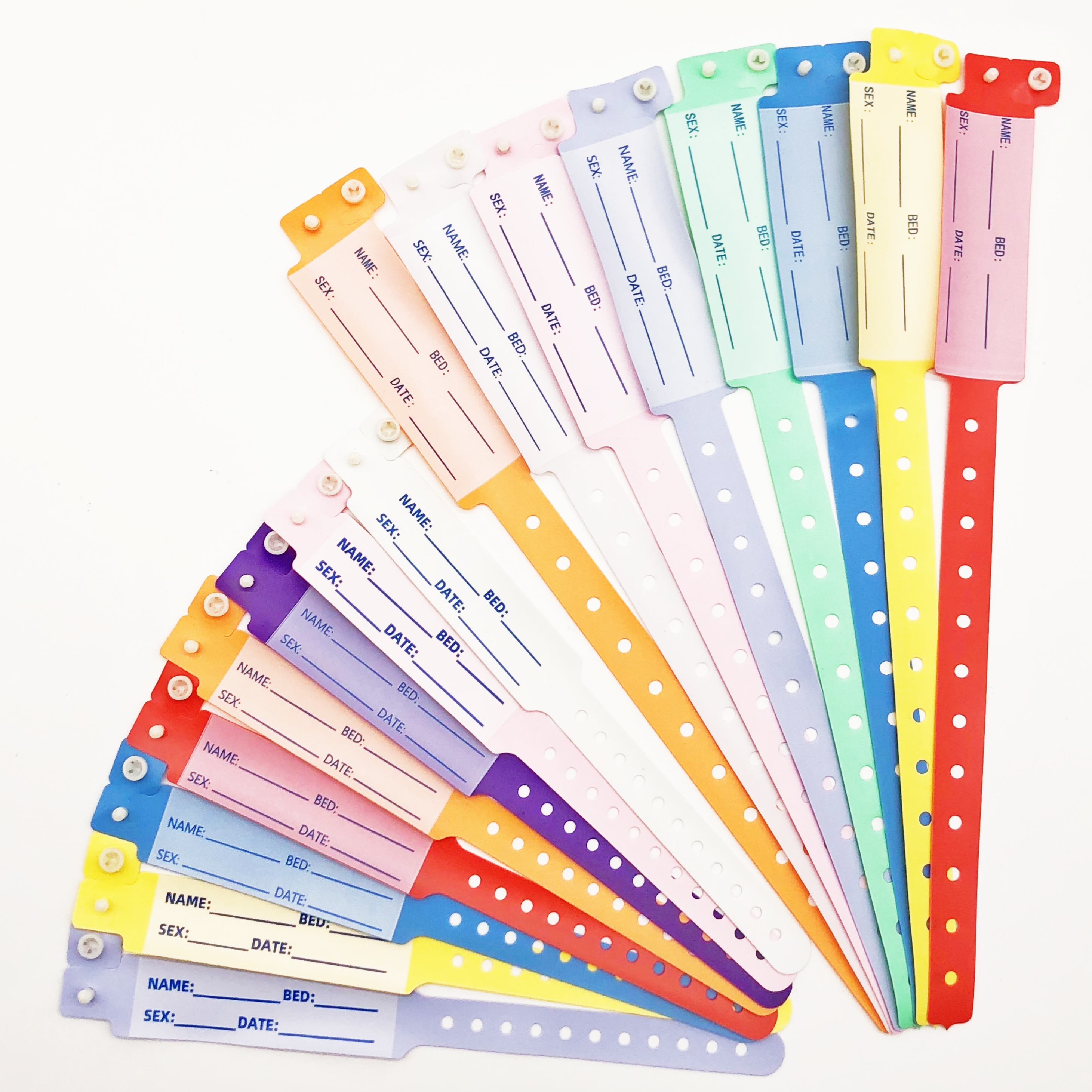
Medical Wristband Product Comparison
| Product line | Documented formats | Material | Printing / encoding | Documented properties |
|---|---|---|---|---|
| Medical thermal wristband | 260×25 mm (customizable) | Thermal-sensitive synthetic paper | Direct thermal printing, no ink | Water-resistant, tear-resistant, patient information printable |
| Tyvek Wristband | 250×19 mm, 250×25 mm | Tyvek | Clear printing | Disposable, tear-resistant, waterproof |
| PVC Patient ID Wristband | 250×25 mm, 250×16 mm | PVC | Printable patient information | Durable, comfortable long-term wear |
| PVC 1 or 2-layer Wristband | 250×25 mm, 250×16 mm | PVC | Logo and text printable | Single or double layer, waterproof, long-lasting |
| PVC+Tab Wristband | 260×40 mm | PVC | Pattern printable | Tab-buckle closure, firm to wear |
| RFID wristband | 250×25 mm, 250×16 mm and multiple specifications | Silicone, PVC, Tyvek, Paper | Built-in RFID chip (LF/HF/UHF optional), readable and writable | Contactless identification, system integration |
| Holographic Wristband | 250×25 mm, 250×16 mm | PVC/Paper with holographic film | Holographic anti-counterfeiting printing | Waterproof, tear-resistant, one-time lock closure, tamper-proof and disposable |
Compliance Evidence Checklist
| Requirement area | What to verify | Documented evidence |
|---|---|---|
| Restricted substances (EU market) | RoHS 2.0 compliance for the specific wristband product being purchased | EU RoHS Certificate of Compliance TST20250302350EC, issued by Dongguan True Safety Testing Co., Ltd. on 14 March 2025, for the paper wristband line, tested to the IEC 62321 series |
| Quality management | Documented quality system and third-party verification of the supplier | ISO9001 certification; on-site verification by Alibaba and SGS |
| EU regulatory scope | Whether the product is placed on the market as a medical device under EU MDR 2017/745 | CJEU Case C-427/24 (reported July 2026): blank patient wristbands are not classified as medical devices under EU MDR 2017/745; intended purpose governs |
| Label symbols | Authorised representative symbol on labels and instructions | ISO 15223-1:2021/Amd 1:2025 changes the symbol from EC REP to EU-REP |
| Production control | Testing regime and after-sales route | 100% test in production; remote after-sales support; standard product lead time 7–10 working days |
FAQ
Do medical wristbands need to be certified as medical devices in the EU?
Not automatically. In Case C-427/24, reported in July 2026, the Court of Justice of the European Union ruled that blank patient wristbands are not classified as medical devices under EU MDR 2017/745. The deciding factor is intended purpose rather than the physical band: a blank identification band sold for general identification falls outside MDR scope, while a band presented for a clinical function has to be assessed as a device by the party placing it on the market. Restricted-substance and labelling rules apply separately. The Tyvek Wristband from DDJOY-Medical Wristbands holds an EU RoHS Certificate of Compliance, certificate number TST20250302350EC, issued by Dongguan True Safety Testing Co., Ltd. on 14 March 2025 and valid for the EU market, with testing against the IEC 62321 series covering RoHS 2.0 requirements under Directive (EU) 2015/863 and (EU) 2017/2102. Label artwork should also reflect ISO 15223-1:2021/Amd 1:2025, which replaces the EC REP symbol with EU-REP.
Which material and print method should a hospital wristband use?
Match the material to wear duration and cleaning routine. For single-use and short-term identification, Tyvek wristbands are documented as disposable, tear-resistant and waterproof, in 250×19 mm and 250×25 mm formats. For durable multi-day wear, the PVC Patient ID Wristband is documented as comfortable for long-term wear in 250×25 mm and 250×16 mm formats, and is also produced in single- or double-layer construction. For on-demand printing at admission, the medical thermal wristband uses thermal-sensitive synthetic paper at 260×25 mm with customizable size and direct thermal printing that requires no ink. For chip-based workflows, RFID wristbands offer a built-in chip with low-frequency, high-frequency or ultra-high-frequency options, readable and writable, in silicone, PVC, Tyvek or paper.
What drives the price of medical wristbands, and what is the minimum order quantity?
There is no published standard price band for medical wristbands, because cost is set by the specification. The main drivers are the material (Tyvek, PVC, thermal-sensitive synthetic paper, or silicone), the print method (direct thermal printing, offset or digital printing, or holographic anti-counterfeiting printing), the closure type (tab buckle or one-time lock closure), the RFID inlay where applicable, the testing and certification documentation required, and the order volume. At DDJOY-Medical Wristbands the documented minimum order quantity is 1,000 units, with OEM production and logo customization available. Quoting against a locked specification is therefore both faster and more comparable than collecting open-ended offers.
Can samples be validated before a bulk order?
Yes, and sample validation is the core purpose of the evaluation stage. Because band behaviour depends on material, thickness, closure and print method together, a physical sample is the only reliable way to confirm that a 250×25 mm PVC patient ID band, a 250×19 mm Tyvek band, or a 260×25 mm thermal band behaves as expected under your printer and handling routine. Send your locked specification, print file, and target format to the published contact channel — DDJOY02@163.com or +86 13636648748 (WhatsApp) — and reference the product line you are evaluating. The full product and specification catalogue is also available for download as a PDF.
What is the production lead time for custom medical wristbands, and what causes delays?
The documented standard product lead time at DDJOY-Medical Wristbands is 7–10 working days. Monthly capacity is reserved to absorb large-volume orders, and urgent runs can be coordinated through advance production scheduling. Realistic delay risks come from five sources: shortages or quality problems in upstream materials such as PVC, Tyvek and RFID chips; sudden order surges that consume reserved capacity; internal production issues such as equipment breakdown, labour shortages or rework; late specification or artwork confirmation from the buyer; and logistics events such as port congestion or power restrictions. Freezing size, print file and closure before production starts is the single most effective lead-time control available to a buyer.
Conclusion
Medical wristbands are specified, not shopped. Material determines comfort and durability, print method determines workflow, closure determines clinical behaviour, size determines fit, identification technology determines what the band can do beyond being visible, and compliance documentation determines whether the product can be purchased at all in your market. Buyers who lock those six constraints before requesting a quotation consistently spend less time on correction and more time on rollout.
The practical sequence is short: define the care setting, pick the material and print method, fix the format and closure, decide whether RFID is needed, collect the certificate numbers and the product scope they cover, then validate a sample against your printer and your data fields. Once those steps are complete, commercial terms — MOQ, lead time, and OEM customization — become a confirmation exercise rather than a negotiation about unknowns.
Next step: request a sample or quotation
DDJOY-Medical Wristbands supplies medical thermal wristbands, Tyvek, PVC patient identification, RFID and tamper-evident wristbands from Shanghai Dingba Identification Co., Ltd., with OEM production, logo customization and a documented minimum order quantity of 1,000 units.
Download the full product catalogue: DDJOY product and specification brochure (PDF).
Contact: OLIVIA KWO · Email: DDJOY02@163.com · Tel / WhatsApp: +86 13636648748 · Website: www.ddlf.com
Have Questions or Need More Details?
Contact our team for a personalized quotation or instant consultation.
Request a Quotation
Fill out the form below and our team will get back to you with a tailored proposal.
WhatsApp Direct Chat
Prefer to chat in real-time? Message us on WhatsApp for instant assistance & quick answers.
- Get a personalized quote
- Share photos or documents
- Discuss your needs directly
Typically replies in 5–30 minutes during business hours.