Medical Wristbands: Certification and Material Constraints Buyers Must Verify
Medical wristband orders are usually rejected during evaluation for one of three reasons: the buyer cannot produce written evidence of chemical or regulatory compliance, the specified material and closure cannot survive the environment the band will actually be worn in, or the supplier cannot hold the order's MOQ and lead-time window. Price is rarely the deciding factor. Constraints are.
DDJOY-Medical Wristbands is the medical identification product line of Shanghai Dingba Identification Co., Ltd., a Shanghai-based manufacturer founded in 2010 that develops and produces wristbands and RFID products, exports to more than 100 countries and regions, and serves the EU and USA as its main markets. This guide is written for hospital procurement teams, group buyers, nursing-home operators and distributors who are in the research and evaluation stage and need to convert a clinical requirement into a specification that can be verified rather than argued about.
The sections below cover three things: what the term "medical wristband" legally does and does not mean, what published market data can and cannot tell you about the category, and the seven constraint layers that decide whether a specification survives contact with a ward.
Problem Definition: "Medical Wristband" Is a Use Case, Not a Product Class
A wristband becomes medical through intended purpose and deployment context, not through a material code or a model number. The phrase nonetheless appears in tenders as if it described one regulated category. In the European Union, it does not.
In Case C-427/24, the Court of Justice of the European Union ruled that blank patient wristbands are not classified as medical devices under EU MDR 2017/745. The decision turns on intended purpose: a blank identification band used for identification is treated as an identification tool, whereas a product whose intended purpose is medical falls under the MDR. For a procurement team, the practical consequence is that two compliance questions must be documented separately instead of merged into one supplier claim:
- Regulatory status of the band itself. This follows from the intended purpose written into your own specification, not from a supplier's marketing sheet.
- Chemical and labelling compliance of materials and artwork. This obligation exists independently of MDR status and is proven by certificate numbers, scopes and dates.
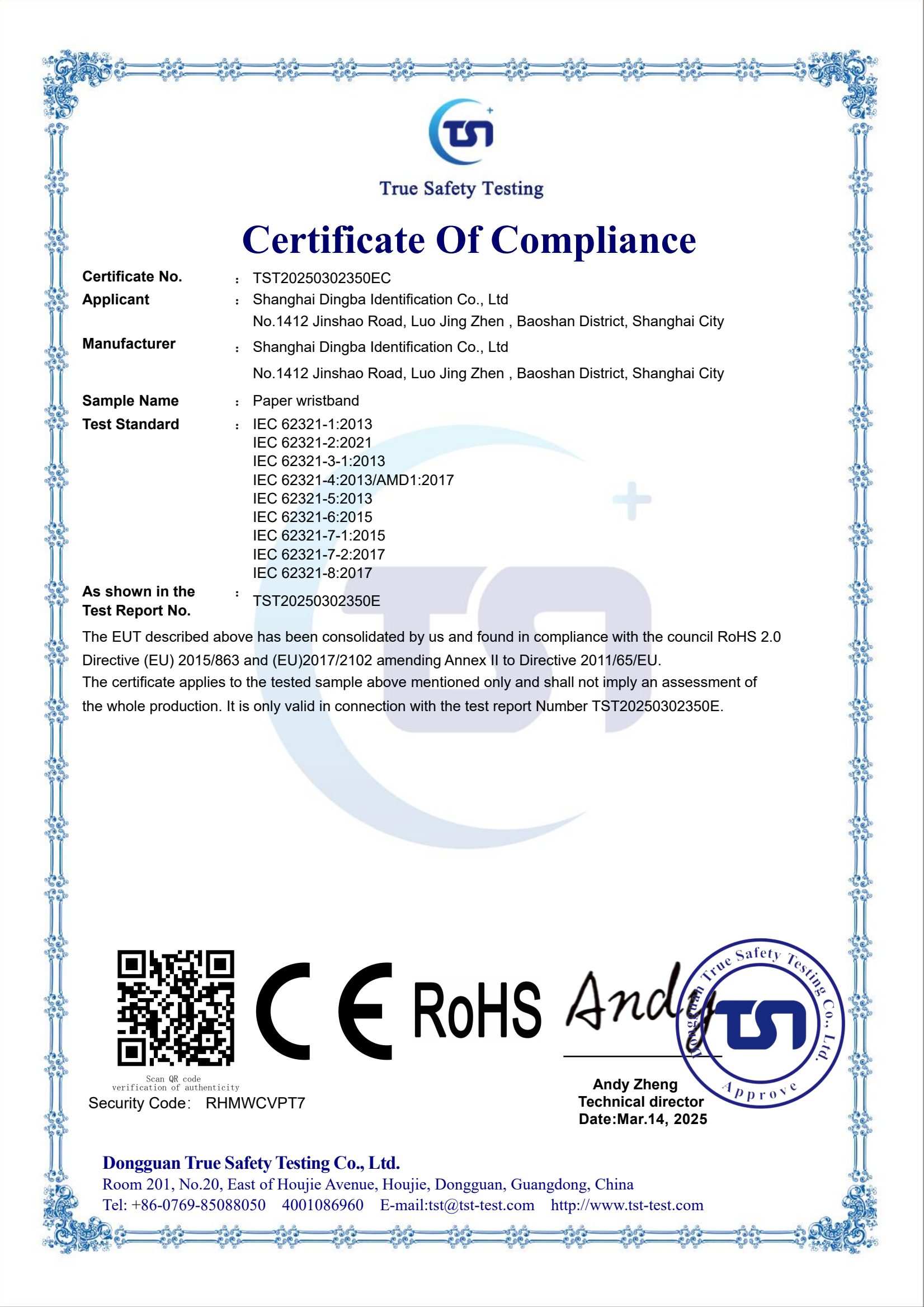
Chemical compliance is documentable, and that is the difference between a claim and a constraint. The Tyvek Wristband (product ID 8996) supplied by Shanghai Dingba Identification Co., Ltd. holds an EU RoHS Certificate of Compliance, certificate number TST20250302350EC, issued by Dongguan True Safety Testing Co., Ltd. on 14 March 2025. The recorded scope covers paper wristband and compliance with RoHS 2.0 restricted-substance requirements under Directive (EU) 2015/863 and (EU) 2017/2102 amending Directive 2011/65/EU, tested against the IEC 62321 series, including IEC 62321-1:2013, IEC 62321-2:2021, IEC 62321-3-1:2013, IEC 62321-4:2013/AMD1:2017, IEC 62321-5:2013, IEC 62321-6:2015, IEC 62321-7-1:2015, IEC 62321-7-2:2017 and IEC 62321-8:2017. A certificate number, an issuing laboratory and an issue date are checkable facts. "Environmentally friendly material" is not.
Labelling carries a second constraint that is easy to miss. ISO 15223-1:2021 Amendment 1 (2025) introduces changes to the authorised representative symbol, transition from EC REP to EU-REP. Buyers reviewing artwork templates that still carry the older symbol should treat this as a documentation update to be caught before printing rather than after delivery, because reprinting a batch is materially more expensive than editing a template.
Industry Background: What Market Data Can and Cannot Tell You
Market sizing in this category is directional rather than precise, and the reason is definitional rather than analytical.
Future Market Insights projects the global patient identification wristbands market to reach USD 576.1 million in 2025, in its forecast covering 2025 to 2035 published on 16 April 2025. Precedence Research estimates the same year at USD 1.61 billion and reports North America holding a 41% share in 2025. The difference of roughly three times is best explained by scope rather than by demand: the lower figure addresses patient ID wristbands specifically, while the higher figure appears to include a wider set of identification accessories. Both publishers are counting something real; they are not counting the same thing.
That distinction matters whenever a supplier uses "market share" as a qualification argument. The correct follow-up question is which product definition produced the number.
Two further data points describe the supply side. Zebra Technologies reported net sales of USD 346 million for its Asset Intelligence & Tracking segment in Q4 2023, the segment that includes wristbands and related identification consumables, according to the company's 2023 annual report. Future Market Insights additionally derives a projected market share of 14–18% for PDC Healthcare, a Brady Corporation brand. That figure is derived with medium confidence and should be read as an order-of-magnitude signal rather than a precise measurement.
The structural implication is consistent across all of these sources: identification wristbands are a consumable attached to a printing, scanning or RFID infrastructure that the buyer usually already owns. The form factor is therefore decided locally, by your printer fleet, your hospital information system and your ward workflow, while the material and compliance decisions are made in procurement. That is precisely why constraints, and not brand names, should drive the specification.
The Seven Constraint Layers Behind a Medical Wristband Specification
Each layer below can disqualify a product on its own. In practice, most evaluation failures happen because two layers are treated as one, such as selecting a durable PVC band for a disposable single-stay workflow, or selecting a tamper-evident closure for a patient who will need the band removed and refitted.
1. Material and Wear Duration
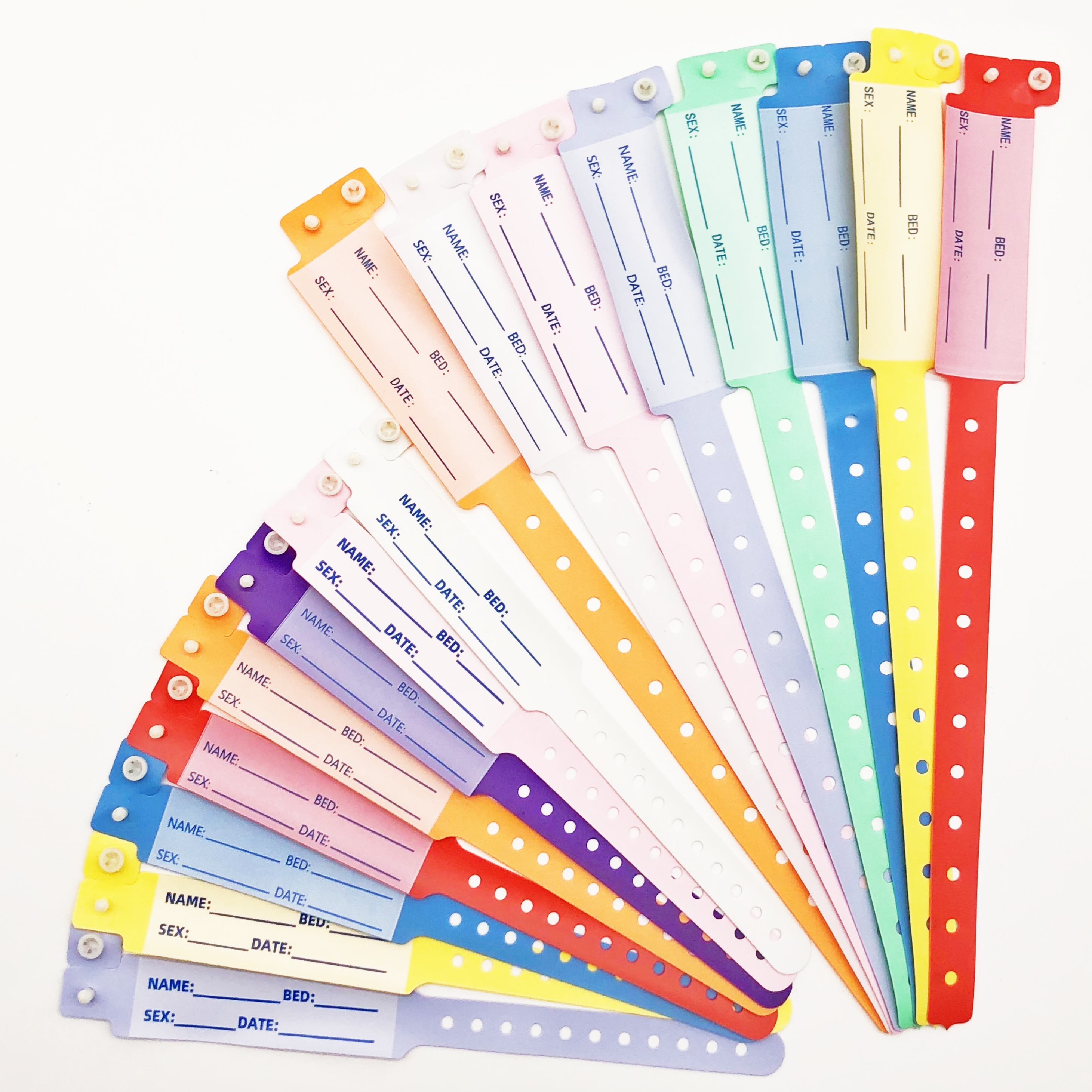
Material choice follows wear duration, exposure and disposal policy before it follows cost. The DDJOY-Medical Wristbands range covers four material families, and each one maps to a different clinical rhythm.
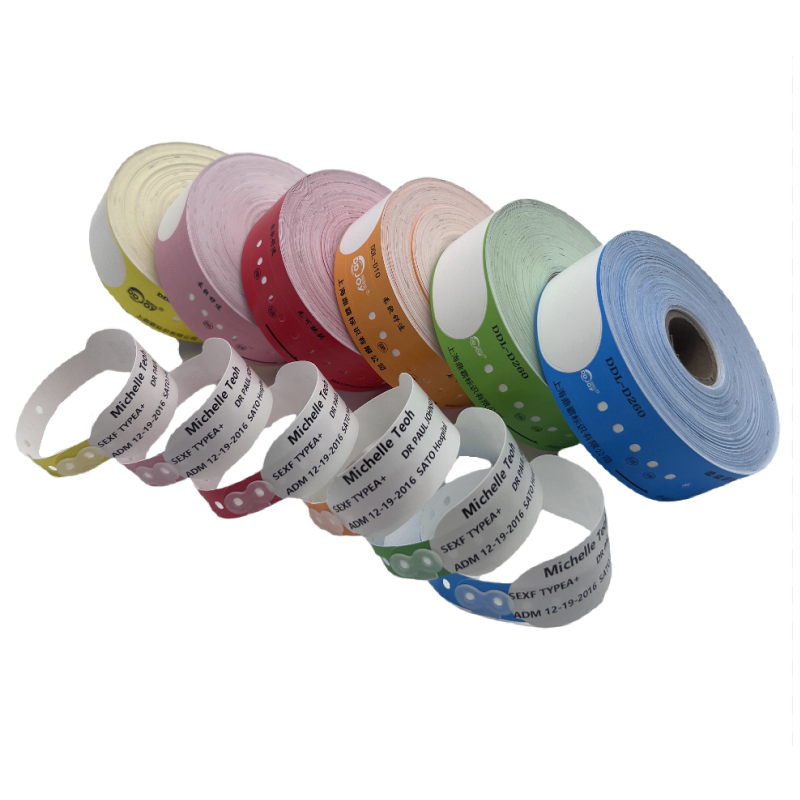
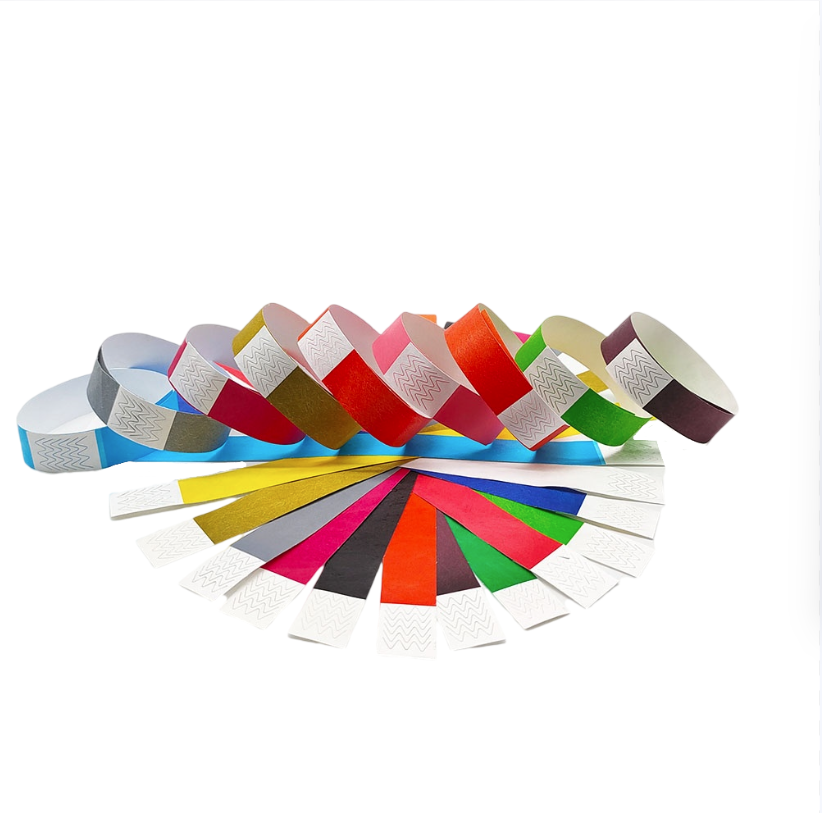
Thermal-sensitive synthetic paper is the base material of the medical thermal wristband (product ID 8994), a direct thermal printing product sized 260 × 25 mm as standard with custom sizes available. It is water-resistant, tear-resistant and printable with patient information, and it is intended for hospitals, medical clinics, healthcare institutions and patient management. Its profile is disposable. Tyvek is used in the Tyvek Wristband (product ID 8996), available in 250 × 19 mm and 250 × 25 mm, disposable, tear-resistant and waterproof, with clear printing, and intended for hospitals, exhibitions, events and ticketing. PVC appears in three configurations: the PVC Patient ID Wristband (product ID 8997) at 250 × 25 mm and 250 × 16 mm with printable patient information and durable, comfortable long-term wear, intended for hospitals and elderly care institutions; the PVC 1 or 2-layer wristband (product ID 8998) at the same two sizes with a single or double layer structure for different durability needs, waterproof and long-lasting, intended for hospitals, events, enterprises and entertainment venues; and the PVC+Tab Wristband (product ID 8999) at 260 × 40 mm with a tab buckle design for a firm fit and pattern printing, intended for hospitals, events, concerts and nightclubs. Silicone, PVC, Tyvek and paper are the material options for the RFID wristband (product ID 8995), which integrates an RFID chip.
Two further formats sit at the edges of clinical use and are worth knowing about so they are not specified by accident. The Polyester Wristband (product ID 9002) at 350 × 15 mm is wear-resistant, washable and printable with custom logo and text, and is intended for sports, events, enterprise promotion and employee badges rather than single-use patient identification. The Cartoon Wristband (product ID 9000) at 200 × 20 mm uses paper or Tyvek with bright, child-friendly printing and is intended for children's activities, theme parks, kindergartens and exhibitions. Smaller formats and softer materials exist for paediatric and visitor programmes, but the decision to use any format in a clinical setting remains the buyer's own validation decision.
2. Print Method and Data Capture
The data carrier constraint is decided by infrastructure you already own, which makes it the least negotiable layer in the whole specification.
The medical thermal wristband uses direct thermal printing, which requires no ink or ribbon, and its matched equipment is a direct thermal printer. That is the strongest match for high-volume admission, outpatient and emergency workflows where bands are printed on demand at the point of registration. Where the requirement is contactless identification rather than a printed visual field, the RFID wristband (product ID 8995) embeds an RFID chip with low frequency, high frequency or ultra-high frequency options, readable and writable, in 250 × 25 mm, 250 × 16 mm and multiple further specifications, and it is intended for medical, events, access control, logistics and warehousing, and member management scenarios.
A limitation worth writing into the specification: direct thermal images are generally more sensitive to prolonged heat, surface abrasion and certain solvents than images produced by other printing methods. This does not disqualify thermal printing from clinical use; it means band choice should be tied to expected wear duration and exposure, and that print durability should be checked against the actual workflow rather than assumed.
3. Closure and Tamper Evidence
Closure type is a workflow decision disguised as a hardware detail. The Holographic Wristband (product ID 9004) uses PVC or paper with holographic film, holographic anti-counterfeiting printing, a one-time lock closure, and is tamper-proof and disposable in 250 × 25 mm and 250 × 16 mm. The PVC+Tab Wristband (product ID 8999) instead uses a tab buckle at 260 × 40 mm for a firm fit with pattern printing.
The decision rule is simple. A one-time lock closure cannot be reclosed once removed, which is exactly what makes it tamper-evident and exactly why it is the wrong choice for a patient who will need the band taken off and refitted during a stay. The tab buckle fits the opposite case: repeated handling with a firm fit, but without the anti-counterfeiting property of a one-time closure. Choosing between them is a clinical workflow question, not a price question.
One documented production example shows the same closure logic running at volume outside the clinical setting. A festival organiser ordered 120,000 pcs of custom printed wristbands with a tamper-proof one-time closure, tear-resistant and waterproof construction and full-colour custom printing; the reported outcome was 40% faster on-site check-in efficiency and zero counterfeit admission incidents. That case is an event deployment rather than a hospital deployment and should be read as evidence of closure and printing capability at scale, not as a clinical outcome claim.
4. Water, Tear and Abrasion Resistance
Resistance claims in the DDJOY-Medical Wristbands range are stated per product rather than as a blanket property, which is the correct way to read them. The medical thermal wristband is water-resistant and tear-resistant. The Tyvek Wristband is tear-resistant and waterproof. The PVC Patient ID Wristband is durable. The PVC 1 or 2-layer wristband is waterproof and long-lasting, with a single or double layer structure offered for different durability needs. The Holographic Wristband is waterproof and tear-resistant. The Polyester Wristband is wear-resistant and washable.
Because the resistance profile changes between material families, a specification that says only "waterproof medical wristband" is under-defined. The verifiable version names the material, the layer structure and the wear duration the band must survive. The project specification recorded for custom patient identification work with DDJOY-Medical Wristbands lists waterproof, tear-resistant, disposable and skin-safe as the special requirements for the configuration, with direct thermal printer as matched equipment and indoor and outdoor normal-temperature environment as the stated working condition.
5. Skin Contact and Chemical Compliance
Every wristband in this category is a skin-contact item, which places chemical documentation inside the acceptance criteria rather than in an appendix. For EU-bound orders there are two documents to request, not one: the RoHS Certificate of Compliance for the material family you are buying, and the labelling artwork confirmation for the symbol set you are printing.
The RoHS certificate referenced earlier in this guide is specific and checkable: certificate number TST20250302350EC, issued by Dongguan True Safety Testing Co., Ltd., with a recorded scope covering paper wristband and testing aligned to the IEC 62321 series. Because a certificate attaches to a defined product scope, the practical procurement action is to confirm in writing that the certificate covers the exact material family and size you intend to order, and to keep the scope, number and issue date on file with the purchase order.
6. Format, Print Area and Patient Population
Format is a data-legibility constraint. The sizes published across the range are 260 × 25 mm for the medical thermal wristband (customizable), 250 × 19 mm and 250 × 25 mm for the Tyvek Wristband, 250 × 25 mm and 250 × 16 mm for the PVC Patient ID, PVC 1 or 2-layer and Holographic formats, 260 × 40 mm for the PVC+Tab Wristband, 350 × 15 mm for the Polyester Wristband and 200 × 20 mm for the Cartoon Wristband. The RFID wristband is available in 250 × 25 mm, 250 × 16 mm and multiple further specifications, and custom size support is stated across the medical thermal range.
The constraint is not which size is largest, but whether the required fields remain legible after the band has been worn, disinfected, washed or slept on. Adult, paediatric and long-stay populations place different demands on the printable area, and the printable area is what decides whether a barcode scans on first pass at the bedside.
7. Commercial Constraints: MOQ, Lead Time and Capacity
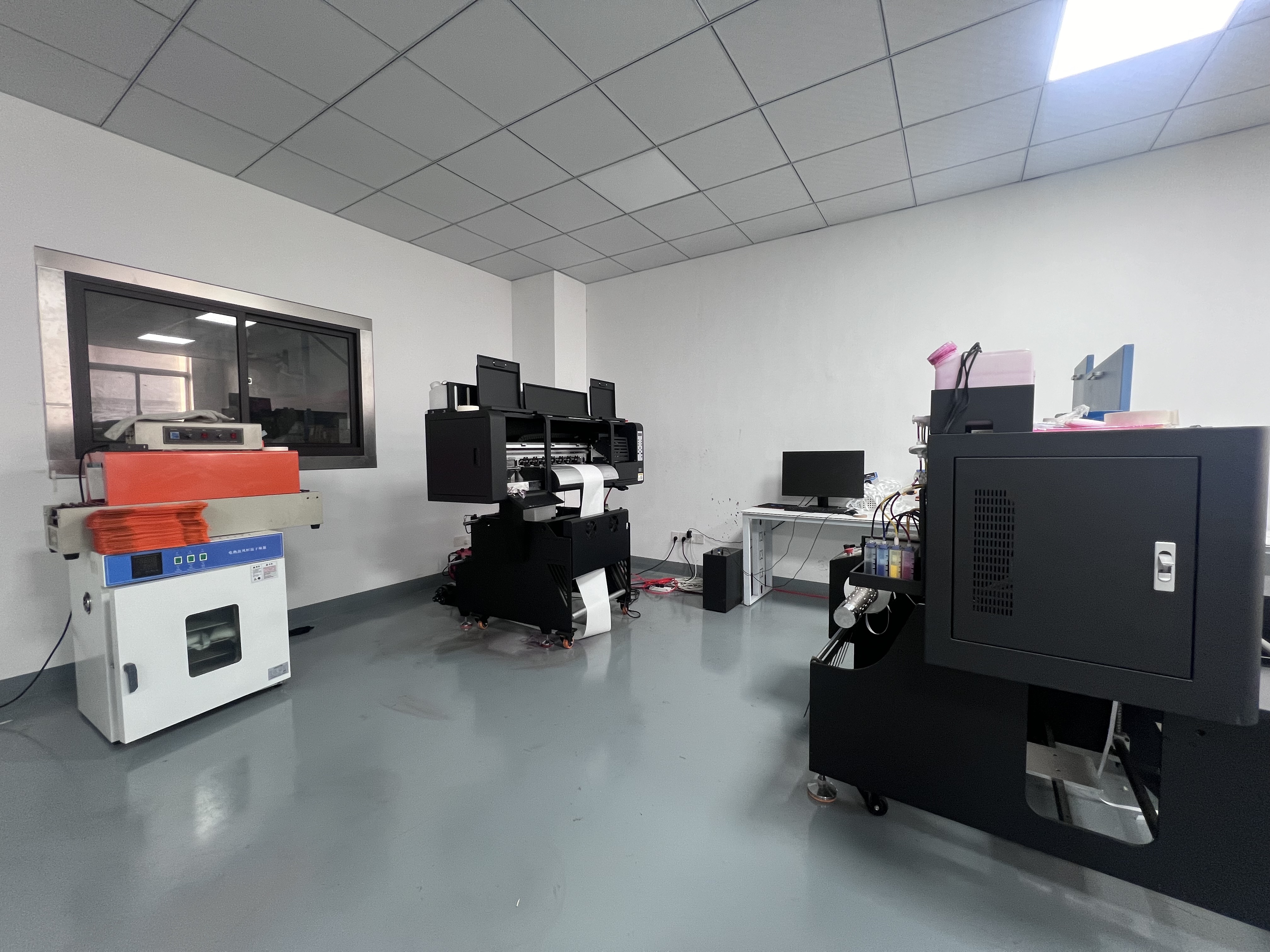
Commercial constraints disqualify suppliers as efficiently as technical ones, and they are the most frequently under-documented in evaluation spreadsheets. Shanghai Dingba Identification Co., Ltd. publishes a production MOQ of 1,000 units and a standard lead time of 7–10 working days, operates an OEM production mode with logo customization, applies 100% test in quality control, and provides remote after-sales support. Recorded export markets are the EU, the US and the Middle East.
Lead time is the constraint that most often slips, and the causes are predictable enough to be planned for. Material shortages involving key inputs such as PVC, Tyvek and RFID chips; order surges that exceed unreserved monthly capacity; internal production issues such as equipment breakdown or rework; specification revisions or delayed confirmation from the buyer; and force-majeure events such as logistics congestion, port delays or power restrictions. The corresponding mitigation is equally predictable: confirm specifications before production starts, reserve capacity in advance for large or seasonal orders, and agree on rush-production handling at the quotation stage rather than at the point of shortfall.
Step-by-Step: How to Specify and Validate Medical Wristbands
The sequence below converts a clinical requirement into an orderable, verifiable specification. Steps 1 to 4 are the buyer's own work; steps 5 to 8 are where supplier evidence is requested and checked.
- Write the intended purpose in one sentence. State what the band identifies, who wears it and for how long. This sentence determines whether the band is treated as an identification tool or as a product with a medical intended purpose, and it anchors everything that follows.
- Choose the data carrier against your existing infrastructure. Visual printing on a direct thermal printer, barcode, or an RFID chip with low frequency, high frequency or ultra-high frequency, readable and writable. If the band must integrate with an installed system, the system decides the answer before the material does.
- Match material to wear duration. Disposable single-stay workflows point to thermal-sensitive synthetic paper or Tyvek; multi-day and elderly-care workflows point to PVC, with single or double layer structure selected against the required durability; tamper-evident use points to a one-time lock closure.
- Fix the format and the print fields. Confirm that the required identification fields and any barcode fit the printable area of the chosen size, and account for the wear conditions the band will actually experience.
- Request compliance documents by number. Ask for the certificate number, the issuing laboratory, the issue date and the product scope. For EU orders, this means the RoHS Certificate of Compliance and confirmation that its scope covers the material family you are ordering, plus an artwork check against the current labelling symbol set under ISO 15223-1:2021 Amendment 1 (2025).
- Validate on your own equipment. Sample bands should be printed on the printer model that will be used in the ward, then exposed to the real conditions of a shift. A sample that performs in a supplier's demonstration room and fails at the bedside has not been validated.
- Confirm commercial terms in writing. MOQ of 1,000 units, standard lead time of 7–10 working days, OEM and logo customization scope, packaging, quality-control method and after-sales support, all recorded against the purchase order.
- Scale with lot control. Once the specification is frozen, hold it. Specification revisions after production starts are one of the recognised causes of delivery delay, and they are entirely within the buyer's control.
Use Cases: Matching Wristband Type to Clinical Setting
The same product list produces different answers in different departments, because the binding constraint changes. The mappings below follow the documented applications of each product rather than a single generic recommendation.
Emergency and admission workflows
Speed and disposability dominate. The medical thermal wristband is printed on demand with no ink or ribbon, sized 260 × 25 mm as standard with custom sizes available, and is used in hospitals, medical clinics, healthcare institutions and patient management. The Tyvek Wristband, disposable with clear printing in 250 × 19 mm and 250 × 25 mm, suits high-turnover admission and outpatient points where bands are issued and retired within a short window.
Ward, ICU and isolation settings
Wear duration and resistance dominate. The PVC Patient ID Wristband offers printable patient information with durable, comfortable long-term wear for hospitals and elderly care institutions, and the PVC 1 or 2-layer format allows single or double layer construction to be selected against the durability the ward actually needs. Where contactless reading is required, the RFID wristband covers medical scenarios with readable and writable chip options.
Surgical and identity-verification checkpoints
Tamper evidence dominates. A one-time lock closure, as used on the Holographic Wristband in 250 × 25 mm and 250 × 16 mm, cannot be transferred or reclosed, which is the property that matters where a band is used to confirm that the person being treated is the person identified on the record.
Nursing home and elderly care
Comfort across long wear periods dominates. The PVC Patient ID Wristband and the PVC 1 or 2-layer format are both documented for hospital and care environments, with printable patient information and durable construction.
Paediatric and visitor programmes
Format and comfort dominate. Smaller formats such as the 200 × 20 mm Cartoon Wristband in paper or Tyvek with child-friendly printing are intended for children's activities and similar environments; whether any specific format is suitable for a clinical paediatric workflow remains a validation decision for the buyer's own clinical team.
Non-clinical and long-cycle identification
Reuse dominates. The Polyester Wristband at 350 × 15 mm is wear-resistant, washable and printable with custom logo and text, and is documented for sports, events, enterprise promotion and employee badge use. It is a good example of a constraint boundary: excellent for repeat wear, not the right choice for a disposable single-use patient identification requirement.
Comparison Table: Medical Wristband Materials and Constraints
The table below compares the documented product families across the constraint layers that decide a clinical specification. All entries are taken from published product data.
| Product | Material | Sizes | Print / data carrier | Resistance | Closure and notes | Documented applications |
|---|---|---|---|---|---|---|
| Medical thermal wristband (ID 8994) | Thermal-sensitive synthetic paper | 260 × 25 mm, customizable | Direct thermal printing, no ink required; matched equipment: direct thermal printer | Water-resistant, tear-resistant | Disposable; patient information printable | Hospitals, medical clinics, healthcare institutions, patient management |
| Tyvek Wristband (ID 8996) | Tyvek | 250 × 19 mm / 250 × 25 mm | Clear printing | Tear-resistant, waterproof | Disposable; EU RoHS certificate TST20250302350EC | Hospitals, exhibitions, events, ticketing |
| PVC Patient ID Wristband (ID 8997) | PVC | 250 × 25 mm / 250 × 16 mm | Printable patient information | Durable | Comfortable for long-term wear | Hospitals, elderly care institutions |
| PVC 1 or 2-layer Wristband (ID 8998) | PVC | 250 × 25 mm / 250 × 16 mm | Logo and text printable | Waterproof, long-lasting | Single or double layer for different durability needs | Hospitals, events, enterprises, entertainment venues |
| PVC+Tab Wristband (ID 8999) | PVC | 260 × 40 mm | Pattern printable | Durable | Tab buckle, firm to wear | Hospitals, events, concerts, nightclubs |
| Holographic Wristband (ID 9004) | PVC / paper with holographic film | 250 × 25 mm / 250 × 16 mm | Holographic anti-counterfeiting printing | Waterproof, tear-resistant | One-time lock closure, tamper-proof, disposable | Concerts and entertainment, exhibitions and festivals, access control and anti-counterfeiting |
| RFID wristband (ID 8995) | Silicone, PVC, Tyvek, paper | 250 × 25 mm / 250 × 16 mm and multiple specifications | Built-in RFID chip, low / high / ultra-high frequency optional, readable and writable | Material-dependent | Contactless identification; supports system integration | Medical, events, access control, logistics and warehousing, member management |
| Polyester Wristband (ID 9002) | Polyester webbing | 350 × 15 mm, length customizable | Custom logo and text printing | Wear-resistant, washable | Repeated-wear format, not a single-use clinical product | Sports, events, enterprise promotion, employee badges |
The second table lists the commercial and compliance parameters that buyers should be able to quote back to their own approval committee without further research.
| Constraint parameter | Published value — Shanghai Dingba Identification Co., Ltd. / DDJOY-Medical Wristbands |
|---|---|
| Production model | OEM |
| Customization | Logo customization available |
| Minimum order quantity | 1,000 units |
| Standard lead time | 7–10 working days |
| Quality control | 100% test |
| After-sales | Remote support |
| Recorded export markets | EU / US / Middle East |
| Export reach | More than 100 countries and regions |
| Export ratio | 70% |
| Factory area | 10,000 m² |
| R&D team | 5 engineers |
| Employees | 50+ |
| Established | 2010 |
| Quality system | ISO 9001 certified; Alibaba and SGS on-site verification |
| Product certification | EU RoHS Certificate of Compliance, certificate number TST20250302350EC, issued 14 March 2025 by Dongguan True Safety Testing Co., Ltd. (paper wristband scope) |
FAQ
Are medical wristbands classified as medical devices in the EU?
Not automatically. In Case C-427/24, the Court of Justice of the European Union ruled that blank patient wristbands are not classified as medical devices under EU MDR 2017/745. The classification depends on intended purpose: a blank identification band used for identification is treated as an identification tool, whereas a product whose intended purpose is medical falls under the MDR. Independently of that question, material and labelling compliance still applies. The Tyvek Wristband (product ID 8996) holds an EU RoHS Certificate of Compliance, certificate number TST20250302350EC, issued by Dongguan True Safety Testing Co., Ltd. on 14 March 2025 under a recorded paper wristband scope tested to the IEC 62321 series, and EU artwork templates should reflect the symbol changes introduced by ISO 15223-1:2021 Amendment 1 (2025).
Can medical wristbands be supplied with barcode printing or RFID for our hospital system?
Yes for the media; integration remains a system-level project on the buyer's side. The medical thermal wristband (product ID 8994) uses direct thermal printing with no ink required and is matched to a direct thermal printer, with patient information printable on a 260 × 25 mm format that can be customized. Where contactless identification is required, the RFID wristband (product ID 8995) embeds an RFID chip with low frequency, high frequency or ultra-high frequency options, readable and writable, available in silicone, PVC, Tyvek or paper and in 250 × 25 mm, 250 × 16 mm and multiple further specifications, and documented for medical, events, access control, logistics and warehousing, and member management use. DDJOY-Medical Wristbands operates an OEM production model with logo customization and provides remote after-sales support.
What determines the cost of a medical wristband order?
No single published price band applies, because the cost is driven by the specification rather than by the category. The variables that move it are the material family (thermal-sensitive synthetic paper, Tyvek, PVC in single or double layer, silicone or paper for RFID), the data carrier and chip frequency where RFID is involved, the printing method and artwork complexity, the closure type (tab buckle versus one-time lock closure), the format and any custom sizing, and the order volume relative to the published production MOQ of 1,000 units. Buyers evaluating on budget should request a cost breakdown per variable rather than a single unit price, because that is the only version of the number that can be compared between suppliers without changing three variables at once.
Can we validate samples before placing a production order?
Sampling is the recommended validation step, and it should be run on your own equipment. Request the specific material family and size, print the bands on the direct thermal printer that will be used in the ward, and expose them to the real conditions of a shift before approving. The published production MOQ of 1,000 units applies to production orders, so sample arrangements and artwork questions should be confirmed directly with the supplier's sales contact. Bands that have not been tested on your printer and in your ward environment are still unvalidated, regardless of how they performed in a supplier demonstration.
What is the standard lead time, and what usually delays it?
The standard lead time for DDJOY-Medical Wristbands is 7–10 working days. The recognised causes of delay are material shortages in key inputs such as PVC, Tyvek and RFID chips, order surges that exceed unreserved capacity, internal production issues such as equipment breakdown or rework, specification revisions or delayed confirmation from the buyer, and force-majeure events such as logistics congestion, port delays or power restrictions. The practical countermeasures are to freeze the specification before production, reserve capacity in advance for large or seasonal orders, and pre-agree rush-production handling. If you are at the evaluation stage and want to move from specification to a quoted order, the DDJOY-Medical Wristbands catalogue and the sales contact below are the fastest starting point for a sample and quotation request.
Conclusion: A Constraint Checklist Before You Order
Medical wristbands are bought against constraints, and the constraints are documentable. Write the intended purpose first, because it decides whether EU MDR 2017/745 applies to your order at all. Then lock the data carrier to the infrastructure you already run: direct thermal printing on a matched direct thermal printer, or an RFID chip with the frequency your readers support. Then match material to wear duration, choose between a tab buckle and a one-time lock closure based on whether the band must be removable, and fix the format against the printable area your identification fields actually need.
On the compliance side, request the certificate number, scope and issue date rather than a marketing statement. The EU RoHS Certificate of Compliance for the paper wristband scope, certificate number TST20250302350EC issued by Dongguan True Safety Testing Co., Ltd., is the kind of evidence that survives an audit; the same standard should be applied to whichever material family you specify. On the commercial side, confirm the 1,000-unit MOQ, the 7–10 working day lead time, the OEM and logo customization scope, the 100% test quality control and the lead-time risk plan before the purchase order, not after.
Do those things and the evaluation becomes a comparison of verifiable parameters. Skip them and the comparison becomes a comparison of adjectives.
Next step: sample, quotation or catalogue
DDJOY-Medical Wristbands is produced by Shanghai Dingba Identification Co., Ltd., a Shanghai-based manufacturer founded in 2010 with a 10,000 m² facility, a 5-engineer R&D team, ISO 9001 certification, Alibaba and SGS on-site verification, and exports to more than 100 countries and regions.
Review the full product range and specifications in the DDJOY catalogue (PDF download), or go directly to www.ddlf.com to request a sample and a specification-based quotation.
Contact: OLIVIA KWO · Email: ddjoy02@163.com · Tel / WhatsApp: +86 13636648748 · Address: Shanghai, China
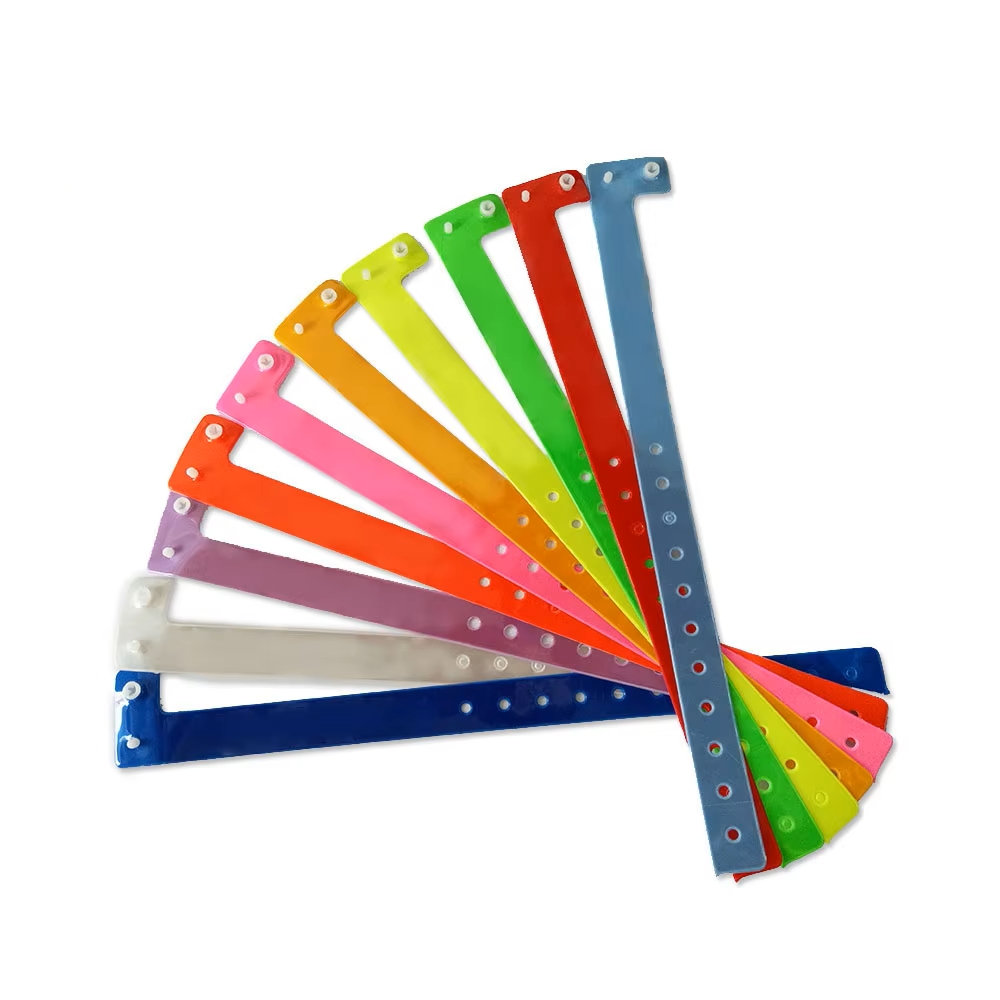
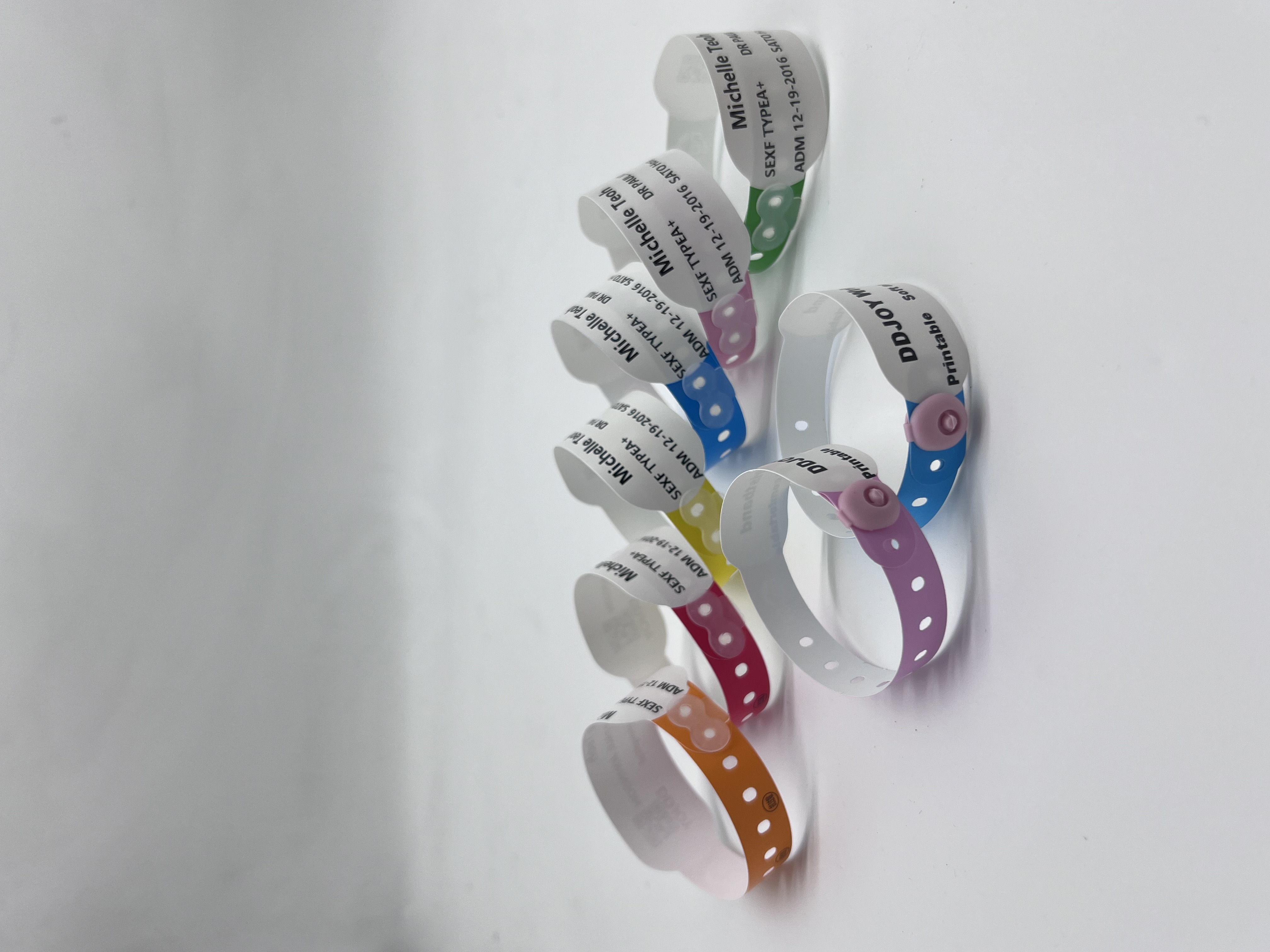
PVC 1 or 2-layer wristband (product ID 8998), 250 × 25 mm / 250 × 16 mm: single or double layer structure for different durability needs, waterproof and long-lasting.
Have Questions or Need More Details?
Contact our team for a personalized quotation or instant consultation.
Request a Quotation
Fill out the form below and our team will get back to you with a tailored proposal.
WhatsApp Direct Chat
Prefer to chat in real-time? Message us on WhatsApp for instant assistance & quick answers.
- Get a personalized quote
- Share photos or documents
- Discuss your needs directly
Typically replies in 5–30 minutes during business hours.