PVC+Tab vs Tyvek Medical Wristbands: A Head-to-Head for Hospital Buyers
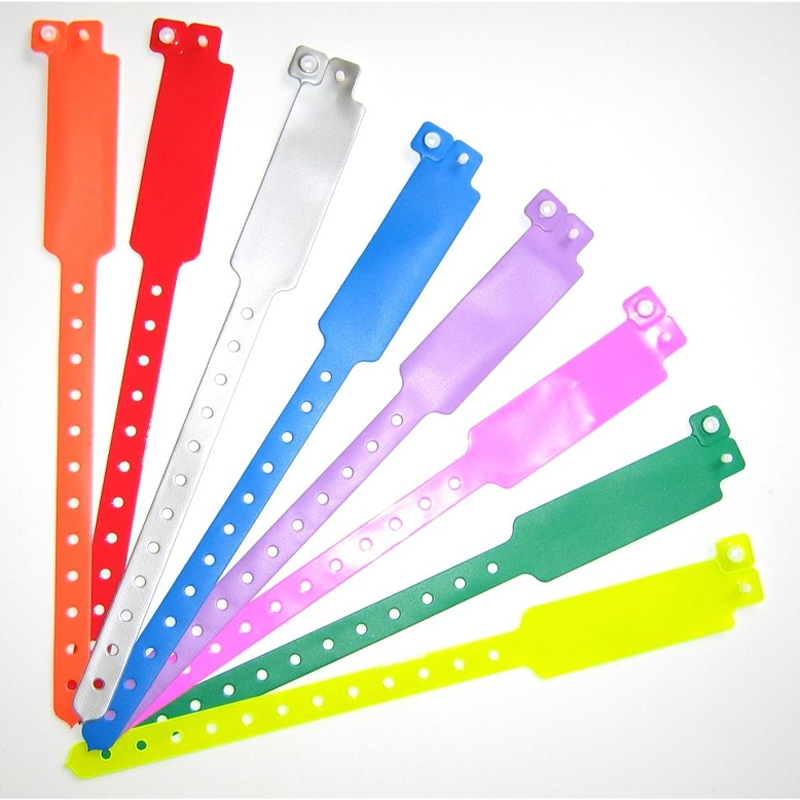
Short answer: specify the PVC+Tab Wristband (260×40mm, PVC, tab buckle) when a band has to survive a multi-day admission, carry a printed pattern, and stay firmly closed through repeated handling and patient transfers. Specify the Tyvek Wristband (250×19mm or 250×25mm, disposable, tear-resistant and waterproof) when each band is issued once, must print clearly at admission speed, and the programme needs a documented EU RoHS compliance file tied to the product. Both formats sit in the DDJOY-Medical Wristbands range, but they are not interchangeable — the replacement model, the fastening, the print field and the certificate scope all differ.
DDJOY-Medical Wristbands is the medical wristband line of Shanghai Dingba Identification Co., Ltd., a Shanghai-based manufacturer of wristbands and RFID products founded in 2010, operating a 10,000 m² facility, holding ISO9001 certification and on-site verification from Alibaba and SGS, and exporting to more than 100 countries and regions with EU and USA as its main markets. The purpose of this comparison is narrower than a catalogue tour: it sets one PVC+Tab construction against one Tyvek construction on the criteria that hospital procurement, nursing and infection-control teams actually audit, and it flags where a buyer must obtain confirmation before a purchase order is released.
A wristband decision usually arrives disguised as a price question. In practice the two formats sit on opposite sides of a replacement boundary. One is built to stay on a patient for the length of an admission and to carry printed identity material on a wide surface. The other is built to be issued once and discarded, with material properties that resist tearing and water. Choose on the wrong side of that boundary and the result is either avoidable replacement cost or bands that fail at ward level — not a saving.
The short answer for hospital buyers
- Durability and fastening dominate: if the band must remain on the patient across days, multiple transfers and repeated checking, the PVC+Tab Wristband is the stronger fit. Its PVC body is stated as durable, and the tab buckle is stated to hold the band firmly in place.
- Single-use and fluid exposure dominate: if the band is issued per encounter and may meet water, the Tyvek Wristband is the stronger fit. It is stated as disposable, tear-resistant and waterproof, with clear printing.
- Print surface dominates: a 260×40mm band gives a 40mm-wide print field, against 19mm or 25mm on the two Tyvek formats. Pattern work and multi-line identity layouts need that width; single-line data does not.
- Documentation dominates under audit: the Tyvek Wristband carries an EU RoHS Certificate of Compliance under a stated certificate number. For a PVC+Tab order, request the certificate that names the construction you are actually buying.
Why this is a constraint problem, not a material preference
Material labels — "PVC" or "Tyvek" — tell a buyer very little on their own. Four constraints decide the outcome, and a fifth follows from them.
Constraint 1: replacement model. A disposable band is consumed per patient encounter; a durable band is consumed per admission or per damage event. This single variable changes annual volume, storage footprint and nursing workflow far more than unit price does.
Constraint 2: fastening security. The PVC+Tab Wristband is specified with a tab buckle design and described as firm to wear. Where a band must stay correctly positioned through bed transfers, imaging appointments and hand-offs, the fastening statement matters as much as the material.
Constraint 3: print field and print method. The PVC+Tab Wristband is stated as pattern printable, which suits graphic, colour-coded or departmental layouts. The Tyvek Wristband is stated to deliver clear printing on a narrower band. Where variable patient data is generated at admission, the printing route — and its durability under daily handling — has to be agreed with the supplier, not assumed from a material name.
Constraint 4: compliance documentation. Certification is product-specific. A certificate covering one construction does not automatically cover another, and a hospital audit will ask for the document that names the item in the purchase order.
Constraint 5: format and fit. Band width drives comfort and print capacity together. A 40mm band and a 19mm band are different wear experiences, and the smaller the wrist, the more that difference matters.
Industry background: demand growth and a moving compliance line
Patient identification banding is a mature consumable category with steady institutional demand. Future Market Insights projects the global patient identification wristbands market at USD 576.1 million in 2025, while Precedence Research places North America at a 41% share in 2025. Those two commercial estimates should be read as directional rather than precise: a second Precedence Research figure puts the 2025 market at USD 1.61 billion, and the difference is best explained by scope — blank identification bands versus printed or system-integrated identification products. For a hospital buyer the practical takeaway is not the headline number but the structure: a large, regionally concentrated consumable category in which documentation quality is a genuine differentiator between suppliers.
Concentration is real but partial. PDC Healthcare, a Brady Corporation brand, holds a projected 14–18% share of the patient identification wristbands market according to Future Market Insights, a figure the source itself grades at medium confidence. Adjacent hardware vendors operate at a different scale: Zebra Technologies reported net sales of USD 346 million for its Asset Intelligence & Tracking segment, which includes wristbands, in Q4 2023. Neither data point changes a band specification, but both explain why hospitals increasingly buy bands as part of a printing and identification system rather than as a standalone SKU.
The regulatory line has moved more than the demand curve. The Court of Justice of the European Union ruled in Case C-427/24 that blank patient wristbands are not classified as medical devices under EU MDR 2017/745, a ruling recorded as effective from 2 July 2026. The reasoning turns on intended purpose: the classification question follows what the product is intended to do, not what it is made of. In parallel, ISO 15223-1:2021 Amendment 1 (2025) changes the authorised representative symbol from EC REP to EU-REP, which affects label artwork where such symbols are used.
For a procurement team, those two developments push the documentation burden away from device classification and towards material substance compliance and labelling accuracy. In plain terms: the questions that decide an EU-facing order are "which certificate covers this exact construction?" and "is the label artwork current?" — not "which MDR class is this band?".
PVC+Tab Wristband (260×40mm): what the construction delivers
The PVC+Tab Wristband is a 260×40mm band made of PVC, fitted with a tab buckle and described as firm to wear, with a surface that supports pattern printing. Its stated application range covers hospitals, events, concerts and nightclubs, and the printing capability is described as vibrant custom printing.
Translated into hospital terms, the construction answers three problems at once. The durable PVC body suits a band that stays on for the length of an admission rather than a single procedure. The tab buckle addresses the most common ward-level failure — a band that loosens and has to be re-fitted or re-issued mid-admission. And the 40mm width gives the print field needed when a band must show a pattern, a colour code or a multi-line identity layout rather than a single data string.
The same construction has boundaries a buyer should respect. This comparison states durability and fastening for the PVC+Tab Wristband; it does not state a waterproof rating for this specific construction, so where wet-ward conditions, bathing or heavy fluid exposure dominate, ask the supplier to confirm surface behaviour before a pilot. The print method for variable patient data on PVC should also be confirmed rather than assumed, because the durability of printed data is what a nurse actually reads at the bedside. And the 40mm width, while an advantage for print, is a fit consideration on the smallest wrists.
Tyvek Wristband (250×19mm / 250×25mm): what the construction delivers
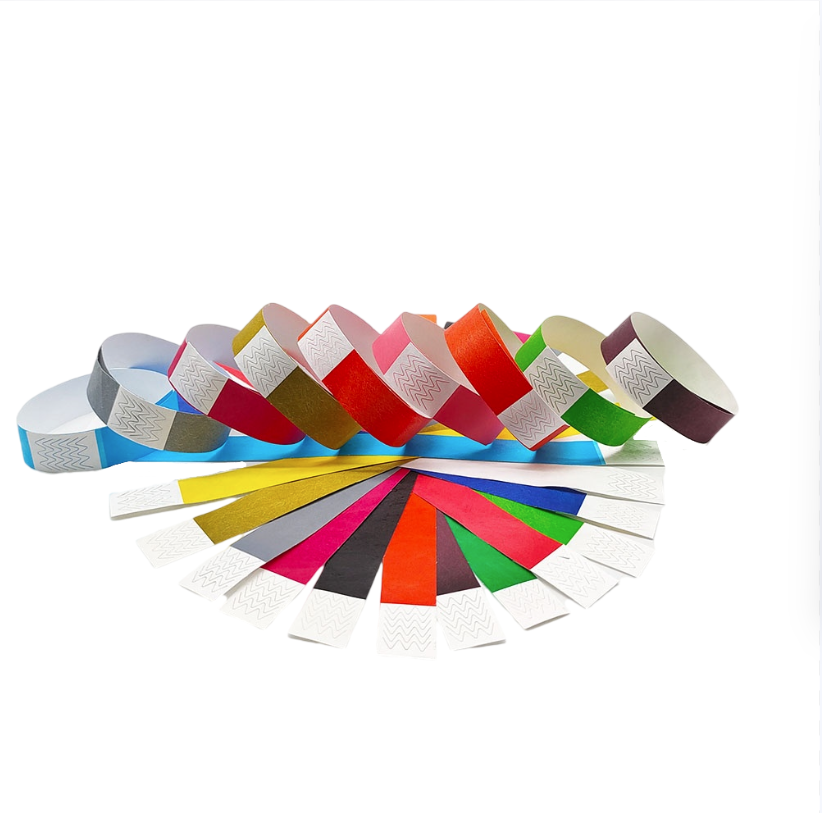
The Tyvek Wristband is a disposable band made of Tyvek, offered in 250×19mm and 250×25mm formats, described as tear-resistant and waterproof with clear printing. Its stated application range covers hospitals, exhibitions, events and ticketing.
The engineering logic here is single-use reliability. A band that is issued once does not need to survive a week of handling, but it does need to resist tearing at the point of application and to keep printed data legible if it meets water. That combination is what makes the format a natural fit for high-turnover environments: emergency departments, outpatient clinics, diagnostic units, isolation wards and admission desks where a band is printed and applied within seconds. The two narrow formats also make the band a practical option where a lower band width on the wrist is the controlling factor.
The compliance position is the strongest documented element of this construction. The Tyvek Wristband holds an EU RoHS Certificate of Compliance, certificate number TST20250302350EC, issued by Dongguan True Safety Testing Co., Ltd. on 14 March 2025, valid for the EU market and tested against IEC 62321-1:2013, IEC 62321-2:2021, IEC 62321-3-1:2013, IEC 62321-4:2013/AMD1:2017, IEC 62321-5:2013, IEC 62321-6:2015, IEC 62321-7-1:2015, IEC 62321-7-2:2017 and IEC 62321-8:2017, in line with RoHS 2.0 restricted-substance requirements under Directive (EU) 2015/863 and (EU) 2017/2102 amending Directive 2011/65/EU.
Its boundaries run the other way. A disposable band implies replacement per encounter, which has to be modelled into annual volume and ward stock. The narrower print field — 19mm or 25mm — constrains graphic layouts, so pattern-heavy branding belongs on a wider format. And because this comparison states the Tyvek Wristband as disposable without specifying a closure style, the fastening should be confirmed against the exact item ordered.
Side-by-side comparison
| Decision criterion | PVC+Tab Wristband | Tyvek Wristband |
|---|---|---|
| Stated size | 260×40mm | 250×19mm and 250×25mm |
| Material | PVC, described as durable | Tyvek |
| Replacement model | Durable band, retained for the identification period | Disposable, single-use format |
| Fastening | Tab buckle design, stated as firm to wear | Disposable format; closure style to be confirmed per order |
| Print surface | Pattern printable, vibrant custom printing on a 40mm field | Clear printing on a 19mm or 25mm field |
| Water and tear | Durability stated; no waterproof rating stated for this construction — confirm before pilot | Stated as tear-resistant and waterproof |
| Compliance documentation | Request the certificate naming the ordered PVC+Tab construction | EU RoHS Certificate of Compliance, certificate no. TST20250302350EC, issued by Dongguan True Safety Testing Co., Ltd., EU market |
| Stated application range | Hospitals, events, concerts, nightclubs | Hospitals, exhibitions, events, ticketing |
Nothing in the table declares one format better. It shows that the two products solve different constraint sets, and that the only criterion where the documented evidence is currently asymmetric is EU substance compliance — which is a documentation task for the PVC+Tab order, not a product verdict.
Step-by-step: six checks before you specify
- Classify the band by encounter length. Map every banding point in the hospital — admission, emergency, ICU, surgical, outpatient, diagnostic, isolation, long-stay care — and mark each as single-encounter or multi-day. Multi-day points point to the PVC+Tab Wristband; single-encounter points point to the Tyvek Wristband.
- Lock the fastening requirement. Where the band must stay correctly positioned through transfers, specify the tab buckle PVC+Tab construction and ask the supplier to confirm the closure performance of the exact item. Where the band is removed at the end of the encounter, the disposable format is sufficient — but confirm the closure style in writing.
- Define the print job, not just the print colour. Separate pattern and colour-coding requirements from variable patient data. Pattern work needs the 40mm PVC+Tab field. Variable data needs an agreed print method and a legibility check under daily handling, including hand hygiene.
- Verify the compliance file against the ordered construction. Ask for the certificate that names the item on the purchase order. The Tyvek Wristband documentation is certificate TST20250302350EC for the EU market; for a PVC+Tab order, request the equivalent document. If label symbols are used, check that artwork reflects ISO 15223-1:2021 Amendment 1 (2025), where the authorised representative symbol changed from EC REP to EU-REP.
- Check format and fit on the actual wrist population. Compare the 40mm PVC+Tab band with the 19mm and 25mm Tyvek formats against your patient mix, including any small-wrist cohorts, and confirm sizing with the supplier before the pilot.
- Confirm the commercial frame. OEM production, logo customisation, a minimum order quantity of 1,000 units, a 7–10 day lead time and 100% test quality control are the stated parameters for this supply route. Set the pilot quantity, the print artwork and the acceptance criteria before those parameters are fixed in a schedule.
Use cases: matching band to scenario
Inpatient admission and multi-day stays
The PVC+Tab Wristband is the better match. A durable PVC body and a tab buckle that stays firm suit a band that must remain readable and correctly positioned across an entire admission, including ward transfers and repeated identity checks.
Emergency and triage
Speed and single-use hygiene dominate. The Tyvek Wristband is issued once, is tear-resistant and waterproof, and prints clearly — properties that matter where a band is applied within seconds and may not be re-checked until the patient is stabilised.
ICU and surgical patient identification
Both formats can appear here, but for different reasons. Where the band must survive sedation periods, transfers and repeated handling, the PVC+Tab construction with its firm tab buckle is the more defensive choice — provided the print method for patient data has been validated for legibility.
Isolation wards
Single-use logic dominates. A disposable Tyvek Wristband avoids carrying a band from one patient to the next, which is the point of a disposable format rather than a cleaning instruction.
Baby and small-wrist identification
Band width becomes the controlling variable. The 250×19mm Tyvek format is the most compact of the three sizes compared here, and its disposable construction matches a per-encounter issue model. Confirm the specific sizing and closure with the supplier before any neonatal pilot.
Outpatient, clinic and diagnostic units
High turnover, short dwell time. The Tyvek Wristband's disposable economics and clear printing fit a band that is applied for a single visit; the PVC+Tab format is harder to justify where the band is removed the same day.
Nursing homes and long-stay care
Residents stay for months, not days. The durable PVC+Tab construction and its firm fastening are structurally better aligned to a band that is worn continuously, subject to supplier confirmation of surface behaviour under the setting's washing routine.
Events, concerts and ticketing
Both formats have a documented role. The Tyvek Wristband covers exhibitions, events and ticketing where a band is issued per admission. The PVC+Tab Wristband covers events, concerts and nightclubs where a band must hold a printed pattern and stay firmly closed through a longer, more physical session.
Procurement constraints: MOQ, lead time and quality control
The supply frame around both formats is the same, which simplifies a mixed order. Production runs in OEM mode with logo customisation available, at a minimum order quantity of 1,000 units, on a 7–10 day lead time, with 100% test quality control and remote after-sales support. Export markets are stated as the EU, USA and Middle East, consistent with an overall export ratio of 70% and main markets in the EU and USA.
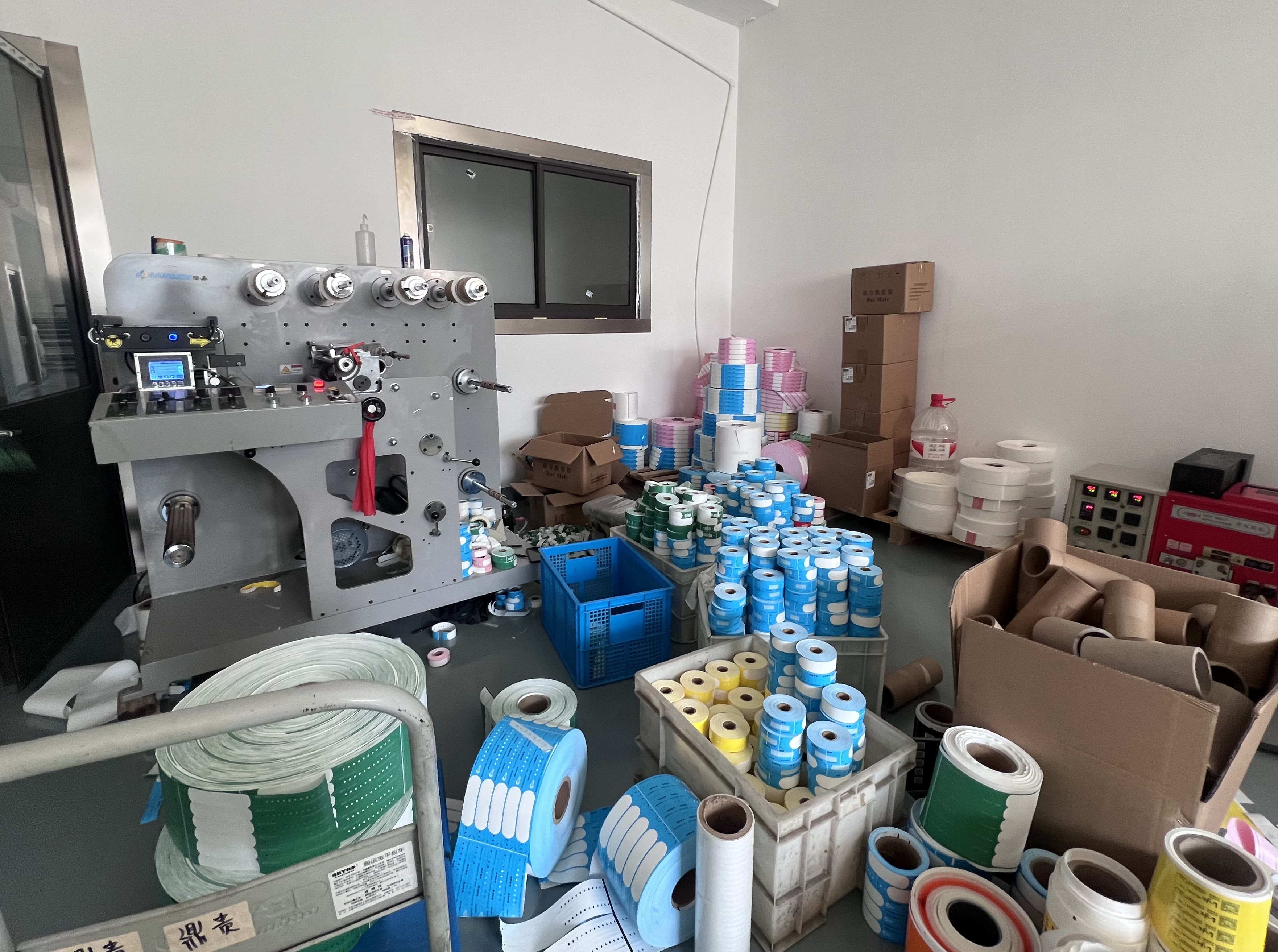
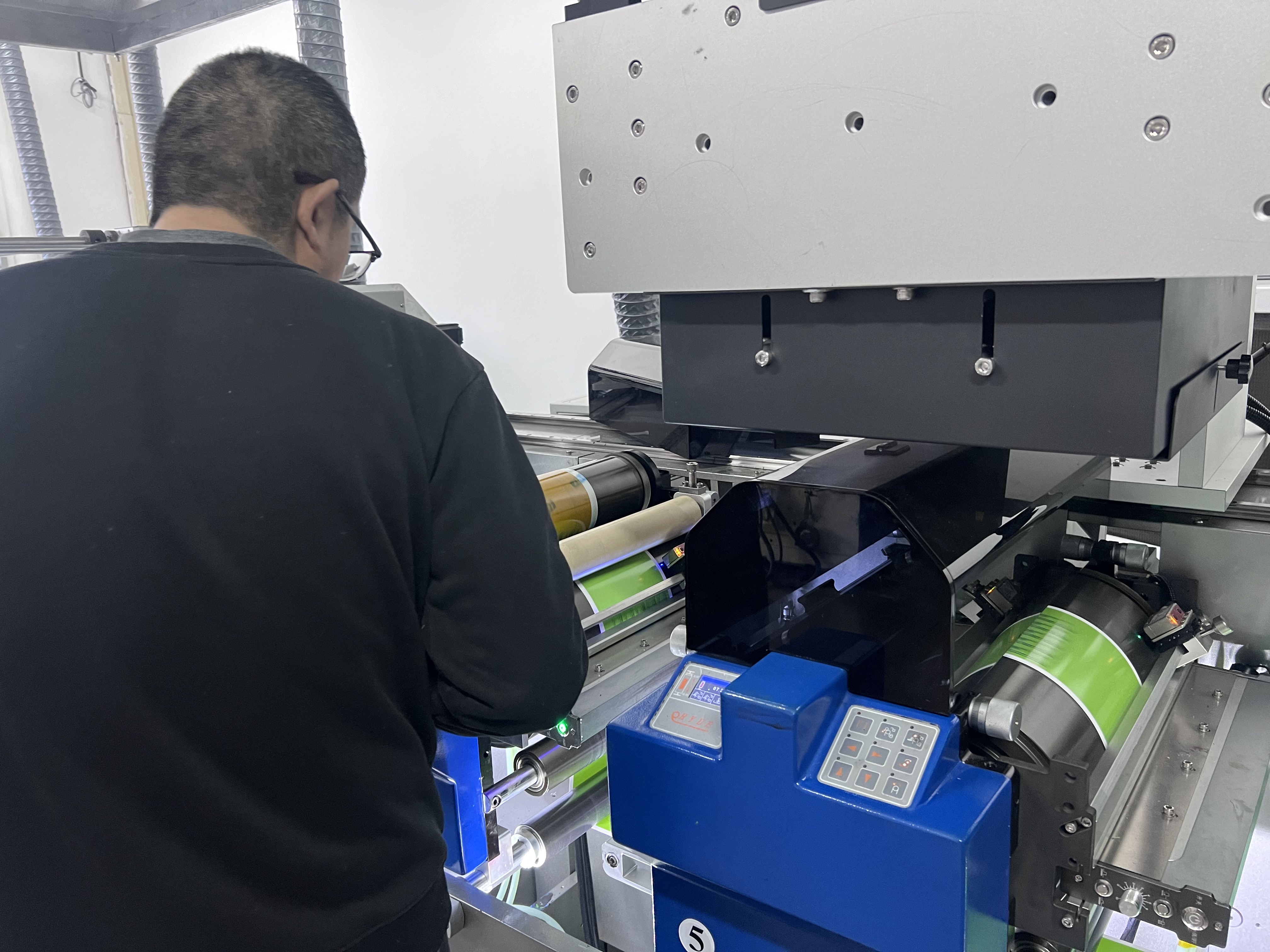
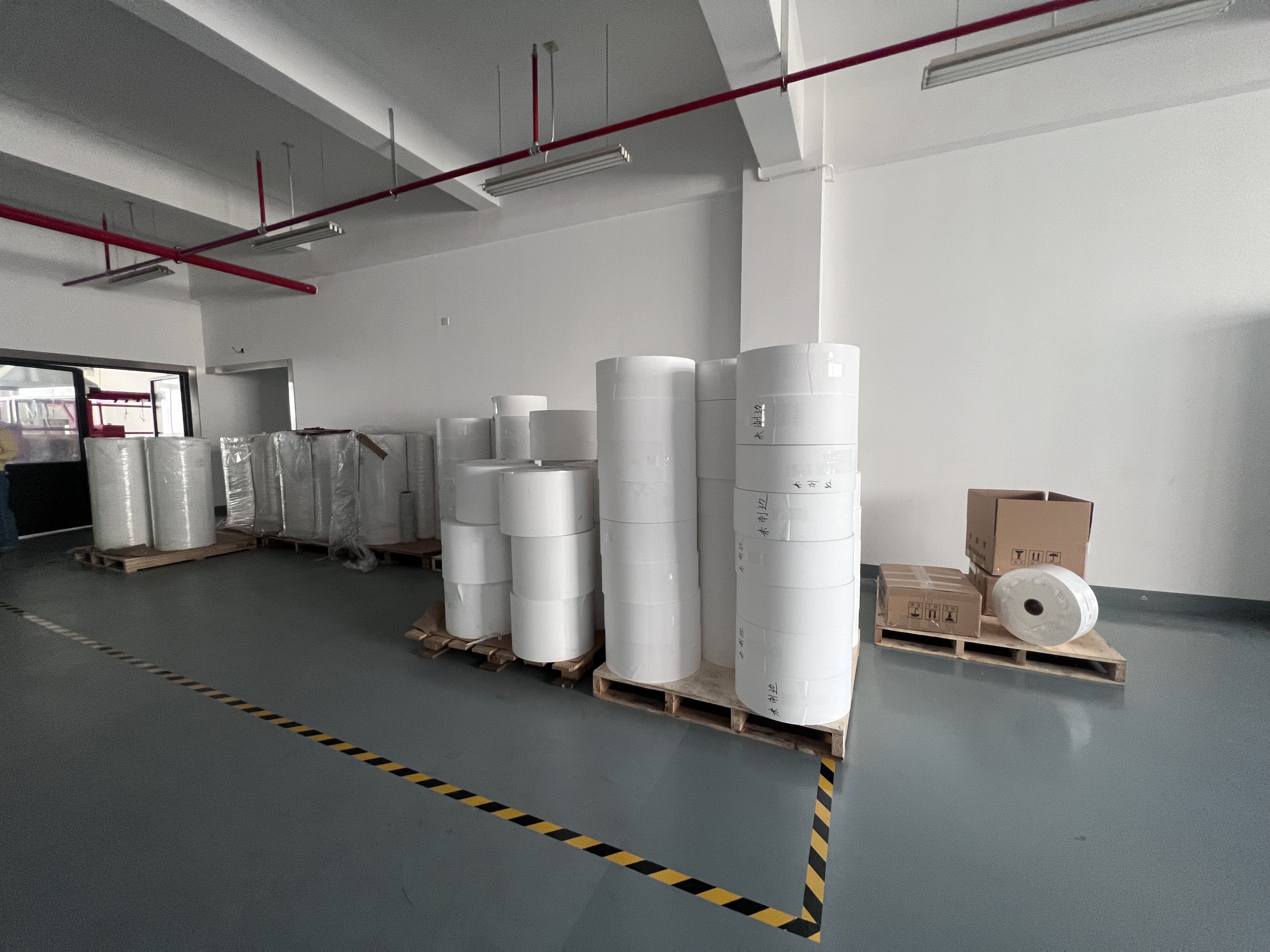
Capacity behind that frame is not theoretical. Shanghai Dingba Identification Co., Ltd. operates a 10,000 m² facility with 50+ employees, a five-engineer R&D team and an annual output stated at 12,000,000 units. A documented event and festival project covered 120,000 pieces of custom printed wristbands for participant identity verification and access control, with the organiser reporting 40% faster on-site check-in and zero counterfeit admission incidents. That project is an event programme, not a hospital deployment — but it is a fair indication of what high-volume custom printing and delivery scheduling look like in practice.
Two procurement habits prevent most problems. First, never let a certificate travel between constructions — match the document to the item on the purchase order. Second, run a print-and-wear pilot on both formats before committing annual volume, because the failure modes that matter (faded variable data, a loosened band, a print layout that does not fit the narrower Tyvek field) only appear in use.
Frequently asked questions
Are PVC+Tab and Tyvek medical wristbands regulated as medical devices in the EU, and which certificate should a hospital verify?
The Court of Justice of the European Union ruled in Case C-427/24 that blank patient wristbands are not classified as medical devices under EU MDR 2017/745, a ruling recorded as effective from 2 July 2026 — the classification follows intended purpose, not material. On substance compliance, the Tyvek Wristband holds an EU RoHS Certificate of Compliance, certificate number TST20250302350EC, issued by Dongguan True Safety Testing Co., Ltd. on 14 March 2025 for the EU market, tested against the IEC 62321 series. A hospital should verify that the certificate names the exact construction being purchased: for a PVC+Tab order, request the document specific to that build rather than reusing the Tyvek file. Where label symbols are used, confirm the artwork reflects ISO 15223-1:2021 Amendment 1 (2025), in which the authorised representative symbol changed from EC REP to EU-REP.
Can both formats carry patient data and custom printed patterns?
Yes, within different limits. The PVC+Tab Wristband is stated as pattern printable, with vibrant custom printing on a 260×40mm surface — a 40mm print field supports patterns, colour coding and multi-line identity layouts. The Tyvek Wristband is stated to deliver clear printing on 250×19mm and 250×25mm bands, which suits single-line or compact data rather than full pattern work. Where variable patient data is printed at admission, the print method and its legibility under daily handling should be confirmed with the supplier. For direct thermal variable-data printing specifically, the range also includes a medical thermal wristband in thermal-sensitive synthetic paper, 260×25mm and customisable, printing by direct thermal method. OEM production and logo customisation are available across the range.
What drives the cost difference between the two formats?
This comparison contains no price data, so no price band can be quoted here — any figure would be invented. The drivers a buyer should model are documented: material (PVC versus Tyvek), band size and print surface (260×40mm versus 250×19mm or 250×25mm), print method and number of colours, and above all the replacement model — a disposable Tyvek band is consumed per encounter, while a durable PVC+Tab band is retained across an admission. The commercial frame is a 1,000-unit minimum order quantity, OEM production and a 7–10 day lead time. Request a quote against annual volume, exact size and print specification so the comparison is made on the same basis.
How should a hospital validate the two formats before a bulk order?
Request samples in the exact sizes being considered — 260×40mm for the PVC+Tab Wristband, and both 250×19mm and 250×25mm for the Tyvek Wristband — then run three checks: print legibility of the actual patient-data layout, closure and positioning on the real wrist population, and surface behaviour under your hand-hygiene and washing routine. Production runs at a 1,000-unit minimum order quantity with 100% test quality control, so a pilot does not have to be large, but it should be run before annual volume is committed.
What lead time should we plan for, and how do we start?
Production lead time is stated at 7–10 days in OEM mode, with 100% test quality control and remote after-sales support, from a 10,000 m² facility with an annual output of 12,000,000 units. For a hospital rollout, stage the order by ward or department so print validation on the first cohort informs the second. To start, request samples and a quotation for the specific formats and print artwork: contact DDJOY-Medical Wristbands at DDJOY02@163.com or WhatsApp +86 13636648748, review the range at ddlf.com, and download the product brochure for the full specification set.
Next step: sample both formats before you decide
The fastest way to settle a PVC+Tab versus Tyvek question is to print your own patient-data layout on both and wear-test them on the target wrist population. DDJOY-Medical Wristbands supplies samples, quotations and the full product brochure on request.
Email DDJOY02@163.com | WhatsApp +86 13636648748 | Download the catalogue (PDF)
Conclusion
The PVC+Tab Wristband and the Tyvek Wristband are not rivals competing for the same slot; they are two answers to different constraint sets. Where the band must stay on through a multi-day admission, hold a printed pattern on a 40mm field and stay firmly closed through handling, the PVC+Tab construction is the better-specified choice. Where the band is issued once, must resist tearing and water, and needs clear printing plus a documented EU RoHS file, the Tyvek construction is the better-specified choice.
Two rules make the decision safe. Match the certificate to the construction — certificate TST20250302350EC covers the Tyvek Wristband for the EU market, and a PVC+Tab order needs its own documentation. And test before you commit, because print legibility and closure behaviour are only proven on the ward, not on a specification sheet.
Have Questions or Need More Details?
Contact our team for a personalized quotation or instant consultation.
Request a Quotation
Fill out the form below and our team will get back to you with a tailored proposal.
WhatsApp Direct Chat
Prefer to chat in real-time? Message us on WhatsApp for instant assistance & quick answers.
- Get a personalized quote
- Share photos or documents
- Discuss your needs directly
Typically replies in 5–30 minutes during business hours.