RFID Medical Wristband Materials: Paper, Tyvek, PVC, and Silicone Selection Guide
An RFID medical wristband is specified by material first and by chip second. This guide compares the four materials listed in the RFID wristband specification — paper, Tyvek, PVC and silicone — against the parameters that actually change a procurement decision: disposability, water and tear exposure, print clarity, wearer comfort, and the intended scenario.
Problem Definition: Where Medical Wristbands Actually Fail
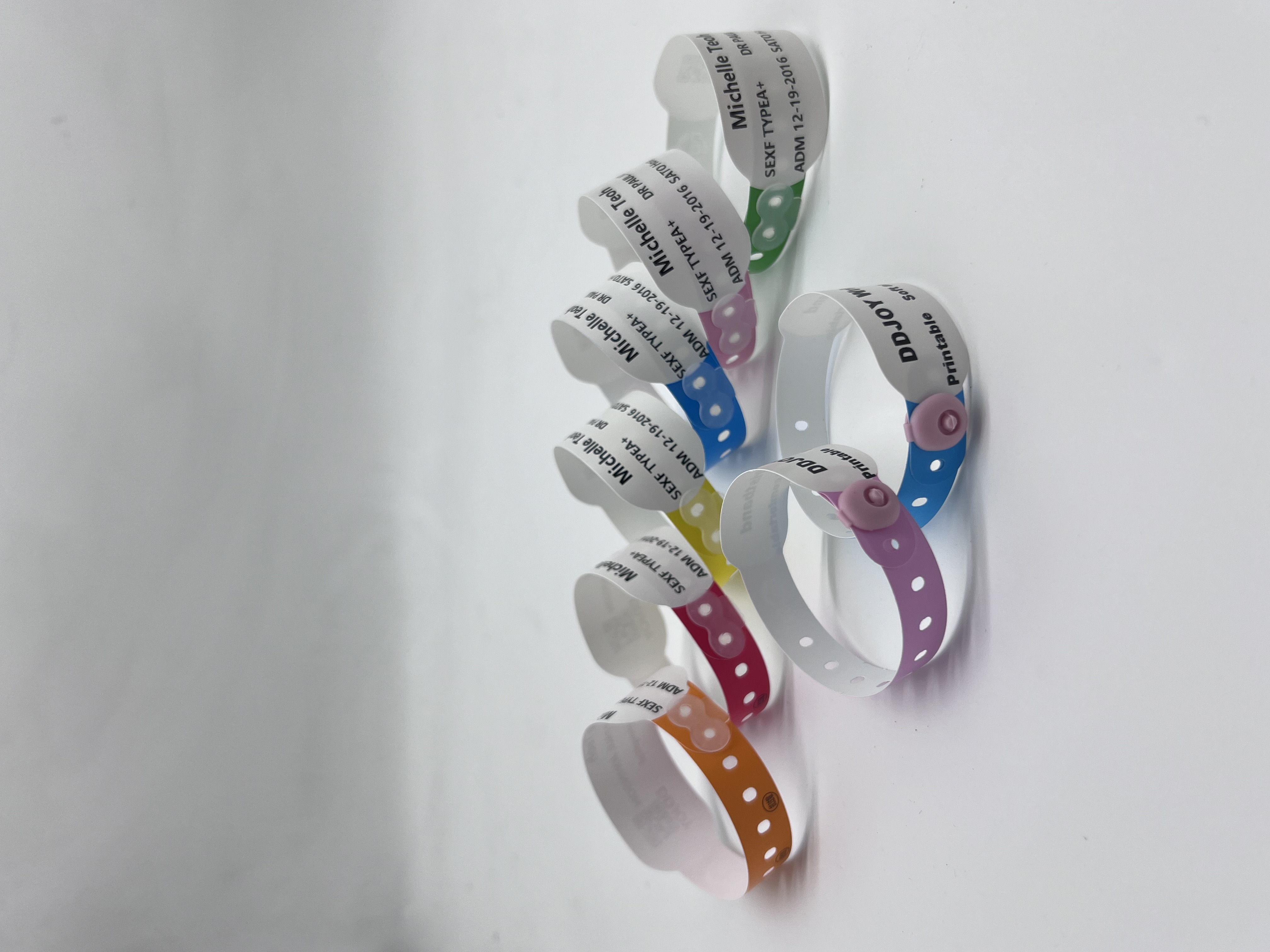
In patient identification, the chip is rarely the first component to fail. The band surface fails first. Printed names, medical record numbers and barcodes smudge, fade or rub away, and the strap tears at the closure after repeated handling. Once the printed information is unreadable, the wristband has stopped doing the job it was issued for, even if the RFID inlay inside is still technically functional.
Material choice therefore decides three things simultaneously:
- whether the band survives water, abrasion and mechanical contact for the intended wear period;
- whether the printed patient or employee information stays legible until the band is removed;
- how the band feels to someone who cannot take it off — a long-stay patient, an elderly resident, a child, or a delegate at a three-day exhibition.
Those three parameters change between a short outpatient visit, a surgical admission, a nursing home resident and an event check-in. They are the reason a single "standard" wristband rarely fits an entire organisation.
Industry Background: What Is Shifting in Medical Wristband Procurement
The global patient identification wristbands market was projected to reach USD 576.1 million in 2025 (Future Market Insights, 2025), with North America holding a 41% share of that market in the same year (Precedence Research). Those two figures should not be treated as interchangeable: Precedence Research's 2025 estimate of USD 1.61 billion is roughly three times the Future Market Insights figure, and the gap most likely stems from a scope difference between blank wristbands and printed, system-integrated identification products. Buyers who cite market numbers should check the scope definition before comparing them.
Regulatory treatment has also become more explicit. On 2 July 2026, the Court of Justice of the European Union ruled in Case C-427/24 that blank patient wristbands are not classified as medical devices under EU MDR 2017/745, tying classification to intended purpose rather than to the product category itself. For hospitals and suppliers alike, that makes the declared intended purpose of a wristband project more decisive than the physical band format. Where labelling symbols are required, ISO 15223-1:2021/Amd 1:2025 also introduced a change to the authorized representative symbol, replacing EC REP with EU-REP.
On the supply side, identification hardware and consumables remain a structured industry: Zebra Technologies, whose Asset Intelligence & Tracking segment includes wristband products, reported net sales of USD 346 million for that segment in Q4 2023 (Zebra Technologies 2023 Annual Report). For most hospitals and care providers, however, the purchasing decision is not made at that level. It is made ward by ward and project by project — which returns the question to material.
Detailed Solution: What Each RFID Wristband Material Delivers
In this product range, an RFID wristband is defined as a wristband equipped with a built-in RFID chip that operates in low frequency, high frequency or ultra-high frequency options and is readable and writable. It can be made from paper, Tyvek, PVC or silicone, is available in sizes including 250×25mm and 250×16mm and in multiple further specifications, and is intended for medical, event, access control, logistics and warehousing, and member management applications.
The chip options are shared across all four materials. What changes is the substrate — and the substrate is what determines print clarity, water and tear behaviour, wearing comfort and disposability.
Paper: A Disposable-Format Material for Short-Contact Identification
Paper is listed as one of the RFID wristband material options, and paper-based wristband formats in the same range show where it is used in practice. The 200×20mm cartoon wristband is a paper/Tyvek construction with cartoon pattern printing, bright and fade-resistant colours and a soft, comfortable, child-friendly feel; it is intended for children's activities, theme parks, kindergartens and exhibitions. The 250×25mm and 250×16mm holographic wristband uses PVC/paper with holographic film, holographic anti-counterfeiting printing and a one-time lock closure, and is specified as waterproof and tear-resistant.
The selection implication is direct. Paper is a disposable-format substrate for short, controlled wear periods. Where water exposure or a longer wear period is expected, the paper layer in this range is combined with another material — as in the PVC/paper holographic construction — rather than used alone.
Tyvek: The Disposable Option With Verified Water and Tear Resistance
Tyvek is the material with the clearest verified property set in this range. Tyvek Wristbands are available in 250×19mm and 250×25mm, are disposable, tear-resistant and waterproof, and support clear printing; their intended scenarios are hospitals, exhibitions, events and ticketing. The RFID wristband can also be supplied in Tyvek, with the same disposable construction, clear printing, and waterproof and tear-resistant performance at 250×19mm and 250×25mm.
That combination — single use, water resistance, tear resistance and print clarity — is why Tyvek is often the first material evaluated for admission bands, outpatient bands, exhibition badges and ticketing, where a band is issued, worn through a defined period and then discarded. The trade-off is equally clear: Tyvek is disposable by design. If a workflow requires the same band to be worn, removed and re-worn, a different substrate is the better fit.
PVC: The Durable Format for Clinical Patient Identification
PVC is the material most directly associated with clinical patient identification in this range. The PVC Patient ID Wristband is made of PVC in 250×25mm and 250×16mm, allows clear printing of patient information, and is described as durable, waterproof and comfortable to wear; it is intended for hospitals and elderly care institutions. PVC wristbands for the medical industry can be supplied in single or double layer structure with logo or text printing, in the same two sizes — the double-layer option exists because some projects need more structural durability than a single layer provides.
Closure format is a second PVC variable worth specifying rather than assuming. The PVC+Tab Wristband measures 260×40mm, uses a tab buckle closure for firm wearing, and has a printable surface for vibrant custom printing; it is intended for hospitals, events, concerts and nightclubs.
Silicone: A Listed RFID Material Option That Requires Specification Confirmation
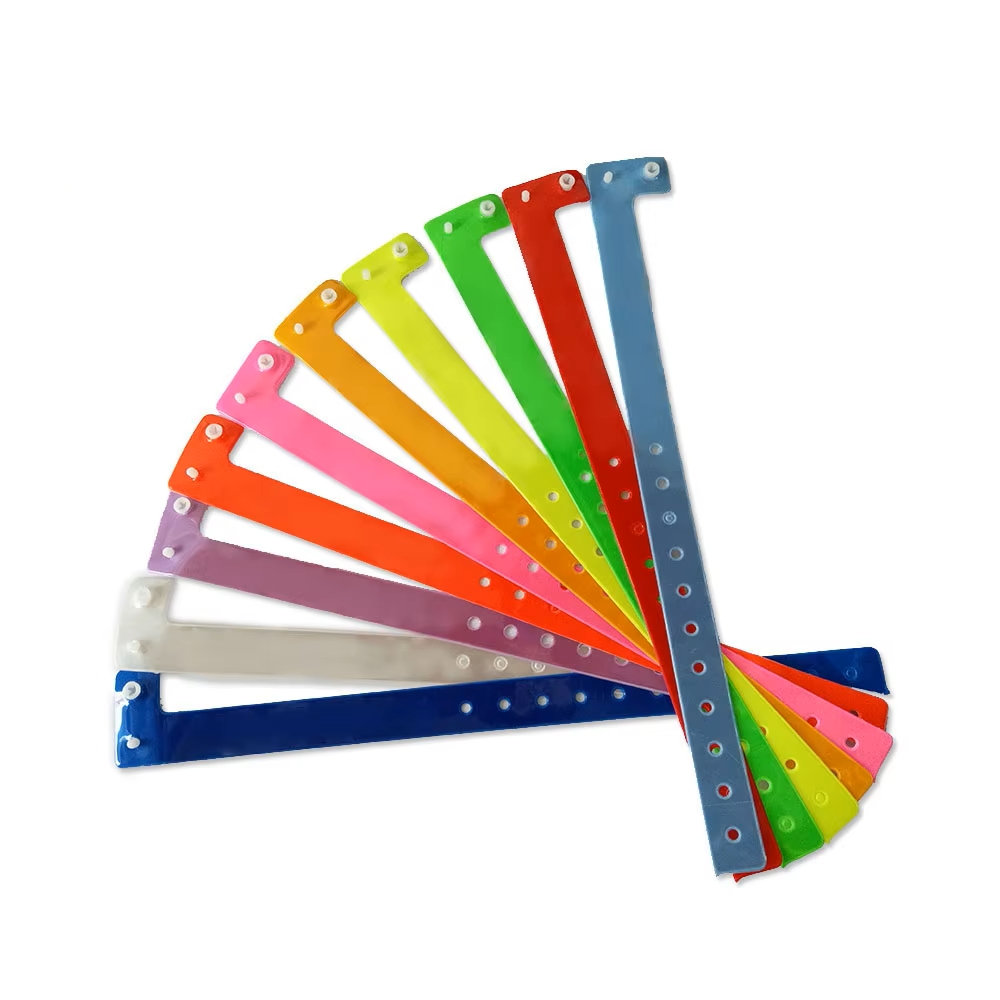
Silicone appears in the RFID wristband material list alongside paper, Tyvek and PVC, and RFID wristbands in this range support multiple specifications and customization. The product data behind this guide does not document silicone-specific durability, print or water-resistance values, and no frequency-band performance or read-range figures are stated for any material. Silicone should therefore be treated as an available material route whose detailed parameters must be confirmed against the supplier's current specification before it is written into a tender or a hospital rollout plan.
Print Clarity and Encoding: Where Material and Data Meet
Print clarity is a material property as much as a printer property. Clear printing is verified in this range for Tyvek wristbands, PVC patient ID wristbands and medical thermal wristbands. The medical thermal wristband follows a different route: it is made of thermal-sensitive synthetic paper, uses direct thermal printing without ink, is disposable and water-resistant, and is designed for hospitals, medical clinics, healthcare institutions and patient management — but it is a printing-based identification format rather than an RFID encoding format.
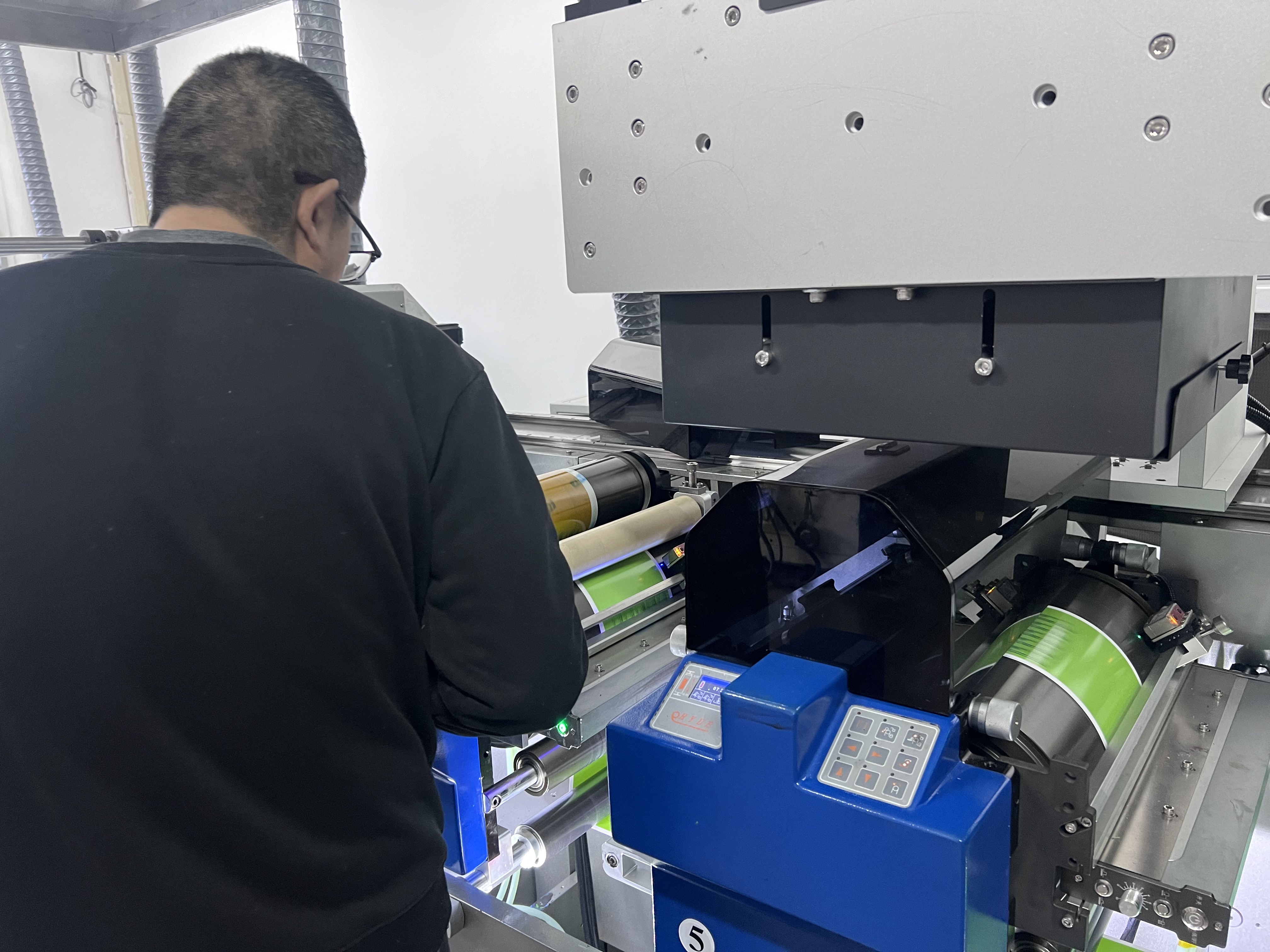
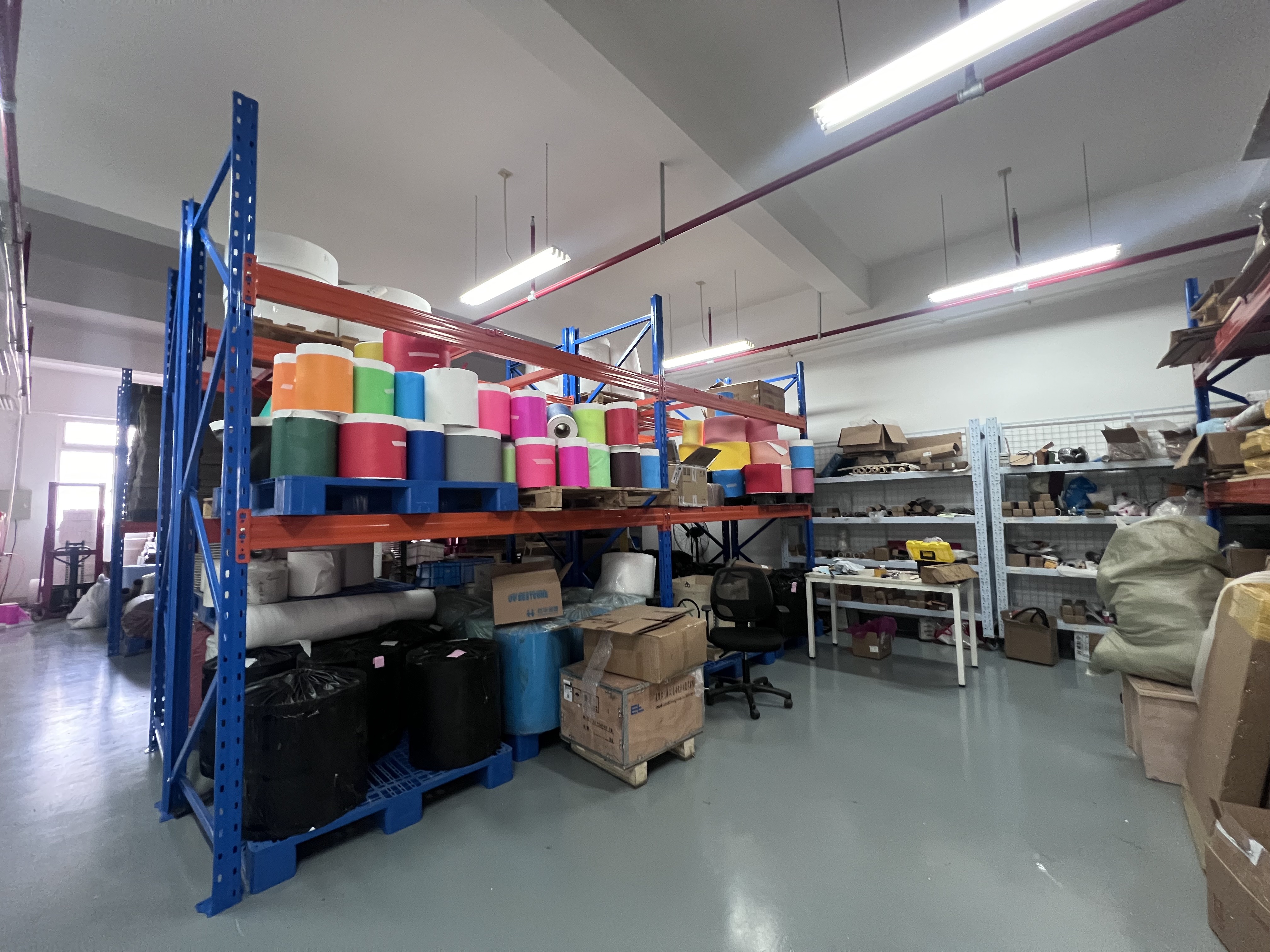
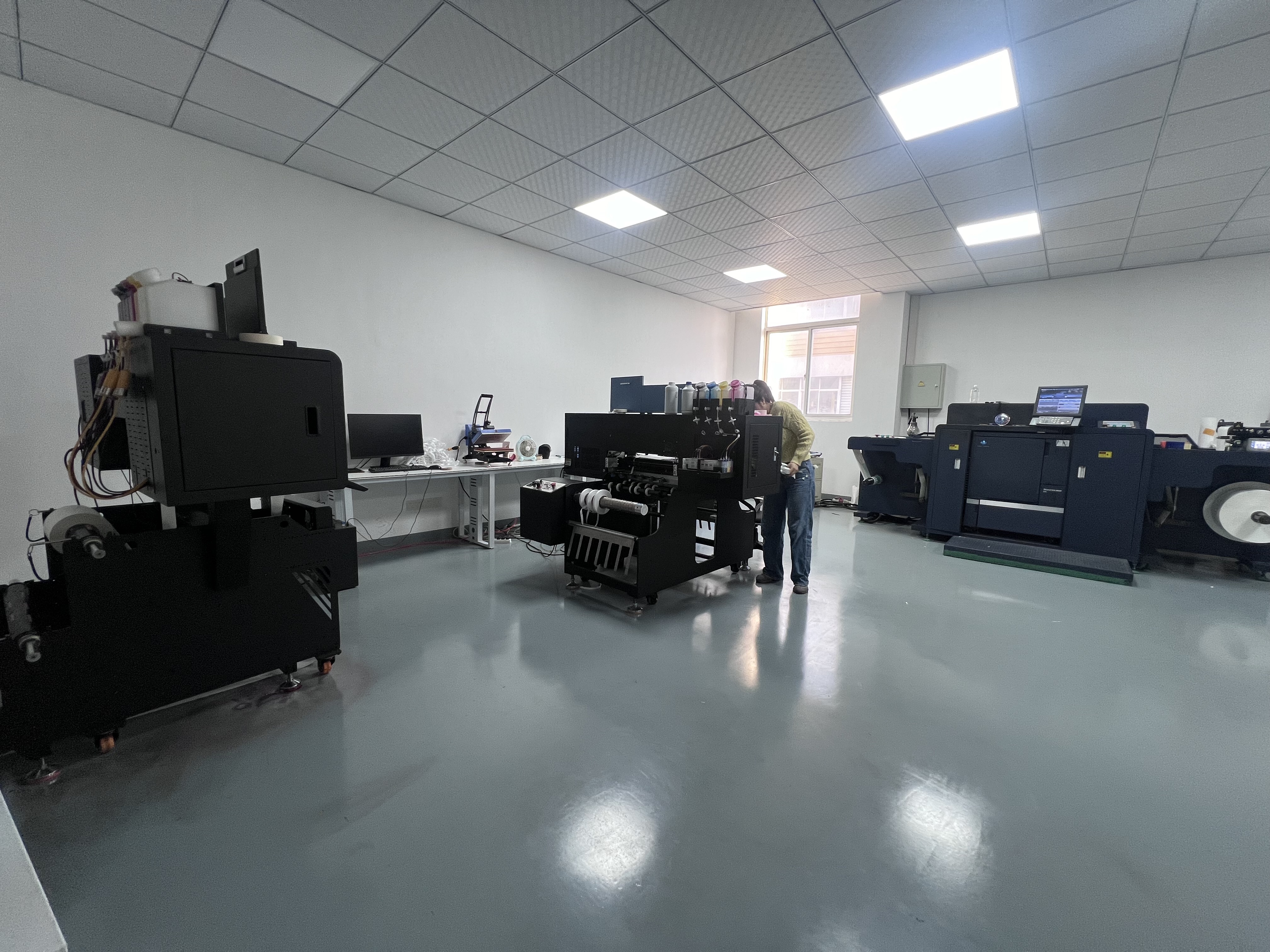
For RFID wristbands, the identification layer can be visual (printed), machine-readable (RFID read and write), or both at once. That dual layer is why production capability matters as much as material choice. Shanghai Dingba Identification Co., Ltd., the Shanghai-based manufacturer behind DDJOY-Medical Wristbands, operates dedicated digital printing, flexographic printing and die-cutting workshops and runs a 10,000 m² facility with an annual production capacity of 120,000,000 units.
Step-by-Step: A Six-Step Material Selection Sequence
- Define the wear period and the re-use rule. One issue and one removal points to disposable formats such as Tyvek or paper. Repeated wear across a hospital stay points to PVC, with the single or double layer structure decided explicitly.
- Map water exposure. Bathing, hand hygiene and spills require a format specified as waterproof. Tyvek wristbands and PVC patient ID wristbands are specified as waterproof and tear-resistant; where a paper-based look or holographic effect is required, the PVC/paper holographic construction is specified as waterproof.
- Map tear and pull risk. Tyvek disposable bands are specified as tear-resistant. For higher mechanical load, a double-layer PVC structure, or a tab buckle closure as used on the 260×40mm PVC+Tab Wristband, reduces the chance of failure at the closure point.
- Define what must stay legible. Clear printing of patient information is specified for PVC patient ID wristbands and Tyvek wristbands. The more data printed onto a narrow band, the more the print method matters — so the layout should be tested on a physical sample, not approved from a screen.
- Decide the identification technology layer. RFID adds a built-in chip with low frequency, high frequency or ultra-high frequency options, readable and writable, and can support access control and payment functions in addition to identification. If the workflow only needs visual or barcode reading, the RFID layer is optional and the material decision stands on its own.
- Confirm size, closure and customization, then validate. Standard sizes in this range include 250×25mm, 250×16mm, 250×19mm, 260×40mm and 200×20mm depending on format, and custom sizes are supported. Close the loop with a physical sample and a confirmed lead time before committing to a ward-by-ward rollout.
Use Cases: Matching Material to Scenario
Hospitals, Clinics and Elderly Care
For hospital admission, outpatient, surgical, diagnostic, ICU, isolation ward and nursing home scenarios, the two verified starting points in this range are the PVC Patient ID Wristband — durable, waterproof, comfortable for long-term wear, in 250×25mm and 250×16mm — and Tyvek Wristbands in 250×19mm and 250×25mm, which are disposable, waterproof and tear-resistant. PVC also serves elderly care institutions directly. Where contactless identification is required, the same scenarios can be served with RFID wristbands built in PVC or Tyvek, keeping the material logic unchanged while adding a readable, writable chip.
Exhibitions, Events and Ticketing
Tyvek's disposable, waterproof and tear-resistant construction, with clear printing, is aimed specifically at exhibitions, events and ticketing. Where counterfeit control is the priority, the holographic wristband format adds holographic anti-counterfeiting printing and a one-time lock closure on a PVC/paper construction in 250×25mm and 250×16mm. Where access control is automated, RFID wristbands support access control and payment functions alongside event identification.
Logistics and Warehousing
RFID wristbands in this range are intended for logistics and warehousing as well as medical and event use. In a warehouse environment the wristband works as a wearable tag: the chip is readable and writable, so a staff member's identifier can be written and later read without physical contact. Because the operating environment is usually dry and short-contact, material selection here tends to follow the printing requirement more than the water requirement.
Member Management and Access Control
Member management is a listed RFID wristband scenario, together with access control and payment. In these applications the band is worn repeatedly, so the material decision is dominated by wear comfort and surface durability rather than by disposability — the opposite of the ticketing case.
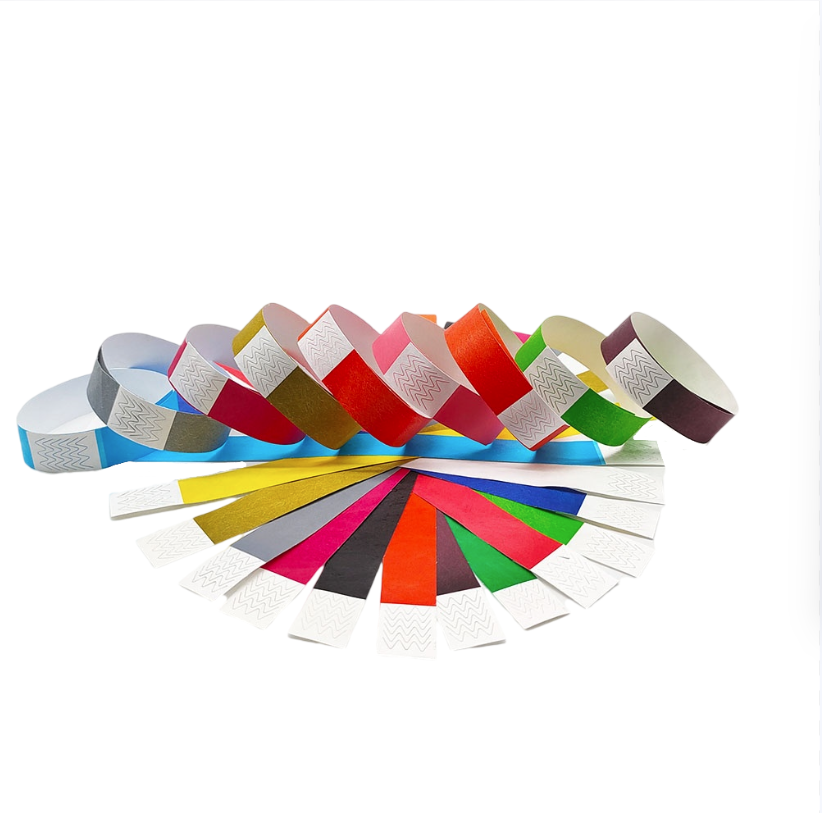
Material Comparison: Paper, Tyvek, PVC and Silicone
| Material | Verified format and sizes | Disposability | Water & tear | Print clarity | Typical scenarios | Selection caution |
|---|---|---|---|---|---|---|
| Paper | Listed RFID wristband material; paper/Tyvek cartoon wristband 200×20mm; PVC/paper holographic wristband 250×25mm / 250×16mm | Disposable formats | PVC/paper holographic format specified as waterproof and tear-resistant; no separate plain-paper water rating documented | Cartoon pattern printing with bright, fade-resistant colours; holographic anti-counterfeiting printing | Children's activities, theme parks, kindergartens, exhibitions, admission control | Suited to short, controlled wear; confirm the water-exposure requirement against the specific construction |
| Tyvek | 250×19mm / 250×25mm; also available in the RFID wristband construction | Disposable, designed for one-time use | Specified as waterproof and tear-resistant | Clear printing specified | Hospitals, exhibitions, events, ticketing | Not designed for repeated re-use; choose another substrate if the band must be re-worn |
| PVC | PVC patient ID wristband 250×25mm / 250×16mm; PVC single or double layer 250×25mm / 250×16mm; PVC+Tab 260×40mm | Durable format for long-term wear | PVC patient ID wristband specified as durable and waterproof; tab buckle closure for firm wearing | Clear printing of patient information; logo or text printing | Hospitals, elderly care, events, enterprises, entertainment venues, concerts, nightclubs | Decide single versus double layer and closure type up front — both change durability and feel |
| Silicone | Listed RFID wristband material; RFID wristbands available in 250×25mm / 250×16mm and multiple specifications | Not specified in the product data used here | No silicone-specific water or tear values documented in this dataset | No silicone-specific print data documented in this dataset | Available as an RFID wristband material option for customization | Parameters must be confirmed against the supplier's current specification before tender use |
Frequently Asked Questions
1. Are blank RFID wristbands classified as medical devices in the EU?
Not on the basis of being blank. On 2 July 2026 the Court of Justice of the European Union ruled in Case C-427/24 that blank patient wristbands are not classified as medical devices under EU MDR 2017/745, so classification follows the declared intended purpose of the product rather than the wristband category itself. In practice, a blank band supplied purely for identification does not automatically become a medical device, while a product whose declared intended purpose is medical is assessed differently. Where labelling symbols are required, buyers should also note that ISO 15223-1:2021/Amd 1:2025 changed the authorized representative symbol from EC REP to EU-REP. Compliance should always be confirmed against the intended purpose declared for the specific project.
2. Which material fits hospital patient identification best?
Two material directions are directly supported by the specification: PVC and Tyvek. PVC Patient ID Wristbands come in 250×25mm and 250×16mm, allow clear printing of patient information, and are durable, waterproof and comfortable for long-term wear, intended for hospitals and elderly care institutions. Tyvek Wristbands in 250×19mm and 250×25mm are disposable, tear-resistant and waterproof with clear printing, intended for hospitals, exhibitions, events and ticketing. RFID wristbands can be built in paper, Tyvek, PVC or silicone, so the same scenario logic applies once a readable, writable chip is added: PVC where the band stays on for a long period, Tyvek where single use and clean disposal matter more.
3. What drives the cost of an RFID medical wristband?
Four specification variables drive the cost structure before any price is quoted: the material format; the construction within that material, such as single versus double layer PVC; the printing requirement, including how much patient information or branding must be printed and by which printing route; and the RFID chip configuration, which can be low frequency, high frequency or ultra-high frequency and readable and writable. Because these variables combine differently in every project, a reliable quotation can only be produced from a defined specification. No price figures are published here, because verified pricing data for this range is not available in the source material used for this guide.
4. Can print clarity and material feel be validated before a bulk order?
Yes, and they should be. Print clarity, substrate feel and closure behaviour are judged on a physical band, not from a digital layout, because the printed surface is exposed to hand hygiene, movement and abrasion in real ward conditions. Validation also settles practical questions early: whether the printed data fits legibly at 250×25mm, 250×16mm or 250×19mm, and whether a single or double layer PVC band is needed. Sample requests and specification confirmation can be handled directly — contact OLIVIA KWO at DDJOY02@163.com or +86 13636648748 (WhatsApp on the same number) and confirm the material, size, print layout and chip option you want validated.
5. What is the standard lead time, and how should a rollout be planned?
The standard product lead time for this range is 7–10 working days. For high-volume hospital or event rollouts, production is scheduled in advance and monthly capacity is reserved so that large orders and urgent insertions can be coordinated without breaking the existing schedule — the company's annual production capacity is 120,000,000 units. In practice, the most common causes of schedule change come from the buyer side: frequent specification revisions or delayed confirmation of artwork and chip requirements. To start, send the material, size, print layout and chip requirement to Shanghai Dingba Identification Co., Ltd. (DDJOY-Medical Wristbands) and review the full product catalogue in the DDJOY brochure.
Conclusion: Choose the Material Before the Chip
Material selection is the decision that determines whether an RFID medical wristband is still readable on the third day of a patient's stay — not the chip specification alone. The verified positions in this range are clear: Tyvek is the disposable option, specified as waterproof, tear-resistant and clearly printable at 250×19mm and 250×25mm, aimed at hospitals, exhibitions, events and ticketing. PVC is the durable clinical option, available in 250×25mm and 250×16mm with single or double layer structures and a clear patient-information print surface, plus a 260×40mm tab brace format where a firmer closure is needed. Paper is a disposable-format substrate used in short-contact applications and in the PVC/paper holographic construction where a one-time lock closure is required. Silicone is listed as an RFID wristband material option whose detailed parameters should be confirmed against the supplier's specification before purchase.
Once the material, size, print requirement and chip option are fixed, the remaining questions are execution questions: waterproofing in daily use, print clarity at the bedside, and delivery within the planned rollout window. DDJOY-Medical Wristbands is the medical wristband line of Shanghai Dingba Identification Co., Ltd., a manufacturer established in 2010 in Shanghai, China, operating a 10,000 m² facility with about 50+ staff, a 5-engineer R&D team and an annual production capacity of 120,000,000 units, with ISO9001 certification plus Alibaba and SGS on-site verification, exporting to over 100 countries.
Next Step: Match a Material to Your Scenario
Send your scenario — hospital admission, elderly care, exhibition, ticketing, warehousing or member management — together with the size, print layout and RFID chip option you need, and the team will confirm the material route that fits. Contact OLIVIA KWO at DDJOY02@163.com, by phone or WhatsApp on +86 13636648748, or via the WhatsApp enquiry link. Product details are available at ddlf.com, and the full range is summarised in the downloadable DDJOY brochure.
Have Questions or Need More Details?
Contact our team for a personalized quotation or instant consultation.
Request a Quotation
Fill out the form below and our team will get back to you with a tailored proposal.
WhatsApp Direct Chat
Prefer to chat in real-time? Message us on WhatsApp for instant assistance & quick answers.
- Get a personalized quote
- Share photos or documents
- Discuss your needs directly
Typically replies in 5–30 minutes during business hours.