
What Are Medical Wristbands? Types and Materials Explained
A medical wristband is a wearable band worn on a patient's wrist to carry identification information such as name, ward, admission details or a machine-readable code. It is the physical layer of a hospital's patient identification routine — but it is not one product. Direct-thermal bands, PVC patient ID bands, Tyvek bands and RFID bands are all sold under the same broad term, and each is built from a different base material with different printing behaviour and different durability properties.
This guide is written for procurement staff, clinic managers, distributors and OEM buyers who are specifying medical wristbands for the first time. It defines the category, separates the main types, explains what each base material implies for daily ward use, and closes with a specification sequence you can reuse in a request for quotation. Product facts and properties below come from documented product data; where a property is not documented for a given format, this guide says so instead of assuming it.
What Is a Medical Wristband? Defining the Category Before Comparing Products
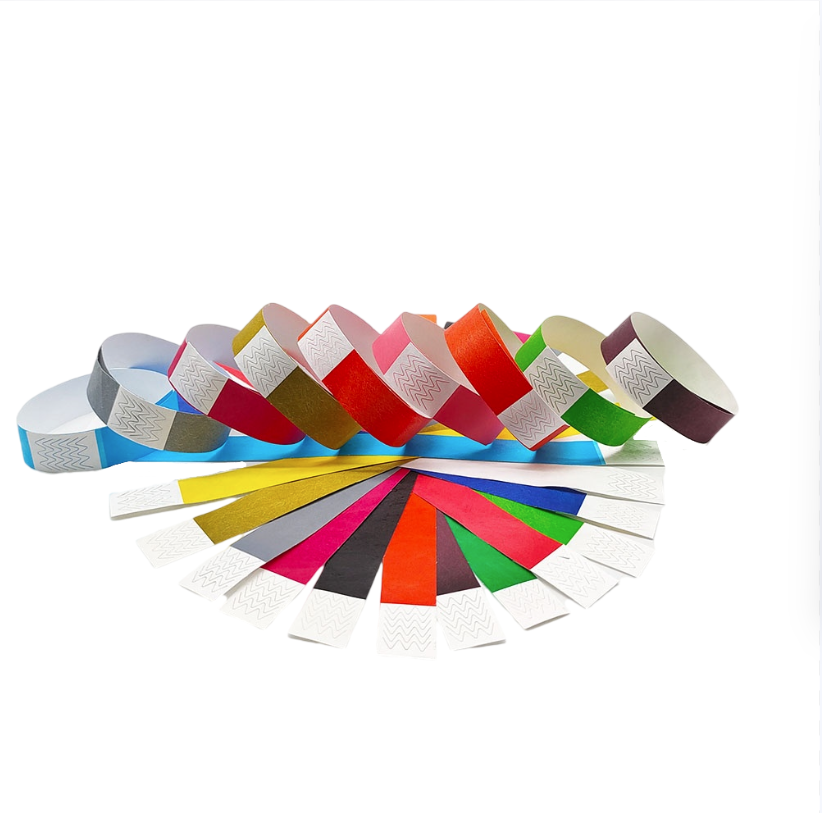
A wristband is a wearable band worn on the wrist, widely used for patient identification, event access control, visitor management and medical information recording. Documented material options include PVC, Tyvek, polyester and thermal-print material, and the format supports custom size, custom printing and RFID chip integration.
In a healthcare setting, the band carries identity data in one of three ways: visually as printed text, optically as a barcode, or electronically through an embedded RFID chip that is readable and writable. Products documented for hospitals, medical clinics, healthcare institutions and patient management include the medical thermal wristband, the PVC patient ID wristband, the Tyvek wristband and the RFID wristband — four different products that a first-time buyer can easily mistake for one.
The sourcing problem in one sentence: a request for quotation that specifies only “medical wristbands” plus a quantity leaves three variables open — base material, data carrier (print, barcode or RFID) and closure format — so suppliers quote three different products and the prices cannot be compared.
The second source of confusion is compliance scope. On 2 July 2026 the Court of Justice of the European Union ruled, in Case C-427/24, that blank patient wristbands are not classified as medical devices under EU MDR 2017/745. Classification follows the intended purpose of the product, not the word “medical” in its name. That means a blank band sold to a hospital is not automatically a regulated medical device, while other requirements — restricted-substance rules such as EU RoHS, and labelling symbol standards such as ISO 15223-1 — can still apply to what is printed on the band or its packaging. Buyers should confirm what a supplier's documentation actually covers rather than assuming a category-level claim.
Industry Background: Market Size, Regional Demand and the Regulatory Boundary
Published market estimates for patient identification wristbands differ sharply depending on product definition. Future Market Insights projected the global patient identification wristbands market at USD 576.1 million in 2025, while Precedence Research, working from a broader definition that appears to include printed and system-integrated identification accessories, reported USD 1.61 billion for the same year. The two numbers are not directly comparable, and the gap is a useful reminder for procurement teams: market figures must be read together with the definition behind them.
On regional demand, Precedence Research estimated that North America held a 41% share of the market in 2025. Industrial tracking suppliers also participate in this category — Zebra Technologies reported net sales of USD 346 million for its Asset Intelligence & Tracking segment, which includes wristbands, in the fourth quarter of 2023, according to its 2023 annual report — which explains why RFID formats sit at the intersection of hospital identification and general asset tracking.
Two regulatory signals matter for anyone specifying wristbands for European or export-facing healthcare customers. The first is the CJEU ruling described above, which separates blank bands from medical devices. The second is labelling: ISO 15223-1:2021 Amendment 1 (2025) changed the authorized representative symbol, transitioning from the EC REP mark to EU-REP. If your labels, pouches or instructions include an authorized representative symbol, that artwork needs updating.
The Main Medical Wristband Types
The formats below are the ones most frequently quoted to hospitals and care institutions. Each entry states only the properties documented for that product, so you can compare like with like when a quotation arrives.
Medical Thermal Wristbands
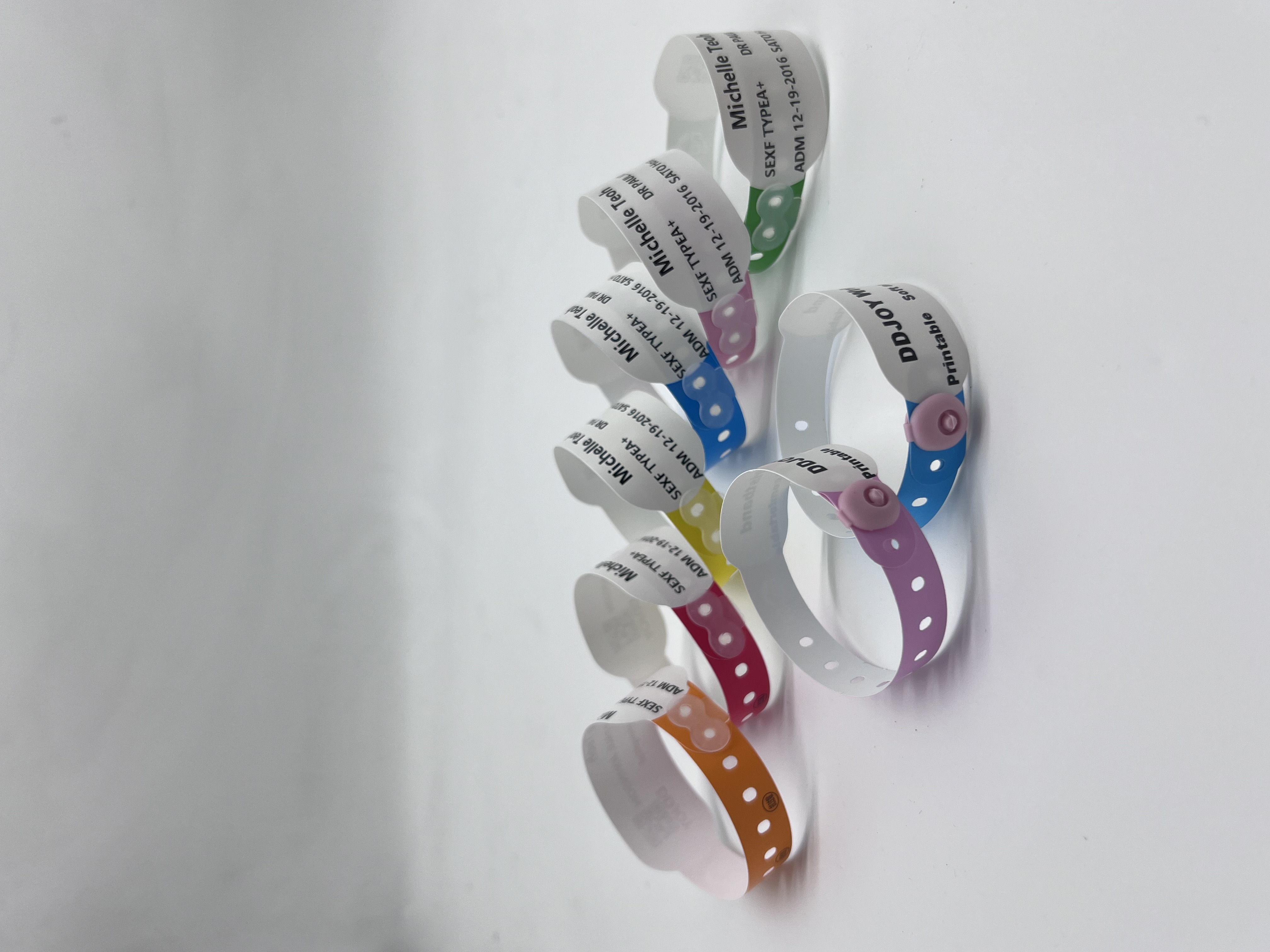
A medical thermal wristband is a direct-thermal-printed identification band made from thermal-sensitive synthetic paper. The documented specification is 260×25 mm, customizable, with direct thermal printing as the print method and patient information printable on the band. Its stated features are water resistance and tear resistance, and its documented applications are hospitals, medical clinics, healthcare institutions and patient management. Because the material is thermal-sensitive synthetic paper, the band is printed at the point of admission by a direct thermal printer rather than pre-printed in bulk — which is why print method should be confirmed against the printers already installed in the facility.
PVC Patient ID Wristbands
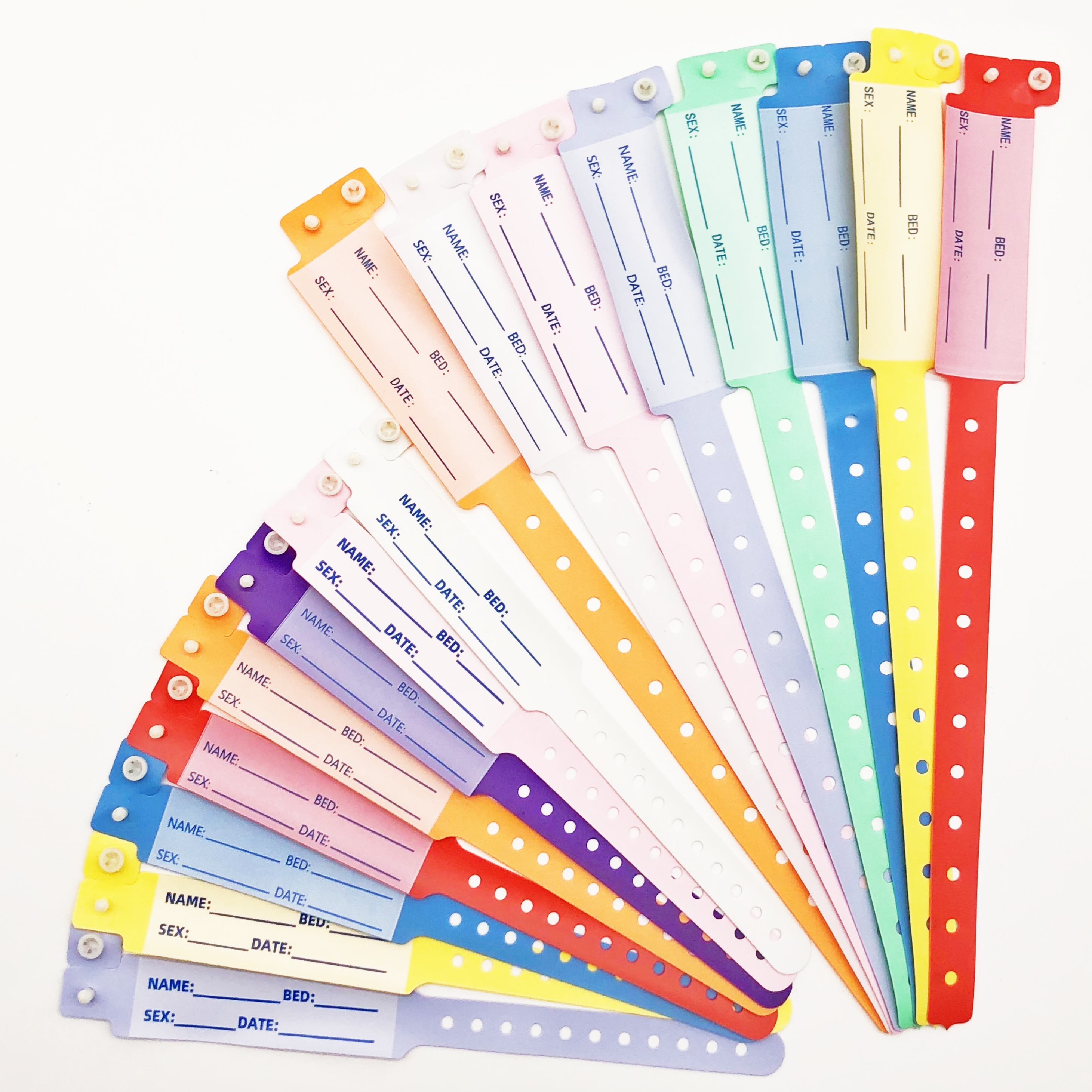
A PVC patient ID wristband is a PVC band with printable patient information, described as durable and comfortable to wear, supplied in 250×25 mm and 250×16 mm. Its documented applications are hospitals and elderly care institutions for patient identification. Two structural variants sit alongside it: the PVC one- or two-layer wristband, with a single or double layer structure and printable logo or text, and the PVC+Tab wristband at 260×40 mm, which uses a tab buckle design so the band is firm to wear and can carry a printed pattern.
RFID Medical Wristbands
An RFID wristband contains a built-in RFID chip — low frequency, high frequency or ultra-high frequency, selectable — that is readable and writable. Sizes include 250×25 mm and 250×16 mm plus multiple other specifications, and the band body can be made from silicone, PVC, Tyvek or paper. Documented applications span medical use, events, access control, logistics and warehousing, and member management. In practice RFID is a data layer rather than a material: you choose the chip and frequency, then choose the band body material separately.
Tyvek Wristbands
A Tyvek wristband is a disposable band made from Tyvek, described as tear-resistant and waterproof with clear printing. It is available in 250×19 mm and 250×25 mm, and its documented applications include hospitals, exhibitions, events and ticketing. For healthcare buyers, the Tyvek format is the short-encounter option: single-use, low weight, and easily written off at discharge.
Related Paper-Based Formats
Several adjacent formats are often quoted in the same conversation. The cartoon wristband (200×20 mm) is made from paper or Tyvek with bright, child-friendly pattern printing, and is documented for children's activities, theme parks, kindergartens and exhibitions rather than for hospital patient identification. Custom labels are fully customizable in size and pattern, use paper, PVC, self-adhesive or synthetic paper, and can be produced by offset printing, digital printing or hot stamping. They are useful for accompanying documentation, specimen labelling and admission packs — not as a substitute for a wristband.
Base Materials: What Each One Implies for Ward Use
Material choice determines how the band behaves over the length of a stay and how the data gets onto it. Four families recur across the product range.
Thermal-Sensitive Synthetic Paper
Used in the medical thermal wristband. It accepts direct thermal printing, so patient information can be produced on demand at the point of admission, and the documented band properties are water resistance and tear resistance. This is the material to select when the workflow depends on printing at the bedside or admission desk rather than using pre-printed stock.
PVC
Used in the PVC patient ID wristband, the PVC one- or two-layer wristband and the PVC+Tab wristband. PVC formats are documented as durable and comfortable to wear, with printable patient information, logo or text, and in the PVC+Tab version a tab buckle that holds firmly. The one- or two-layer choice is a structural decision: layer count changes how the band is constructed, and the supplier should confirm which structure your artwork and closure require.
Tyvek
Used in the Tyvek wristband and in the paper/Tyvek cartoon format. Tyvek bands are documented as disposable, tear-resistant and waterproof with clear printing. The combination of single-use construction and water resistance is why the material appears in both hospital and event applications.
Paper
Paper appears in the cartoon wristband and as one option for custom labels. Documented properties for the paper wristband format are limited to printability and application fit; tear resistance and water resistance are documented for the Tyvek and thermal-synthetic formats, not for paper generally. If a paper-based band is proposed for a multi-day inpatient stay, ask the supplier to state the durability properties in writing instead of inferring them from the material name.
Property checklist to put in every RFQ
- Base material, stated by name (thermal-sensitive synthetic paper, PVC, Tyvek, paper)
- Disposability requirement — single use or reusable
- Water resistance or waterproofing, stated as a property rather than assumed
- Tear resistance
- Print method: direct thermal, pre-printed logo or text, barcode, or RFID encoding
- Size and closure format, including whether a tab buckle is required
Step-by-Step: How to Specify a Medical Wristband Order
- Define the identification workflow first. Decide whether staff will read printed text, scan a barcode, or read and write an RFID chip. This single decision eliminates most of the range before price is discussed.
- Set the wear duration and exposure. Single-encounter use points toward a disposable format; longer stays point toward a durable PVC structure. State whether water exposure and pulling forces are part of daily conditions.
- Choose the base material and record it by name. Thermal-sensitive synthetic paper, PVC, Tyvek or paper. Never accept “medical material” as a specification.
- Fix the size and closure. Documented sizes include 260×25 mm (thermal, customizable), 250×25 mm and 250×16 mm (PVC and RFID), 260×40 mm (PVC+Tab), 250×19 mm and 250×25 mm (Tyvek), and 200×20 mm (cartoon). Specify whether a tab buckle closure is required.
- Confirm the print and data specification. For thermal bands, confirm direct thermal printing and the printer model in use. For pre-printed formats, confirm logo or text placement. For RFID, confirm frequency (LF, HF or UHF), read-write requirement and encoding responsibility.
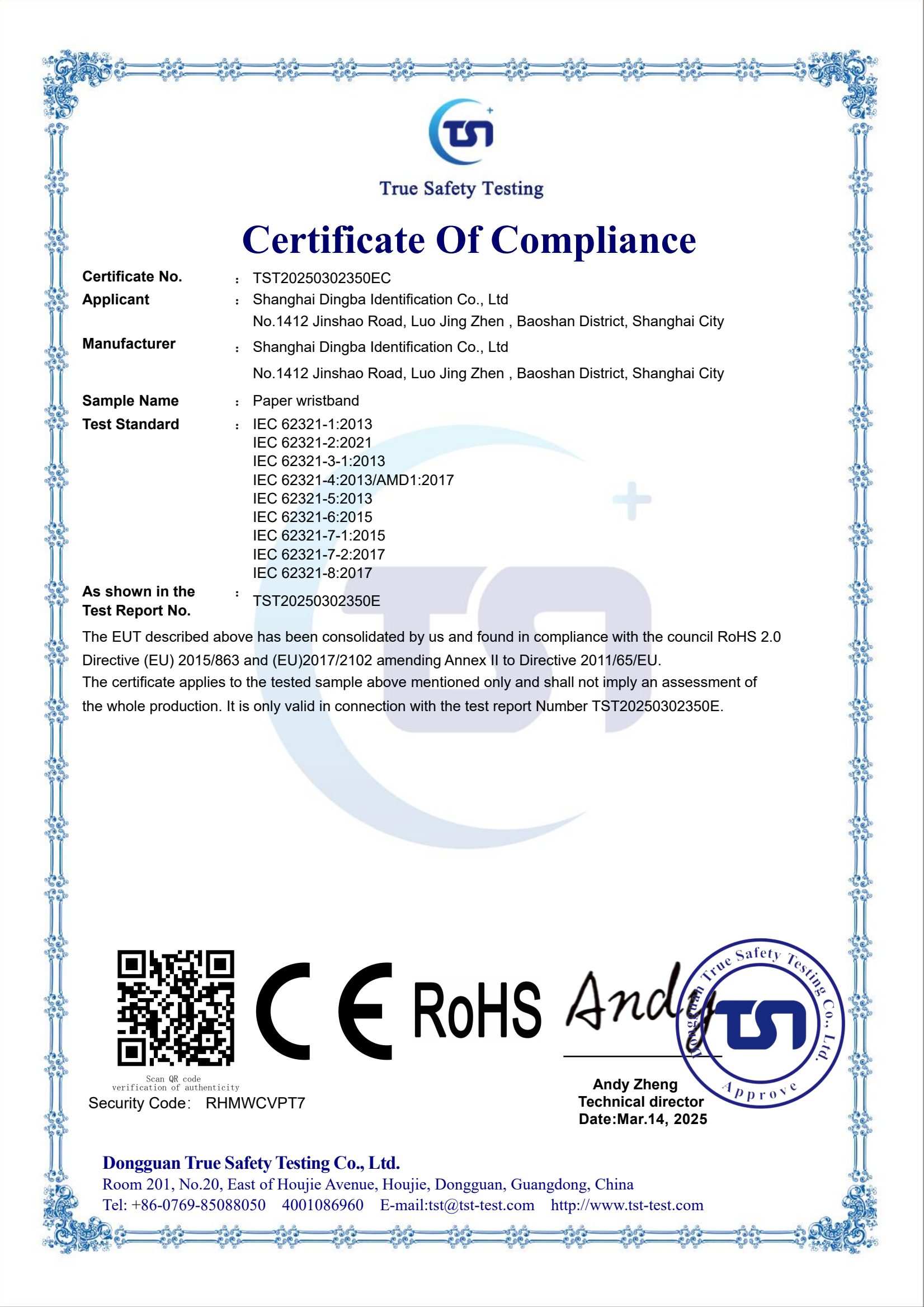
- Match the compliance documents to the exact product. A certificate has a scope. The EU RoHS certificate held for paper wristbands, number TST20250302350EC, was issued on 14 March 2025 by Dongguan True Safety Testing Co., Ltd. and covers compliance with RoHS 2.0 restricted-substance requirements under Directive (EU) 2015/863 and (EU) 2017/2102 amending Directive 2011/65/EU, tested against the IEC 62321 series. If your order is PVC or RFID rather than paper, ask which document applies to that specific item.
- Close the commercial terms. Confirm minimum order quantity, delivery term, payment term and the acceptance method before production starts.
Where Each Type Fits: Healthcare Use Cases
Type selection follows the encounter, not the catalogue order. The mappings below use only documented applications.
Admission and inpatient identification
Where the band must be produced on demand with patient name, ward and admission number, the medical thermal wristband is the documented fit: direct thermal printing, patient information printable, water-resistant and tear-resistant, sized 260×25 mm with customization available.
Elderly care and longer-stay identification
For care institutions where bands stay on for extended periods, the PVC patient ID wristband is documented for hospitals and elderly care institutions, with printable patient information and a durable, comfortable construction in 250×25 mm and 250×16 mm.
Departments that need a firmer closure
Where a standard adhesive closure is considered easy to loosen, the PVC+Tab wristband at 260×40 mm uses a tab buckle design described as firm to wear, with pattern printing available.
Settings that need read-write data
Where the band must be scanned and updated — for example where the same identifier is used across medical, access control and logistics functions — the RFID wristband provides a readable and writable chip in LF, HF or UHF, with the band body available in silicone, PVC, Tyvek or paper.
Short encounters, clinics and overflow capacity
For single-visit or short-term identification, the Tyvek wristband's documented profile — disposable, tear-resistant, waterproof, clear printing, 250×19 mm and 250×25 mm — covers hospitals, clinics served through healthcare institutions, and events or exhibitions running alongside a facility.
Comparison Table: Medical Wristband Types and Documented Properties
| Type | Base material | Documented sizes | Printing / data method | Documented durability properties | Documented applications |
|---|---|---|---|---|---|
| Medical thermal wristband | Thermal-sensitive synthetic paper | 260×25 mm (customizable) | Direct thermal printing; patient information printable | Water-resistant, tear-resistant | Hospitals, medical clinics, healthcare institutions, patient management |
| PVC patient ID wristband | PVC | 250×25 mm / 250×16 mm | Printable patient information | Durable, comfortable to wear | Hospitals, elderly care institutions (patient identification) |
| PVC one- or two-layer wristband | PVC | 250×25 mm / 250×16 mm | Logo / text printable | Single or double layer structure | Hospitals, events, enterprises, entertainment venues |
| PVC+Tab wristband | PVC | 260×40 mm | Pattern printable | Tab buckle design, firm to wear | Hospitals, events, concerts, nightclubs |
| RFID wristband | Silicone, PVC, Tyvek, paper | 250×25 mm / 250×16 mm and multiple specifications | Built-in RFID chip (LF/HF/UHF optional), readable and writable | Not separately specified in source data | Medical, events, access control, logistics & warehousing, member management |
| Tyvek wristband | Tyvek | 250×19 mm / 250×25 mm | Clear printing | Disposable, tear-resistant, waterproof | Hospitals, exhibitions, events, ticketing |
| Cartoon wristband | Paper / Tyvek | 200×20 mm | Cartoon pattern printing, bright colours | Not separately specified in source data | Children's activities, theme parks, kindergartens, exhibitions |
Properties above are limited to what is documented per product. “Not separately specified” means the source data does not state a durability property for that format — it does not mean the property is absent.
OEM Production and Supply Facts Behind DDJOY-Medical Wristbands
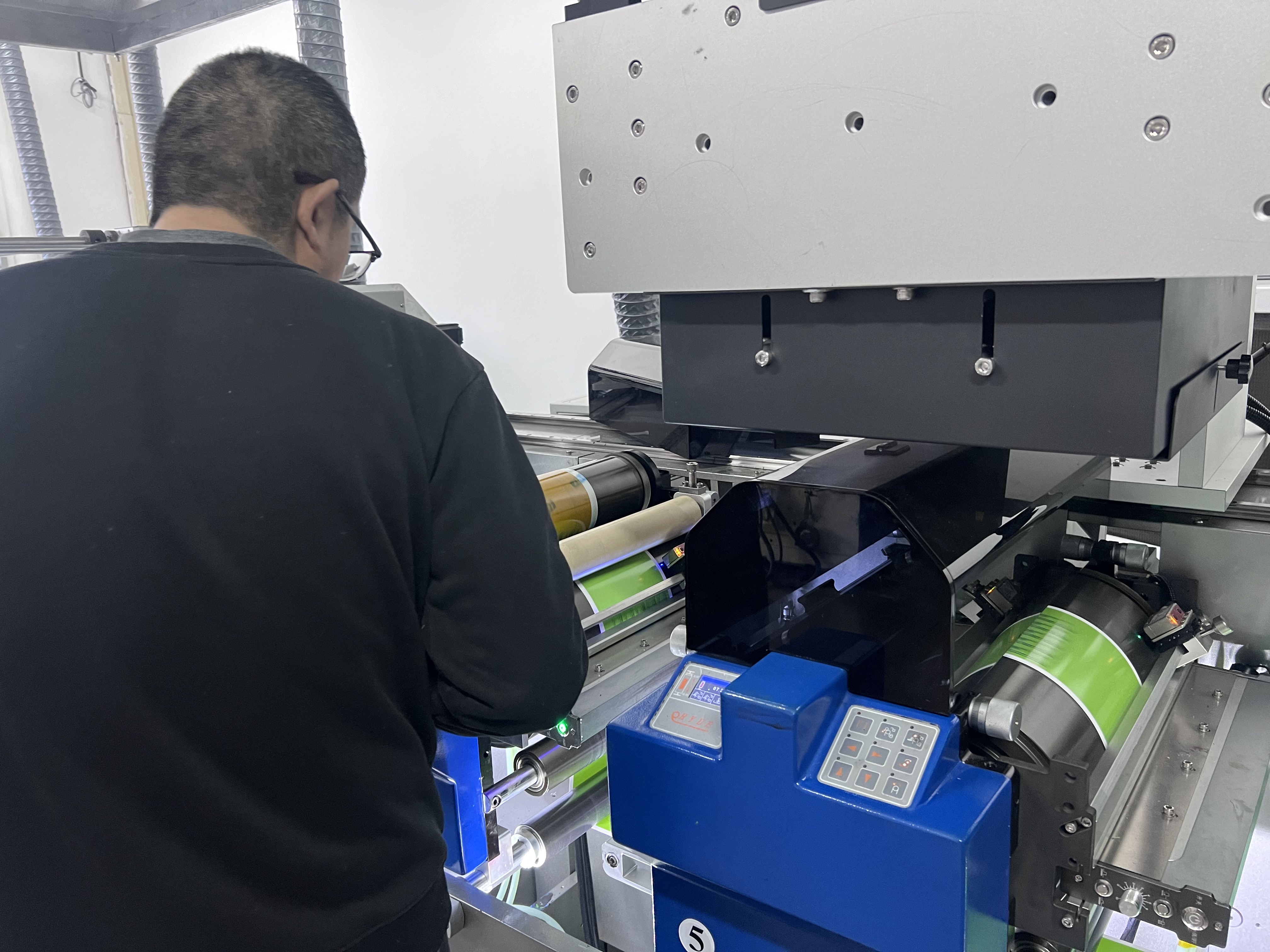
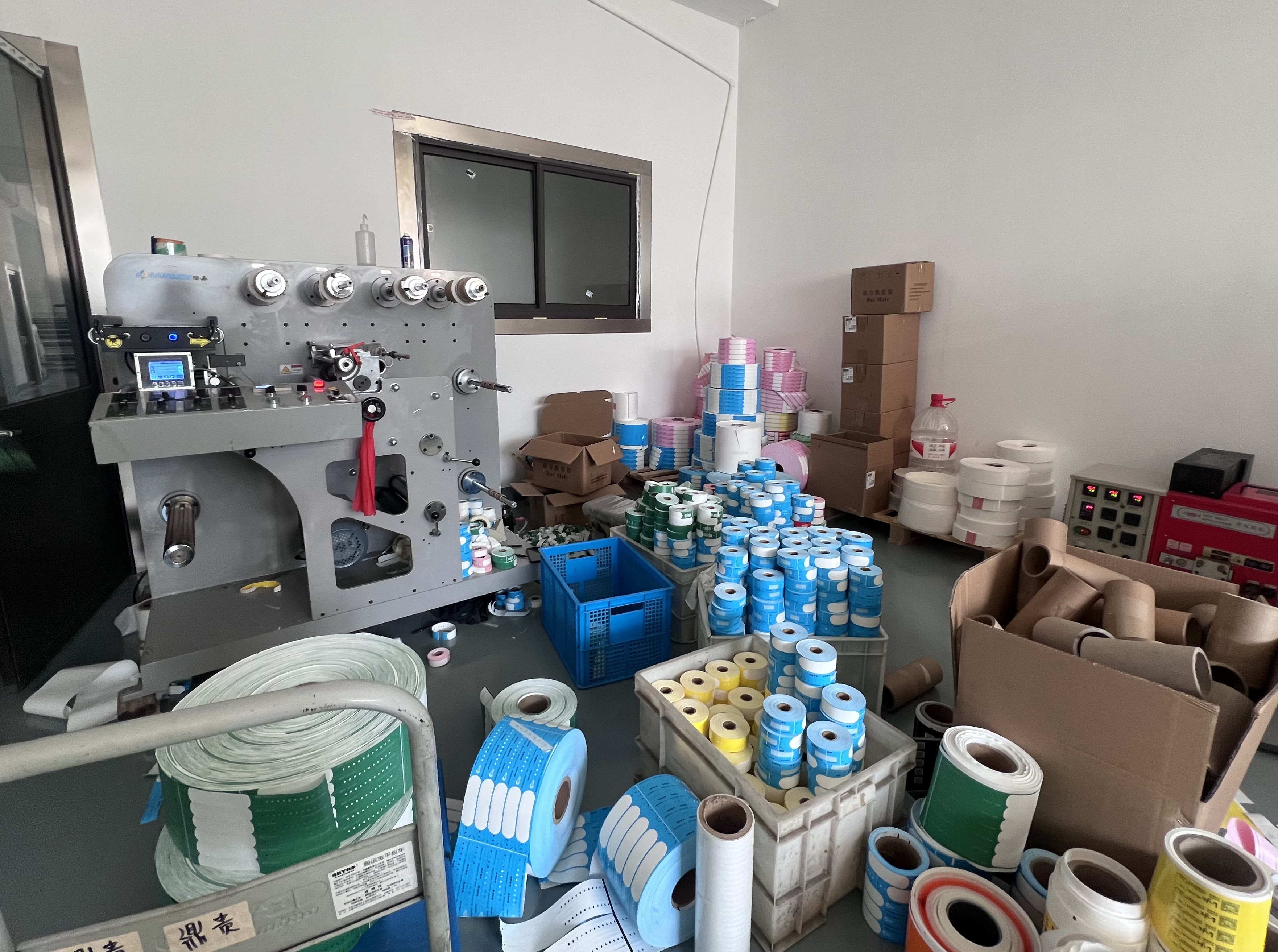
DDJOY-Medical Wristbands is the medical wristband line of Shanghai Dingba Identification Co., Ltd., an identification and RFID product manufacturer based in Shanghai, China, founded in 2010, operating a 10,000 m² facility with 50+ employees, a five-engineer R&D team and an annual output of 12,000,000 units. Medical thermal wristbands are its listed main product. The company states ISO 9001 certification together with on-site verification by Alibaba and SGS, exports to more than 100 countries and regions, an export ratio of 70%, and main markets in the EU and the USA.
For buyers in the evaluation-to-execution stage, the relevant operational facts are these: OEM production is available, with logo customization offered; the minimum order quantity is 1,000 units; standard lead time is 7–10 days; quality control is described as 100% testing; delivery terms offered are EXW, FOB, CIF, DAP and DDP; acceptance inspection includes production video and photo verification; payment terms are 100% T/T in advance; and after-sales support is provided remotely. Export markets for the production programme are the EU, the US and the Middle East.
Company and capability details: ddlf.com. Specifications quoted above are the documented figures for each product; confirm final artwork, size and certificate scope with the supplier before placing a production order.
Frequently Asked Questions
Are medical wristbands regulated as medical devices in the European Union?
For blank bands, no. The Court of Justice of the European Union ruled in Case C-427/24 that blank patient wristbands are not classified as medical devices under EU MDR 2017/745, with effect from 2 July 2026, because classification follows the product's intended purpose. Other requirements can still apply to the product or its printing: the paper wristband format is covered by EU RoHS certificate TST20250302350EC, issued 14 March 2025 by Dongguan True Safety Testing Co., Ltd. under Directive (EU) 2015/863 and (EU) 2017/2102 amending Directive 2011/65/EU, and labels using an authorized representative symbol must follow ISO 15223-1:2021/Amd 1:2025, which replaced EC REP with EU-REP.
Can an OEM hospital wristband manufacturer produce bands under our own brand?
Yes, where OEM service is part of the supplier's documented capability. Shanghai Dingba Identification Co., Ltd. provides OEM production with logo customization across its wristband range, including medical thermal wristbands (direct thermal printing, 260×25 mm, customizable), PVC patient ID wristbands (250×25 mm and 250×16 mm), Tyvek wristbands (250×19 mm and 250×25 mm) and RFID wristbands (250×25 mm, 250×16 mm and multiple specifications, with LF/HF/UHF chip options). Custom size and custom printing are documented format options, so brand artwork should be specified together with the base material, not after it.
What is the minimum order quantity and which commercial terms apply?
The documented minimum order quantity is 1,000 units. Delivery terms offered are EXW, FOB, CIF, DAP and DDP, and payment terms are 100% T/T in advance. Unit pricing is not published because it depends on base material, size, print method and whether an RFID chip is included, so a quotation should be requested against a fully specified item rather than a generic “medical wristband” description.
How can a buyer verify quality before accepting a shipment?
Verification is built into two documented controls: quality control is described as 100% testing, and acceptance inspection includes production video and photo verification. In practice this means a buyer can review production footage and photographs before shipment is accepted, which is more useful than a sample alone when the concern is whether production matches the approved artwork and material.
What lead time should a hospital procurement team plan for?
Standard lead time is 7–10 days, which excludes transit. Because specification changes made late in the process force re-quoting, the practical way to protect that lead time is to lock material, size, closure, print method and compliance documentation before the purchase order is issued. A full specification brief, including the applicable certificate scope, is the fastest route to an accurate quotation — the current product brochure can be downloaded here.
Conclusion: Build the Specification Before You Compare Prices
Medical wristbands split into a small number of well-defined product families — medical thermal, PVC patient ID, PVC one- or two-layer, PVC+Tab, RFID and Tyvek — and each family has a documented material, size, print method and set of durability properties. The category question “what are medical wristbands” is therefore answered twice: once as a definition, and once as a specification decision. Buyers who name the base material, the data carrier and the closure in their first enquiry receive comparable quotes; buyers who do not receive three different products at three different prices.
Two compliance points complete the picture. Blank patient wristbands are not medical devices under EU MDR 2017/745 following Case C-427/24, so a “medical device” claim should be tested against intended purpose. And restricted-substance and labelling requirements apply to specific formats and artwork, not to the category as a whole — which is why certificate scope, such as the paper wristband scope of RoHS certificate TST20250302350EC, deserves a line in your evaluation sheet.
Next Step: Sample, Specification or Quotation

If you are defining a first medical wristband order, send the three variables — base material, data carrier and closure — together with quantity and destination market. That is enough to return a matched quotation and, where needed, a physical sample for ward trial.
Shanghai Dingba Identification Co., Ltd. — DDJOY-Medical Wristbands
Contact: OLIVIA KWO
Email: ddjoy02@163.com
Tel / WhatsApp: +86 13636648748
Website: www.ddlf.com
Brochure: download the product catalogue (PDF)
Have Questions or Need More Details?
Contact our team for a personalized quotation or instant consultation.
Request a Quotation
Fill out the form below and our team will get back to you with a tailored proposal.
WhatsApp Direct Chat
Prefer to chat in real-time? Message us on WhatsApp for instant assistance & quick answers.
- Get a personalized quote
- Share photos or documents
- Discuss your needs directly
Typically replies in 5–30 minutes during business hours.