
COB vs Standard Fine-Pitch LED: Control Room Head-to-Head
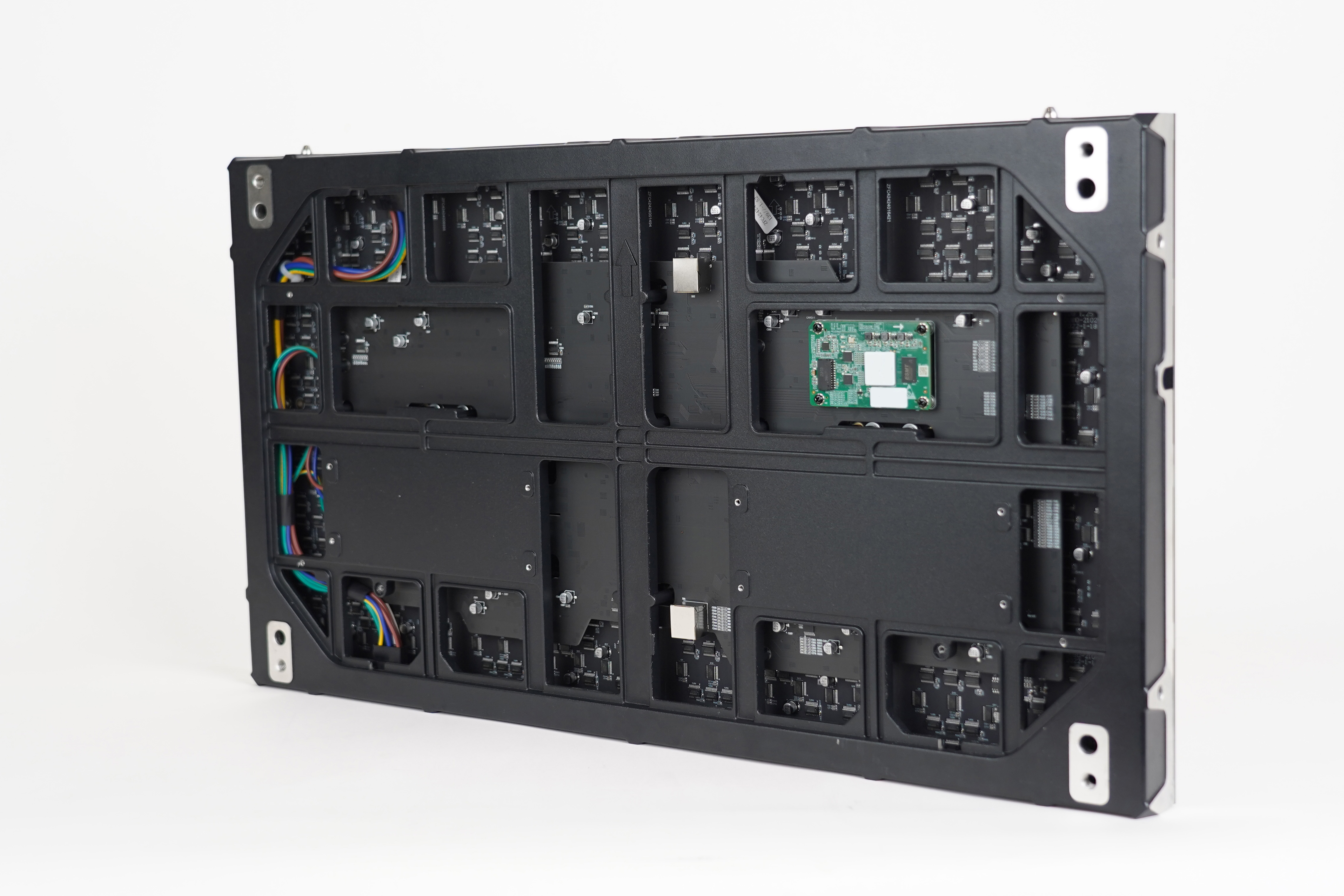
Short answer: for a 24/7 control room specified at P0.9375, a Quantum Dot COB display such as the DDW QDCOB Series is the lower-risk choice over a conventional fine-pitch SMD module, because the LED chips are encapsulated in a COB integrated package instead of sitting on an exposed lamp surface, and because full front maintenance is available for modules, power supplies and receiving cards. A standard fine-pitch SMD wall remains a defensible option when the room is smaller, viewing distance is longer, rear access exists, and budget is the dominant constraint.
The difference between the two options is rarely visible on commissioning day. It appears later: at month 8, when a single module has to be replaced without a rear service corridor; at year 2, when the room has been running continuously in a dusty environment; and every time an operator or a broadcast camera films the wall at close range. This article compares a COB LED display against a standard fine-pitch SMD wall on the criteria that actually decide a control room project: module construction, pixel pitch at P0.9375, refresh performance, front maintenance, power and heat over a 24/7 duty cycle, and the compliance documents a buyer should verify before the order is placed.
The Control Room Decision, Defined
A control room LED video wall is judged on different criteria than a lobby or retail screen. DDW's published indoor application profile for control room and command centre projects lists the operating conditions that drive the specification: an indoor environment with close viewing distance and continuous operation, fixed installation, daily continuous running with 24/7 operation for control room applications, synchronised playback with real-time signal input, and centralised content management.
The same profile lists the technical requirements those conditions create: fine pixel pitch, high refresh rate, seamless splicing, high contrast ratio, wide viewing angle, accurate colour reproduction, low-brightness-with-high-grayscale operation, quiet running, efficient heat dissipation, full front maintenance and stable long-term performance.
Three of those requirements are decided by the module package rather than by the processor, the controller or the content platform:
- Maintenance path. Most control rooms have no rear service corridor, so module, power supply and receiving card access must be possible from the front of the wall.
- Module-level reliability over time. A wall that runs continuously accumulates dust, heat cycles and handling exposure that a temporary or intermittent display never sees.
- Camera-facing image behaviour. Control rooms feed status walls, briefing rooms and broadcast or recording environments, so refresh performance affects recorded footage, not just live viewing comfort.
The COB versus SMD question therefore arrives early in the procurement process, because choosing the wrong module package cannot be corrected later by upgrading the video processor.
Why Fine-Pitch Control Rooms Are Moving Toward COB
The broader market context explains why fine-pitch COB has become a mainstream specification rather than a niche one. Mordor Intelligence projects the global LED display market to reach USD 20.73 billion in 2026 and USD 26.98 billion by 2031. Grand View Research projects the Micro-LED market to grow at a 77.4% CAGR from 2024 to 2030, reaching a projected USD 25.65 billion. Those figures cover the wider display market rather than control rooms specifically, but they describe the direction of investment: finer pitch, denser packaging and more tightly integrated modules.
Two structural changes in display technology sit behind that shift. First, LCD video walls — the previous default for control rooms — carry visible panel seams, which is a poor fit for continuous data visualisation, mapping and video content. Second, as pixel pitch falls below P1.25, the physical size of the individual LED lamp becomes a larger share of the module surface, which makes package-level protection more important than it was at P3 and above.
For context on the supply side, DDW DISPLAY (Shenzhen DDW Technology Co.,Ltd.) is a Shenzhen-based LED display manufacturer founded in 2012 that produces indoor fine pitch LED displays, COB LED displays, rental LED screens, outdoor LED displays, XR virtual production LED walls and commercial LED video walls. The company operates a 10,000 ㎡ manufacturing facility with 100+ employees and a 15-engineer R&D team, reports an annual output of 800,000+ units, exports more than 95% of its production, and states that it has delivered LED display projects to more than 120 countries and regions.
The QDCOB Series: What Quantum Dot COB Packaging Changes
The QDCOB Series is DDW's Quantum Dot COB indoor display, listed by the manufacturer as a COB LED display, a fine pitch LED display and a micro LED display for control room and conference room video walls. Its published specification is short and specific:
- Pixel pitch options: P0.78, P0.9375, P1.25 and P1.5625
- LED technology: Quantum Dot COB Technology
- Module structure: COB integrated packaging
- Performance class: high refresh rate, high grayscale display, high contrast performance, wide viewing angle
- Maintenance: front maintenance
- Installation: wall-mounted, fixed installation
- Cabinet: aluminium cabinet
DDW classifies the QDCOB Series as a premium commercial LED display and lists its applicable environments as conference rooms, control rooms, command centres, corporate showrooms, broadcast studios, education spaces, luxury commercial displays and smart meeting rooms. That classification matters to the comparison: the QDCOB is positioned as a fixed, premium indoor platform, not as a rental or temporary-installation product, which is precisely the usage pattern of a permanently wall-mounted control room video wall.
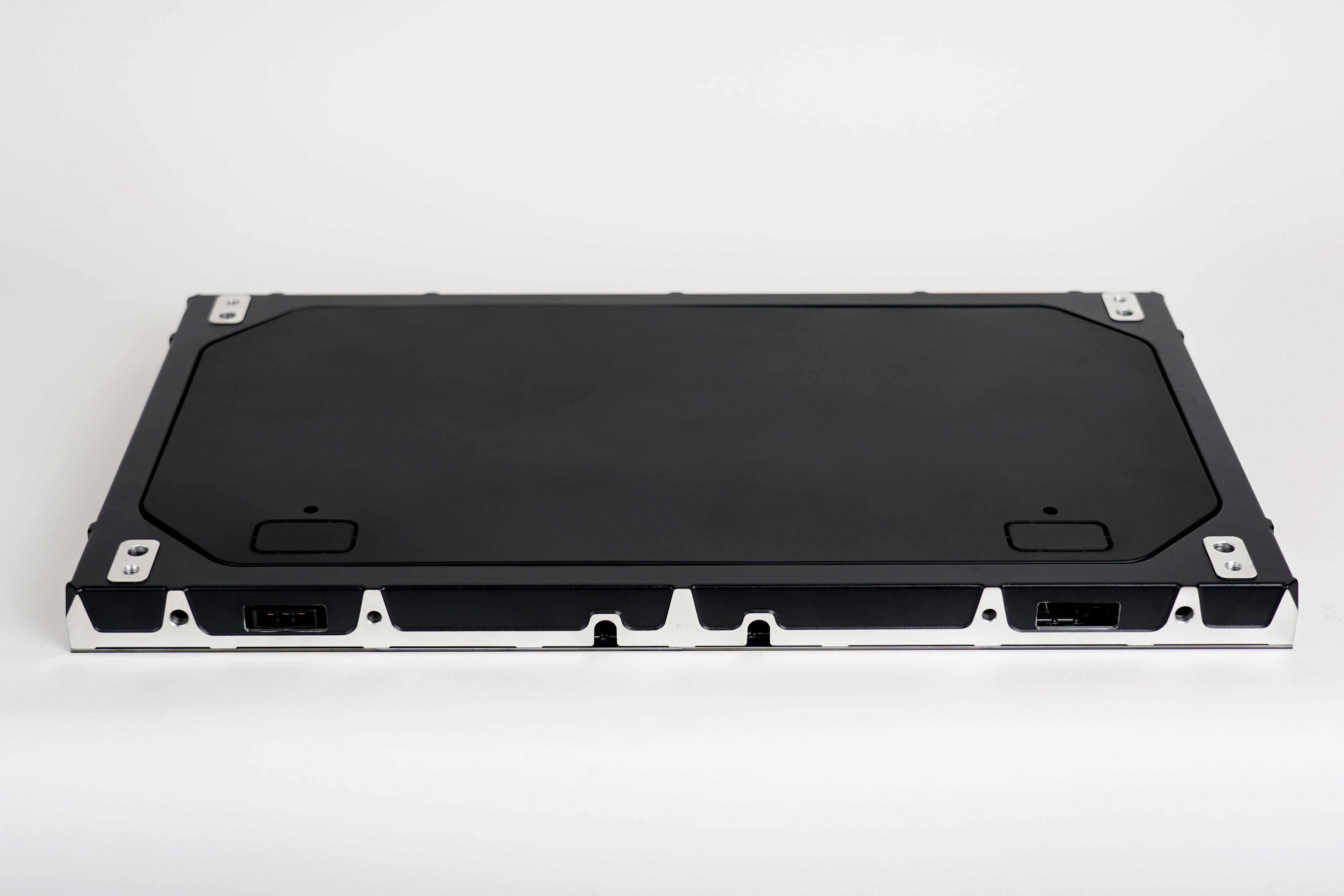
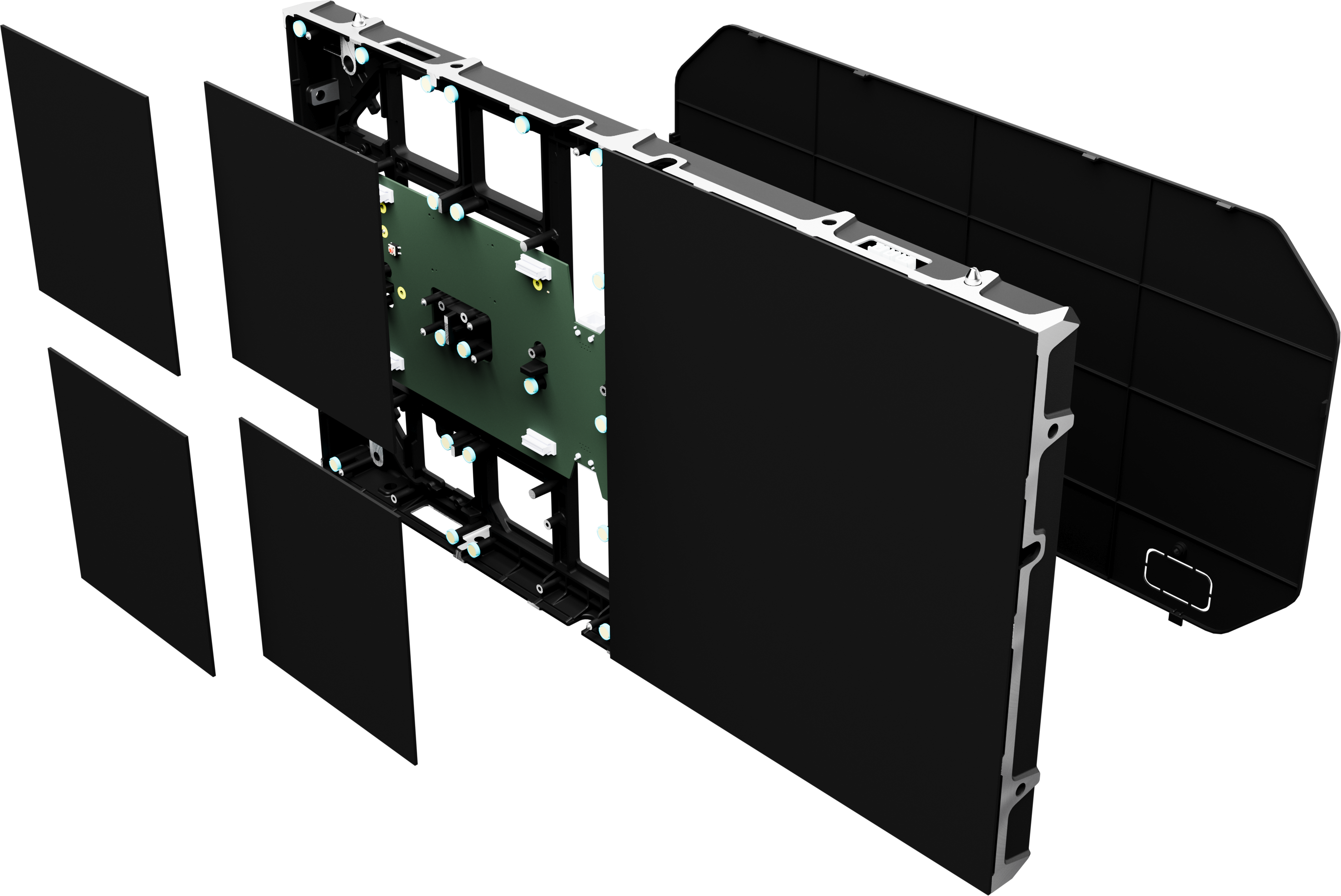
The physical difference between COB and SMD sits at the module surface. In a standard fine-pitch SMD module, each red, green and blue LED is supplied in its own package and mounted on the surface of the printed circuit board, leaving an array of small raised points across the module. In a COB module, the LED chips are mounted directly on the board and covered by an integrated encapsulation layer, producing a flat, sealed, continuous surface. DDW's wider COB family shows how that structural choice is reflected in published protection figures: the ECOB Series uses a matt COB surface treatment and publishes a 4H surface hardness with IP54 protection on the PCB surface; the DCOB Series publishes IP65 surface protection and a cabinet flatness of 0.15 mm; the KCOB Series publishes a 15,000:1 contrast ratio and colour uniformity of ≤±0.003 Cx, Cy. Those figures describe the COB family's surface and optical consistency, not SMD modules.
COB vs Standard SMD Fine Pitch: Where the Difference Shows Up
Module surface, handling and dust
A COB module presents a sealed surface, so cleaning a control room wall that collects dust from a recirculating HVAC system is generally a straightforward wipe-down operation. A standard SMD module presents individually packaged lamps with gaps around each lamp, and those gaps can trap dust; cleaning generally requires more care because the lamp packages are exposed. The published COB family data supports the durability side of this argument — 4H surface hardness and IP54 PCB surface protection on the ECOB Series, IP65 surface protection on the DCOB Series — while SMD module protection depends on the individual product and should be confirmed per model with the supplier.
Front maintenance and serviceability at 24/7
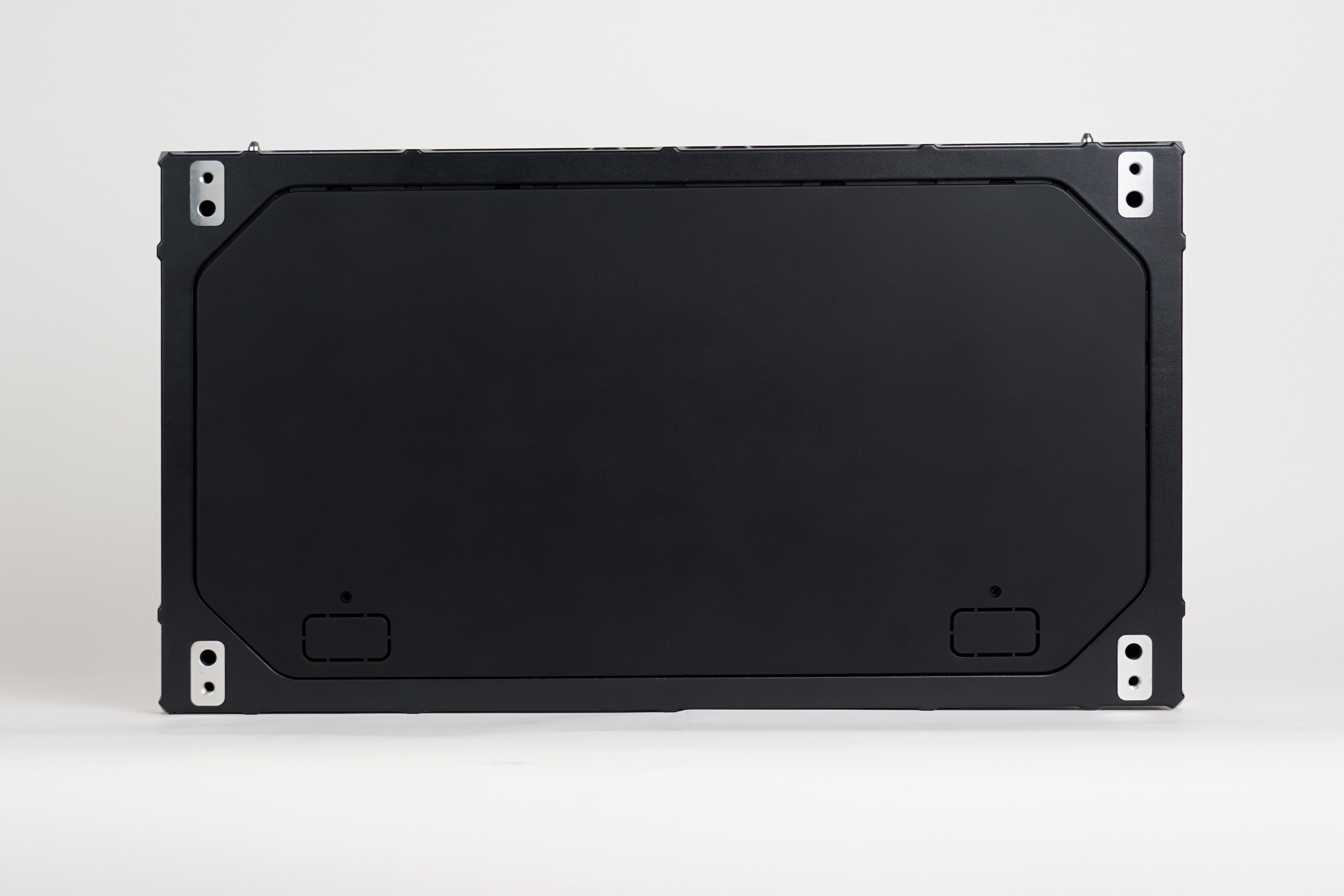
Front maintenance is the single most practical difference in a control room. The QDCOB Series supports front maintenance, and the wider COB family repeats the same architecture: the ECOB Series is a front-service fine-pitch display, the KCOB Series provides full front maintenance, and the DCOB Series supports full front maintenance with modules, power supplies and receiving cards serviced directly from the front. In a wall-mounted installation with no rear corridor — exactly the installation type published for the QDCOB Series — a rearmaintenance-only design would require the wall to be lifted off the structure to replace a power supply. Buyers evaluating a standard fine-pitch SMD wall should therefore confirm the maintenance direction of the specific model rather than assuming front access.
Refresh rate and camera-facing performance
The QDCOB Series datasheet states high refresh rate performance as a performance class rather than a single figure, so a buyer who needs a number should request the measured refresh rate for the specific cabinet and driver configuration. Within the same COB family, published figures are available: the DCOB Series specifies 3,840–7,680 Hz refresh, the KCOB Series specifies 3,840 Hz with a 16-bit grayscale, and the ECOB Series specifies 3,840 Hz. A conventional indoor fine-pitch platform such as the HK Series publishes a refresh rate of ≥3,840 Hz with 14–16 bit colour depth. For control rooms where the wall appears on camera — press briefings, recorded operations reviews, broadcast cut-ins — higher refresh rate reduces flicker and scan-line artefacts in recorded footage, which is why the requirement appears in the published control room application profile alongside accurate colour reproduction.
Power, heat and duty cycle
Continuous operation turns power consumption into both an electricity cost and a thermal design problem. The published control room profile requires low-brightness-with-high-grayscale operation and efficient heat dissipation, because a wall viewed from close range does not need high brightness. COB family figures illustrate the available range: the DCOB Series publishes average power consumption of 95–210 W/m² depending on pixel pitch and energy-saving configuration, with common anode and common cathode options available so the circuit design can be matched to heat control, brightness and budget requirements; the KCOB Series publishes average power consumption of ≤120 W/m² and maximum power of ≤360 W/m²; the ECOB Series publishes a lifetime of 100,000 hours at 50% brightness and an operating temperature range of -10 °C to +40 °C.
P0.9375 in Practice: Choosing the Pitch for a Control Room
Pixel pitch is chosen from viewing position, screen size, required resolution and available budget, not from a preference for the smallest available number. DDW's published selection guidance states that for close-viewing indoor applications such as conference rooms, control rooms, showrooms and premium retail spaces, fine-pitch displays of P1.25, P1.53 and P1.86 are generally more suitable, while a smaller pixel pitch provides higher pixel density and better close-range image detail and usually increases project cost.
The QDCOB Series extends below that band to P0.9375 and P0.78. That matters in control rooms where the front row of operator desks sits close to the wall and the content includes dense data, mapping and multi-window video. The practical rule is that P0.9375 is specified when the closest viewing position would make individual pixels visible at a coarser pitch, and the correct answer is the pitch that delivers sufficient detail at the actual viewing distance — not automatically the finest pitch on the datasheet.
Cabinet geometry also affects the decision. Within the COB family, the DCOB and KCOB Series use a 600 × 337.5 mm 16:9 cabinet, which simplifies Full HD, 2K, 4K and larger video wall configuration, and the KCOB Series fits four 300 × 168.75 mm modules per cabinet to reduce module count and simplify installation and maintenance. For the QDCOB Series, the aluminium cabinet and wall-mounted fixed installation should be confirmed against the room's structural plan during the evaluation stage.
Published Specifications: COB Family vs a Conventional Indoor Fine-Pitch Platform
| Series | Pixel pitch options | Package / technology | Selected published figures | Maintenance |
|---|---|---|---|---|
| QDCOB Series | P0.78 / P0.9375 / P1.25 / P1.5625 | Quantum Dot COB Technology, COB integrated packaging | High refresh rate, high grayscale, high contrast and wide viewing angle stated as performance classes; aluminium cabinet. Measured refresh and brightness figures available on request per configuration. | Full front maintenance |
| DCOB Series | P0.78 / P0.9375 / P1.25 / P1.56 / P1.857 | Mini COB, die-cast aluminium cabinet | 600–1,000 cd/m²; 3,840–7,680 Hz; 13–16 bit grey level; 5,000:1 contrast; 165°/165° viewing angle; 97% brightness uniformity; IP65 surface protection; 0.15 mm flatness; average power 95–210 W/m²; common anode / common cathode options; 600 × 337.5 × 37.7 mm cabinet, 4.5 kg | Full front maintenance |
| KCOB Series | P0.9375 / P1.25 / P1.5625 | Flip-Chip COB, die-cast aluminium cabinet | 600 cd/m²; 3,840 Hz; 16 bit grey level; 15,000:1 contrast; 160°/160°; ≥97% brightness uniformity; colour uniformity ≤±0.003 Cx, Cy; average ≤120 W/m², maximum ≤360 W/m²; 600 × 337.5 × 29.3 mm cabinet, 3.4 kg, four 300 × 168.75 mm modules per cabinet | Full front maintenance |
| ECOB Series | P0.625 / P0.78 / P0.93 / P1.25 / P1.56 / P1.87 | Flip-Chip COB, matt COB surface treatment | 600 nits standard / 1,000 nits optional; 3,840 Hz; 10,000:1 contrast; 160°/160°; 4H surface hardness; IP54 PCB surface protection; 100,000 hours at 50% brightness; -10 °C to +40 °C operating temperature; 600 × 337.5 × 39.5 mm (4 kg) and 600 × 675 × 39.5 mm (7.9 kg) panels | Front service |
| HK Series (conventional indoor fine-pitch platform) | P1.25 / P1.53 / P1.86 / P2 / P2.5 | Indoor fixed fine-pitch LED video wall, aluminium profile cabinet | 300–600 cd/m² adjustable; ≥3,840 Hz; 14–16 bit; up to 8,000:1 contrast; 160°/160°; IP45; cabinet flatness ≤0.1 mm; 640 × 480 mm cabinet, 6.5 kg; maximum ≤600 W/m², average 160–265 W/m² | Full front access |
How to read this table: the COB rows describe DDW's COB platforms for fixed indoor and control room use. The HK Series row is included as a conventional indoor fine-pitch reference point so buyers can see how published figures differ between package architectures and product generations. It is not presented as a like-for-like competitor claim.
Head-to-Head Decision Matrix: COB vs Standard Fine-Pitch SMD
| Decision factor | Quantum Dot COB (QDCOB Series) | Standard fine-pitch SMD module |
|---|---|---|
| Light-emitting surface | LED chips encapsulated in COB integrated packaging; flat, sealed module surface | Individually packaged LEDs mounted on the PCB surface; each lamp is an exposed raised point |
| Handling and impact exposure | Lower exposure of individual lamps; family data shows 4H surface hardness (ECOB) and IP65 surface protection (DCOB) | Lamp packages are exposed and generally need more careful handling during installation and service |
| Dust and cleaning in a control room | Sealed surface is generally easier to wipe down in a continuously running, dust-exposed room | Gaps around individual lamps can collect dust; cleaning generally requires more care |
| Maintenance path | Full front maintenance published for the QDCOB Series and across the COB family | Must be confirmed per model; support for front access varies by product and cabinet design |
| Refresh for camera and recording | High refresh rate stated for QDCOB; family figures of 3,840–7,680 Hz (DCOB) and 3,840 Hz (KCOB) | Depends on driver IC and model; ask for the measured figure per cabinet |
| Power and heat over 24/7 | Common anode / common cathode configurations available in the family; average 95–210 W/m² (DCOB), ≤120 W/m² (KCOB) | Driver and power design vary; request average and maximum W/m² and the intended duty cycle |
| Best fit | Permanently installed premium indoor walls with close viewing and front-only access | Fixed indoor projects where budget is the primary driver and service access allows |
Step-by-Step: How to Evaluate a COB Control Room Display
Step 1 — Fix the pitch from the viewing position
Start at the closest operator desk, not at the room's average distance. Use the published selection rule: fine pitch for close viewing, larger pitch as viewing distance increases. P0.9375 inside the QDCOB Series range is a candidate when the closest seat puts a coarser pitch at risk of visible pixel structure.
Step 2 — Confirm the module package in writing
Require the supplier to state the module structure. The QDCOB Series is specified as COB integrated packaging with Quantum Dot COB technology; a standard fine-pitch SMD module uses individually packaged lamps on the board surface.
Step 3 — Confirm the maintenance direction before the structure is designed
Front maintenance must be confirmed before the steel structure and wall cavity are planned. QDCOB publishes front maintenance with wall-mounted fixed installation; the COB family confirms front service on ECOB and full front maintenance on DCOB and KCOB.
Step 4 — Request measured refresh, brightness and power figures
Request the measured numbers for the exact cabinet and driver combination: refresh rate, brightness, grayscale, contrast, average and maximum power per square metre. Family references include 3,840–7,680 Hz refresh and 95–210 W/m² average power on the DCOB Series.
Step 5 — Verify compliance documents for the destination market
Match the certificate to the market, the product model and the certificate's stated scope. Do not accept a certificate that names a different product family without written confirmation.
Step 6 — Check factory quality control and evidence
DDW's published quality control process covers 100% product inspection, aging test, module testing, brightness and colour calibration, waterproof test, power safety test and performance inspection before shipment. Its ISO 9001:2015 certificate (number 12824Q21369R0S) is issued by the China Standards Institute (Beijing) Certification Center, is valid until 2027-10-09, and covers the production of electronic products including LED display, LCD video wall and digital signage for export.
Step 7 — Validate with a sample or pilot configuration
Confirm the module surface, colour uniformity and black-level behaviour on a physical sample before releasing the full order. DDW's published order terms allow an MOQ of 1 unit or project-based orders, so a pilot configuration is commercially practical.
Step 8 — Lock lead time and service terms
Standard products carry a published lead time of 15–30 days; customised projects depend on product design, quantity and technical requirements. Confirm after-sales scope — remote technical support, installation guidance, troubleshooting support, product warranty service, spare parts supply and engineering assistance — before signature.
Where This Configuration Fits
The QDCOB Series is published for conference rooms, control rooms, command centres, corporate showrooms, broadcast studios, education spaces, luxury commercial displays and smart meeting rooms. The strongest fit for the head-to-head decision in this article is the command and control environment, where the wall is fixed, run continuously and serviced from the front.
Adjacent applications share the same requirement profile. A conference room video wall uses the same close viewing distance and front-access constraint, and DDW has delivered a 26 ㎡ FU Series P1.56 indoor fine-pitch display in Pakistan for business meetings, presentations, video conferencing and multimedia content, which illustrates the fixed indoor fine-pitch delivery model. Broadcast studios add the camera-facing requirement on top of it. Corporate showrooms and education spaces follow the same logic whenever the wall is permanently installed and viewed from close range.
Compliance and Verification Checklist
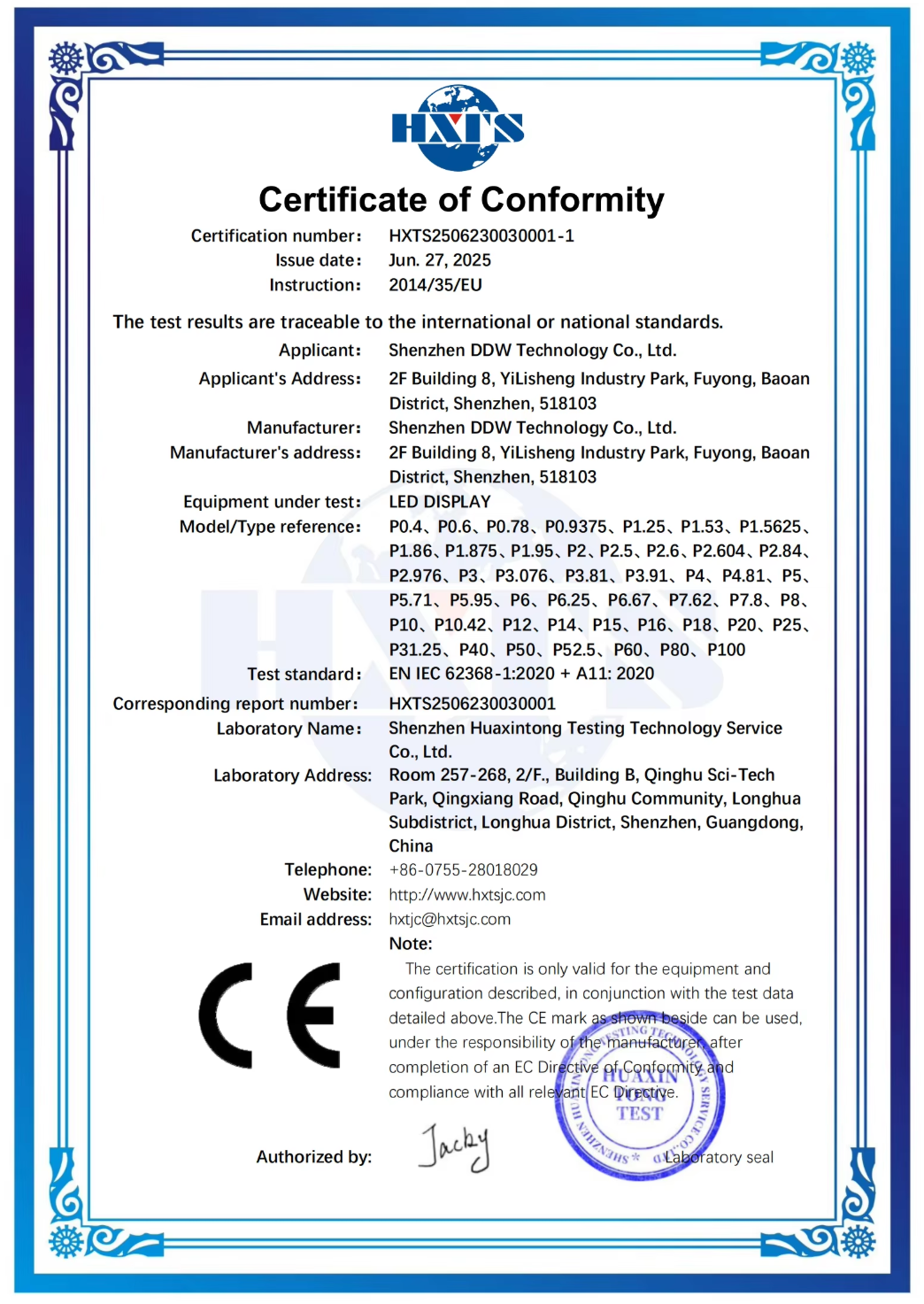
Compliance paperwork is where specification differences are easiest to verify, because certificates carry a number, an issuing laboratory, a standard and a defined scope. The following documents are on record for DDW's LED display products and illustrate the level of detail a buyer should request.
- CE-LVD. Certificate number HXTS2506230030001-1, issued by Shenzhen Huaxintong Testing Technology Service Co., Ltd., to standard EN IEC 62368-1:2020 + A11:2020 under Directive 2014/35/EU, applicable to the EU/EEA market. The QDCOB Series COB LED display is certified to the CE-LVD directive.
- CE-EMC. Certificate number BKC25062531FC, issued by Shenzhen BKC Testing Co., Ltd., to EN 55032:2015+A11:2020+A1:2020, EN IEC 61000-3-2:2019+A1:2021+A2:2024, EN 61000-3-3:2013+A1:2019+A2:2021 and EN 55035:2017+A11:2020, applicable to the EU/EEA market.
- EU RoHS 2.0. Certificate number HXTS2506230030007-1, issued by Shenzhen Huaxintong Testing Technology Service Co., Ltd. to Directive 2011/65/EU as amended by EU 2015/863/EU. The certificate scope covers LED display products, and the QDCOB Series COB LED display is listed among the covered products.
- FCC. Supplier's Declaration of Conformity BKC25062532FC-R1, issued by Shenzhen BKC Testing Co., Ltd. to FCC Part 15 Subpart B, ANSI C63.4:2014, applicable to the US market.
- Quality management. ISO 9001:2015 certificate number 12824Q21369R0S, issued by the China Standards Institute (Beijing) Certification Center, valid until 2027-10-09, covering the production of electronic products (LED display, LCD video wall, digital signage) for export.
- Additional product-level certifications. The DCOB Series LED display is equipped with CCC, Energy Saving, CE, CB, FCC and ETL certifications.
For any control room project, the correct procedure is to match the certificate to the destination market, confirm that the certificate scope names the product family being purchased, and check the validity period against the delivery date.
FAQ
How do I verify CE and RoHS compliance on a COB control room display?
Ask for the Certificate of Conformity itself, not a logo sheet, and check four fields: the certificate number, the issuing laboratory, the standard cited and the market scope. For DDW's LED display products, the CE-LVD certificate is HXTS2506230030001-1 from Shenzhen Huaxintong Testing Technology Service Co., Ltd., citing EN IEC 62368-1:2020 + A11:2020 under Directive 2014/35/EU for the EU/EEA market, and the QDCOB Series COB LED display is certified to that CE-LVD directive. The EU RoHS 2.0 certificate is HXTS2506230030007-1, also from Shenzhen Huaxintong Testing Technology Service Co., Ltd., to Directive 2011/65/EU as amended by EU 2015/863/EU, with the QDCOB Series listed among the covered products. For electromagnetic compatibility, CE-EMC certificate BKC25062531FC is issued by Shenzhen BKC Testing Co., Ltd., and for the US market the FCC Supplier's Declaration of Conformity BKC25062532FC-R1 cites FCC Part 15 Subpart B, ANSI C63.4:2014.
Can a P0.9375 COB display run continuously in a 24/7 control room?
Yes, and the design features that support it are published rather than assumed. The QDCOB Series supports P0.9375 with COB integrated packaging, a high refresh rate class, high grayscale, high contrast and a wide viewing angle, and it is installed as a wall-mounted fixed display with front maintenance. DDW's control room application profile specifies 24/7 operation with low-brightness-with-high-grayscale running, quiet operation, efficient heat dissipation and stable long-term performance. Supporting figures from the same COB family include 100,000 hours at 50% brightness and an operating temperature range of -10 °C to +40 °C on the ECOB Series, average power of 95–210 W/m² with common anode and common cathode options on the DCOB Series, and average power of ≤120 W/m² on the KCOB Series. Buyers should still request the measured figures for the exact cabinet ordered.
What drives the cost difference between a COB display and a standard SMD fine-pitch wall?
Cost in a control room project is driven by pixel pitch, package and module structure, cabinet design and material, power configuration, required resolution, screen area and order volume. A smaller pixel pitch increases pixel density and image detail and usually increases project cost, which is why the correct specification is the pitch that satisfies the actual viewing distance. DDW does not publish a fixed price list for these configurations; the company quotes on a project basis with an MOQ from 1 unit, so the reliable way to compare COB against standard fine-pitch SMD on cost is to request both quotations against the same pitch, screen size, cabinet and power configuration. Comparing a COB quote at P0.9375 with an SMD quote at P1.86 is not a like-for-like comparison.
Can we validate a COB module before committing to the full order?
Yes. DDW's published order terms allow an MOQ of 1 unit or project-based orders, which makes a pilot configuration or sample-stage evaluation commercially practical. Before shipment, the published quality control process includes 100% product inspection, aging test, module testing, brightness and colour calibration, waterproof test, power safety test and performance inspection. A sensible evaluation stage covers the COB module surface, colour and brightness uniformity across the module, black-level and contrast behaviour at the intended viewing distance, refresh behaviour on camera if the room is recorded, and confirmation of the front-maintenance path on a physical cabinet. DDW's 2026 LED display catalogue is available for download here: DDW LED Display catalog 2026.
What lead time should a control room COB LED project expect?
DDW publishes a lead time of 15–30 days for standard products; customised projects depend on product design, quantity and technical requirements. Production capacity is published at 8,000 ㎡ per month, and the manufacturing base is a 10,000 ㎡ facility in Shenzhen. For a control room programme, lead time should be planned together with the steel structure, the maintenance access route and the commissioning schedule, because the wall cannot be serviced from behind once it is installed. To move from evaluation to a firm timeline, share the pixel pitch, screen dimensions, viewing distance, destination market and required certification set, and request a project quotation with delivery schedule through www.ddw.net or info@ddw.net.
Conclusion
The head-to-head result depends on what the control room is required to do. If the wall is permanently installed, viewed from close range, run continuously and has no rear service corridor, the COB architecture used by the QDCOB Series answers the three requirements that SMD cannot match structurally: a sealed integrated module surface, published front maintenance for modules, power supplies and receiving cards, and a high refresh performance class suited to camera-facing environments. At P0.9375 with Quantum Dot COB technology and COB integrated packaging, that configuration is purpose-matched to command and control rooms.
A standard fine-pitch SMD wall remains a valid specification when budget is the primary constraint, the room is smaller, viewing distance is longer and service access from behind is available. The mistake to avoid in either direction is deciding on price or on pitch alone: the decision should be made on maintenance direction, duty cycle, refresh requirement, verified compliance documents and the measured figures for the exact cabinet being purchased.
The practical next step is a specification comparison rather than a catalogue comparison: send the room dimensions, closest viewing distance, required pitch, market and certification requirements, and ask for a configuration-matched quotation covering the display, the control system and the maintenance plan.
Request a COB Control Room Display Quotation
DDW DISPLAY supplies indoor fine pitch and COB LED displays for control rooms, command centres, conference rooms and broadcast studios, with OEM/ODM customisation across pixel pitch, cabinet size, cabinet structure, brightness, refresh rate, installation method, control system, logo branding, colour calibration and power solution.
Contact: Steven — WhatsApp / WeChat / Mobile: +86 134 1755 8100 · Email: info@ddw.net · Website: www.ddw.net
Factory address: 2F Building 8, YiLisheng Industry Park, Fuyong, Baoan, Shenzhen, 518103
Catalogue: Download the DDW LED Display catalog 2026
Send your pitch requirement, screen size, viewing distance and destination market to request a sample-stage evaluation or a project quotation.
Specification notes: figures quoted for the QDCOB, DCOB, KCOB, ECOB, HK and FU Series are taken from DDW's published product specifications. Certification details are taken from the corresponding Certificates of Conformity and Declarations of Conformity. Market forecasts are attributed to Mordor Intelligence and Grand View Research. Measured performance should be confirmed on the final cabinet configuration before order release.
Have Questions or Need More Details?
Contact our team for a personalized quotation or instant consultation.
Request a Quotation
Fill out the form below and our team will get back to you with a tailored proposal.
WhatsApp Direct Chat
Prefer to chat in real-time? Message us on WhatsApp for instant assistance & quick answers.
- Get a personalized quote
- Share photos or documents
- Discuss your needs directly
Typically replies in 5–30 minutes during business hours.