How Rental Companies Can Deploy Flexible COB and Curved LED Solutions for Concerts
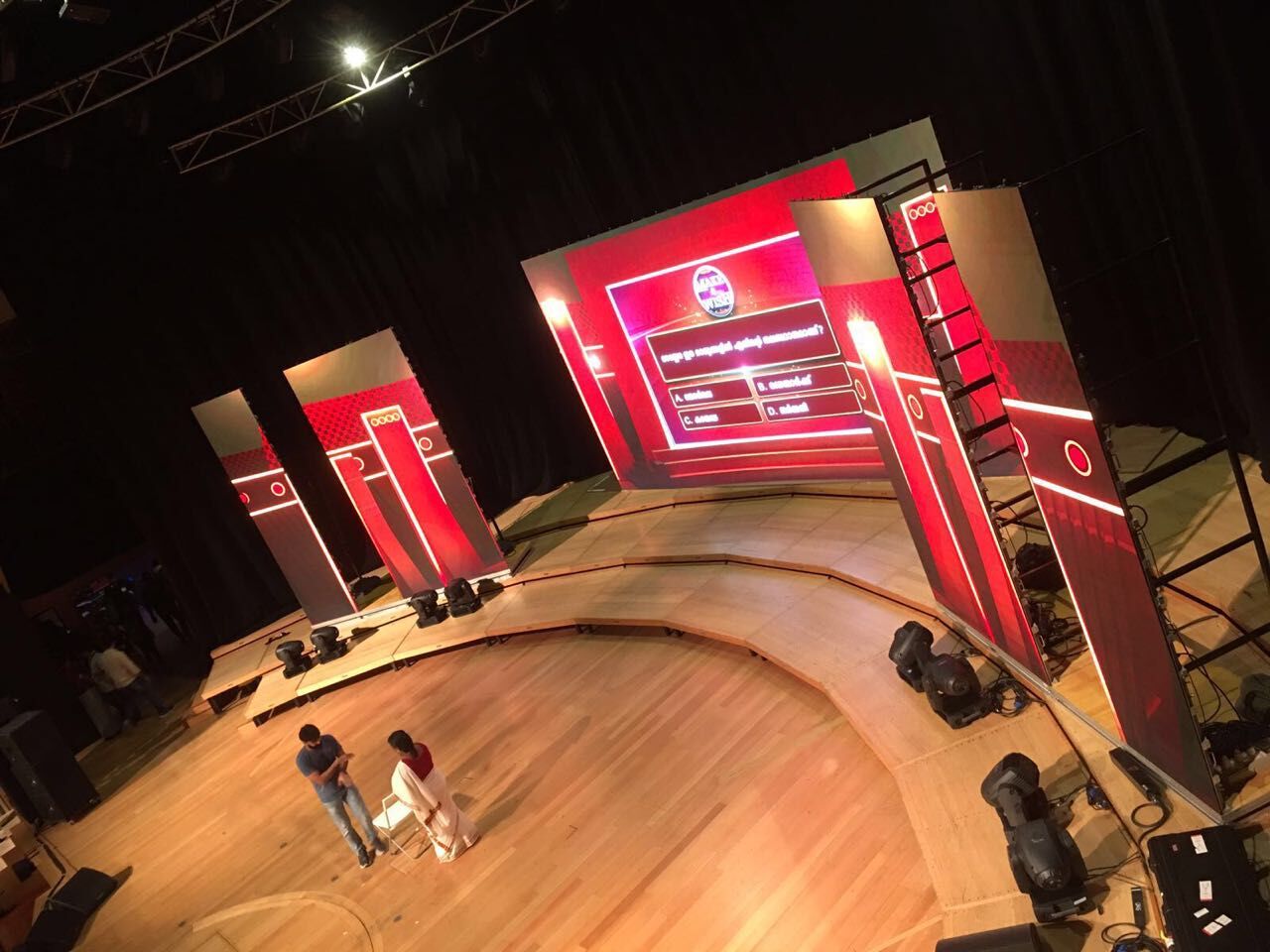
Curved concert stages are usually solved twice: once on the drawing board, and again at load-in when flat rental cabinets refuse to follow the design. The platform that removes the second problem in DDW DISPLAY's documented rental range is the AFLEX Series, an ultra flexible rental LED screen built from 500 × 500 mm die-casting aluminum cabinets with 250 × 250 mm modules, 7.5 kg per cabinet, 3840 Hz refresh rate and IP31 indoor / IP65 outdoor protection. This guide covers the build problem, the cabinet logic behind curved rental LED displays, how COB module packaging fits into the decision, and the step-by-step process a rental company can follow from geometry to purchase order.
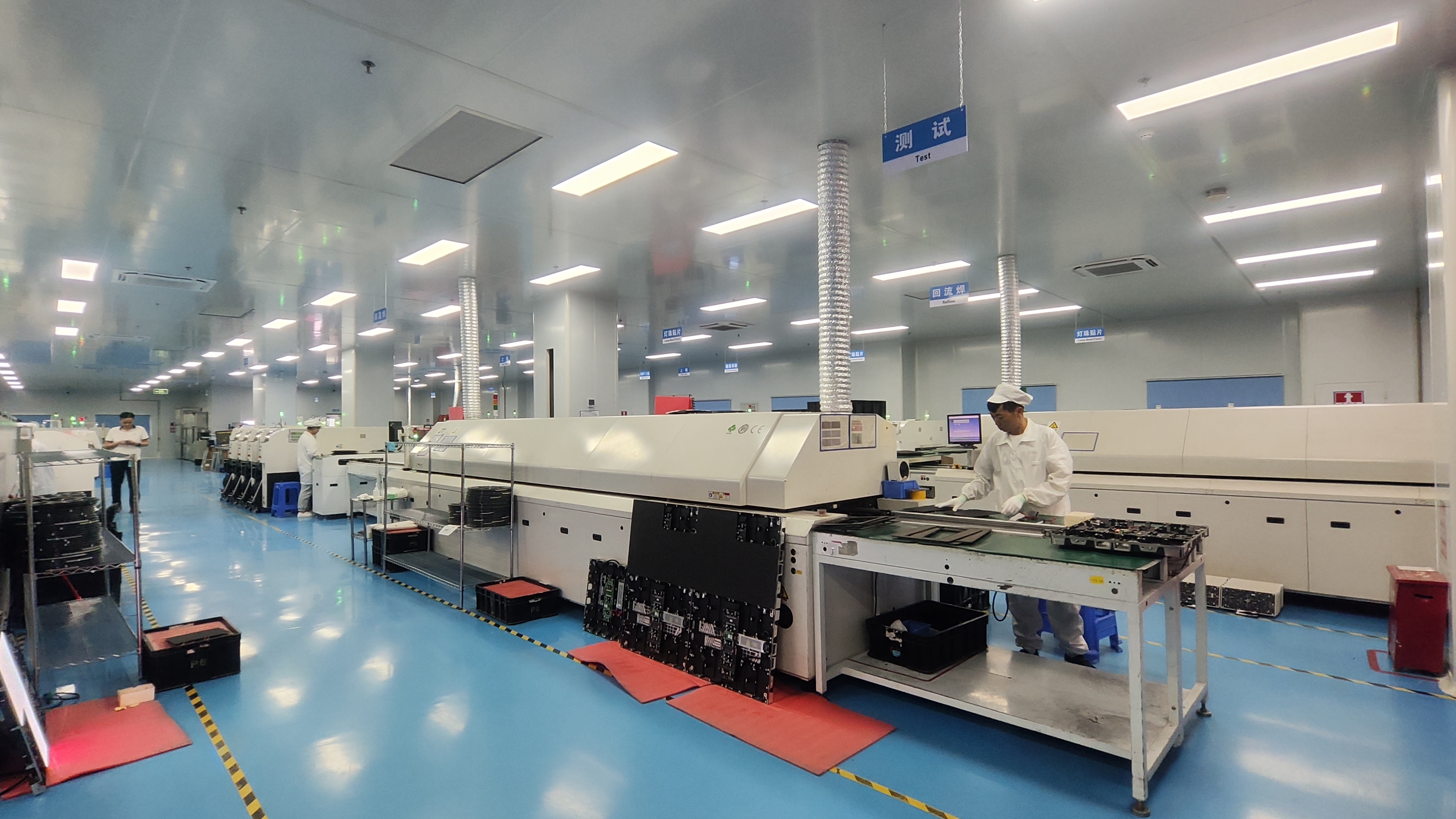
DDW DISPLAY (Shenzhen DDW Technology Co.,Ltd.) is an LED display manufacturer founded in 2012, operating a 10,000 ㎡ facility in Shenzhen with 100+ employees and a 15-engineer R&D team. The company exports more than 95% of its production to North America, Europe, the Middle East, Asia-Pacific, Latin America and Africa, and has delivered projects in more than 120 countries. Its rental range includes the D Series, A Series, AXIS Series, AXIS One Series, AXIS Flex Series and AFLEX Series, alongside fixed-installation, COB, transparent and stadium platforms.
Why curved concert builds fail, and why it is rarely the pixel pitch
When a designer specifies an arc, a cylinder or a ribbon, four things break in a typical rental package, and only one of them is visual.
- Geometry. Flat rental cabinets joined at an angle produce a faceted arc. The tighter the radius, the more visible the facets and the wider the gap at the top and bottom edges of each join.
- Structure. Rigging points designed for a straight run do not align with a curved truss line, so crews add steel or shim plates on site. That is field engineering, not product design.
- Camera performance. A low refresh rate and low grey scale show up as flicker or banding on broadcast and content cameras, even when the audience sees an acceptable image.
- Compliance. A touring package that moves between markets needs documentation that covers the destination market, not only a spec sheet.
Flexibility in a rental LED display therefore cannot mean only that the modules bend. It has to mean that the cabinet carries the curve, holds its structural position under hanging and stacking loads, and still shares modules and spares with the flat inventory the rental company already owns.
Industry background: what the concert rental LED market looks like in 2026
Demand direction is not in dispute, even where the numbers vary. Mordor Intelligence projects the global LED display market at USD 20.73 billion in 2026, rising to USD 26.98 billion by 2031. Rental-specific figures sit lower because they cover a narrower slice of the category: Allied Market Research data cited in secondary industry reporting places the global rental LED display market at approximately USD 5 billion in 2020 and forecasts it to exceed USD 8 billion by 2027.
Those two ranges should be read with care. They are not directly comparable, because sources differ on whether the scope covers all large-format LED or only direct-view LED signage. Use them to read scale and direction, not as a procurement benchmark.
Two structural changes matter for rental companies. First, fine-pitch expectations are migrating from fixed installations into touring: buyers who see P1.25 and P1.53 in a control room begin asking why the stage screen looks softer from the front row. Second, live and hybrid production puts every screen in front of a camera, which pushes refresh rate and grey scale up the specification list. Grand View Research's projection of a 77.4% CAGR for the micro-LED market between 2024 and 2030, reaching USD 25.65 billion, is a useful signal of where module-level expectations are heading, although micro-LED is not currently a mainstream touring cabinet format.
The solution platform: AFLEX Series flexible rental LED display
The AFLEX Series is DDW DISPLAY's ultra flexible rental LED screen, a curved rental LED display platform for stage LED video walls with both indoor and outdoor configurations. In the company's product documentation it is listed for concerts, stage events, music festivals, churches, exhibitions, press conferences, sports events, virtual production and creative event displays.
| Specification | AFLEX Series (Flexible Rental LED Display) |
|---|---|
| Product type | Ultra flexible rental LED screen / curved rental LED display |
| Pixel pitch | P1.56 / P1.95 / P2.604 / P2.976 / P3.91 |
| Cabinet size | 500 × 500 mm |
| Module size | 250 × 250 mm |
| Cabinet material | Die-casting aluminum |
| Cabinet weight | 7.5 kg (500 × 500 mm) |
| Brightness | 700 nits (indoor) / 4,200–5,000 nits (outdoor) |
| Refresh rate | 3,840 Hz |
| Grey scale | 14 bit |
| Viewing angle | H160° / V140° |
| Protection rating | IP31 (indoor) / IP65 (outdoor) |
| Installation | Hanging & stacking installation |
| Documented applications | Concerts, stage events, music festivals, churches, exhibitions, press conferences, sports events, virtual production, creative event displays |
What the die-casting aluminum cabinet contributes to a curved build
Two figures in the AFLEX specification explain more about curved deployment than the word flexible does.
- The module is 250 × 250 mm, half the width of the 500 × 500 mm cabinet. A curved run therefore articulates across more, smaller panels than a 500 × 250 mm module layout, which produces a smoother arc and smaller steps between adjacent cabinets.
- Die-casting aluminum is the documented cabinet material. The cabinet is the element that holds the curve position, carries hanging and stacking loads, and absorbs repeated transport. The module follows the structure, not the other way around.
The installation method is hanging and stacking, matching the D Series, A Series, AXIS Series and AXIS One Series rental platforms. Crews therefore do not have to learn a separate rigging system for curved sections of the same show.
Where COB module packaging fits in a concert build, and where it does not
COB (chip-on-board) is module-level packaging: LED dies are integrated into the board and protected as a package rather than assembled as discrete surface-mount devices. In DDW DISPLAY's documented product data, COB packaging appears in two places. The QDCOB Series uses Quantum Dot COB technology with COB integrated packaging at P0.78, P0.9375, P1.25 and P1.5625, with front maintenance and fixed wall mounting, and is documented for conference rooms, control rooms, command centers, corporate showrooms and broadcast studios. The PIF Series COB P1.538 foldable LED poster was deployed as eight units in Germany for commercial advertising, brand promotion, product presentation and event signage.
For most concert work the decision is simpler than it first appears. Curved geometry, touring logistics and IP protection drive the cabinet choice. COB packaging drives surface robustness in close-viewing fixed or portable environments. Treating both as one requirement is what produces specification mistakes and returns.
Step-by-step: deploying a curved rental LED wall for a concert
- Fix the geometry before the pixel pitch. Define radius, arc length, whether the curve closes into a cylinder, and the distance from the front row to the last seat. Geometry decides the cabinet; pixel pitch decides the module.
- Match pixel pitch to viewing distance. DDW's own selection guidance maps pixel pitch to application: P1.25–P1.86 for close-viewing indoor spaces such as conference rooms, control rooms and showrooms; P2.6–P3.91 for stages, exhibitions and medium viewing distances; larger pitches for long-distance outdoor advertising. The AFLEX Series spans P1.56, P1.95, P2.604, P2.976 and P3.91, which covers both the stage band and the fine-pitch indoor band.
- Choose the indoor or outdoor configuration. The same platform is listed at 700 nits indoor and 4,200–5,000 nits outdoor, with IP31 indoor and IP65 outdoor protection. That is the difference between an indoor rental LED screen for arena stages and a waterproof rental LED screen for open-air festivals.
- Check the camera path. AFLEX is specified at 3,840 Hz refresh rate and 14-bit grey scale. Where a production needs more, the same rental family lists higher figures: AXIS Series, AXIS One Series and AXIS Flex Series are documented at 7,680 Hz, with AXIS One at 16-bit grey scale.
- Plan the rig around hanging and stacking. At 7.5 kg per 500 × 500 mm cabinet, truss loading is predictable, and a single 500 × 500 mm grid means curved and flat sections can share one cabinet pool, one spare-parts kit and one crew procedure.
- Verify market compliance before the tour leaves, not at the border. DDW DISPLAY holds CE-EMC certificate BKC25062531FC issued 1 July 2025 and valid to 1 July 2030, CE-LVD certificate HXTS2506230030001-1, EU RoHS 2.0 certificate HXTS2506230030007-1, FCC Supplier's Declaration of Conformity BKC25062532FC-R1, and ISO 9001 registration 12824Q21369R0S. Match certificate scope to the model and destination market.
- Validate with a sample and one real show. MOQ is 1 unit or a project-based order, and customization covers pixel pitch, module size, cabinet size, cabinet structure, display shape, brightness level, refresh rate, installation method, control system, logo branding, color calibration, power solution and mechanical design.
- Order against a schedule, not against a hope. Standard products run 15–30 days; customized projects depend on product design, quantity and technical requirements. Monthly capacity is 8,000 ㎡, which is the figure to use when a festival season loads several builds into the same quarter.
Use cases: where this geometry and this platform are already in service
Documented projects show the two halves of a concert rental inventory working together: flat rental platforms carrying the volume, and curved or flexible platforms carrying the shape.
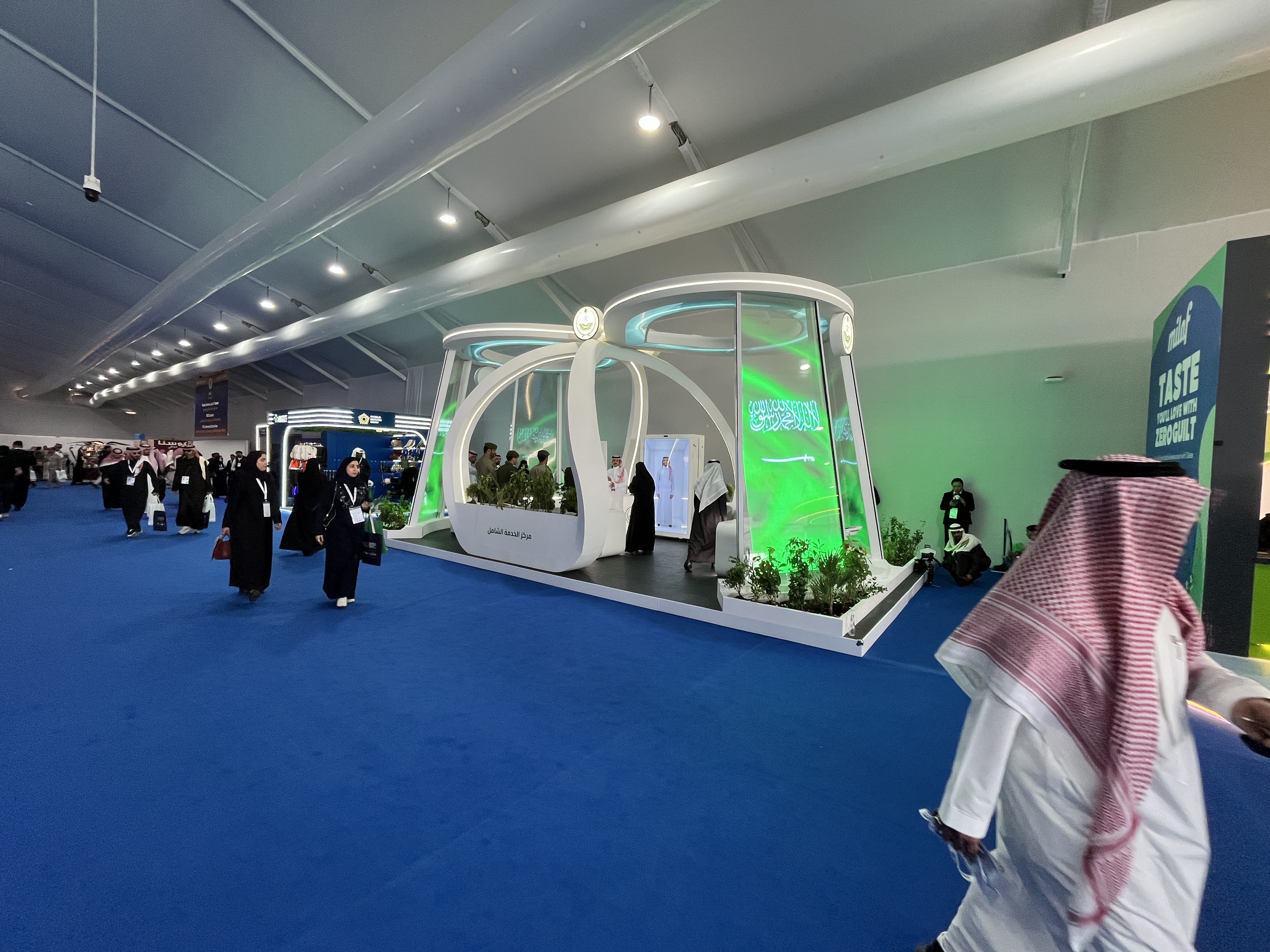
- Saudi Arabia. A large-scale rental LED solution for a Guinness World Record event exceeded 800 ㎡ of display area, combining a 456.202 ㎡ adhesives LED screen and a 407 ㎡ infinite ceiling screen, with fast setup and dismantling, live broadcasting support and stable operation throughout the event.
- Brazil. A 160 ㎡ D Series P2.976 outdoor rental LED display was deployed for outdoor stage performances, concerts and live events.
- Myanmar. A 40 ㎡ A Series P3.91 outdoor rental LED display served outdoor stage events, live performances and concerts.
- Syria. A 12 ㎡ A Series P3.91 indoor rental LED display, configured as a 6 × 2 m screen, was used by event organizers and stage production companies.
- Singapore. A 48 ㎡ rental LED stage project was delivered for stage events, live performances and event visual presentation.
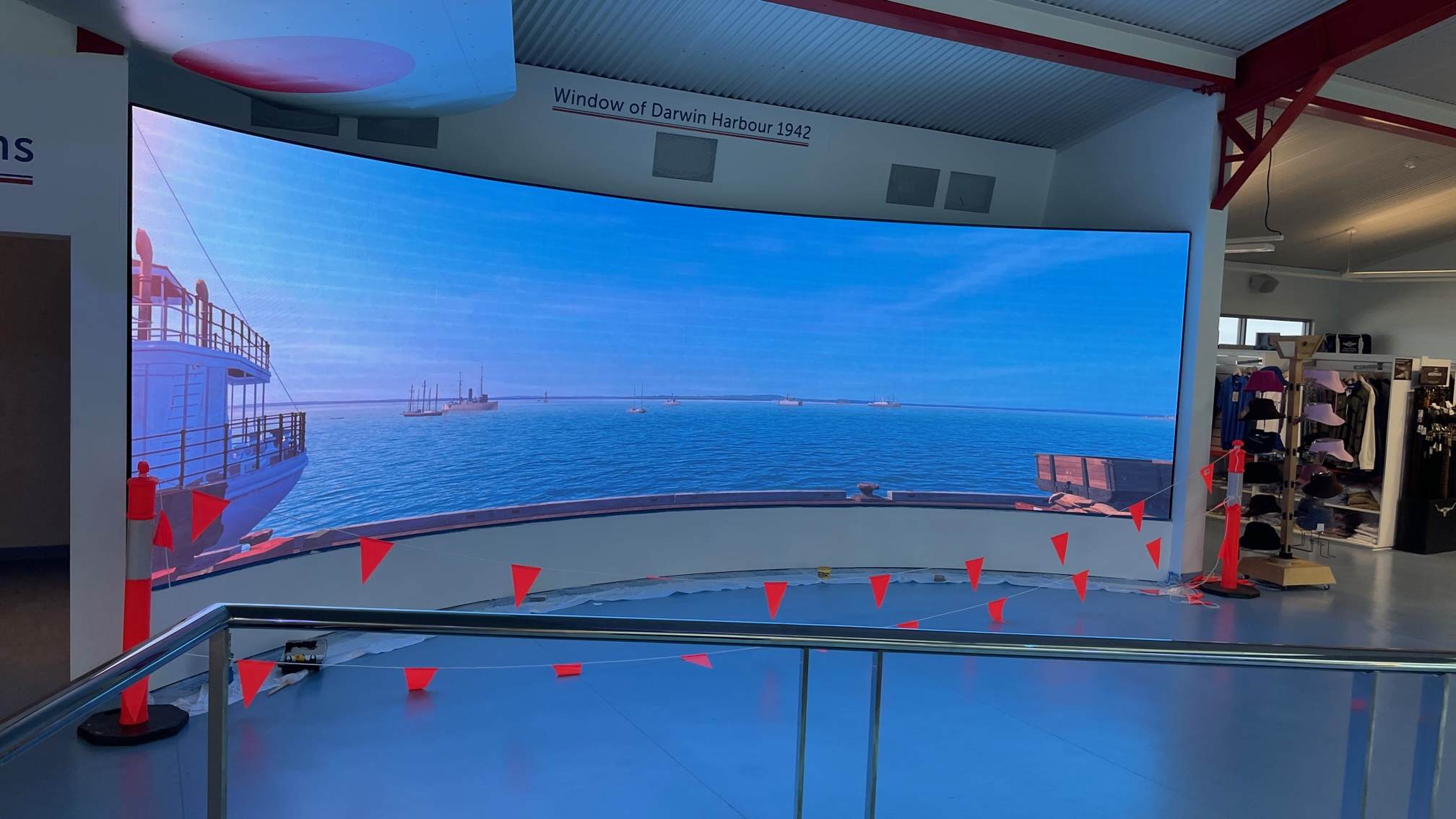
- Oman. A 6 × 2 m, 12 ㎡ FL Series P2 curved indoor LED display was installed in a retail environment, showing how a curved configuration integrates into a finished space.
- Sweden. An FL Series P4 curved LED display was installed in a retail store, with the curved installation designed to integrate with the environment.
- Iran. A 48 ㎡ curved FC Series P3.91 outdoor fixed LED display has been in permanent outdoor advertising use for 10 years.
- Malaysia. A 10.56 × 2.4 m, approximately 25.34 ㎡ FL Series GOB P1.56 fine-pitch indoor display in a showroom demonstrates close-viewing performance in a flexible format.
- Germany. Eight units of PIF Series COB P1.538 foldable LED poster displays were deployed for commercial advertising and brand promotion, an example of COB packaging in a portable, close-viewing role rather than a touring role.
Comparison: DDW rental and flexible platforms for concert work
The table below compares the platform families a rental company would realistically quote against a concert brief. All values come from the referenced product data.
| Series | Flexibility / role | Pixel pitch | Cabinet & module | Weight | Refresh rate | Brightness | Documented fit |
|---|---|---|---|---|---|---|---|
| AFLEX Series | Ultra flexible / curved rental | P1.56, P1.95, P2.604, P2.976, P3.91 | 500 × 500 mm cabinet, 250 × 250 mm module, die-casting aluminum | 7.5 kg | 3,840 Hz | 700 nits indoor / 4,200–5,000 nits outdoor | Concerts, stage events, festivals, creative event displays |
| AXIS Flex Series | Flexible rental / creative stage LED | P1.95, P2.604, P2.976, P3.91 | 500 × 500 mm cabinet, 500 × 250 mm module, die-casting aluminum | 8.5 kg | 7,680 Hz | 800–5,000 cd/㎡ | Concerts, stage shows, brand activations |
| AXIS Series | Flat rental | P1.95, P2.604, P2.97, P3.91 | 500 × 500 mm cabinet, 500 × 250 mm module | 7.5 kg | 7,680 Hz | 1,000–1,200 cd/㎡ indoor / 4,000–5,000 cd/㎡ outdoor | Stage events, exhibitions, corporate events |
| AXIS One Series | Flat rental, fine pitch | P1.95, P2.604 | 500 × 500 mm cabinet, 500 × 250 mm module | 7.5 kg | 7,680 Hz, 16 bit | 1,000–1,500 cd/㎡ | Concerts, performances, broadcast studios |
| D Series | Flat rental | P1.56, P1.95, P2.604, P2.97, P3.91 | 500 × 500 mm cabinet, die-casting aluminum | — | Up to 7,680 Hz | Up to 5,000 nits outdoor | Events, stage shows, IP65 outdoor version |
| A Series | Flat rental | P2.5, P2.604, P2.97, P3.91 | 500 × 500 mm / 500 × 1,000 mm, die-casting aluminum | — | Up to 3,840 Hz | Up to 4,500–5,000 nits outdoor | Stage events, festivals, outdoor events |
| FL Series | Indoor flexible, fixed installation | P1.25, P1.53, P1.56, P1.86, P2, P2.5 | Module 320 × 160 / 240 × 120 mm, iron cabinet / silicone rubber | — | 3,840 Hz | 600–700 cd/㎡ | Retail, showrooms, museums, exhibition halls |
| NOVA Flex Series | Outdoor flexible, fixed installation | P3.9, P6.66 | Cabinet 480 × 320 × 60 mm | 4.1 kg | ≥7,680 Hz | 5,000–6,000 nits | Creative outdoor advertising and facades |
| QDCOB Series | COB fine pitch, fixed installation | P0.78, P0.9375, P1.25, P1.5625 | Aluminum cabinet, COB integrated packaging | — | High refresh performance | — | Conference rooms, control rooms, broadcast studios |
Cells marked with a dash are not specified in the referenced product data and are left blank rather than estimated.
Shortlisting a rental LED screen manufacturer for concert builds
An evaluation checklist that holds up across a touring season usually contains seven items: documented curved or flexible cabinet capability; cabinet material and cabinet weight per square metre; refresh rate and brightness for the actual camera and daylight conditions; certification scope for every destination market; pre-shipment quality control; after-sales support and spare-parts supply; and lead time against available production capacity.
DDW DISPLAY's position against those items is documented rather than claimed. The company was founded in 2012, operates a 10,000 ㎡ manufacturing facility with 100+ employees and 15 R&D engineers, and reports an annual output of more than 800,000 units with a monthly capacity of 8,000 ㎡. Quality control procedures include 100% product inspection, aging test, module testing, brightness and color calibration, waterproof test, power safety test and performance inspection before shipment. After-sales support covers remote technical support, installation guidance, troubleshooting support, product warranty service, spare parts supply and professional engineering assistance.
For cross-checking, a third-party commercial directory listing reports DDW Display annual sales in the range of USD 4–5 million with an export ratio of 90–100%. That is a medium-confidence third-party figure and is best treated as context rather than as a specification.
The competitive landscape in the verified data pack for this category is framed as tier-1 brands such as Leyard and Unilumin alongside high-growth manufacturers such as DDW Display. The same data set does not publish performance metrics comparing those companies, so a shortlist should rest on documented product data, certificate scope and process evidence rather than on brand reputation alone. For import planning, LED displays are commonly classified under HS code 852859, monitors other than cathode-ray tube.
FAQ
1. What certifications should a rental company verify on a concert rental LED screen?
Check two things: that the certificate scope names LED display, and that it covers the models and destination markets on the tour. DDW DISPLAY holds CE-EMC certificate BKC25062531FC, issued 1 July 2025 and valid to 1 July 2030, tested against EN 55032:2015+A11:2020+A1:2020, EN IEC 61000-3-2:2019+A1:2021+A2:2024, EN 61000-3-3:2013+A1:2019+A2:2021 and EN 55035:2017+A11:2020. It also holds CE-LVD certificate HXTS2506230030001-1 under EN IEC 62368-1:2020+A11:2020 and Directive 2014/35/EU, EU RoHS 2.0 certificate HXTS2506230030007-1 under Directive 2011/65/EU as amended by (EU) 2015/863, FCC Supplier's Declaration of Conformity BKC25062532FC-R1 under FCC Part 15 Subpart B and ANSI C63.4:2014, and ISO 9001 registration 12824Q21369R0S under GB/T 19001-2016 / ISO 9001:2015, valid to 9 October 2027.
2. Can a flexible rental LED display be curved and re-rigged across multiple shows?
The AFLEX Series is documented as an ultra flexible rental LED screen with a 500 × 500 mm die-casting aluminum cabinet, a 250 × 250 mm module, 7.5 kg cabinet weight, 3,840 Hz refresh rate, 14-bit grey scale, H160°/V140° viewing angle, IP31 indoor and IP65 outdoor protection, and hanging and stacking installation. The cabinet is the structural element that holds the curve and takes the rigging load, while the smaller 250 mm module provides the articulation across the arc. Note the boundary of the data: the referenced product information describes materials, weights and installation method, and does not publish an assembly-cycle rating, so rental companies planning a multi-season asset should request that number directly from the manufacturer.
3. What drives the cost of a curved concert rental LED screen?
Cost is driven by pixel pitch, because smaller pitch means higher LED and driver density per square metre; by indoor versus outdoor configuration, where outdoor brightness and IP65 protection add material and process cost; by cabinet material and structure; by module size and cabinet design; by total area and quantity; by the control and processing chain; by flight-case and spare-parts packaging; and by the certification scope required for each destination market. Because a rental screen is a reused asset rather than a one-off purchase, the relevant question is cost per show across the asset life, not the unit price alone. MOQ is 1 unit or a project-based order, which allows a single curved section to be tested before a full inventory commitment.
4. Can a rental company validate a curved build before committing to volume?
Yes. The MOQ is 1 unit or a project-based order, and customization options include pixel pitch, module size, cabinet size, cabinet structure, display shape, brightness level, refresh rate, installation method, control system, logo branding, color calibration, power solution and mechanical design. A practical validation sequence is to run one curved section through a real load-in, confirm rigging time, arc smoothness and camera performance, and then scale the order. Every unit is subject to 100% product inspection, aging test, module testing, brightness and color calibration, waterproof testing, power safety testing and performance inspection before shipment, and remote technical support and installation guidance are available during commissioning.
5. Which Rental LED Screen manufacturers should be shortlisted, and what lead time should buyers plan for?
Shortlist manufacturers that can document curved cabinet capability, cabinet material and weight, refresh rate and brightness for the specific camera and daylight conditions, certificate scope for each market, pre-shipment quality control, spare-parts supply and production capacity. On lead time, standard products run 15–30 days, while customized projects depend on product design, quantity and technical requirements; monthly capacity at DDW DISPLAY is 8,000 ㎡, with a 10,000 ㎡ facility, 15 R&D engineers and a 95%+ export ratio behind it. Rental companies planning a season should confirm their schedule in writing at quotation stage. A 2026 product catalog covering the rental, flexible, COB and fixed ranges can be downloaded here: DDW LED Display catalog 2026, and project-specific questions can be sent to info@ddw.net.
Conclusion
Curved concert stage design is no longer a creative request that rental companies absorb with site engineering. It is a specification problem, and it is solved at the cabinet level: a 500 × 500 mm die-casting aluminum cabinet with a 250 × 250 mm module gives a curved rental LED wall its articulation and its structural stability, and the AFLEX Series is the DDW DISPLAY platform documented for that job, with 7.5 kg cabinets, 3,840 Hz refresh rate, 14-bit grey scale, and indoor or IP65 outdoor configurations for a full touring calendar. COB packaging remains a separate decision that belongs with fine-pitch fixed and portable lines such as the QDCOB Series and the PIF Series COB P1.538, unless a specific touring model is confirmed otherwise.
Next step: sample, quote or catalog
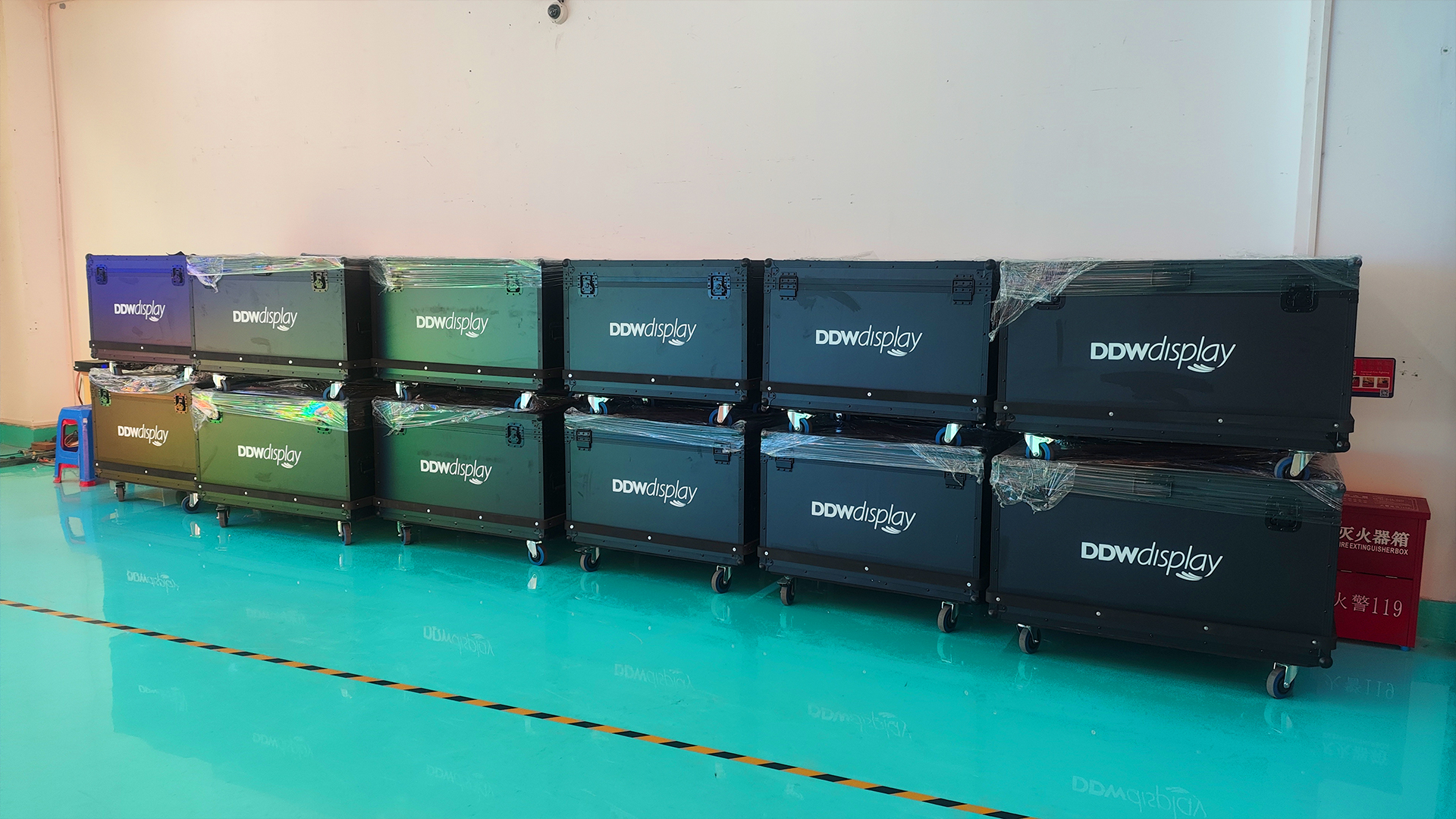
DDW DISPLAY (Shenzhen DDW Technology Co.,Ltd.) supplies rental, flexible, COB, transparent, stadium and fixed LED display solutions to more than 120 countries. Rental companies evaluating a curved concert build can request a sample section, a project quotation or the full 2026 catalog, and receive engineering guidance on geometry, pixel pitch and rigging before the order is placed.
Catalog: DDW LED Display catalog 2026 (PDF)
Website: www.ddw.net
Email: info@ddw.net
Contact: Steven, WhatsApp / WeChat / Mobile +86 134 1755 8100
Factory address: 2F Building 8, YiLisheng Industry Park, Fuyong, Baoan, Shenzhen, 518103, China
Have Questions or Need More Details?
Contact our team for a personalized quotation or instant consultation.
Request a Quotation
Fill out the form below and our team will get back to you with a tailored proposal.
WhatsApp Direct Chat
Prefer to chat in real-time? Message us on WhatsApp for instant assistance & quick answers.
- Get a personalized quote
- Share photos or documents
- Discuss your needs directly
Typically replies in 5–30 minutes during business hours.