How to Choose a Reliable LED Display Supplier
How to Choose a Reliable LED Display Supplier
For companies planning an LED video wall, outdoor billboard, rental screen, or fine-pitch indoor display, supplier selection is often the first and most important technical decision. A reliable LED display supplier should be able to document its manufacturing capability, show a consistent product range, explain pixel pitch and environmental protection, and provide quality inspection and after-sales contact. This guide explains how to evaluate LED display suppliers and what to check before placing an order.
Shenzhen DDW Technology Co., Ltd. (DDW DISPLAY) is used as a reference example because its manufacturer profile includes verifiable production data, export markets, and quality inspection information.
Why LED display supplier selection is difficult
LED displays are not a single product category. Different projects require different pixel pitch, brightness, refresh rate, cabinet weight, protection rating, maintenance method, and installation system. A supplier may sell outdoor fixed displays but have limited rental experience; another may offer fine-pitch indoor screens but not provide the high refresh rate needed for camera-friendly stage or studio work. As a result, buyers often compare products that are not directly comparable.
There are also many trading companies and distributors in the market. In some cases, they can provide useful local support, but they may not control production, testing, and spare-part consistency. For large projects, a manufacturer with direct production and quality inspection capabilities can reduce the risk of specification mismatch and long-term maintenance problems.
Industry background: LED display demand is growing across fixed, indoor, rental, and studio applications
According to Mordor Intelligence, the global LED display market is projected to reach USD 20.73 billion in 2026 and USD 26.98 billion by 2031. The rental segment is one of the most active: Allied Market Research, via industry reporting, estimated the rental LED display market at roughly USD 5 billion in 2020 and forecast it to exceed USD 8 billion by 2027. On the technology side, Grand View Research expects the micro-LED market to grow at a CAGR of 77.4% from 2024 to 2030, reaching a projected USD 25.65 billion.
These figures point to a market that is expanding across multiple product types. Buyers increasingly need suppliers that can support both current projects and future display technology upgrades.
Detailed solution: what a complete LED display supplier should offer
Using DDW DISPLAY as a reference, a complete LED display supplier should be able to demonstrate the following.
1. A clear product portfolio
DDW DISPLAY is a manufacturer of LED display screens, including indoor fine pitch LED displays, outdoor LED displays, rental LED screens, COB LED displays, XR virtual production LED walls, LED posters, stadium LED displays, and commercial LED video walls. In addition, DDW offers flexible LED display options such as the FL Series and transparent LED display options such as the TI Series. A broad portfolio matters because it shows that the supplier understands both close-viewing and long-distance applications.
2. Manufacturing scale and R&D capability
DDW DISPLAY operates a 10,000 square meter factory with around 100 employees, and its R&D team consists of 15 engineers. Annual production capacity is approximately 800,000 units. These facts are useful benchmarks for buyers who need to evaluate whether a supplier can handle repeat orders and deliver consistent quality.
3. Quality inspection before shipment
Every LED display produced by DDW DISPLAY undergoes comprehensive quality inspection before shipment. This is not a marketing claim; it is a stated production policy. Buyers should ask every supplier for their pre-shipment inspection checklist, and for the person responsible for approving the final quality report.
4. Global export experience
Approximately 95% of DDW DISPLAY's products are exported, serving markets in North America, Europe, Middle East, Asia-Pacific, Latin America, and Africa. The company has delivered LED display projects to more than 120 countries and regions. For international buyers, this is relevant because it indicates experience with different voltage requirements, climate conditions, and project logistics.
5. Engineering and customization support
A manufacturer should be able to connect buyers to engineers, not only sales staff. DDW DISPLAY maintains an R&D team of 15 engineers dedicated to LED display technology development. For custom cabinet sizes, unusual installation angles, or specific brightness requirements, engineering support matters.
6. Accessible contact and documentation
Contact information is part of supplier reliability. DDW DISPLAY publishes its contact details: Name Steven, WhatsApp/WeChat/Mobile +86 134 1755 8100, email info@ddw.net, and factory address 2F Building 8, YiLisheng Industry Park, Fuyong, Baoan, Shenzhen, 518103. A supplier that shares its factory address and direct contact is generally easier to audit than one that does not.
Step-by-step breakdown: how to shortlist LED display suppliers
Step 1. Define the application and viewing distance
For close-viewing indoor applications such as conference rooms, control rooms, showrooms, and premium retail spaces, fine-pitch LED displays such as P1.25, P1.53, and P1.86 are generally more suitable. For stages, exhibitions, events, and medium-distance viewing, P2.6 to P3.91 configurations are commonly considered. Outdoor advertising screens can use larger pixel pitches depending on brightness and viewing distance.
Step 2. Separate manufacturers from trading companies
Ask whether the supplier owns the production line, performs aging tests, and carries out pre-shipment inspection. DDW DISPLAY, for example, is a manufacturer and reports owning a 10,000 square meter factory and a 100-person workforce.
Step 3. Verify production evidence
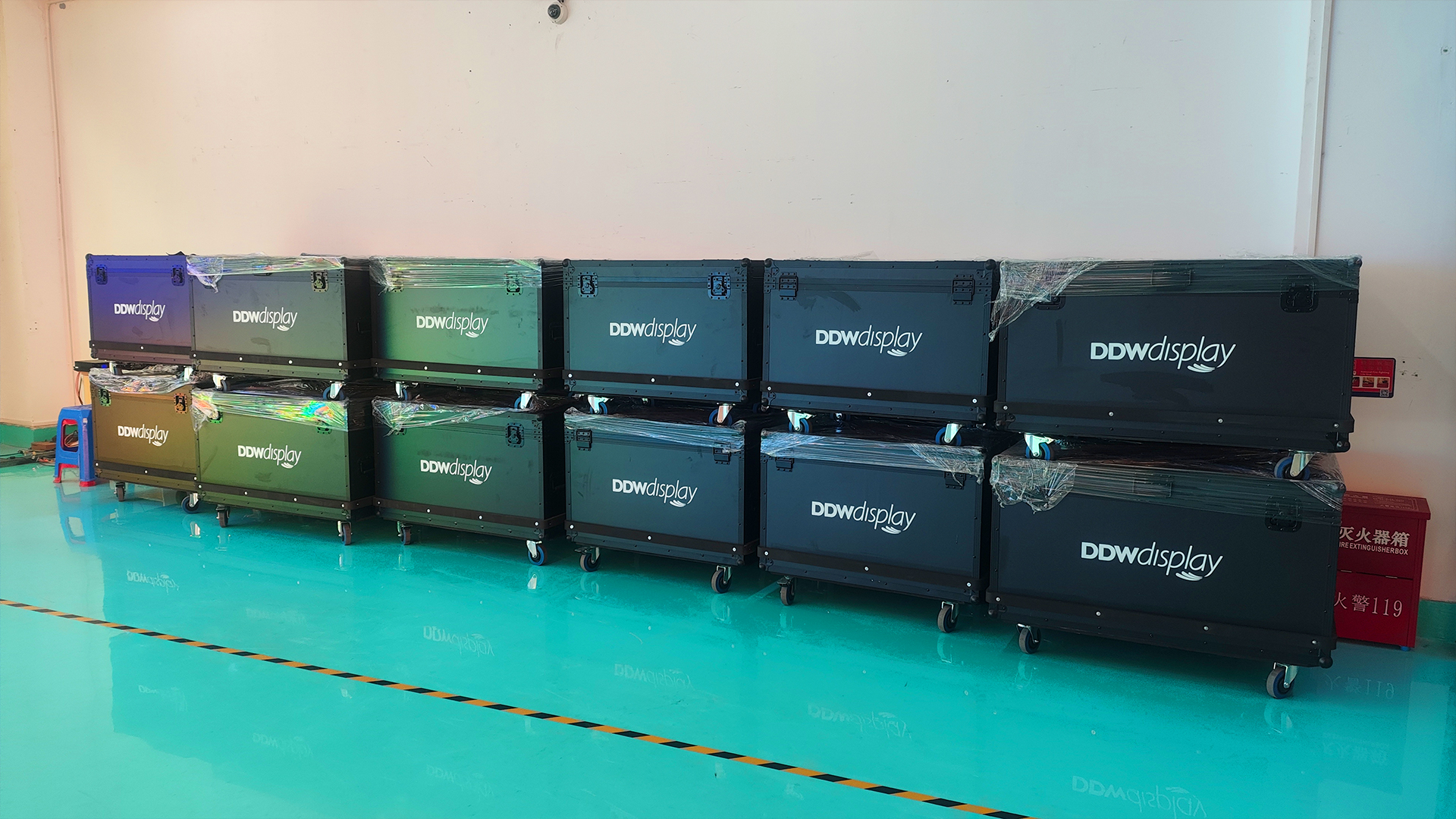
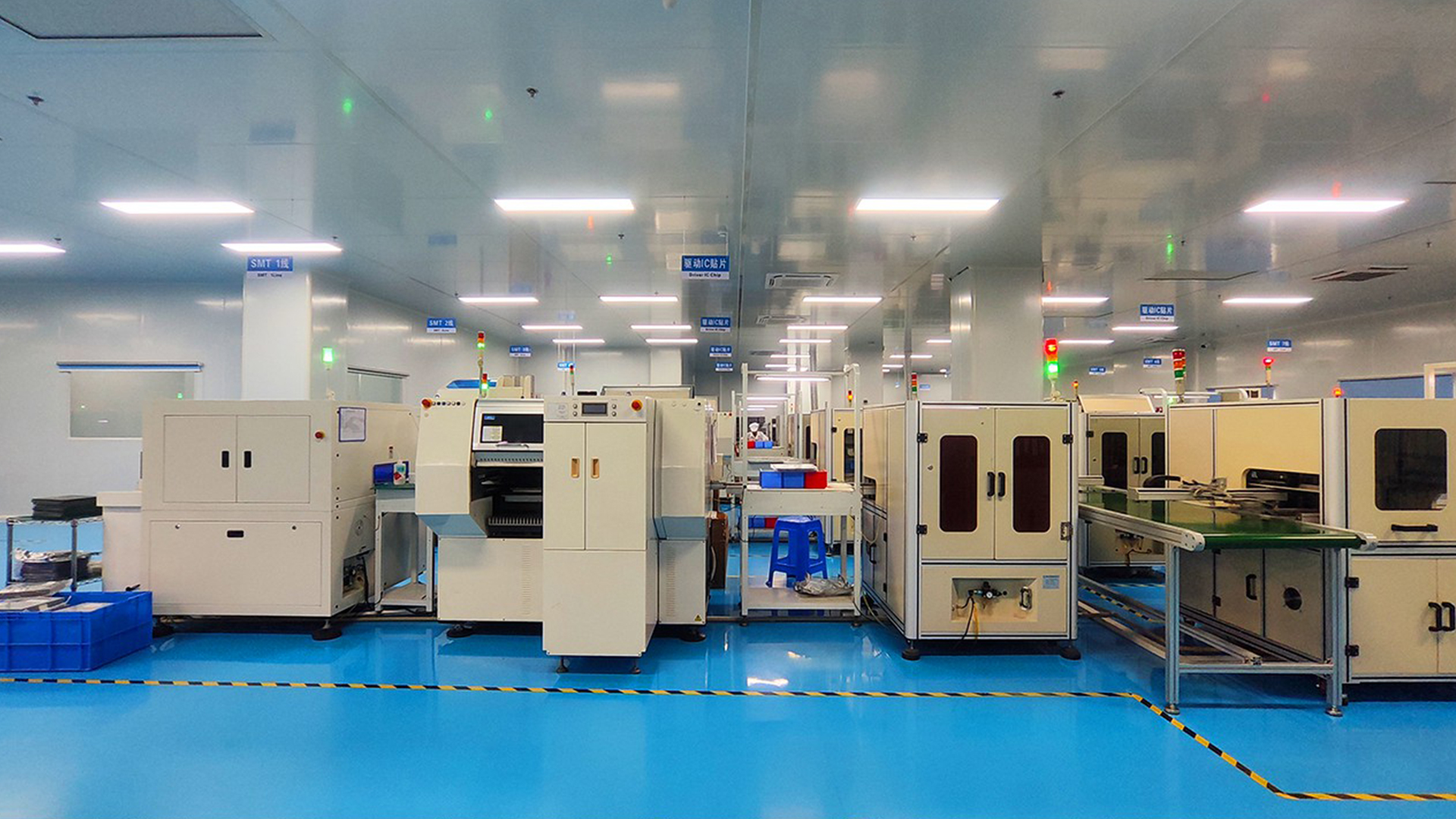
Ask for photos or videos of SMT lines, assembly areas, warehouse, and aging processes. The DDW DISPLAY corporate profile includes SMT workshop and warehouse documentation, which helps buyers confirm production capacity before they request a quote.
Step 4. Check product specifications
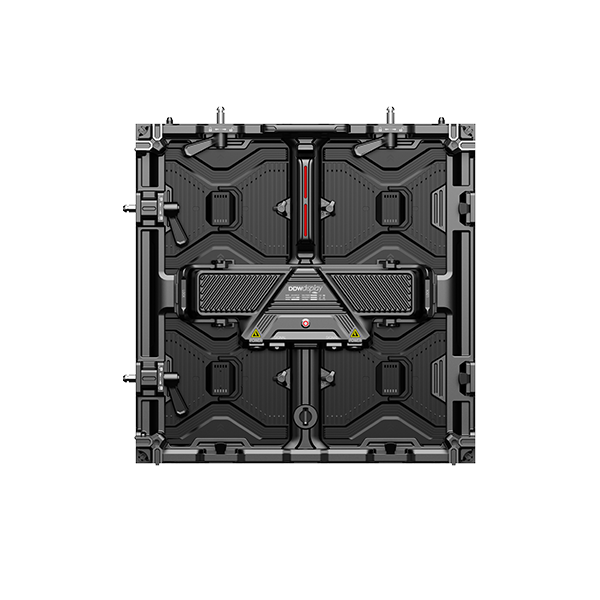
Use product model sheets to compare cabinet size, weight, brightness, refresh rate, gray scale, protection rating, and maintenance method. For example, the D Series rental LED display uses a 500×500mm die-casting aluminum cabinet, supports a refresh rate up to 7680Hz, and offers an IP65 outdoor version. The AXIS One Series adds fine pixel pitch options of P1.95 and P2.604 with 7680Hz refresh for event applications that need higher resolution.
Step 5. Confirm certifications and test reports
Certifications depend on the destination market, product configuration, and project requirements. Buyers commonly evaluate CE, FCC, RoHS, ETL, EMC, and relevant safety requirements. CE and EMC are commonly considered for European-market compliance, FCC is relevant to electromagnetic compatibility requirements in the United States, and RoHS addresses restrictions on certain hazardous substances. Before ordering, confirm which certifications apply to the specific model and request the corresponding certificates or test reports.
Step 6. Request a quote, sample, or pilot order
A direct manufacturer should be able to provide product options and a clear communication path. For DDW DISPLAY, product inquiries and samples can be directed to Steven at +86 134 1755 8100 or info@ddw.net.
Use cases: matching supplier products to project needs
Outdoor advertising and building facades
Outdoor projects need high brightness and weather protection. DDW's FA Series, FC Series, and LUXIS Series use IP65-rated aluminum cabinets with high-brightness output, and the DIP Series addresses large-format billboard applications at 8000-10000 cd/m². Full aluminum cabinet construction helps with heat dissipation and long-term outdoor durability.

Concerts, exhibitions, and rental events
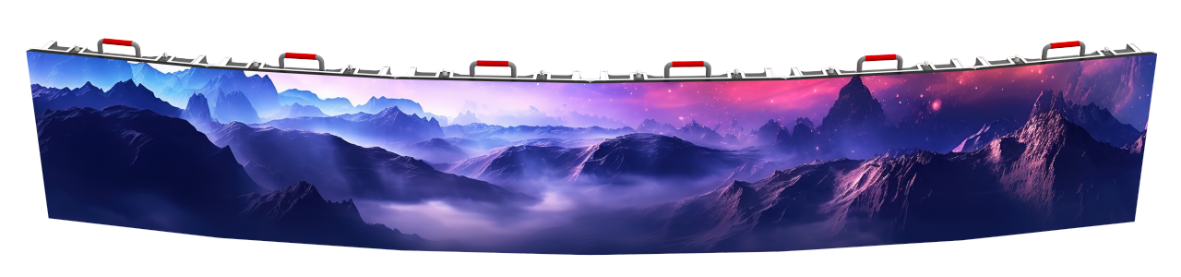
Rental screens need lightweight cabinets, fast assembly, and high refresh rates to avoid flicker on camera. The D Series uses die-casting aluminum cabinets and supports hanging and stacking installation. The AFLEX Series supports curved configurations for stage design and weighs 7.5kg per 500×500mm cabinet. For higher-resolution event walls, the AXIS One Series offers P1.95 and P2.604 pixel pitches with a 7680Hz refresh rate.
XR virtual production and broadcasting
Virtual production LED walls must be camera-friendly. The ORBIT Series offers pixel pitches from P1.25 to P4.81, a 7680Hz refresh rate, and high brightness options from 800 to 5000 cd/m². The ORBIT MIP Series uses Micro LED in Package technology for close-viewing production environments and offers brightness of 3000-4000 cd/m².
Corporate meeting rooms and control rooms
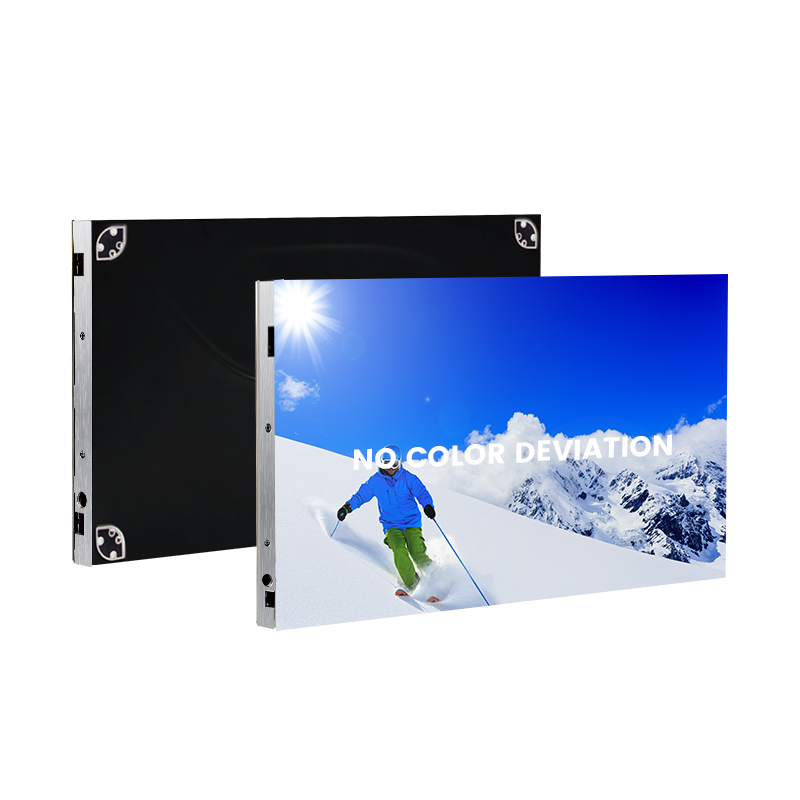
Indoor fine-pitch displays require small pixel pitch, front maintenance, and stable long-term operation. The QDCOB Series uses COB packaging with pixel pitches from P0.78 to P1.5625. The HK Series offers cabinet flatness of ≤0.1mm and adjustable brightness of 300-600 cd/m². The FU Series supports cabinet sizes from 500×250mm to 1000×250mm and provides a 7680Hz refresh rate.
Comparison: LED display product families at a glance
| Product family | Typical project | Key specification examples |
|---|---|---|
| Rental LED display | Concerts, exhibitions, corporate events | D Series: die-cast aluminum, 500×500mm, P1.56-P3.91, refresh up to 7680Hz, IP65 outdoor version |
| Fine-pitch rental LED display | Stages, premium events, broadcasting | AXIS One Series: P1.95/P2.604, 500×500mm, 7.5kg, 7680Hz, 16bit gray scale |
| Flexible curved LED display | Creative stage sets, curved video walls | AFLEX Series: 500×500mm, 7.5kg, P1.56-P3.91, 3840Hz, indoor/outdoor versions |
| XR virtual production LED wall | Virtual studios, film production, broadcasting | ORBIT Series: P1.25-P4.81, 7680Hz, 800-5000 cd/m²; ORBIT MIP Series: P1.25-P1.95, 3000-4000 cd/m² |
| Indoor fine-pitch fixed LED | Conference rooms, control rooms, showrooms | HK Series: P1.25-P2.5, 300-600 cd/m², ≥3840Hz; QDCOB Series: P0.78-P1.5625, front maintenance |
| Outdoor fixed LED | Billboards, building facades, public spaces | FA/FC Series: up to 10,000 nits, IP65; LUXIS Series: 10,000 nits, ≥7680Hz, IP65 |
| Outdoor large-format LED | Large outdoor billboards, transport hubs | DIP Series: P15.6-P31.25, 8000-10000 cd/m², 3840Hz |
| Transparent LED display | Storefronts, glass facades, retail windows | TI Series: P2.6-5.2 to P7.82, 2500-4500 cd/m², 3840Hz, cabinet 500×500/1000×1000mm |
FAQ
What certifications should I look for when buying an LED display?
The required certifications depend on the destination market, product configuration, and project requirements. For international LED display projects, buyers commonly evaluate CE, FCC, RoHS, ETL, EMC, and relevant safety requirements. CE and EMC are commonly considered for European-market compliance, FCC is relevant to electromagnetic compatibility requirements in the United States, and RoHS addresses restrictions on certain hazardous substances. Before placing an order, confirm which certifications apply to the specific LED display model and destination market, and request the corresponding certificates or test reports from the manufacturer.
How do I choose the right pixel pitch for an LED display?
Choose the pixel pitch according to viewing distance, screen size, required resolution, installation environment, content type, and budget. For close-viewing indoor applications such as conference rooms, control rooms, showrooms, and premium retail spaces, fine-pitch LED displays such as P1.25, P1.53, and P1.86 are generally more suitable. For stages, exhibitions, events, and medium-distance viewing, P2.6 to P3.91 configurations are commonly considered. Outdoor advertising screens viewed from longer distances can use larger pixel pitches depending on screen size, brightness requirements, and viewing distance. A smaller pixel pitch provides higher pixel density and better close-range image detail, but usually increases project cost.
Rental LED display vs fixed LED display: which one should I choose?
Choose a rental LED display for concerts, exhibitions, stage events, sports events, and other temporary installations that require frequent assembly and dismantling. Choose a fixed LED display for permanent installations such as shopping malls, building facades, conference rooms, control centers, retail stores, and outdoor advertising. Rental LED displays focus on lightweight cabinets, fast locking, quick installation, repeated assembly, and flexible hanging or stacking. Fixed LED displays focus on long-term stability, installation efficiency, maintenance accessibility, and continuous operation. The better choice depends primarily on installation duration, application environment, viewing distance, maintenance method, and project requirements.
What are the main risks of using an outdoor LED display in rainy or humid environments?
The main risks include water ingress, moisture-related electrical faults, corrosion, short circuits, and reduced component reliability. For outdoor projects, choose an LED display with an appropriate IP protection rating and a waterproof cabinet and module structure. Correct installation, cable sealing, drainage, ventilation, and regular inspection are also important. Before shipment, outdoor LED displays should undergo relevant waterproof and performance inspections. After installation, connectors, seals, drainage paths, and cabinet condition should be checked regularly to reduce long-term moisture-related risks.
How do I evaluate an LED display supplier before placing an order?
Check whether the supplier can document its manufacturing process, product range, quality inspection, and export experience. For example, DDW DISPLAY was established in 2012 and reports over 15 years of experience in LED display technology development and manufacturing. The company operates a 10,000 square meter factory with approximately 100 employees and 15 R&D engineers, and its annual production capacity is about 800,000 units. Approximately 95% of its products are exported, serving markets in North America, Europe, Middle East, Asia-Pacific, Latin America, and Africa. The company has delivered projects to more than 120 countries and regions, and every LED display undergoes comprehensive quality inspection before shipment. For product specifications, samples, or a quote, contact Steven at +86 134 1755 8100 or info@ddw.net.
Conclusion
Selecting an LED display supplier is both a technical and commercial decision. Buyers should look for documented manufacturing capability, a complete product portfolio, clear specifications, certification support, and direct communication. DDW DISPLAY provides one reference example: factory-based production, an 800,000-unit annual capacity, quality inspection before shipment, and project delivery to more than 120 countries and regions.
Next step
For project requirements, samples, or a quote, contact DDW DISPLAY:
Name: Steven
Phone/WhatsApp/WeChat: +86 134 1755 8100
Email: info@ddw.net
Factory address: 2F Building 8, YiLisheng Industry Park, Fuyong, Baoan, Shenzhen, 518103
Download the DDW LED Display Catalog 2026 to review product specifications.