
Indoor COB LED Display Compliance Guide: Regional Power and Environment Checks
For an indoor fine-pitch COB LED display installed in a control room or command center, the compliance review usually comes down to three specification lines that can be checked before a purchase order is issued: the rated AC input window, the specified operating temperature range, and the maintenance access method. Published specifications for indoor COB models are explicit on these points. The DDW ECOB Series lists AC 100–240V, 50/60Hz input and an operating temperature range of -10°C to +40°C. The DDW DCOB Series lists AC 100–240V input, a 37.7mm cabinet depth, and full front maintenance. The DDW KCOB Series lists 100–240 VAC ±10% input in a 29.3mm cabinet weighing 3.4kg.
This guide is written for buyers in the research and evaluation stages who have to reconcile a display specification with a specific site, a specific grid, and a specific set of import documents. It does not assume that any certification, rating, or approval applies automatically. Instead, it explains how to build a regional compliance checklist from supplier documentation that can actually be verified, line by line.
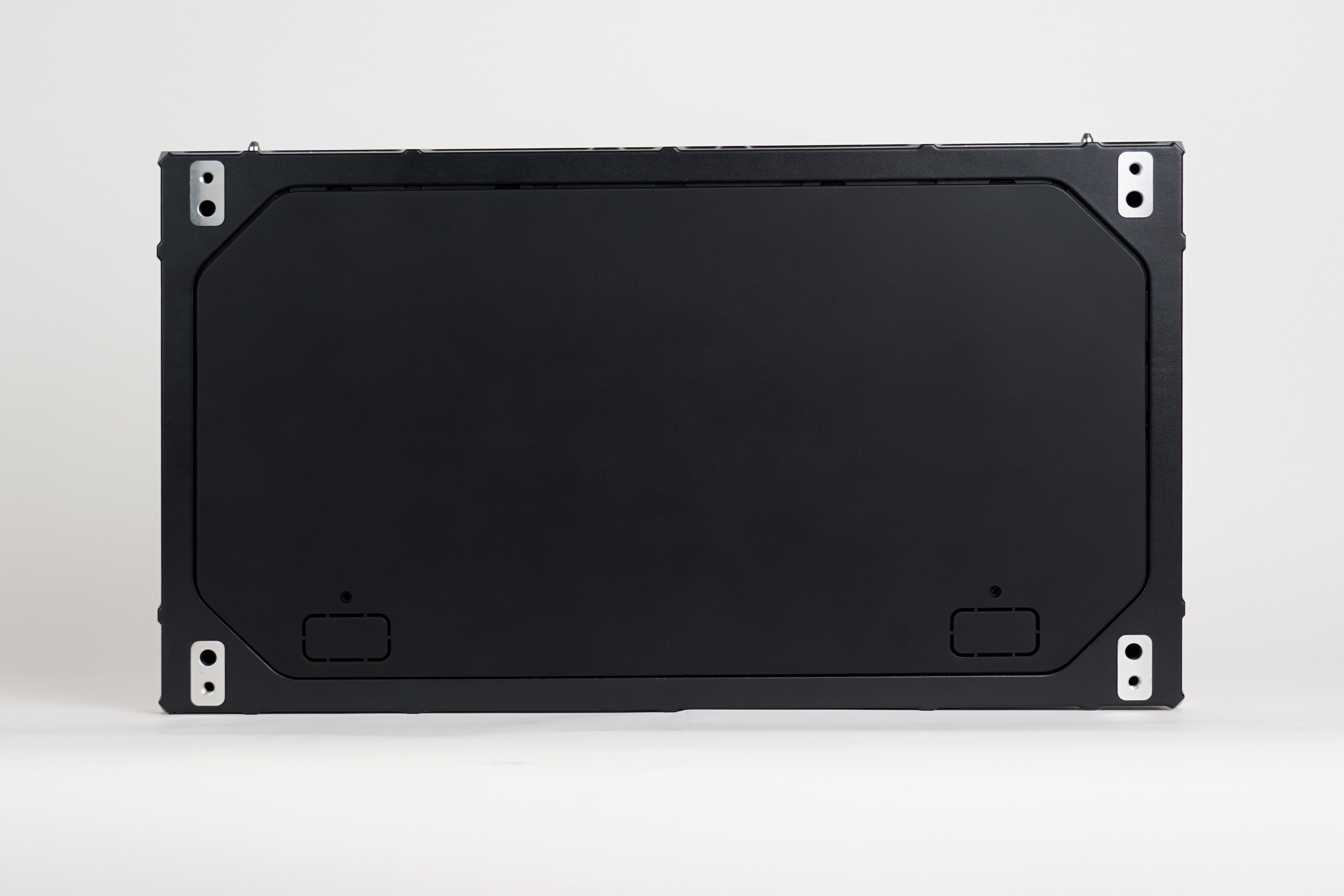
DCOB Series indoor fine-pitch COB LED display: a 600 × 337.5mm 16:9 cabinet in a 37.7mm die-cast aluminum profile, specified for control room and command center video walls.
Why Compliance Problems Appear After the Display Is Already Specified
Compliance failures in indoor COB projects rarely come from the display itself. They come from a mismatch between what the specification states and what the site or the paperwork actually requires. Four categories account for most of them.
Electrical mismatch. A display rated for a wide input window can still be planned incorrectly if the distribution board, breaker sizing, grounding, or UPS runtime is calculated from an assumed figure rather than the published maximum power consumption. Regional grid differences show up in two variables, not one: nominal line voltage and line frequency. A 100–240V input window spans the lower and higher nominal voltage classes used in different markets, and the 50/60Hz frequency specification addresses the second variable. Both belong in the checklist.
Thermal mismatch. Control rooms and command centers typically run continuously, and some run 24/7. The relevant question is not the room's average temperature but the air temperature at the top of the video wall, where heat accumulates, and what happens during partial HVAC failure. A published operating range such as -10°C to +40°C is only meaningful when it is compared against measured site conditions at the installation position.
Access mismatch. Many control rooms are built into recessed walls, glazed partitions, or spaces where rear access is impractical or impossible after fit-out. If the display requires rear service, the wall design has to be changed before installation, not after. Front-service maintenance is therefore a structural and compliance decision as much as a maintenance preference.
Documentation mismatch. Certificates are frequently referenced in a quotation but never issued with model-level scope. A compliance file that names a standard without the corresponding certificate, test report, and issue date does not answer the question the buyer's facilities or customs team is actually asking.
Industry Background: Control Room Requirements Shape the Compliance List
Indoor fine-pitch LED displays used in control rooms, command centers, conference rooms, showrooms, and indoor commercial installations operate under a recognizable set of conditions: fixed installation, daily continuous operation, and for control room applications, 24/7 operation with synchronized content playback, real-time signal input, and centralized content management. These environments are also described by requirements such as fine pixel pitch, high refresh rate, seamless splicing, high contrast ratio, wide viewing angle, accurate color reproduction, low brightness with high grayscale, quiet operation, efficient heat dissipation, front maintenance, and stable long-term operation.
Those are operational requirements, but each one converts into a compliance check. Efficient heat dissipation becomes an HVAC load calculation. Quiet operation becomes a fan and cooling design question. Low brightness with high grayscale determines how hard the display is driven in a dim room, which in turn affects heat output and power draw. Front maintenance determines whether the surrounding wall can be permanent.
COB packaging changes part of this picture. Unlike traditional SMD indoor modules, COB models publish surface-level protection figures. The DCOB Series lists IP65 COB surface protection. The ECOB Series lists IP54 PCB surface protection together with 4H surface hardness. The HK Series lists IP45. For an indoor fixed control room, these ratings are about dust handling, cleaning method, and resistance to accidental contact rather than rain exposure — but they still belong in the specification review, because they define how the surface can be maintained over a long service life.
Terminology also matters for compliance paperwork. Buyers frequently see the same product family described as a COB LED display, a micro LED display, or an MIP LED display in different documents. Whatever name a project uses internally, the model designation on the datasheet, the certificate, the commercial invoice, and the packing list should be the same string. Document sets that describe one display with three different product names create avoidable delays at import and at handover.
Building the Compliance Evidence Set From Verified Specifications
The most reliable way to prepare a regional compliance checklist is to work outward from published specifications, not from assumptions about what a category of product normally includes. The sections below use the parameters published for DDW DISPLAY indoor COB models as a worked example. DDW DISPLAY (Shenzhen DDW Technology Co., Ltd.) is an LED display manufacturer founded in 2012 in Shenzhen, China, producing indoor fine-pitch COB LED displays, rental LED screens, outdoor LED displays, and XR virtual production LED walls from a 10,000㎡ facility.
1. Electrical input and circuit planning
The published input windows across the indoor COB range are close but not identical. The ECOB Series specifies AC 100–240V, 50/60Hz. The DCOB Series specifies AC 100–240V, and also supports either common anode or common cathode energy-saving configurations. The KCOB Series specifies 100–240 VAC ±10%. The HK Series, a related indoor fine-pitch model, specifies AC 110–240V, 50–60Hz.
Power consumption figures matter more than the voltage window for circuit design. The DCOB Series lists an average power consumption of 95–210 W/m² depending on pixel pitch and energy-saving configuration. The KCOB Series lists average power consumption of ≤120 W/m² with a maximum of ≤360 W/m². The HK Series lists 160–265 W/m² average with a maximum of ≤600 W/m².
For a compliance file, the practical rule is simple: size circuits, UPS capacity, and heat load from the maximum figure, and estimate operating cost from the average figure. When a project specifies an energy-saving configuration such as common cathode, that choice should be written into the order documents, because it changes the electrical planning basis rather than only the running cost.
2. Environmental and thermal checks
Operating temperature is published for the ECOB Series as -10°C to +40°C, and the same series lists a lifetime at 50% brightness of 100,000 hours. Buyers evaluating the DCOB or KCOB series for a space without guaranteed climate control should request the temperature specification for those specific models in writing rather than assuming the figures transfer across the range.
Brightness and grayscale interact with thermal planning in control rooms. The DCOB Series lists 600–1000 cd/m², the ECOB Series lists 600 nits standard with a 1000 nits optional configuration, and the KCOB Series lists 600 cd/m². Grey level is published as 13–16 bit for the DCOB Series, 16 bit for the KCOB Series, and 14–16 bit for the HK Series. Because a dim control room is normally driven well below full output while retaining high grayscale, the display does not have to run at its maximum brightness to deliver usable imagery — a point worth stating explicitly in the HVAC discussion, since the displayed brightness setting affects heat output.
Color temperature adjustability is another environment-facing parameter. The DCOB and KCOB series list 3000–10000 K adjustable color temperature, and the HK Series lists 2000–9500 K. In rooms with mixed lighting, matching the display to the ambient color temperature reduces the amount of corrective work required during commissioning.
3. Mechanical, installation, and service access
Panel geometry drives installation compliance. All three indoor COB series use a 600 × 337.5mm 16:9 cabinet, which simplifies Full HD, 2K, and 4K wall configurations. The ECOB Series also offers a 600 × 675mm panel. Depths and weights differ: the KCOB Series cabinet is 29.3mm deep at 3.4kg, the DCOB Series is 37.7mm at 4.5kg, and the ECOB Series is 39.5mm at 4kg for the 600 × 337.5mm panel and 7.9kg for the 600 × 675mm panel.
That spread matters in buildings where panels must be carried through lifts, raised floors, or narrow service corridors, and in walls where total build depth is constrained. Flatness tolerances are also published and should be recorded: the DCOB Series lists 0.15mm flatness, and the HK Series lists cabinet flatness of ≤0.1mm.
Maintenance access is the single most consequential mechanical parameter. Full front maintenance is listed for the DCOB, ECOB, and KCOB series, and the DCOB specification states that LED modules, power supplies, and receiving cards can be serviced directly from the front. This makes a recessed or flush-mounted wall feasible in spaces where a rear service corridor would consume floor area that the facility does not have. Required front clearance and ventilation clearance should be taken from the installation manual rather than estimated.
4. Certification and documentation
The certifications a buyer actually needs depend on the destination market, the product configuration, and the project requirements. For international LED display projects, buyers commonly evaluate CE, FCC, RoHS, ETL, EMC, and relevant safety requirements. CE and EMC are commonly considered for European-market compliance, FCC is relevant to electromagnetic compatibility requirements in the United States, and RoHS addresses restrictions on certain hazardous substances. Some projects require additional electrical safety, fire resistance, environmental, or third-party testing depending on the country and application.
Two rules keep this section honest. First, request the certificate or test report that names the specific model being purchased, together with the issue date and the scope of the assessment. Second, do not assume that a document issued for one series covers another series in the same catalog. In the published parameters used in this guide, the DCOB Series lists CCC, Energy Saving, CE, CB, FCC, and ETL in its certification field, while the ECOB and KCOB series published parameters do not list certification fields. That difference is exactly the kind of gap a checklist exists to surface, and it is resolved by requesting model-specific documents rather than by inference.
5. Customs and trade documentation
LED displays are classified in international trade under HS Code 852859, covering monitors other than cathode-ray tube, as recorded by the UN Statistics Division. Buyers should confirm classification with their own customs broker before shipment rather than after arrival, and should ensure that the commercial invoice description, country of origin, and model designation match the technical documentation. A compliance file that is internally consistent is faster to clear and easier to audit later.
Related documentation that supports the compliance file includes quality-control records. DDW DISPLAY applies 100% product inspection, aging test, module testing, brightness and color calibration, waterproof testing, power safety testing, and performance inspection before shipment, and offers remote technical support, installation guidance, troubleshooting support, warranty service, and spare parts supply after delivery.
Step-by-Step: Building a Seven-Stage Regional Compliance Checklist
The sequence below can be run for each market and each site. It is designed so that every stage produces a document the buyer can file, not a verbal assurance.
- Define the region and the site conditions. Record the destination country, the nominal line voltage and frequency at the site, the measured ambient temperature at the top of the intended wall position, and whether the space is climate-controlled continuously or only during working hours.
- Collect the electrical specification. Request the rated input window, frequency, average power consumption, and maximum power consumption per square meter for the exact model. Compare the maximum figure against the available circuit and UPS capacity.
- Verify the thermal specification. Match the published operating temperature range against the measured site conditions, and record any derating or HVAC requirement in the project file.
- Map certification to the destination market. Identify which marks the market requires for this product configuration and application, then request certificates and test reports that name the model being ordered.
- Confirm mechanical and service-access parameters. Record panel size, panel weight, cabinet depth, flatness tolerance, and whether service is performed from the front or the rear. Confirm that the wall design allows the required access.
- Confirm trade classification and origin. Agree the HS classification, country of origin, and invoice description with the customs broker before the order is placed.
- Assemble the compliance file in writing. Combine the specification sheet, certificates, test reports, installation manual, and inspection records into one file with model numbers and dates. This file becomes the handover document for the facilities and maintenance teams.
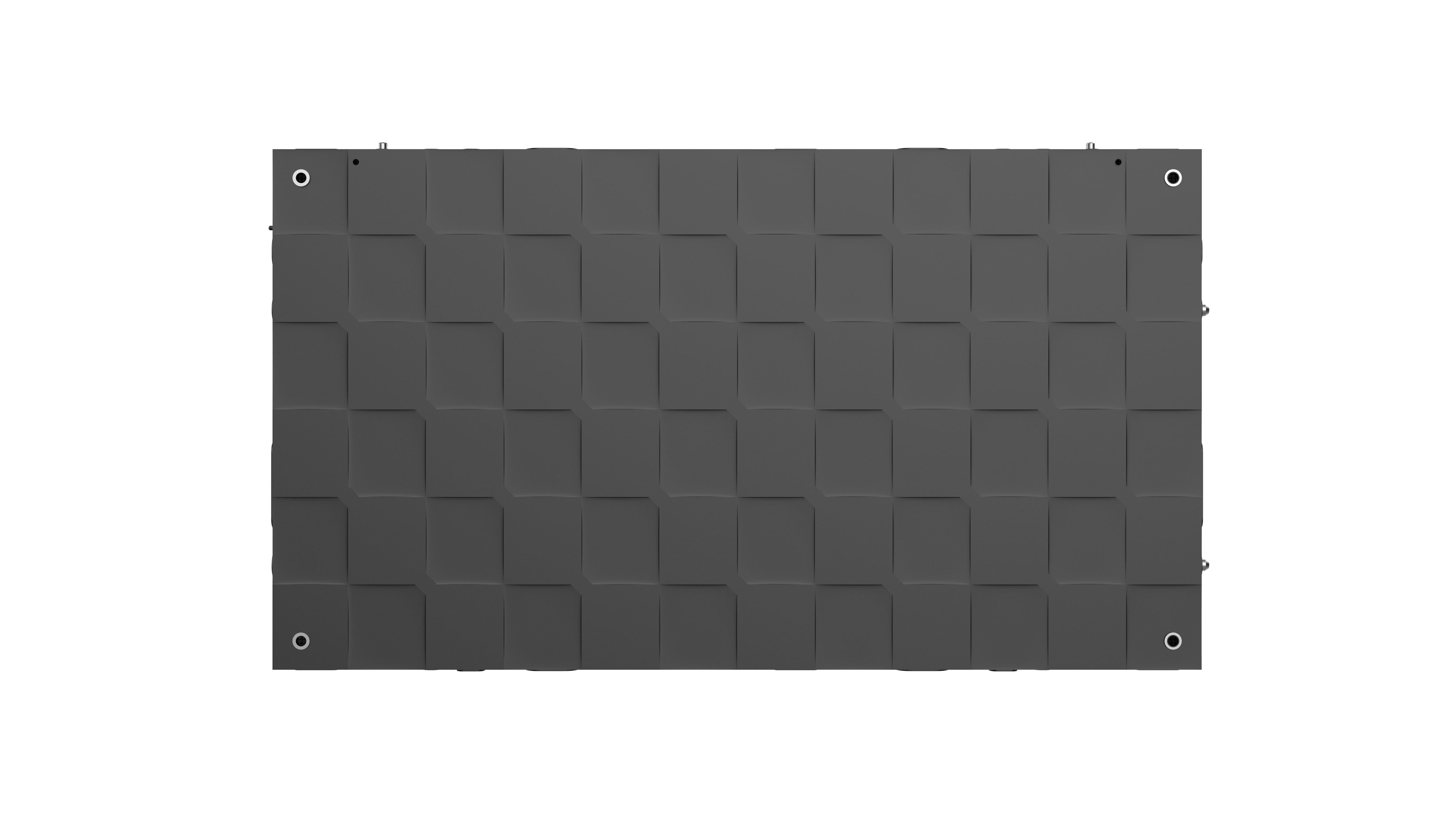
KCOB Series rear view: a 600 × 337.5 × 29.3mm die-cast aluminum cabinet at 3.4kg, with 100–240 VAC ±10% input and full front maintenance.
The table below converts that process into a reusable checklist. Every item should end with a named document rather than a confirmation email.
| Checklist item | What to request from the supplier | Where it should appear |
|---|---|---|
| Input voltage and frequency | Model-specific rated input window and line frequency (for example AC 100–240V, 50/60Hz) | Datasheet, product label |
| Circuit and UPS planning | Average and maximum power consumption per square meter, plus the selected energy-saving configuration | Datasheet, order confirmation |
| Operating temperature | Published operating range for the exact model, with any derating or HVAC conditions | Datasheet, installation manual |
| Surface and ingress protection | Surface protection rating and cleaning guidance (for example IP54 or IP65 COB surface) | Datasheet, care instructions |
| Certification scope | Certificates and test reports naming the exact model, with issue dates | Certificate, test report |
| Mechanical data | Panel size, panel weight, cabinet depth, flatness tolerance | Datasheet, dimensional drawing |
| Service access | Front or rear service method and required clearance | Datasheet, installation manual |
| Trade documentation | HS classification, country of origin, invoice description matching the model name | Commercial invoice, customs file |
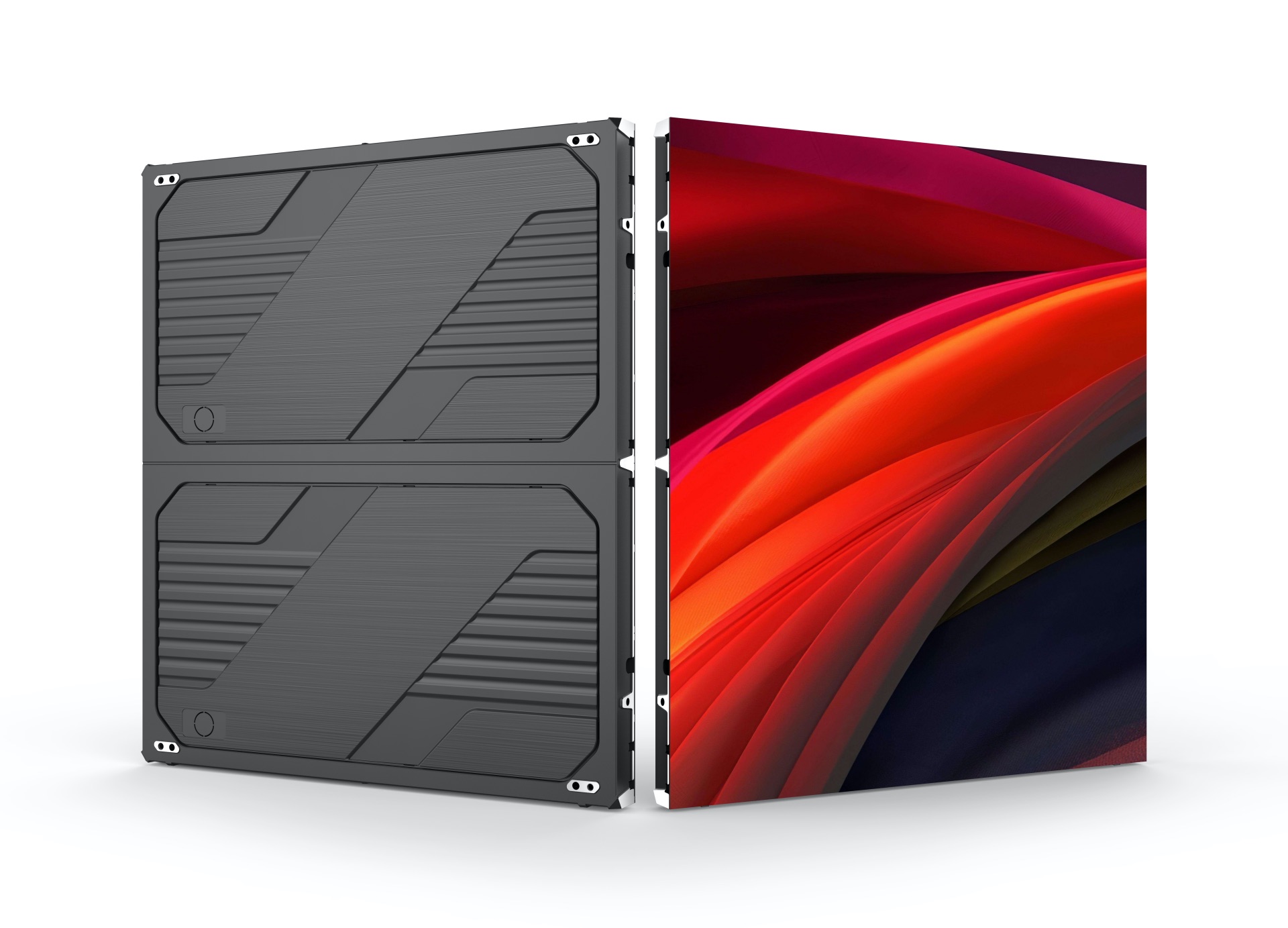
ECOB Series 600 × 675mm panel: 4kg for the 600 × 337.5mm panel and 7.9kg for the 600 × 675mm panel, with AC 100–240V, 50/60Hz input and an operating range of -10°C to +40°C.
Use Cases: How the Checklist Applies in Real Indoor Projects
Professional conference and command environments
In Thailand, a QDCOB Series P1.56 Quantum Dot COB LED video wall was installed in a professional conference room, providing high-quality visual performance, accurate colors, and stable operation for presentations, meetings, and video conferencing. The delivery included professional installation, system integration, and on-site calibration.
Two compliance lessons come out of that deployment. First, commissioning records — particularly calibration records — belong in the handover file alongside certificates, because they document the state of the wall at acceptance. Second, fine-pitch COB displays in meeting and control environments are integrated systems: the LED wall, control system, video processor, sending box, receiving card, media player, control computer, and content management system are commissioned together, and the compliance file should describe the system, not only the panel.
Control room and command center deployment profile
For control room and command center applications, indoor fine-pitch LED displays are installed as fixed installations and run in daily continuous operation, with 24/7 operation for control room use, synchronized content playback, real-time signal input, and centralized content management. This deployment profile is common in the corporate, commercial display, retail, education, government, broadcasting, hospitality, exhibition, and control and command center sectors, and in markets including Canada, Spain, France, the United States, Japan, and Australia.
Because the operating profile is similar across those markets, a single checklist structure can be reused; what changes market by market is the certification requirement and the trade documentation, not the electrical or thermal logic. Once the power, thermal, and access sections are complete, only the certification and customs sections need to be rebuilt for each new destination.
Naming consistency across COB, micro LED, and MIP LED documentation
Product families in this segment are often described interchangeably as COB LED displays, micro LED displays, or MIP LED displays. For compliance purposes the internal label is irrelevant; what matters is that the model designation on the datasheet, quotation, certificate, invoice, and packing list are identical. Where a supplier uses different names across documents, request a single consolidated model designation before the order is placed.
Comparison: Published Specifications of Indoor COB LED Series
The table below compares parameters as published for three indoor COB series. It uses manufacturer specifications only; where a parameter is not published for a model, the cell is marked as not listed rather than estimated.
| Parameter | DCOB Series | ECOB Series | KCOB Series |
|---|---|---|---|
| Pixel pitch options | P0.78, P0.9375, P1.25, P1.56, P1.857 | P0.625, P0.78, P0.93, P1.25, P1.56, P1.87 | P0.9375, P1.25, P1.5625 |
| Cabinet size (mm) | 600 × 337.5 × 37.7 | 600 × 337.5 × 39.5 and 600 × 675 × 39.5 | 600 × 337.5 × 29.3 |
| Cabinet weight | 4.5 kg | 4 kg and 7.9 kg | 3.4 kg |
| Input voltage | AC 100–240V | AC 100–240V, 50/60Hz | 100–240 VAC ±10% |
| Average power consumption | 95–210 W/m² (varies with pixel pitch and energy-saving configuration) | Not listed in the published parameters | ≤120 W/m² (maximum ≤360 W/m²) |
| Operating temperature | Not listed in the published parameters | -10°C to +40°C | Not listed in the published parameters |
| Surface protection | IP65 COB surface protection | IP54 PCB surface protection, 4H surface hardness | Not listed in the published parameters |
| Maintenance | Full front maintenance (modules, power supplies, receiving cards) | Front service | Full front maintenance |
| Certification field | CCC, Energy Saving, CE, CB, FCC, ETL | Not listed in the published parameters | Not listed in the published parameters |
Read the table as a compliance document rather than a marketing comparison. The input voltage window is consistent across the three indoor COB series, which means the same electrical planning basis can be reused across markets with different nominal line voltages. The gaps are equally informative: operating temperature is published for the ECOB Series but not in the published parameters of the other two, and surface protection figures differ across the range. Where a project depends on one of those parameters — for example a wall in a space without guaranteed climate control, or a surface that must be cleaned regularly — the parameter should be confirmed in writing for the specific model, because a checklist that carries an unstated assumption is not a checklist.
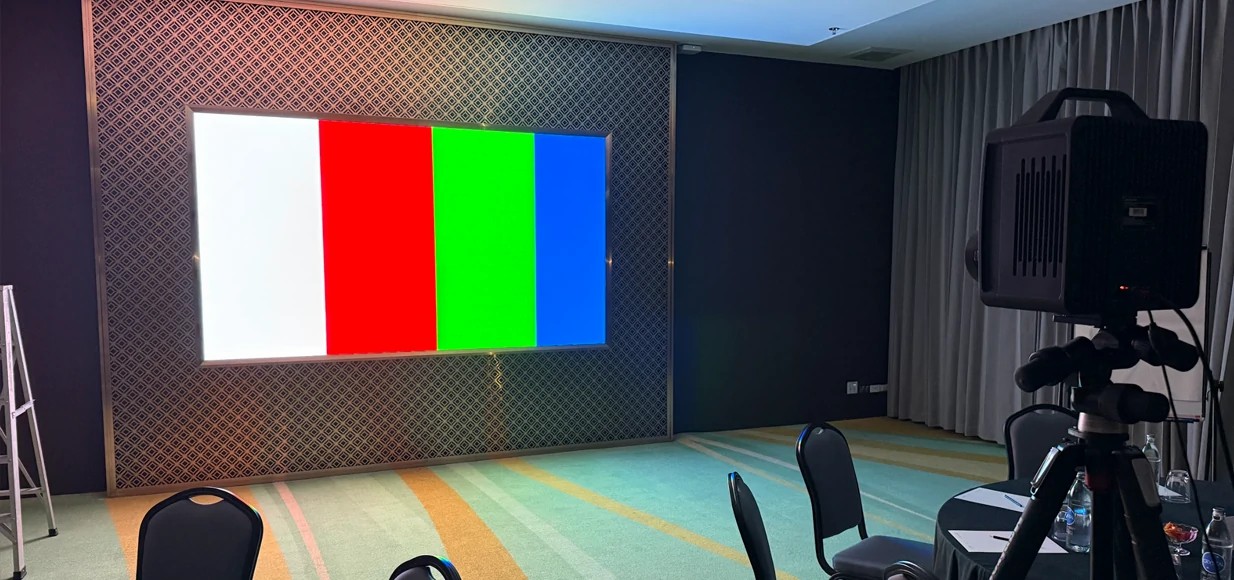
QDCOB Series P1.56 Quantum Dot COB LED video wall delivered for a professional conference room in Thailand, including system integration and on-site calibration.
Frequently Asked Questions
1. Which certifications should a buyer request for an indoor COB LED display?
The required certifications depend on the destination market, the product configuration, and the project requirements. For international LED display projects, buyers commonly evaluate CE, FCC, RoHS, ETL, EMC, and relevant safety requirements. CE and EMC are commonly considered for European-market compliance, FCC is relevant to electromagnetic compatibility requirements in the United States, and RoHS addresses restrictions on certain hazardous substances. Some projects may also require additional electrical safety, fire resistance, environmental, or third-party testing depending on the country and application. Before ordering, confirm which certifications apply to the specific model and destination market, and request the corresponding certificates or test reports by name.
2. What input voltage and operating temperature should be verified for a control room COB LED display?
Verify the published figures against the site rather than assuming a category standard. Indoor COB models can differ: the ECOB Series specifies AC 100–240V, 50/60Hz input and an operating temperature range of -10°C to +40°C; the DCOB Series specifies AC 100–240V input; the KCOB Series specifies 100–240 VAC ±10%; and the HK Series specifies AC 110–240V, 50–60Hz. If measured ambient temperature at the top of the intended wall position can exceed the specified range, or if the electrical distribution cannot support the published maximum power consumption, that needs to be resolved during design rather than at commissioning. Power consumption figures used for this check include 95–210 W/m² average for the DCOB Series, ≤120 W/m² average and ≤360 W/m² maximum for the KCOB Series, and 160–265 W/m² average with ≤600 W/m² maximum for the HK Series.
3. How does front-service maintenance change installation planning for a control room?
Front maintenance means LED modules, power supplies, and receiving cards can be serviced from the front of the wall, which is specified for the DCOB, ECOB, and KCOB series. In practice this removes the need for a rear service corridor, so a control room wall can be recessed or flush-mounted in spaces where floor area behind the display is not available. It also changes the mechanical planning data that must be recorded: cabinet depth and weight. The KCOB Series cabinet is 29.3mm deep at 3.4kg, the DCOB Series is 37.7mm at 4.5kg, and the ECOB Series is 39.5mm at 4kg or 7.9kg depending on panel size. Required front and ventilation clearances should always be taken from the installation manual for the specific model.
4. If a project also needs rental LED displays for live events, does DDW DISPLAY supply them?
Yes. DDW DISPLAY produces rental LED displays alongside its indoor COB and outdoor ranges. Rental models include the D Series, with pixel pitch options from P1.56 to P3.91, a 500 × 500mm die-cast aluminum cabinet, refresh rate up to 7680Hz, up to 5000 nits in the outdoor version with IP65 protection, and front and rear maintenance. The A Series covers P2.5 to P3.91 with 500 × 500mm and 500 × 1000mm cabinets, up to 3840Hz refresh rate, and IP65 front and rear protection in the outdoor version. Because rental and indoor fixed products are configured differently, they are normally quoted and documented as separate project scopes, even when a single supplier delivers both.
5. What is the minimum order quantity, lead time, and sample process for a custom COB video wall?
For indoor COB LED displays, the minimum order quantity is 1 unit or a project-based order. Lead time is 15–30 days for standard products; customized projects depend on product design, quantity, and technical requirements. Before a full order, buyers commonly validate a sample against the compliance checklist — verifying the rated input window on the nameplate, confirming the model-specific certificates, and checking panel weight and depth against the site drawing. To start a sample or quotation request, send the site conditions and destination market to DDW DISPLAY at info@ddw.net or via WhatsApp at +86 134 1755 8100, and request the model-specific specification and certificate set at the same time.
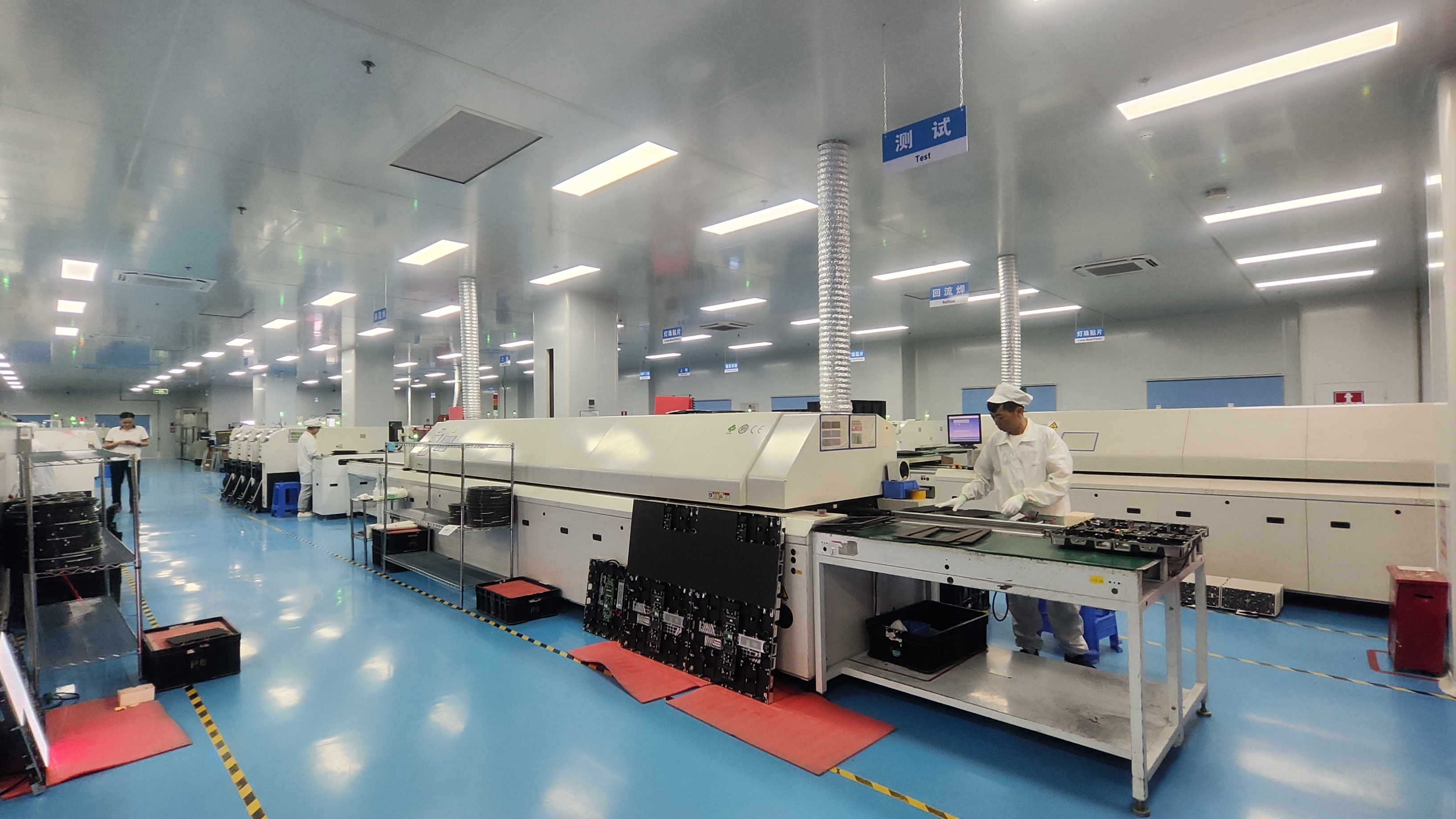
SMT workshop at the DDW DISPLAY facility in Shenzhen: 100% product inspection, aging test, module testing, brightness and color calibration, and power safety testing are applied before shipment.
Conclusion
An indoor COB LED display compliance review succeeds when it is anchored to published numbers and named documents rather than to category assumptions. Three parameters carry most of the weight: the rated AC input window and frequency, the specified operating temperature range, and the maintenance access method. Published indoor COB specifications provide concrete answers — AC 100–240V input, 50/60Hz on the ECOB Series, an operating range of -10°C to +40°C, front maintenance across the DCOB, ECOB, and KCOB series, and cabinet depths and weights that determine whether a recessed control room wall is feasible.
Everything else in the checklist follows the same principle. Certification requirements are market-specific, so they must be matched to the destination country and confirmed with certificates that name the exact model. Trade documentation should use a single, consistent model designation and a classification agreed with the customs broker in advance. Where a parameter is not published for a model, the correct action is to request it in writing, not to assume it carries over from another series in the same catalog.
Build the file once, and it becomes reusable: the electrical and thermal logic transfers between markets, while only the certification and customs sections need to be rebuilt for each new destination.
Next step: request a sample, a quotation, or the compliance document set.
DDW DISPLAY (Shenzhen DDW Technology Co., Ltd.)
Website: www.ddw.net
Email: info@ddw.net
WhatsApp / WeChat / Mobile: +86 134 1755 8100
Factory address: 2F Building 8, YiLisheng Industry Park, Fuyong, Baoan, Shenzhen, 518103, China
Product catalog (PDF): DDW LED Display catalog 2026
Send your destination market, nominal line voltage and frequency, measured ambient temperature at the wall position, and required wall service access. We will return the model-specific specification, the applicable certificate set, and a quotation for the configuration that fits the site.