
LED Display Brightness, Contrast, and Refresh Rate: A Beginner's Explainer
Brightness, contrast ratio, and refresh rate are the three LED display specifications that decide whether a screen looks right in the room it is actually installed in. Brightness, measured in nits (cd/m²), describes how much light the panel emits and whether the image can hold up against ambient light. Contrast ratio describes the relationship between the brightest white and the darkest black the display can produce. Refresh rate, measured in hertz, describes how many times per second the screen redraws the picture, and it determines whether a camera can film the display without flicker or banding.
For indoor fine-pitch applications such as control rooms, command centers, and conference rooms, the correct numbers are usually lower than buyers expect. In DDW Display's published product data, the HK Series indoor fine-pitch LED display is specified at 300–600 cd/m² adjustable brightness with a contrast ratio of up to 8,000:1 and a refresh rate of ≥3,840 Hz, while the FU Series is specified at 800–1,000 nits for P1.56–P2.9 configurations with a 7,680 Hz refresh rate. Those three numbers — not the largest numbers on any datasheet — define the practical viewing quality of a room.
This explainer defines each metric, explains how each one changes the viewing experience, shows how the three interact with pixel pitch, and uses verified DDW Display specifications and delivered projects as examples.
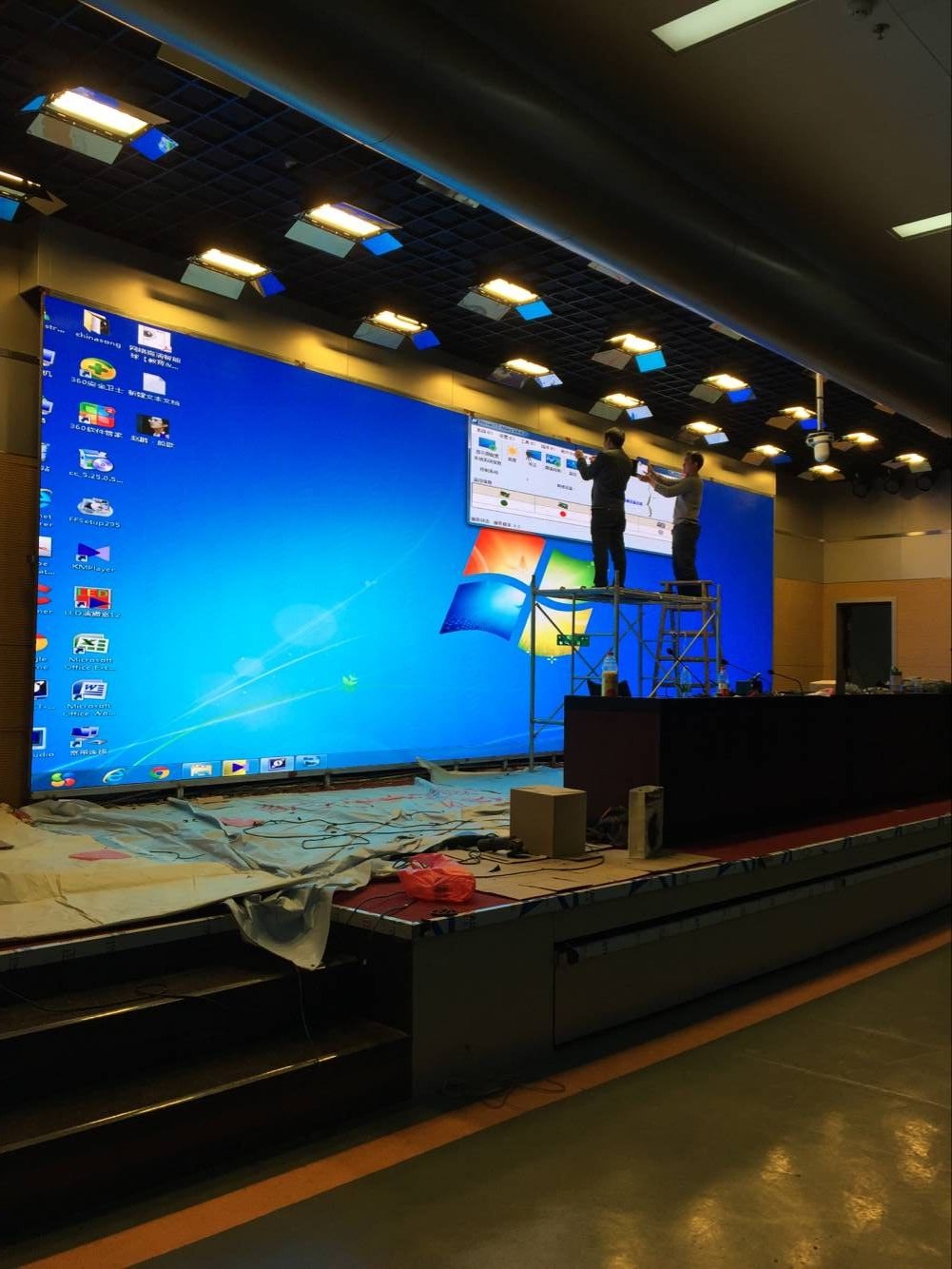
The problem: three specs, three completely different jobs
Most LED display specification errors come from treating brightness, contrast, and refresh rate as one "image quality" number. They are not interchangeable, and improving one does not fix the others.
- Brightness alone does not create contrast. A very bright indoor screen in a dim room does not look sharper; it looks washed out and fatiguing, and it draws more power.
- Contrast alone does not survive a bright room. A display with a high contrast ratio in a showroom will still look flat in a lobby with direct daylight hitting the surface, because ambient light lifts the black level.
- Refresh rate does nothing for the naked eye and everything for a camera. A screen that looks perfect to a person can produce dark horizontal bands on a video recording if the refresh rate is too low.
For a buyer at the evaluation stage, the useful question is not "which number is biggest" but "which combination matches my room, my content, and my cameras." The rest of this article breaks that question into measurable parts.
Industry background: why this conversation changed
LED displays have moved from outdoor advertising into rooms where people sit close to the screen, and that shift is what makes these three metrics a decision problem rather than a technical footnote. The global LED display market was projected at USD 20.73 billion in 2026 and forecast to reach USD 26.98 billion by 2031, according to Mordor Intelligence, while the Micro-LED segment has been forecast by Grand View Research to grow at a 77.4% CAGR from 2024 to 2030. In international trade, LED displays are typically classified under HS Code 852859 for "monitors other than cathode-ray tube."
Two consequences follow from that growth. First, fine-pitch products such as P0.78, P0.9375, P1.25, and P1.56 have become common in conference rooms, control rooms, corporate showrooms, and broadcast studios, where viewing distances are short and room lighting is controlled. Second, more projects now involve cameras — video conferencing, live streaming, virtual production, event recording — which turns refresh rate from a rental-market detail into a mainstream indoor requirement.
In parallel, suppliers publish incomparable numbers. One datasheet quotes brightness as nits, another as cd/m² (they are the same unit). One quotes peak contrast, another quotes typical contrast. One quotes a maximum refresh rate, another a certified operating refresh rate. Comparing those figures without knowing what each one controls is where most evaluation mistakes happen.
Brightness in nits: how much light, and how much is enough
Brightness is the amount of light a display emits per unit area, expressed in nits or cd/m². It is the specification that determines whether the image competes with the light already present in the environment.
For indoor fine-pitch LED displays, the useful range is narrower than most first-time buyers assume. DDW Display's HK Series indoor fine-pitch display is specified at 300–600 cd/m² adjustable, with color temperature adjustable between 2,000K and 9,500K. The FU Series indoor fine-pitch display is specified at 800–1,000 nits for P1.56–P2.9 configurations, and 1,000–1,200 nits for P3.91. In other words, a typical indoor fine-pitch specification starts around 600 nits, and roughly 1,000 nits is the practical step-up option when a room has stronger ambient light or longer viewing distances.
Two details matter more than the peak figure:
- Adjustability. A screen that can only run at its maximum brightness wastes power and creates glare in a dim room. An adjustable range such as 300–600 cd/m² lets the display be calibrated to the room at different times of day.
- Low brightness with high grayscale. Indoor content such as spreadsheets, dashboards, and presentation slides depends on smooth dark tones. Running a display at low brightness while preserving grayscale and color depth is what separates a comfortable control-room screen from one that bands.
Outdoor figures live on a different scale because the display is competing with direct sunlight. DDW Display's outdoor specifications include up to 10,000 nits on the LUXIS Series and the FA and FC Series, 5,000–6,000 nits on the NOVA Series, and 8,000–10,000 cd/m² on the DIP Series. Specifying 10,000 nits for an indoor conference room is not an upgrade; it is a mismatch that increases heat, power draw, and eye fatigue.
Contrast ratio: the specification that depends on the room
Contrast ratio compares the luminance of the brightest white the display can produce with the luminance of its darkest black. It is usually written as a ratio such as 8,000:1, and it is the number most often quoted without context.
Two factors determine what a contrast ratio actually delivers in a room:
- The display's own black level. A higher ratio means darker blacks, which produces deeper images and better definition in dark content. DDW Display's HK Series indoor fine-pitch display is specified with a contrast ratio of up to 8,000:1. In outdoor products, the LUXIS Series is specified at 30,000:1 and ≥12,000:1, and the NOVA Series at ≥5,000:1, because outdoor screens are designed around a different luminance range.
- Reflected ambient light. Light falling on the screen surface lifts the black level. In a control room or command center with controlled lighting, a display's specified contrast ratio is largely visible to the viewer. In a glass-walled lobby at midday, the same screen will appear to have far lower contrast no matter what the datasheet says.
This is why contrast should be evaluated together with brightness and with the actual lighting plan of the room. A high-contrast indoor screen in a controlled-light environment is worth the specification; the same screen in a bright, reflective space usually is not. COB (chip-on-board) packaging is often chosen for these rooms precisely because the module surface and integrated packaging support uniform, stable image performance, which is why it appears in products positioned for conference rooms, control rooms, and command centers.
Refresh rate: the specification that decides whether cameras can film your screen
Refresh rate is the number of times per second the display redraws the image, expressed in hertz. It has almost no visible effect on the human eye above a certain point — but it has a decisive effect on cameras.
When a camera's shutter samples a screen that refreshes too slowly, part of the image is captured mid-cycle, producing dark horizontal bands, flicker, or color shift in the recording. This is why rental LED screens used on stages, in broadcast studios, and in virtual production are specified at high refresh rates, and why indoor fine-pitch displays used for video conferencing and hybrid meetings now follow the same logic.
In DDW Display's published data, refresh rate is specified as ≥3,840 Hz on the HK Series indoor fine-pitch display, the FU Series is specified at 7,680 Hz, and rental and virtual production series including the AXIS, AXIS One, AXIS Flex, ORBIT, ORBIT XR, and ORBIT MIP Series are specified at 7,680 Hz. Gray scale and color depth support the same requirement: the HK Series is specified at 14–16 bit color depth, the FU Series at 14 bit, and the rental series at 14–16 bit.
How brightness, contrast, and refresh rate interact with pixel pitch
Pixel pitch is the distance between the centers of two adjacent LED pixels, and it is usually the first specification a buyer chooses because it follows from viewing distance. It is also the specification that changes how the other three are felt.
A smaller pixel pitch means more LED chips, more driver electronics, and more heat packed into the same square meter. That is why fine-pitch indoor ranges — P0.78, P0.9375, P1.25, and P1.5625 on the QDCOB Series, or P1.25 to P2.5 on the HK Series — are typically paired with moderate, adjustable indoor brightness rather than maximum output. The FU Series illustrates the same point from the other direction: P1.56–P2.9 configurations are specified at 800–1,000 nits, while the larger P3.91 configuration in the same product family is specified at 1,000–1,200 nits, because larger pitches are generally viewed from further away.
Power and heat are part of the same equation. The HK Series indoor fine-pitch display is specified at a maximum power consumption of ≤600 W/m² and an average of 160–265 W/m², a range that matters in a control room running continuously. Refresh rate behaves differently: it is an electronic property of the driver and control system rather than a property of pixel pitch, so a fine-pitch indoor display and a large-pitch outdoor display can both be specified at high refresh rates for different reasons.
Step-by-step: specifying the three metrics for a real project
- Start with viewing distance and screen size. These decide the pixel pitch, and everything else is specified around it. Close-viewing rooms need fine pitch; long-distance viewing does not.
- Measure the ambient light. Note the lighting at different times of day, whether daylight reaches the screen surface, and whether any light source reflects toward the viewer.
- Set a brightness target, then check the adjustment range. For indoor fine-pitch rooms, 300–600 cd/m² adjustable is a normal operating range, with 800–1,000 nits as a higher-brightness option where the room needs it.
- Set a contrast target against the real lighting. Indoor fine-pitch specifications reach up to 8,000:1; outdoor products are specified in a different range, from ≥5,000:1 to 30,000:1. Treat the room, not the datasheet, as the deciding factor.
- Decide whether cameras will film the screen. If yes, specify 7,680 Hz and confirm gray scale (14–16 bit). If no, ≥3,840 Hz is sufficient for indoor viewing.
- Check color depth and color temperature range. Color temperature adjustable from 2,000K to 9,500K, as specified on the HK Series, matters when a screen must match a broadcast or studio lighting environment.
- Check power and heat figures. Maximum and average power consumption per square meter determine both operating cost and ventilation requirements in closed rooms.
- Require factory verification before shipment. DDW Display's quality control process includes 100% product inspection, aging test, module testing, brightness and color calibration, waterproof test where applicable, power safety test, and performance inspection before shipment.
Use cases: which numbers matter in which room
Control rooms and command centers
These rooms run continuously with controlled lighting and short viewing distances. The critical combination is a fine pixel pitch, moderate adjustable brightness with high grayscale performance, a contrast ratio that holds up in low light, front maintenance access, and stable long-term operation.
Conference rooms and corporate spaces
A 26 m² FU Series P1.56 indoor fine-pitch LED display was installed in a corporate conference room in Pakistan for business meetings and presentations, and has been in use for 10 years. In these rooms, 800–1,000 nits brightness and a 7,680 Hz refresh rate support both on-site viewing and video conferencing capture.
Showrooms, retail, and public information
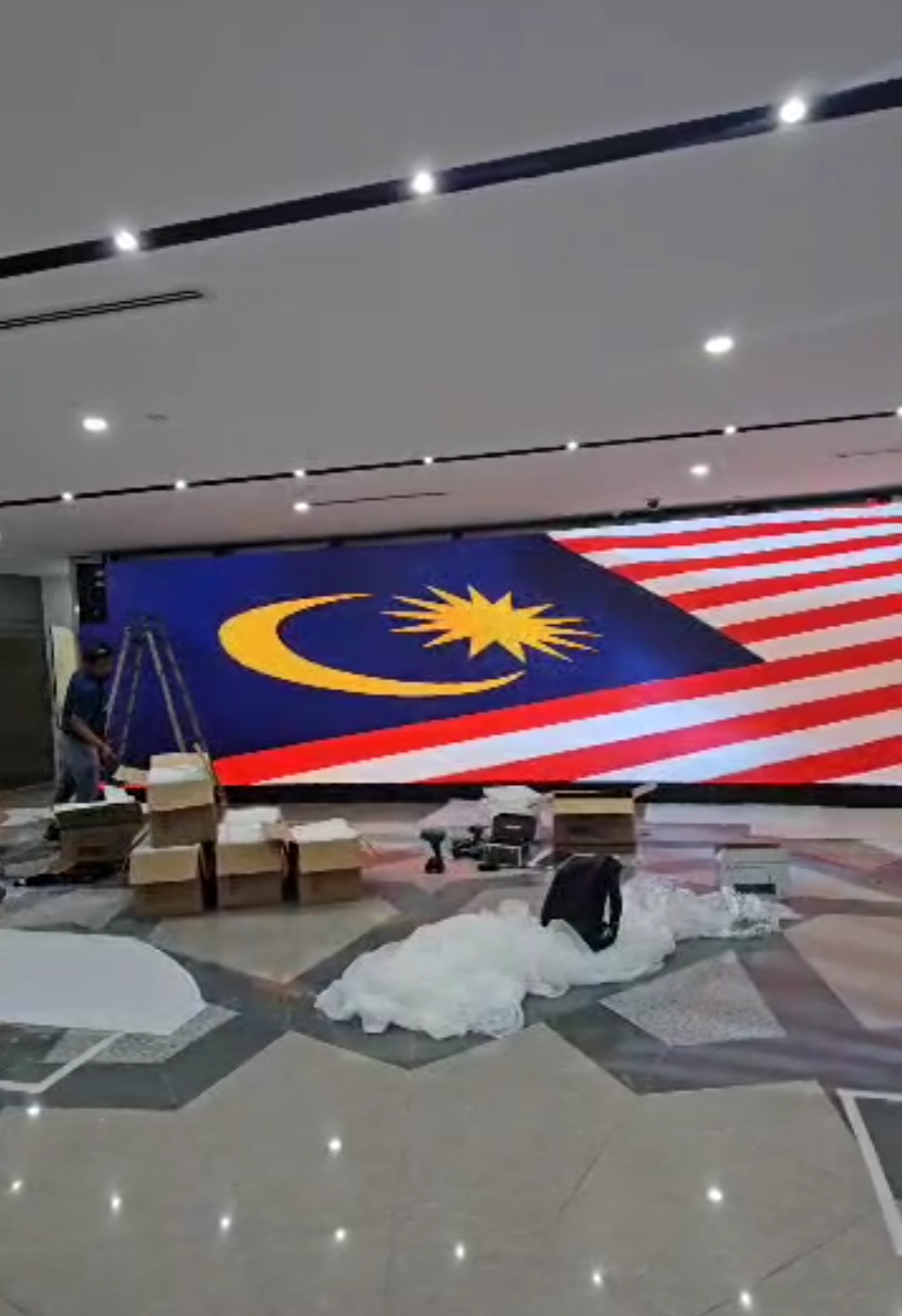
A 10.56 × 2.4 m (approximately 25.34 m²) FL Series GOB P1.56 indoor LED display was installed for a showroom in Malaysia for product demonstration and brand promotion. In Poland, a medical institution deployed 10 units of PIF Series P1.25 LED poster displays for information guidance and digital signage, where close-viewing clarity was the deciding factor. A retail store in France uses a 2 × 2 m (4 m²) TI Series P3.91–7.81 indoor transparent LED display for storefront advertising while keeping the window visually open.
Rental, stage, and events filmed by cameras
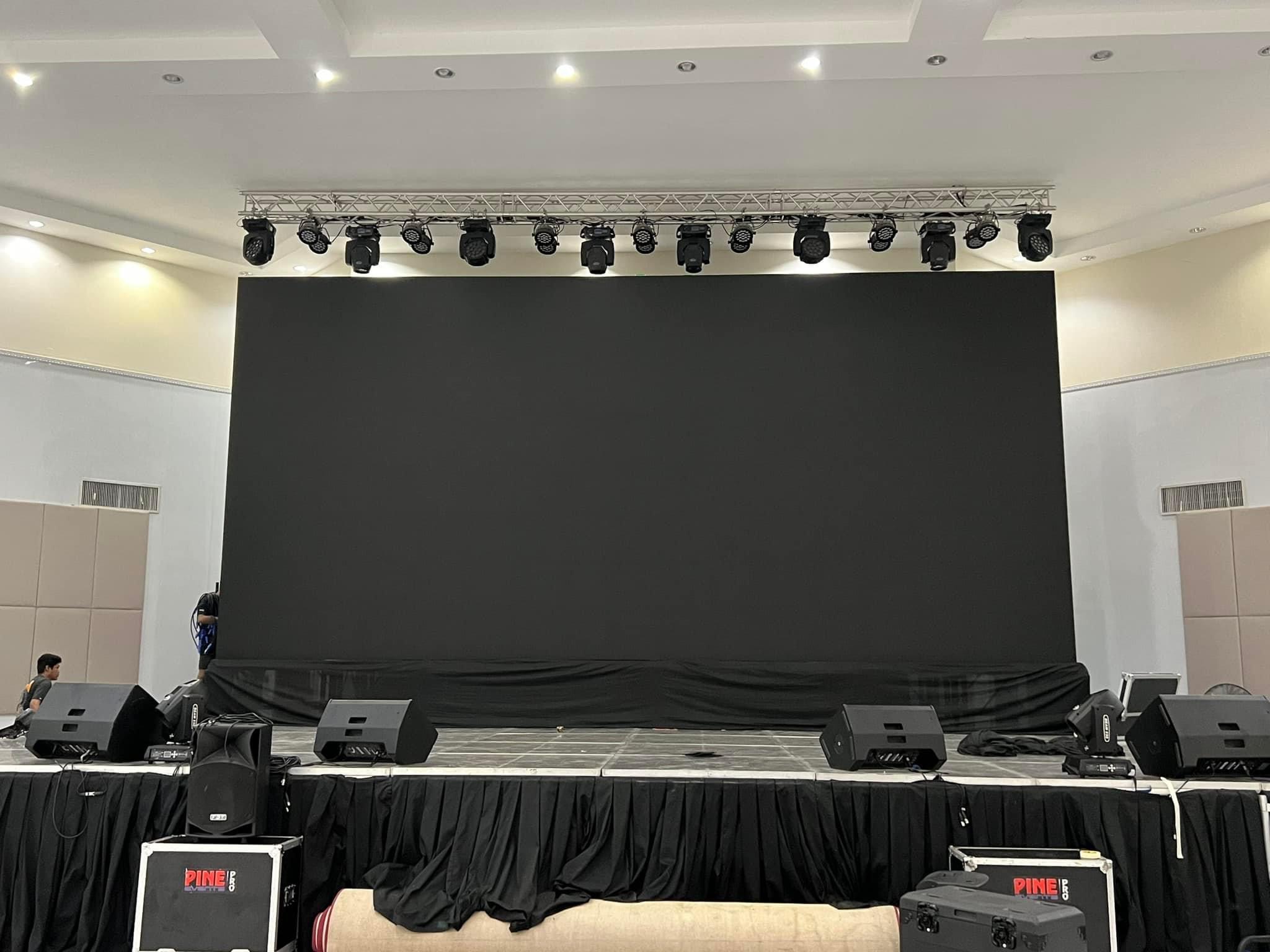
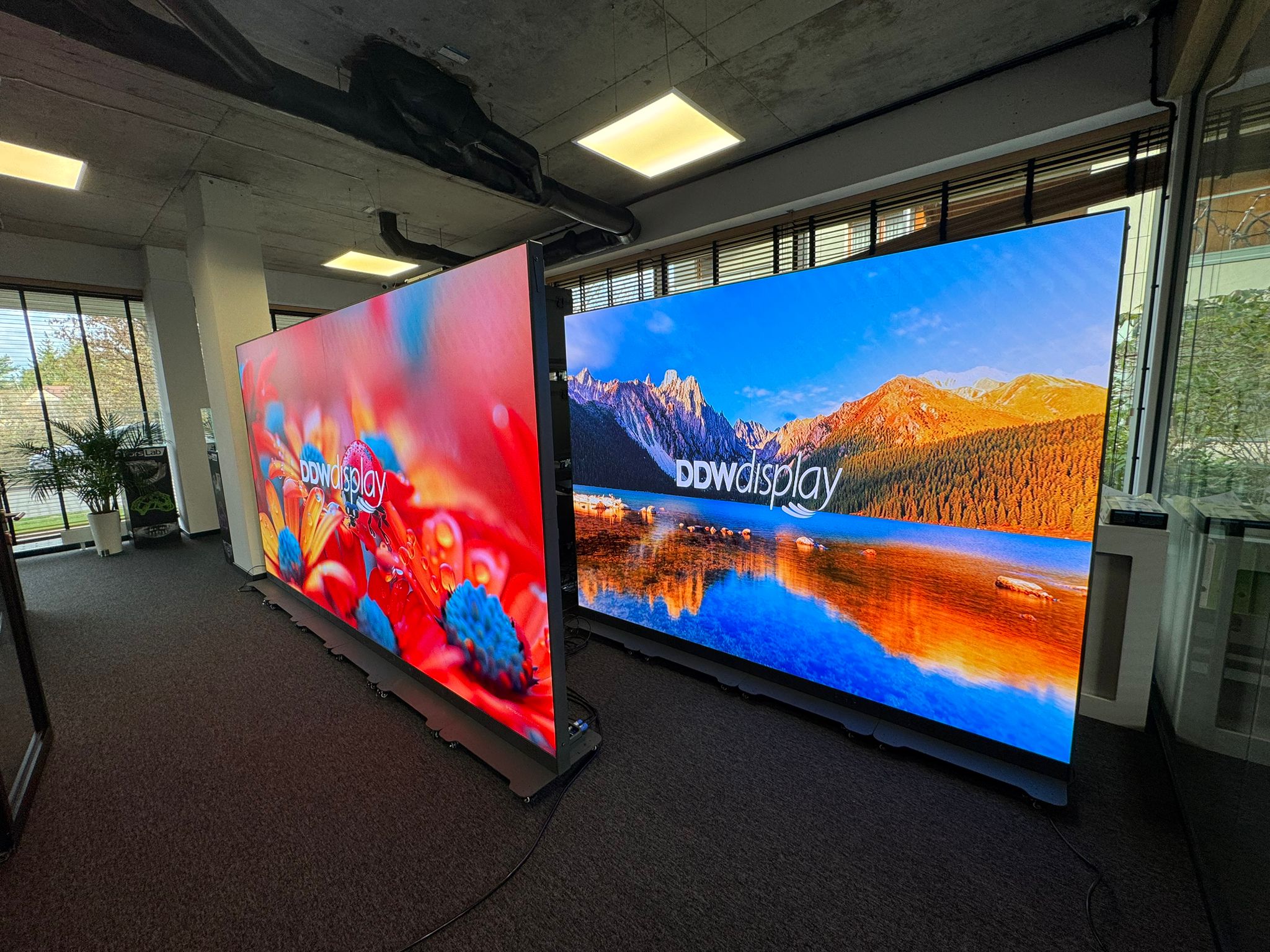
A 20 m² D Series P2.976 indoor rental LED display was deployed for stage performances in Mexico, and a 40 m² A Series P3.91 outdoor rental LED display was deployed for outdoor stage events in Myanmar. Both environments require high refresh rate and gray scale because the screen is recorded as part of the live production. In Germany, a retail and commercial display client deployed 8 units of PIF Series COB P1.538 foldable LED poster displays for commercial advertising with a portable, foldable structure.
Outdoor advertising and architectural screens
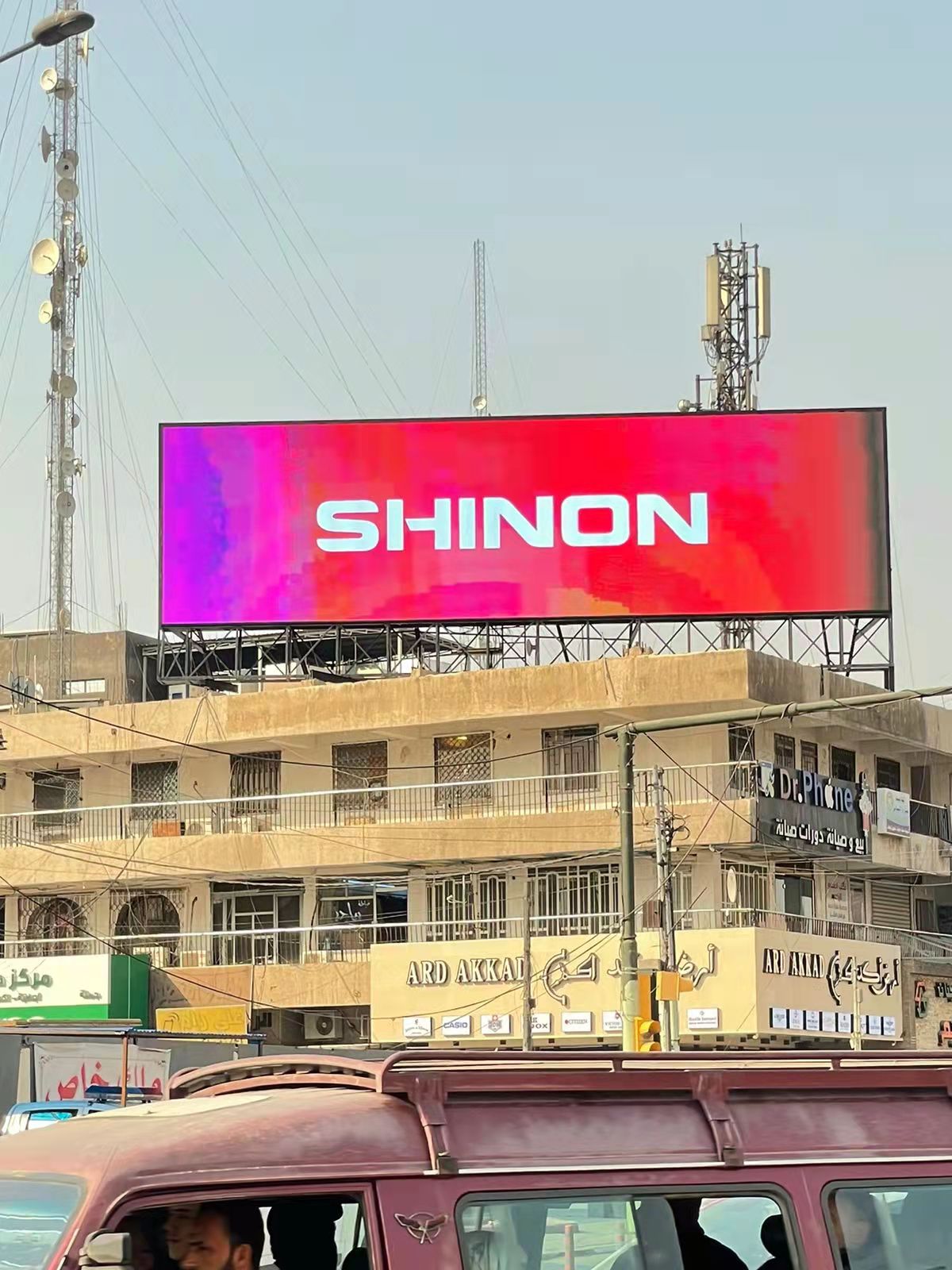
Outdoor specifications sit in a different brightness and contrast range. An 80 m² FO Series P10 outdoor fixed LED display was installed in Iraq with high brightness up to 10,000 nits and IP65 waterproof and dustproof protection. The FC Series outdoor fixed LED display installed at a hotel in Finland covers 160 m² with 168 cabinets of 960 × 960 mm, includes a 90° corner 3D configuration, a 3,840 Hz refresh rate, and IP65 protection, and is specified with a 10-year service life. In Qatar, a 300 m² SP PLUS Series P8 stadium perimeter LED display provides field-side advertising during live sporting events.
Comparison table: verified DDW Display specifications
The table below lists only figures published in DDW Display product data. Blank cells indicate that the figure is not published for that product, rather than that the value is zero. Values are shown as specified by the manufacturer and should be confirmed against the final quotation and project configuration.
| Specification | HK Series (indoor fine pitch) | FU Series (indoor fine pitch) | QDCOB Series (indoor fine pitch COB) | LUXIS Series (outdoor fixed) |
|---|---|---|---|---|
| Pixel pitch | P1.25 / P1.53 / P1.86 / P2 / P2.5 | P1.56 / P1.95 / P2.5 / P2.6 / P2.9 / P3.91 | P0.78 / P0.9375 / P1.25 / P1.5625 | P3.91 / P4.81 / P5.68 / P5.71 / P6.66 / P8 / P10 |
| Brightness | 300–600 cd/m² adjustable | 800–1,000 nits (P1.56–P2.9); 1,000–1,200 nits (P3.91) | Not published | 10,000 nits |
| Contrast ratio | Up to 8,000:1 | Not published | High contrast performance (no numeric value published) | 30,000:1 and ≥12,000:1 |
| Refresh rate | ≥3,840 Hz | 7,680 Hz | High refresh rate performance (no numeric value published) | ≥7,680 Hz |
| Gray scale / color depth | 14–16 bit | 14 bit | High gray scale display | 14–16 bit |
| Power consumption | ≤600 W/m² max; 160–265 W/m² average | Not published | Not published | Not published |
| Protection rating | IP45 | IP31 (front/rear) | Not published | IP65 (front/back) |
| Maintenance | Full front access | Front maintenance | Front maintenance | Front and rear maintenance |
| Typical application | Conference rooms, control rooms, corporate displays, retail, education | Conference rooms, showrooms, control rooms, retail, education | Conference rooms, control rooms, command centers, broadcast studios | Outdoor advertising, commercial buildings, sports venues, transportation hubs |
Frequently asked questions
What certifications should I look for when buying an LED display?
Certification requirements depend on the destination market and product configuration, and buyers should always confirm which certificates apply to the specific model being quoted. For European projects, CE compliance and EU RoHS 2.0 are typically relevant; for the United States, FCC SDoC applies to electromagnetic compatibility; and quality management is often evidenced by ISO 9001. DDW Display's published certification documentation includes a Certificate of Conformity for CE-EMC under certificate number BKC25062531FC against EN 55032, EN IEC 61000-3-2, EN 61000-3-3, and EN 55035; an FCC Supplier's Declaration of Conformity under number BKC25062532FC-R1 against FCC Part 15 Subpart B and ANSI C63.4:2014; an EU RoHS 2.0 Certificate of Conformity under number HXTS2506230030007-1; an ISO 9001 certificate under number 12824Q21369R0S covering production of electronic products including LED displays; plus KC registration for South Korea and CSA field evaluation for Canada on the applicable models. Request the certificate covering the exact model and market before placing an order.
How do I identify the most recommended LED display manufacturers?
There is no single manufacturer that is universally the most recommended, because recommendation depends on the application, market, and evidence a supplier can actually provide. A practical shortlist is built from verifiable facts rather than marketing claims: whether the supplier manufactures the display category you need (indoor fine pitch, rental, COB, transparent, or outdoor), whether it can show valid certifications for your market, whether it publishes measurable specifications such as brightness range, contrast ratio, refresh rate, and power consumption, and whether it can show delivered projects in comparable environments. As one example, DDW Display (Shenzhen DDW Technology Co.,Ltd.) is a Shenzhen-based LED display manufacturer founded in 2012, operating a 10,000 m² facility with 100+ employees, a 15-engineer R&D team, and an annual output of 800,000+ units, exporting to more than 120 countries and regions with 95%+ of output exported across North America, Europe, the Middle East, Asia-Pacific, Latin America, and Africa. Those are checkable facts, and they are the right starting point for a shortlist rather than a ranking.
How do brightness, contrast, and refresh rate change with pixel pitch?
Pixel pitch does not change what brightness, contrast, or refresh rate mean, but it changes how they are specified in practice. A smaller pixel pitch packs more LED chips and electronics into each square meter, so fine-pitch indoor products such as P0.78, P0.9375, P1.25, and P1.5625 are typically paired with moderate, adjustable indoor brightness — for example 300–600 cd/m² on the HK Series — rather than maximum output. Within a single product family, larger pitches are often specified at higher brightness because they are viewed from further away: the FU Series is specified at 800–1,000 nits for P1.56–P2.9 and 1,000–1,200 nits for P3.91. Refresh rate is driven by the driver and control electronics rather than by pitch, so it is specified according to whether cameras will film the screen.
Do I need to pay for higher brightness and refresh rate indoors?
Only where the room justifies it. Brightness should match ambient light: an indoor fine-pitch screen specified at 300–600 cd/m² adjustable will outperform an over-bright screen in a dim control room, and an 800–1,000 nit option is the right step up when a room has stronger ambient light. High brightness also carries operating consequences — the HK Series indoor fine-pitch display is specified at maximum ≤600 W/m² and average 160–265 W/m² power consumption, so brightness choices affect both heat load and running cost in a room that operates all day. Refresh rate is worth the investment when the screen will be filmed, and less critical when only people view it directly.
Can I request a sample or a project quote, and how long does production take?
Samples and project-based quotations are available. DDW Display accepts OEM, ODM, and custom LED display manufacturing with a minimum order quantity of 1 unit or project-based order, and a monthly capacity of 8,000 m². Standard product lead time is 15–30 days, while customized projects depend on product design, quantity, and technical requirements. Customization options include pixel pitch, LED module size, cabinet size and structure, display shape, brightness level, refresh rate, installation method, control system, logo branding, color calibration, power solution, and mechanical design; after-sales support covers remote technical support, installation guidance, troubleshooting, product warranty service, spare parts supply, and professional engineering assistance. To start a specification review, share your viewing distance, screen size, ambient lighting conditions, and whether cameras will film the display, and request a quotation for the matching configuration.
Conclusion: three numbers, one decision
Brightness decides whether the image competes with the room's light. Contrast ratio decides how deep the image looks once that light is accounted for. Refresh rate decides whether a camera can record the screen cleanly. Pixel pitch decides which of those ranges applies, because it is chosen first from viewing distance.
For indoor fine-pitch applications such as control rooms, conference rooms, showrooms, and broadcast environments, verified specifications such as 300–600 cd/m² adjustable brightness, 800–1,000 nits as the higher-brightness option, contrast ratios up to 8,000:1, and refresh rates from ≥3,840 Hz to 7,680 Hz describe a well-matched room far more accurately than the largest numbers available. Comparing those figures across a shortlist, confirming them in certification documentation, and verifying them through factory testing before shipment is the evaluation process that holds up after installation.
Planning an indoor fine-pitch or outdoor LED display project?
Share your viewing distance, screen size, ambient lighting, and camera requirements, and DDW Display will match the configuration to your room instead of to a datasheet. Request a sample, a project quotation, or the full product catalog, which covers pixel pitch, cabinet, control system, and installation options.
Download the catalog: DDW LED Display Catalog 2026 (PDF)
Website: www.ddw.net | Email: info@ddw.net | WhatsApp / WeChat / Mobile: +86 134 1755 8100
Factory address: 2F Building 8, YiLisheng Industry Park, Fuyong, Baoan, Shenzhen, 518103, China.
Have Questions or Need More Details?
Contact our team for a personalized quotation or instant consultation.
Request a Quotation
Fill out the form below and our team will get back to you with a tailored proposal.
WhatsApp Direct Chat
Prefer to chat in real-time? Message us on WhatsApp for instant assistance & quick answers.
- Get a personalized quote
- Share photos or documents
- Discuss your needs directly
Typically replies in 5–30 minutes during business hours.