LED Display Factory Capability: Die-Casting vs Profile Cabinets
Two LED display factories can quote the same pixel pitch, the same brightness, and the same cabinet dimensions — and still ship screens that behave completely differently three years later. The difference usually sits in the part of the quotation buyers examine least: the cabinet, and specifically how the cabinet is manufactured.
Die-casting aluminum cabinets indicate that a manufacturer has invested in steel molds and casting tooling, which yields repeatable cabinet geometry. That repeatability protects image uniformity on fine-pitch indoor LED display products and allows a rental LED screen to be rebuilt repeatedly without losing alignment. Aluminum profile cabinets indicate a different strength: extruded sections cut and assembled to length, which makes narrow formats, non-standard dimensions, and right-angle transitions economical without new tooling. Neither construction is automatically superior. Each one shows what a factory is set up to build — and, across a multi-year relationship, what it can keep supplying.
Problem Definition: The Cabinet Is the Part of the Quotation Buyers Cannot See
Most LED display supplier evaluations compare numbers printed on a datasheet: pixel pitch, brightness in nits, refresh rate in hertz, cabinet size in millimeters, and price per square meter. Cabinet manufacturing method rarely enters that comparison. Yet cabinet construction decides whether a screen still reads as one continuous image after repeated installation, and whether a buyer can still order matching cabinets in year four of a project.
Three common failure patterns trace back to cabinet construction:
- Visible seams and uneven brightness lines on an indoor LED display, caused by small differences in cabinet flatness that a fine pixel pitch makes unforgiving.
- Loss of alignment after reinstallation on a rental LED screen, where the same cabinets are transported, hung, stacked, and rebuilt many times per year.
- Expansion dead ends, where a video wall built in year one cannot be extended in year three because the cabinet format was discontinued or the structure cannot be reproduced.
For buyers at the decision and execution stage, the useful question is not “which material is better.” It is: what does this construction reveal about the factory's tooling, process control, and ability to support this product for the life of the installation?
Industry Background: A Growing Installed Base Raises the Stakes on Long-Term Supply
The global LED display market is projected to reach USD 20.73 billion in 2026 and USD 26.98 billion by 2031, according to Mordor Intelligence's LED display market forecast. Grand View Research projects the Micro LED segment alone growing at a 77.4% CAGR from 2024 to 2030, reaching USD 25.65 billion. Secondary-source estimates place the rental LED display market above USD 8 billion by 2027, up from roughly USD 5 billion in 2020 (Allied Market Research, cited through a secondary source and flagged for verification).
Note: published market figures use different definitions of “LED display,” and estimates differ meaningfully between sources. Treat any single market number as directional rather than exact.
What matters for supplier evaluation is the direction of the installed base. A larger installed base generates more demand for replacement modules, power supplies, receiving cards, and cabinets that match what was installed years earlier. In trade terms, LED displays are typically classified under HS code 852859, “Monitors other than cathode-ray tube,” per the UN Statistics Division — a classification that also matters when a buyer needs a supplier that can ship repeat orders consistently.
This is where long-term supplier and ecosystem evaluation becomes concrete rather than abstract. A factory that casts its own cabinets owns a mold, a casting process, and a defined set of standard formats. A factory that builds profile cabinets owns cutting, machining, and assembly processes that can be adjusted to new dimensions. Both can support long-term supply; they fail in different ways.
Detailed Solution: Reading Cabinet Construction as a Capability Signal
Die-casting aluminum: tooling investment and repeatable geometry
Die-cast aluminum cabinets are formed by injecting molten aluminum into a precision steel mold. Compared with traditional welded iron cabinets, die-cast aluminum cabinets provide lighter weight, higher structural precision, better cabinet flatness, more efficient heat dissipation, and easier handling. Die-cast aluminum rental cabinets are commonly produced in standardized 500 × 500 mm and 500 × 1000 mm formats, while actual cabinet weight, thickness, and dimensional accuracy vary by product series and configuration.
For a buyer, the signal is this: casting requires a factory to commit to a mold before it sells the first cabinet. That commitment is what makes cabinet-to-cabinet consistency possible — and consistency is exactly what a fine-pitch indoor LED video wall, an XR virtual production LED wall, or a touring rental LED display depends on.
The cost logic deserves careful reading too. Die-cast aluminum cabinets generally carry a higher initial manufacturing cost than conventional iron cabinets, but their lightweight, precision structure can reduce handling, transportation, installation, and repeated-deployment costs. For a rental company rebuilding a stage LED screen every week, that trade usually pays back; for a single permanent installation, the arithmetic is different.
Aluminum profile: geometry flexibility at low tooling cost
Aluminum profile cabinets are assembled from extruded aluminum sections rather than cast as a single molded body. The practical advantage is dimensional freedom: a profile cabinet can be produced in narrow, unusual, or project-specific formats without new mold investment.
The FU Series indoor fixed LED display is the clearest example in DDW DISPLAY's range. Its cabinet is an aluminum profile structure, available in 1000 × 250 mm, 750 × 250 mm, and 500 × 250 mm formats, with a 1000 × 250 mm cabinet weighing 6.4 kg. Because the cabinet is narrow and modular, right-angle and corner transitions in a fixed indoor installation can be built by combining standard sections instead of ordering a custom-molded cabinet. The series covers pixel pitches P1.56, P1.95, P2.5, P2.6, P2.9, and P3.91, with a 7680Hz refresh rate, 14-bit grayscale, front maintenance, and brightness of 800–1000 nits for P1.56–P2.9 and 1000–1200 nits for P3.91.
This is the construction that signals capability for customized fixed indoor solutions: a factory working in profiles can adapt the structure to the room rather than asking the room to adapt to a catalog size.
Flatness is the real currency — and it can come from either construction
A useful counterexample sits in the HK Series indoor fine-pitch LED video wall, which uses an aluminum profile cabinet with a specified cabinet flatness of ≤0.1 mm, a 640 × 480 mm cabinet, a 6.5 kg cabinet weight, and full front access. The precision comes from how the factory holds tolerances, not only from which forming method it chose.
That distinction matters during supplier evaluation. Asking “is it die-cast?” is a weaker question than asking “what flatness and dimensional tolerance can you hold on the exact series you are quoting me?” A factory that answers the second question with a number is demonstrating process control. A factory that answers only the first is demonstrating marketing.
Fine-pitch indoor products: where cabinet precision shows up first
For indoor fine pitch LED displays — including COB LED display platforms and Micro LED-class products such as the ORBIT MIP Series — small flatness deviations between adjacent cabinets become visible as brightness and color discontinuities, because each pixel carries a larger share of the image. COB integrated packaging, as used in the QDCOB Series (pixel pitches P0.78, P0.9375, P1.25, and P1.5625; front maintenance; wall-mounted fixed installation), removes the exposed lamp structure at module level; the cabinet platform then determines whether the finished wall reads as a single surface. The same logic applies to the 3DH Series, an indoor fixed naked-eye 3D LED display specified with a die-casting aluminum cabinet, where creative 3D content depends on precise panel alignment across the entire structure.
What the cabinet says about repair
Cabinet design also sets the repair economics of the next five years. Higher cabinet precision supports easier alignment and repeated assembly, while a lightweight structure simplifies handling during installation and maintenance; heavier iron cabinets may require more labor for transportation, installation, and servicing.
Modular architecture extends the same logic. Modular LED displays allow individual replacement of LED modules, power supplies, receiving cards, and other components, which reduces downtime and simplifies troubleshooting compared with non-modular structures. Whether that replacement happens from the front or the rear depends on the cabinet and the installation: DDW DISPLAY specifies front maintenance on the FU Series and full front access on the HK Series, and offers front and rear maintenance configurations across several rental and outdoor platforms.
Step-by-Step Breakdown: Auditing a Factory Through Its Cabinets
The following sequence turns cabinet construction from a specification into an audit tool. It works for a rental LED screen program, a fixed indoor LED video wall, or an OEM project.
Step 1 — Establish the construction and the tooling behind it
Ask directly: is the cabinet die-cast aluminum, aluminum profile, or a welded iron structure? Then ask what that implies. A die-cast answer should come with standardized formats and a mold investment story. A profile answer should come with a format list and a dimension-flexibility story. A supplier that cannot explain the tooling behind its own cabinet is unlikely to control tolerances on it.
Step 2 — Request flatness and dimensional data for the quoted series
Do not accept a material name as a quality statement. Request the specified cabinet flatness for the exact series being quoted — for example, the HK Series specification of ≤0.1 mm cabinet flatness — along with cabinet size and weight. Precision data is what separates a repeatable product from a sample that happened to fit together.
Step 3 — Test the geometry your project actually needs
A rectangular wall of catalog dimensions hides structural weaknesses. Bring the awkward part of the project to the conversation: the right-angle return, the narrow column, the odd width. Profile-based structures such as the FU Series, with 1000 × 250 mm, 750 × 250 mm, and 500 × 250 mm cabinet options, exist precisely because those geometries are common in fixed indoor installations. If a supplier has no answer for irregular geometry, custom capability is theoretical rather than practical.
Step 4 — Walk the maintenance path
Confirm how a module, power supply, or receiving card is replaced, and from which side. Front maintenance matters when the wall is flush-mounted against a finished surface; rear maintenance matters when access space exists behind the screen. Modular replacement of individual components — rather than replacing a complete display system — is the design choice that keeps lifetime service costs predictable.
Step 5 — Check process control upstream
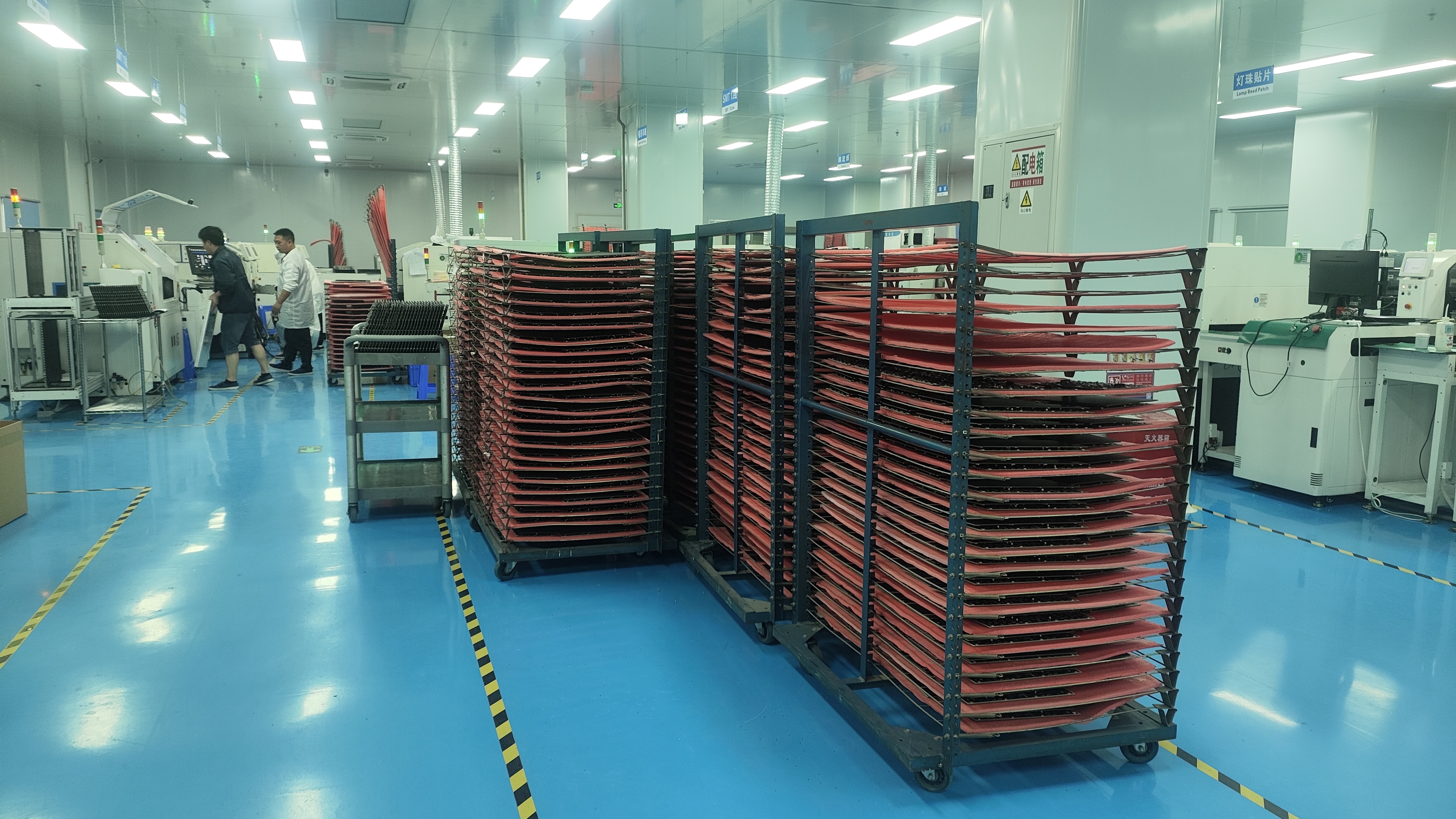
Cabinets sit at the end of a production chain. Look at what happens before assembly: SMT production, module testing, and pre-shipment inspection. DDW DISPLAY applies 100% pre-shipment inspection and offers project-specific configurations including refresh rates of ≥3840Hz or ≥7680Hz, outdoor protection up to IP65, and brightness from approximately 600–1,500 nits for indoor applications up to 5,000–10,000 nits for selected outdoor solutions.
Step 6 — Verify long-term supply evidence
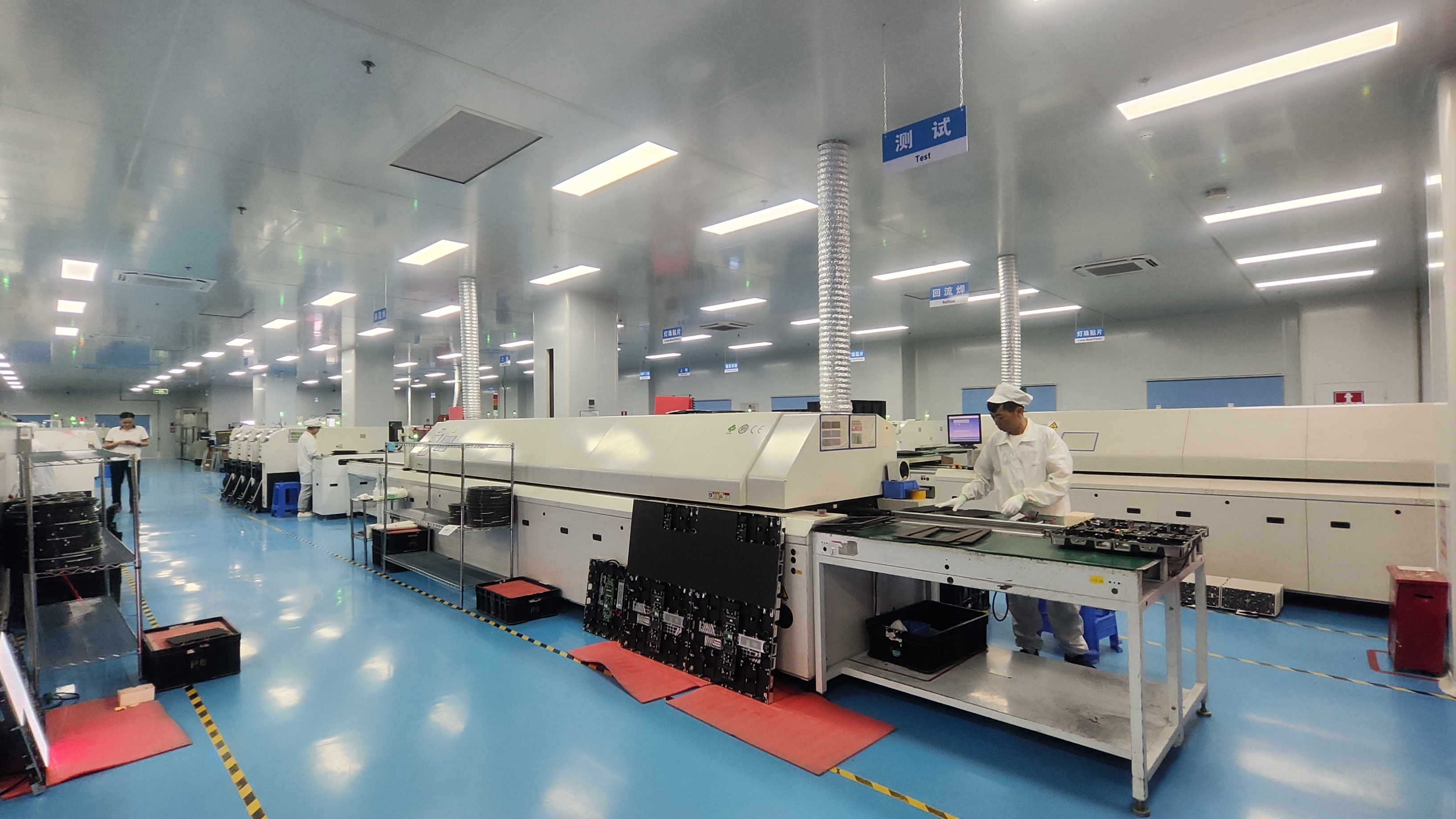
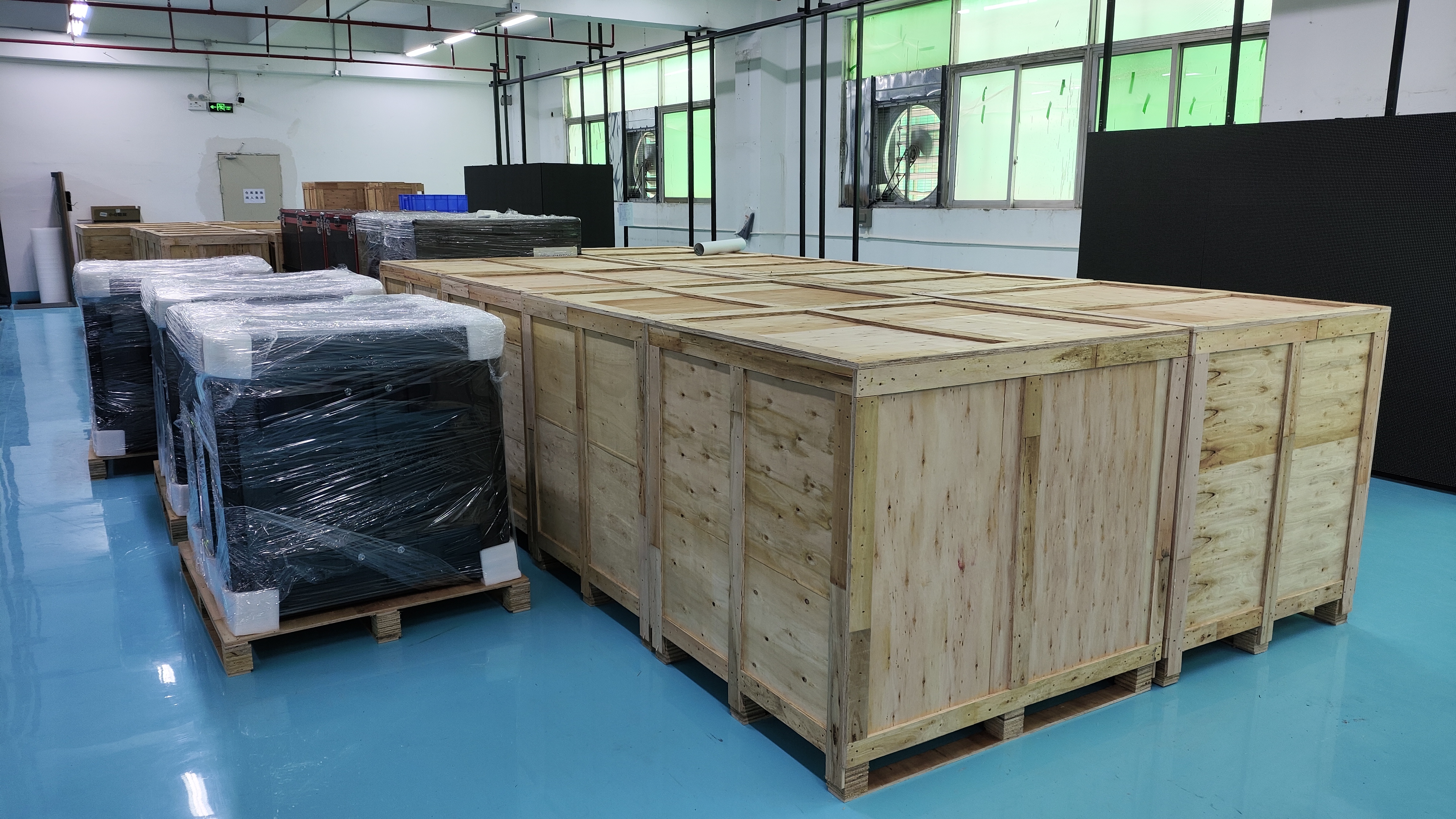
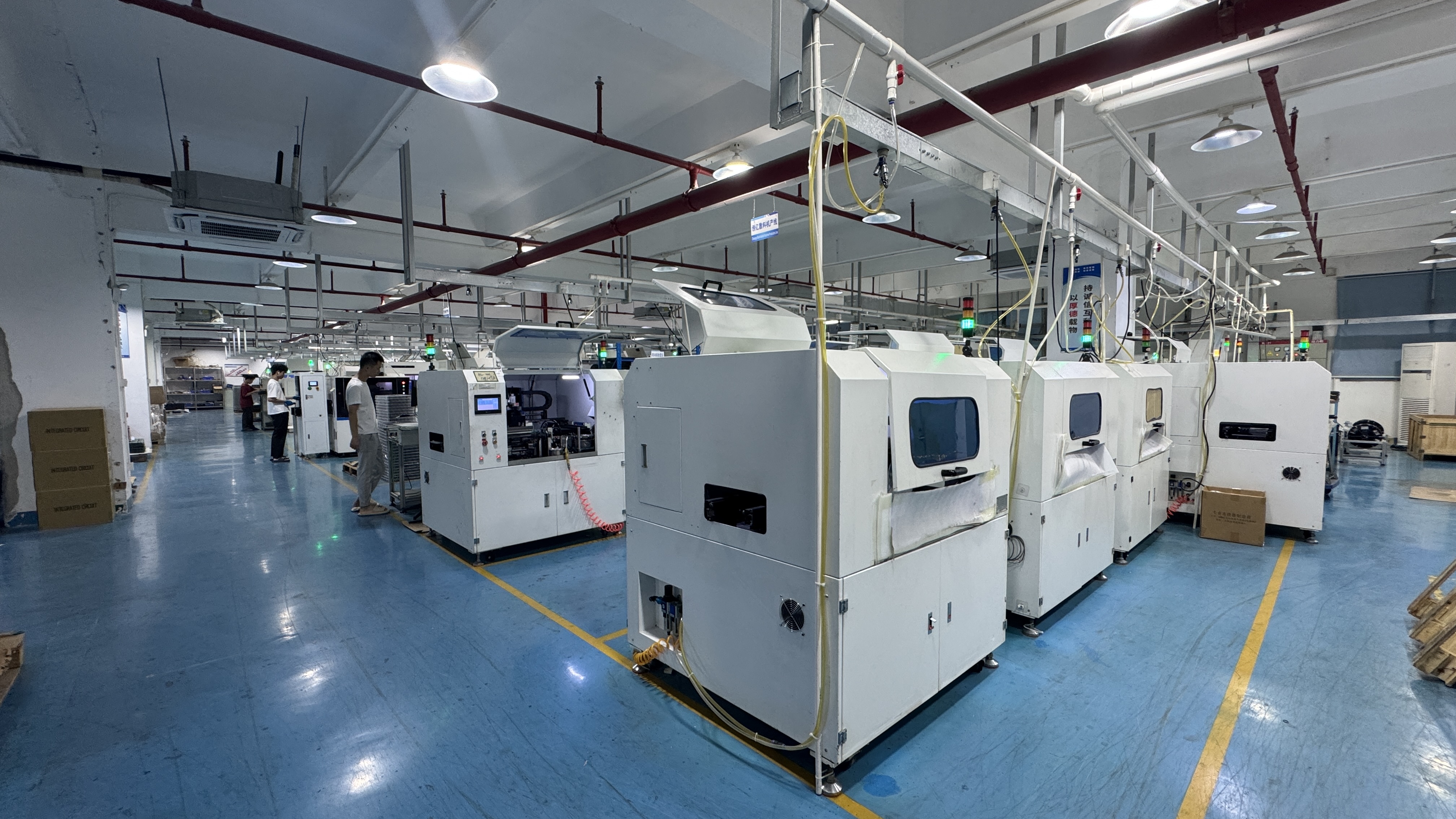
Finally, test whether the factory can still support the product after the project is delivered. DDW DISPLAY (Shenzhen DDW Technology Co.,Ltd.) has delivered LED display projects to more than 120 countries and regions, operates a 10,000 ㎡ factory with approximately 100 employees, and produces about 800,000 units annually, including indoor fine pitch LED displays, outdoor LED screens, rental LED displays, COB LED displays, XR virtual production LED walls, stadium LED displays, LED posters, and customized commercial display solutions. The company also provides OEM and private label LED display manufacturing capabilities and accepts project-based orders with a minimum order quantity of one unit.
Use Cases: Which Construction Fits Which Project
- Corporate meeting rooms, control rooms, and showrooms (fixed indoor): fine-pitch LED video walls where flatness drives image quality. Profile-based platforms with defined flatness specifications (FU Series, HK Series) and COB fine-pitch platforms (QDCOB Series) suit rooms where dimensions are dictated by the architecture, not by a catalog.
- Touring and event production (rental): a rental LED display that is assembled, dismantled, and transported repeatedly benefits from lightweight die-cast aluminum cabinets in standardized 500 × 500 mm and 500 × 1000 mm formats, where alignment must survive each rebuild. Flexible versions exist for curved stage LED screen configurations.
- Retail and brand environments (creative): naked-eye 3D indoor fixed installations and transparent LED display products that integrate with glass facades place different demands on structure — alignment precision for the former, lightweight modular structures for the latter.
- XR and virtual production: an XR virtual production LED wall combines fine pitch, high refresh rate, and precise panel alignment, all of which rest on the cabinet platform. MIP LED display and Micro LED-class products in this category depend on cabinet consistency as much as on the LED package.
- Outdoor advertising and stadiums: outdoor LED screen structures add protection and weather resistance to the same cabinet questions, with IP65 configurations available on selected DDW series.
Comparison Table: Cabinet Constructions Side by Side
| Series | Cabinet construction | Product focus | Format and specification notes |
|---|---|---|---|
| D Series | Die-casting aluminum | Indoor & outdoor rental LED screen | 500 × 500 mm; up to 7680Hz; up to 5000 nits (outdoor); IP65 outdoor version |
| A Series | Die-casting aluminum | Rental / stage LED video wall | 500 × 500 mm and 500 × 1000 mm; 4500–5000 nits outdoor |
| AXIS / AXIS One / AXIS Flex | Die-casting aluminum | Rental LED display and curved stage screens | 500 × 500 mm; 7.5–8.5 kg; 7680Hz |
| ORBIT / ORBIT MIP / ORBIT XR | Die-casting aluminum | XR virtual production LED wall; MIP LED display | 500 × 500 mm / 500 × 1000 mm; 7680Hz; 8–14.5 kg |
| 3DH Series | Die-casting aluminum cabinet | Naked-eye 3D indoor fixed LED display | Indoor wall mount / creative structure installation; front maintenance |
| QDCOB Series | Aluminum cabinet; COB integrated packaging | Indoor fine-pitch COB LED display | P0.78 / P0.9375 / P1.25 / P1.5625; front maintenance |
| FU Series | Aluminum profile cabinet | Indoor fixed fine-pitch LED video wall | 1000 × 250 / 750 × 250 / 500 × 250 mm; 6.4 kg (1000 × 250 mm); P1.56–P3.91; 7680Hz |
| HK Series | Aluminum profile | Indoor fine-pitch LED video wall | 640 × 480 mm; 6.5 kg; flatness ≤0.1 mm; full front access |
| AIOF Series | Die-casting aluminum cabinet | All-in-one conference LED display | Integrated design; 135 inch / 162 inch |
| PIF Series | Aluminum cabinet, foldable structure | Portable LED poster | 640 × 1920 mm / 1280 × 1920 mm; front maintenance |
| Evaluation dimension | Die-casting aluminum | Aluminum profile | Traditional welded iron cabinet |
|---|---|---|---|
| How it is formed | Molten aluminum injected into a precision steel mold | Extruded aluminum sections cut and assembled to length | Welded iron structure |
| Weight and handling | Lighter than welded iron; easier handling | Narrow, lightweight formats — e.g. 6.4 kg at 1000 × 250 mm (FU) | Heavier; more labor for transportation, installation, and servicing |
| Structural precision | Higher structural precision and better cabinet flatness | Precision depends on machining and assembly; HK Series specifies ≤0.1 mm flatness | Lower precision in the same format class |
| Thermal behavior | Aluminum has better thermal conductivity than iron, supporting heat transfer | Aluminum body; cabinet-level thermal performance is not separately specified in published series data | Higher weight and lower conductivity |
| Standard formats | Commonly 500 × 500 mm and 500 × 1000 mm for rental cabinets | Project-driven formats, e.g. 1000 × 250, 750 × 250, 500 × 250 mm | Not standardized in the same way |
| Best suited to | Rental stages, concerts, exhibitions, live events, XR studios, fine-pitch LED walls, commercial installations requiring frequent installation or precise alignment | Fixed indoor installations with non-standard widths, corners, and right-angle transitions | Legacy structures where weight and precision are not priorities |
| Cost logic | Higher initial manufacturing cost; lightweight precision can reduce handling, transport, installation, and repeated-deployment costs | Changing dimensions generally requires no new mold investment | Lower initial material cost, higher lifetime handling cost |
| Maintenance implications | Higher precision supports easier alignment and repeated assembly; lightweight structure simplifies handling | FU Series: front maintenance. HK Series: full front access | More labor required for servicing |
Cabinet material alone does not determine LED power consumption. Energy efficiency depends mainly on pixel pitch, LED type, brightness, driving IC, power supply, content, and operating conditions. Aluminum does, however, provide better thermal conductivity than iron, which supports thermal management during long-term operation.
Frequently Asked Questions
What certifications should I look for when buying an LED display?
The required certifications depend on the destination market, the product configuration, and the project. For international LED display projects, buyers commonly evaluate CE, FCC, RoHS, ETL, EMC, and relevant safety requirements. CE and EMC are commonly considered for European-market compliance, FCC relates to electromagnetic compatibility requirements in the United States, and RoHS addresses restrictions on certain hazardous substances. Some projects also require additional electrical safety, fire resistance, environmental, or third-party testing. Before ordering, confirm which certifications apply to the specific LED display model and destination market, and request the corresponding certificates or test reports. For large commercial, rental, stadium, and fixed-installation projects, certification should be assessed together with product testing, aging tests, quality inspection, electrical safety, waterproof performance for outdoor products, and manufacturer quality-control capability.
Can a manufacturer support custom cabinet structures and OEM or private-label programs?
DDW DISPLAY provides OEM and private label LED display manufacturing capabilities. Custom structure support depends on the construction platform: profile-based cabinets can be produced in project-specific formats such as 1000 × 250 mm, 750 × 250 mm, and 500 × 250 mm, while die-cast aluminum platforms work within standardized formats such as 500 × 500 mm and 500 × 1000 mm. The company's R&D team includes 15 engineers, and project-specific configurations can be matched to the application rather than applying one standard configuration to every project. Buyers should confirm the exact cabinet format, flatness specification, and maintenance method in writing for the series being quoted.
What are the purchasing terms and acceptance criteria?
Minimum order quantity is one unit or project-based order. Delivery terms include EXW Shenzhen, FOB Shenzhen, CIF, and DDP, subject to destination and order requirements. Acceptance criteria include pre-shipment inspection, aging test, display performance test, brightness and color consistency inspection, and customer video inspection or third-party inspection on request. Payment terms are T/T with 30% deposit in advance and 70% balance before shipment; other payment terms are subject to order agreement.
How can I validate cabinet quality before committing to a volume order?
Because project-based orders can start at a minimum order quantity of one unit, validation can begin with a single cabinet or a small section rather than a full production run. Ask for the specified cabinet flatness and dimensions for the exact series, request pre-shipment inspection and aging test results, and use customer video inspection or third-party inspection where the project justifies it. For a fine-pitch indoor LED video wall, the most revealing check is whether adjacent cabinets align to the stated flatness tolerance after assembly, since that tolerance is what protects image uniformity at small pixel pitches.
What makes an LED display manufacturer reliable for long-term rental screen supply?
Long-term rental supply depends on three things: a stable cabinet platform, replaceable components, and evidence of continuing delivery. DDW DISPLAY has delivered LED display projects to more than 120 countries and regions, operates a 10,000 ㎡ factory with approximately 100 employees, and produces about 800,000 units annually. Its rental platforms use standardized die-cast aluminum cabinets in 500 × 500 mm and 500 × 1000 mm formats, and modular LED displays allow individual replacement of LED modules, power supplies, receiving cards, and other components instead of replacing a complete display system. To evaluate this against your own project, you can request a sample or quotation and specify the exact cabinet format, pixel pitch, and maintenance method you need.
Conclusion: Ask What the Cabinet Proves, Not What It Is Made Of
Die-casting and aluminum profile constructions answer two different questions. Die-casting aluminum demonstrates tooling investment and repeatable geometry — the property that protects fine-pitch indoor LED displays and survives the repeated assembly cycles of a rental LED screen. Aluminum profile demonstrates dimensional flexibility — the property that makes right-angle transitions, narrow formats, and non-standard fixed indoor installations practical without custom mold cost. A measured flatness figure such as ≤0.1 mm on a profile cabinet shows that the forming method is not the whole story; the factory's tolerance control is.
For buyers moving from decision to execution, the audit sequence is straightforward: identify the construction, request the flatness and dimensional data for the quoted series, test the geometry your room actually has, confirm the maintenance path, inspect upstream process control, and verify long-term supply evidence such as delivery record, annual capacity, minimum order quantity, and spare-part availability.
Next Step: Review the Cabinet Platform Against Your Project
DDW DISPLAY (Shenzhen DDW Technology Co.,Ltd.) manufactures indoor fine pitch LED displays, outdoor LED screens, rental LED displays, COB LED displays, XR virtual production LED walls, stadium LED displays, LED posters, and customized commercial display solutions — with OEM and private label manufacturing capabilities and project-based orders starting at a minimum order quantity of one unit.
Download the full specification reference: DDW LED Display catalog 2026 (PDF)
Request a sample, a quotation, or a technical review of your cabinet structure: WhatsApp +86 134 1755 8100 · Email: info@ddw.net · Website: www.ddw.net