LED Display Lifespan, Maintenance Contracts and Spare Parts FAQ
For a corporate buyer, the day the LED wall is commissioned is the day the real ownership questions begin. Three of them decide most of the next decade: what limits the service life of the display, how quickly a failed part can be replaced without closing the room, and what a maintenance agreement should obligate each side to do. The short answer is that in wall-mounted corporate installations, a front-serviceable cabinet, a defined spare-parts list and a written maintenance scope matter more than the headline lifetime figure on the specification sheet.

Why the Datasheet Lifetime Figure Does Not Answer the Uptime Question
DDW publishes a lifetime of 100,000 hours at 50% brightness for the ECOB Series, an indoor fine-pitch COB LED display. That figure is a rated LED lifetime measured under a defined brightness condition. It describes the light-emitting device, not the complete display system, and it does not by itself tell a facilities team how many hours of usable meeting-room or control-room time a wall will deliver.
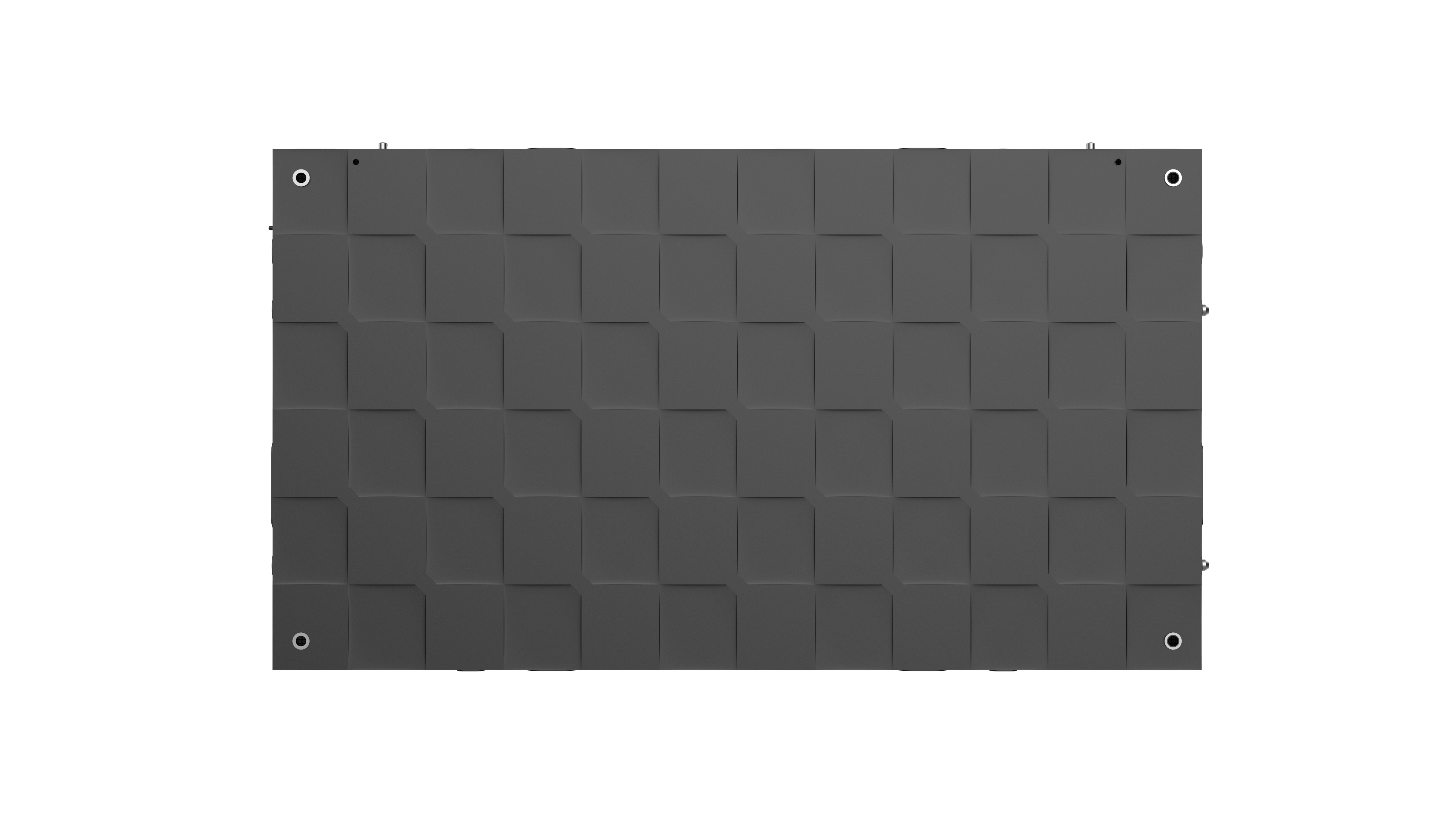
The parts that actually take a corporate display offline are rarely the LEDs. They are the serviceable components around them: LED modules, power supplies and receiving cards. On the KCOB Series, DDW specifies full front maintenance that allows LED modules, power supplies and receiving cards to be serviced from the front. That single sentence matters more to uptime than the lifetime rating, because it decides whether a fault is a module swap or a structural intervention.
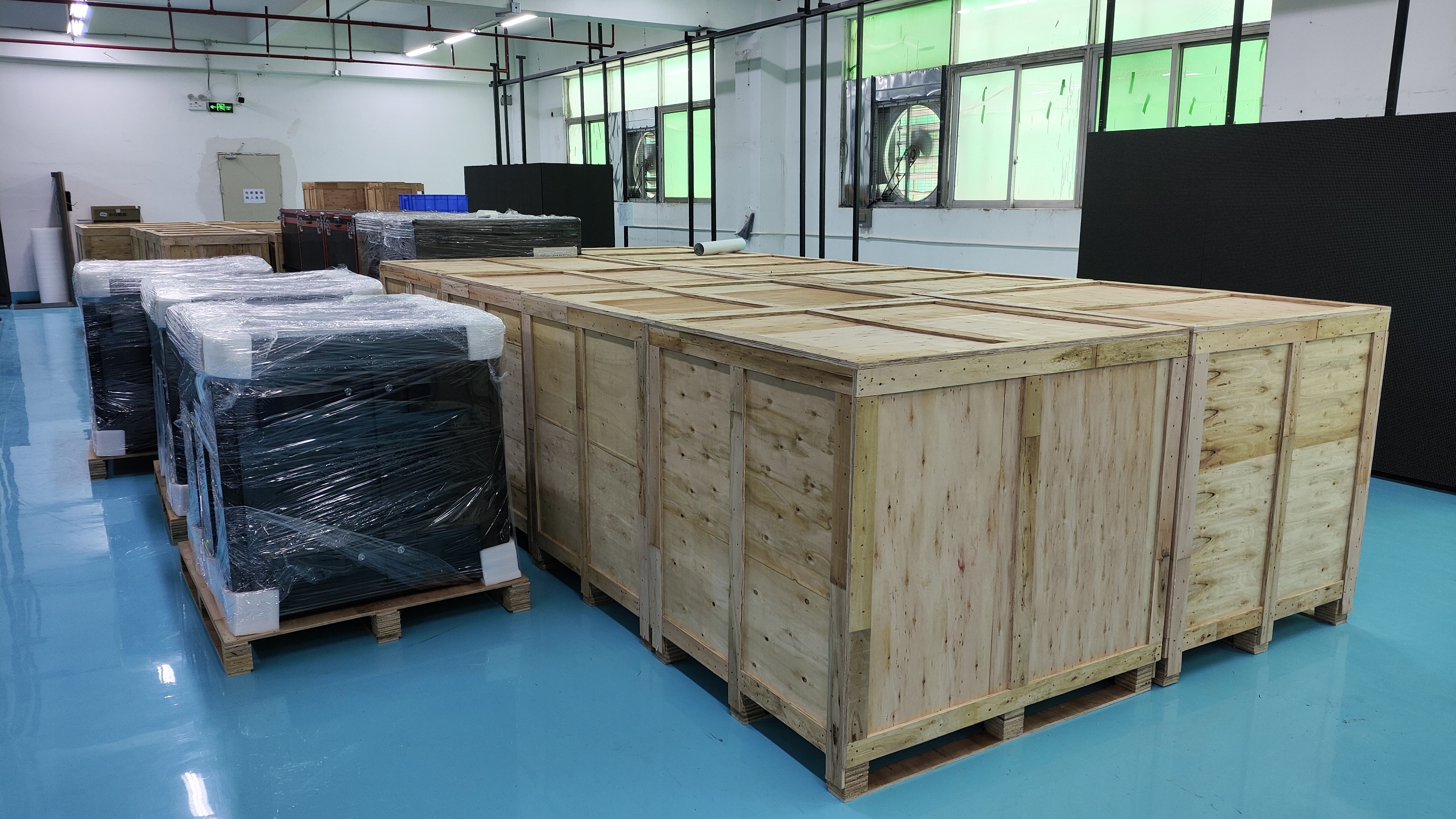
The second determinant is part availability. If the module in question is not already in the building, downtime is measured by production and freight rather than by the repair itself. DDW states a lead time of 15–30 days for standard products, with customized projects depending on product design, quantity and technical requirements. A corporate client who has not planned for that window has effectively accepted a multi-week outage as a possible outcome.
The third determinant is contractual. A maintenance agreement that lists response times but not wear items, or warranty coverage but not spare-parts supply, leaves the most expensive scenario undefined — and undefined is where post-installation disputes start.
Industry Background: Corporate LED Walls as Long-Life Infrastructure
The global LED display market is projected to reach USD 20.73 billion in 2026 and USD 26.98 billion by 2031, according to Mordor Intelligence. Growth of that scale reflects a change in how organisations use the technology: the LED video wall has moved from event rental and advertising into permanent corporate infrastructure — boardrooms, control rooms, showrooms, training centres and reception areas.
Permanent installation changes the engineering priorities. Rental LED platforms such as the DDW D Series are built around repeated assembly and are commonly specified with both front and rear maintenance access. A corporate wall is installed once and then expected to run daily for years, frequently mounted flush to a finished surface with no rear service aisle. In that configuration, rear access is not an option that was overlooked — it is physically unavailable.
This is why fine-pitch indoor platforms have moved toward front-service architecture. The KCOB Series pairs a 600 × 337.5 × 29.3 mm die-cast aluminum cabinet at 3.4 kg with full front maintenance. The ECOB Series is a front-service fine-pitch display in a die-cast aluminum cabinet, with 600 × 337.5 mm and 600 × 675 mm panels at 39.5 mm depth and weights of 4 kg and 7.9 kg. The HK Series offers full front access in a 640 × 480 mm aluminum profile cabinet weighing 6.5 kg, with cabinet flatness of ≤0.1 mm.
Cross-border ownership adds a documentation layer. LED displays are commonly classified under HS code 852859, the trade heading for monitors other than cathode-ray tube, which is the code that appears on import paperwork for the original wall and for spare modules shipped later. Keeping the classification, the certificate numbers and the module list in one file is what prevents admin delay at the exact moment speed matters.
Detailed Solution: What a Serviceable Corporate LED Wall Is Built From
Front-serviceable cabinets and real downtime
Front maintenance means the LED module, power supply or receiving card can be reached from the viewing side of the screen. In a wall-mounted boardroom or a reception feature wall, that is the difference between a service call and a room closure. DDW applies the principle across its indoor range: the KCOB Series carries full front maintenance for modules, power supplies and receiving cards; the ECOB Series supports front service, which simplifies installation and servicing; the HK Series provides full front access; the FU Series is front-maintenance with fixed wall installation; and the AIOF Series integrates display, receiving card and control system in a single unit with front maintenance at 135-inch and 162-inch sizes.
The AIOF case is worth noting for corporate buyers, because an integrated all-in-one unit often replaces a projection screen in a room that was never designed with a rear plant room. Front maintenance is the only service model that works in that geometry.
Modular cabinet structure and spare-part stocking
Spare-part stocking is a part-number problem before it is a logistics problem. The KCOB Series uses four 300 × 168.75 mm modules per 600 × 337.5 mm cabinet, which reduces module quantity and simplifies installation and maintenance, and its 16:9 cabinet standard supports Full HD, 2K, 4K and larger configurations. The ECOB Series uses 150 × 168.75 mm modules. The FU Series uses 250 × 250 mm modules across 1000 mm, 750 mm and 500 mm cabinet widths, with 6.4 kg at the 1000 × 250 mm size.
Each of those choices changes the number of distinct spare parts a client must hold. A wall composed of fewer, larger modules has fewer units to stock and fewer independently replaceable positions; a wall composed of smaller modules allows finer replacement granularity at the cost of more part numbers. Neither approach is universally preferable — the decision belongs before the purchase order, because spares must match the exact series, pixel pitch and module size, not the category.

Aluminum cabinets, wear and long-term operation
Die-cast aluminum is the structural basis of most DDW indoor fine-pitch platforms — the ECOB, KCOB, HK, FU, QDCOB and AIOF Series all use aluminum cabinets — and the KCOB die-cast aluminum body is specified for high precision, better flatness and easier installation. The material contributes heat dissipation and dimensional stability, which is why operating limits and power figures belong in the maintenance conversation rather than only on the datasheet: the ECOB Series is rated for -10 °C to +40 °C, and the KCOB Series specifies average power consumption of ≤120 W/m² alongside a 3840 Hz refresh rate and 15,000:1 contrast ratio.
For a maintenance agreement, the practical framing is to separate structure from wear items. The aluminum cabinet is structure: it is inspected, cleaned, and checked for flatness and fixings over its service life. Modules, power supplies and receiving cards are wear items: they are precisely the components DDW lists as front-serviceable on the KCOB Series, and they are the components that should appear in the contract by name, quantity and replacement responsibility.
Step-by-Step Breakdown: Building a Post-Installation Service Plan
A service plan is a document, not a promise. The six steps below convert a completed installation into an asset with a defined maintenance path.
Use Cases: Three Corporate Scenarios and Their Service Priorities
1. Corporate conference room — 26 m² fine-pitch installation
DDW delivered a 26 m² FU Series P1.56 indoor fine-pitch LED display for a corporate client operating a conference room in Pakistan. The FU Series uses 250 × 250 mm modules, a 6.4 kg cabinet at the 1000 × 250 mm size, front maintenance and 90° right-angle splicing. For that client, the post-installation questions are entirely module-level: how many 250 × 250 mm modules the wall contains, how many to hold as spares, and who is authorised to replace them.
2. Control room and command centre — uptime as the acceptance criterion
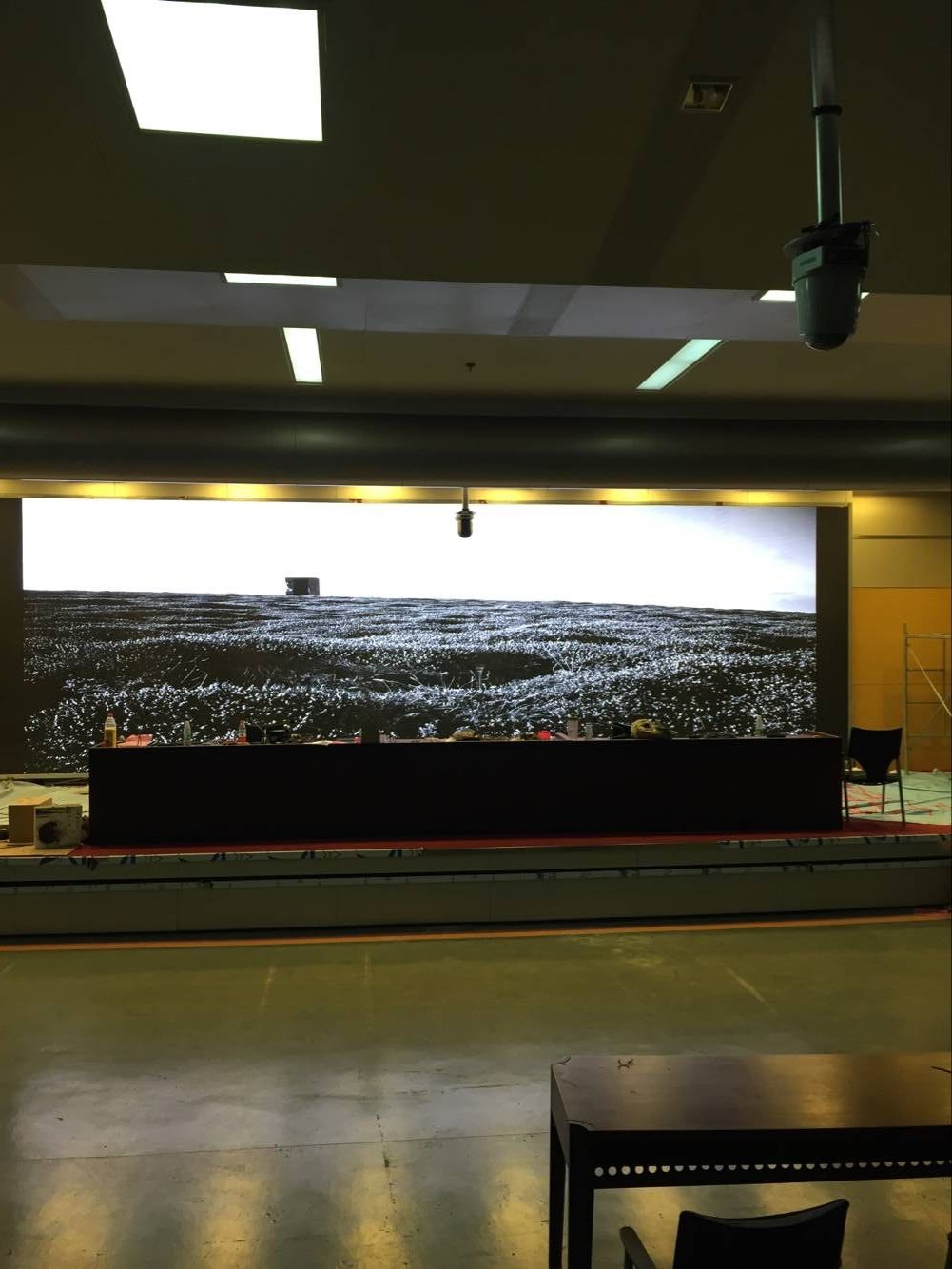
The ECOB Series is designed for control room and command centre applications, with front service as its maintenance model and a rated lifetime of 100,000 hours at 50% brightness. In a control room the display is a working surface, so the relevant number is restoration time, not repair elegance. That pushes the contract toward defined wear-item stock and a named escalation contact rather than toward general service language.
3. Showroom and meeting space — slim cabinet, front-only access
The KCOB Series cabinet is 29.3 mm deep and 3.4 kg, which supports clean, space-saving installation in showrooms and meeting rooms, and full front maintenance means a module, power supply or receiving card can be changed without dismantling what is behind the wall. For a brand environment that cannot be closed during business hours, that access model is the practical difference between scheduled maintenance and disruption.
Comparison Table: Service Access Across DDW Indoor and Rental Platforms
| Series | Typical corporate use | Cabinet size / weight | Maintenance access | Relevant service specification |
|---|---|---|---|---|
| ECOB Series — Indoor Fine-Pitch COB LED Display | Control room, command centre, conference | 600 × 337.5 × 39.5 mm / 600 × 675 × 39.5 mm; 4 kg / 7.9 kg | Front service | Lifetime 100,000 hours at 50% brightness; PCB surface protection IP54; -10 °C to +40 °C |
| KCOB Series — Indoor Fine-Pitch COB LED Display | Corporate, control room, showroom | 600 × 337.5 × 29.3 mm; 3.4 kg | Full front maintenance | Modules, power supplies and receiving cards serviceable from front; average power ≤120 W/m²; 3840 Hz |
| HK Series — Indoor Fine Pitch LED Display | Conference room, control room, retail | 640 × 480 mm; 6.5 kg | Full front access | Cabinet flatness ≤0.1 mm; IP45; contrast ratio up to 8,000:1 |
| FU Series — Indoor Fine Pitch LED Display | Conference, showroom, control room | 1000 × 250 / 750 × 250 / 500 × 250 mm; 6.4 kg (1000 × 250 mm) | Front maintenance | Ultra-thin aluminum profile cabinet; 90° right-angle splicing; IP31; 7680 Hz |
| AIOF Series — All-in-One LED Display | Meeting room, training room | 135-inch / 162-inch integrated unit | Front maintenance | Integrated receiving card and control system; die-cast aluminum cabinet |
| D Series — Rental LED Display | Corporate events, temporary stages | 500 × 500 mm; die-cast aluminum | Front and rear maintenance | IP65 outdoor version; up to 7680 Hz; brightness up to 5000 nits (outdoor) |
Frequently Asked Questions
DDW publishes a CE-EMC certificate, BKC25062531FC, issued by Shenzhen BKC Testing Co., Ltd., citing EN 55032:2015+A11:2020+A1:2020, EN IEC 61000-3-2:2019+A1:2021+A2:2024, EN 61000-3-3:2013+A1:2019+A2:2021 and EN 55035:2017+A11:2020. A CE-LVD certificate, HXTS2506230030001-1, is issued by Shenzhen Huaxintong Testing Technology Service Co., Ltd. under EN IEC 62368-1:2020 + A11:2020, and an EU RoHS 2.0 certificate, HXTS2506230030007-1, covers the LED display scope. For the US market, the FCC Supplier's Declaration of Conformity is BKC25062532FC-R1 under FCC Part 15 Subpart B, ANSI C63.4:2014. ISO 9001 certificate 12824Q21369R0S is valid from 2025-05-12 to 2027-10-09. Because these certificates are issued against defined scopes, a buyer should confirm that each document covers the exact series and configuration being purchased.
Front maintenance removes the need for rear access. On the KCOB Series, DDW specifies full front maintenance so that LED modules, power supplies and receiving cards can be serviced from the front; the ECOB Series is also a front-service platform, and the HK Series provides full front access. When a wall is mounted flush to a finished surface with no rear aisle, this is what allows a failed part to be replaced without dismantling the installation around it. The remaining variable is part availability, which is why stocking is a separate decision.
Separate structure from wear items. The aluminum cabinet should be covered by inspection, cleaning and fixing or flatness checks, while the wear items — LED modules, power supplies and receiving cards — should be listed by name with quantities and replacement responsibility. The agreement should also define response and escalation, on-site versus remote support, warranty scope and exclusions, and whether spare-parts supply is a contractual line rather than a favour. DDW's published after-sales scope covers remote technical support, installation guidance, troubleshooting support, product warranty service, spare parts supply and professional engineering assistance; final terms are confirmed per project.
At minimum the front-serviceable items: LED modules, power supplies and receiving cards. Because module sizes differ by series — 150 × 168.75 mm on the ECOB Series, 300 × 168.75 mm on the KCOB Series and 250 × 250 mm on the FU Series — spares must be ordered against the exact series, pixel pitch and module size of the installed wall, not as generic parts. A cabinet and module map makes this straightforward to specify at handover.
DDW states a lead time of 15–30 days for standard products, with customized projects depending on product design, quantity and technical requirements; the minimum order quantity is 1 unit or project-based order. Because that window is measured in weeks, a corporate client who holds no stock is accepting a multi-week outage as a possible outcome. A spare-parts list and quotation can be requested directly from DDW at info@ddw.net or via WhatsApp on +86 134 1755 8100.
Conclusion: The Contract and the Stock List Decide the Service Life
A corporate LED wall is not maintained by a lifetime number. It is maintained by knowing which parts wear, where they sit, how they are reached and how fast a replacement can be in the room. On a DDW fine-pitch installation, the technical foundation is already in place: front-service architecture on the ECOB and KCOB Series, full front access on the HK Series, modular aluminum cabinets from 29.3 mm to 39.5 mm deep, and a documented after-sales scope that includes remote technical support, troubleshooting and spare-parts supply.
What remains is the commercial layer — a maintenance agreement that names the wear items, a spare-parts list that matches the installed module size, and a review point so that both stay accurate. Buyers who settle those three items at handover convert a display purchase into a decade of predictable operation; buyers who leave them open convert every module fault into a scheduling problem.
Next step: request a spare-parts list and maintenance scope for your wall
Share your installed series, pixel pitch and cabinet count, and DDW Display will return a matched spare-parts schedule and a written scope for remote and on-site support. Sample modules, module quotations and the 2026 product catalogue are available on request.
Email: info@ddw.net | WhatsApp / WeChat / Mobile: +86 134 1755 8100 | Website: www.ddw.net
Download the catalogue: DDW LED Display Catalog 2026 (PDF)
Shenzhen DDW Technology Co.,Ltd. (DDW DISPLAY) — 2F Building 8, YiLisheng Industry Park, Fuyong, Baoan, Shenzhen, China, 518103. Established 2012; LED display manufacturer producing indoor fine-pitch LED displays, outdoor LED displays and rental LED screens.
Specifications quoted in this article are DDW published product parameters, including cabinet dimensions and weights, maintenance access, brightness, refresh rate, power consumption, operating temperature and stated lifetime at 50% brightness. Certificate numbers refer to the certificates published by DDW and their stated scopes. Commercial terms such as warranty length, response times and spare-parts quantities are agreed per project and are not implied by this article.
Have Questions or Need More Details?
Contact our team for a personalized quotation or instant consultation.
Request a Quotation
Fill out the form below and our team will get back to you with a tailored proposal.
WhatsApp Direct Chat
Prefer to chat in real-time? Message us on WhatsApp for instant assistance & quick answers.
- Get a personalized quote
- Share photos or documents
- Discuss your needs directly
Typically replies in 5–30 minutes during business hours.