LED Display Ranking 2026: Best Picks for Control Rooms, Stages, and Outdoor Venues
This 2026 LED display ranking sorts recommended display types by the environment they are deployed in, not by catalogue size. The first pick is the ECOB Series indoor fine-pitch COB LED display for control rooms and command centres, because one product family combines a P0.625–P1.87 pixel pitch range, front-service die-cast aluminium cabinets weighing 4 kg and 7.9 kg, 10,000:1 contrast and a 3840 Hz refresh rate. Conference rooms, stages, outdoor billboards, stadium perimeters and naked-eye 3D landmarks follow, each with a stated reason for inclusion and the verified specification that supports it.
DDW Display (Shenzhen DDW Technology Co.,Ltd.) is an LED display manufacturer founded in 2012 in Shenzhen, China, producing indoor fine-pitch COB LED displays, rental LED screens, outdoor LED displays, stadium LED displays, transparent LED screens and related commercial display products. Every display type ranked below comes from that catalogue and from documented delivered projects, which is why the ranking can be built on verified specifications instead of advertising claims.
The list ranks display types, not brands. No third-party product is assessed, no market share is implied, and the order reflects how hard each environment is to satisfy — the control room is first because it is the most constrained room in the list.
Why Environment Comes Before Brand in LED Display Selection
Most LED display shortlists are built the wrong way round. The buyer starts with a pixel pitch, a price band or a familiar logo, then tries to fit the screen into a room. The result is predictable: a wall that is too coarse for the viewing distance in a control room, a rental cabinet that takes too long to strike during a stage changeover, or an outdoor screen that loses contrast in direct sunlight.
Environment-first selection reverses the order. The deployment environment fixes four constraints before any product is discussed:
- Viewing distance — it sets the maximum usable pixel pitch.
- Ambient light — it sets the brightness and contrast the screen has to deliver.
- Service access — it decides whether the display must be maintained from the front.
- Structure and handling — it limits cabinet size and panel weight, and decides whether a cabinet is lifted by one technician or flown on a truss.
Every pick below is judged against those four constraints, plus one commercial check: whether the manufacturer can document the product with certificates and delivered projects rather than a specification sheet alone.
Industry Background: What Buyers Are Specifying Going Into 2026
1. Fine-pitch COB has moved from flagship halls into working rooms. COB (chip-on-board) packaging covers the LED die with a protective surface instead of mounting a single lamp on the face of the module, and flip chip COB is the current generation of that packaging. For a control room the practical effect is a screen that tolerates close inspection and long duty cycles, which is why COB LED display specifications now appear in command-centre tenders rather than only in premium showrooms.
2. Rental buyers now write refresh rate into the brief. A rental LED screen used at a conference, a concert or a broadcast set is filmed, and a low refresh rate produces visible scan lines on camera. Rental specifications increasingly name a refresh rate alongside brightness and cabinet weight, and the same expectation now reaches fixed indoor walls that sit behind video-conference cameras.
3. Outdoor buying has split into two models. Permanent advertising screens and stadium perimeter boards are procured for permanence: brightness for sunlight visibility, IP65-level waterproof and dustproof protection against rain, dust and humidity, and maintenance access that does not require dismantling the structure. Naked-eye 3D billboards are procured differently — as a content-led landmark asset where geometry and content production matter as much as the panel.
4. Transparent and micro LED formats are expanding the shortlist. Indoor transparent LED screens are now a standard option for retail glass, and MIP-based micro LED displays are specified for XR virtual production stages where the wall appears directly behind a camera.
The 2026 LED Display Ranking: Six Picks With Six Rationales
Rank #1 — ECOB Series Indoor Fine-Pitch COB LED Display for Control Rooms and Command Centres
The ECOB Series is an indoor fine-pitch COB LED display built on flip chip COB technology with a die-cast aluminium cabinet. It ranks first because a control room or command centre is the hardest environment in this list to satisfy: operators sit close to the wall, the wall runs through long shifts, the room is filmed or screen-shared, and the space behind the screen is usually a corridor, a structural wall or building services rather than a service aisle.
- Pixel pitch: P0.625–P1.87 range
- Cabinet options: 600 × 337.5 × 39.5 mm at 4 kg, and 600 × 675 × 39.5 mm at 7.9 kg
- Brightness: 600 nit standard, 1000 nit optional
- Contrast ratio: 10,000:1
- Refresh rate: 3840 Hz
- Maintenance: front service
- Construction: die-cast aluminium cabinet, flip chip COB packaging
What each specification does in a control room. The P0.625–P1.87 pitch range lets a project size the wall to the actual operator distance, so single-pixel text, thin trend lines and dense dashboards stay legible instead of breaking into visible pixels. The 10,000:1 contrast ratio is what allows the wall to be run at a reduced brightness level without losing black-level separation — the standard 600 nit setting suits a dim control room, while the optional 1000 nit configuration covers rooms with high ambient light or glass walls. A 3840 Hz refresh rate removes visible scan banding when the room is filmed or when the wall appears in a video-conference feed. Front service maintenance means a failed module is replaced from the operator side, so the design does not need a rear access corridor — often the single restriction that rules other fine-pitch walls out of a refurbishment. And the 39.5 mm cabinet depth with 4 kg and 7.9 kg panel weights keeps both wall load and handling effort predictable: the smaller panel is a one-person lift, and the 600 × 675 mm panel builds height faster on tall walls.
Rank #2 — AIOF Series All-in-One LED Conference Display for Meeting Rooms
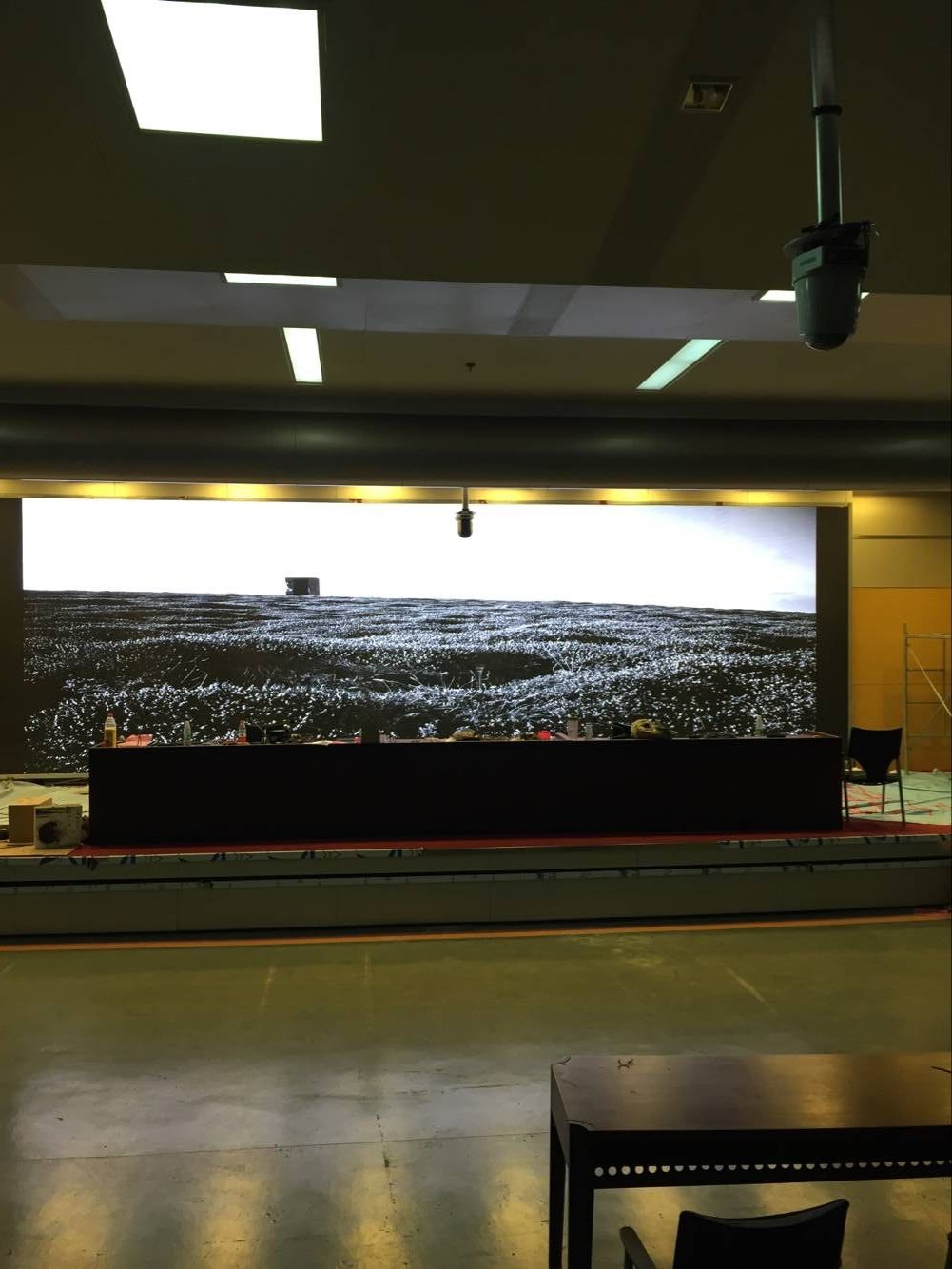
The AIOF Series is an all-in-one LED display for conference rooms: an integrated LED display and conference room LED screen supplied as a single unit rather than as a cabinet wall plus a separate control rack. It ranks second for meeting-room deployments because the buying pattern is different from every other pick on this list. Meeting rooms are usually specified by facilities or IT teams, they rarely have a technical room behind the wall, and the decision is made in weeks rather than months.
Inclusion rationale: an integrated format removes the split responsibility between screen supplier and control-room equipment, which is where most small conference LED projects lose time. Where the room is large enough to be treated as a fixed AV project rather than a meeting-room fit-out, a fine-pitch wall is the better build — DDW Display delivered a 26 ㎡ FU Series P1.56 indoor fine-pitch LED display for a corporate conference room, and the ECOB Series covers the same requirement when front service or a tighter pitch is needed.
Rank #3 — Rental and Flexible Rental LED Displays for Stages and Events
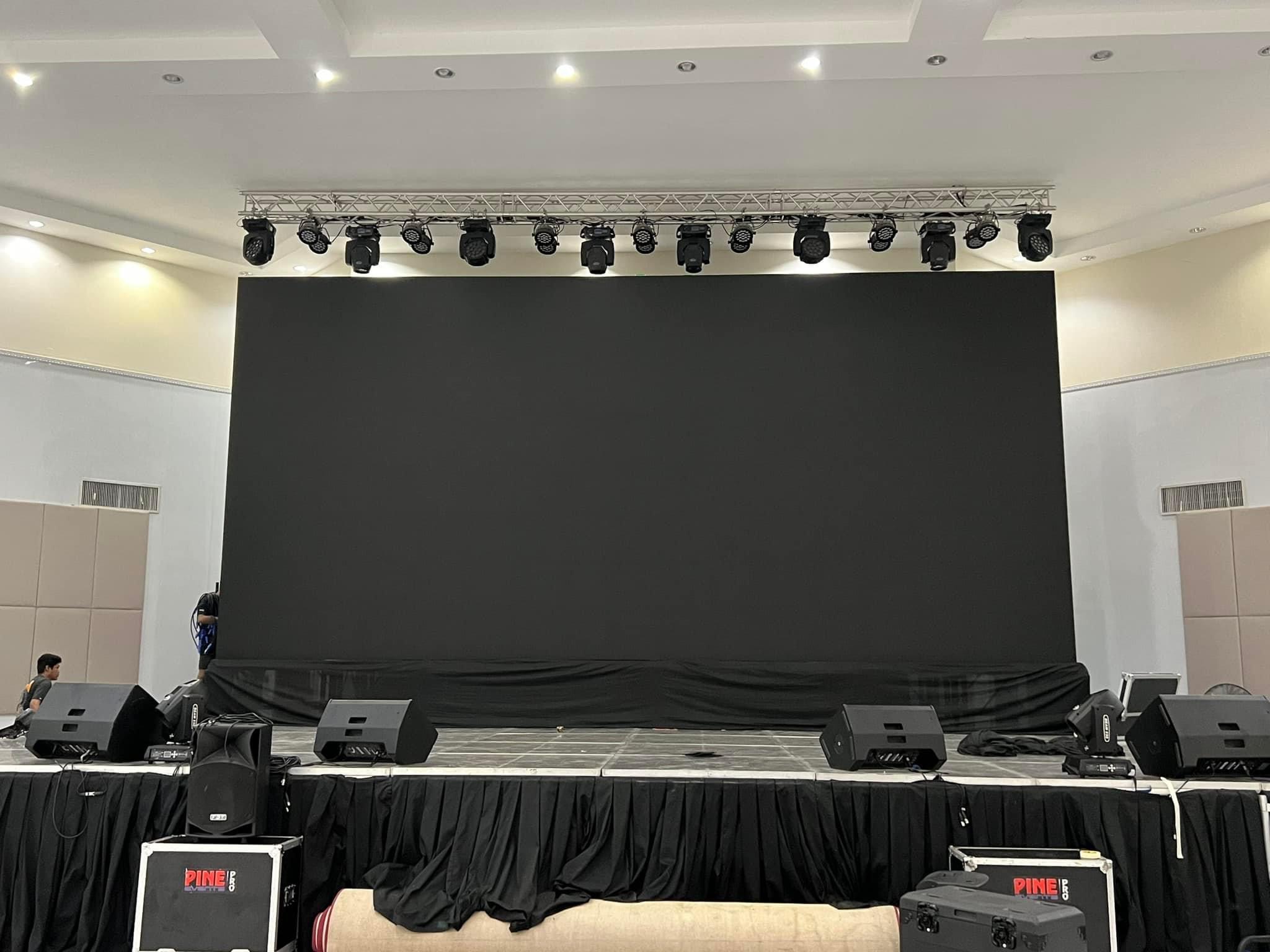
Stage work does not reward permanence; it rewards speed and repeatability. The rental range covers AXIS Series, AXIS One Series, D Series and A Series for flat rental LED video walls, plus AXIS Flex Series and AFLEX Series for curved and flexible rental configurations.
- Documented projects: 20 ㎡ D Series P2.976 indoor rental LED display for a stage production company in Mexico; 48 ㎡ rental LED display for a stage rental company in Singapore; A Series P3.91 indoor rental LED display for a conference hall in Romania.
- Design requirements: fast installation and dismantling, lightweight cabinet design, high refresh rate for camera shooting, seamless splicing, hanging and stacking installation, curved installation capability, and reliable performance across repeated rental cycles.
Inclusion rationale: a rental cabinet is handled dozens of times a year, so the specification that matters is the one that survives handling — quick assembly, consistent splicing after repeated builds, and a refresh rate that holds up when the stage LED screen is filmed. The 48 ㎡ Singapore project and the 20 ㎡ Mexico stage build show the format working at both mid-size and large-format scale.
Rank #4 — High-Brightness Outdoor Fixed LED Displays: FA, FC, LUXIS and NOVA Series
Outdoor fixed LED displays are a permanence purchase: the screen is installed once and expected to run in sunlight, rain, dust and wind for years. The FA Series, FC Series, LUXIS Series and NOVA Series cover this requirement, with high brightness for sunlight visibility and IP65-level waterproof and dustproof protection for outdoor installations.
- 40 ㎡ curved FA Series P3.91 outdoor fixed LED display for a retail storefront in Colombia, built as a 2 × 20 m ultra-wide curved screen
- 8 ㎡ FC Series P3.91 outdoor fixed LED display for a retail storefront in the Czech Republic
- 5.5 ㎡ FC Series P3.91 outdoor fixed LED display, 0.5 × 11 m fascia format, for a retail property in Italy
- 160 ㎡ FC Series outdoor fixed installation for a hotel exterior in Finland, 168 cabinets on a 960 × 960 mm cabinet
Inclusion rationale: an outdoor LED screen is judged on two things that a specification sheet rarely settles — daylight legibility at the actual viewing distance, and the cost of reaching the screen when something fails. Brightness, cabinet sealing and installation geometry therefore drive the decision more than pixel pitch alone.
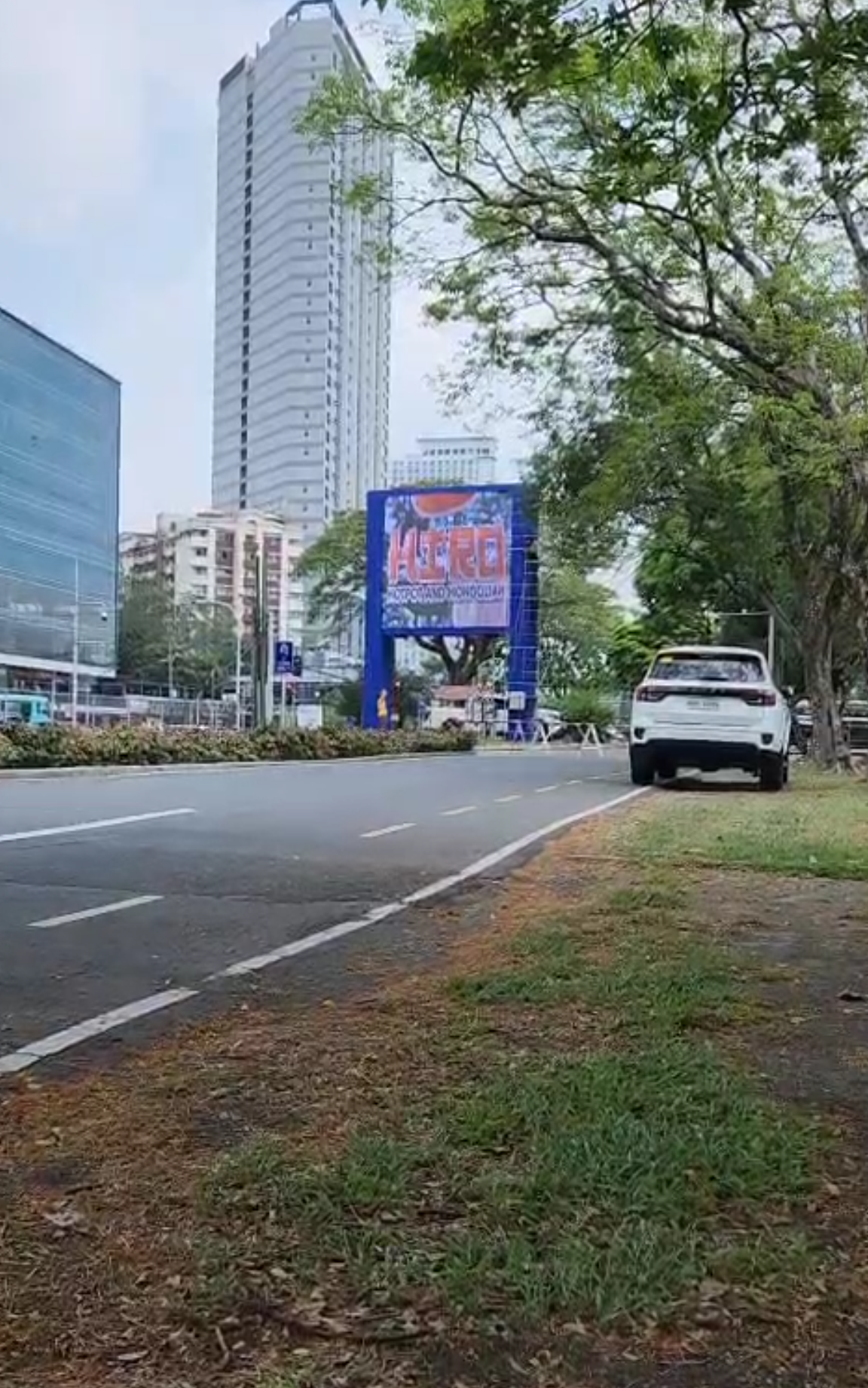
Rank #5 — Stadium Perimeter LED Displays: SPPLUS and SPPro Series
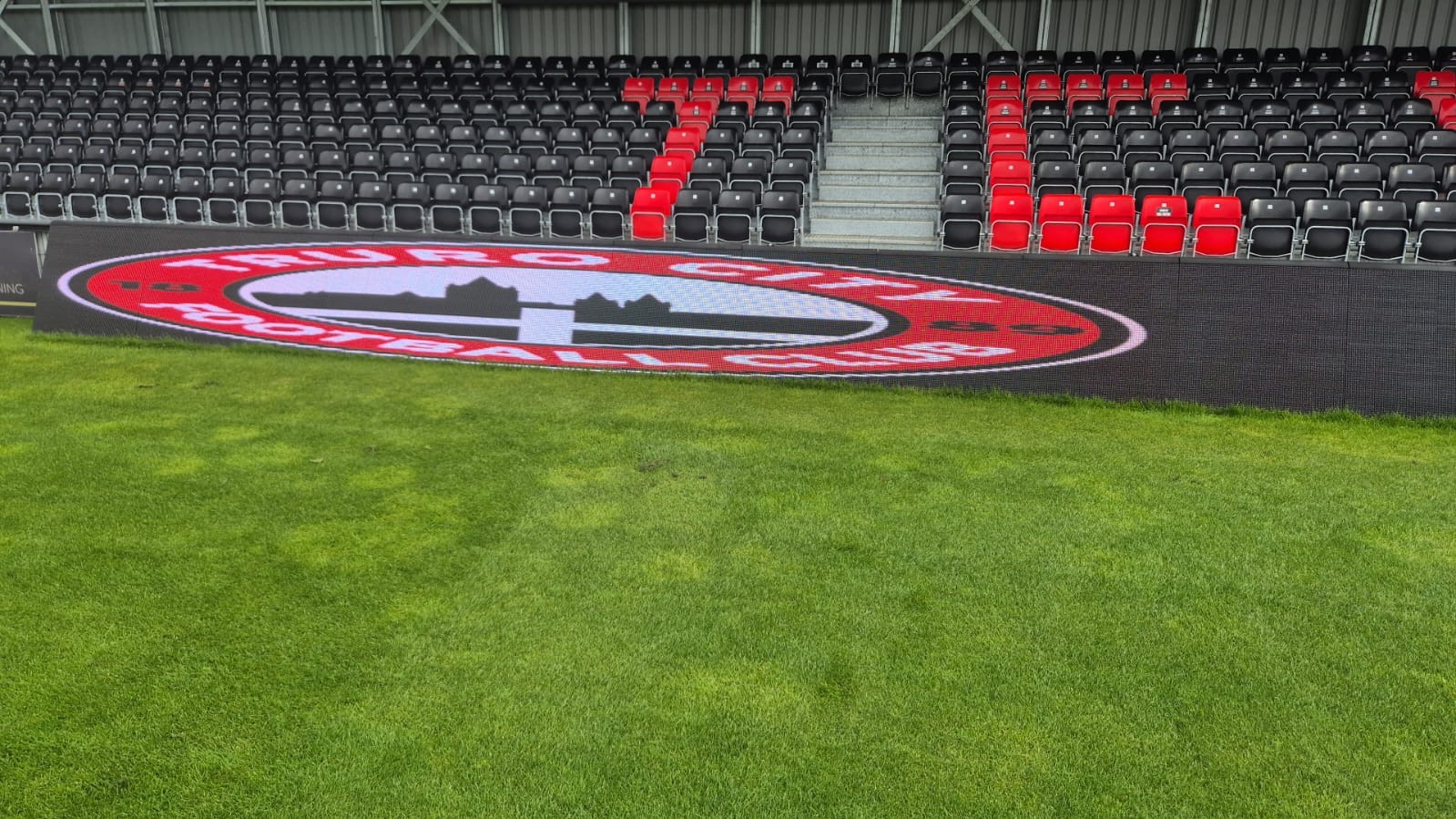
Stadium perimeter boards are ranked separately from general outdoor fixed screens because they are a different geometry and a different commercial model. They sit at pitch level, they are seen at a shallow angle and on broadcast cameras, and they rotate sponsor content during live play. The SPPLUS Series and SPPro Series cover this format as perimeter LED boards and sports LED advertising screens.
Documented project: a 21 ㎡ P10 stadium perimeter LED display for a sports venue operator in the United Kingdom, used for perimeter advertising, sponsor promotion and dynamic commercial content during live events.
Inclusion rationale: a perimeter board has to stay legible for spectators in the stands and for the broadcast camera, and it has to be serviceable between fixtures. The P10 pitch class used in the UK project reflects the viewing distance of a perimeter installation rather than the close-viewing logic of an indoor wall.
Rank #6 — Naked-Eye 3D LED Billboards: 3DH Series
The 3DH Series naked-eye 3D LED display is ranked last because it is the most content-dependent pick in the list. The hardware is only half the result; the other half is a 3D content pipeline that the site owner is willing to fund and refresh.
- 5.75 × 2.25 m, approx. 12.94 ㎡ 3DH Series P6.25 installation behind storefront glass for a retail brand in Spain
- 160 ㎡ 90-degree corner naked-eye 3D installation for a hotel exterior in Finland, 168 cabinets on a 960 × 960 mm cabinet at 3840 Hz refresh rate, built on the FC Series outdoor fixed platform
Inclusion rationale: naked-eye 3D earns its place when two conditions exist — corner or L-shaped geometry that lets the content wrap around a building edge, and a site owner who will commission bespoke 3D content. Without both, a conventional high-brightness outdoor LED display delivers more advertising value per square metre.
Also considered. Two further formats sit outside the top six because they answer narrower briefs. Indoor transparent LED screens (TI Series and TAD Series) suit retail glass where the window must stay visually open, with a documented 68 ㎡ transparent installation in a shopping mall in the Philippines. MIP-based micro LED displays (ORBIT MIP Series) are specified for XR virtual production walls where the LED screen is filmed directly as a background.
Comparison Table: The Six Picks Side by Side
| Rank | Recommended pick | Primary environment | Verified specification anchors | Inclusion rationale |
|---|---|---|---|---|
| 1 | ECOB Series indoor fine-pitch COB LED display | Control rooms, command centres | P0.625–P1.87; 600 × 337.5 × 39.5 mm at 4 kg; 600 × 675 × 39.5 mm at 7.9 kg; 600 nit standard / 1000 nit optional; 10,000:1 contrast; 3840 Hz; front service | Close viewing, low-glare operation, no rear access |
| 2 | AIOF Series all-in-one LED conference display | Conference rooms, corporate spaces | Integrated LED display and conference room LED screen supplied as one unit | Single-supplier fit-out, no separate control rack |
| 3 | AXIS, AXIS One, D and A Series; AXIS Flex and AFLEX for curved builds | Stages, events, tours | 20 ㎡ D Series P2.976, 48 ㎡ rental stage, A Series P3.91 conference hall; hanging, stacking, curved and fast-assembly design | Fast install and strike, camera-safe refresh |
| 4 | FA, FC, LUXIS and NOVA Series outdoor fixed | Outdoor advertising, facades | 40 ㎡ curved FA P3.91, 8 ㎡ FC P3.91, 5.5 ㎡ FC P3.91 fascia, 160 ㎡ FC hotel exterior; high brightness, IP65-level protection | Daylight legibility, weather resistance |
| 5 | SPPLUS and SPPro Series stadium perimeter | Sports venues | 21 ㎡ P10 perimeter installation for a UK sports venue operator | Perimeter geometry, sponsor rotation, broadcast visibility |
| 6 | 3DH Series naked-eye 3D | Landmark and retail advertising | 12.94 ㎡ 3DH P6.25 storefront; 160 ㎡ 90-degree corner build, 168 cabinets, 3840 Hz | Corner geometry plus funded 3D content |
All figures above are taken from DDW Display product data or from documented project records. No competitor specification is stated or implied.
Step-by-Step: Reusing the Five Selection Criteria
The five criteria that produced this ranking can be reused on any LED display project in the order below.
Step 1 — Fix the use case and the realistic viewing distance. Record the closest viewer position and the farthest one. A control room is measured from the operator desk, not from the door.
Step 2 — Set the pixel pitch from that distance. For close-viewing indoor rooms such as conference rooms, control rooms and showrooms, fine-pitch configurations in the P1.25, P1.53 and P1.86 class are generally more suitable; stages, exhibitions and events at medium distance commonly use P2.6 to P3.91; outdoor advertising viewed from long distance can use a larger pitch depending on screen size and brightness. A smaller pitch raises pixel density and cost, so the correct pitch is the one that delivers sufficient image quality at the actual distance.
Step 3 — Match brightness to ambient light. The ECOB Series runs at 600 nit standard with a 1000 nit option, which covers the range between a dim control room and a bright glass-walled meeting space. Outdoor and perimeter screens need high brightness for sunlight visibility, together with IP65-level waterproof and dustproof protection.
Step 4 — Confirm service access before confirming the cabinet. Front service maintenance on the ECOB Series allows module replacement from the room side, which removes the need for a rear corridor and is often the difference between a wall being installable or not.
Step 5 — Check panel weight and cabinet size against the structure. A 600 × 337.5 × 39.5 mm panel weighs 4 kg and a 600 × 675 × 39.5 mm panel weighs 7.9 kg, both at 39.5 mm depth. Confirm the mounting surface, the lifting method and whether cabinets will be handled by one technician or two.
Step 6 — Verify power, environment and life ratings for the destination market. Confirm the AC 100–240 V, 50/60 Hz input against site power, check that the operating range of -10°C to +40°C covers the installation environment, and use the 100,000-hour lifetime figure at 50% brightness as the reference point for expected service life rather than as a warranty statement.
Step 7 — Ask for documentation, not descriptions. DDW Display holds a CE-EMC certificate (BKC25062531FC, to EN 55032, EN 55035, EN IEC 61000-3-2 and EN 61000-3-3, valid to 2030-07-01), a CE-LVD certificate (HXTS2506230030001-1, to EN IEC 62368-1:2020+A11:2020), an EU RoHS 2.0 certificate (HXTS2506230030007-1), an FCC Supplier Declaration of Conformity (BKC25062532FC-R1) for the United States, and ISO 9001 certification (12824Q21369R0S, valid to 2027-10-09). Certificates should name the LED display scope and the destination market.
Use Cases: Where Each Pick Earns Its Place
Control room and command centre. Choose the ECOB Series when the wall is viewed from a desk a few metres away, when the room has no rear access, and when the screen must stay calm at reduced brightness across long shifts. The 10,000:1 contrast and 3840 Hz refresh rate support both data legibility and camera-facing operation.
Conference and meeting rooms. Choose the AIOF Series where a single integrated display is preferred; choose a fine-pitch wall such as the FU Series P1.56 build delivered for a 26 ㎡ corporate conference room where the room is a fixed fit-out.
Stages, tours and events. Choose rental configurations when the same cabinets are rebuilt repeatedly across venues, and flexible rental series when the design calls for a curved stage LED screen. The 48 ㎡ Singapore stage project and the 20 ㎡ Mexico stage backdrop both illustrate the format in live use.
Outdoor advertising and building facades. Choose high-brightness outdoor fixed series when the screen is permanent and viewed from the street or a roadside. The 40 ㎡ curved retail storefront in Colombia and the 160 ㎡ hotel exterior in Finland show the format at two very different scales.
Sports venues. Choose stadium perimeter series when the screen runs at pitch level and carries sponsor content during play; the 21 ㎡ P10 UK installation reflects that geometry. For retail glass where transparency matters, the TI Series and TAD Series transparent LED screens remain the appropriate format; for XR stages filmed directly by a camera, the ORBIT MIP Series micro LED display is the relevant product family.
FAQ
Which certifications should I verify before ranking an LED display manufacturer?
For EU-market projects, ask for a CE-EMC certificate and a CE-LVD certificate that name LED display as the product scope. DDW Display holds CE-EMC certificate BKC25062531FC (EN 55032:2015+A11:2020+A1:2020, EN 55035:2017+A11:2020, EN IEC 61000-3-2:2019+A1:2021+A2:2024, EN 61000-3-3:2013+A1:2019+A2:2021, valid to 2030-07-01), CE-LVD certificate HXTS2506230030001-1 to EN IEC 62368-1:2020+A11:2020, and EU RoHS 2.0 certificate HXTS2506230030007-1. For the United States, the FCC Supplier Declaration of Conformity BKC25062532FC-R1 covers FCC Part 15 Subpart B; ISO 9001 certificate 12824Q21369R0S, valid to 2027-10-09, covers production quality management. Certificates should always be matched to the specific model and destination market.
Can pixel pitch and cabinet size be customized for a control room or rental project?
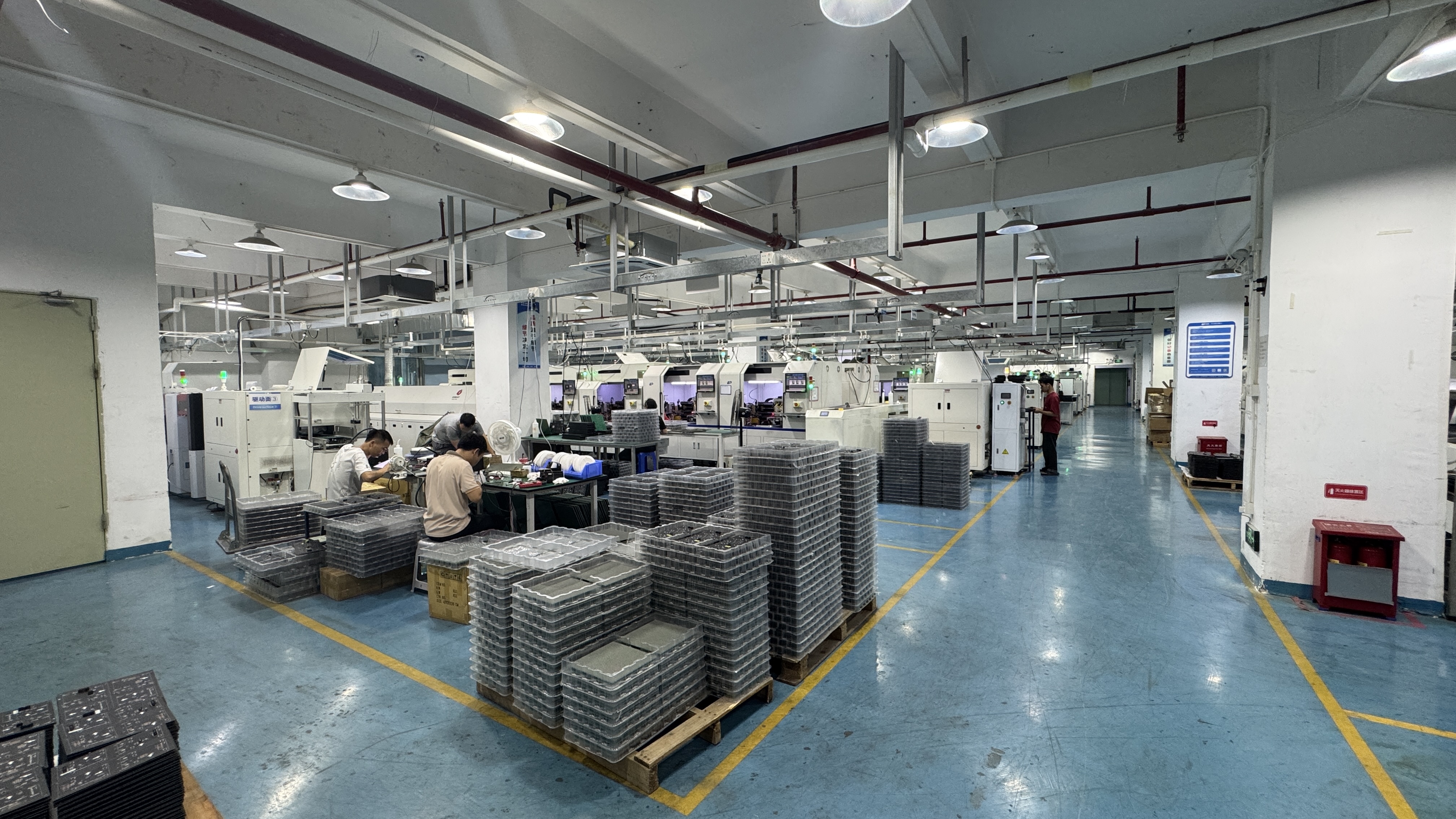
Yes. DDW Display operates an OEM / ODM and project-based customization model covering pixel pitch, LED module size, cabinet size, cabinet structure, display shape, brightness level, refresh rate, installation method, control system, logo branding, color calibration, power solution and mechanical design. Custom work is supported by a 15-engineer R&D team inside a 10,000 ㎡ manufacturing facility, with a 95%+ export ratio across North America, Europe, the Middle East, Asia-Pacific, Latin America and Africa.
What drives the budget difference between the six picks?
The dominant cost driver is pixel density: a fine-pitch indoor wall in the P0.625–P1.87 range carries far more LED die per square metre than a P10 stadium perimeter board. Secondary drivers are the brightness tier (600 nit standard versus 1000 nit optional on the ECOB Series), cabinet construction such as die-cast aluminium, curved or flexible mechanics on rental series, weather protection on outdoor series, total screen area, and the control system specified with the project.
Can I validate a screen before committing to a full order?
Order quantities start from 1 unit on a project basis, which is how sample-level validation is normally handled. Every LED display passes 100% product inspection, aging test, module testing, brightness and color calibration, waterproof test and power safety test before shipment, against an annual output of 800,000+ units and a monthly capacity of 8,000 ㎡.
What lead time should I plan for?
Standard products typically ship in 15–30 days. Customized projects depend on product design, quantity and technical requirements, so the schedule should be agreed at the design stage rather than at the order stage. Buyers evaluating several of the picks above can request a quote or the 2026 LED display catalogue to compare configurations before fixing the pixel pitch and cabinet.
Conclusion
The 2026 ranking holds together because it follows the environment rather than the price list. Control rooms lead because they constrain viewing distance, brightness, service access and wall load at the same time — and the ECOB Series answers all four with a P0.625–P1.87 pitch range, 600 nit standard or 1000 nit optional brightness, 10,000:1 contrast, 3840 Hz refresh, front service maintenance and 4 kg / 7.9 kg die-cast aluminium panels at 39.5 mm depth. Conference rooms, stages, outdoor facades, stadium perimeters and naked-eye 3D landmarks follow because each has a different dominant constraint.
The reusable criteria are deliberately short: use case first, pixel pitch second, brightness third, service access fourth, panel weight and cabinet size fifth — then check power input (AC 100–240 V, 50/60 Hz), operating range (-10°C to +40°C) and the 100,000-hour lifetime at 50% brightness against the site, and confirm the certificates that apply to the destination market. A screen that passes those checks will still fit the room five years after installation.
Next step: compare the picks against your own site.
Send the room dimensions, viewing distance and installation conditions, and DDW Display will return a recommended series, pixel pitch and cabinet configuration. The 2026 LED display catalogue covers all six picks and can be downloaded here: DDW LED Display Catalog 2026 (PDF).
DDW DISPLAY — Shenzhen DDW Technology Co.,Ltd. · Website: www.ddw.net · Email: info@ddw.net · WhatsApp / WeChat / Mobile: +86 134 1755 8100 · Factory: 2F Building 8, YiLisheng Industry Park, Fuyong, Baoan, Shenzhen 518103, China.
Have Questions or Need More Details?
Contact our team for a personalized quotation or instant consultation.
Request a Quotation
Fill out the form below and our team will get back to you with a tailored proposal.
WhatsApp Direct Chat
Prefer to chat in real-time? Message us on WhatsApp for instant assistance & quick answers.
- Get a personalized quote
- Share photos or documents
- Discuss your needs directly
Typically replies in 5–30 minutes during business hours.