Ranking LED Display Solutions by Use Case: Control Room, Rental, Outdoor, and XR
There is no single best LED display. A panel that keeps a control room readable at three meters is the wrong choice for a roadside billboard viewed from 150 meters, and a touring rental cabinet is over-specified for a fixed lobby wall. This ranking sorts LED display solutions by deployment scenario — control room and command center, conference room, rental and stage, outdoor fixed and billboard, and XR virtual production — and explains why each category fits the buyers who install it. The reference products are the series published by Shenzhen DDW Technology Co., Ltd. (DDW DISPLAY), an LED display manufacturer founded in 2012 that operates a 10,000 m² factory and exports roughly 95% of its output to markets in North America, Europe, the Middle East, Asia-Pacific, Latin America and Africa.
Why Most LED Display Rankings Mislead Buyers
Most LED display searches begin as a product question — pixel pitch, brightness, price per square meter — while the decisions that determine whether a project succeeds are made at the room level. Four failure modes appear repeatedly in buyer reviews.
- Ranking by pixel pitch alone. A smaller pixel pitch increases pixel density and close-range image detail, but it usually increases project cost. Selecting P1.25 for a wall viewed from twelve meters pays for resolution the audience cannot resolve.
- Ignoring the service model. A display mounted flush to a wall with no rear access must be serviceable from the front. Full front maintenance exists on the DCOB Series, HK Series, FU Series and KAIO Series precisely because rear corridors are often unavailable in control rooms, boardrooms and retail spaces.
- Treating brightness as a specification contest. An outdoor cabinet rated at up to 10,000 nits is not an upgrade in a dim meeting room; it is a power and comfort problem. Conversely, an indoor 600 cd/m² panel behind sunlit storefront glass fails at the job it was bought for.
- Assuming one cabinet fits every job. Rental cabinets optimize weight and assembly speed; fixed cabinets optimize long-term stability, thermal behavior and maintenance access. The two priorities pull in opposite directions.
A ranking is only useful when it starts from the deployment scenario, the viewing distance, the lighting environment and the service model — not from the product catalogue order.
Market Background: Where the Demand Is Coming From
The global LED display market was projected at USD 20.73 billion in 2026 and is forecast to reach USD 26.98 billion by 2031, according to Mordor Intelligence (LED Display Market Size, Trends & Industry Forecast, 2031). Within that total, two segments are attracting disproportionate buyer attention: Micro-LED and the rental/event segment.
Grand View Research projects the Micro-LED market growing at a 77.4% CAGR from 2024 to 2030, reaching a projected USD 25.65 billion. That growth is directly relevant to XR and premium indoor buyers, because MIP (Micro LED in Package) packaging now appears in virtual production walls and high-end commercial displays rather than only in research settings.
The rental segment estimate should be handled with more caution. A secondary source citing Allied Market Research values the global rental LED display market at approximately USD 5 billion in 2020 and forecasts above USD 8 billion by 2027. That figure is not independently verified and is best treated as a directional indicator of demand rather than a planning number.
Two further reference points are useful in procurement documents. LED displays are commonly classified under HS code 852859, 'Monitors other than cathode-ray tube,' for international trade (UN Statistics Division). Separately, published data indicates that transparent LED displays can achieve energy savings in the range of 30% to 40% compared with traditional LEDs, often complying with ISO 50001 energy management standards — relevant when electricity cost forms part of a project business case.
DDW DISPLAY (Shenzhen DDW Technology Co.,Ltd.) is a Shenzhen-based LED display manufacturer established in 2012, operating a 10,000 m² facility with approximately 100 employees and a 15-engineer R&D team, producing around 800,000 units annually and delivering projects to more than 120 countries and regions. The series named in this ranking come from that published product range, which is why every specification below traces back to a documented model.
The Ranking Framework: Six Criteria Buyers Actually Use
- Viewing distance and pixel pitch. The closest seat determines the finest pitch the project genuinely needs.
- Ambient light and brightness. Controlled indoor lighting, studio lighting and direct sunlight demand different brightness bands.
- Installation and service model. Front maintenance, rear access, hanging, stacking, floor-stand or wall-mount.
- Motion and camera performance. Refresh rate and grey scale determine whether cameras capture flicker, scan lines or moiré.
- Environment and protection. IP rating, dust, moisture, impact and handling during installation.
- Energy and long-term operating cost. Average power consumption per square meter, energy-saving modes and cabinet thermal design.
The Ranking: Five Deployment Scenarios, Ranked by Buyer Fit
Rank 1 Control Room and Command Center: DCOB Series and ECOB Series
Control rooms rank first because they combine the three hardest constraints in one space: short viewing distances, continuous operation, and service access that is usually blocked by the wall itself. Operators sit close enough that pixel structure must disappear, the display may run around the clock, and the panel generally has to be maintained from the front.
The DCOB Series is an indoor fine-pitch Mini COB LED display listed for corporate, control room, command center, conference and meeting, broadcast, showroom and commercial display applications. It is offered in pixel pitches of P0.78, P0.9375, P1.25, P1.56 and P1.857. Brightness is 600–1000 cd/m² with 97% brightness uniformity, contrast ratio is 5000:1, viewing angle is 165° horizontally and vertically, and refresh rate runs from 3840 to 7680 Hz with 13–16 bit grey scale. Colour temperature is adjustable from 3000 K to 10000 K.
The cabinet is the part that decides whether a control room project is practical. DCOB cabinets measure 600 × 337.5 × 37.7 mm, weigh 4.5 kg each, and use die-cast aluminum with a 0.15 mm flatness tolerance. The 16:9 cabinet ratio simplifies building Full HD, 2K, 4K and larger walls without custom steelwork. Maintenance is full front, covering LED modules, power supplies and receiving cards. COB surface protection is rated IP65, which matters where cabinets are handled during installation and where dust is a long-term presence. Average power consumption is 95–210 W/m² depending on pixel pitch and the selected energy-saving configuration, and both common anode and common cathode modes are available to match different power, heat, brightness and budget requirements. Published certifications for the series include CCC, Energy Saving, CE, CB, FCC and ETL.
The ECOB Series sits alongside it as an energy-saving indoor LED video wall built on Mini Flip-Chip COB LED technology, and is likewise listed for control room, command center and corporate environments.
Limitation: fine-pitch COB is a premium indoor format. If the nearest operator position is far enough away that P1.86 or P2.5 resolves the content comfortably, the smaller pitches buy detail nobody in the room will see. Control rooms with full rear access corridors may also find standard indoor fine-pitch options such as the HK Series or FU Series commercially sufficient.
Rank 2 Conference Rooms and Corporate Meeting Spaces: KAIO Series and AIOF Series
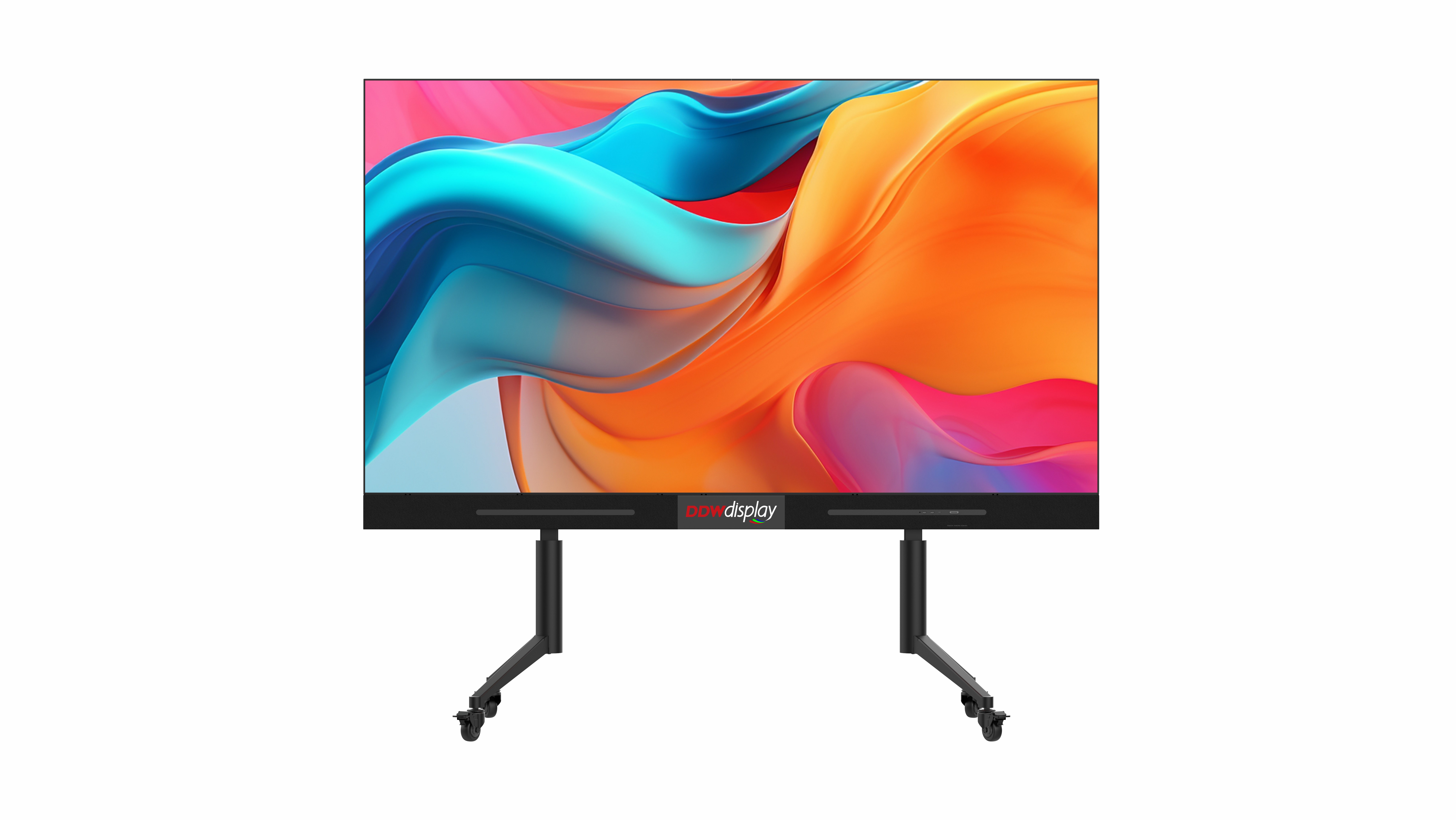
Conference rooms rank second because the risk is not image quality but adoption. If a display requires a rack, a switcher and an AV technician, the room stops being used. The ranking therefore favours integrated systems with front maintenance and standard 16:9 formats.
The KAIO Series is an LED all-in-one conference display available in 108-inch, 135-inch and 162-inch sizes at 1920 × 1080 resolution, with pixel pitch options of P1.25, P1.5625 and P1.875. It runs a 3840 Hz refresh rate with 16-bit colour depth and a 3000:1 contrast ratio; brightness is 600 cd/m² and the viewing angle is 160° horizontally and vertically. The cabinet is die-cast aluminum with a 29.5 mm body thickness. The integrated system runs Android 12.0 with 16 GB RAM and 256 GB storage, and audio is handled by 2 × 18 W built-in speakers. LED packaging can be specified as SMD, COB or MIP depending on the display quality, protection and project requirement. Wireless screen sharing, whiteboard and recording functions are supported, and maintenance is from the front.
The AIOF Series covers the same deployment with a different architecture: pixel pitches of P0.78, P0.93, P1.25 and P1.56 in 135-inch and 162-inch formats, an integrated control system, and a choice of floor-stand or wall-mount installation.
Limitation: all-in-one displays trade configurability for simplicity. Rooms that need non-standard aspect ratios, very large wall areas, or a specific external processor are usually better served by a modular fine-pitch wall.
Rank 3 Rental, Stage and Live Events: AXIS Series and AFLEX Series
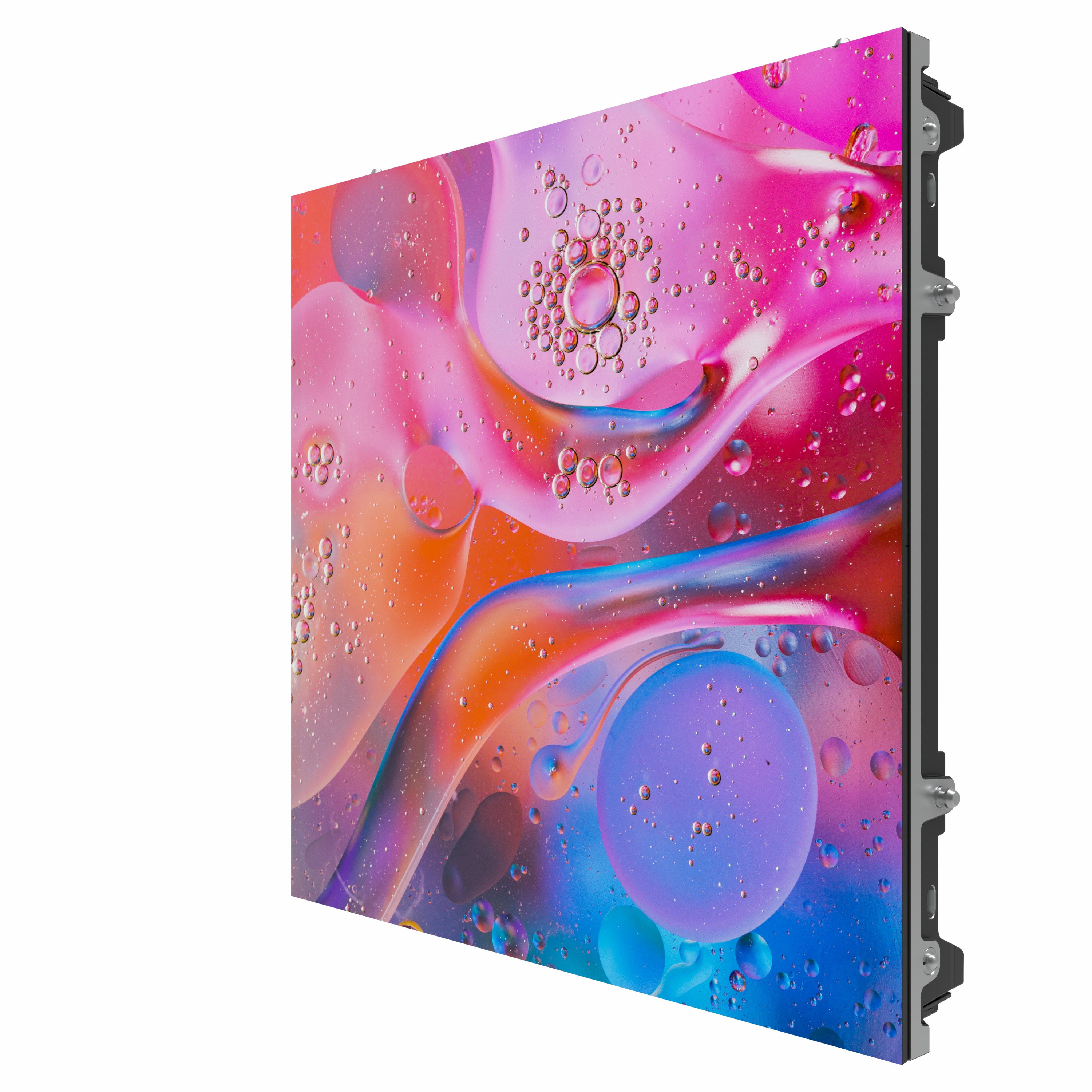
Rental and stage work ranks third not because it is less demanding, but because the buyer's criteria are narrower and better defined: weight, assembly speed and camera behaviour. A rental fleet is judged by how many square meters a crew can build in an afternoon and by how the screen looks on camera.
The AXIS Series is a rental LED display offered in P1.95, P2.604, P2.97 and P3.91 with 500 × 500 mm die-cast aluminum cabinets weighing 7.5 kg and 500 × 250 mm modules. Brightness is 1000–1200 cd/m² for the indoor version and 4000–5000 cd/m² for the outdoor version, with a refresh rate of 7680 Hz and 14–16 bit grey scale. It supports curved, hanging and stacking installation and offers both front and rear maintenance. Where a production needs higher definition at close camera range, the AXIS One Series adds P1.95 and P2.604 at 1000–1500 cd/m² with 7680 Hz and 16-bit processing.
Curved and creative stages are served by the AFLEX Series, an ultra-flexible rental screen with P1.56, P1.95, P2.604, P2.976 and P3.91 options in 500 × 500 mm cabinets weighing 7.5 kg and 250 × 250 mm modules. It supports concave and convex splicing, hanging and stacking, a H160°/V140° viewing angle and a 3840 Hz refresh rate with 14-bit grey scale. The indoor version is rated IP31 at 700 nits; the outdoor version is rated IP65 at 4200–5000 nits. The D Series extends the same rental logic across P1.56 to P3.91 with refresh rates up to 7680 Hz and outdoor brightness up to 5000 nits at IP65.
These specifications are what rank the category. A 7680 Hz refresh rate with 14–16 bit processing is what keeps broadcast and event cameras from capturing flicker, scan lines and moiré. Lightweight die-cast aluminum cabinets with quick-lock design are what make repeated transport and reconfiguration financially viable.
Limitation: rental cabinets are engineered for handling, not for the rigidity and thermal mass of permanent installation. For a fixed stage inside a venue, a fixed-installation series usually delivers better long-term flatness and lower cost per square meter.
Rank 4 Outdoor Fixed and Billboard: LUXIS, FC, NOVA and DIP Series
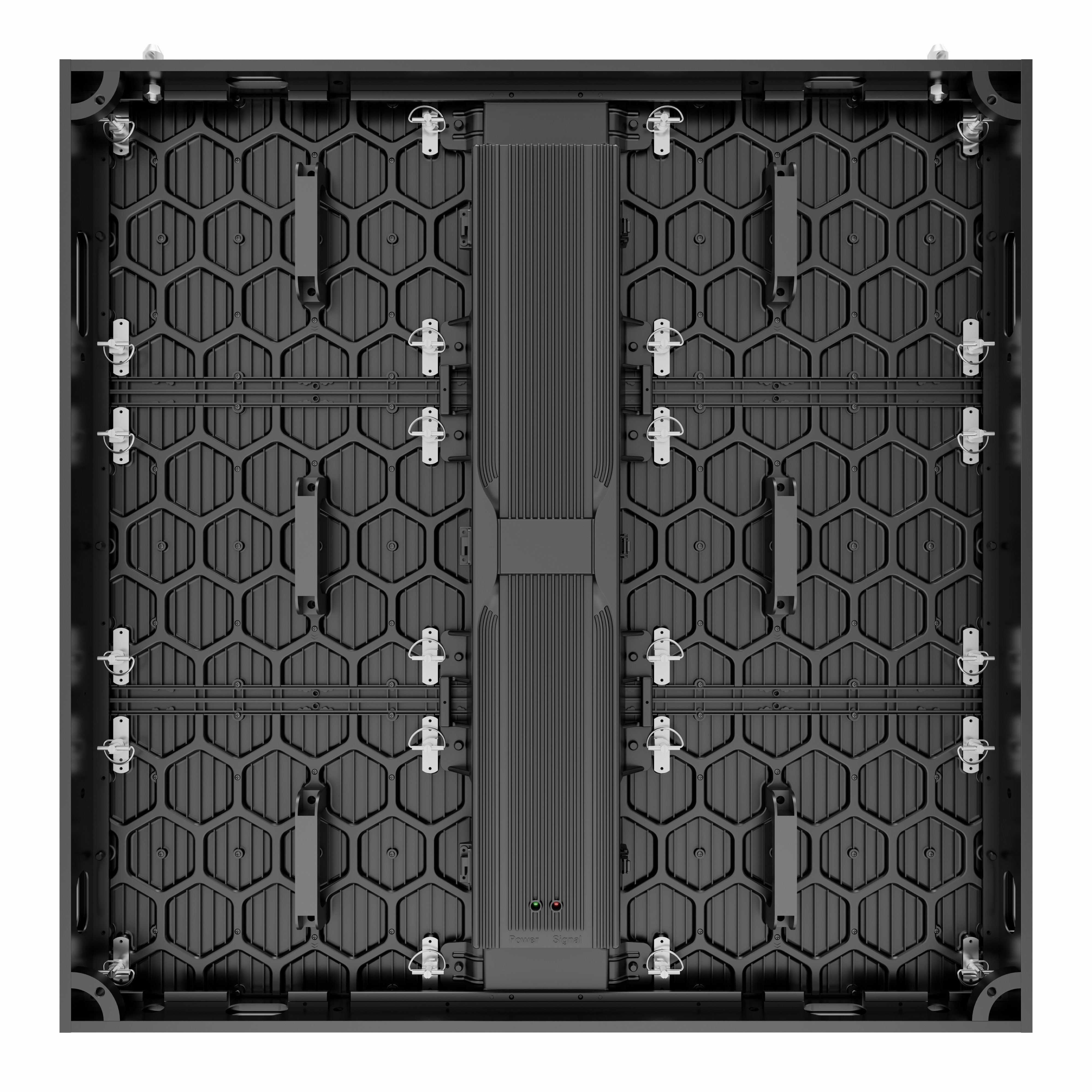
Outdoor fixed and billboard displays rank fourth because the specification set is dominated by one variable — ambient light — and one risk — weather. Everything else follows from those two.
The LUXIS Series is a premium outdoor fixed LED display with pixel pitches from P3.91 to P10, cabinet formats of 500 × 500 mm and 960 × 960 mm, brightness up to 10,000 nits, contrast ratio up to 30,000:1, refresh rate of at least 7680 Hz, 14–16 bit grey scale and IP65 protection on both front and rear. Cabinet weight is 8.5 kg in the 500 × 500 mm format. The FC Series is an outdoor fixed, energy-saving LED screen with pixel pitches from P2.976 to P10 in a full aluminum cabinet, brightness up to 10,000 nits, a H160°/V140° viewing angle, IP65 waterproof and dustproof protection, and front and rear maintenance. The FA Series covers the same deployment with P4 to P10 options, up to 10,000 nits and IP65 protection.
Not every outdoor job needs 10,000 nits. The NOVA Series is a lightweight outdoor fixed display weighing 3.7 kg per 480 × 320 × 60 mm cabinet, with P3.9 and P6.66 pixel pitches, 5000–6000 nits brightness, ≥7680 Hz refresh, ≥5000:1 contrast and IP65 protection — a fit for storefronts, gas stations, bus stops and building facades where structural loading matters. The NOVA Flex Series applies the same module concept to curved surfaces with a minimum bending radius of 306 mm. For very long viewing distances where resolution is not the constraint, the DIP Series uses traditional DIP packaging at P15.6 to P31.25 with 8000–10,000 cd/m², a 1500 × 500 mm display unit, 8.8 kg cabinet weight, 14-bit grey scale, 3840 Hz refresh and IP65 protection.
Stadium perimeter advertising is its own subcategory. The SPPro Series is a stadium perimeter LED display with P5.7, P6.67, P8 and P10 options, a full aluminum cabinet, protective soft mask design, IP65 rating and front and rear maintenance. The SPPLUS Series covers the same application with P6.67, P8 and P10 options and a protective soft mask cabinet design.
Risk note: the main failure mode for outdoor LED displays in rainy or humid environments is water ingress leading to electrical faults, corrosion, short circuits and reduced component reliability. Mitigation is a combination of an appropriate IP rating, sealed cable entries, drainage, ventilation and scheduled inspection of seals and connectors — not brightness.
Rank 5 XR and Virtual Production: ORBIT MIP, ORBIT XR and ORBIT Series
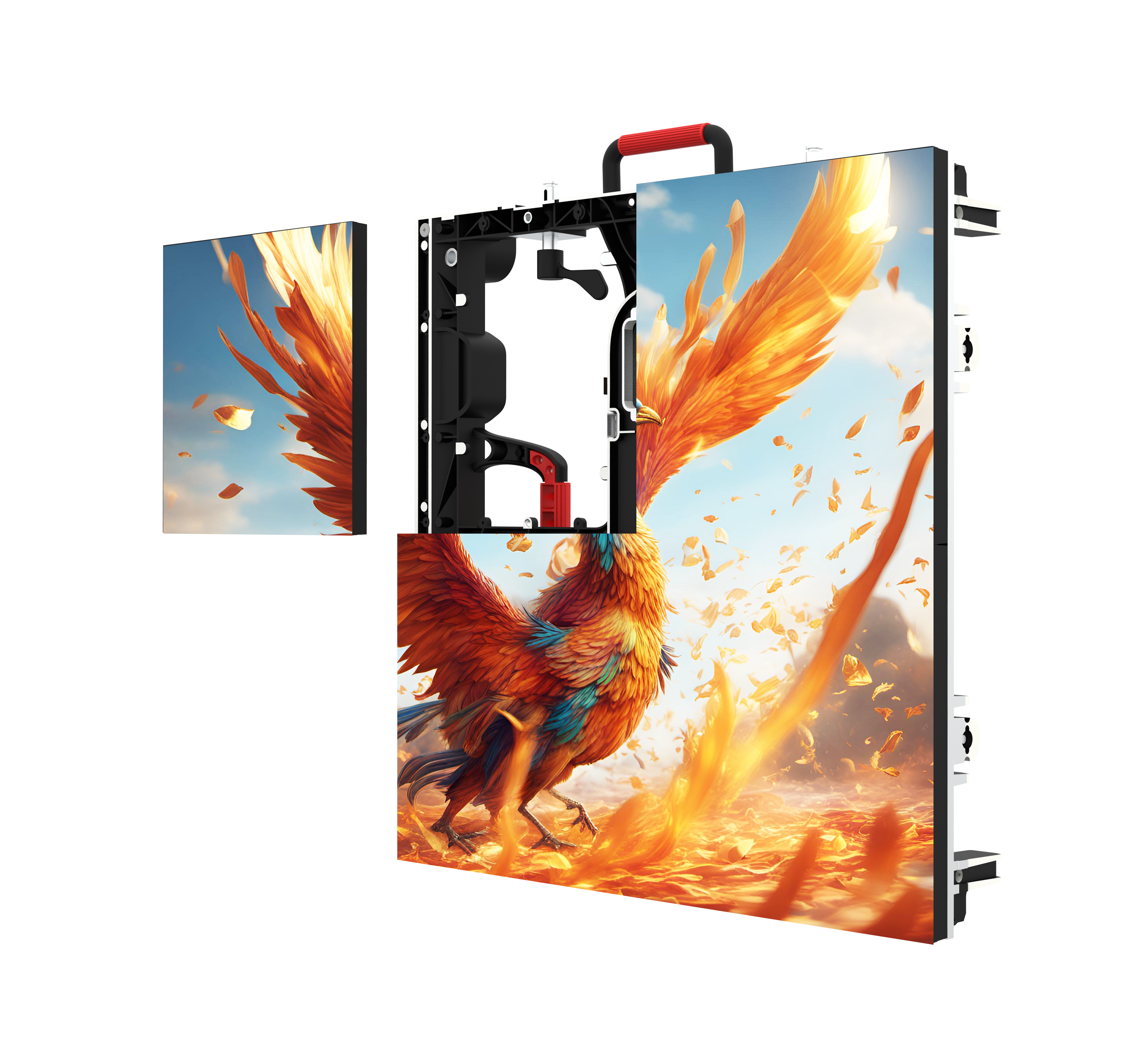
XR and virtual production rank fifth because the buyer set is smaller while the technical bar is higher. On an XR stage the LED wall is not simply a display; it is simultaneously a lighting instrument and a camera background.
The ORBIT MIP Series is a Micro LED XR display built on MIP (Micro LED in Package) technology, with pixel pitches of P1.25, P1.3, P1.56 and P1.95 in 500 × 500 mm die-cast aluminum cabinets using 250 × 250 mm modules at 8 kg. Brightness is 3000–4000 cd/m², refresh rate is 7680 Hz, and grey scale is 14–16 bit. MIP packaging improves LED protection and stability, which suits the long operating hours of a studio. The ORBIT XR Series uses GOB packaging at P1.95, P2.135 and P2.604 with 1500 cd/m² brightness, 7680 Hz refresh and 16-bit grey scale in 500 × 500 mm cabinets and 250 × 250 mm modules at 8 kg. The ORBIT Series broadens the range from P1.25 to P4.81 with 500 × 500 mm and 500 × 1000 mm cabinets, 8 kg and 14.5 kg weights, and brightness from 800 to 5000 cd/m².
The inclusion reason for this category is the camera. At 7680 Hz with 14–16 bit processing, these panels are designed to reduce the flicker, scanning lines and moiré effects that appear when a camera films an LED wall, while fine pixel pitch keeps the panel convincing at the close distances used in virtual production.
Limitation: panel performance is only one input. XR stages also depend on camera tracking, genlock, colour pipeline and content rendering. A 1500-nit GOB wall in a lighting-controlled studio can outperform a brighter wall that is not synchronised with the camera system.
Applying the Ranking Step by Step
- Name the deployment category and the closest viewing position. Control room, conference room, rental stage, outdoor fixed, or XR studio — then measure the nearest viewer, not the average one.
- Set the brightness and protection target from the environment. Controlled indoor lighting typically calls for 600–1000 cd/m²; studio lighting can require 1500–4000 cd/m²; direct-sunlight outdoor installations call for up to 10,000 nits with IP65 protection.
- Choose the pixel pitch band from viewing distance. Fine pitches such as P1.25, P1.53 and P1.86 suit close-viewing indoor rooms; P2.6 to P3.91 is commonly considered for stages, exhibitions and medium viewing distances; outdoor advertising viewed from long distances can use larger pitches.
- Decide the service model before the cabinet. Confirm whether the space allows rear access. If not, front-only maintenance designs such as the DCOB, HK, FU and KAIO Series are the practical requirement.
- Check motion and camera requirements. 3840 Hz covers most indoor commercial work; 7680 Hz with 14–16 bit grey scale is the band for broadcast, live events, rental and XR.
- Confirm cabinet weight against the structure. A 4.5 kg DCOB cabinet, a 3.7 kg NOVA cabinet, a 7.5 kg AXIS rental cabinet and a 26 kg 960 × 960 mm LUXIS cabinet all imply different steelwork and handling plans.
- Verify documentation before production. Certificates for the destination market, model-specific specifications, pre-shipment inspection and delivery terms should all be confirmed in writing.
Comparison Table: Deployment Scenarios Side by Side
| Deployment scenario | Recommended series | Pixel pitch options | Brightness | Refresh rate | Protection |
|---|---|---|---|---|---|
| Control room / command center | DCOB Series (ECOB Series as energy-saving indoor video wall) | P0.78, P0.9375, P1.25, P1.56, P1.857 | 600–1000 cd/m², 97% uniformity | 3840–7680 Hz | IP65 COB surface protection |
| Conference room / corporate | KAIO Series all-in-one; AIOF Series | P1.25–P1.875; P0.78–P1.56 | 600 cd/m² | 3840 Hz | Indoor use |
| Rental / stage / events | AXIS Series; AXIS One Series; AFLEX Series; D Series | P1.95–P3.91; P1.56–P3.91 | 1000–1200 cd/m² indoor, 4000–5000 cd/m² outdoor; AFLEX 700 nits indoor, 4200–5000 nits outdoor | 7680 Hz; AFLEX 3840 Hz | IP31 indoor / IP65 outdoor versions |
| Outdoor fixed / billboard | LUXIS Series; FC Series; FA Series; NOVA Series; DIP Series | P3.91–P10; P2.976–P10; P4–P10; P3.9–P6.66; P15.6–P31.25 | Up to 10,000 nits; NOVA 5000–6000 nits; DIP 8000–10,000 cd/m² | ≥7680 Hz; DIP 3840 Hz | IP65 / IP65 |
| Stadium perimeter | SPPro Series; SPPLUS Series | P5.7–P10; P6.67–P10 | High-brightness outdoor | High refresh rate | IP65 waterproof and dustproof |
| XR / virtual production | ORBIT MIP Series; ORBIT XR Series; ORBIT Series | P1.25–P1.95; P1.95–P2.604; P1.25–P4.81 | 3000–4000 cd/m²; 1500 cd/m²; 800–5000 cd/m² | 7680 Hz | Indoor studio environment |
Specifications above are published series data. Final configuration should be confirmed against the exact model, destination market and project conditions.
How These Rankings Play Out in Practice
A control room upgrade with operator desks within a few meters of the wall and no rear corridor points to a fine-pitch COB front-maintenance wall at P0.78–P1.25, with 3840–7680 Hz refresh for any recording or broadcast feed taken from the room.
A touring event fleet that must build stages in daylight and also serve indoor conference work points to lightweight 500 × 500 mm rental cabinets with 7680 Hz refresh and both indoor and outdoor versions, plus a flexible curved series for creative stage shapes.
A city-centre billboard on a steel structure, a stadium perimeter advertising band, and an XR studio wall are three different projects that share nothing but the word 'display': the first is a brightness and IP65 exercise, the second is a protection-and-mask exercise with long horizontal runs, and the third is a camera-synchronisation exercise where 7680 Hz and fine pitch matter more than nits.
Frequently Asked Questions
What certifications should I look for when buying an LED display?
Requirements depend on the destination market, product configuration and project type. Buyers commonly evaluate CE, FCC, RoHS, ETL and EMC compliance: CE and EMC are commonly considered for the European market, FCC addresses electromagnetic compatibility in the United States, and RoHS covers restrictions on certain hazardous substances. Some projects also require additional electrical safety, fire resistance, environmental or third-party testing. Confirm that the certificate applies to the exact model and destination market, and request the certificates or test reports. The DCOB Series lists CCC, Energy Saving, CE, CB, FCC and ETL. For international trade documentation, LED displays are commonly classified under HS code 852859.
How do I choose the right pixel pitch for an LED display?
Choose pixel pitch from viewing distance, screen size, required resolution, installation environment, content type and budget. Fine pitches such as P1.25, P1.53 and P1.86 suit close-viewing indoor rooms including conference rooms, control rooms, showrooms and premium retail. P2.6 to P3.91 is commonly considered for stages, exhibitions and medium viewing distances, while outdoor advertising viewed from long distances can use larger pitches. A smaller pixel pitch provides higher pixel density and better close-range detail but usually increases project cost, so the smallest available pitch is not automatically the best choice. In the DDW range, published bands run from P0.78–P1.857 on the DCOB Series, P1.25–P2.5 on the HK Series, P1.95–P3.91 on the AXIS Series, P3.91–P10 on the LUXIS Series and P15.6–P31.25 on the DIP Series.
What has the biggest effect on LED display project cost?
Cost is driven by pixel pitch and pixel density, total screen area, brightness, cabinet material, refresh rate and processing, protection rating, maintenance design, installation structure and energy configuration. Energy design belongs in the same calculation: DCOB Series average power consumption ranges from approximately 95 to 210 W/m² depending on pixel pitch and whether common anode or common cathode mode is used, which changes both electricity cost and heat load. Published data also indicates that transparent LED displays can achieve energy savings of 30% to 40% compared with traditional LEDs and often comply with ISO 50001. Note that publicly available reference data on rental yields — for example average daily rental rates per square meter in major event markets — remains limited, so ROI models are better built on supplier quotations than on published averages.
How can buyers validate a supplier before a full production order?
Validate four things. First, certificates and test reports that name the exact model and destination market. Second, model-specific specifications in writing, including pixel pitch, brightness, refresh rate, cabinet dimensions, cabinet weight and maintenance direction. Third, the pre-shipment quality process — DDW Display states that every LED display undergoes comprehensive quality inspection before shipment. Fourth, the sample or pilot option: ask whether a module or cabinet sample can be supplied for evaluation, and where a physical sample is not practical, request batch-level inspection and aging test records tied to the production order.
Rental LED display or fixed LED display — which should I choose?
Choose a rental LED display for concerts, exhibitions, stage events, sports events and other temporary installations requiring frequent assembly and dismantling. Rental designs focus on lightweight cabinets, quick-lock systems, fast installation and flexible hanging or stacking. Choose a fixed LED display for permanent installations such as building facades, shopping malls, conference rooms, control centers, retail stores and outdoor advertising, where long-term stability, maintenance accessibility and continuous operation matter more. The decision depends mainly on installation duration, application environment, viewing distance, maintenance method and project requirements. Buyers who want to compare configurations side by side can download the DDW LED Display catalog 2026 or send room dimensions, viewing distance and content type to info@ddw.net for a configuration recommendation.
Conclusion
Ranking LED displays by use case produces a different answer than ranking them by catalogue order. Control rooms rank first because short viewing distance, continuous operation and front-only service access all point to a fine-pitch COB platform such as the DCOB Series at P0.78–P1.857. Conference rooms rank second because integrated, front-service all-in-one systems get used. Rental and stage work ranks third because weight, 7680 Hz camera-friendly refresh and 500 × 500 mm cabinets decide fleet economics. Outdoor fixed and billboard displays rank fourth because brightness up to 10,000 nits and IP65 protection decide visibility and survival. XR and virtual production rank fifth because MIP and GOB fine-pitch walls at 7680 Hz decide what the camera actually records.
The correct starting point is always the same: define the room, the closest viewer, the lighting and the service access — then select the series that satisfies those constraints without paying for capability the project will never use.
Next Step: Match a Series to Your Project
DDW DISPLAY publishes full technical data for the DCOB, ECOB, KAIO, AIOF, AXIS, AFLEX, LUXIS, FC, NOVA, SPPro and ORBIT series. Download the 2026 catalog, or send your room dimensions, viewing distance, installation environment and content type to the engineering team for a configuration recommendation and quotation.
Catalog: DDW LED Display catalog 2026 (PDF)
Email: info@ddw.net | WhatsApp / WeChat / Mobile: +86 134 1755 8100 | Web: www.ddw.net