Top Rental LED Screen Picks for 2026: Event Pro Shortlist
Short answer: for 2026 event work, the DDW DISPLAY D Series earns the first slot on this list. It combines a P1.56 to P3.91 pitch range in a 500 × 500 mm die-casting aluminum cabinet, refresh rate up to 7680 Hz, viewing angles of H160° / V140°, hanging and stacking installation, and an IP65 outdoor version with brightness up to 5000 nits. The A Series takes the second slot for stage and outdoor video walls, supported by documented P3.91 indoor and 48 m² stage deployments. AFLEX takes the third slot for curved and creative set designs. Ranking here is editorial, based on DDW DISPLAY's published product parameters and delivered rental projects, not on sales volume or market share.
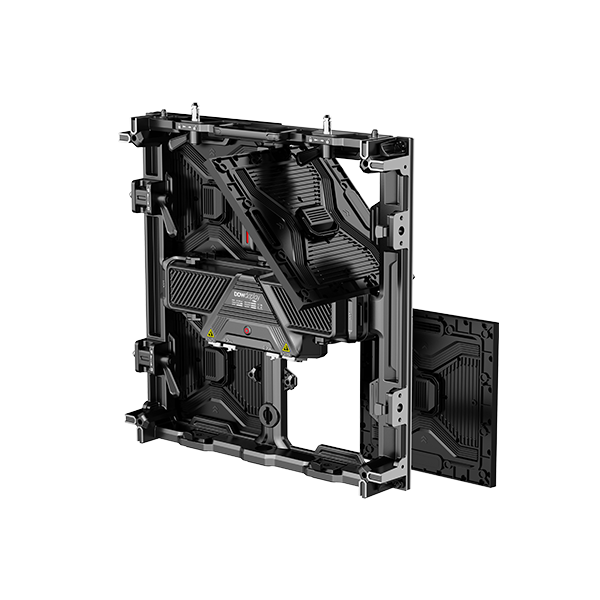
Cover: DDW DISPLAY D Series rental LED display, first pick on this 2026 shortlist for indoor and outdoor event builds.
What breaks a rental screen on site
A rental screen is judged on three things that do not appear in a showroom: load-in time, image consistency under stage lighting and camera capture, and how the cabinets behave after repeated transport. DDW DISPLAY's rental application profile names the operating conditions its rental lines are built around — temporary indoor and outdoor installation, frequent transportation and assembly, large audience viewing distances, high-brightness outdoor conditions, and long operating hours during events.
In practice, five constraints decide whether a specific series suits a booking:
- Pitch versus distance. A pitch that looks sharp in a 4 m booth reads as visible pixel structure from the front row of a conference or from a tight camera shot.
- Cabinet structure. Weight, lock design and flatness determine how many technicians and hours the rig needs, and whether hanging or stacking is practical on the available truss.
- Refresh under cameras. Broadcast, IMAG and content capture need a refresh rate that keeps scanning artefacts out of the recorded image.
- Protection matching the site. An outdoor festival and a hotel ballroom place different demands on cabinet sealing and brightness.
- Service access. Front and rear maintenance options decide whether a failed module can be swapped during a changeover or requires de-rigging.
Why cabinet modularity shapes a rental inventory
Cabinet dimensions matter more than total screen size for a rental fleet. The D Series uses a 500 × 500 mm cabinet, so four cabinets form a 2 × 2 m block and wall dimensions in 0.5 m increments can be built from the same stock. That keeps flight-case count and spare-module inventory predictable across different bookings, and lets one cabinet family serve a small conference backdrop and a large stage wall. Keeping several pitches inside the same cabinet format adds a second benefit: rigging hardware, packing and spare parts carry across pitch options from P1.56 up to P3.91.
Six criteria used to rank these picks
- Pitch range against realistic viewing distance. Does the series cover the distances the booking actually has, from close-viewing corporate content to long-throw festival crowds?
- Cabinet and rigging design. Die-casting aluminum construction, 500 × 500 mm modularity, quick locks, plus hanging and stacking support.
- Refresh rate for camera work. Published refresh figures are checked against the capture requirement, not against the processor alone.
- Protection rating matched to environment. Whether an outdoor-rated version exists, and what its IP rating covers.
- Serviceability during changeovers. Front and rear maintenance access.
- Configuration transparency and delivered evidence. How much of the parameter set is published, and whether real rental projects are documented.
The criteria are applied qualitatively. No numeric weighting or market-share score is used, and rank order is an editorial judgement about fit for professional event work.
The 2026 shortlist at a glance
| Pick | Series | Primary event role | Verified parameters to plan with | Confirm at quotation |
|---|---|---|---|---|
| 1 | D Series | Indoor and outdoor stage, concert and festival walls | P1.56 / P1.95 / P2.604 / P2.97 / P3.91; 500 × 500 mm die-casting aluminum cabinet; refresh up to 7680 Hz; H160° / V140°; IP65 outdoor version, brightness up to 5000 nits; hanging and stacking; front and rear maintenance | Protection rating of indoor-version cabinets for damp or semi-exposed sites |
| 2 | A Series | Stage and outdoor video walls, conference backdrops | Documented P3.91 indoor rental deployment and a 48 m² stage build; modular rental structure for repeated assembly | Full pitch list, cabinet weight, protection rating |
| 3 | AFLEX Series | Curved and creative stage sets | Flexible rental LED panel class: curved LED screen and stage LED video wall | Bending radius, pitch options, cabinet options for the actual set drawing |
Pick 1 — D Series: the indoor and outdoor rental reference
The D Series is DDW DISPLAY's rental LED display for LED video walls and event screens, supplied in indoor and outdoor versions. Its published parameter set is the most complete of the three picks: pixel pitches P1.56, P1.95, P2.604, P2.97 and P3.91; a 500 × 500 mm die-casting aluminum cabinet; refresh rate up to 7680 Hz; brightness up to 5000 nits in the outdoor version; viewing angles of H160° horizontally and V140° vertically; IP65 protection on the outdoor version; front and rear maintenance; and hanging plus stacking installation. It ranks first because those figures answer all five on-site constraints above without requiring a second product family.
Pitch options from P1.56 to P3.91
The range covers both ends of event work. P1.56 is the finest option in the D Series and suits close-viewing corporate content, conference backdrops and camera-framed stage shots where pixel structure must stay out of the image. P1.95 and P2.604 sit in the middle for mid-size stage walls and exhibition builds. P2.97 and P3.91 serve large stage and festival surfaces viewed from a distance, where a coarser pitch keeps cabinet count and cost proportionate to what the audience can resolve.
Cabinet, rigging and servicing
The cabinet is high-strength die-casting aluminum, chosen for light weight, flatness and durability under frequent rental handling. Quick locks and the modular cabinet structure support fast assembly and disassembly, hanging installation from truss and stacking installation on ground support, with curved installation and corner connection available for creative layouts. Front and rear maintenance means modules can be reached from either side, which matters when a wall is rigged close to a backstage wall or a set piece.
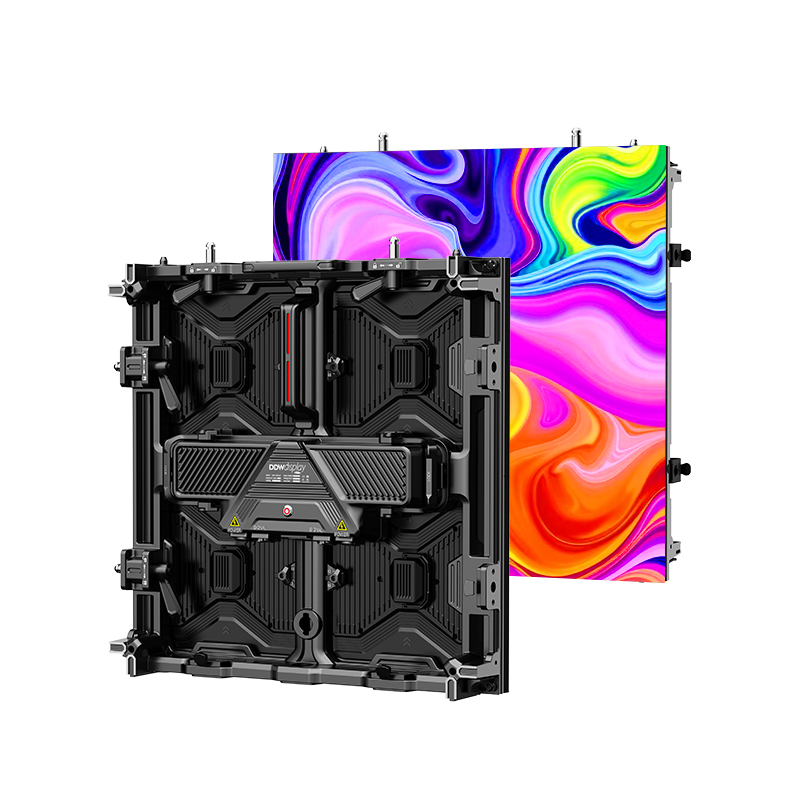
D Series cabinets are die-casting aluminum with a 500 × 500 mm footprint, supporting hanging and stacking builds.
Refresh, brightness and viewing angles
Refresh up to 7680 Hz is the headline figure for camera work: it is the parameter that keeps LED walls usable for broadcast, IMAG and content capture rather than only for direct viewing. Brightness up to 5000 nits applies to the outdoor version and addresses daylight festival conditions; the indoor version is intended for controlled lighting. Viewing angles of H160° / V140° cover wide audience seating and side-angle camera positions. Confirm the quoted values for the exact version ordered, because indoor and outdoor versions are configured separately.
Deployment evidence
DDW DISPLAY documents a 20 m² D Series indoor rental LED display delivered to a stage production and rental customer in Mexico, used for indoor stage performances, stage backdrops and multimedia content display. That project is a rental-format installation rather than a permanent build, which is the relevant proof point for event professionals evaluating repeated assembly.
Where the D Series is not the right pick
Two situations fall outside its published scope. First, viewing distances shorter than the rental range can support call for a finer-pitch indoor display rather than a rental cabinet. Second, set designs built on compound curves may exceed what a flat rental cabinet can follow even with curved installation, which is where AFLEX becomes relevant. Neither case is a defect; both are limits of the format.
Pick 2 — A Series: stage and outdoor video walls
The A Series is defined by DDW DISPLAY as a rental LED display for outdoor screens and stage LED video walls. It ranks second because two documented projects show it working across different event types rather than in a single configuration: an A Series P3.91 indoor rental LED display for a conference centre and corporate event client in Romania, used for presentations, video playback and stage backdrops, and a 48 m² A Series rental LED display for a stage production and rental company in Singapore, used for stage events, live performances and video content playback.
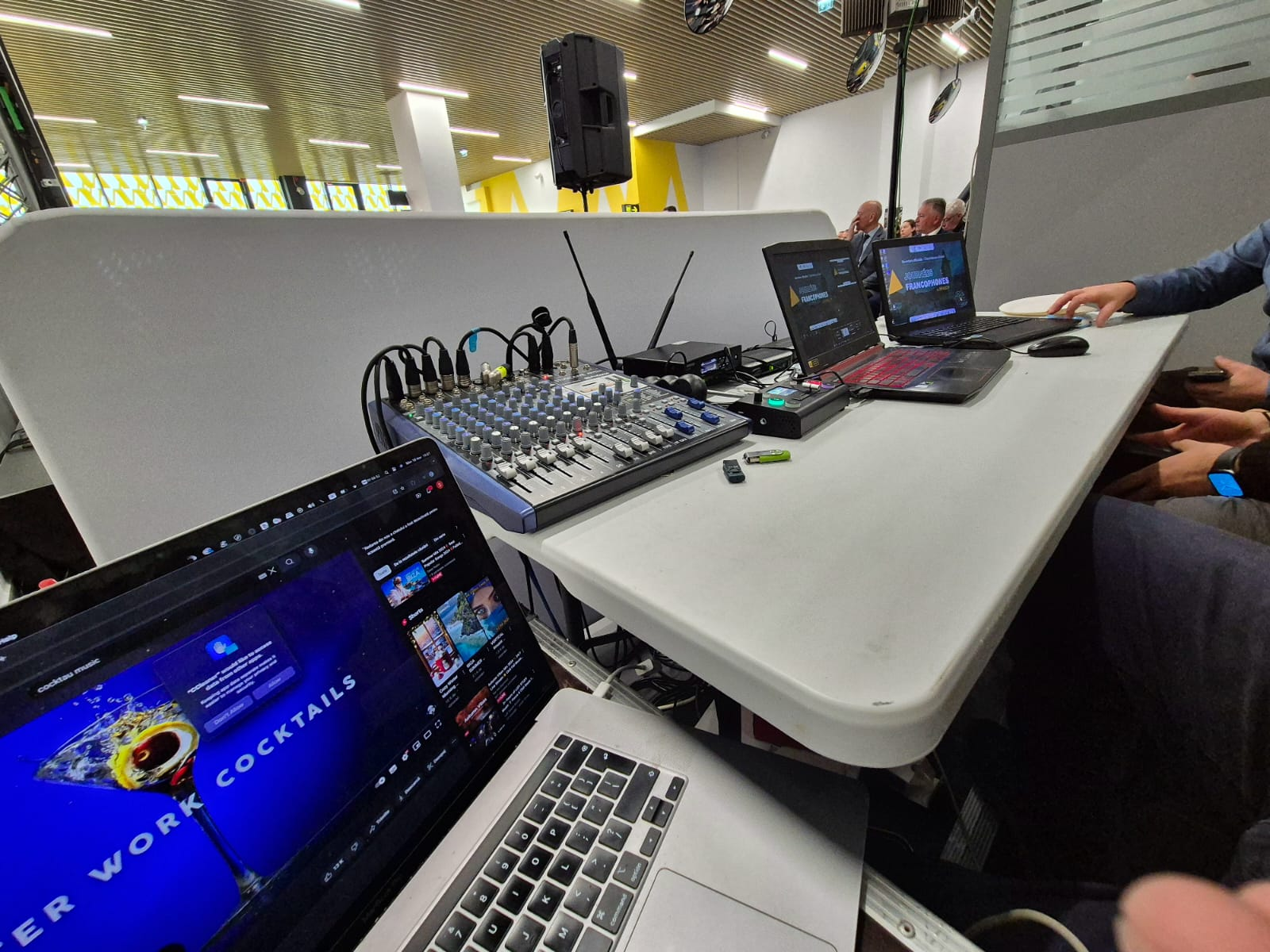
A Series P3.91 indoor rental LED display in a conference-centre deployment, used for presentations and video playback.
The P3.91 conference build and the 48 m² stage build illustrate the practical value of the series: the same rental family is documented in a seated corporate room and on a large performance stage, which is the mix most rental houses actually carry. For buyers building a fleet around one family, that breadth reduces the number of product lines to stock, train on and service.
A 48 m² A Series rental LED display deployed for stage events and live content playback.
The limitation to plan around is documentation depth. The material used for this shortlist documents A Series pitch and project evidence rather than a full parameter sheet, so pitch options beyond the documented P3.91 indoor build, cabinet weight and protection rating should be confirmed in writing before a project is quoted. That is a verification step, not a capability judgement.
Pick 3 — AFLEX Series: curved and creative stage sets
AFLEX Series is DDW DISPLAY's flexible rental line, described as a flexible rental LED display, curved LED screen and stage LED video wall. It ranks third because it solves a geometry problem the flat rental cabinets cannot: DDW DISPLAY's event-production application profile lists curved installation capability among the requirements rental screens must meet, and curved scenery, wrap-around set pieces and sculpted stage shapes are routine in concert and festival design.
The limitation is the same one that applies to any flexible panel specification: the numbers that matter are set-drawing specific. Bending radius, pitch and cabinet configuration need to be confirmed against the actual curve before the design is locked, and a shop drawing review is the sensible checkpoint. AFLEX sits third on this list because its role is narrower than the D Series and its published parameter coverage in this material is lighter than the A Series deployment record — not because curved capability is a secondary need.
Step by step: matching a series to a booking
- Measure the two distances that matter. The nearest audience position and the tightest camera framing. Both set the minimum acceptable pitch.
- Set a pitch band, then pick the series. If the band sits inside P1.56 to P3.91, the D Series covers it. If the set is curved, move the geometry question to AFLEX first.
- Decide indoor or outdoor version. Outdoor placement requires the IP65 outdoor version and its brightness headroom; indoor placement prioritises controlled brightness, refresh and service access.
- Plan cabinets, blocks and rigging. Convert wall width and height into 500 mm increments, then confirm hanging from truss or stacking on ground support against the venue's structural limits.
- Match refresh to capture. Confirm the published refresh figure against the camera and processor chain used on the show, particularly where the wall appears on camera rather than only to the audience.
- Verify paperwork and delivery. Request the certificate scope for the exact model and market, the pre-shipment inspection record, and the confirmed lead time.
Matching pixel pitch to viewing distance
The general rule is that pitch should be fine enough for the closest viewer and the tightest shot, and no finer than necessary, because smaller pitch raises project cost without adding visible detail at distance. For close-viewing indoor applications such as conference rooms, control rooms, showrooms and premium retail, fine-pitch displays around P1.25 to P1.86 are the usual reference band. For stages, exhibitions and events viewed at medium distance, P2.6 to P3.91 is commonly considered. Outdoor advertising viewed from long distances can use larger pitches, matched to screen size and brightness requirements.
Applied to this shortlist, that means P1.56 is the finest available option in the D Series and the closest fit for corporate and camera-critical indoor work, while P2.604 to P3.91 covers stage and festival surfaces. If a booking genuinely needs a finer pitch than the rental range offers, the honest answer is a different display category rather than a rental cabinet stretched beyond its purpose.
Indoor versus outdoor placement
The D Series is supplied in indoor and outdoor versions, and the distinction is not cosmetic. IP65 protection and brightness up to 5000 nits are stated for the outdoor version; the indoor version is intended for controlled environments. Because the IP65 rating applies to the outdoor version, indoor cabinets should not be assumed weather-rated when a site turns out to be damp, semi-exposed or draughty.
Outdoor placement brings a specific risk set: water ingress and moisture can cause electrical faults, corrosion, short circuits, LED module failure or power-supply damage, and the risk rises with heavy rain, high humidity, poor drainage, damaged seals or unprotected cable connections. Selecting an outdoor-rated cabinet is only the first control; correct sealing, cable protection, drainage, ventilation and regular inspection of seals, connectors and power supplies carry the rest.
Indoor placement shifts the priorities to service access and camera performance. Front and rear maintenance lets a module be replaced without dismantling the rig, which matters when the changeover window is measured in hours, and a high refresh rate keeps the wall clean in broadcast and IMAG feeds.
Use cases: which pick fits which event
- Concert and festival main stage. D Series at P2.97 or P3.91 in the outdoor version, hung from truss or stacked on ground support, with the 7680 Hz refresh headroom for camera feeds.
- Corporate conference and presentation backdrop. D Series at P1.56 to P2.604 in the indoor version; A Series P3.91 is also documented in a conference-centre deployment.
- Exhibition and trade-show walls. D Series in P1.95 to P2.604 for booth content viewed at short to medium range, with front maintenance where stand space is tight.
- Live broadcast and IMAG. D Series with refresh up to 7680 Hz, plus confirmation of the processor and camera chain for the specific show.
- Curved scenery and sculpted sets. AFLEX Series, with bending radius and pitch confirmed against the set drawing before fabrication.
Verification checklist before you confirm an order
- Pitch band matched to the nearest audience position and the tightest camera framing.
- Indoor or outdoor version stated explicitly in the quotation, with the IP rating tied to that version.
- Cabinet count and block layout resolved in 500 mm increments, with hanging or stacking method confirmed.
- Refresh rate and brightness values confirmed for the exact configuration ordered.
- Maintenance access agreed: front, rear or both, and how it works with the planned rig.
- Certificate scope checked for the exact model and destination market.
- Pre-shipment inspection record requested: aging test, module testing, brightness and colour calibration, waterproof test and power safety test.
- Lead time and delivery schedule confirmed in writing.
On certification, the documents supplied for DDW DISPLAY's LED display scope include a CE-EMC certificate (BKC25062531FC, issued 2025-07-01, valid to 2030-07-01), a CE-LVD certificate (HXTS2506230030001-1, EN IEC 62368-1:2020 + A11:2020, issued 2025-06-27, valid to 2030-06-27), an FCC Supplier's Declaration of Conformity (BKC25062532FC-R1, FCC Part 15 Subpart B, issued 2025-07-01, valid to 2030-07-01) and an EU RoHS 2.0 certificate (HXTS2506230030007-1, issued 2025-06-27, valid to 2030-06-27), alongside an ISO 9001 certificate (12824Q21369R0S, valid to 2027-10-09) covering production of LED display, LCD video wall and digital signage for export. Certificates are issued against a defined scope, so the model and destination market still need to be matched at order stage.
FAQ
Which certifications should a rental LED screen carry for EU or US deployment?
The required certifications depend on the destination market, the product configuration and the project. For EU-facing work, CE marking, EMC conformity and RoHS substance restrictions are the usual reference points; for the United States, FCC electromagnetic compatibility requirements apply. DDW DISPLAY's supplied documents for its LED display scope cover CE-EMC, CE-LVD, FCC SDoC and EU RoHS 2.0, supported by an ISO 9001 quality management certificate. Before ordering, confirm that the certificate applies to the exact model and market, and request the certificate or test report itself rather than a summary.
How do I match pixel pitch to viewing distance on a rental build?
Choose pitch according to viewing distance, screen size, required resolution, installation environment, content type and budget. Close-viewing indoor applications such as conference rooms, showrooms and premium retail generally suit fine pitch around P1.25 to P1.86; stages, exhibitions and events viewed at medium distance commonly use P2.6 to P3.91; outdoor screens viewed from long distances can use larger pitches matched to size and brightness. A smaller pitch raises pixel density and cost, so the right choice is the pitch that delivers sufficient quality at the actual viewing distance rather than the smallest number available.
Rental LED display or fixed LED display — when is rental the right choice?
Choose rental for concerts, exhibitions, stage events, sports events and any temporary installation that is repeatedly assembled and dismantled. Choose fixed installation for permanent sites such as building facades, shopping malls, conference rooms, control centres and retail stores. Rental designs prioritise lightweight cabinets, quick locking, fast assembly and flexible hanging or stacking; fixed designs prioritise long-term stability, installation efficiency and continuous operation. Installation duration, viewing distance, environment and maintenance method decide the case.
What drives cost when comparing rental LED screen options?
Pixel pitch is the clearest cost driver: finer pitch increases pixel density and image detail at close range, and usually increases project cost. Screen area, cabinet quantity, indoor versus outdoor version, and project-specific technical requirements also change the configuration and therefore the quote. DDW DISPLAY prices are quoted per project rather than published as list prices, so the practical comparison is a written quotation for the same pitch, cabinet count, version and delivery scope across the options you are considering.
What are the order terms — minimum quantity, lead time and pre-shipment checks?
DDW DISPLAY states a minimum order of one unit on a project basis, with monthly capacity of 8,000 m². Standard products carry a 15–30 day lead time; customised projects depend on product design, quantity and technical requirements. Quality control covers 100% product inspection, aging test, module testing, brightness and colour calibration, waterproof test, power safety test and performance inspection before shipment, with remote technical support, installation guidance, troubleshooting and spare-parts supply after delivery. To move from shortlist to a decision, request a quotation or sample arrangement for the specific series and configuration through info@ddw.net or WhatsApp +86 134 1755 8100.
Next step
For a booking inside the P1.56 to P3.91 band with standard 500 × 500 mm cabinets, start with the D Series and confirm the indoor or outdoor version against the venue. Move to A Series when the deployment record for stage and conference builds matters to the buyer, and to AFLEX when the set drawing contains curves. DDW DISPLAY (Shenzhen DDW Technology Co., Ltd.) was founded in 2012 and operates a 10,000 ㎡ manufacturing facility in Shenzhen, exporting to more than 120 countries and regions.
Planning a 2026 season? Request a rental LED screen quotation or sample arrangement for the D Series, A Series or AFLEX Series, and confirm pitch, cabinet count, protection rating and lead time in writing. The DDW LED Display catalog 2026 lists the full product range, and specifications are available on request via info@ddw.net or the company website www.ddw.net.
Have Questions or Need More Details?
Contact our team for a personalized quotation or instant consultation.
Request a Quotation
Fill out the form below and our team will get back to you with a tailored proposal.
WhatsApp Direct Chat
Prefer to chat in real-time? Message us on WhatsApp for instant assistance & quick answers.
- Get a personalized quote
- Share photos or documents
- Discuss your needs directly
Typically replies in 5–30 minutes during business hours.