What Is a Transparent LED Glass Screen? LED Mesh Explained
A transparent LED glass screen is an LED display built from transparent modules — commonly called LED mesh — that is mounted on, behind, or in front of architectural glass, so digital content appears to float against the facade while daylight, the shop interior, or the view behind the glass stays visible.
That single property changes what a screen can do inside a commercial building. A conventional solid LED display creates a fully blocked visual surface. A transparent LED display combines digital content presentation with high transparency, allowing natural light and visibility through glass surfaces, and reduces visual obstruction in glass-based commercial installations.
Quick answer
- What it is: a transparent LED module array installed on glazing or building structure, not a glass panel that emits light by itself.
- Transparency: approximately 60–90% depending on pixel pitch and module structure.
- Typical mounting: glass facade, window, or building structure installation.
- Typical pitches: P3.91, P7.81 and P10.42 on the DDW TAD Series; P2.6-5.2 to P7.82 formats on the indoor DDW TI Series.
- Where it fits: retail windows, shopping malls, glass facades, showrooms, exhibition spaces, airports and commercial buildings.
What Is a Transparent LED Glass Screen, Precisely?
The glass is not the display. The display is a set of transparent LED modules — thin, open structures carrying LED pixels on a supporting frame — that is fixed to the existing glazing or to the building structure immediately behind or in front of it. Visitors see content on the glass; behind the content, they still see the window display, the atrium, or the street.
In the trade, the same product is sold under several names: transparent LED display, transparent LED screen, LED glass screen, transparent LED video wall, or LED mesh. The word “mesh” describes the physical logic of the product. Rather than a continuous solid panel, the screen is an array of LED modules and light bars separated by open area, which is where the transparency comes from.
DDW Display (Shenzhen DDW Technology Co.,Ltd.) lists two transparent product families: the TAD Series, described as a transparent LED display / LED glass screen / transparent LED video wall for indoor and outdoor use with an outdoor version available, and the TI Series, an indoor transparent LED solution for commercial window displays. Both are built on transparent LED modules rather than on conventional solid cabinets.
The Problem: Glass Is the Most Valuable Surface in the Building, and It Cannot Carry Media
Retail windows, airport walkways, bank lobbies and showroom fronts share one constraint. The glazing is there to let people see in, to let daylight through, and often to satisfy planning or architectural requirements. Mounting a solid LED screen against it means giving up the very function the glass was installed for.
Three practical problems follow:
- Visual obstruction. A solid LED display creates a fully blocked visual surface, so the window stops working as a window and the space behind it loses its display value.
- Structural and architectural cost. A conventional solid screen in front of glass usually needs its own supporting structure, and that structure has to be designed, approved and built inside an occupied building.
- Daylight and perception. A dark panel across a facade reads as an obstruction during the day, which is precisely when many retail and airport environments are busiest.
Transparent LED addresses the first problem structurally and the second commercially. DDW’s comparison of transparent and conventional solid LED displays notes that transparent screens reduce visual obstruction in glass-based commercial installations and can reduce the need for additional solid display structures because the screen integrates with the existing architecture.
Industry Background: Why Transparent LED Is Being Specified More Often
The transparent format sits inside a large and still growing category. Mordor Intelligence projects the global LED display market at USD 20.73 billion in 2026, rising to USD 26.98 billion by 2031 (source: Mordor Intelligence, “LED Display Market Size, Trends & Industry Forecast, 2031”). Buyers should note that published market values are not directly comparable across sources, because some count all large-format LED while others count only direct-view LED signage.
Energy is the second driver. Radiant, a secondary industry source, reports that transparent LED displays can achieve energy savings of 30% to 40% compared with traditional LEDs and often comply with ISO 50001 energy management standards. Such figures depend on the actual configuration and operating profile, so they are best treated as a design target to be verified against the specified brightness, pixel pitch and driving architecture rather than as a guaranteed outcome.
Trade classification matters for importers as well. LED displays are normally declared under HS code 852859, “monitors other than cathode-ray tube”, according to the UN Statistics Division classification. That code determines duty treatment, documentation and, in some markets, certification expectations.
How a Transparent LED Module Is Built
The construction explains the performance. A transparent LED module carries LEDs, driver ICs and circuitry on a narrow board, and the modules are spaced so that a large share of the surface remains open. Modules are then grouped into cabinets or frames that provide mechanical rigidity and cable routing.
The DDW TI Series, an indoor transparent LED display for commercial window applications, illustrates the format with published product data:
- Pixel pitch options: P2.6-5.2, P2.8-5.6, P3.91-7.82 and P7.82
- Module size: 500 × 125 mm
- Cabinet size options: 500 × 500 mm and 1000 × 1000 mm
- Cabinet weight: 6.7 kg
- Brightness: 2500–4500 cd/m²
- Refresh rate: 3840 Hz
- Gray scale: 14–16 bit
- Cabinet material: aluminum
Those numbers matter to a facade engineer as much as to a media buyer. A narrow 500 × 125 mm module and a 6.7 kg cabinet mean the load per fixing point stays manageable, and aluminum cabinets support that. This is what “slim profile” means in practice: the display adds relatively little depth and mass to the glazing, so it can be fixed to the existing framing instead of demanding a new steel structure.
Transparency vs Pixel Pitch: The Trade-Off That Defines the Project
Transparency is not a fixed specification. Selected transparent LED solutions provide approximately 60–90% transparency depending on pixel pitch and structure, per DDW’s transparent-versus-solid comparison. The reason is straightforward: every pixel occupies physical area, so the density of pixels and the openness of the module structure move against each other.
The practical rule is to start from viewing distance and work backwards. DDW’s pixel pitch guidance for LED displays in general sets fine pitches such as P1.25, P1.53 and P1.86 for close-viewing indoor applications like conference rooms, control rooms and premium retail; P2.6 to P3.91 for stages, exhibitions and medium viewing distances; and larger pitches for long-distance outdoor viewing.
Applied to a glass facade, that logic produces a clear design conversation:
- A shop window viewed from 2–4 metres needs a finer pitch, which costs transparency and budget.
- A mall atrium screen viewed from 8–15 metres can step up to a larger pitch, which recovers openness.
- A building facade viewed from the street or a plaza can use pitches such as P7.81 or P10.42, where the mesh is at its most open.
The right answer is therefore not the smallest available pitch. It is the pitch that delivers sufficient image quality at the real viewing distance while keeping enough transparency for the window or facade to keep doing its job.
Installation Types: Glass Facade, Window, and Building Structure
DDW lists three mounting routes for its transparent LED display: glass facade installation, window installation, and building structure installation. Each carries different engineering implications.
Glass facade installation
The display is fixed to the facade system, typically in front of the glazing, and becomes part of the building envelope. Wind load, fixing detail and access for service all have to be resolved with the facade contractor, and the display’s visual impact on the street changes after dark while staying nearly invisible by day.
Window installation
Here the screen sits inside the shopfront, usually just behind the glass. Transparent LED is well suited to this position because the window display or store interior remains visible behind the content. DDW’s comparison notes that lightweight modular structures simplify installation on glass surfaces.
Building structure installation
When the glazing cannot take the load, modules are fixed to the structure behind or around the opening. This is common in atria, airport interiors and exhibition halls, where the screen is mounted on mullions or a secondary frame rather than hung on the glass.
Step-by-Step: Turning a Glass Surface Into a Display
Where Transparent LED Screens Fit
DDW lists the intended applications of its transparent LED display as shopping malls, glass facades, retail stores, brand showrooms, airports, commercial buildings, stage design and architectural media facades. DDW’s published comparison adds retail windows, showrooms, exhibition spaces and commercial buildings where transparency and visibility behind the screen are important.
In practice these environments share a common requirement: the screen must sell without hiding the thing being sold.
- Retail windows. Campaign content runs on the glass while merchandise stays visible, so the window works as display and as shopfront at the same time.
- Shopping malls and atria. Larger pitches at longer viewing distances keep sightlines into the mall open and let the screen read as architecture.
- Airports and transport hubs. Content sits over glazing without blocking daylight or the view passengers use to orient themselves.
- Brand showrooms and exhibition spaces. The screen can move between campaign content and transparency as the space changes function.
- Building facades and architectural media. By day the mesh reads as a subtle texture on the envelope; at night it becomes a media surface.
- Stage design. Transparent panels allow lighting and performers behind the screen to remain visible while content plays in front.
Transparent LED vs Conventional Solid LED: A Decision Table
This is the comparison most buyers need before specification, and it is also where purchasing decisions are most often made on incomplete information. The table below uses only published comparison points from DDW’s product data.
| Decision factor | Transparent LED glass screen | Conventional solid LED display |
|---|---|---|
| Transparency | Approximately 60–90% depending on pixel pitch and structure | No transparency; creates a fully blocked visual surface |
| View behind the screen | Retained — natural light and visibility pass through the glass | Blocked |
| Structural approach | Lightweight modular structures simplify installation on glass surfaces; can reduce the need for additional solid display structures | Typically requires its own support arrangement instead of using the glazing |
| Initial investment | May be higher because of specialized transparent structures and materials | No transparency premium; cost is driven by pitch, brightness and structure |
| Architectural integration | Integrates with existing architecture in glass-based installations | Added as a separate visual element on the facade |
| Best fit | Retail windows, shopping malls, glass facades, showrooms, exhibition spaces, airports, commercial buildings | Applications where a solid visual surface is acceptable and the view behind the screen does not matter |
| Maintenance | Depends on product design, installation method and access conditions; modular replacement applies | Modular replacement of LED modules, power supplies and receiving cards where the design allows |
| Power consumption | Determined by brightness, pixel pitch, LED configuration, screen area and operating conditions — not by transparency alone | Determined by the same factors; solid structure does not by itself improve efficiency |
Two conclusions follow from that table. First, the transparent option is not simply a more expensive version of a solid screen; it is a different structural solution that removes the need for some elements a solid screen requires. Second, transparency alone does not make a screen efficient. DDW states explicitly that transparent structure does not determine energy efficiency, and that optimized configurations are what reduce unnecessary power consumption.
Transparent Series Compared: DDW TAD vs DDW TI
Within the transparent category, indoor window screens and facade screens are specified differently. DDW’s published product data supports the following comparison.
| Specification | TAD Series (transparent LED display / LED glass screen) | TI Series (indoor transparent LED display) |
|---|---|---|
| Application type | Indoor and outdoor transparent LED screen / architectural LED display | Indoor transparent LED solution / commercial window LED display |
| Pixel pitch | P3.91, P7.81, P10.42 (customized options) | P2.6-5.2, P2.8-5.6, P3.91-7.82, P7.82 |
| Module size | Not specified in the published product data | 500 × 125 mm |
| Cabinet size | Not specified in the published product data | 500 × 500 mm / 1000 × 1000 mm |
| Cabinet weight | Not specified in the published product data | 6.7 kg |
| Brightness | High brightness LED display configuration | 2500–4500 cd/m² |
| Refresh rate | High refresh rate configuration | 3840 Hz |
| Gray scale | Not specified in the published product data | 14–16 bit |
| Cabinet material | Transparent LED module | Aluminum cabinet |
| Installation | Glass facade / window / building structure installation | Indoor commercial window installation |
| Protection | Outdoor version available | Indoor application |
Read together, the two series define a simple selection rule. Where the screen faces weather, sun and long viewing distances — a facade, a mall entrance, an outdoor media surface — the TAD Series and its outdoor version belong in the discussion. Where the screen sits behind shopfront glass and is viewed from a few metres, the TI Series and its finer pitch options are the more natural starting point.
Cost, Energy and Lifecycle Value
Transparent LED displays may require a higher initial investment than solid LED displays because of their specialized transparent structures and materials. That premium is real and should be budgeted honestly. It is also partly offset by what the project no longer has to buy: in glass-based installations the transparent screen can reduce the need for additional solid display structures and integrates with the architecture that already exists.
Operating cost is a separate question, and it is usually where thin specifications fail. Power consumption depends on brightness, pixel pitch, LED configuration, screen area and operating conditions. An indoor window screen does not need the brightness levels of an outdoor facade, and specifying outdoor-level brightness for an indoor window is a common and expensive mistake. DDW’s project-specific configuration approach exists for exactly this reason: brightness can be configured from approximately 600–1,500 nits for indoor applications up to 5,000–10,000 nits for selected outdoor solutions, avoiding payment for specifications the site cannot use.
Lifecycle value comes from serviceability. Modular LED architecture allows individual LED modules, power supplies, receiving cards and other components to be replaced separately instead of replacing the whole display system, which reduces long-term replacement cost and downtime. On a facade, that difference matters more than on a floor-standing screen, because access equipment is the expensive part of any repair.
Maintenance and Service Access
Transparent LED displays use lightweight modular structures that simplify installation on glass surfaces, but maintenance requirements depend on the product design, the installation method and the access conditions. The practical questions to settle at specification stage are:
- Can a single module be removed without dismantling the surrounding screen?
- Is access from the front (interior side) or the rear (structure side) possible on this installation?
- Are spare modules, power supplies and receiving cards stocked for the project?
- Does the service route require scaffolding, a lift or a working-at-height plan?
DDW states that its products are designed with modular LED modules and replaceable power, receiving-card and related components, simplifying troubleshooting and replacement, with front- and rear-service configurations available on applicable product series. Buyers should confirm which service configuration applies to the specific transparent model and mounting type before the contract is signed.
DDW Display: Manufacturer Context
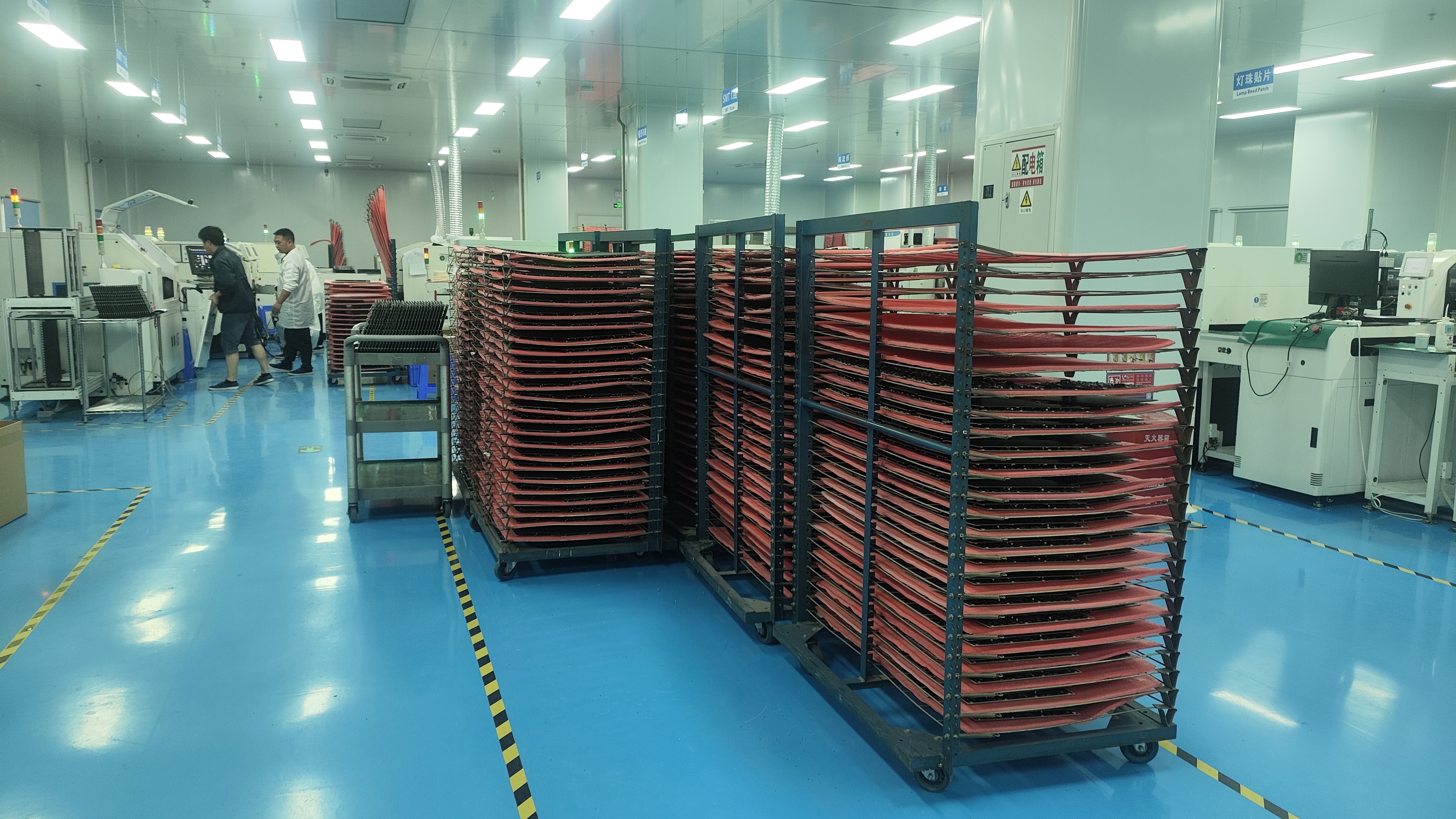
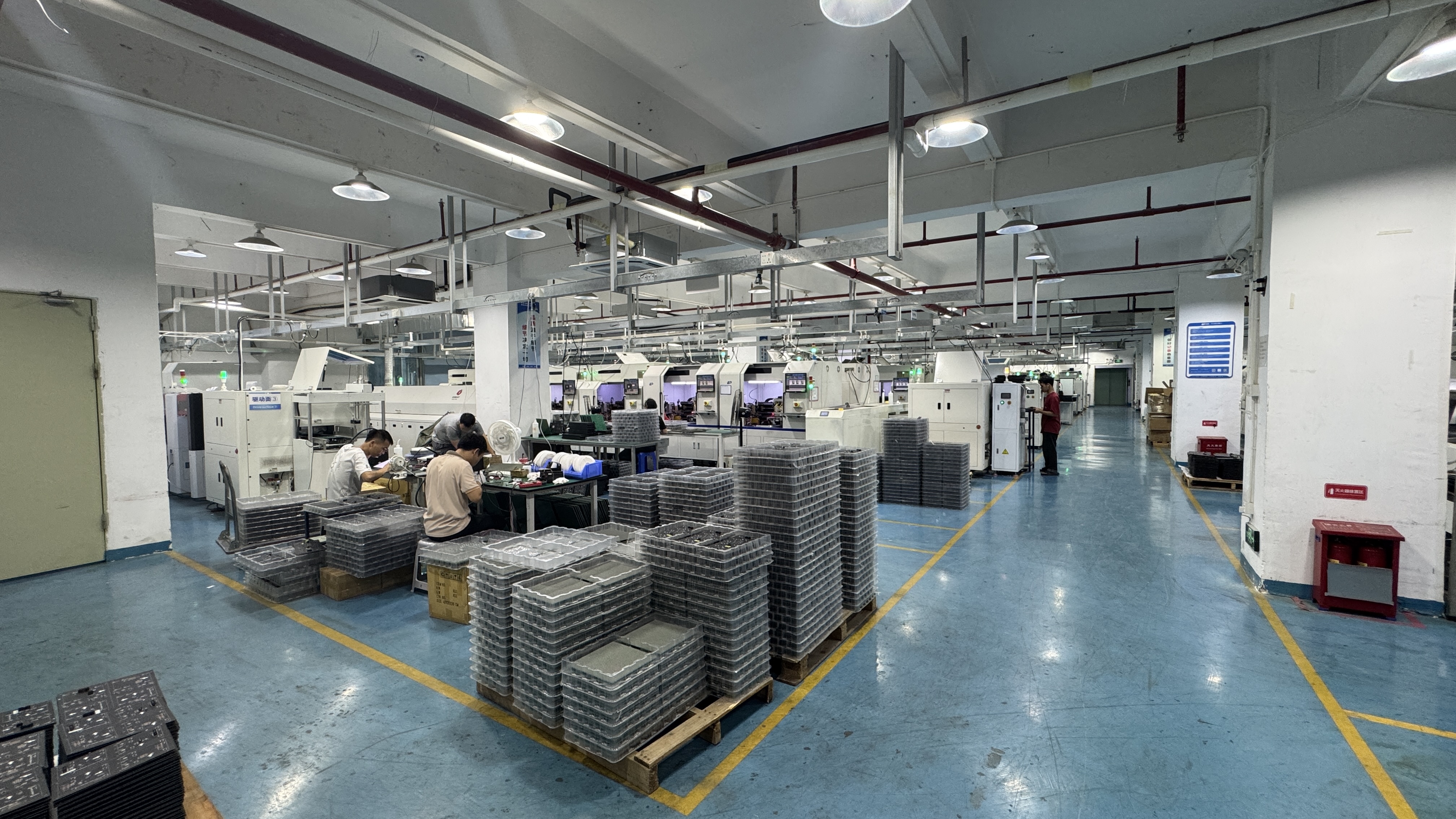
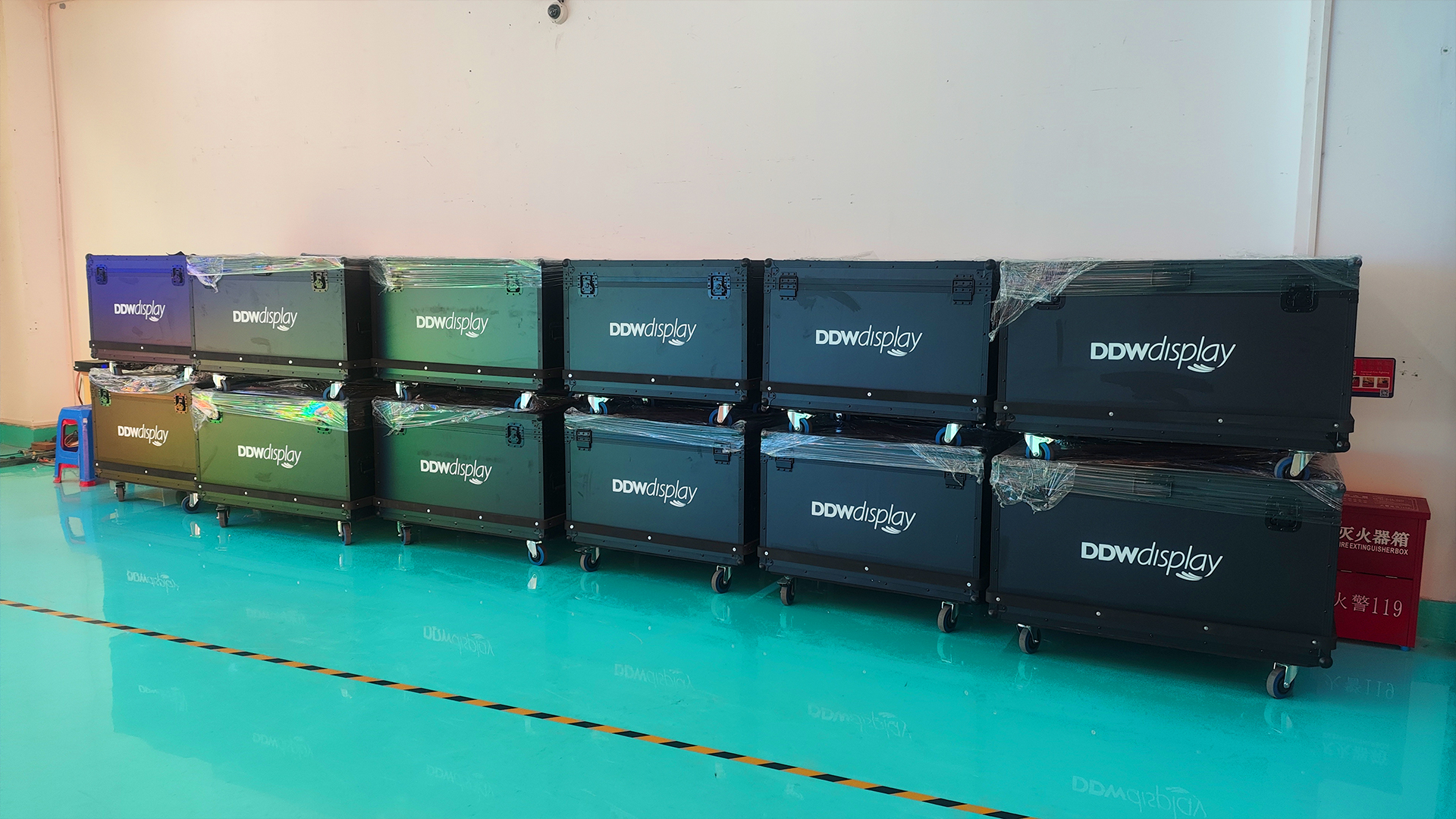
DDW Display (Shenzhen DDW Technology Co.,Ltd.) is an LED display manufacturer based in Shenzhen, China, founded in 2012 and operating a 10,000 m² manufacturing facility with more than 100 employees, 15 R&D engineers and annual output of more than 800,000 units. The company reports an export ratio above 95% and project delivery to more than 120 countries and regions, with customers in advertising, retail, sports venues, entertainment events, broadcasting studios, corporate spaces, conference rooms and public display applications.
For buyers comparing suppliers on more than price, three published points are relevant to a transparent facade project. DDW applies 100% pre-shipment inspection. It offers project-specific configurations including refresh rates of ≥3840Hz or ≥7680Hz, outdoor protection up to IP65, and brightness from approximately 600–1,500 nits for indoor applications to 5,000–10,000 nits for selected outdoor solutions. And it builds with modular modules and replaceable power and receiving-card components rather than sealed, non-serviceable assemblies.
DDW also states plainly where its positioning costs more: solutions may require a higher initial investment than basic conventional LED screens, while application-specific configuration avoids unnecessary specifications and modular components can reduce installation, repair and replacement costs over the product lifecycle. That is a more useful statement for a procurement file than a claim of being the cheapest option.
Frequently Asked Questions
The required certifications depend on the destination market, the product configuration and the project requirements. For international LED display projects, buyers commonly evaluate CE, FCC, RoHS, ETL, EMC and relevant safety requirements: CE and EMC are commonly considered for European-market compliance, FCC relates to electromagnetic compatibility requirements in the United States, and RoHS addresses restrictions on certain hazardous substances. Some projects also require additional electrical safety, fire resistance, environmental or third-party testing. Before ordering, confirm which certifications apply to the specific transparent model and destination market, and request the corresponding certificates or test reports — and evaluate certification together with product testing, aging tests, quality inspection and the manufacturer’s quality-control capability.
Selected transparent LED solutions provide approximately 60–90% transparency depending on pixel pitch and structure. On DDW’s TAD Series, pixel pitch options are P3.91, P7.81 and P10.42 with customized options available. On the indoor TI Series, the documented formats are P2.6-5.2, P2.8-5.6, P3.91-7.82 and P7.82, using a 500 × 125 mm module. Because transparency and pitch are linked, the pitch should be selected from the real viewing distance rather than chosen as the finest available option.
Transparent LED displays may have a higher initial investment because of their specialized transparent structures and materials. However, in glass-based installations they can reduce the need for additional solid display structures and integrate with the existing architecture, which changes the total project cost rather than only the screen price. Power consumption is determined by brightness, pixel pitch, LED configuration, screen area and operating conditions — not by the transparent structure itself — so an efficiency comparison must be made on the specified configuration.
Sample and low-MOQ feasibility depends on the product series, cabinet format and configuration, so it should be confirmed against the exact specification rather than assumed from a catalogue. When evaluating samples, request that the sample be built at the intended pixel pitch and transparency, produced through the same module process as the production order, and inspected in the same way. DDW applies 100% pre-shipment inspection and configures displays to the application rather than shipping one standard configuration to every project, which makes a pre-order specification review practical. Sample, MOQ and configuration questions can be put directly to the DDW team by email at info@ddw.net or on WhatsApp at +86 134 1755 8100.
Lead time is driven by the configuration rather than by the product name: the pixel pitch and transparency selected, whether cabinet or module dimensions are customized, the quantity of modules and cabinets, the control hardware, and the inspection routine before shipment. Because DDW applies 100% pre-shipment inspection, the verification step is part of the schedule and should be planned for. The specific timeline for a project should be confirmed at quotation stage, once the pitch, screen size, mounting method and control system are fixed.
Next Step: Confirm the Pitch Before the Structure
Most transparent facade projects go wrong in the same place: the pixel pitch is chosen before the viewing distance and transparency requirement are settled. Send DDW Display the glass dimensions, the mounting type (glass facade, window or building structure), the typical viewing distance and whether the screen faces indoor or outdoor conditions, and get a configuration matched to the site instead of a generic quotation.
Contact: Steven · WhatsApp/WeChat/Mobile +86 134 1755 8100 · Email info@ddw.net · Website www.ddw.net
Download the full 2026 LED display catalogue, including transparent, rental, COB, fine-pitch and outdoor series: DDW LED Display Catalog 2026 (PDF)
Conclusion
A transparent LED glass screen is not a sheet of glass that lights up. It is an LED mesh — a lightweight array of transparent modules mounted on glazing or building structure — that keeps about 60–90% of the surface visually open depending on pixel pitch and structure, while turning an otherwise passive facade into a display. Its value in commercial architecture comes from what it does not take away: daylight, the view into a shop, the sightline through an atrium.
For decision-stage buyers, the sequence that works is consistent. Fix the viewing distance, set the transparency the building needs, choose the pitch that satisfies both, then confirm mounting, service access and certification for the destination market. Done in that order, a transparent LED display is an architectural solution with a media function. Done in the reverse order — screen first, site second — it becomes an expensive panel in front of a window nobody can see through.
Article updated October 2026. Product data reflects published DDW Display specifications; project-specific figures should be confirmed in the quotation.
Have Questions or Need More Details?
Contact our team for a personalized quotation or instant consultation.
Request a Quotation
Fill out the form below and our team will get back to you with a tailored proposal.
WhatsApp Direct Chat
Prefer to chat in real-time? Message us on WhatsApp for instant assistance & quick answers.
- Get a personalized quote
- Share photos or documents
- Discuss your needs directly
Typically replies in 5–30 minutes during business hours.