Customized Elevator OEM: Engineering Bespoke Dimensions, Materials, and Compliance
An OEM customized elevator is a vertical transportation unit manufactured to a buyer's specific shaft dimensions, capacity, speed, cabin materials, and compliance requirements, rather than supplied as a fixed catalog model. For contractors, developers, and distributors, this means the elevator is engineered around the building instead of forcing the building to adapt to a standard product.
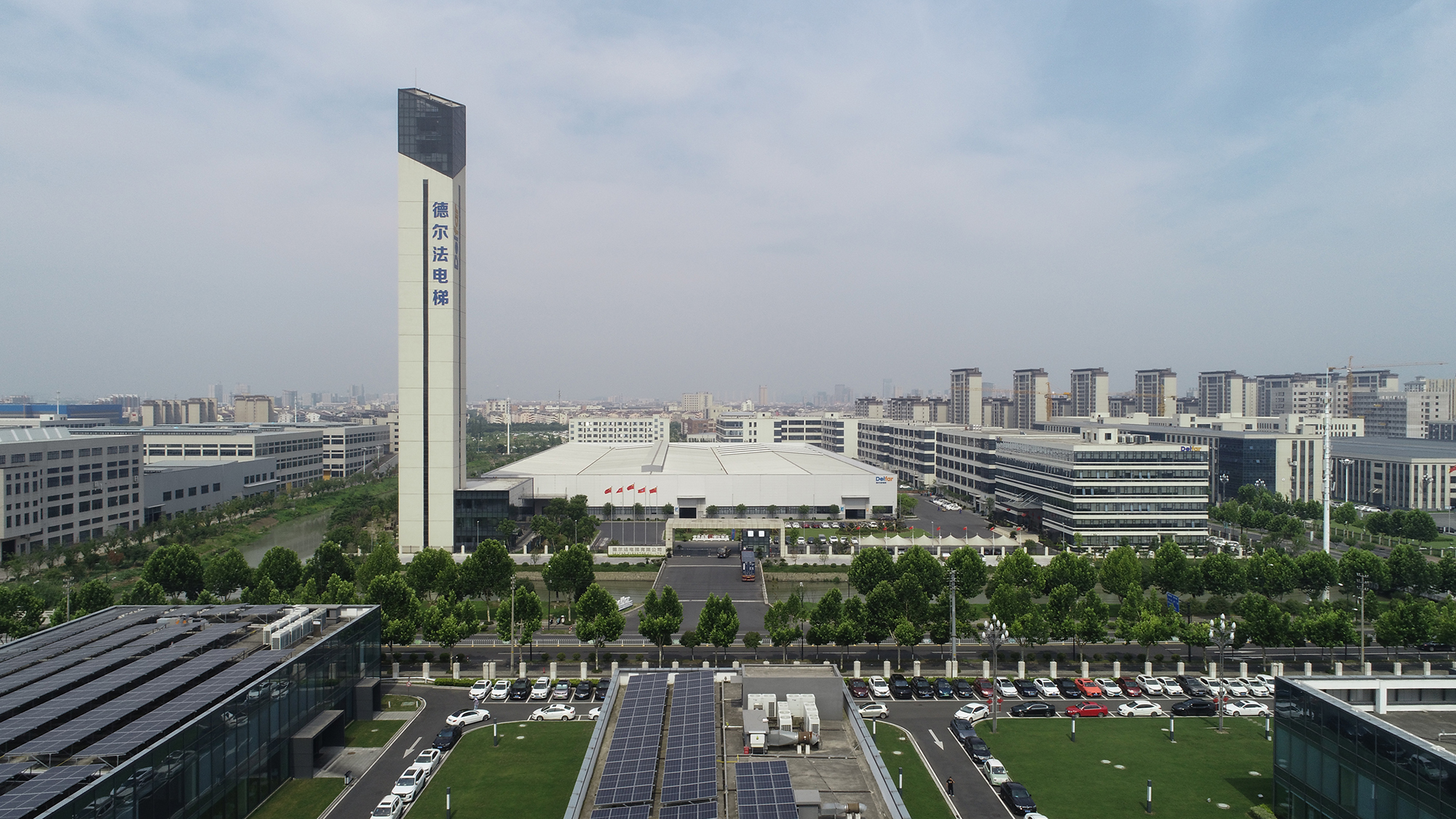
Delfar Elevator Co., Ltd. (www.delfarelevator.com) is a professional elevator manufacturer based in Huzhou, Zhejiang, China. The company provides OEM production services with customization options covering logo, cabin wall material and color, car door material and color, ceiling type, floor material and pattern, and handrail material and color. Its product range includes passenger elevators, home elevators, observation elevators, hospital elevators, freight elevators, car elevators, machine-room-less elevators, small machine-room elevators, escalators, and moving walks. This article explains how OEM elevator customization works in practice, which parameters can be adapted, and how a project moves from a bespoke specification to a delivered, tested unit.
Why Standard Elevator Configurations Often Fall Short
A standard elevator catalog cannot cover every building reality. Shaft width and depth vary with architectural design; pit depth and overhead height are constrained by existing structures; expected traffic differs between a six-floor villa and a thirty-stop commercial tower; and the items moved range from passengers to hospital beds to vehicles. The gap between catalog products and project conditions is precisely what customized elevator manufacturing solves.
Common mismatches include:
- Dimension conflicts: a car that meets the rated capacity on paper but cannot fit the actual shaft opening, door size, or pit depth of the building.
- Application mismatch: using a passenger elevator configuration in an industrial cargo setting where a heavy-duty freight platform with capacities up to 2000–8000 kg is required.
- Material mismatch: standard finishes that do not meet the aesthetics or durability expectations of a hotel, villa, or commercial lobby.
- Compliance gap: equipment designed without verifying the destination market's standards, such as EN 81-20 and EN 81-50 in Europe, which are mandatory for CE marking.
Each mismatch creates delay, rework, or a building feature that underperforms. The purpose of OEM elevator customization is to remove these risks during the design and manufacturing stage, before the equipment reaches the site.
Industry Background: Customization and Machine-Roomless Demand Are Growing
The global elevator market was valued at approximately USD 84.8 billion in 2024 and is projected to grow from USD 87.9 billion in 2025 to USD 126.7 billion by 2034, at a compound annual growth rate of 4.2% (Global Market Insights). This growth is not uniform across building types, and several verified trends directly increase the need for customized elevator solutions.
- The residential elevator market was estimated at USD 54.61 billion in 2024 (Grand View Research), driven by multi-level homes and villa projects where shaft space is limited and cabin styling must match interior design.
- The industrial elevators market is projected to grow from USD 72.1 billion in 2025 to USD 116.3 billion by 2035 at a CAGR of 4.9% (Future Market Insights), reflecting rising demand for heavy-duty freight and logistics lifting equipment.
- Machine roomless (MRL) technology is expected to witness the highest growth rate among elevator technologies, with a CAGR of 9.6% through 2034 (Fortune Business Insights). This makes machine roomless customized elevators increasingly relevant for buildings where a rooftop machine room is undesirable.
- The Middle East elevator market was valued at USD 1.25 billion in 2023 and is projected to reach USD 2.38 billion by 2030 (Allied Market Research), a region where project standards, environmental conditions, and architectural expectations often require customized equipment.
- In Europe, EN 81-20 and EN 81-50 are the primary harmonized standards for elevator design and testing, and they are mandatory for CE marking (Liftinstituut). EN 81-20 also requires a light curtain door detection system to reduce the risk of door strikes on passengers (KONE Compliance Guide).
These trends explain why buyers increasingly ask manufacturers not only for a price, but for evidence that the supplier can adapt dimensions, materials, capacity, and compliance to a specific project.
What OEM Customized Elevator Manufacturing Involves at Delfar
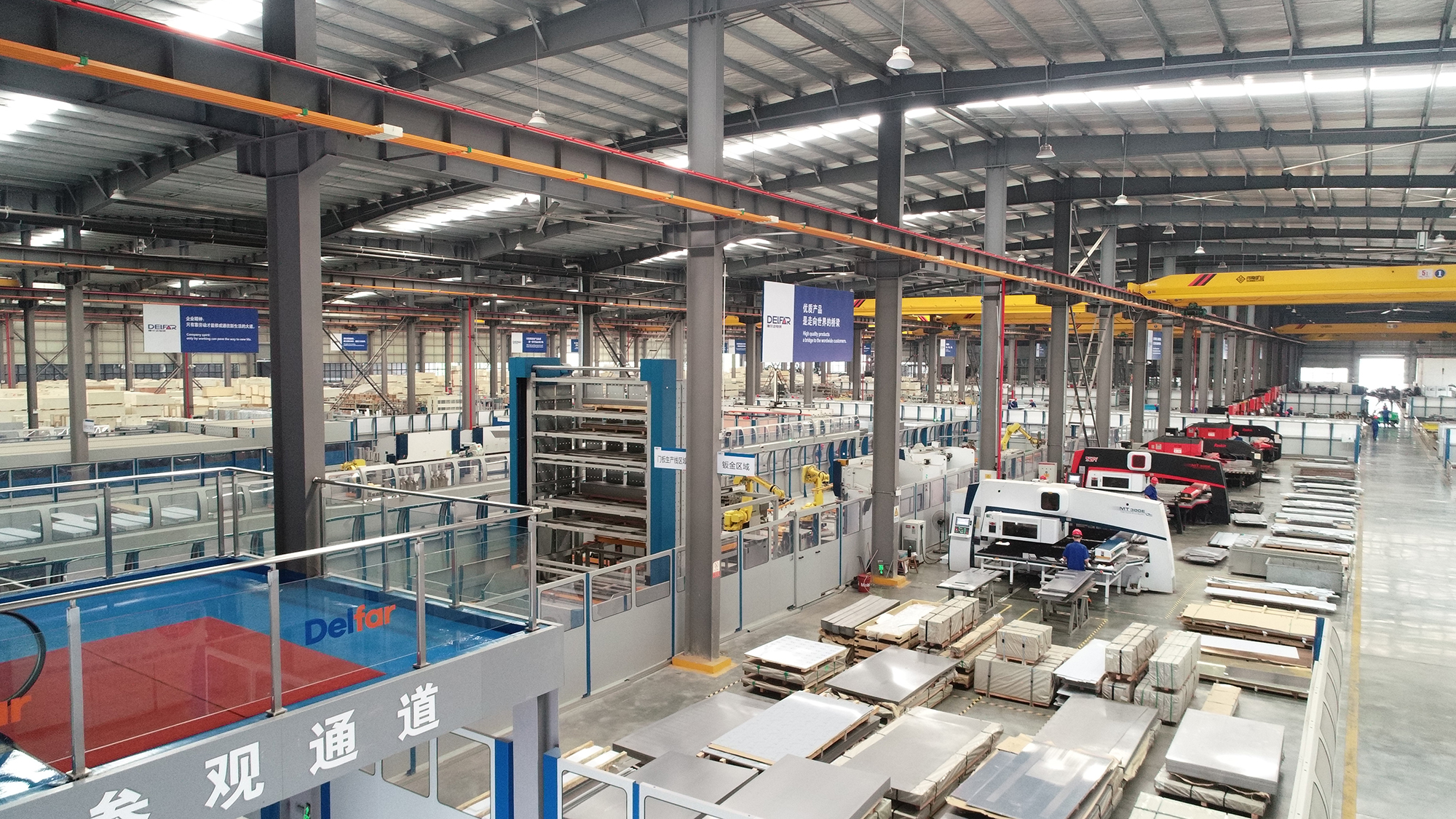
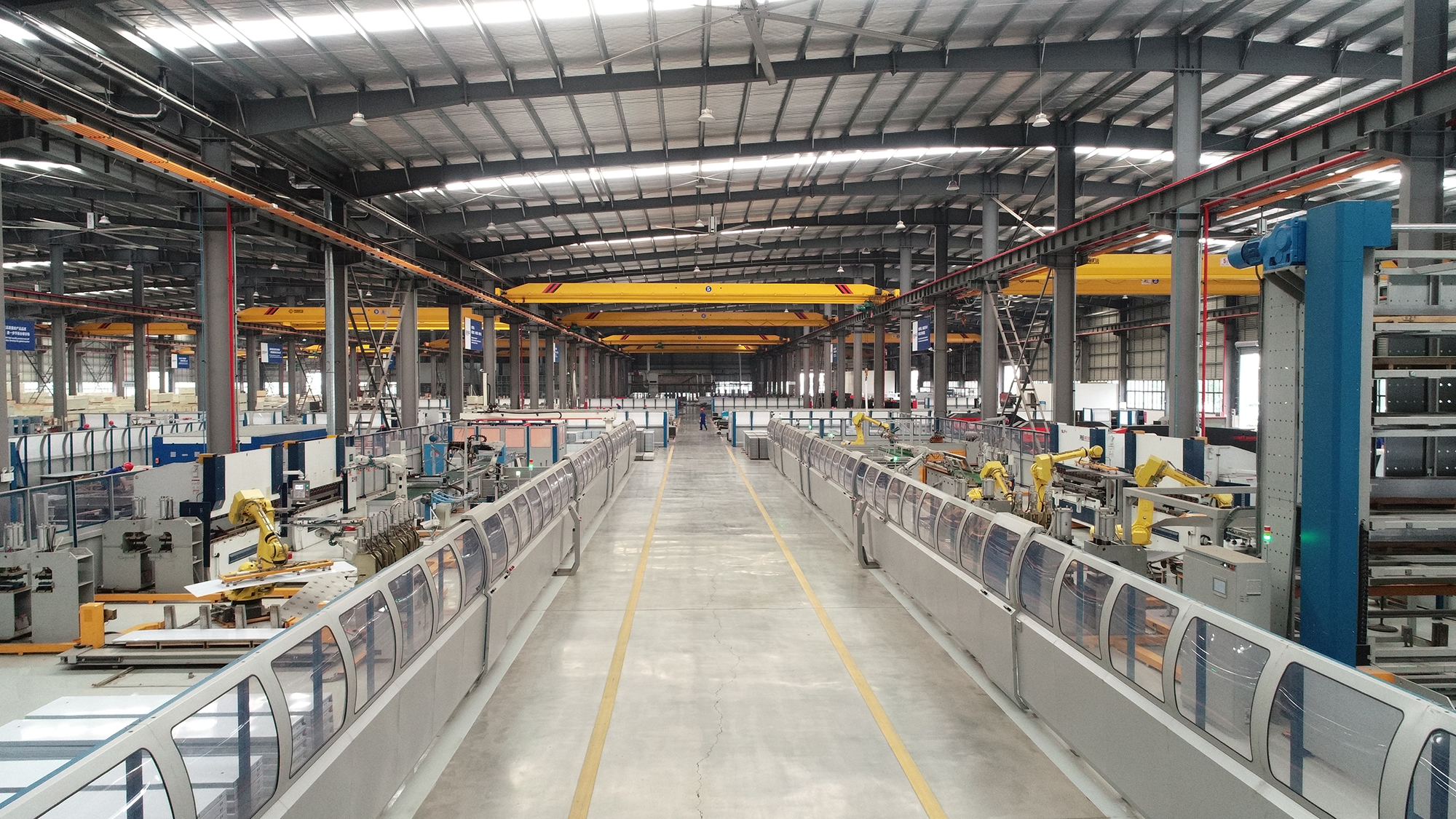
Founded in 2011, Delfar Elevator operates an integrated manufacturing model rather than a simple assembly operation. The factory covers approximately 100,000 m², employs about 280 people including an R&D team of 30 engineers, and has an annual output capacity of 10,000 units. Around 50% of production is exported to global markets, which means the engineering team regularly works with project standards and expectations from different countries.
1. Customization Scope
OEM services are available for the following specification points:
- Logo
- Cabin wall material and color
- Car door material and color
- Ceiling type
- Floor material and pattern
- Handrail material and color
2. Production Capacity and Lead Time
- Monthly production capacity: 800 units
- Normal production lead time: 35 days
- Minimum order quantity: 1 unit
- Quality control: 100% pre-shipment test
This means a developer or distributor can order a single customized residential elevator to solve one villa's shaft problem, or scale to dozens of units for a high-rise project without changing supplier.
3. Product Platforms for Different Building Demands
Delfar produces nine product categories, each with a standard parameter envelope that can be adapted for a specific project:
| Product | Model | Capacity | Speed | Travel / Stops | Typical Applications |
|---|---|---|---|---|---|
| Passenger elevator | DP / DPN | 400–3000 kg | 1.0–6.0 m/s | ≤100 m / 2–60 stops | Residential, commercial, hotels |
| Home / villa elevator | DH | 320–630 kg | 0.3–0.5 m/s | ≤20 m / 2–6 stops | Private villas, duplex homes |
| Freight elevator | DF / DFN | 2000–8000 kg | 0.25–1.0 m/s | ≤50 m / 2–10 stops | Manufacturing, logistics, warehousing |
| Bed / stretcher elevator | DPB / DPNB | 1600–3000 kg | 1.0–2.0 m/s | ≤60 m / 2–20 stops | Healthcare facilities |
| Car elevator | DA / DAN | 3000–5000 kg | 0.2–0.5 m/s | ≤30 m / 2–6 stops | Parking buildings, automotive facilities |
| Observation elevator | DPO / DPNO | 630–1600 kg | 1.0–2.5 m/s | ≤100 m / 2–30 stops | Shopping malls, atriums, hotels |
| Dumbwaiter | DW | 50–500 kg | 0.2–0.5 m/s | ≤30 m / 2–8 stops | Restaurants, hotels, catering |
| Escalator | DE | 600 / 800 / 1000 mm step width | 0.5 m/s | 3–12 m rise | Retail, transit stations |
| Moving walk | DM | 600 / 800 / 1000 mm pallet width | 0.5 m/s | ≤10 m rise | Airports, terminals |
Capacity, speed, travel height, stops, and materials above represent standard parameter envelopes for each platform. The OEM engineering process adjusts these parameters to the actual shaft and project requirements.
4. Cabin and Finish Options
For the same elevator model, the cabin can be finished in different materials depending on the building grade and design intent:
- Passenger and observation elevators: stainless steel, glass, painted steel, wood-finish, and customized options for car walls, car doors, and landing doors; PVC or marble floors; stainless steel, solid wood, or acrylic handrails; stainless steel, glass, or acrylic panels for C.O.P. and L.O.P.
- Freight elevators: painted steel or hairline stainless steel car walls; curved-lined steel or stainless steel curved-lined steel floors; stainless steel faceplate C.O.P. and L.O.P.
- Bed elevators: stainless steel cabin walls and doors, anti-slip PVC flooring, stainless steel handrails, ceilings, and door frames.
- Car elevators: painted steel or stainless steel cabin walls and doors, with high-strength structural steel cabin frames and concrete or steel structure shafts.
- Dumbwaiters: 304 stainless steel cabin structure, stainless steel or anti-slip steel floors, stainless steel doors.
5. Quality and Certification System
Delfar holds QAC-issued certificates covering the design, manufacture, installation, remodeling, and repair of elevators and escalators:
- ISO 9001:2015 / GB/T 19001-2016 quality management system — certificate 00625Q30569R4M
- ISO 14001:2015 / GB/T 24001-2016 environmental management system — certificate 00625E30335R4M
- ISO 45001:2018 / GB/T 45001-2020 occupational health and safety management system — certificate 00625S30329R4M
The company has also obtained CE, CU, SASO, SGS, and SC certificates for international project compliance. For projects in Europe or on CE-marked equipment, the EN 81-20 and EN 81-50 harmonized standards apply, and these credentials support the documentation required for project handover.
Step-by-Step: How an OEM Customized Elevator Order Is Executed
The path from a bespoke dimension request to a tested elevator follows a structured workflow:
- Project intake. The buyer provides the shaft drawing or key dimensions: car size, travel height, number of stops, required capacity, speed, and building type. Working conditions also matter: Delfar equipment is designed for ambient temperatures of −5°C to +40°C, relative humidity ≤90% RH non-condensing, and altitude ≤1,000 m unless otherwise specified for the project.
- Product platform selection. The engineering team maps the requirements to the appropriate platform, such as a machine-roomless passenger elevator (DP/DPN) for a commercial tower, a freight elevator (DF/DFN) for an industrial facility, or a car elevator (DA/DAN) for a parking structure.
- Configuration and customization. The buyer selects cabin wall material and color, car door material and color, ceiling type, floor material and pattern, handrail material and color, and confirms logo application. Structural details such as shaft type (concrete, steel, or aluminum) are matched to the product configuration.
- Engineering design. The R&D team of 30 engineers develops the layout, control configuration, and safety system around the specific shaft and traffic pattern.
- Manufacturing. Production runs through precision cutting, forming, welding, machining, assembly, testing, and inspection. Key manufacturing processes reach up to 70% automation under 5S management.
- Pre-shipment testing. Every unit undergoes a 100% pre-shipment test before loading, and the standard acceptance term is pre-shipment inspection.
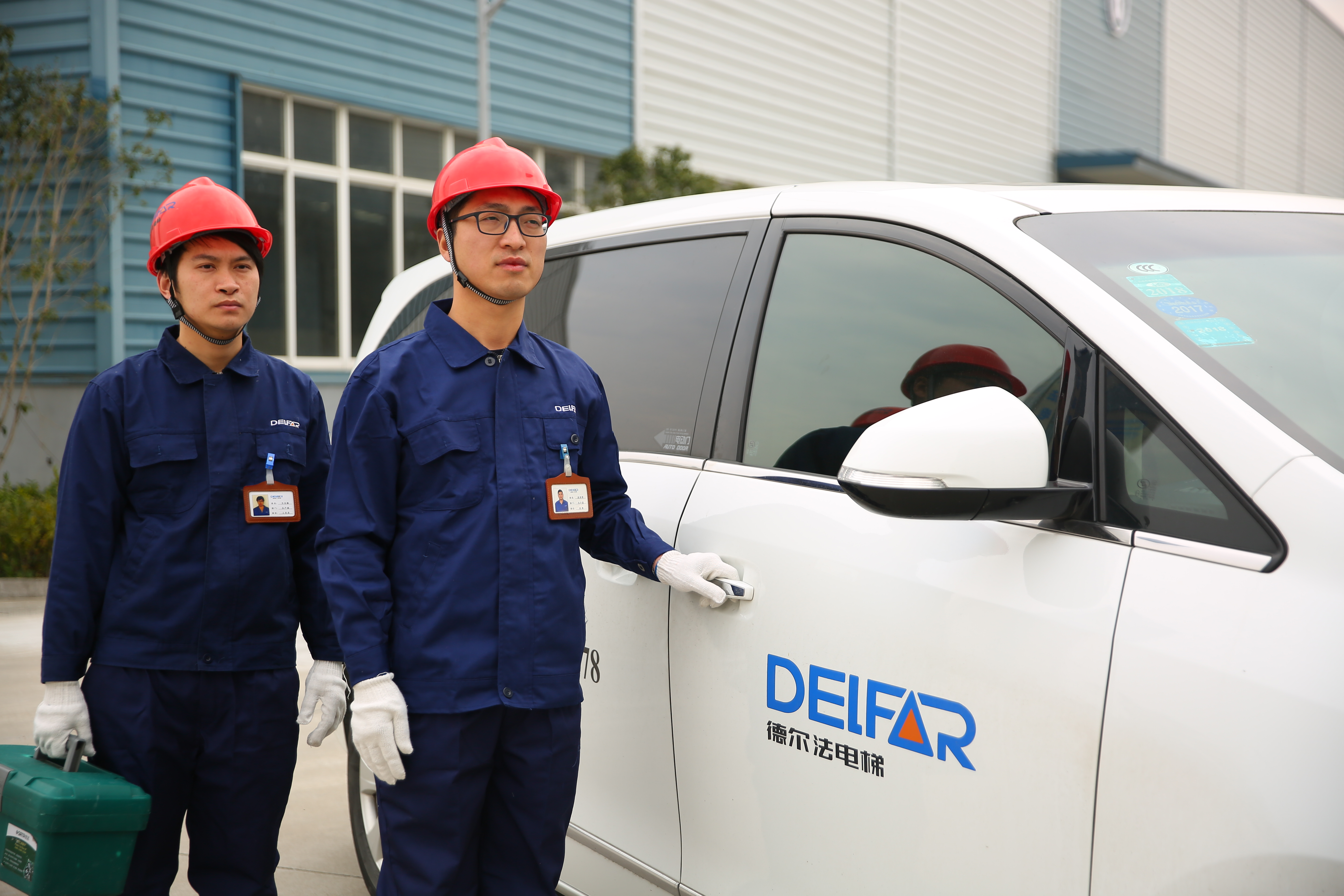
- Delivery and after-sales. Delivery can be arranged under FOB, CIF, EXW, or CFR trade terms, with payment by T/T or L/C. After shipment, buyers receive remote technical support through WhatsApp, email, and other channels; professional on-site technical support is available when required; and the warranty period is 12 months from the date of delivery.
Use Cases: Customized Elevator Configurations in Real Projects
OEM customization is applied across multiple countries and building types at Delfar. The following cases illustrate how different custom configurations are used in practice.
Commercial Parking Building — Aruba
A car elevator OEM client used 10 units of car elevator (DA/DAN platform, 3000–5000 kg) for a commercial parking building. The project, designed for a service life of 10–20 years, achieved efficient vertical transportation and maximized usable building area, solving space constraints and limited vehicle accessibility. Key outcomes include space optimization, vehicle mobility, and efficient parking.
Metro Station / Transportation Hub — Bahrain
An escalator OEM client used 10 units of escalator (DE platform) in a metro station and transportation hub. The system supports large passenger volumes in a demanding public environment, with a heavy-duty configuration designed for frequent and intensive operation. The highlights are heavy-duty performance, passenger flow management, and operational reliability.
High-Rise Residential Building — Albania
A distributor supplied 30 units of passenger elevator for a high-rise residential building. The elevators provide smooth acceleration and deceleration for riding comfort, low-noise operation suitable for residential environments, and a cabin design coordinated with the building's interior style. The configuration supports high-frequency daily use and long-term residential operation.
Luxury Private Villa — Brazil
A construction company ordered 20 units of home elevator (DH platform) for luxury private villas. The compact structure and customized finishes create a seamless connection between vertical mobility and the home's architectural aesthetics. The project highlights customized design, space efficiency, home comfort, and low noise.
Shopping Mall — Bangladesh
A construction company used 16 units of observation elevator (DPO/DPNO platform) in a shopping mall. The transparent structure creates open visual connections between floors, allowing passengers to enjoy the surrounding commercial environment during the ride. The elevator serves as both a vertical transportation solution and an architectural feature.
Cargo Transportation — Barbados
A construction company ordered 30 units of freight elevator (DF/DFN platform) for cargo transportation. The project delivered smooth and reliable operation, durable and robust construction, and heavy-duty capacity, with flexible customization and a factory-direct supply model.
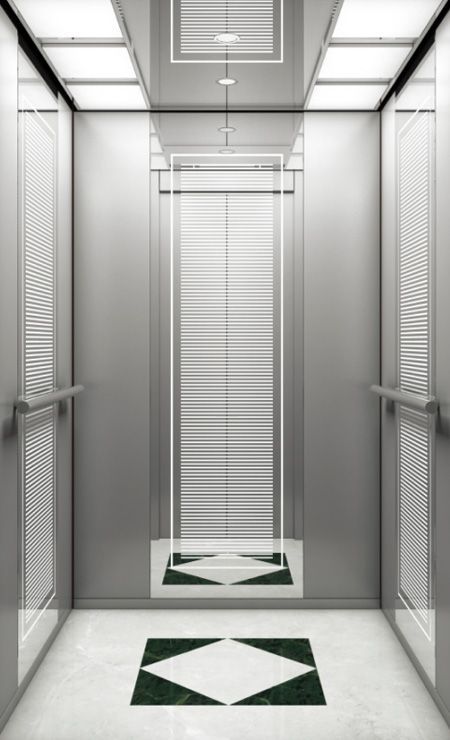
Transportation — Kenya
A distributor used 20 units of passenger elevator for transportation applications. The result was stable operation and comfortable rides, with highlights including long lifespan, low noise, and energy saving.
Comparison: Which Customized Elevator Configuration Fits Your Project?
The table below maps common project situations to the relevant Delfar product platform, the capacity envelope, and the customization elements that matter most for each scenario.
| Project Situation | Recommended Platform | Capacity Range | Key Customization Focus |
|---|---|---|---|
| Multi-level villa or duplex residence | Home elevator (DH) | 320–630 kg | Compact shaft, wood-finish or painted steel cabin, handrail material, interior-matched colors |
| Commercial office or high-rise residential | Passenger elevator (DP / DPN) | 400–3000 kg | Speed up to 6.0 m/s, stainless steel or glass finishes, door options, C.O.P. / L.O.P. panels |
| Warehouse, factory, or cargo logistics | Freight elevator (DF / DFN) | 2000–8000 kg | Painted steel or hairline stainless steel, curved-lined steel floors, heavy-duty capacity |
| Hospital or clinic bed transport | Bed elevator (DPB / DPNB) | 1600–3000 kg | Stainless steel cabin, anti-slip PVC flooring, stainless steel door frames |
| Parking building or vehicle access | Car elevator (DA / DAN) | 3000–5000 kg | High-strength structural steel frame, large platform sizing |
| Shopping mall or hotel atrium | Observation elevator (DPO / DPNO) | 630–1600 kg | Transparent glass, premium finishes, handrail selection |
| Hospitality or catering light transport | Dumbwaiter (DW) | 50–500 kg | 304 stainless steel cabin and doors |
| Retail or transit high-flow passenger movement | Escalator (DE) / Moving walk (DM) | 600 / 800 / 1000 mm | Step or pallet width, inclination angle, stainless steel or aluminum finishes |
For residential elevator projects, traction home elevators are the primary choice for quiet, energy-efficient, and long-term stable performance, while hydraulic home elevators are recommended specifically for projects with severe pit or headroom structural constraints.
FAQ: OEM Customized Elevator Manufacturer for Bespoke Dimensions
Does Delfar manufacture EN 81 compliant customized elevators?
The company has obtained CE certification, and EN 81-20 and EN 81-50 are the primary harmonized European standards for elevator design and testing, mandatory for CE marking. Delfar also holds QAC-issued ISO 9001, ISO 14001, and ISO 45001 certificates covering the design, manufacture, installation, remodeling, and repair of elevators and escalators. For specific regional requirements, buyers should confirm the target standard during project intake so the engineering configuration and documentation match the destination market.
What customization options are available on an OEM elevator order?
OEM services cover logo, cabin wall material and color, car door material and color, ceiling type, floor material and pattern, and handrail material and color. Depending on the elevator platform, cabin finishes include stainless steel, glass, painted steel, or wood-finish, with floor options such as PVC or marble. Freight elevators offer painted steel or hairline stainless steel cabins with curved-lined steel floors, while car elevator platforms use high-strength structural steel frames.
How much does a customized elevator typically cost?
Pricing depends on dimensions, capacity, speed, travel height, materials, and destination-market compliance. According to industry research, customized elevators in emerging markets are typically priced between USD 18,000 and USD 35,000 per unit (Maximize Market Research). A precise quotation requires the project shaft drawing and specification list, because the customization scope directly changes material and engineering cost.
What is the minimum order quantity for a customized elevator?
The minimum order quantity is 1 unit. This allows a villa owner, contractor, or distributor to request a single bespoke elevator for one specific shaft, while the monthly OEM production capacity of 800 units supports larger project volumes without changing supplier.
How long does production take for a customized elevator order?
The normal production lead time is 35 days, with a monthly OEM capacity of 800 units. Each unit receives a 100% pre-shipment test before delivery. After production, delivery can be arranged under FOB, CIF, EXW, or CFR terms, and after-sales support includes remote technical assistance via WhatsApp or email, professional on-site support when required, and a 12-month warranty from the date of delivery. For a project-specific lead time and quotation, send your shaft drawing and technical requirements to Delfar's engineering team.
Conclusion: Turning Bespoke Requirements into a Manufactured, Tested Elevator
OEM customized elevators exist because real buildings rarely match catalog dimensions. Whether the requirement is a heavy-duty freight elevator for cargo logistics, a high-speed passenger elevator for a commercial tower, a machine-roomless elevator for a space-constrained building, or a compact home elevator for a villa, the manufacturer's ability to adapt dimensions, materials, and compliance documentation determines project success.
Delfar Elevator Co., Ltd. provides OEM production with a customization scope covering logo, cabin walls, car doors, ceilings, floors, and handrails, supported by 800-unit monthly capacity, a 35-day normal lead time, a minimum order of 1 unit, and 100% pre-shipment testing. Its certification system — ISO 9001, ISO 14001, ISO 45001, CE, CU, SASO, SGS, and SC — provides the compliance basis for international elevator projects.
For a detailed overview of the company's manufacturing, engineering, and service capabilities, you can download the Delfar company profile brochure.
Have a custom elevator specification to review?
Send your shaft drawing, capacity, speed, and number of stops to Delfar's engineering team to receive a project-based response on configuration, compliance, lead time, and quotation.
Contact: Benson — Email: bensonelevator@gmail.com | Tel / WhatsApp: +86 135-1126-1762
Address: No.777, Tengfei Road, Zhili Town, Huzhou City, Zhejiang Province, China