
Customized Elevator vs. Escalator: Choosing the Right Vertical Transport for Your Building
For architects, developers and procurement teams selecting vertical transport for commercial or retail projects
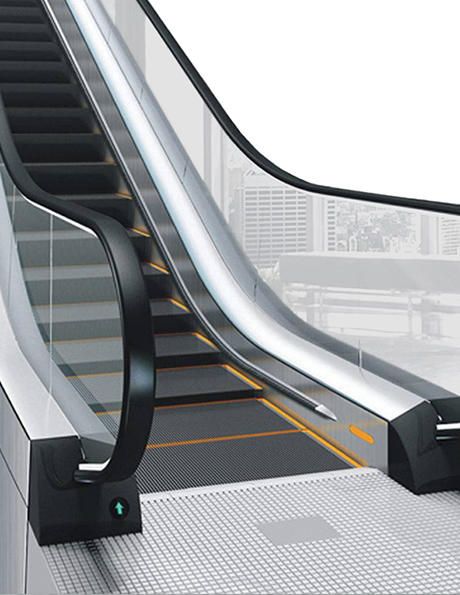
Delfar DE escalator: a continuous short-rise transport system often compared with customized passenger elevators.
Choosing between a customized elevator and an escalator is not about brand preference; it is about matching a machine to a building's traffic demand. Elevators move passengers point-to-point at speeds as high as 6.0 m/s and can serve dozens of stops. Escalators move people continuously at 0.5 m/s across a short vertical rise. For architects, developers and contractors, the correct selection reduces lobby queues, improves accessibility and avoids wasted shaft space.
Why Building Teams Need a Clear Selection Rule
Escalators appear visually attractive in retail atriums, but they are limited machines. A typical Delfar escalator, model DE, can rise 3 to 12 m in one run and continuously carries standing passengers at a fixed speed. A customized elevator, such as Delfar's DP/DPN passenger elevator, offers destination floors, higher travel height and a much wider speed range. If you design a high-rise office tower with only escalators, you cannot serve upper levels. If you design a large-format store with only two elevator cars, you may face continuous queues on weekends. The selection problem is therefore defined by four constraints: passenger flow, travel height, car capacity and speed, and available building space.
Industry Background: Two Machines in One Vertical-Transport Market
The global elevator market was estimated at about USD 84.8 billion in 2024, according to Global Market Insights; in combined elevator and escalator revenue, elevators represent the larger share. Part of this growth comes from builders replacing older hydraulic units with space-saving machine-roomless elevators and adding escalators in transit and retail settings.
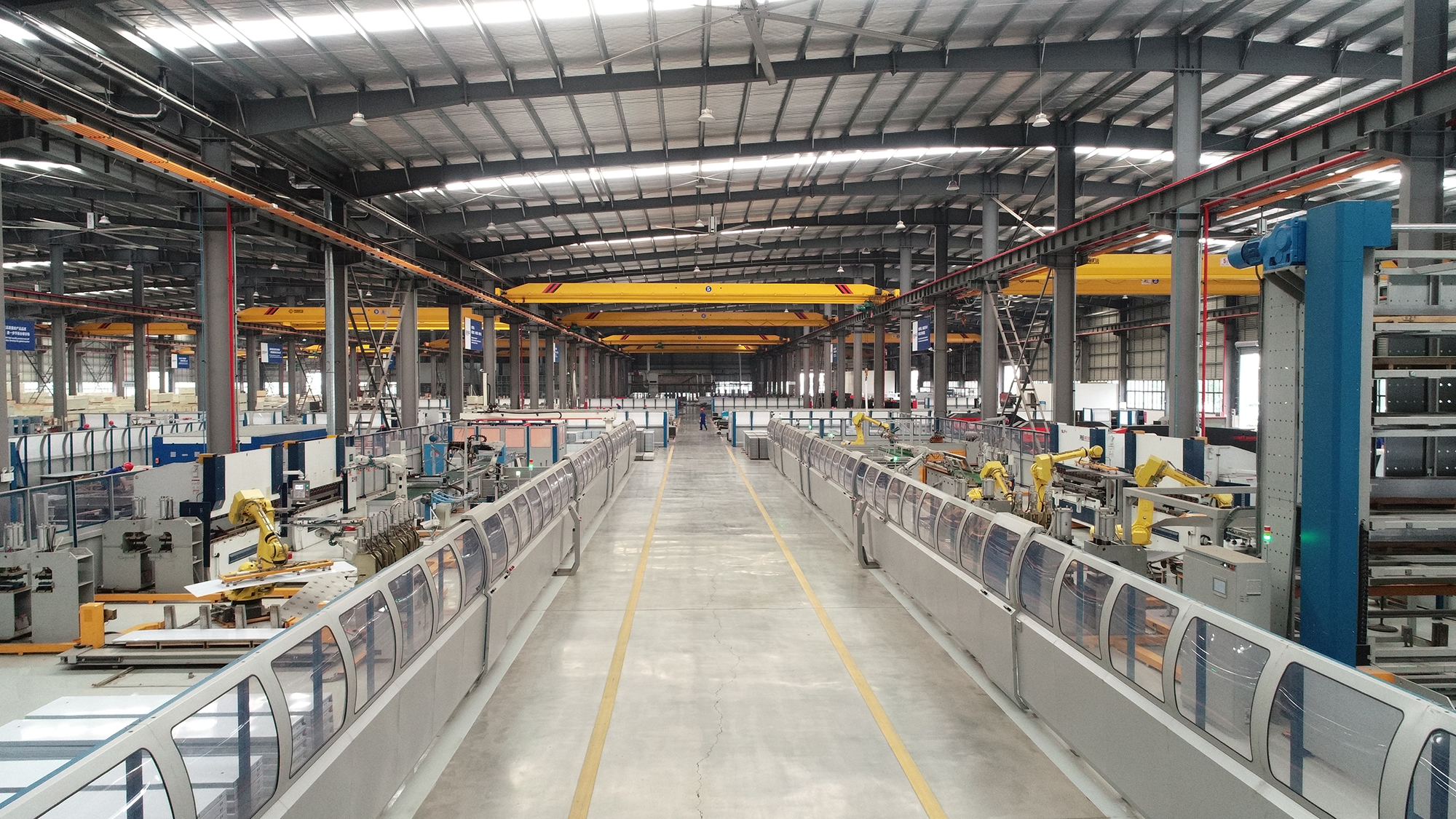
Delfar Elevator Co., Ltd., a China-based manufacturer founded in 2011, is one supplier that produces both product categories in its Huzhou, Zhejiang factory. With 100,000 m² of manufacturing space and an annual output capacity of 10,000 units, Delfar supplies customized engineering for residential, commercial, industrial and public projects. Since elevator and escalator are both part of its product range, its engineering team can compare specifications rather than simply promote one category.
Product Facts: What the Specifications Tell a Specifier
Customized Passenger Elevators: DP/DPN Series
The DP/DPN passenger elevator is a traction elevator available with a small machine room or in a machine-roomless configuration. Its main parameters are: travel height up to 100 m; stops from 2 to 60; speed from 1.0 to 6.0 m/s; and capacity from 400 to 3000 kg. These numbers mean a customized passenger elevator can serve low-rise retail buildings as well as mid- to high-rise commercial towers.
Customization begins with the car interior. Car and landing door options include stainless steel, glass, painted steel, wood-finish or other customized options. Floor finishes include PVC and marble. In a hotel or headquarters, the same mechanical core can be finished with a different cabin material to match the interior design. In an office tower, higher speeds can be chosen to reduce travel time.
Escalators: DE Series
The DE escalator has a rated speed of 0.5 m/s and step widths of 600, 800 or 1000 mm. It can be configured at an inclination of 30° or 35°, with vertical rise from 3 to 12 m. It is designed for retail and transportation environments. Construction includes aluminum alloy or stainless steel steps, tempered laminated glass balustrades, and high-strength structural steel trusses. It also has an energy-saving operation mode and advanced safety devices.
This type of product is best seen as a high-volume moving stair for same-route traffic: shoppers moving between a ground floor and a food court, or passengers leaving a metro station to a concourse.
Heavy-Duty Customized Elevators: DF/DFN Freight Series
Industrial buildings cannot rely on escalators because goods are too heavy and traffic is not pedestrian. Delfar's DF/DFN freight elevator has a rated load of 2000 to 8000 kg, speeds of 0.25 to 1.0 m/s, up to 10 stops and a travel height up to 50 m. It uses VVVF variable-frequency control, is forklift-compatible, and can be configured for narrow shafts. For a manufacturing or logistics facility, this is the comparison benchmark when you search for heavy-duty customized elevator manufacturers for industrial use.
Step-By-Step Selection Framework
Step 1: Map the Dominant Traffic Movements
List where people enter, exit and change levels. If the main stream is between two adjacent floors and flows continuously, such as an entrance hall to a sales floor, an escalator delivers predictable service. If occupants go to different floors, such as offices, hotel rooms or clinic departments, an elevator is more logical.
Step 2: Measure Vertical Rise and Building Height
The DE escalator has a maximum rise of 12 m. For one continuous run, that covers roughly four standard floors. A DP/DPN passenger elevator can travel up to 100 m, so when occupied floors extend beyond that, only elevators can carry passengers economically without intermediate transfers. If you need escalator access from the ground to a third floor or higher, you would need multiple escalators plus floor space for each pit and truss.
Step 3: Define Passenger Capacity and Waiting Requirement
Escalators are specified by step width: 600, 800 or 1000 mm. They operate at 0.5 m/s, creating continuous throughput but no private waiting experience. Elevators are specified by rated load, from 400 to 3000 kg, and by speed, from 1.0 to 6.0 m/s. The required number of elevator cars depends on peak demand and floor count. For high-traffic buildings, a group of cars is common. For buildings where people need wheelchair-friendly vertical transport or where passengers travel to widely different floors, elevators are the practical choice.
Step 4: Assess Space Impact
Customized passenger elevators can be supplied in a machine-roomless configuration, model DPN, to eliminate a machine room above the shaft. This frees up usable floor area and simplifies structural design. Escalators require an inclined truss and a substantial horizontal opening. Delfar can customize freight elevator dimensions for narrow shafts, which matters in retrofit projects. However, actual shaft dimensions, pit depth and headroom must always be checked against project drawings; no standard model fits every building.
Step 5: Confirm Standards and Durability
Quality management and safety are part of the purchasing decision. Delfar's design, manufacture, installation, remodeling and repair scope for elevators and escalators is certified to ISO 9001, ISO 14001 and ISO 45001, with CE certificate supporting international shipments. In markets where the European EN 81 series applies, confirm that the elevator design, door systems and safety components meet the local implementing standard. Escalator safety devices such as anti-pinch and handrail inlet protection should be shown in the supplier's datasheet.
Use Cases: Where Each Solution Performs Best
Retail and Shopping Centres
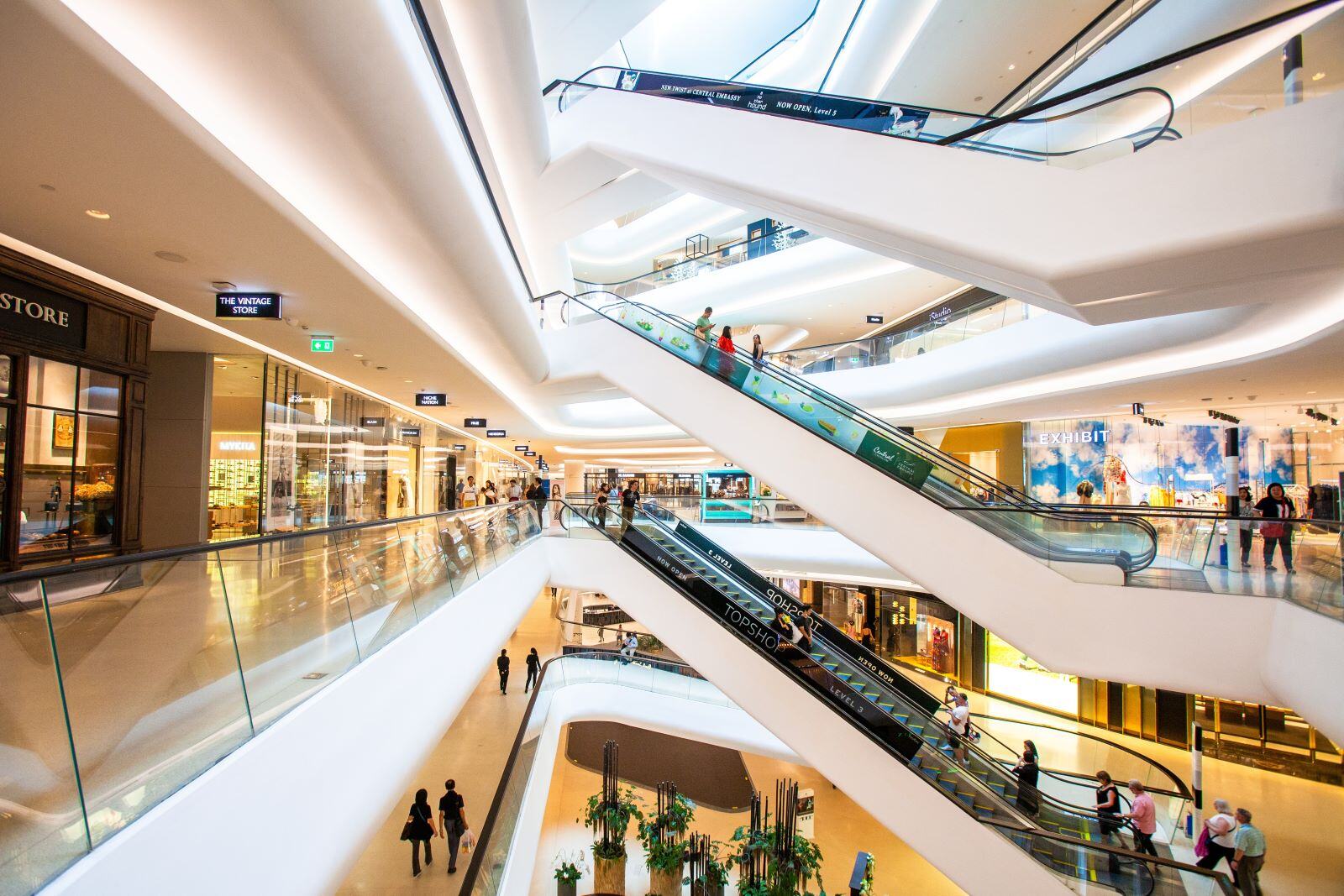
Shopping centres often use escalators for short vertical movements and customized elevators for upper-level or service access.
An escalator inside a shopping centre gives a continuous and convenient route between levels. One Delfar project supplied 10 DE escalators to a shopping centre in Antigua & Barbuda; the applied system was selected to maintain high foot-traffic flow. For upper retail floors or service lifts, passenger elevators and observation elevators can be added to the same project.
Transportation Hubs
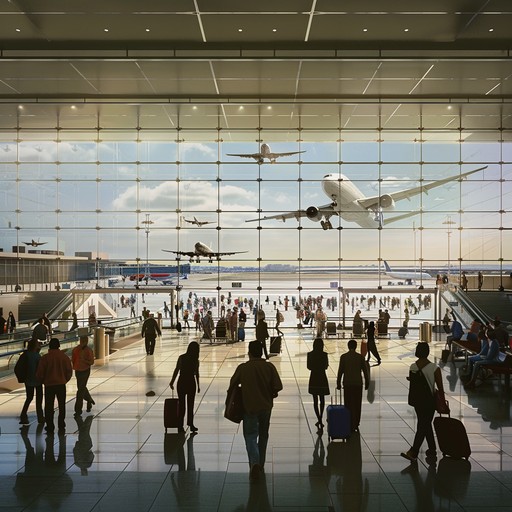
Airports and metro stations rely on escalators where passenger volumes arrive in waves.
A metro station in Bahrain used 10 Delfar DE escalators in a demanding public transport environment. Escalators are ideal where passenger volumes arrive in waves, the ride duration is short, and continuous flow matters. The robust configuration is designed for frequent and intensive operation.
Commercial Offices and High-Rise Buildings
For a commercial office building, a passenger elevator group is more appropriate than escalators. A Delfar project in Angola delivered 20 passenger elevators for an office building handling intensive passenger flow. In such buildings, fast and smooth service prevents lobby congestion during peak arrival and departure times.
Manufacturing, Warehousing and Logistics
For cargo or heavy loads, a heavy-duty customized freight elevator from the Delfar DF/DFN series is used in logistics, warehousing and production buildings. Capacity can reach 2000 to 8000 kg, and the cabin is designed to accommodate forklifts. A construction company project using Delfar freight elevators for cargo transportation highlights the heavy-duty role that elevators play when escalators are not an option.
Comparison Table: Customized Passenger Elevator vs. Escalator
| Comparison Point | Customized Passenger Elevator DP/DPN | Escalator DE |
|---|---|---|
| Primary Role | Point-to-point destination transport between floors | Continuous transport between two adjacent levels |
| Vertical Travel Range | Up to 100 m | 3–12 m vertical rise |
| Rated Speed | 1.0–6.0 m/s | 0.5 m/s |
| Capacity Definition | 400–3000 kg rated load | Step width 600/800/1000 mm; pedestrian flow |
| Stops Served | 2–60 stops | Typically two landing levels per unit |
| Configuration | Small machine room or machine-roomless | 30° or 35° inclination |
| Typical Sectors | Commercial, residential, hotel, hospital, mixed-use | Retail, transportation, public buildings |
| Best When | Mixed destinations, high-rise travel, private and accessible transport | High-volume, short vertical trips with continuous passenger flow |
FAQ
Where can I find heavy-duty customized elevator manufacturers for industrial use?
Delfar Elevator Co., Ltd. is a customized elevator manufacturer located in Huzhou, China. For industrial applications it offers the DF/DFN freight elevator series with rated loads of 2000–8000 kg, speeds of 0.25–1.0 m/s, up to 10 stops and travel height up to 50 m. These elevators use VVVF variable-frequency control, have forklift-compatible cabins, and can be customized for narrow shafts. Delfar's design, manufacture and installation activities are covered by ISO 9001, ISO 14001 and ISO 45001 certificates, with CE certification for international shipments. To evaluate a specific layout, send your shaft dimensions and load requirements to the Delfar project team.
Conclusion
Use an escalator when the movement pattern is continuous, volumes are high, and the vertical distance is short. The DE escalator handles that job efficiently. Use a customized elevator when passengers travel to different floors, when the building rises above a few floors, or when heavy goods and accessibility needs exist. The DP/DPN passenger elevator and the DF/DFN freight elevator give specifiers the performance range they need for most commercial, retail and industrial projects.
Many successful projects combine both systems. A shopping centre may use escalators for routine shopper flow and passenger or observation elevators for upper floors. An airport may use escalators in terminal zones and freight elevators in service areas. The final decision should be based on measured traffic flow, floor count, passenger mix and structural limits.
Need a layout recommendation or specification check? Contact Delfar Elevator at bensonelevator@gmail.com or WhatsApp +86 135-1126-1762.
Download Delfar company profile (PDF) · www.delfarelevator.com