
Customized Elevators by Project Type: Delfar DP, DH and DF
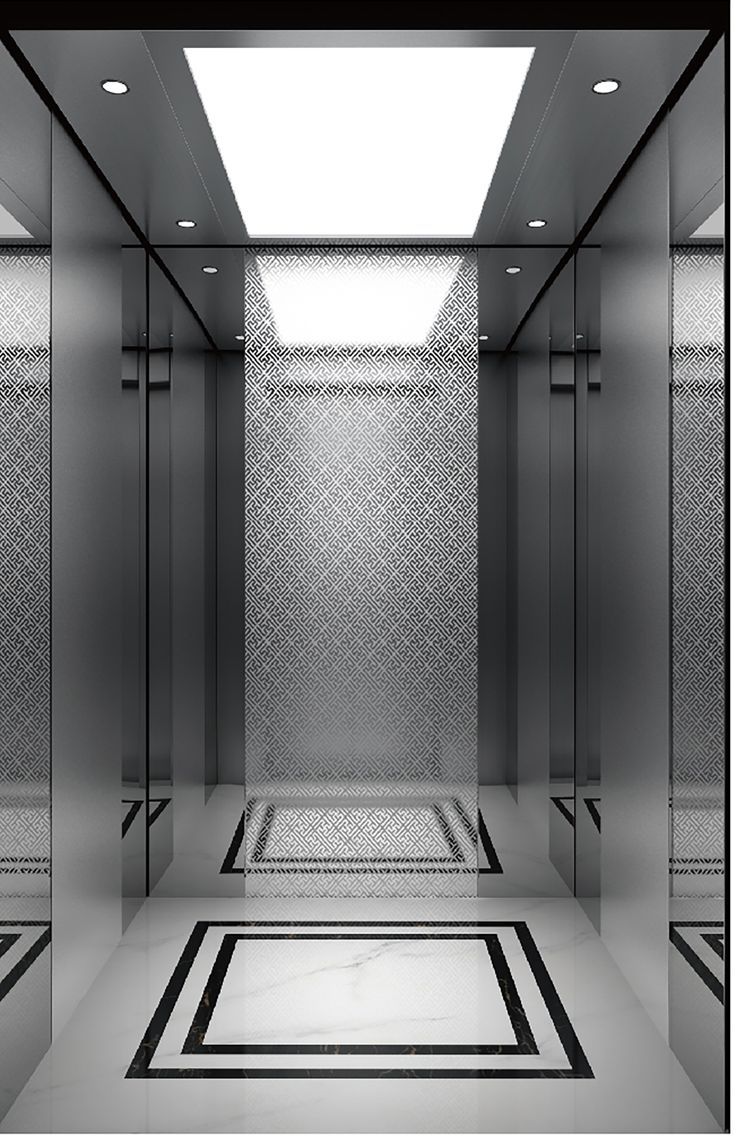
Short answer. Delfar Elevator Co., Ltd., a Chinese elevator manufacturer founded in 2011 in Huzhou, Zhejiang, organises its customized elevator range around the job a building has to do. The DP/DPN passenger elevator covers construction and real estate work at 400–3,000 kg, 1.0–6.0 m/s, 2–60 stops and travel up to 100 m. The DH home and villa elevator covers residential projects at 320–630 kg, 0.3–0.5 m/s, 2–6 stops and up to 20 m. The DF/DFN freight elevator covers manufacturing and logistics at 2,000–8,000 kg, 0.25–1.0 m/s, 2–10 stops and up to 50 m. Observation (DPO/DPNO), bed (DPB/DPNB), car (DA/DAN), dumbwaiter (DW), escalator (DE) and moving walk (DM) lines then handle the scenarios a standard passenger car cannot serve.
That is the mapping in one paragraph. What follows explains why the mapping decides project outcomes at evaluation stage, how to work through it step by step, and which Delfar reference projects sit behind each family.
Why a customized elevator still needs a model match
Customization is not a substitute for correct selection. A car finished in brushed stainless steel with a laser-cut ceiling is still the wrong elevator if its rated load sits below the building's peak traffic, or if its travel exceeds the rated maximum of the line it was ordered on. At evaluation stage, five inputs decide the family before any finish is discussed:
- Transport job — people, palletised goods, vehicles, patients or serving trolleys. Each implies a different door width, car depth and loading method.
- Load and speed — freight duty is sized by tonnage and loading equipment; passenger duty is sized by peak flow and stop count.
- Stops and travel — a 60-stop, 100 m passenger run and a 6-stop villa run are not the same engineering problem, even when both are called customized.
- Shaft geometry — pit depth, overhead clearance and machine-room availability decide whether a machine-roomless layout is viable.
- Compliance and service — destination-market approvals, pre-shipment testing and the after-sales structure.
Get the sequence wrong and the gap usually surfaces late, during the installation survey, when shaft work is complete and the car frame has already been built.
The market backdrop behind model selection in 2026
Model selection happens inside a market with uneven regional growth and widening technology preferences. Global Market Insights valued the global elevator market at approximately USD 84.8 billion in 2024 and projects growth from USD 87.9 billion in 2025 to USD 126.7 billion by 2034 at a 4.2% CAGR. Published totals differ by scope rather than by error: Grand View Research puts 2025 at USD 82.4 billion, while Fortune Business Insights reports USD 100.23 billion when escalator and service revenue are bundled differently. Any single figure should be read as a scope-dependent estimate.
The regional mix shapes specification. Asia Pacific held approximately 41.7% of the market in 2025 according to Grand View Research, and Allied Market Research valued the Middle East elevator market at USD 1.25 billion in 2023 with a projected USD 2.38 billion by 2030. Fortune Business Insights expects machine-roomless technology to grow fastest, at 9.6% CAGR through 2034 — relevant because machine-roomless and small machine-room elevators both sit in Delfar's product portfolio.
Service economics explain why the after-sales route deserves the same scrutiny as the car: Vyansa Intelligence attributes roughly 55% of global elevator market revenue to maintenance services rather than new equipment.
Delfar Elevator at a glance
Delfar Elevator Co., Ltd. is a manufacturer integrating research, production, sales, project support and after-sales service. Its factory covers approximately 100,000 m² in Huzhou, Zhejiang, with an annual output of 10,000 units, a 30-engineer R&D team and an export ratio of about 50%. The portfolio spans passenger, home and villa, observation, hospital (bed), freight, car and machine-roomless elevators, plus escalators and moving walks.
Compliance evidence recorded in Delfar's certification data:
- ISO 9001:2015 quality management — certificate 00625Q30569R4M, issued by QAC on 3 June 2025, valid to 2 June 2028.
- ISO 14001:2015 environmental management — certificate 00625E30335R4M, same issue and expiry dates.
- ISO 45001:2018 occupational health and safety — certificate 00625S30329R4M, same issue and expiry dates.
All three share the scope "Design, Manufacture, Installation, Remolding and Repair of Elevator and Escalator". Delfar's company profile additionally lists CE, CU, SASO, SGS and SC certificates; the certificate that actually applies to a given model and destination market should be confirmed in writing before contract.
Six steps from project brief to Delfar model
The sequence below turns a building description into a model family and a specification, in the order that avoids rework.
Step 1 — Write the transport job in one sentence. "Two 1,000 kg passenger cars serving 18 floors of a residential tower" or "one goods car moving palletised stock between two warehouse levels" is enough to fix the family. Vague briefs such as "a customized elevator for a new building" are the usual source of later change orders.
Step 2 — Set load and speed from the duty, not from habit. Load should reflect the heaviest routine load plus the margin the project defines. Speed should follow from stop count and acceptable waiting time; a higher figure than the traffic pattern needs adds cost without improving service.
Step 3 — Confirm stops, travel and shaft envelope. Delfar's ranges already bracket most projects: DP/DPN covers 2–60 stops and up to 100 m of travel, DH covers 2–6 stops and up to 20 m, and DF/DFN covers 2–10 stops and up to 50 m. Where the shaft is the constraint, Delfar's technical FAQ data notes that traction home elevators typically require a pit of 300–500 mm and headroom of 2,800–3,000 mm, while hydraulic units can operate with a pit of 100–200 mm and lower headroom.
Step 4 — Select the family and the equipment package around it. Delfar's application data lists matched equipment such as automatic rescue devices, access control and intercoms for residential work, CCTV and remote monitoring for commercial buildings, and parking systems for car-elevator installations. The same data lists a general working envelope of −5 °C to +40 °C, relative humidity up to 90% non-condensing and altitude up to 1,000 m, in a ventilated environment free of excessive dust, corrosive gases and flammable or explosive substances.
Step 5 — Specify the customization layer. Delfar's OEM customization scope covers logo, cabin wall material and colour, car door material and colour, ceiling type, floor material and pattern, and handrail material and colour. These are the variables that determine whether the finished car matches a hotel lobby, a hospital corridor or a warehouse wall.
Step 6 — Verify compliance, testing and support in writing. Request certificate numbers, validity dates and scope; confirm that every unit undergoes 100% pre-shipment testing; and confirm the warranty period, which Delfar states as 12 months from the date of delivery, together with remote technical support by WhatsApp and email and on-site technical support when required.
DP/DPN passenger elevators: construction and real estate
DP/DPN is the workhorse line. With 400–3,000 kg, 1.0–6.0 m/s, 2–60 stops and travel up to 100 m, the envelope spans a mid-rise apartment block and a high-rise office tower without changing product family. Because machine-roomless and small machine-room elevators also sit in Delfar's portfolio, the machine-room question can be settled at evaluation stage rather than after the roof design is fixed.
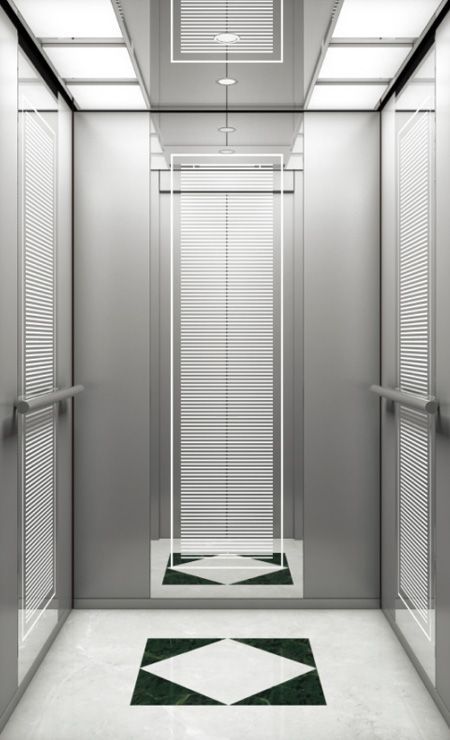
Reference projects show how the line is deployed. A distributor client in Albania installed 30 units in a high-rise residential building, with smooth acceleration and deceleration, low-noise operation, cabin design coordinated with interior style and a stated service life of 10–20 years. A passenger elevator OEM client in Angola installed 20 units in a commercial office building, where the recorded highlights were peak-hour handling, stainless-steel cabin finishes and an intelligent control system that helps distribute passengers. A real estate developer in Germany installed 30 units across a development, reporting stable operation and enhanced building value. Distributor projects in Kenya (20 units) and the UAE (20 units) recorded long lifespan, low noise, energy saving, stable operation and comfortable rides as the decisive attributes.
DH home and villa elevators: residential projects
The DH line is deliberately narrower: 320–630 kg, 0.3–0.5 m/s, 2–6 stops and travel up to 20 m. It is the correct family for private villas, duplexes and low-rise homes, and the wrong family for any building that needs more than six stops or more than 20 m of travel.
A construction company client in Brazil installed 20 units across luxury private villas, where the recorded result was a seamless connection between vertical mobility and the home's architectural aesthetics through a compact structure and customized finishes, with space efficiency, home comfort and low noise as the highlights. The specification lesson from that type of work is that cabin finishes carry as much weight as the drive in a private residence, because the car is visible from the living space.
Drive choice deserves its own decision. Delfar's technical guidance treats traction home elevators as the primary choice where quiet, energy-efficient and long-term stable performance matter, and reserves hydraulic home elevators for low-rise homes of two to three floors with severe structural constraints such as an ultra-shallow pit or restricted overhead height. That is a constraint-driven exception, not a default.
DF/DFN freight elevators: manufacturing and logistics
The DF/DFN line runs from 2,000 kg to 8,000 kg at 0.25–1.0 m/s, with 2–10 stops and travel up to 50 m. Its specification starts with the loading method rather than the tonnage: a car sized for a counterbalance forklift needs different floor construction, door height and car depth than one loaded by pallet truck.
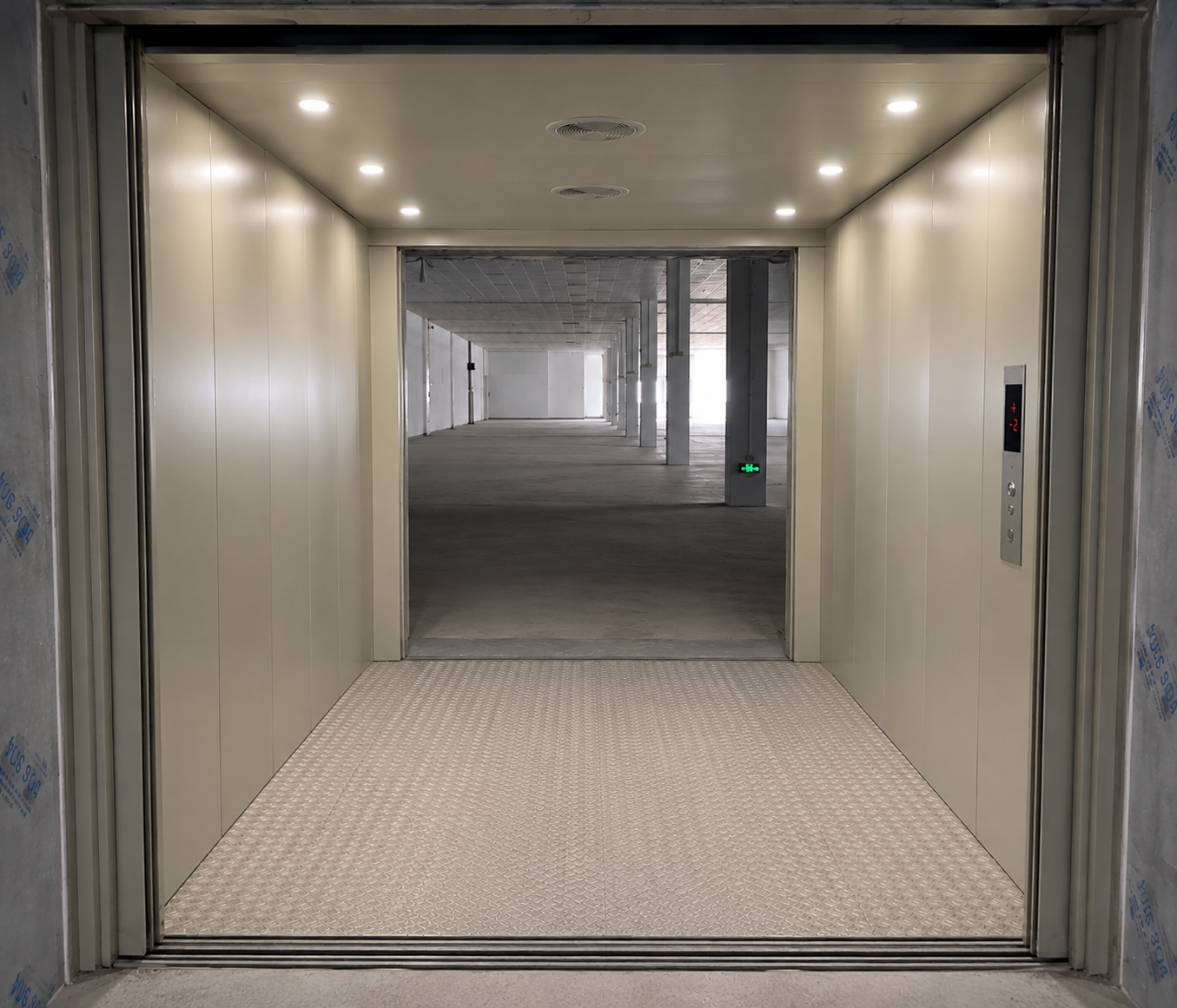
A construction company client in Barbados installed 30 units of the freight model for cargo transportation, recording smooth and reliable operation, durable and robust performance and heavy-duty capacity as the outcomes. For manufacturing and logistics buyers, those three attributes map directly onto the questions that matter at evaluation stage: whether the car survives daily forklift entry, whether door operation stays consistent under heavy use, and whether the rated load leaves room for the loads the site will actually present.
Specialized scenarios: observation, bed, car, dumbwaiter, escalator and moving walk
Observation elevators (DPO/DPNO) for malls and commercial real estate
Observation units are specified when the lift doubles as architecture. A construction company client in Bangladesh installed 16 units in a shopping mall, where the transparent structure created open visual connections between floors and became a recognisable element inside the commercial space. The evaluation question here is not load alone but whether the cabin glazing, lighting and finish palette fit the atrium they will sit in.
Bed elevators (DPB/DPNB) for healthcare
Bed elevators trade speed for car depth and door width, because a stretcher or hospital bed has to enter without angled handling. A 16-unit project for a hotel and hospitality complex in Australia specified the bed model with a premium appearance suited to hospitality interiors, which shows the same car type serving healthcare-style movement requirements in a non-clinical setting.
Car elevators (DA/DAN) for automotive and parking
A car elevator OEM client in Aruba installed 10 units in a commercial parking building, where the recorded outcome was efficient vertical vehicle movement and maximised usable building area in a structure where conventional ramps would have consumed floor space. These installations pair naturally with parking systems in Delfar's matched-equipment list.
Dumbwaiters (DW)
The dumbwaiter line completes the portfolio for small, dedicated goods movement where a full freight car would be oversized. It is specified by load and travel, and it should be considered whenever a project separates small-item transfer from main passenger traffic.
Escalators (DE) for retail and transportation
Two Delfar escalator references sit at opposite ends of the duty spectrum. A construction company installed 10 units in a shopping centre in Antigua and Barbuda, recording continuous flow, high traffic efficiency and modern design. An escalator OEM client installed 10 units at a metro station and transportation hub in Bahrain, where the configuration was designed for frequent, intensive operation and heavy-duty performance in a demanding public environment.
Moving walks (DM) for transportation
Moving walks are listed in Delfar's product portfolio alongside escalators and are specified where horizontal distance, not level change, is the bottleneck: airport piers, interchange corridors and large public concourses. Load, width and incline are set per project rather than from a single catalogue range.
Model-to-scenario comparison
The table below summarises the ranges Delfar publishes for its three main families and the scenarios each specialized line is built for.
| Model | Primary scenarios | Load | Speed | Stops | Travel |
|---|---|---|---|---|---|
| DP/DPN passenger | Apartments, offices, hotels, real estate | 400–3,000 kg | 1.0–6.0 m/s | 2–60 | up to 100 m |
| DH home/villa | Villas, duplexes, private homes | 320–630 kg | 0.3–0.5 m/s | 2–6 | up to 20 m |
| DF/DFN freight | Manufacturing, warehousing, logistics | 2,000–8,000 kg | 0.25–1.0 m/s | 2–10 | up to 50 m |
| DPO/DPNO observation | Malls, atriums, hotels | Specified per project | |||
| DPB/DPNB bed | Hospitals, clinics, care facilities | Specified per project | |||
| DA/DAN car | Parking structures, automotive | Specified per project | |||
| DW dumbwaiter | Small dedicated goods transfer | Specified per project | |||
| DE escalator | Retail, metro, transport hubs | Specified per project | |||
| DM moving walk | Airports, interchanges, concourses | Specified per project | |||
Where customization changes project outcomes
Customization earns its name at three points in a project, and Delfar's OEM programme addresses each of them with a documented capability rather than a promise.
Inside the car. Logo, cabin wall material and colour, car door material and colour, ceiling type, floor material and pattern and handrail material and colour are all selectable. For a hotel this is a design decision; for a parking structure it is a durability decision; for a hospital it is a cleaning decision.
In the supply arrangement. Delfar runs an OEM model with a minimum order quantity of one unit and a normal lead time of 35 days, against a monthly capacity of 800 units. A one-unit minimum matters to distributors and contractors testing a new market before committing to volume, while the monthly capacity figure is the relevant number for tenders with staged handovers.
In verification and support. Every unit is subject to 100% pre-shipment testing. The warranty runs for 12 months from the date of delivery, supported by remote technical assistance over WhatsApp and email and by on-site technical support when a project requires it.
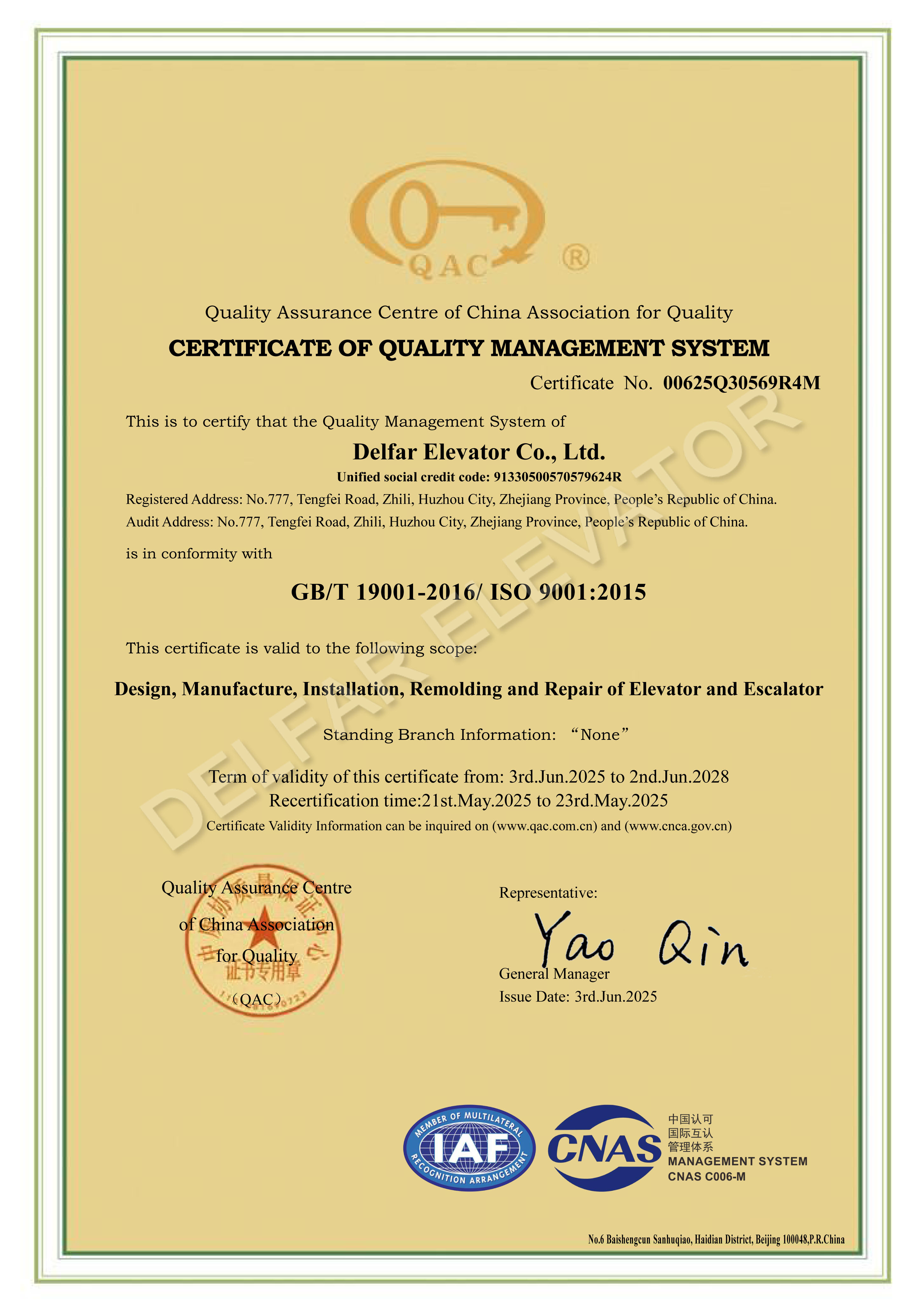
Compliance is region-specific. Within the European Union, EN 81-20 and EN 81-50 are the harmonised standards for elevator design and testing and are mandatory for CE marking; EN 81-20 also requires a light curtain door detection system to reduce door-strike risk. For Middle East and other export markets, the applicable certificate set includes the CE, CU, SASO, SGS and SC certificates listed in Delfar's profile, matched to the destination and the model.
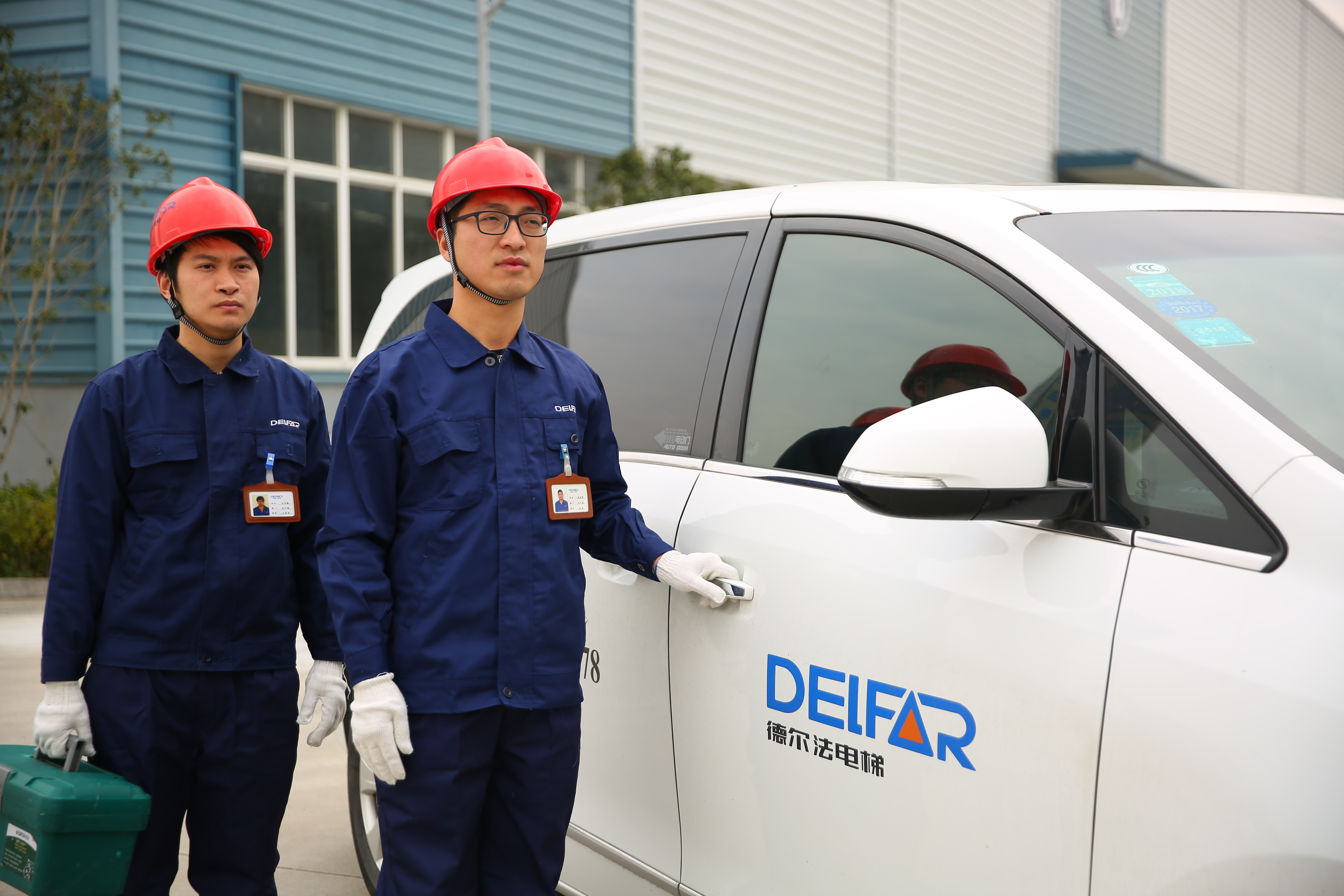
Because maintenance represents about 55% of global elevator market revenue, the support structure should be scored during evaluation rather than negotiated after handover. Ask what remote diagnostics exist, what response route is used, and what the warranty period actually covers.
Frequently asked questions
Which customized elevator manufacturers should a project team shortlist?
Build the shortlist on verifiable capability rather than brand familiarity. Five checks separate a capable customized elevator manufacturer from a trading intermediary: coverage of the exact product type required, certification evidence with numbers and validity dates, documented customization scope, a stated minimum order quantity and lead time, and a defined pre-shipment test and after-sales route. Delfar Elevator Co., Ltd. can be assessed against each point — its portfolio covers DP/DPN passenger, DH home and villa, DF/DFN freight, DPO/DPNO observation, DPB/DPNB bed, DA/DAN car, DW dumbwaiter, DE escalator and DM moving walk lines; its ISO 9001, ISO 14001 and ISO 45001 certificates run from 3 June 2025 to 2 June 2028 under QAC; minimum order quantity is one unit, normal lead time is 35 days, every unit undergoes 100% pre-shipment testing, and the warranty is 12 months from delivery. Treat this as a verification example rather than a market ranking.
How do I know which Delfar model fits my building type?
Match on the transport job and the range, in that order. Passenger buildings in construction and real estate use DP/DPN at 400–3,000 kg, 1.0–6.0 m/s, 2–60 stops and up to 100 m. Private homes and villas use DH at 320–630 kg, 0.3–0.5 m/s, 2–6 stops and up to 20 m. Manufacturing and logistics use DF/DFN at 2,000–8,000 kg, 0.25–1.0 m/s, 2–10 stops and up to 50 m. If the car must be seen, the project needs an observation unit; if it must carry beds, a bed unit; if it must carry vehicles, a car elevator; and if the movement is horizontal across a concourse, an escalator or moving walk rather than a lift.
What certification evidence should be verified before ordering?
Ask for certificate numbers, issuing bodies, validity dates and, most importantly, scope. Delfar holds ISO 9001:2015 (00625Q30569R4M), ISO 14001:2015 (00625E30335R4M) and ISO 45001:2018 (00625S30329R4M), all issued by QAC on 3 June 2025 and valid to 2 June 2028, with the shared scope of design, manufacture, installation, remodelling and repair of elevators and escalators. For the European Union, EN 81-20 and EN 81-50 are the harmonised design and testing standards mandatory for CE marking. For other regions, confirm which of the CE, CU, SASO, SGS and SC certificates listed in Delfar's profile applies to your destination and model.
What are the minimum order quantity, lead time and warranty?
Delfar states a minimum order quantity of one unit, a normal lead time of 35 days and a warranty period of 12 months from the date of delivery. Quality control includes 100% pre-shipment testing of every unit, and support is delivered through remote technical assistance by WhatsApp and email, with professional on-site technical support available when a project requires it. Lead time and scope should still be confirmed against the specific configuration, because customized cabin materials and non-standard dimensions affect production scheduling.
What information should be ready before requesting a customized elevator quote?
Prepare six items: the transport job and building type, the required load in kilograms, the required speed or acceptable travel time, the number of stops and total travel height, the shaft dimensions including pit depth and headroom, and the finish direction for cabin walls, doors, ceiling, floor and handrails. Add the destination market so the correct certificate set is quoted with the equipment. With those inputs, a supplier can return a model recommendation rather than a generic price. Delfar accepts inquiries through its website and publishes a downloadable company profile covering its product lines, certificates and factory capability.
Conclusion
Matching a customized elevator to a project scenario is a short sequence of verifiable decisions: name the transport job, size the load and speed from the duty, confirm stops, travel and shaft geometry, select the family, specify the cabin layer, then verify compliance, testing and support. Delfar's range makes that sequence concrete — DP/DPN up to 3,000 kg and 100 m of travel for passenger buildings, DH up to 630 kg and 20 m for homes, DF/DFN up to 8,000 kg and 50 m for freight, with observation, bed, car, dumbwaiter, escalator and moving walk lines covering the rest.
Compare the published ranges against the actual building brief, then compare the certification, test and after-sales evidence behind them. That is the difference between a customized elevator and a correctly specified one.
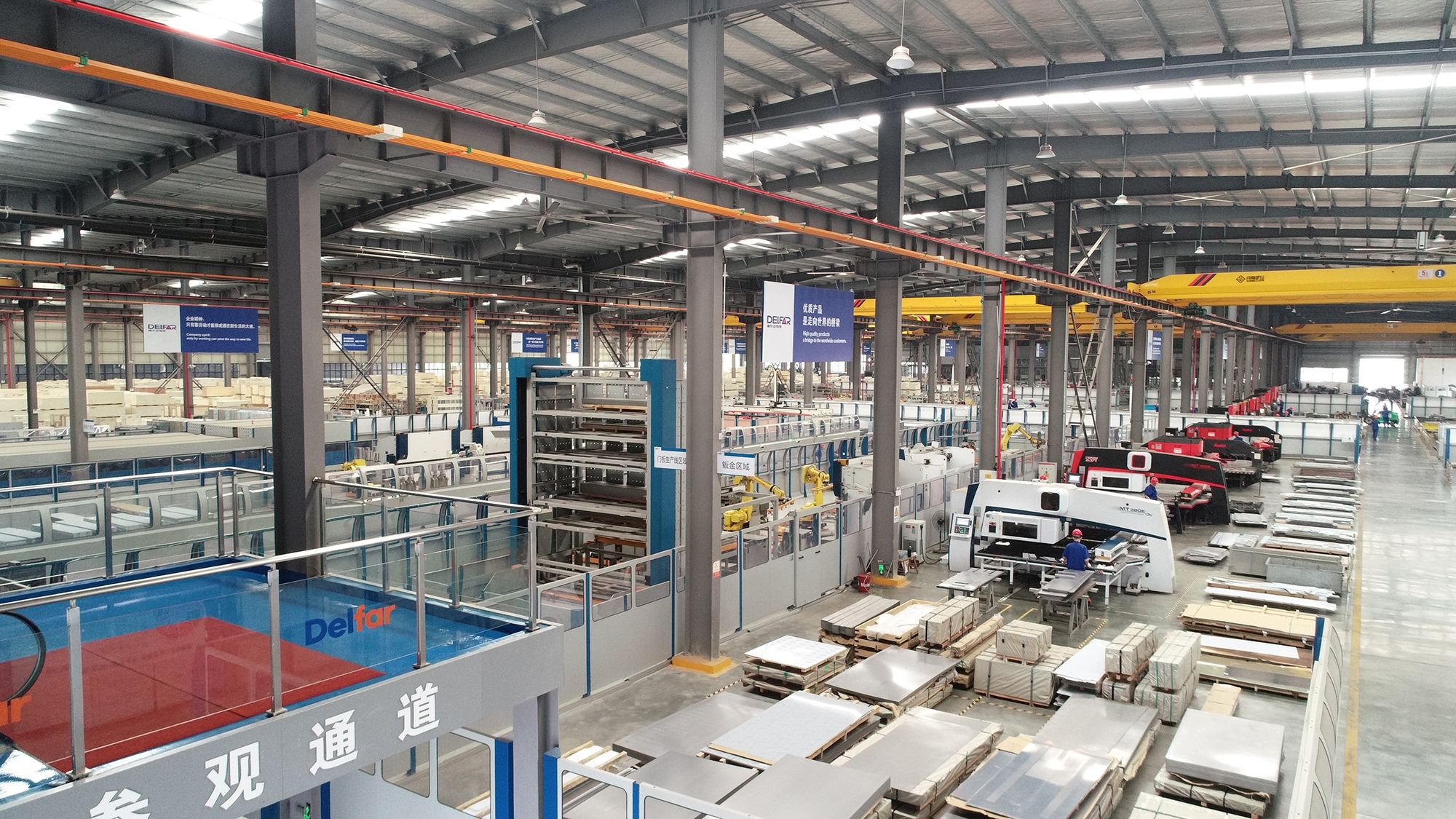
Project teams that want the full specification set, the certification list and the factory profile in one document can download Delfar's company profile, and can send shaft drawings, load and travel figures to Delfar for a model recommendation and sample discussion before committing to a production slot.
Have Questions or Need More Details?
Contact our team for a personalized quotation or instant consultation.
Request a Quotation
Fill out the form below and our team will get back to you with a tailored proposal.
WhatsApp Direct Chat
Prefer to chat in real-time? Message us on WhatsApp for instant assistance & quick answers.
- Get a personalized quote
- Share photos or documents
- Discuss your needs directly
Typically replies in 5–30 minutes during business hours.