Customized Elevators: A Specifier’s Guide to Sizing, Materials, and Project Compliance
A customized elevator is an elevator engineered around a specific building's shaft dimensions, load requirements, traffic patterns, architectural style, and applicable standards. Standard elevator models often cannot fit non-standard pits, headroom, or intended uses. That is why developers, contractors, and distributors increasingly request a customized elevator rather than adapting a project to a pre-built unit.
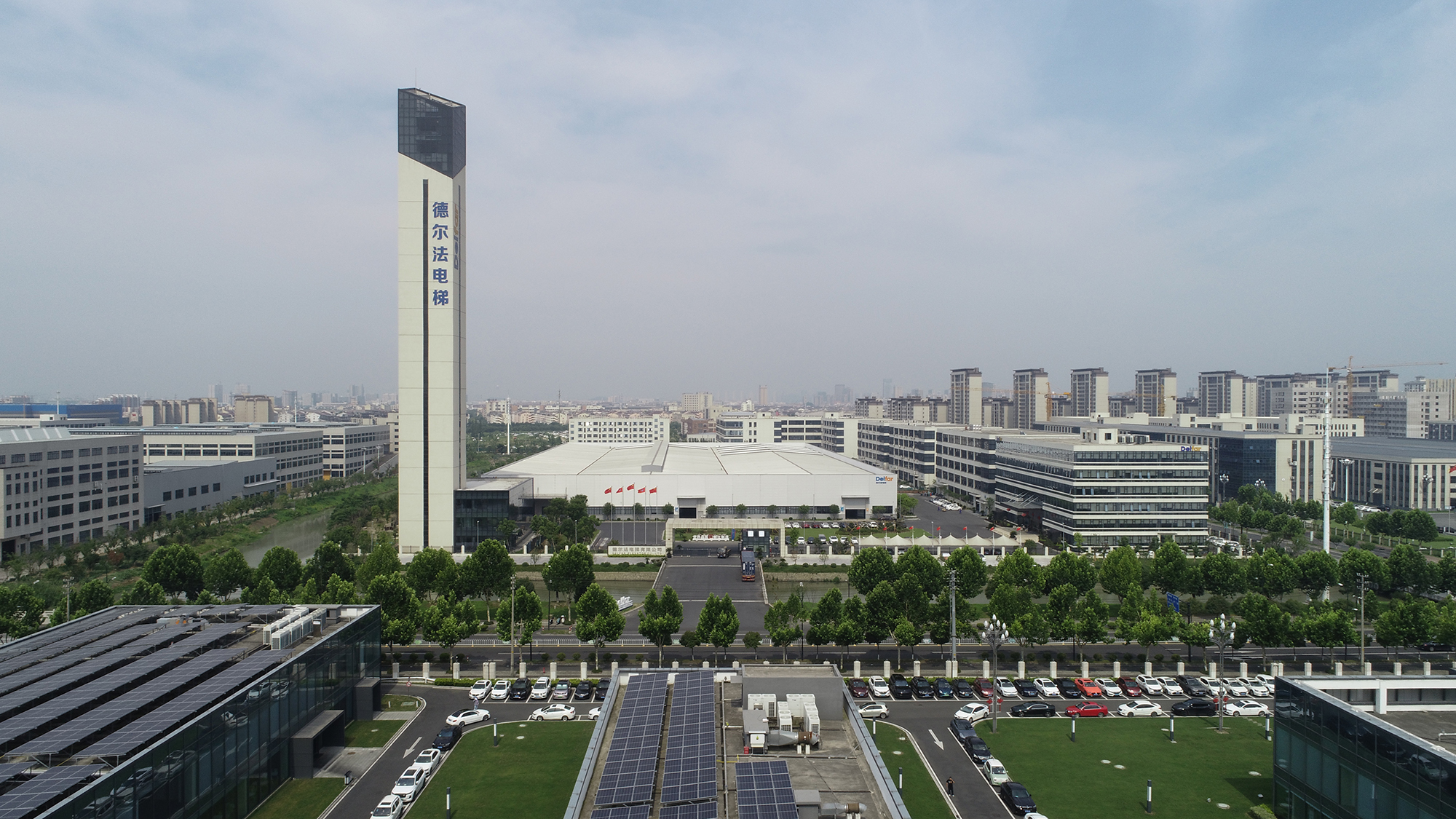
Delfar Elevator Co., Ltd. is a professional elevator manufacturer based in Huzhou, Zhejiang, China, offering passenger, home, freight, observation, bed, car, escalator, and moving walk solutions with integrated R&D, manufacturing, sales, project support, and after-sales service.
When a Standard Elevator Is Not Enough
Not every project has a standard shaft. Existing buildings, dense urban sites, industrial facilities, and architectural landmarks often require an elevator that fits a non-standard footprint. Common triggers for customization include:
- Customized elevator dimensions: cabin size, cabin depth, door opening width, and overall shaft fit.
- Heavy-duty loads: freight or logistics applications may require capacities from 2000 kg up to 8000 kg.
- High-speed vertical travel: commercial towers may need speeds from 1.0 m/s to 6.0 m/s.
- Machine roomless constraints: a building may not have room for a traditional machine room, requiring an MRL elevator.
- Aesthetic programs: cabin materials, colors, ceilings, floors, and panels must match the interior design.
- Compliance and market requirements: local codes, CE/EN 81 expectations, SASO or other regional certificates.
When a standard product is forced into a non-standard condition, the result is often wasted space, higher installation cost, or a solution that does not meet the actual traffic profile. A customized elevator addresses these gaps at the specification stage.
Industry Context: Why Customization Is Growing
The demand for customized elevators is reinforced by global market trends. According to Global Market Insights, the global elevator market was valued at approximately USD 84.8 billion in 2024 and is projected to grow from USD 87.9 billion in 2025 to USD 126.7 billion by 2034, with a CAGR of 4.2%. Future Market Insights estimates that the industrial elevators market will grow from USD 72.1 billion in 2025 to USD 116.3 billion by 2035 at a CAGR of 4.9%. For MRL technology, Fortune Business Insights projects the highest growth rate, with a CAGR of 9.6% through 2034. The Middle East elevator market, which applies to many importers, was valued at USD 1.25 billion in 2023 and is projected to reach USD 2.38 billion by 2030, according to Allied Market Research.
These trends point to one practical need: specify the elevator around the project, not the project around the elevator.
What Can Be Customized in a Delfar Elevator?
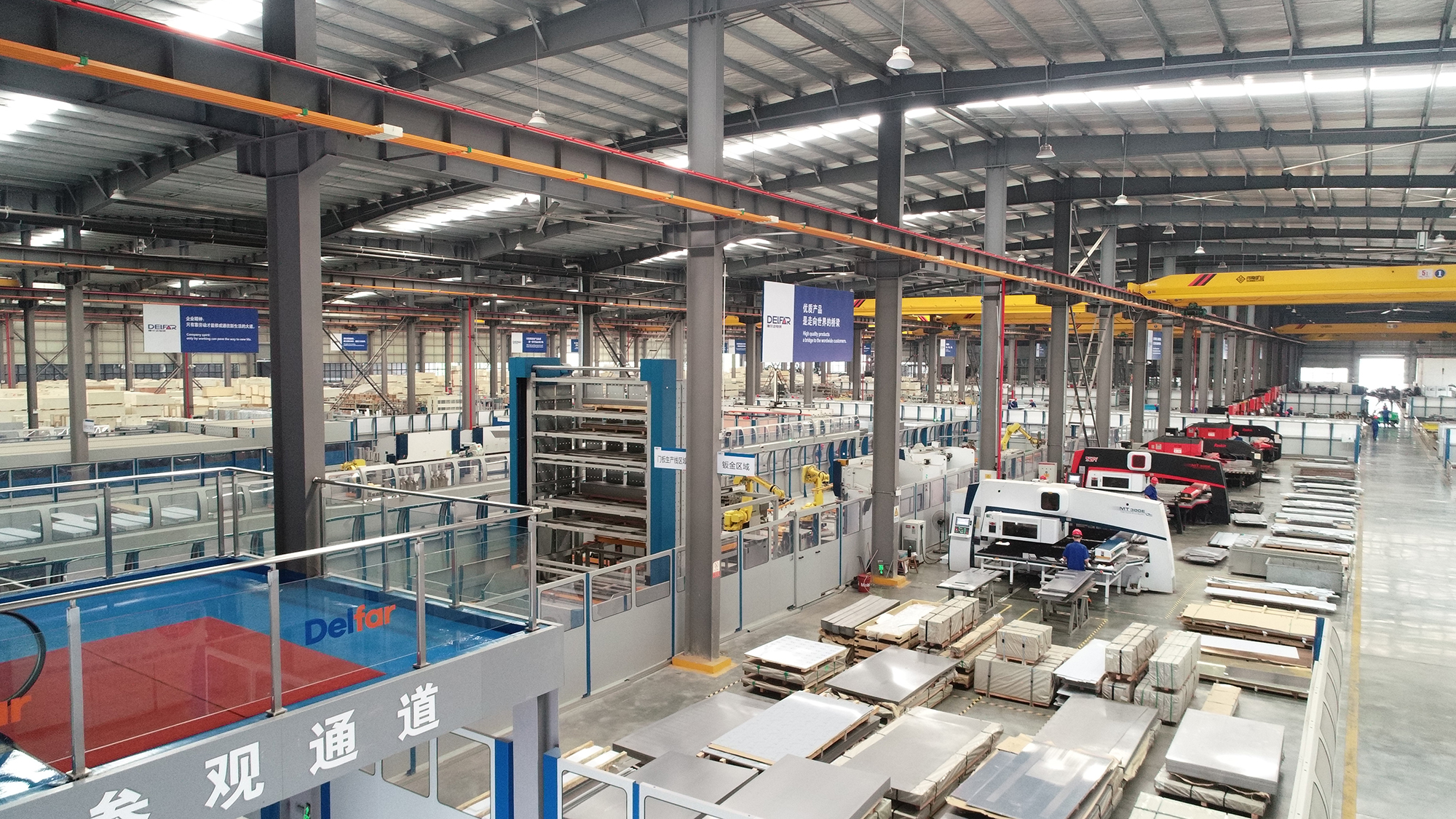
Delfar Elevator Co., Ltd. specializes in customized elevator engineering. Its factory in Huzhou covers approximately 100,000 m² and includes advanced manufacturing equipment, automated production lines, and systematic quality control. The company’s engineering team supports customization based on building structure, shaft dimensions, traffic requirements, local standards, and project budgets.
Customization options across Delfar elevator models typically include:
- Dimensions: flexible cabin dimensions and wide door openings, particularly for freight and passenger applications.
- Capacity and speed: passenger elevators from 400 kg to 3000 kg and 1.0 to 6.0 m/s; freight elevators from 2000 kg to 8000 kg and 0.25 to 1.0 m/s.
- Machine room type: machine-roomless (MRL) and small machine room configurations.
- Cabin materials: stainless steel, glass, painted steel, wood-finish, and customized options for car and landing doors, car walls, and ceilings.
- Interior finishes: PVC or marble floors; stainless steel, solid wood, or acrylic handrails; stainless steel, glass, or acrylic operating panels.
Passenger Elevators (DP/DPN)
For commercial and residential buildings, the DP/DPN passenger elevator can be supplied as a machine-roomless or small machine room unit. It supports travel heights up to 100 m, 2 to 60 stops, speeds from 1.0 to 6.0 m/s, and capacities from 400 to 3000 kg. Car and landing doors can be specified in stainless steel, glass, painted steel, wood-finish, or customized options.
Freight Elevators (DF/DFN)
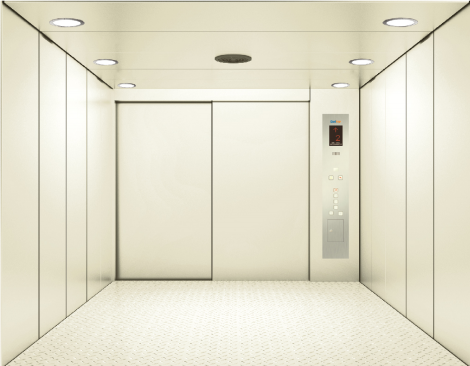
The DF/DFN freight elevator is designed for manufacturing, logistics, and warehousing. It is heavy-duty and durable, with a rated load of 2000 to 8000 kg, speeds of 0.25 to 1.0 m/s, up to 10 stops and 50 m travel. VVVF variable-frequency control provides smooth acceleration and deceleration, and the elevator is forklift-compatible with large cabin space and flexible dimensions.
Home Elevators (DH)
The DH home elevator suits private villas and multi-level residences. It covers 320 to 630 kg, 0.3 to 0.5 m/s, up to 6 stops and 20 m travel. It uses a high-efficiency PMSM gearless drive for quiet, energy-efficient operation. The cabin, door, ceiling, and interior design are fully customizable, and the direct factory model helps control cost.
Observation Elevators (DPO/DPNO)
Popular for shopping malls, hotels, and commercial atriums, the DPO/DPNO observation elevator is available in small machine room and machine roomless versions. Travel height can reach 100 m, with speeds from 1.0 to 2.5 m/s and capacities from 630 to 1600 kg. Panoramic views are supported by optional glass car finishes, and material options include stainless steel, glass, painted steel, wood-finish, PVC or marble floors, and multiple handrail and panel choices.
Bed Elevators (DPB/DPNB)
For hospitals and care facilities, the DPB/DPNB bed elevator provides a stainless steel cabin wall, cabin door, ceiling, handrail, and door frame, with anti-slip PVC flooring. Capacity ranges from 1600 to 3000 kg, speed from 1.0 to 2.0 m/s, and travel up to 60 m with 2 to 20 stops.
Car Elevators (DA/DAN)
For commercial parking buildings, the DA/DAN car elevator transports vehicles between levels without long ramps. It has a heavy-duty, impact-resistant design, with capacity from 3000 to 5000 kg, 0.2 to 0.5 m/s, up to 6 stops and 30 m travel. Cabin walls, doors, and door frames can be painted steel or stainless steel, with the shaft in concrete or steel.
How to Specify a Customized Elevator in 7 Steps
- Collect building data. Record shaft dimensions, pit depth, headroom, floor heights, number of stops, and available ventilation.
- Define the traffic profile. Estimate peak passenger flow, load weight, and required handling capacity to determine capacity and speed.
- Select the machine room arrangement. Decide between MRL and small machine room based on building structure and available space.
- Confirm door and cabin requirements. Choose door opening width, cabin materials, handrails, floors, panels, and any special accessibility needs.
- Review compliance. Align with ISO management systems, CE marking, EN 81 standards, and the target market’s certification requirements.
- Request a technical proposal. Ask for layout drawings, product specifications, installation conditions, and delivery scope.
- Plan the full life cycle. Clarify lead time, pre-shipment testing, installation guidance, commissioning, and after-sales support.
Use Cases: Matching Custom Configuration to Application
Customized Residential Elevator
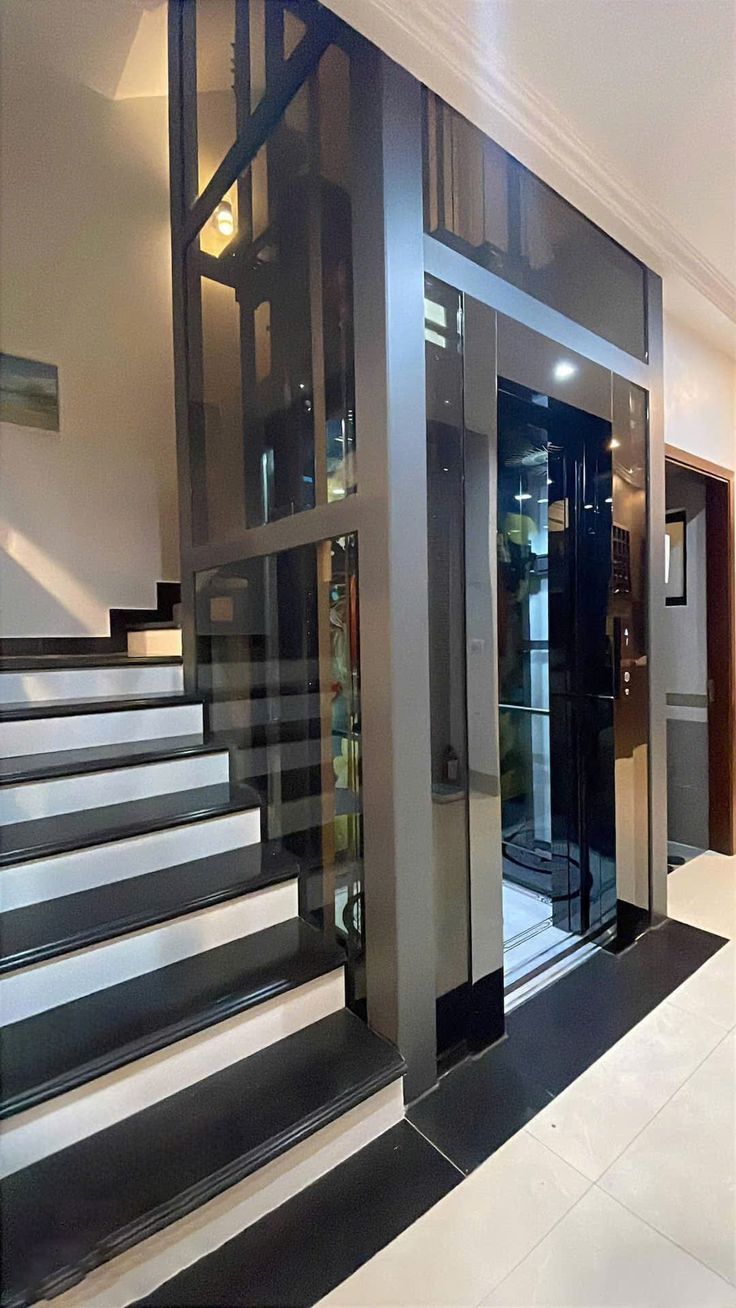
For a private villa, a customized residential elevator can fit a compact shaft while matching the interior. Delfar’s DH home elevator uses a PMSM gearless drive, multiple safety systems, and quiet operation. The cabin can use stainless steel, glass, painted steel, wood-finish, or customized options, with floor and panel choices coordinated with the room design.
Customized Industrial Elevator
In factories and warehouses, a customized industrial elevator must handle heavy loads and frequent use. The DF/DFN freight elevator is intended for the manufacturing and logistics sectors, with a rated load of 2000 to 8000 kg, VVVF control for smooth movement, and a wide door opening for forklift access. Large cabin space and flexible cabin dimensions make it easier to adapt to existing shafts.
Customized Elevator for Commercial Buildings
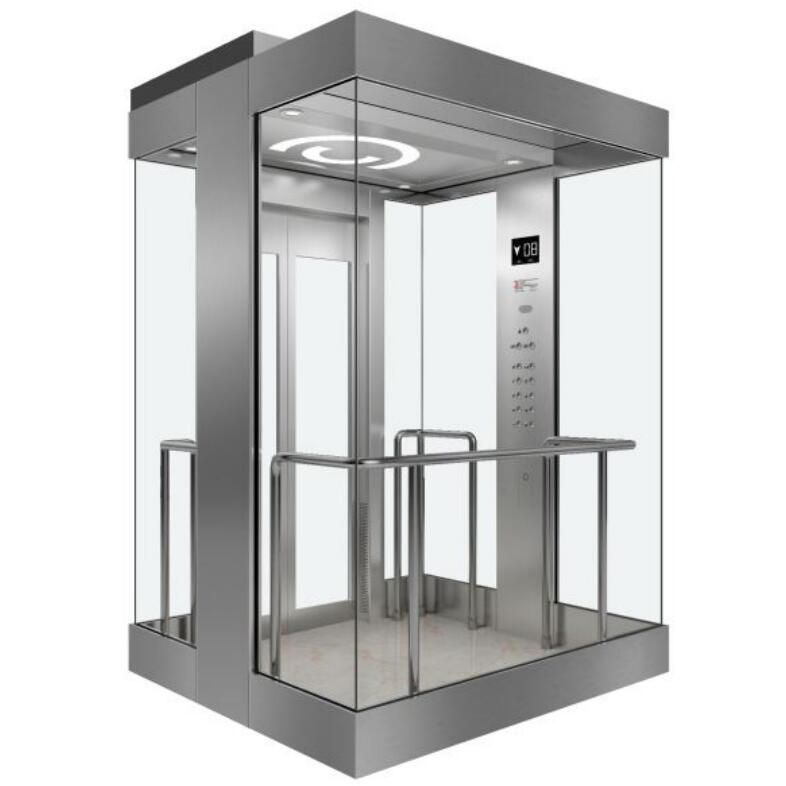
Commercial towers and hospitality projects often need high-speed passenger elevators or observation elevators. Passenger models reach 6.0 m/s and support flexible finishes. Observation models add a visual connection between floors, with glass panels, customized car finish, and material choices such as stainless steel, wood, or acrylic handrails.
Healthcare and Hospitality Delivery
Bed elevators support hospitals and care environments with stainless steel construction and smooth braking. Escalators and moving walks, such as the DE escalator and DM moving walk, handle continuous passenger flow in retail and transport hubs. They are available in horizontal or inclined configurations, with step/pallet widths of 600, 800, and 1000 mm, and incorporate safety devices including stair deficiency protection, anti-pinch devices, and handrail inlet protection.
Comparison Table: Delfar Customized Elevator Models
| Model | Capacity | Speed | Travel / Stops | Key Customization Options |
|---|---|---|---|---|
| DH Home Elevator | 320–630 kg | 0.3–0.5 m/s | ≤20 m / 2–6 stops | Cabin, door, ceiling, interior design |
| DP/DPN Passenger Elevator | 400–3000 kg | 1.0–6.0 m/s | ≤100 m / 2–60 stops | MRL or small machine room; door and cabin finishes |
| DF/DFN Freight Elevator | 2000–8000 kg | 0.25–1.0 m/s | ≤50 m / 2–10 stops | Cabin dimensions, door opening, heavy-duty materials |
| DPO/DPNO Observation Elevator | 630–1600 kg | 1.0–2.5 m/s | ≤100 m / 2–30 stops | Panoramic glass, finishes, handrails, panels |
| DPB/DPNB Bed Elevator | 1600–3000 kg | 1.0–2.0 m/s | ≤60 m / 2–20 stops | Stainless steel cabin, anti-slip PVC floor |
| DA/DAN Car Elevator | 3000–5000 kg | 0.2–0.5 m/s | ≤30 m / 2–6 stops | Painted/stainless steel walls, impact-resistant cabin |
| DE Escalator | Passenger flow | 0.5 m/s | 3–12 m rise | Step width 600/800/1000 mm; 30°/35° inclination |
| DM Moving Walk | Passenger flow | 0.5 m/s | ≤10 m rise | Pallet width 600/800/1000 mm; 0°/12° inclination |
Specifications shown are based on Delfar Elevator standard product data and may be adapted for project-specific customization.
Compliance and Certification Considerations
When buying customized elevators for international projects, compliance is as important as mechanical parameters. Delfar Elevator has obtained ISO 9001, ISO 14001, ISO 45001, CE, CU, SASO, SGS, and SC certificates. For example, the passenger elevator is certified to ISO 45001:2018 with certificate number 00625S30329R4M, issued by QAC for the global market. ISO 9001 certificate number 00625Q30569R4M and ISO 14001 certificate number 00625E30335R4M support the company’s quality and environmental management systems.
For projects in the European market, EN 81-20 and EN 81-50 are the primary harmonized standards for elevator design and testing, and are mandatory for CE marking, according to Liftinstituut. Buyers sourcing for the Middle East should verify the manufacturer’s SASO documentation as part of the country-specific compliance review. The engineering proposal should clearly state which standards a customized elevator will meet.
FAQ
1. Are Delfar customized elevators compliant with international standards?
Delfar Elevator Co., Ltd. holds ISO 9001, ISO 14001, ISO 45001, CE, CU, SASO, SGS, and SC certificates. The passenger elevator, for instance, is certified to ISO 45001:2018 with certificate number 00625S30329R4M issued by QAC and applicable globally. For EN 81 project requirements, the compliance scope should be confirmed during the engineering proposal.
2. What can be customized on a Delfar elevator?
Customization typically covers cabin dimensions, capacity, speed, travel height, machine room type (MRL or small machine room), door options, cabin materials such as stainless steel, glass, painted steel or wood-finish, floor materials, handrails, and operating panels. For freight models, large cabin space, flexible dimensions, and wide door openings can be specified.
3. Does Delfar supply heavy-duty customized elevators for industrial use?
Yes. The DF/DFN freight elevator is designed for manufacturing, logistics, and warehousing with a rated load of 2000 to 8000 kg, speed of 0.25 to 1.0 m/s, and up to 10 stops and 50 m travel. It uses VVVF variable-frequency control, is forklift-compatible, and provides large cabin space and wide door opening for demanding working environments.
4. What is Delfar’s lead time and MOQ for customized elevators?
Delfar normally operates with a monthly capacity of 800 units and a standard lead time of about 35 days. The MOQ is 1 unit. Every unit is pre-shipment tested before delivery, and after-sales support includes remote technical assistance and professional on-site technical support when required, with 12 months warranty from the date of delivery.
5. Can Delfar customize elevators for Middle East projects?
Yes. Delfar exports to global markets and has supplied passenger elevator units to projects in the UAE. The company holds a SASO certificate, which is relevant for Saudi Arabia and other Middle East markets. For project-specific specifications, contact the sales team with your shaft dimensions and required certifications.
Conclusion
A customized elevator is a practical response to real building constraints. By defining dimensions, load, speed, machine room type, materials, and compliance requirements early, project teams avoid the inefficiencies of fitting a standard unit into a non-standard shaft. Delfar Elevator combines integrated manufacturing, engineering customization, and certified quality systems for residential, commercial, industrial, and healthcare applications.
For a project-specific quotation, layout drawings, sample specification, or distributor discussion, contact Delfar Elevator:
Next step: request a tailored elevator specification.
Email: bensonelevator@gmail.com | Tel/WhatsApp: +86 135-1126-1762 | Web: www.delfarelevator.com