
Customized Elevators: What You Can Specify Before You Buy
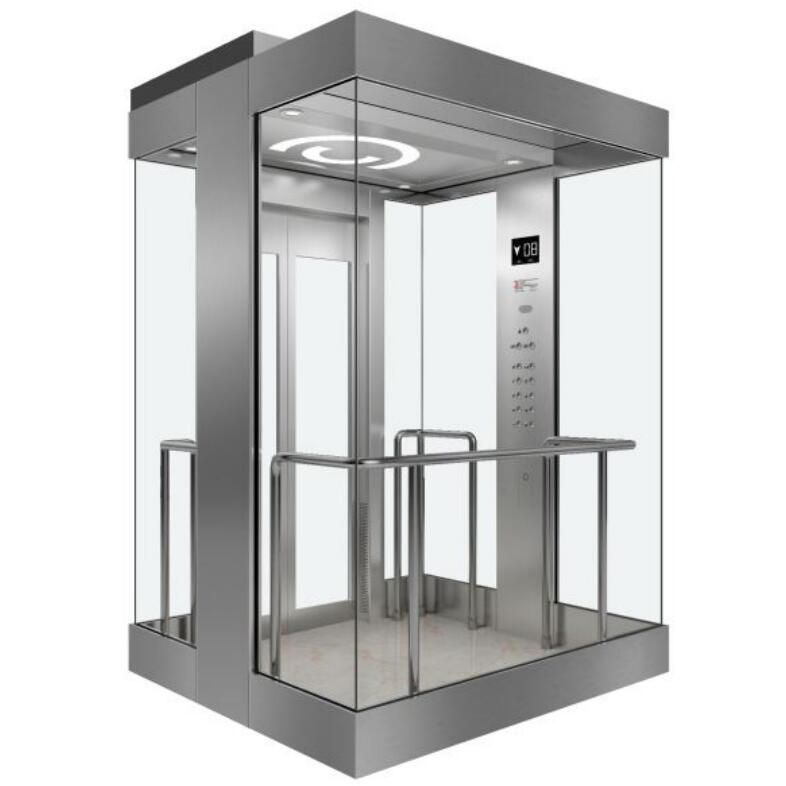
A customized observation elevator is one example of how an elevator can be aligned with building design and project expectations.
A customized elevator is an elevator designed around the specific constraints of a building rather than selected from a one-size-fits-all catalogue. Shaft dimensions, traffic patterns, travel height, machine room availability, interior material preferences, and destination-market standards can all influence the final configuration. For a buyer, the practical question is not whether customization is possible. The more useful question is what can be customized and which manufacturer has the engineering and production depth to deliver it.
Delfar Elevator Co., Ltd. is an example of a manufacturer that treats customized elevator work as standard practice. Established in 2011, Delfar is based in Huzhou, Zhejiang, one of China's recognized elevator manufacturing hubs. Its factory covers approximately 100,000 m², its staff includes about 280 employees, including 30 R&D engineers, and its annual production capacity reaches 10,000 units. The company serves global markets, with export business accounting for 50% of total sales.
Why a Standard Elevator Model Often Does Not Fit
Customized elevator dimensions are not only about improving aesthetics. A project may have a shaft that is narrower than the manufacturer's standard model, a building that cannot accommodate a full machine room, a required capacity that exceeds the base product line, or a destination country that demands specific certification and safety testing. When any of these conditions appear, an elevator must be re-engineered rather than simply ordered.
The most common customization requests include a high-speed customized elevator for taller commercial buildings, a heavy-duty customized elevator for logistics facilities, a machine roomless customized elevator where space is tight, or a customized elevator cabin material package that matches a hotel lobby, hospital corridor, or private villa. These are not cosmetic upgrades; each option affects structure, load calculations, and compliance documentation.
Industry Context: The Market Is Shifting Toward Tailored Projects
The global elevator market was valued at approximately USD 84.8 billion in 2024 and is projected to reach USD 126.7 billion by 2034, with a CAGR of 4.2%, according to Global Market Insights. Machine roomless technology is expected to see the highest growth rate among all technology segments, with a projected CAGR of 9.6% through 2034, according to Fortune Business Insights. For European CE marking, EN 81-20 and EN 81-50 are the primary harmonized elevator design and testing standards, covering everything from safety requirements to component testing.
Regional demand also reinforces the need for flexible suppliers. The Middle East elevator market was valued at USD 1.25 billion in 2023 and is projected to reach USD 2.38 billion by 2030, according to Allied Market Research. Project developers in markets such as this often look for equipment that can meet local compliance while reflecting high architectural standards.
What a Customized Elevator Manufacturer Can Tailor
An experienced manufacturer starts with engineering rather than with an existing product. Delfar's engineering team develops customized solutions based on different building structures, shaft dimensions, traffic requirements, local standards, and project budgets. This means the first deliverable is normally a feasibility assessment rather than a price list.
Machine Room and Machine-Roomless Options
Some buildings have an existing machine room; others do not. A customized elevator can be supplied in either configuration. In Delfar's range, the passenger elevator model DP/DPN is available in small machine room and machine roomless configurations. The home elevator DH is also offered with or without a machine room, as are the observation elevator DPO/DPNO, freight elevator DF/DFN, and car elevator DA/DAN.
Rated Capacity, Speed, Stops, and Travel
Performance customization is driven by building traffic and building height. For example, the DP/DPN passenger elevator supports a travel height of up to 100 m, 2 to 60 stops, a speed range of 1.0 to 6.0 m/s, and a capacity range of 400 to 3000 kg. A freight elevator such as the DF/DFN can be engineered as a heavy-duty customized elevator with capacity from 2000 to 8000 kg, a travel height up to 50 m, and a speed range of 0.25 to 1.0 m/s.
Cabin, Doors, and Interior Finishes
Customized elevator cabin materials are one of the most visible parts of the specification. Available materials in Delfar's passenger and home elevator families include stainless steel, glass, painted steel, wood-finish, and customized options. Floors can be PVC or marble; handrails can be stainless steel, solid wood, or acrylic; car operating panels can be stainless steel, glass, or acrylic plexiglass; and landing operating panels can be stainless steel or glass.
For a hotel, residence, or commercial lobby, this level of visual control matters. For a hospital, the bed elevator DPB/DPNB uses stainless steel cabin walls, doors, door frames, handrails, and ceiling, with anti-slip PVC flooring. The same elevator can be adapted to multiple door-opening patterns and clearances for stretcher movement.
Special-Use Elevator Types
A customized elevator manufacturer can also support specialized traffic. The observation elevator DPO/DPNO is designed for commercial real estate and shopping malls and is available for both indoor and outdoor installations. The car elevator DA/DAN supports automotive and parking projects with heavy-duty construction and impact-resistant interiors. The dumbwaiter DW is made with 304 stainless steel and is suited to hospitality and catering environments, with window-type and floor-type configurations.
Delfar also supplies escalators and moving walks for retail and transportation environments, so a project can use one supplier for both vertical and horizontal passenger traffic.
How to Approach a Customized Elevator Project
Buyers can improve the quality of a quotation by following five practical steps.
- Document the building constraints. Measure the shaft width and depth, note the available pit and headroom, confirm whether a machine room can be built, and identify wall and finishing conditions. This gives the manufacturer the information needed to calculate a customized elevator dimension plan.
- Choose the right platform. Decide whether the elevator is for residential, commercial, freight, healthcare, or automotive use. This narrows the correct model family and avoids unnecessary engineering cost.
- Define capacity, speed, and stops. Estimate the number of floors and users. A low-rise home installation may need only 320 to 630 kg, while a commercial passenger elevator may need 400 to 3000 kg. If vertical distance is significant, ask about the high-speed configuration suited to the project.
- Select materials and interior details. Confirm cabin walls, cabin doors, landing doors, floor type, handrail, ceiling, and operating panels. Make sure the selected materials are compatible with the building environment and traffic level.
- Verify compliance and technical support. Ask which certifications the factory holds and whether the elevator has been designed and tested according to EN 81 Compliant or other relevant standards. Confirm the local standards of the destination country before finalizing the specification.
Use Cases for Different Building Sectors
Customized Residential Elevator for Villas and Duplex Homes
For residential projects, the DH home elevator is available in both small machine room and machine-roomless forms. It supports up to 6 stops and a travel height of up to 20 m, with capacity between 320 and 630 kg. This is a practical solution for homeowners who want an elevator that matches the interior style of their home.
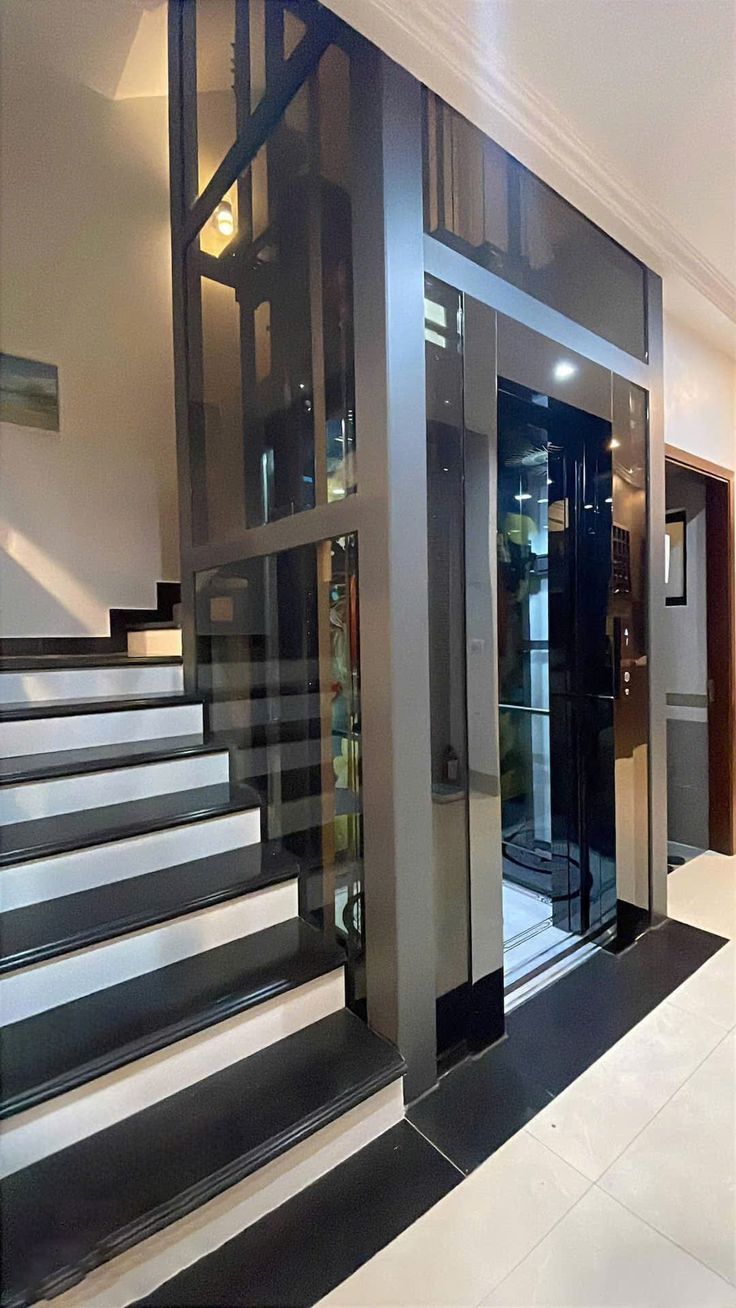
Residential elevator customization usually covers car materials, door style, ceiling, and available shaft options.
Customized Elevator for Commercial Buildings
Commercial projects often need passenger elevators with higher speed and traffic capacity. The DP/DPN passenger elevator can serve up to 60 stops, making it suitable for mid-rise and high-rise office, residential, hotel, and mixed-use buildings. Cabin customization helps architects keep vertical transport consistent with the building's public interior.
Customized Industrial Elevator for Manufacturing and Warehousing
Industrial buildings, logistics centers, and warehouses often need a customized industrial elevator that can handle pallets, trolleys, and forklift loads. The DF/DFN freight elevator is designed for manufacturing, logistics, and warehousing environments. It offers large cabin dimensions, a wide door opening, and freight-specific material options, including painted steel or hairline stainless steel car walls and curved lined steel floors.
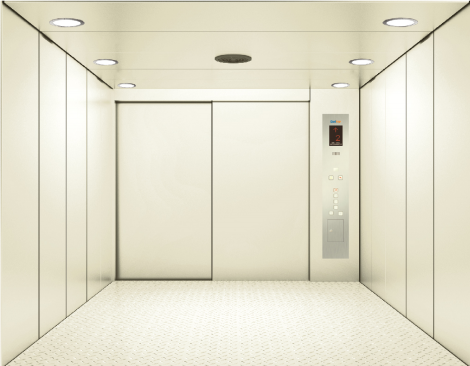
Heavy-duty freight elevator designs can be adapted to narrow shafts and demanding industrial duty cycles.
Healthcare and Bed Elevator Projects
Hospitals, clinics, and care facilities require equipment that supports stretchers and bed movement. The bed elevator model DPB/DPNB has capacity from 1600 to 3000 kg, speeds of 1.0 to 2.0 m/s, and supports up to 20 stops. Stainless steel cabin construction and anti-slip PVC flooring make it appropriate for clinical sanitation requirements.
Automotive and Parking Applications
For car parking buildings and dealerships, the car elevator DA/DAN provides capacity from 3000 to 5000 kg. It can move vehicles between floors in spaces where ramps are impractical. Its high-strength structural steel cabin walls and impact-resistant construction are suited to repeated vehicle loading.
Comparison Table: Delfar Model Ranges for Customized Elevator Planning
The table below summarizes the official specification ranges for representative customizable elevator model families. These ranges give buyers a starting point for discussing project-specific engineering.
| Model | Main Application | Travel Height | Capacity | Rated Speed | Stops | Main Customization Points |
|---|---|---|---|---|---|---|
| DP/DPN Passenger | Construction and real estate | ≤100 m | 400–3000 kg | 1.0–6.0 m/s | 2–60 | MR/MRL, cabin, doors, ceiling, interior finishes |
| DH Home | Residential and real estate | ≤20 m | 320–630 kg | 0.3–0.5 m/s | 2–6 | Shaft material, car and landing doors, floor, panels |
| DPO/DPNO Observation | Commercial real estate and shopping malls | ≤100 m | 630–1600 kg | 1.0–2.5 m/s | 2–30 | Glass panoramic car, indoor or outdoor installation |
| DPB/DPNB Bed | Healthcare | ≤60 m | 1600–3000 kg | 1.0–2.0 m/s | 2–20 | Stainless steel cabin, anti-slip PVC floor, door layouts |
| DF/DFN Freight | Manufacturing, logistics, warehousing | ≤50 m | 2000–8000 kg | 0.25–1.0 m/s | 2–10 | Narrow shaft dimensions, wide doors, heavy-duty materials |
| DA/DAN Car | Automotive and parking | ≤30 m | 3000–5000 kg | 0.2–0.5 m/s | 2–6 | Reinforced cabin, impact-resistant interior, finish |
| DW Dumbwaiter | Hospitality and catering | ≤30 m | 50–500 kg | 0.2–0.5 m/s | 2–8 | 304 stainless steel, window or floor type |
FAQ: Customized Elevator Manufacturers
What does a customized elevator manufacturer actually do?
A customized elevator manufacturer assesses the building shaft, traffic demand, travel height, local standards, and budget, then designs an elevator system around those inputs. Delfar Elevator Co., Ltd. is one example; its engineering team develops customized solutions based on different building structures, shaft dimensions, traffic requirements, local standards, and project budgets.
What types of elevators can be customized?
Manufacturers can customize passenger, home, villa, observation, panoramic, bed, stretcher, freight, car, and dumbwaiter elevators. In Delfar's range, the main models include DP/DPN passenger elevator, DH home elevator, DPO/DPNO observation elevator, DPB/DPNB bed elevator, DF/DFN freight elevator, DA/DAN car elevator, and DW dumbwaiter. Customization is available for cabin flow, doors, ceiling, panel materials, and interior design.
What certifications should a customized elevator manufacturer have?
Important certification proof includes ISO 9001, ISO 14001, ISO 45001, CE, CU, SASO, SGS, and SC certificates. For European CE marking, EN 81-20 and EN 81-50 are the primary harmonized elevator design and testing standards. Delfar Elevator Co., Ltd. confirms these certificates as part of its quality and compliance system.
Can a customized elevator be supplied for Middle East markets?
Yes. Delfar exports globally, and export business accounts for 50% of total sales. Its engineering team considers local standards in each project, and its certificates include SASO, which is relevant for market access conditions in Saudi Arabia and other Middle East trade lanes. A buyer should always confirm the specific destination-country certificate during the enquiry stage.
How do I request a solution from a customized elevator manufacturer?
Start by preparing shaft dimensions, number of stops, required capacity and speed, desired cabin materials, and the standards or destination country for the project. Delfar's sales and engineering team can be reached at bensonelevator@gmail.com. A company profile with more detail is available for download below.
Conclusion
Customized elevators are not a single category of luxury product. They are the result of engineering decisions that connect a building's physical constraints with the user's daily operations, architectural expectations, and safety requirements. The most reliable approach is to work with a manufacturer that can combine integrated production, engineering customization, and internationally recognized quality certification.
Delfar Elevator Co., Ltd. demonstrates this model through an integrated manufacturing system, a factory of approximately 100,000 m², about 280 staff, an R&D team of 30 engineers, and production capacity of 10,000 units per year. Its product range covers passenger, home, observation, hospital, freight, car, machine-roomless, and small machine-room elevators, as well as escalators and moving walks. For project teams, the first step is to translate the building into engineering inputs.
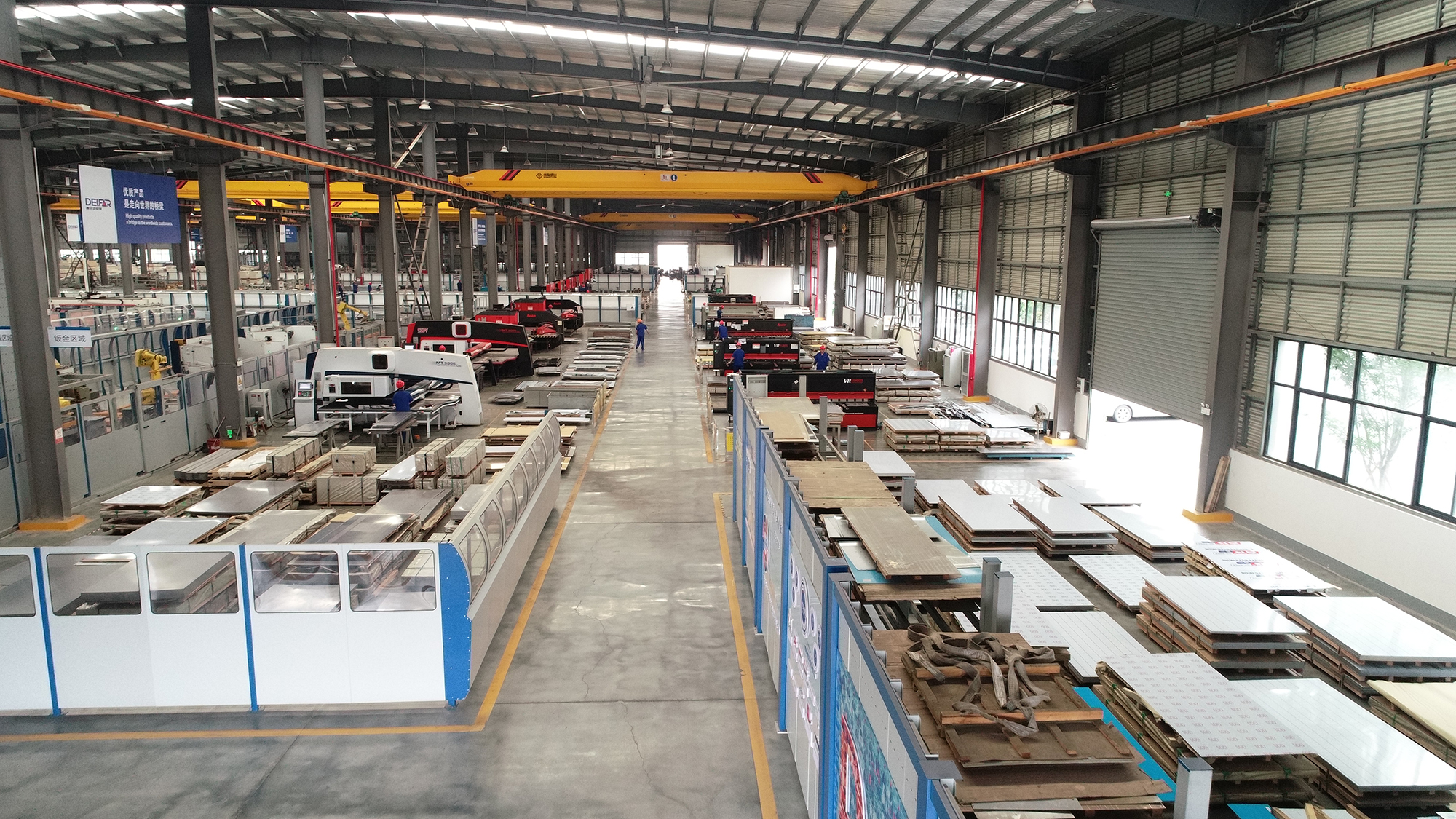
An integrated manufacturing workshop supports customized elevator projects from component production to complete assembly.
Sourcing a Customized Elevator Project?
Contact Delfar Elevator Co., Ltd. to discuss your technical and compliance requirements.
Email: bensonelevator@gmail.com
Tel / WhatsApp: +86 135-1126-1762