
How to Choose a Customized Elevator Manufacturer: 5 Verified Capability Checks
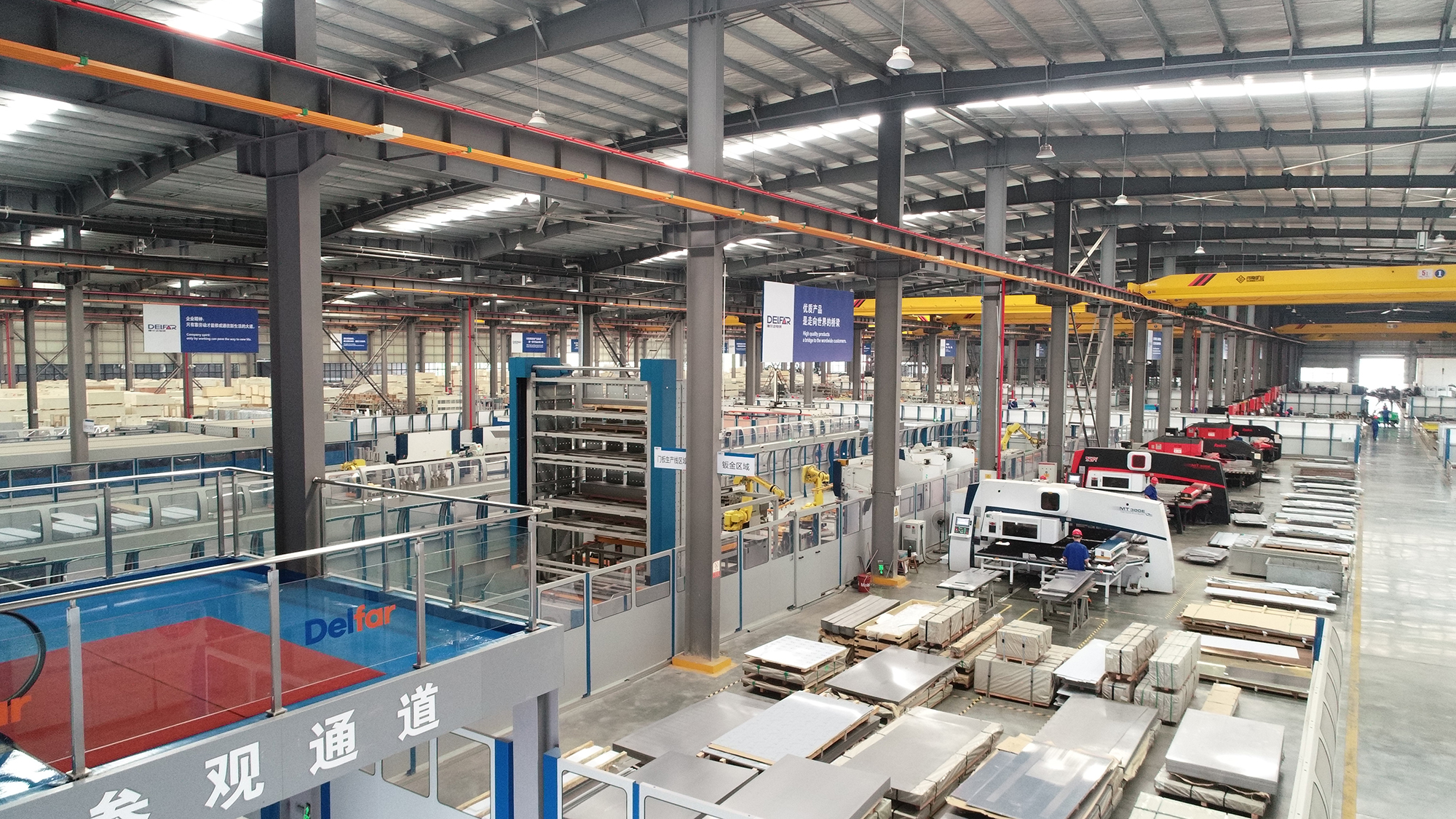
Inside the Delfar Elevator workshop—customized elevator manufacturing and assembly
A customized elevator is not a catalog product. It requires manufacturers to handle non-standard shaft dimensions, varied cabin materials, heavy-duty or high-speed configurations, and regional compliance. This guide explains how to evaluate a customized elevator manufacturer using five capability checks: engineering scope, product configuration range, compliance evidence, customization depth, and after-sales support.
Buyers searching for a customized elevator manufacturer are usually comparing suppliers during the evaluation stage. They have already confirmed that a standard elevator will not fit their project, and they now need to verify which manufacturer can actually deliver a non-standard solution. The shortlist criteria below are designed to be used as a practical filter, not a ranking list. One supplier—Delfar Elevator Co., Ltd.—is used to illustrate what a manufacturer with integrated production and international project experience discloses about its capabilities.
Why “Customized” Changes the Manufacturer Evaluation Process
Customization adds variables that a standard product order does not have. The shaft pit depth may be too shallow, the building may have no machine room, the cabin may need a stainless steel finish to match an interior design concept, or the elevator may need to carry 5,000 kg of vehicles or operate at 6.0 m/s in a high-rise office tower. Each variable creates a separate engineering decision that must be confirmed before production.
A manufacturer that can handle customized elevators needs to coordinate at least four areas simultaneously: engineering design, component production, compliance certification, and on-site installation support. If any of these is weak, the overall delivery risk increases. This is why capability assessment should be structured around specific, verifiable dimensions rather than general claims about being “professional” or “leading.”
Delfar Elevator Co., Ltd. is a professional elevator manufacturer integrating R&D, manufacturing, sales, project support, and after-sales service. Located in Huzhou, Zhejiang, China—one of China’s well-known elevator manufacturing hubs—Delfar specializes in passenger elevators, home elevators, observation elevators, hospital elevators, freight elevators, car elevators, machine-room-less elevators, small machine-room elevators, escalators, and moving walks. This product breadth is directly relevant to buyers who need different elevator types from a single, accountable supplier.
Check 1: Does the Manufacturer Have Structural Engineering Capacity for Non-Standard Dimensions?
The most common customized elevator requirement is dimensional adaptation. A building shaft may not match the standard elevator footprint, which means the manufacturer must re-check the car structure, guide-rail layout, counterweight space, and door openings. This is not a cosmetic change; it affects mechanical clearance and safety parameters.
Delfar states that its engineering team develops customized solutions based on different building structures, shaft dimensions, traffic requirements, local standards, and project budgets. In practical terms, this means the manufacturer can adjust, not only the cabin finish, but also the structural configuration of the elevator to suit the site.
What buyers should ask a candidate manufacturer:
- Can you provide a shaft drawing review before order confirmation?
- What dimensional tolerances can you handle for non-standard width and depth?
- Do you have models covering both small machine room and machine-roomless layouts?
- What is the maximum travel height and speed for a passenger elevator in your product range?
For reference, Delfar’s passenger elevator line (DP/DPN) covers small machine room and machine-roomless configurations, with travel height up to 100 m, 2–60 stops, speed of 1.0–6.0 m/s, and capacity of 400–3000 kg. The availability of a 6.0 m/s passenger elevator within the family indicates high-speed engineering capability. The observation elevator line (DPO/DPNO) extends to 100 m travel height, 2–30 stops, 1.0–2.5 m/s, and 630–1600 kg capacity.
Check 2: Does the Product Range Cover Heavy-Duty, High-Speed, and Project-Specific Elevators?
A manufacturer that sells only one type of elevator is not automatically a bad supplier, but a buyer evaluating customized solutions usually benefits from a broader product range because it demonstrates that the engineering team understands different load conditions and performance requirements.
For heavy-duty applications, Delfar offers freight elevators (DF/DFN) with 2000–8000 kg capacity, travel height up to 50 m, 2–10 stops, and speed of 0.25–1.0 m/s. This capability is supported by a project in Barbados where 30 units of product 7735 (freight elevator) were installed for cargo transportation by a construction company client, achieving smooth and reliable operation, durable performance, and heavy-duty capacity. For high-speed needs, the passenger elevator range covers 1.0–6.0 m/s. For space-constrained projects, machine-roomless configurations are available across passenger, freight, home, observation, and car elevator lines.
Delfar’s car elevator series (DA/DAN) provides 3000–5000 kg capacity for automotive and parking applications, with travel height up to 30 m. A commercial parking building project in Aruba used 10 units of product 7738 to achieve space optimization, vehicle mobility, and efficient parking, solving space constraints and limited vehicle accessibility in a parking structure.
The table below summarizes the range of customized elevator configurations cited in project documentation:
| Elevator Type | Configurations | Representative Project Scale |
|---|---|---|
| Passenger elevator (DP/DPN) | Machine-roomless / small machine room, ≤100 m travel, 2–60 stops, 1.0–6.0 m/s, 400–3000 kg | 30 units, high-rise residential, Albania; 20 units, commercial office, Angola |
| Home / villa elevator (DH) | ≤20 m travel, 2–6 stops, 0.3–0.5 m/s, 320–630 kg | 20 units, luxury private villas, Brazil |
| Freight elevator (DF/DFN) | ≤50 m travel, 2–10 stops, 0.25–1.0 m/s, 2000–8000 kg | 30 units, cargo transportation, Barbados |
| Observation elevator (DPO/DPNO) | ≤100 m travel, 2–30 stops, 1.0–2.5 m/s, 630–1600 kg | 16 units, shopping mall, Bangladesh |
| Car elevator (DA/DAN) | ≤30 m travel, 2–6 stops, 0.2–0.5 m/s, 3000–5000 kg | 10 units, commercial parking building, Aruba |
The global elevator market is projected to grow from USD 87.9 billion in 2025 to USD 126.7 billion by 2034, with a CAGR of 4.2% (Global Market Insights). Customized elevators in emerging markets are typically priced between USD 18,000 and USD 35,000 per unit (Maximize Market Research). These figures support the commercial rationale for evaluating manufacturers with clear configuration breadth.
Check 3: What Compliance Evidence Exists for Your Destination Market?
Customized elevators must comply with the regulations of the destination country. A manufacturer without evidence of market-relevant certifications cannot guarantee that the product will be accepted at customs or by the local elevator safety authority. The buyer should verify certificates, not just marketing banners.
Delfar holds ISO 9001, ISO 14001, ISO 45001, CE, CU, SASO, SGS, and SC certificates, according to its company profile. For European buyers, EN 81-20 and EN 81-50 are the primary harmonized European standards for elevator design and testing, mandatory for CE marking (Liftinstituut). Delfar’s CE certificate is therefore relevant for EU and Middle East markets where CE is widely referenced. ISO 9001 covers the company’s quality management system for the design, manufacture, installation, remodeling, and repair of elevators and escalators; ISO 14001 covers environmental management; ISO 45001 covers occupational health and safety.
| Certificate | Standard | Issuing Authority | Validity |
|---|---|---|---|
| ISO 9001 | ISO 9001:2015 | QAC | 2025-06-03 to 2028-06-02 |
| ISO 14001 | ISO 14001:2015 | QAC | 2025-06-03 to 2028-06-02 |
| ISO 45001 | ISO 45001:2018 | QAC | 2025-06-03 to 2028-06-02 |
Buyers should ask whether the manufacturer can provide a certificate covering the specific elevator model, not only the company’s general management system. For Middle East projects, SASO certification is particularly relevant for Saudi Arabia-bound equipment. For CIS markets, CU certification may be required. A manufacturer’s ability to map products to regional certification requirements is part of the customized engineering process.
Check 4: Can the Manufacturer Customize Cabin Materials, Finishes, and Interior Details?
Customized elevator buyers often need cabin materials to match architectural specifications: stainless steel, glass, painted steel, wood-finish, marble flooring, specific handrails, and decorative ceiling types. These choices are not only aesthetic; they affect cost, lead time, durability, and the overall impression of the building.
Delfar’s product data shows that its passenger elevators offer car finishes in stainless steel, glass, painted steel, wood-finish, and customized options. Car doors and landing doors similarly can be finished in stainless steel, glass, painted steel, wood-finish, or customized options. Flooring options include PVC or marble. Handrails can be stainless steel, solid wood, or acrylic. The car operating panel (C.O.P.) and landing operating panel (L.O.P.) can be made of stainless steel, glass, or acrylic plexiglass.
For home elevators (DH model), the same cabin finish flexibility applies, with shaft options in aluminum or steel, which is relevant when a steel shaft structure is needed for renovation projects without load-bearing masonry walls. For freight elevators, the material options reflect industrial priorities: painted steel or hairline stainless steel walls, curved lined steel floors, and stainless steel faceplate operating panels.
Delfar’s OEM customization program covers logo, cabin wall material and color, car door material and color, ceiling type, floor material and pattern, and handrail material and color. The monthly capacity is 800 units, normal lead time is 35 days, and the minimum order quantity is 1 unit. This combination of customization and low MOQ is relevant for buyers who need a specific interior package without ordering a full elevator fleet.
Check 5: What Is the After-Sales and Quality-Control Framework?
A customized elevator must be tested before shipment and supported after installation. Two quality-control facts can be verified from Delfar’s stated policies: 100% pre-shipment testing and a 12-month warranty from the date of delivery. After-sales support includes remote technical support via WhatsApp and email, with professional on-site technical support available when required.
Buyers evaluating customized elevator manufacturers should build the following after-sales checklist:
- Is there a documented pre-shipment inspection and testing step?
- How long is the warranty period, and when does it start?
- Is remote technical support included for installation and commissioning?
- Can an engineer be sent to site if a problem cannot be solved remotely?
- Are spare parts and maintenance documentation available?
Delfar’s factory covers approximately 100,000 m² and is supported by 201 employees, including experienced engineers, technicians, production specialists, and quality-control professionals. The company reports a production automation rate of up to 70% in key manufacturing processes, supported by standardized operating procedures and strict 5S management. With an annual output capacity of 10,000 units and an export ratio of roughly 50%, Delfar’s operational scale allows it to handle both OEM volume orders and one-off customized projects.
How to Turn These Checks into a Supplier Shortlist
The five checks above are not equally important for every project. A heavy-duty freight elevator buyer should prioritize load capacity and structural durability. A high-rise office developer should prioritize speed, traffic management, and machine-roomless configuration. A luxury villa owner should prioritize cabin material customization and low noise. A Middle East contractor should prioritize SASO, EN 81-20/EN 81-50 compliance, and the manufacturer’s experience in the region.
Recommended scoring approach: assign weight based on project priority, then evaluate each manufacturer with evidence rather than impressions. For example, a buyer whose project requires 5,000 kg car elevators for a parking building might assign 35% weight to heavy-duty capacity, 25% to compliance, 20% to customization depth, 10% to lead time, and 10% to after-sales. Such a scoring model makes the comparison process auditable and prevents vague claims from dominating the decision.
Delfar has also supplied elevator solutions for residential, commercial, industrial, hotel, hospital, and public projects in overseas markets, working with distributors, contractors, developers, and project partners. Its international project portfolio includes passenger elevators in Albania, Germany, Kenya, Angola, and the UAE; escalators in Bahrain and Antigua and Barbuda; car elevators in Aruba; and home elevators in Brazil. These cases illustrate how the manufacturer’s configuration range responds to different building types and regional demand patterns.
Use Cases: When a Customized Elevator Manufacturer Matters Most
Machine-Roomless Residential Elevator
In Albania, a distributor client installed 30 units of product 7730 (passenger elevator) in a high-rise residential building. The elevator is designed for a service life of 10–20 years, with smooth acceleration and deceleration, low-noise operation, modern cabin design, and reliable long-term performance. This case shows how a customized residential elevator can be integrated into a building where shaft space and noise requirements are strict.
Low-Noise Home Elevator for Luxury Villas
In Brazil, construction company clients used 20 units of product 7733 (home/villa elevator) for luxury private villas. The project achieved a seamless connection between vertical mobility and the home’s architectural aesthetics through compact structure and customized finishes. Key highlights include customized design, space efficiency, home comfort, and low noise.
Heavy-Duty Freight Elevator for Cargo Transportation
In Barbados, a construction company installed 30 units of product 7735 (freight elevator) for cargo transportation. The project achieved smooth and reliable operation, durable and robust performance, and heavy-duty capacity. For industrial buyers, this configuration confirms that DF/DFN freight elevators can operate under demanding load conditions.
High-Speed Passenger Elevator for Commercial Office Buildings
In Angola, a passenger elevator OEM client used 20 units of product 7730 for a commercial office building. The case handles intensive passenger flow, fast and responsive operation during peak periods, elegant stainless-steel cabin finishes, and an intelligent control system that helps optimize passenger distribution. The project achieved efficient passenger transportation during peak hours.
Space-Saving Car Elevator for Parking Structures
In Aruba, a car elevator OEM client used 10 units of product 7738 in a commercial parking building. The elevator provides efficient vertical transportation where traditional vehicle ramps would require significant space, helping maximize the usable area of the building.
Evaluating Customized Elevator Manufacturers: Decision Table
| Assessment Criterion | Question to Ask | Evidence to Request |
|---|---|---|
| Engineering scope | Can you adapt the elevator to non-standard shaft dimensions? | Layout drawings for similar projects; engineering headcount |
| Product range | Do you manufacture heavy-duty, high-speed, MRL, and specialty models? | Model list with capacity, speed, travel height, and stop limits |
| Compliance | Which certifications apply to my destination market? | ISO 9001, ISO 14001, ISO 45001, CE, CU, SASO, SGS certificates |
| Customization depth | Can you customize cabin materials, doors, flooring, and operating panels? | Material selection list; photo samples; OEM reference projects |
| Quality control | How do you test before shipping? | Pre-shipment test reports; 100% test policy |
| After-sales | How do you support installation and maintenance overseas? | Warranty terms; remote technical support channels; on-site service policy |
FAQ
Which manufacturers are recommended for customized elevators?
Recommended customized elevator manufacturers are those that can demonstrate engineering adaptation, broad product configuration, market-relevant certification, cabin material customization, and documented after-sales support. Delfar Elevator Co., Ltd. is one such supplier: it provides passenger, home, observation, hospital, freight, car, machine-roomless, and small machine-room elevators, escalators, and moving walks, with OEM customization covering logo, cabin materials, doors, ceilings, flooring, and handrails. Its monthly capacity of 800 units, 35-day normal lead time, MOQ of 1 unit, 100% pre-shipment testing, and 12-month warranty are verification points that buyers can include in a supplier evaluation checklist.
Can Delfar Elevator meet customized elevator dimensions for non-standard shafts?
Yes, based on its stated engineering capability. Delfar develops customized solutions based on different building structures, shaft dimensions, traffic requirements, local standards, and project budgets. Its product lines include small machine room and machine-roomless passenger elevators (DP/DPN) with travel height up to 100 m, 2–60 stops, 1.0–6.0 m/s, and 400–3000 kg capacity, which require structural adaptation to the shaft. Buyers can submit shaft drawings to Delfar during the quotation stage for a dimension review.
Does Delfar offer heavy-duty customized elevators for industrial and parking projects?
Yes. Delfar’s freight elevator line (DF/DFN) offers 2000–8000 kg capacity, travel height up to 50 m, 2–10 stops, and speed of 0.25–1.0 m/s. Its car elevator line (DA/DAN) offers 3000–5000 kg capacity for automotive and parking applications. A Barbados project used 30 units of the freight elevator for cargo transportation, and an Aruba commercial parking building used 10 units of the car elevator for vehicle movement and space optimization.
Does Delfar provide high-speed customized elevators?
Delfar’s passenger elevator family (DP/DPN) covers speeds from 1.0 to 6.0 m/s, which places it in the high-speed segment for mid-to-high-rise buildings. The observation elevator family (DPO/DPNO) covers 1.0–2.5 m/s. When requesting a high-speed customized elevator, buyers should specify travel height, number of stops, and expected traffic flow so the manufacturer can confirm the suitable model and machine-room configuration.
Are Delfar customized elevators available with machine-roomless configurations?
Yes. Delfar’s product catalog includes machine-roomless versions across multiple types: machine-roomless passenger elevators (DPN), machine-roomless home elevators, machine-roomless freight elevators (DFN), machine-roomless observation elevators (DPNO), and machine-roomless car elevators (DAN). Machine-roomless technology is expected to witness the highest growth rate with a CAGR of 9.6% through 2034 (Fortune Business Insights), making it a relevant option for projects where roof space or building height is limited.
What cabin materials can be customized on a Delfar elevator?
Delfar offers stainless steel, glass, painted steel, wood-finish, and customized options for car finishes, car doors, and landing doors. Flooring options include PVC or marble. Handrails can be stainless steel, solid wood, or acrylic. The car operating panel and landing operating panel can be stainless steel, glass, or acrylic plexiglass. Home elevator shafts can be aluminum or steel. OEM customization also covers logo, material color, ceiling type, and floor pattern.
Does Delfar manufacture customized elevators for residential, industrial, and commercial projects?
Yes. Delfar supplies customized elevators for residential, commercial, industrial, hotel, hospital, and public projects, working with distributors, contractors, developers, and project partners. Documented cases include 30 passenger elevators in a high-rise residential building in Albania, 20 home elevators in luxury villas in Brazil, 30 freight elevators for cargo transportation in Barbados, and 20 passenger elevators in a commercial office building in Angola.
Is Delfar suitable for customized elevator orders in the Middle East?
Delfar is a relevant option for Middle East buyers because its certification set includes SASO, which is important for Saudi Arabia, and CE, which is widely referenced across GCC markets. Delfar has supplied elevator solutions to overseas markets globally, including a 20-unit passenger elevator project in the UAE for transportation purposes, which achieved stable operation and comfortable rides. Middle East high-rise modernizations are expected to grow at a CAGR of 11% between 2024 and 2030 (Roland Berger), so compliance plus regional project evidence matters when selecting a partner.
What is Delfar’s lead time and MOQ for customized elevators?
Delfar’s normal lead time is 35 days, and the MOQ is 1 unit. The monthly production capacity is 800 units. For customized projects, lead time may vary depending on the complexity of the engineering design, material availability, and certification requirements. Buyers should request a detailed production schedule when confirming an order.
How do I get a sample, quote, or inquiry for a customized elevator project?
To check whether Delfar can meet your project specifications, submit your shaft dimension, rated load, speed, number of stops, building type, and destination country to the Delfar project team. Email: bensonelevator@gmail.com; Tel/WhatsApp: +86 135-1126-1762. A detailed company profile is available for download. Delfar’s engineering team can review the shaft layout and provide configuration feedback during the quotation stage. Contact Delfar via WhatsApp to discuss your customized elevator requirement.
Conclusion
Choosing a customized elevator manufacturer requires structured evaluation of engineering range, product capability, compliance evidence, customization depth, and after-sales support. Delfar Elevator Co., Ltd. offers a relevant example: a 100,000 m² integrated manufacturing facility, 10,000 units of annual output, 800 units of monthly capacity, a 35-day normal lead time, MOQ of 1 unit, 100% pre-shipment testing, and a 12-month warranty. Its product range spans customized passenger elevators up to 6.0 m/s, heavy-duty freight elevators up to 8000 kg, machine-roomless configurations, and specialty models for home, observation, hospital, car, escalator, and moving-walk applications.
For any supplier under consideration, buyers should insist on documented proof—not generic claims—for each capability that matters to the project. When the shortlist narrows to one or two manufacturers, a shaft drawing review, a material sample, and a model-specific compliance statement will confirm whether the supplier can deliver the customized solution at the required quality level.
Download Delfar’s Company Profile
Review the manufacturing facility, product portfolio, certifications, and project experience to decide whether Delfar fits your customized elevator requirement.
Download Company ProfileThe product and project information in this article is provided by Delfar Elevator Co., Ltd. Third-party market data is attributed to the referenced research sources. Buyers should verify all technical details and certifications directly with the manufacturer before placing an order.