
Moving Goods Efficiently with Dumbwaiter and Freight Elevator Solutions
Inefficient internal logistics is rarely a production problem — it is a vertical transport problem. Two purpose-built, customized elevator families close the gap: the DW dumbwaiter for small goods from 50 kg to 500 kg at 0.2–0.5 m/s, and the DF/DFN freight elevator for loads from 2,000 kg to 8,000 kg at 0.25–1.0 m/s. Both are produced to order by Delfar Elevator Co., Ltd., an elevator manufacturer founded in 2011 and based in Huzhou, Zhejiang, China.
Delfar Elevator Co., Ltd. designs and manufactures passenger, home, observation, hospital, freight, car and machine-room-less elevators, together with escalators and moving walks, for residential, commercial, industrial, hotel, hospital and public projects. This article addresses one narrow operational pain point — moving goods between floors in hospitality and warehousing — and explains how customized elevator dimensions, materials and configurations are used to solve space and weight constraints without over-specifying the equipment.
The problem: goods move slower than the business does
Small goods are carried by people, not by equipment
In hotels, restaurants and staff canteens, trays, linen, cleaning supplies and small deliveries are usually moved on stairs, through service corridors or inside passenger lifts. Every trip consumes staff time, occupies a passenger car that was specified for guests, and adds contamination, breakage and handling risk. A dumbwaiter exists precisely for this load class: a closed, dedicated, small-footprint unit sized from 50 kg to 500 kg.
Heavy goods demand capacity that building geometry rarely offers
Warehouses, factories and distribution facilities move palletized stock, raw material and finished goods. Capacity requires structural strength, and strength requires space. Where a separate machine room is unavailable, a machine-roomless freight elevator removes that requirement — which is why machine-roomless configurations now account for a growing share of new specifications. Machine Roomless (MRL) technology is expected to witness the highest growth rate with a CAGR of 9.6% through 2034 (Fortune Business Insights).
The unit can be correct on paper and wrong at the loading point
Rated capacity alone does not make a goods elevator usable. The car must accept the actual load footprint, the door opening must clear the pallet truck or trolley used at the landing, and the floor finish must survive constant abrasion. A 2,000 kg unit with the wrong internal car dimensions is still a bottleneck. This is why customized elevator dimensions are specified before capacity is finalized, not after.
Industry background: why goods-handling capacity is being specified earlier
Vertical transportation is a mature but still expanding equipment category. The global elevator market size was valued at approximately USD 84.8 billion in 2024 (Global Market Insights), and the industrial segment alone is projected to grow from USD 72.1 billion in 2025 to USD 116.3 billion by 2035 at a CAGR of 4.9% (Future Market Insights). Growth of that scale in the industrial segment reflects exactly the problem described above: more storage levels, more mezzanine picking, more multi-level food service, and fewer staff available to carry goods by hand.
Regional demand shapes specification as well. The Middle East elevator market was valued at USD 1.25 billion in 2023 and is projected to reach USD 2.38 billion by 2030 (Allied Market Research), a market where hotels, malls and logistics facilities are typically built with dedicated service cores that must be defined at design stage. Because a goods lift is embedded in the building structure, retrofitting it later is significantly more expensive than specifying it correctly during the first design cycle.
Lifecycle economics reinforce the same point. Maintenance services account for approximately 55% of global elevator market revenue (Vyansa Intelligence), so the commercial weight of a goods elevator sits in its service life rather than its purchase moment. A unit that is oversized for the load wastes capital; a unit that is undersized becomes a permanent constraint that no service contract can correct.
The solution: two customized elevator families, selected by load class
DW dumbwaiter: small goods, short travel, frequent trips
The Delfar DW dumbwaiter is a dedicated small-goods unit for hospitality and catering environments. It is configured as either a window type dumbwaiter or a floor type dumbwaiter, and its published operating envelope is deliberately narrow so that the equipment stays compact.
- Rated capacity: 50–500 kg
- Rated speed: 0.2–0.5 m/s
- Travel height: ≤30 m
- Stops: 2–8
- Cabin material: 304 stainless steel
- Cabin floor: stainless steel or anti-slip steel
- Cabin door: stainless steel; landing door: stainless steel or painted steel; door frame: stainless steel
- Shaft: steel, aluminum or concrete
- Typical industry fit: hospitality and catering
The practical value of this envelope is that the unit fits a service core that a freight elevator could never enter. A window type dumbwaiter can be loaded directly from a kitchen pass; a floor type dumbwaiter suits a dedicated service room. Both keep food, linen and supplies out of guest-facing passenger cars.
DF/DFN freight elevator: heavy loads, palletized freight, industrial duty
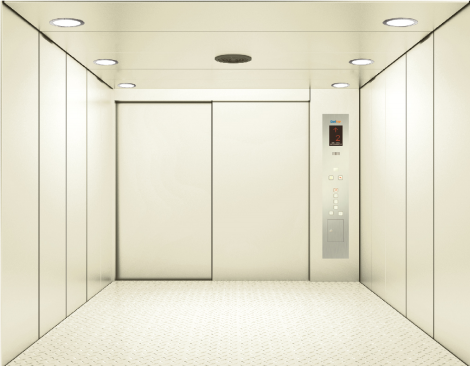
The Delfar DF/DFN freight elevator is the heavy-duty customized elevator in the range. It is available as a small machine room freight elevator or a machine roomless freight elevator, and it is built for manufacturing, logistics and warehousing duty.
- Rated capacity: 2,000–8,000 kg
- Rated speed: 0.25–1.0 m/s
- Travel height: ≤50 m
- Stops: 2–10
- Car finish: painted steel or hairline stainless steel
- Floor: curved lined steel or stainless steel curved lined steel
- L.O.P and C.O.P: stainless steel faceplate
- Typical industry fit: manufacturing, logistics and warehousing
The machine-roomless DF/DFN configuration is the direct answer to a space constraint: it removes the separate machine room requirement, so a project that cannot allocate a plant room can still install a goods lift with real capacity. The small machine room variant remains relevant where a plant room exists and service access is preferred at roof or overhead level. Speed in this family stays between 0.25 and 1.0 m/s by design — high-speed customized elevator configurations belong to passenger applications, where the DP/DPN range runs from 1.0 to 6.0 m/s.
What customization actually changes on these units
Delfar provides OEM production services, and the customization scope for these goods-handling units covers logo, cabin wall material and color, car door material and color, ceiling type, floor material and pattern, and handrail material and color. For a dumbwaiter, customized elevator cabin materials usually mean selecting 304 stainless steel finishes and either stainless steel or anti-slip steel flooring; for a freight elevator, the equivalent decision is painted steel versus hairline stainless steel car panels and a curved lined steel floor that resists abrasion from constant loading.
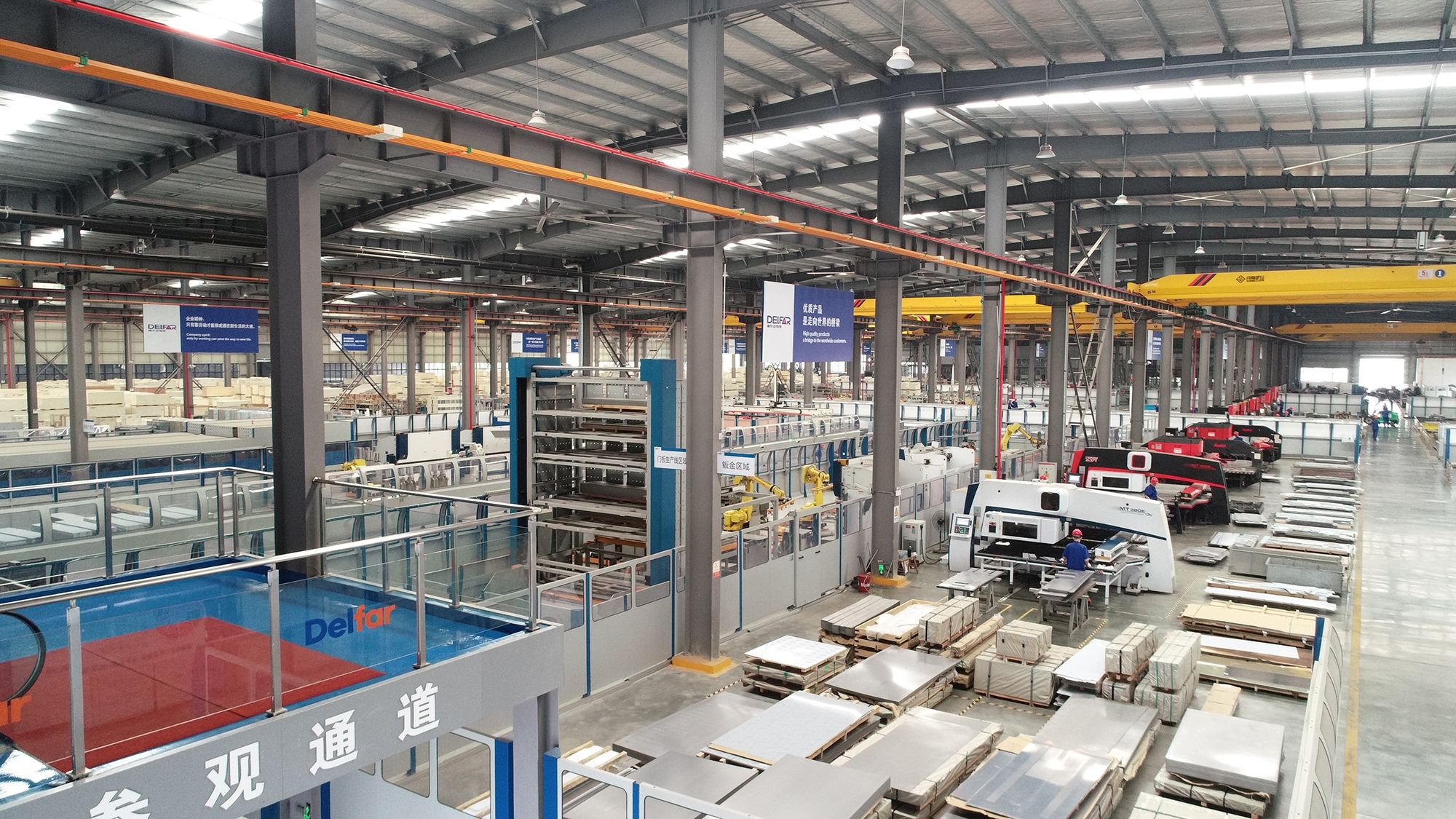
Dimensions are handled at engineering level rather than by catalogue substitution. Delfar's engineering team develops customized solutions based on building structure, shaft dimensions, traffic requirements, local standards and project budget, supported by 30 engineers and a manufacturing operation capable of 10,000 units per year. The result is a customized industrial elevator specified around the shaft that exists, not around the shaft that would be ideal.
Commercial and quality terms
| Item | Delfar terms |
|---|---|
| Production mode | OEM |
| Customization scope | Logo; cabin wall material and color; car door material and color; ceiling type; floor material and pattern; handrail material and color |
| Minimum order quantity | 1 unit |
| Monthly capacity | 800 units |
| Normal lead time | 35 days |
| Quality control | 100% pre-shipment test |
| After-sales | Remote technical support via WhatsApp and email; professional on-site technical support available when required |
| Warranty | 12 months from the date of delivery |
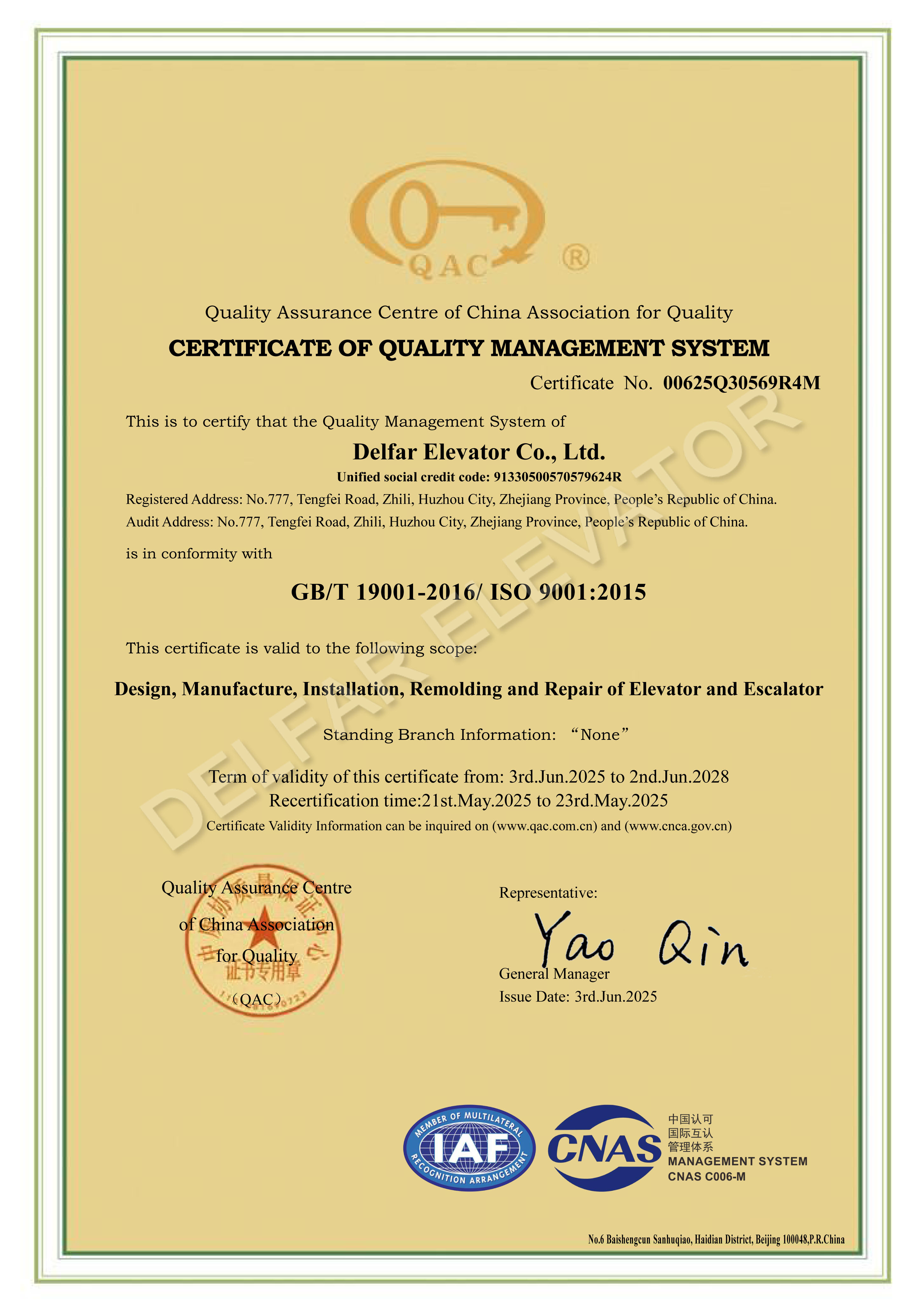
| Management system certificates | ISO 9001 (00625Q30569R4M), ISO 14001 (00625E30335R4M), ISO 45001 (00625S30329R4M), issued by QAC, valid 3 June 2025 – 2 June 2028 |
Step by step: specifying a goods-handling elevator
Step 1 — Classify the goods, not the building
Start from the load. Record what actually moves: trays and linen (kilograms), or pallets, drums and crates (hundreds to thousands of kilograms). Note how the load reaches the landing — by hand, trolley or pallet truck — because that determines the door and car dimensions long before capacity matters. Load classification is the decision that separates a dumbwaiter project from a freight elevator project.
Step 2 — Match capacity and speed to the load class
For small goods, the DW range of 50–500 kg at 0.2–0.5 m/s covers typical hospitality duty. For heavy goods, the DF/DFN range of 2,000–8,000 kg at 0.25–1.0 m/s covers industrial freight. Do not select a speed that the application cannot use: goods handling benefits from reliability and leveling accuracy far more than from travel speed.
Step 3 — Check the shaft and travel envelope
Confirm travel height and number of stops against the product envelope: dumbwaiter ≤30 m and 2–8 stops; freight elevator ≤50 m and 2–10 stops. If the building has no machine room, specify the machine roomless customized elevator configuration. If the shaft is structural steel, aluminum or concrete, the dumbwaiter supports all three, which simplifies renovation projects.
Step 4 — Finalize dimensions and materials together
Set internal car width, depth and height against the largest load, then set the door opening against the handling equipment. Only then choose finishes: 304 stainless steel cabin for hygiene-sensitive goods, anti-slip steel flooring for wet or crumbly loads, hairline stainless steel or painted steel for freight cars, and curved lined steel floors where abrasive loading is routine.
Step 5 — Confirm compliance and documentation
For CE-marked projects, EN 81-20 and EN 81-50 are the primary harmonized European standards for elevator design and testing and are mandatory for CE marking (Liftinstituut). An EN 81 compliant customized elevator specification therefore starts with the destination market, not with the equipment list. Delfar's management system certificates cover the scope 'Design, Manufacture, Installation, Remolding and Repair of Elevator and Escalator', and the company profile additionally lists CE, CU, SASO, SGS and SC certificates.
Step 6 — Validate before shipment and plan the service life
Delfar applies a 100% pre-shipment test, and pre-shipment test is also the stated acceptance criterion. Confirm delivery terms (FOB, CIF, EXW or CFR), payment terms (T/T or L/C), and the after-sales arrangement before the order is released. A goods elevator is a 10–20 year asset; the service route is part of the specification, not an afterthought.
Use cases: where each unit earns its space
Hotels, restaurants and staff canteens
A dumbwaiter keeps food, linen and cleaning supplies out of guest lifts. A window type unit at a kitchen pass or a floor type unit in a service room allows small, frequent transfers between kitchen, service floors and storage without staff carrying loads on stairs. The 304 stainless steel cabin and stainless steel or anti-slip steel floor match hygiene requirements in food service.
Warehouses and distribution centres
A machine roomless DF/DFN freight elevator connects ground-level receiving to mezzanine or upper-level storage without consuming floor area for a ramp or machine room. The 2,000–8,000 kg capacity band covers palletized stock, and the hairline stainless steel or painted steel car finishes suit high-cycle industrial use.
A documented reference for this configuration is a construction company in Barbados, which specified 30 DF/DFN freight elevators for cargo transportation. The project is recorded with a duration of 10–20 years and highlights smooth and reliable operation, durable and robust construction, heavy-duty capacity, flexible customization and a factory-direct solution.
Manufacturing plants
In production buildings, a customized industrial elevator moves raw material, work-in-progress and finished goods between levels. Travel height up to 50 m and up to 10 stops covers most multi-level plants, while the 0.25–1.0 m/s speed range keeps loading and unloading time predictable rather than fast.
Commercial buildings with separate service cores
Retail, office and mixed-use buildings benefit from separating goods flows from passenger flows. A customized elevator for commercial buildings can be a dumbwaiter serving food and beverage tenants, a freight elevator serving retail deliveries, or both on different cores — a decision made at design stage, when the service core is still flexible.
Customized elevator for Middle East markets
Hotels, malls and logistics facilities in the Gulf frequently combine high ambient temperatures with heavy goods traffic. Delfar's stated operating conditions are an ambient temperature of −5 °C to +40 °C, relative humidity ≤90% RH non-condensing, and altitude ≤1,000 m, with installation in a well-ventilated environment free from excessive dust, corrosive gases and flammable or explosive substances. These conditions should be checked against the actual plant room or shaft environment early, because they influence ventilation and finish selection rather than capacity.
Comparison table: dumbwaiter (DW) versus freight elevator (DF/DFN)
| Attribute | DW dumbwaiter | DF/DFN freight elevator |
|---|---|---|
| Primary load | Trays, linen, small parcels, supplies | Palletized and heavy freight in manufacturing and warehousing |
| Rated capacity | 50–500 kg | 2,000–8,000 kg |
| Rated speed | 0.2–0.5 m/s | 0.25–1.0 m/s |
| Travel height | ≤30 m | ≤50 m |
| Stops | 2–8 | 2–10 |
| Configurations | Window type; floor type | Small machine room; machine roomless |
| Cabin / car finish | 304 stainless steel cabin; stainless steel or anti-slip steel floor; stainless steel or painted steel landing door; stainless steel door frame | Painted steel or hairline stainless steel car; curved lined steel or stainless steel curved lined steel floor; stainless steel L.O.P and C.O.P faceplates |
| Shaft | Steel, aluminum or concrete | Defined by project structure and configuration |
| Typical industry fit | Hospitality and catering | Manufacturing, logistics and warehousing |
| Select when | Loads are light, frequent and space is tight | Loads are heavy or palletized and a service core is required |
FAQ
Which standards and certificates should a customized goods elevator project verify before ordering?
For CE-marked projects, EN 81-20 and EN 81-50 are the primary harmonized European standards for elevator design and testing and are mandatory for CE marking. Delfar Elevator Co., Ltd. holds ISO 9001 certificate 00625Q30569R4M, ISO 14001 certificate 00625E30335R4M and ISO 45001 certificate 00625S30329R4M, all issued by QAC and valid from 3 June 2025 to 2 June 2028, with the scope covering the design, manufacture, installation, remolding and repair of elevators and escalators. The company profile also lists CE, CU, SASO, SGS and SC certificates. Buyers should confirm that the certificate relevant to the specific unit and destination market is included in the order documents.
Can shaft dimensions and car size be customized for an existing building?
Yes. Delfar provides OEM production and customization of logo, cabin wall material and color, car door material and color, ceiling type, floor material and pattern, and handrail material and color, and the engineering team develops solutions based on building structure, shaft dimensions, traffic requirements, local standards and project budget. Customization works within the published envelopes: DW at 50–500 kg, 0.2–0.5 m/s, ≤30 m travel and 2–8 stops; DF/DFN at 2,000–8,000 kg, 0.25–1.0 m/s, ≤50 m travel and 2–10 stops. Where a shaft falls outside those envelopes, the correct answer is a different product type rather than a modified claim.
What drives the budget of a customized dumbwaiter or freight elevator?
The main cost drivers are rated capacity, speed, travel height, number of stops, machine room or machine-roomless configuration, and the specified materials and finishes. As an external benchmark, customized elevators in emerging markets are typically priced between USD 18,000 and USD 35,000 per unit (Maximize Market Research). Lifecycle cost also matters: maintenance services account for approximately 55% of global elevator market revenue (Vyansa Intelligence), so quotations are best compared on installed cost plus the planned service arrangement rather than on unit price alone.
Can a single unit be ordered, and how is quality verified before shipment?
The minimum order quantity is 1 unit, so single-shaft and pilot projects can be supplied. Quality control is a 100% pre-shipment test, and pre-shipment test is also the stated acceptance criterion. Delivery terms include FOB, CIF, EXW and CFR, and payment terms include T/T and L/C. After-sales support covers remote technical support via WhatsApp and email, professional on-site technical support when required, and a 12-month warranty from the date of delivery.
What lead time should be planned, and how do I request a configuration?
Normal lead time is 35 days, supported by a monthly capacity of 800 units; project schedules should also allow for shipping, site preparation, installation and commissioning. To request a configuration or quotation, send the shaft dimensions, required capacity, travel height, number of stops, load type and destination market to the Delfar team through www.delfarelevator.com.
Conclusion: match the load, then match the shaft
Efficient goods movement is not solved by buying more capacity than the building needs. It is solved by separating the load classes: a DW dumbwaiter for 50–500 kg of small goods at 0.2–0.5 m/s, and a DF/DFN freight elevator for 2,000–8,000 kg of heavy goods at 0.25–1.0 m/s. Once the load class is fixed, customized elevator dimensions, a machine-roomless configuration where space is scarce, and appropriate cabin materials determine whether the unit becomes a working part of the logistics chain or another constraint.
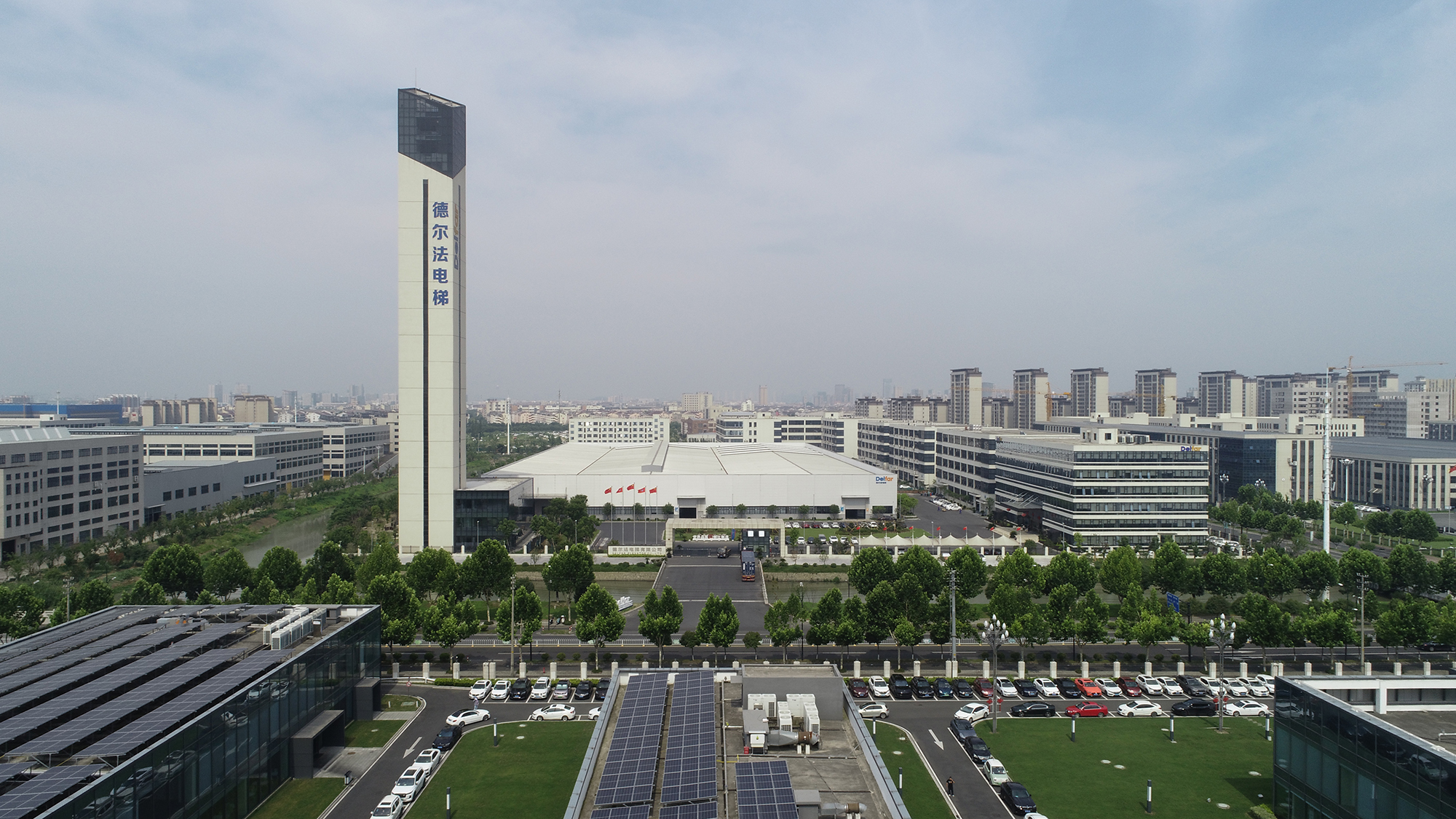
Delfar Elevator Co., Ltd. manufactures both families in a 100,000 m² facility in Huzhou, Zhejiang, China, with OEM production, a minimum order quantity of 1 unit, a normal lead time of 35 days and a 100% pre-shipment test as the acceptance criterion. For projects in hospitality and warehousing where internal logistics is the bottleneck, that combination is the practical starting point.
Specify the right goods elevator before the shaft is fixed
Send shaft dimensions, load type, capacity, travel height, number of stops and destination market to receive a configuration review and quotation.
Download the company profile and product catalogue: Delfar company profile (PDF)
Email: bensonelevator@gmail.com · Tel / WhatsApp: +86 135-1126-1762 · Address: No.777, Tengfei Road, Zhili Town, Huzhou, Zhejiang, China
Have Questions or Need More Details?
Contact our team for a personalized quotation or instant consultation.
Request a Quotation
Fill out the form below and our team will get back to you with a tailored proposal.
WhatsApp Direct Chat
Prefer to chat in real-time? Message us on WhatsApp for instant assistance & quick answers.
- Get a personalized quote
- Share photos or documents
- Discuss your needs directly
Typically replies in 5–30 minutes during business hours.