Specifying Load Capacity and Speed for Customized Freight Elevators
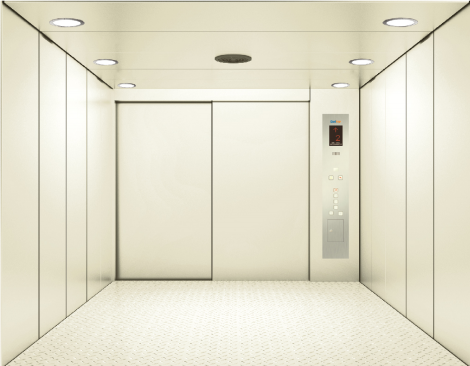
In a customized freight elevator project, rated load and rated speed are the two parameters that determine the car platform size, the door clear opening, the traction machine and brake rating, the rope configuration, the pit and overhead dimensions, the energy consumed per trip, and ultimately the shaft the building has to provide.
Freight elevators rarely fail because a buyer picked the wrong brand. They fail because load, speed, stops and travel height were fixed before the payload handling method, the shaft survey and the compliance route were understood. When rated load is underestimated, the car platform and door opening are usually wrong as well — and at that point the shaft, not the elevator, becomes the constraint the project cannot solve.
This guide explains how to specify load capacity and speed for a customized freight elevator in an order that keeps engineering decisions in the right sequence. It covers how rated load should be derived from real payload handling, how VVVF control and a gearless traction machine determine the speed that can actually be used in service, how stops and travel height change the drive architecture, and how narrow-shaft and machine-room-less customization shifts the achievable envelope. Parameter values quoted here come from Delfar Elevator Co., Ltd. product data and from published third-party sources; project-specific values are always confirmed through engineering review against the real shaft and traffic requirements.
Problem definition: the load–speed decision that locks everything else
Rated load and rated speed are coupled. Rated load drives machine torque, sheave size, rope diameter and quantity, brake capacity, guide-rail dimensions, and the structural loads transferred into the shaft. Rated speed drives machine power, controller sizing, brake response and — through acceleration and deceleration ramps — the dynamic load the cargo experiences during every start and stop. Specify either value without the other and the engineering review has to solve a problem that should never have been created.
Four specification errors account for most freight elevator rework:
- Rated load taken from the goods only. Pallet trucks, powered pallet trucks, trolleys and the pallet itself travel inside the car with the load. Concentrated wheel loads also differ from distributed floor loads, so the car structure and floor finish must match the handling method, not only the total weight.
- Passenger elevator speed copied into a freight application. Higher speed increases machine power, braking distance and energy per trip; in exchange it must be paired with acceleration ramps that keep an unstable or top-heavy load from shifting.
- Car size fixed before the shaft survey. In a narrow-shaft retrofit, the internal shaft dimension decides the usable car platform, and the platform decides the largest pallet that can be loaded.
- Compliance treated as a final document check. The standards that apply in the destination market change what can be specified at all — for example, EN 81-20 requires a light curtain door detection system to reduce the risk of door strikes on passengers (KONE compliance guidance).
Industry background: where customized freight and industrial elevator demand is growing
Third-party research puts the global elevator market at approximately USD 84.8 billion in 2024 (Global Market Insights), with a projected rise from USD 87.9 billion in 2025 to USD 126.7 billion by 2034 at a CAGR of 4.2% (Global Market Insights). The industrial elevator segment — the group most closely tied to goods and freight movement — is projected to grow from USD 72.1 billion in 2025 to USD 116.3 billion by 2035 at a CAGR of 4.9% (Future Market Insights).
Technology direction points the same way. Machine-room-less (MRL) technology is expected to record the highest growth rate in the elevator market, at a CAGR of 9.6% through 2034 (Fortune Business Insights). That matters in freight and industrial projects because removing the machine room reduces the building space the owner has to reserve. Regionally, Asia Pacific held approximately 41.7% of the elevator market in 2025 (Grand View Research), while the Middle East elevator market was valued at USD 1.25 billion in 2023 and is projected to reach USD 2.38 billion by 2030 (Allied Market Research) — a region where high ambient temperatures and large logistics and hospitality developments shape specification choices.
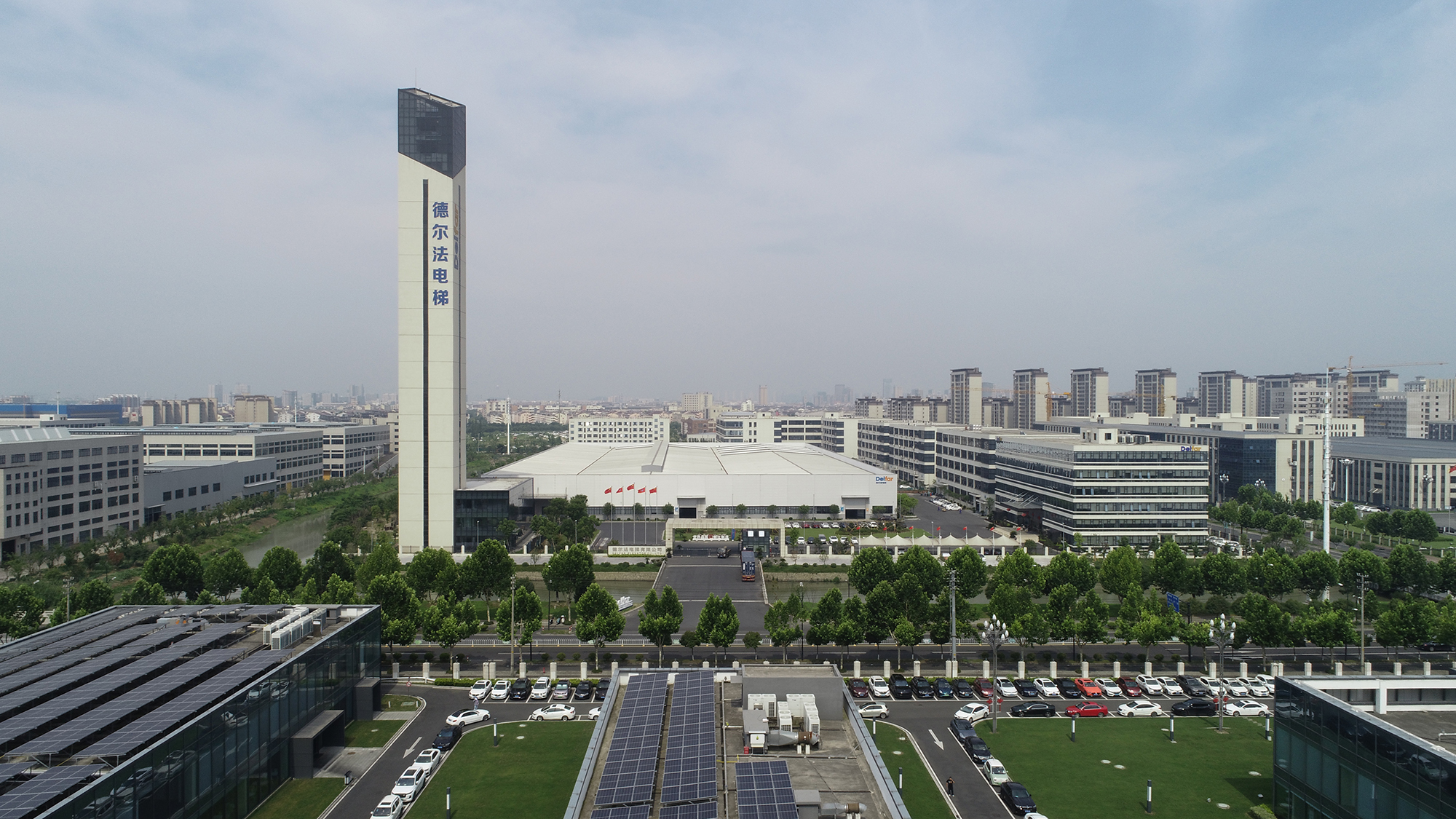
On the standards side, EN 81-20 and EN 81-50 are the primary harmonized European standards for elevator design and testing and are mandatory for CE marking (Liftinstituut). Delfar Elevator Co., Ltd. is an elevator manufacturer founded in 2011 in Huzhou, Zhejiang, China, producing passenger, home, observation, hospital, freight, car, machine-room-less and small machine room elevators, escalators and moving walks; the company holds ISO 9001, ISO 14001, ISO 45001, CE, CU, SASO, SGS and SC certificates and exports about 50% of its output to overseas markets. Those certificates and the quality system behind them are what allow a customized configuration to reach an international project without re-negotiating the compliance route from zero.
Detailed solution: how to fix rated load and rated speed on a customized freight elevator
Rated load: derive it from the handling method, not from a label
Rated load is the load the elevator is designed to lift, not the weight printed on the goods invoice. The practical derivation runs in four steps: establish the heaviest single load and its support method; add every piece of handling equipment that enters the car; check the usable platform area and the door clear opening against that footprint; then confirm the machine, brake, rope and guide-rail consequences of the resulting rated load.
The same pallet of goods handled by a manual pallet truck, by a powered pallet truck, or carried in by a counterbalance forklift produces three different cars and three different rated loads. Forklift entry also adds concentrated dynamic wheel loads that affect the car floor structure and, in many projects, the position of the car within the shaft. A heavy-duty customized elevator therefore starts as a handling-method question, not as a capacity figure.
Delfar's product platform shows how far rated load scales across its elevator families. The DP/DPN passenger elevator family covers 400–3000 kg, 1.0–6.0 m/s, 2–60 stops and travel height up to 100 m in machine-room-less or small machine room configuration, while the DH home elevator family covers 320–630 kg, 0.3–0.5 m/s, 2–6 stops and up to 20 m of travel. Freight-oriented configurations are engineered per project: Delfar's engineering team develops customized solutions based on building structures, shaft dimensions, traffic requirements, local standards and project budgets, so rated load is confirmed against a real shaft rather than selected from a catalogue column. Car finish and floor selection follow the same logic — the recorded material options across the families include stainless steel, glass, painted steel and wood-finish surfaces with customized options, and PVC or marble flooring — and for goods transport the choice should be driven by abrasion and impact resistance in the actual duty cycle.
Rated speed and VVVF control: what actually determines ride behaviour
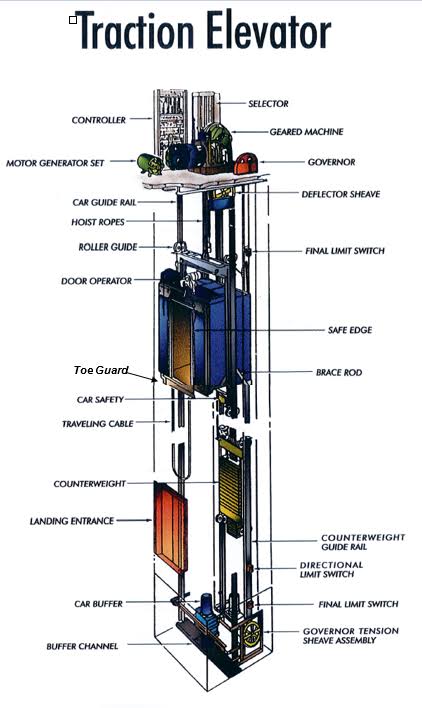
Rated speed is the speed the elevator holds in steady travel; how it reaches and leaves that speed is decided by the drive. In Delfar's gearless traction design, the driving unit is a permanent magnet synchronous motor (PMSM) traction machine: the variable-frequency drive (VFD) supplies regulated AC power to the stator to create a rotating magnetic field, the rotor with permanent magnets rotates in synchronism, and the rotor directly turns the integrated traction sheave, generating friction with the steel ropes to move the car. An encoder provides real-time position and speed feedback for precise control, while the brake engages during stops to guarantee safety.
That is what VVVF (variable voltage, variable frequency) control contributes to a freight specification: a controlled acceleration and deceleration profile instead of an abrupt start and stop. For goods movement this is not only a comfort feature. A controlled ramp limits the dynamic forces acting on the cargo, keeps the load from shifting on the platform, and supports accurate leveling at each landing so that pallet trucks and trolleys can transfer without a step or a gap.
Speed selection is a trade-off rather than a target. Raising rated speed increases machine power, brake duty, energy per trip and often the pit and overhead space required, while shortening travel time. In freight duty the binding constraint is usually load and handling time rather than travel time, so a moderate speed paired with a correctly sized load capacity tends to produce a more economical and more durable installation than a high speed paired with a marginal capacity.
Stops and travel height: how they change the drive architecture
Stops and travel height determine how often the machine starts and how much rope and safety equipment the shaft carries. More stops mean more acceleration and deceleration cycles per trip, which directly affects machine duty and increases the value of smooth VVVF control. Travel height determines whether a traction or a hydraulic solution is technically appropriate at all.
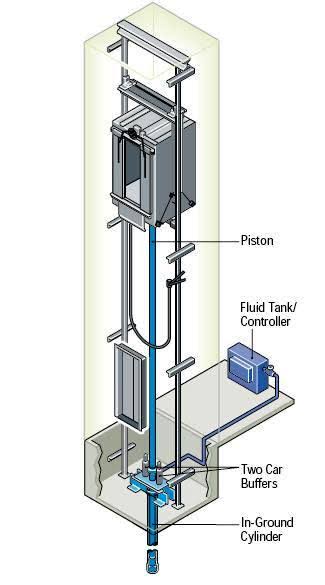
Compared with traditional hydraulic elevators, traction elevators offer distinct advantages in speed, energy efficiency, travel height and space savings, providing up to 3.3 times higher speed and up to approximately 6 times higher travel height. Traction elevators are suitable for medium and high-rise buildings, residential complexes, hotels, offices, hospitals, commercial buildings and high-traffic applications, whereas hydraulic elevators are best for low-rise, low-speed, low-traffic and heavy-load applications. Drive architecture also changes the building works: in Delfar's home elevator range, a traction solution typically requires a pit depth of 300–500 mm and headroom of 2800–3000 mm, while a hydraulic solution can operate with a shallower pit of 100–200 mm. The same principle — trading structural works against drive architecture — applies when a freight installation is planned inside an existing building with limited pit or overhead clearance.
Narrow-shaft customization and machine-room-less layouts
Narrow-shaft customization starts with a shaft survey, not with a product selection. Internal clear dimensions, door positions and sizes, overhead height, pit depth, wall construction and the structural condition of the slab all constrain what the car can be. Once those values are known, engineering works backward: it establishes the largest car platform that fits the available shaft while preserving the door clear opening the handling equipment needs, then matches rated load, speed, stops and travel to that platform.
Machine-room-less configuration is the main lever in tight buildings. MRL layouts can reduce building space requirements because the machine is integrated into the hoistway rather than housed in a separate room — one reason MRL technology is expected to record the highest growth rate in the market, at a CAGR of 9.6% through 2034 (Fortune Business Insights). Two trade-offs should be stated openly in a narrow-shaft specification: reducing platform area to fit a narrow shaft reduces the largest pallet the elevator can carry, and increasing rated load inside a fixed shaft increases machine, brake, rope and structural demands without changing the shaft itself.
Environment, duty and supporting systems
Load and speed also have to be specified against the operating environment. Delfar elevator solutions are specified for ambient temperatures of −5°C to +40°C, relative humidity up to 90% RH non-condensing and altitudes up to 1,000 m, installed in a well-ventilated environment free from excessive dust, corrosive gases and flammable or explosive substances. When the real project environment is harsher, the specification has to declare it: fire protection, explosion-proof, waterproof, corrosion-resistant, dust-proof and high or low temperature resistant requirements are configuration decisions, not additions to be made after installation.
Supporting systems belong in the same discussion because they affect electrical and control design: emergency power supply, fire alarm system, CCTV, automatic rescue device (ARD), access control, intercom and remote monitoring. An ARD, for example, uses battery power to lower the car to the nearest floor during a power outage — in freight duty that determines whether a loaded car can be recovered without manual intervention.
Step-by-step: the freight elevator specification workflow
- Define the payload envelope. Identify the heaviest single load, its support method and every piece of handling equipment that enters the car. This produces the target rated load before any model is discussed.
- Establish traffic and cycle requirements. Estimate peak periods and trips per hour, because frequent starts affect machine duty and raise the value of controlled acceleration.
- Fix travel height and number of stops from the building. These two values determine rope length, safety devices and whether traction or hydraulic architecture is technically suitable.
- Choose the drive architecture. Compare speed, energy efficiency, travel height, space savings, application fit, maintenance focus and configuration-dependent initial cost.
- Pair rated load with rated speed. Confirm the machine, brake, rope and guide-rail consequences of the pair, and verify that the acceleration and deceleration ramp keeps the load stable.
- Reconcile the design with the shaft. Run the shaft survey, agree the car platform and door opening, and decide whether a machine-room-less or narrow-shaft layout is required.
- Lock compliance, documentation and lifecycle support. Confirm the standards that apply in the destination market, the certificates the supplier holds, and the scope of installation guidance, commissioning, maintenance support and after-sales service before the order is released.
Use cases: matching load and speed to the operating environment
The same rated load can require different speeds, duty ratings and finishes depending on where the elevator is installed. Delfar's project scope covers residential, villa, commercial, hospitality, healthcare, industrial, logistics, transportation and public infrastructure and mixed-use developments, and the environment usually decides the priority:
- Manufacturing and industrial plants: dust-proof and corrosion-resistant requirements often take priority, and cycle frequency rather than travel height tends to drive the speed decision.
- Logistics and warehouse facilities: high-frequency, low-to-medium travel duty, where accurate leveling matters more than peak speed because every trip ends with a transfer.
- Low-temperature and high-temperature environments: high or low temperature resistant configurations, specified against the measured ambient range rather than a default assumption.
- Hospitality, retail and commercial buildings: goods movement integrated with passenger traffic, where travel height and stop count frequently push the project toward traction architecture.
- Automotive and parking, healthcare and public infrastructure: projects where supporting systems — fire alarm, CCTV, access control, intercom, remote monitoring — are part of the specification rather than optional extras.
Multi-unit delivery experience matters in these programs because repeatability across identical shafts is what keeps a project on schedule. Delfar project records include 16 units of model 7737 supplied to a hotel and hospitality complex in Australia, a project delivered with an operation duration of 10–20 years and a premium appearance suited to the hospitality environment. For freight and industrial programs, the equivalent requirement is that every unit in a multi-shaft building is produced, inspected and commissioned to the same confirmed parameter set.
Comparison table: traction vs. traditional hydraulic for freight specification
| Decision factor | Traction elevator (customized, MRL-capable) | Traditional hydraulic elevator |
|---|---|---|
| Speed potential | Up to 3.3× higher speed than traditional hydraulic elevators | Lower speed; suited to low-speed duty |
| Travel height | Up to approximately 6× higher travel height | Limited travel height; oriented to low-rise applications |
| Energy use | About 28% lower energy consumption; counterweight and efficient electric drive reduce the energy required for operation | Generally higher energy consumption; depends on pump and oil circulation |
| Building space | Machine-room-less layouts can reduce building space requirements | Requires space for pump and machine components; no MRL space advantage |
| Best fit | Medium/high-rise buildings, residential complexes, hotels, offices, hospitals, commercial buildings and high-traffic applications | Low-rise, low-speed, low-traffic and heavy-load applications |
| Maintenance focus | Traction machine, ropes, brake, encoder, controller | Hydraulic oil, pump, valves and seals, plus potential leakage; fewer major moving components |
| Initial cost | Can be higher depending on configuration; lower energy consumption and reduced building space may offset initial costs over time | Lower initial cost in some low-rise configurations |
Comparison compiled from Delfar Elevator comparison data on traction and traditional hydraulic elevators. Cost statements describe configuration-dependent differences, not fixed prices.
Frequently asked questions
1. Which standards should a customized freight elevator comply with in a CE-marked market?
EN 81-20 and EN 81-50 are the primary harmonized European standards for elevator design and testing, and they are mandatory for CE marking (Liftinstituut). EN 81-20 also requires a light curtain door detection system to reduce the risk of door strikes (KONE compliance guidance). For a customized freight elevator, the compliance route — including safety devices such as unintended car movement protection — should be fixed during specification rather than at handover, and the supplier's certificate set should be verified in the same review. Delfar holds ISO 9001, ISO 14001, ISO 45001, CE, CU, SASO, SGS and SC certificates.
2. Can rated load and rated speed be specified independently on a customized freight elevator?
Only partly. Rated load drives machine torque, sheave and rope selection, brake capacity and guide-rail loads, while rated speed drives machine power and the acceleration and deceleration profile delivered by VVVF control, so the two are confirmed together. Delfar's product platform provides reference points: the DP/DPN passenger elevator family covers 400–3000 kg, 1.0–6.0 m/s, 2–60 stops and travel height up to 100 m, while the DH home elevator family covers 320–630 kg, 0.3–0.5 m/s, 2–6 stops and up to 20 m. Freight-oriented configurations are engineered per project because the machine, brake and shaft must be checked against the actual load-and-speed pair instead of a standard table.
3. How does a higher load or higher speed affect the project budget?
Two effects move in opposite directions. Raising rated load or rated speed generally increases machine, brake, rope and structural demands, and the initial cost of a traction elevator can be higher than a hydraulic elevator depending on configuration. The offsetting effect is operating cost and building space: traction solutions consume about 28% less energy than traditional hydraulic elevators, and machine-room-less layouts can reduce building space requirements. For budget planning, customized elevators in emerging markets are typically priced between USD 18,000 and USD 35,000 per unit (Maximize Market Research, 2025), and maintenance services account for approximately 55% of global elevator market revenue (Vyansa Intelligence, 2025) — which is why lifecycle cost, not purchase price alone, should drive the load and speed decision.
4. What can be reviewed with the manufacturer before production starts?
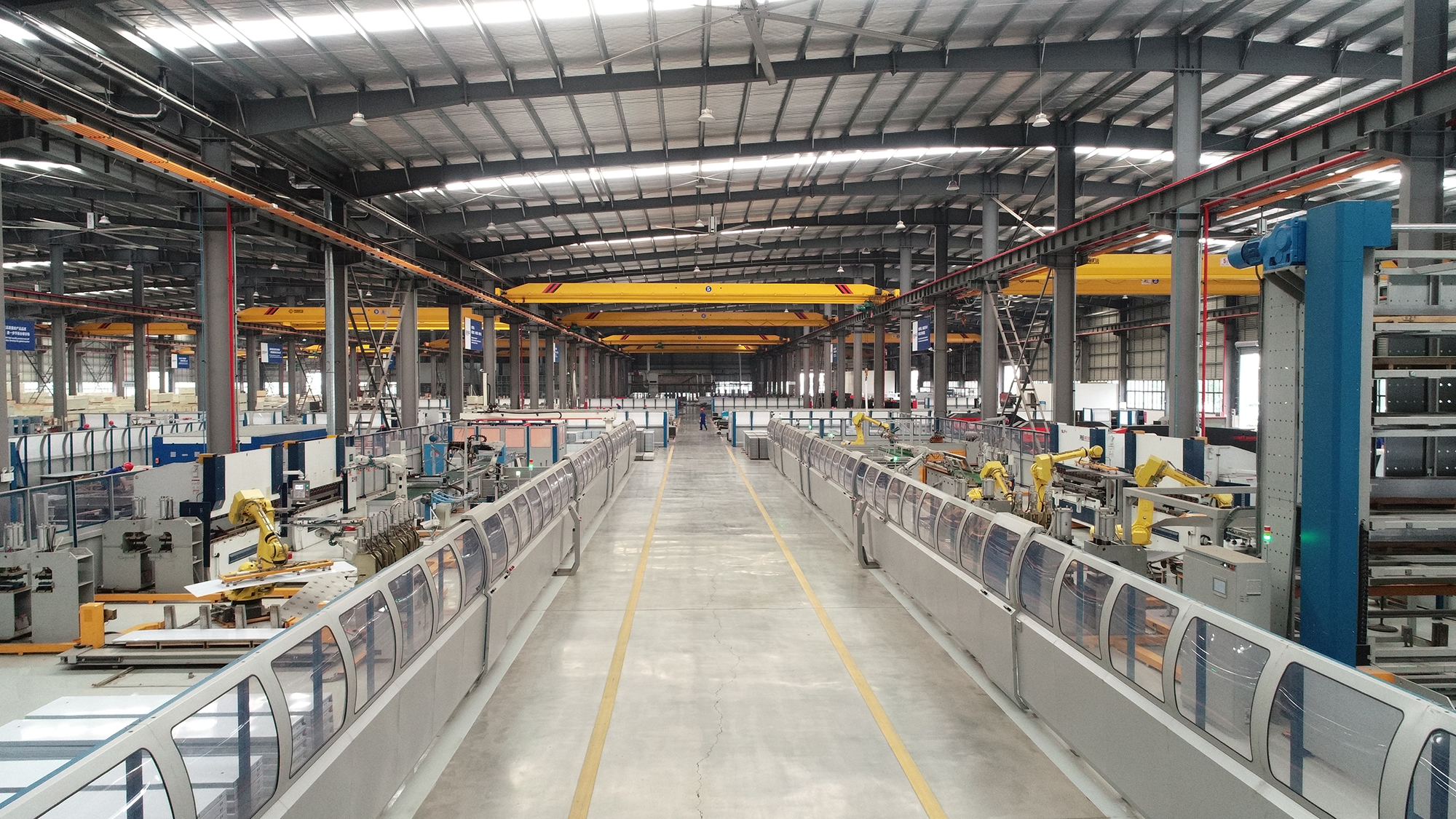
The specification review covers building structure, shaft dimensions, traffic requirements, local standards and project budget — the inputs Delfar's engineering team uses to develop customized solutions. Delfar's process runs from pre-sales consultation and technical design through manufacturing, installation guidance, commissioning, maintenance support and after-sales service, so the shaft survey, car platform, door opening and parameter set can all be confirmed before components are released to production. Manufacturing takes place in a factory of approximately 100,000 m² with production automation of up to 70% in key processes, standardized operating procedures and 5S management, and every component passes managed production and inspection processes before becoming part of a complete elevator solution.
5. What should be fixed before the order is released, and how do we start?
Six items need to be fixed: the payload envelope and handling method; the rated load and rated speed pair; stops and travel height; the drive architecture; the shaft and layout constraints, including whether a narrow-shaft or machine-room-less design is required; and the compliance route for the destination market. Starting the review requires only the shaft drawings plus the expected traffic and payload data. Delfar Elevator Co., Ltd. can be contacted for a technical review and quotation — share the shaft dimensions and payload details and the engineering team will respond with a confirmed parameter set.
Conclusion
Load capacity and speed are not the last two numbers on a freight elevator datasheet — they are the first two decisions. Once the payload envelope and handling method are defined, the rated load follows. Once the drive, the ramps and the travel height are understood, a rated speed can be chosen that the machine, brake and building genuinely support. Stops, travel height, shaft geometry and compliance then fall into place around those two values instead of contradicting them.
A customized freight elevator specified in this order needs less rework, fits the shaft it was measured against, and performs predictably over a long service life. The most useful moment to involve the manufacturer is therefore before the parameters are frozen — with shaft drawings, payload data and destination market in hand.
Next step: confirm your freight elevator parameters
Send the shaft drawings, payload data and destination market, and Delfar Elevator will return a confirmed load, speed, stops and travel-height configuration together with the applicable compliance route.
Download the Delfar Elevator company profile (PDF)
Email: bensonelevator@gmail.com · Tel / WhatsApp: +86 135-1126-1762
No.777, Tengfei Road, Zhili Town, Huzhou City, Zhejiang Province, China