
Top 5 Customized Elevator Solutions for Residential, Commercial, and Industrial Use
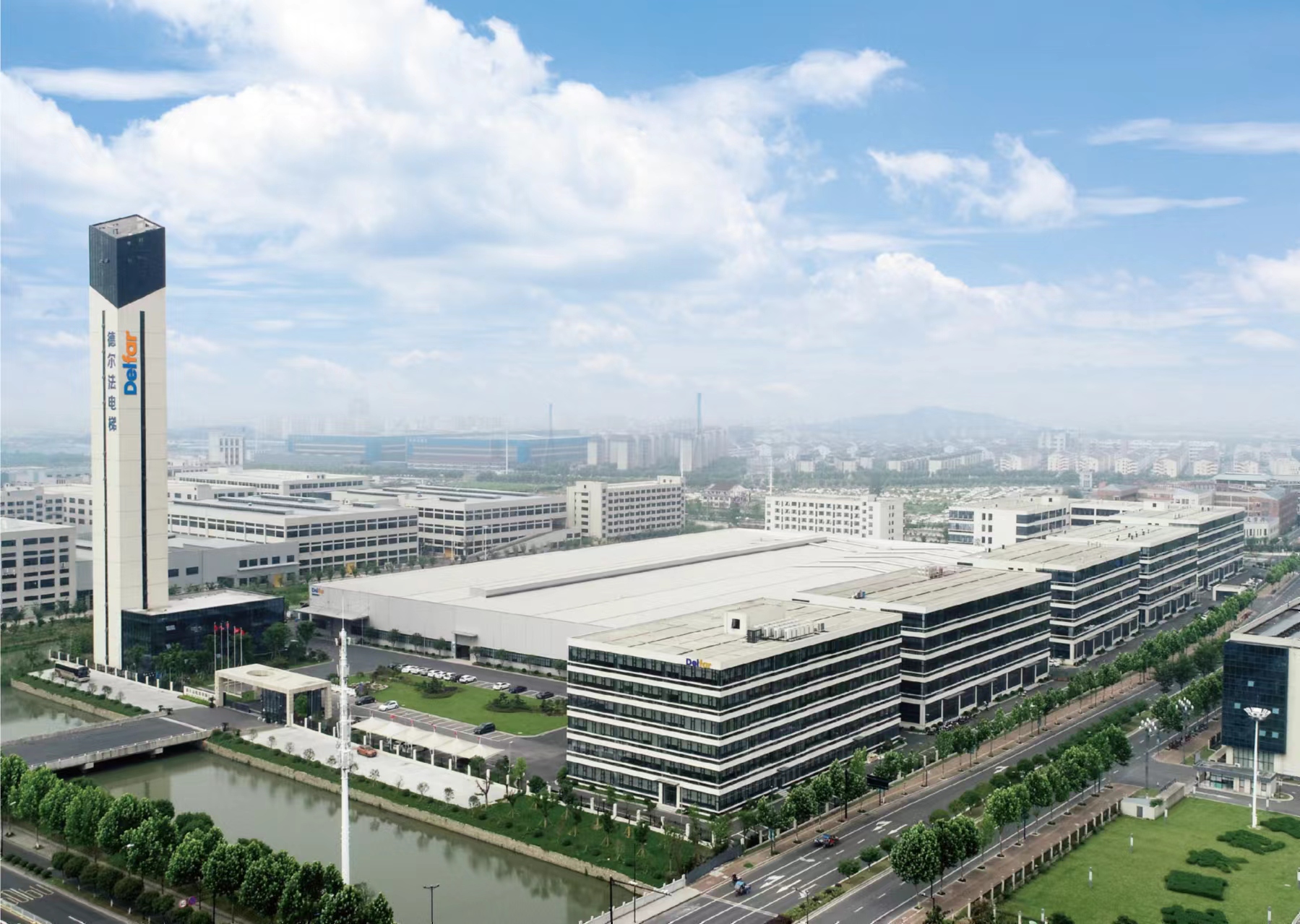
Quick answer: A customized elevator is not one product with optional extras — it is a product family whose capacity, speed, travel height, stop count and cabin materials are matched to one specific building. Ranked by project fit rather than brand preference, the five most useful customized elevator solutions are the DH home/villa elevator for residential buildings, the DP/DPN passenger elevator for commercial and high-rise residential projects, the DF/DFN freight elevator for industrial and logistics sites, the DPO/DPNO observation elevator for retail and commercial real estate, and the DW dumbwaiter for hotels and catering operations.
This ranking compares solution types, not competing manufacturers, because the choice of family — not the choice of supplier — is the decision that most often goes wrong. A villa that needs a 320–630 kg home elevator cannot be served by a 2,000–8,000 kg freight platform, and a warehouse gains nothing from a 6.0 m/s passenger car. Each entry below follows the same structure: what the solution is, its verified specifications, why it fits a defined project type, and where its limits begin. All product data comes from the published specifications of Delfar Elevator, a professional elevator manufacturer based in Huzhou, Zhejiang, China.
What "Customized" Actually Changes in an Elevator Specification
Customization in elevator procurement operates on three separate levels, and buyers in the evaluation stage should keep them apart, because each level carries a different cost and a different lead-time impact.
- Geometry: travel height, number of stops, cabin footprint, door arrangement, and shaft type (steel, aluminum or concrete, depending on the family).
- Performance: rated capacity and rated speed, selected within the band each family can physically deliver.
- Appearance and interface: logo, cabin wall material and color, car door material and color, ceiling type, floor material and pattern, and handrail material and color — the standard customization list offered in Delfar's OEM program.
Delfar Elevator Co., Ltd. integrates R&D, manufacturing, sales, project support and after-sales service, and runs an OEM production program with a minimum order quantity of one unit and a monthly capacity of 800 units. That combination matters commercially: a single bespoke elevator for a private villa and a multi-unit series order for a residential tower can move through the same production and inspection system.
The problem this ranking solves: most sourcing errors in customized elevator projects fall into three categories — a geometry mismatch (the chosen family cannot serve the available travel height or stop count), a duty mismatch (capacity is sized from passenger traffic when the real duty is cargo), and a compliance or finish mismatch (the specification omits the standards the destination market enforces, or the finishes cannot be executed in the selected family).
Why Project Type, Not Brand Preference, Drives the Shortlist
Global demand is spread across segments rather than concentrated in one building type. The global elevator market was valued at approximately USD 84.8 billion in 2024 and is projected to grow from USD 87.9 billion in 2025 to USD 126.7 billion by 2034, a CAGR of 4.2%, according to Global Market Insights. Grand View Research estimates the residential elevator segment alone at USD 54.61 billion in 2024, while Future Market Insights projects the industrial elevators market to grow from USD 72.1 billion in 2025 to USD 116.3 billion by 2035 at a CAGR of 4.9%.
Published figures differ by scope: global estimates range from roughly USD 82 billion to USD 100 billion for 2024–2025 depending on whether escalators and service revenue are bundled, so any single market number should be read as a definition, not an absolute. Within that market, elevators accounted for about 75% of the combined elevator and escalator market in 2025 (Vyansa Intelligence, reported via PR Newswire), and machine-roomless (MRL) technology is expected to record the highest growth rate, at a CAGR of 9.6% through 2034 (Fortune Business Insights). Regionally, Asia Pacific held approximately 41.7% of the market in 2025 (Grand View Research), while the Middle East elevator market was valued at USD 1.25 billion in 2023 and is projected to reach USD 2.38 billion by 2030 (Allied Market Research).
The practical translation for a specifier is simple: because growth is distributed across residential, commercial and industrial segments, the correct first question is not "which elevator brand," but "which family fits this building's traffic, load and shaft." Two further signals reinforce that logic. Maintenance services account for approximately 55% of global elevator market revenue (Vyansa Intelligence, via PR Newswire), so lifecycle terms weigh as heavily as purchase price, and high-rise modernizations in the Middle East & Africa are expected to grow at a CAGR of 11% between 2024 and 2030 (Roland Berger), which favors suppliers who can support both new installations and long-term service.
The Ranking: Five Customized Elevator Solutions by Project Type
#1 DH Home/Villa Elevator — Best for Residential Buildings
The DH is a small machine room or machine-roomless home elevator rated for a travel height of up to 20 m, 2–6 stops, a speed of 0.3–0.5 m/s and a capacity of 320–630 kg. Shaft construction can be aluminum or steel; the car and the car and landing doors can be specified in stainless steel, glass, painted steel, wood-finish or other customized options; flooring is PVC or marble; the car operating panel can be stainless steel, glass or acrylic plexiglass, and the landing operating panel stainless steel or glass.
It ranks first because residential projects impose the tightest geometric constraints. A 320–630 kg capacity band matches household traffic — passengers plus luggage, strollers or a wheelchair — without demanding the shaft footprint of a commercial car, and the 0.3–0.5 m/s speed profile keeps noise and energy demand low inside a home. The machine-roomless configuration removes the need for a separate machine room, which is often the difference between fitting a lift into an existing villa and abandoning the idea. On the residential decision between drive technologies, Delfar's guidance is that traction home elevators are the primary choice where quiet, energy-efficient, long-term stable performance matters, while hydraulic home elevators are recommended specifically for projects with severe pit or headroom structural constraints.
A verified application illustrates the design intent: a construction company in Brazil ordered 20 units of the DH for a luxury private villa project, where the compact structure and customized finishes create a seamless connection between vertical mobility and the home's architectural aesthetics. The recorded project highlights were customized design, space efficiency, home comfort and low noise, with a project duration of 10–20 years.
Where it stops: the DH family covers up to 20 m of travel and 6 stops. A building that needs more stops or a taller rise moves into the passenger elevator category below.
#2 DP/DPN Passenger Elevator — Best for Commercial and High-Rise Residential Projects
The DP/DPN passenger elevator is available as a small machine room or machine-roomless unit, with a travel height of up to 100 m, 2–60 stops, a speed range of 1.0–6.0 m/s and a capacity range of 400–3,000 kg. Car finishes, car and landing door finishes and handrails follow the same customized material set as the DH — stainless steel, glass, painted steel, wood-finish and custom options — with PVC or marble flooring and stainless steel, glass or acrylic plexiglass control panels.
This is the widest band in the portfolio, and it is the reason the DP/DPN ranks second: one family covers a four-storey office block and a 100 m tower, and the upper end of the range (up to 6.0 m/s) addresses the high-speed customized elevator requirement in tall buildings, while the machine-roomless configuration answers the growing preference for MRL technology — the segment expected to grow fastest through 2034. For commercial buildings, the specification decision usually narrows to capacity per car, speed, and how the control system distributes passengers at peak.
Two verified projects show the commercial range in practice. A distributor in Albania installed 30 units of the DP/DPN in a high-rise residential building, with smooth acceleration and deceleration, low-noise operation, a modern cabin design coordinated with the building's interior, an efficient configuration for high-frequency daily use and reliable long-term performance. A passenger elevator OEM client in Angola used 20 units in a commercial office building designed for intensive passenger flow, fast and responsive operation during peak periods, elegant stainless-steel cabin finishes and an intelligent control system that helps optimize passenger distribution.
Where it stops: capacity tops out at 3,000 kg. Palletized goods, trolleys and vehicles belong to the freight and specialty families, not to a passenger car.
#3 DF/DFN Freight Elevator — Best for Industrial and Logistics Sites
The DF/DFN freight elevator is offered as a small machine room or machine-roomless unit with a travel height of up to 50 m, 2–10 stops, a speed of 0.25–1.0 m/s and a capacity of 2,000–8,000 kg. The car is built in painted steel or hairline stainless steel, the floor in curved lined steel or stainless steel curved lined steel, and the landing and car operating panels use stainless steel faceplates.
It ranks third because load duty, not passenger comfort, defines the design. The 2,000–8,000 kg band is what separates a genuine industrial solution from a passenger elevator being used as a service lift: pallets, roll cages and equipment need a platform rated for that mass, and the deliberately low 0.25–1.0 m/s speed supports precise levelling at loading docks and reduces wear under repeated heavy cycles. The durable material set — painted steel or hairline stainless steel surfaces and lined steel flooring — is specified for abrasion rather than appearance.
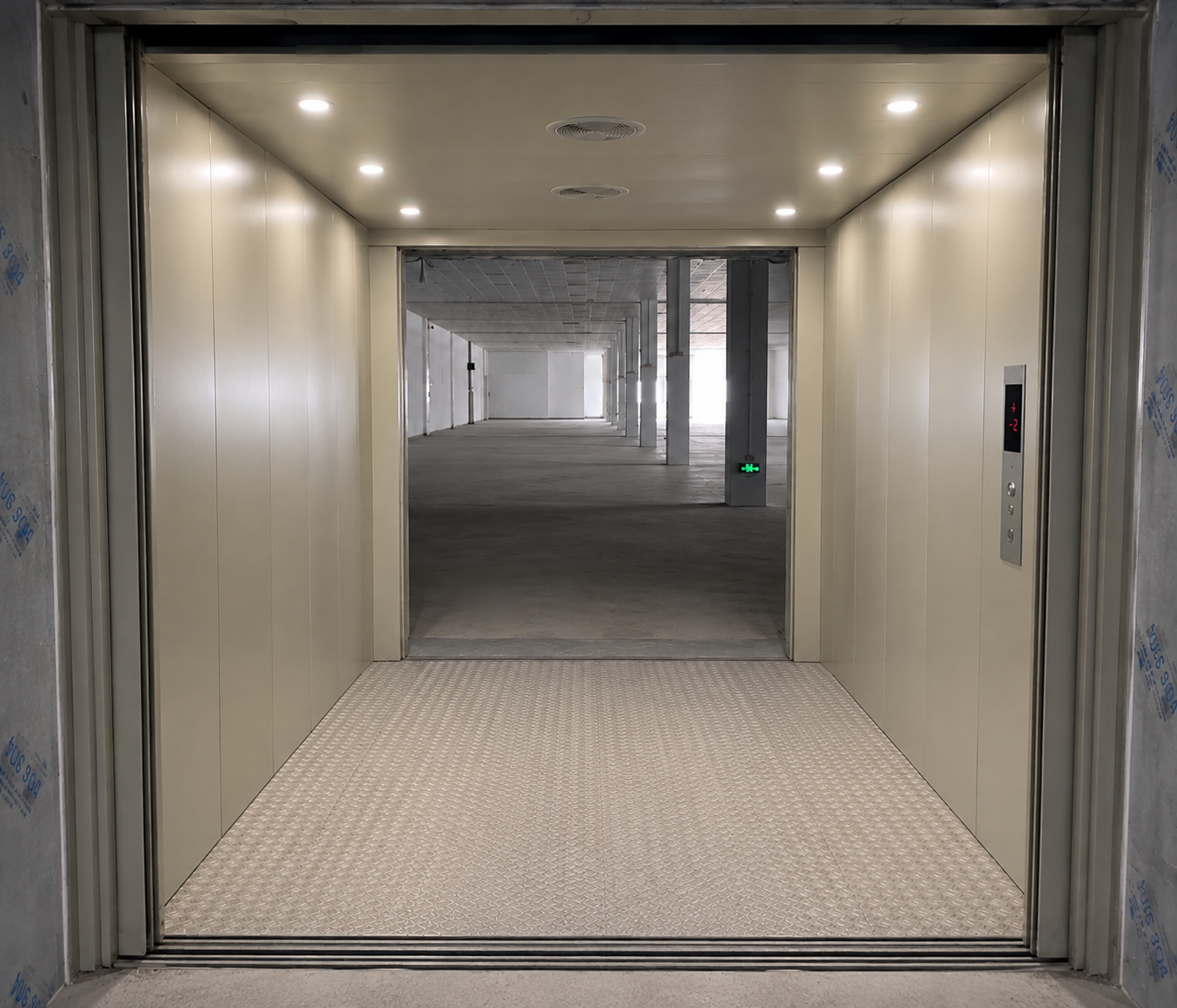
A construction company operating cargo transportation ordered 30 units of the DF/DFN. The recorded outcome was smooth and reliable operation, durable and robust construction and heavy-duty capacity, with flexible customization and a factory-direct supply arrangement.
Where it stops: the family covers 2,000–8,000 kg over up to 50 m and 10 stops. Above that band, or for vertical vehicle movement, the project needs a different platform rather than a larger version of this one.
#4 DPO/DPNO Observation Elevator — Best for Retail and Commercial Real Estate
The DPO/DPNO observation elevator (also described as an observation lift or panoramic lift) is available with a small machine room or machine-roomless configuration, a travel height of up to 100 m, 2–30 stops, a speed of 1.0–2.5 m/s and a capacity of 630–1,600 kg. Cabin and door finishes can be stainless steel, glass, painted steel, wood-finish or customized, with PVC or marble flooring and stainless steel, solid wood or acrylic handrails.
It ranks fourth because it does two jobs at once: vertical transportation and architecture. Its transparent structure creates open visual connections between floors, enhances the visual appeal of public spaces and can become a recognizable visual element inside a mall or atrium — value that a fully enclosed car cannot deliver. For commercial real estate and shopping mall projects, that dual function frequently justifies the specification, provided the traffic demand stays inside the 630–1,600 kg and 2–30 stop range.
A construction company in Bangladesh installed 16 units of the DPO/DPNO in a shopping mall, where the transparent design maximizes visual openness, complements contemporary commercial architecture and turns the ride itself into part of the visitor experience.
Where it stops: glass-dominant cabins suit public and front-of-house locations. For back-of-house goods movement, the freight elevator remains the correct choice.
#5 DW Dumbwaiter — Best for Hospitality and Catering Operations
The DW dumbwaiter is supplied as a window type or floor type unit with a travel height of up to 30 m, 2–8 stops, a speed of 0.2–0.5 m/s and a capacity of 50–500 kg. The cabin is 304 stainless steel with a stainless steel or anti-slip steel floor, stainless steel or painted steel landing doors, and a shaft that can be steel, aluminum or concrete.
It ranks fifth because it is the smallest and most specialized solution in the set, and because it solves a problem the other four families create: separating service traffic from guest traffic. Hotels, restaurants and catering operations use the DW to move food, supplies and tableware between preparation, storage and service levels without occupying a passenger car, and the 50–500 kg capacity and compact shaft requirements allow it to be fitted into existing service cores.
Where it stops: with a 2–8 stop range and a 500 kg ceiling, the DW is a service device. It is not a substitute for a passenger elevator, and it should never be specified as one.
How a Customized Elevator Is Specified and Built: Step by Step
The sequence below reflects the customization items and commercial terms published for Delfar's OEM program and shows where buyers in the execution stage should attach approvals.
- Define the project type and traffic profile. Residential, commercial, industrial, retail or hospitality; estimated daily trips, peak demand and any cargo requirement.
- Measure the shaft. Available travel height, number of stops, cabin footprint, door arrangement and shaft construction determine which families are technically possible before any finish is discussed.
- Select the family and the capacity/speed band. DH up to 20 m, 2–6 stops, 320–630 kg; DP/DPN up to 100 m, 2–60 stops, 400–3,000 kg; DF/DFN up to 50 m, 2–10 stops, 2,000–8,000 kg; DPO/DPNO up to 100 m, 2–30 stops, 630–1,600 kg; DW up to 30 m, 2–8 stops, 50–500 kg.
- Choose cabin materials and interfaces. Logo, cabin wall material/color, car door material/color, ceiling type, floor material/pattern and handrail material/color, plus control panel finish.
- Confirm the compliance path for the destination market. EN 81-20 and EN 81-50 are the primary harmonized European standards for elevator design and testing and are mandatory for CE marking (Liftinstituut); EN 81-20 also requires a light curtain door detection system to reduce the risk of door strikes on passengers, as described in compliance guidance published by KONE.
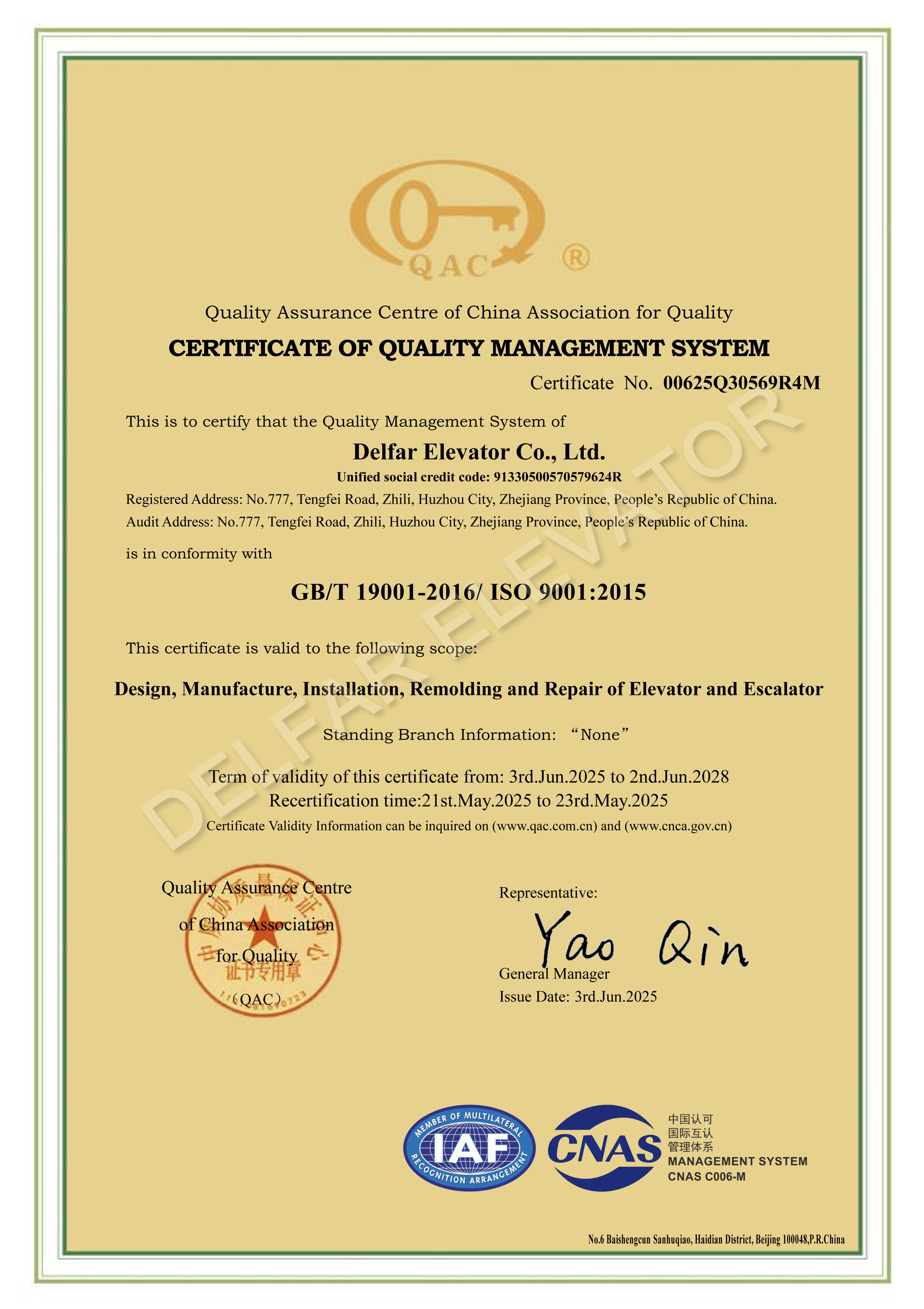
- Verify the manufacturer's certification scope. Delfar holds ISO 9001 (certificate 00625Q30569R4M issued by QAC, valid 3 June 2025 – 2 June 2028), ISO 14001 and ISO 45001, each covering the design, manufacture, installation, remolding and repair of elevators and escalators, alongside CE, CU, SASO, SGS and SC certificates. The CU and SASO certificates are directly relevant to projects in customs-union markets and to customized elevator projects for Middle East markets, where SASO compliance is a procurement condition.
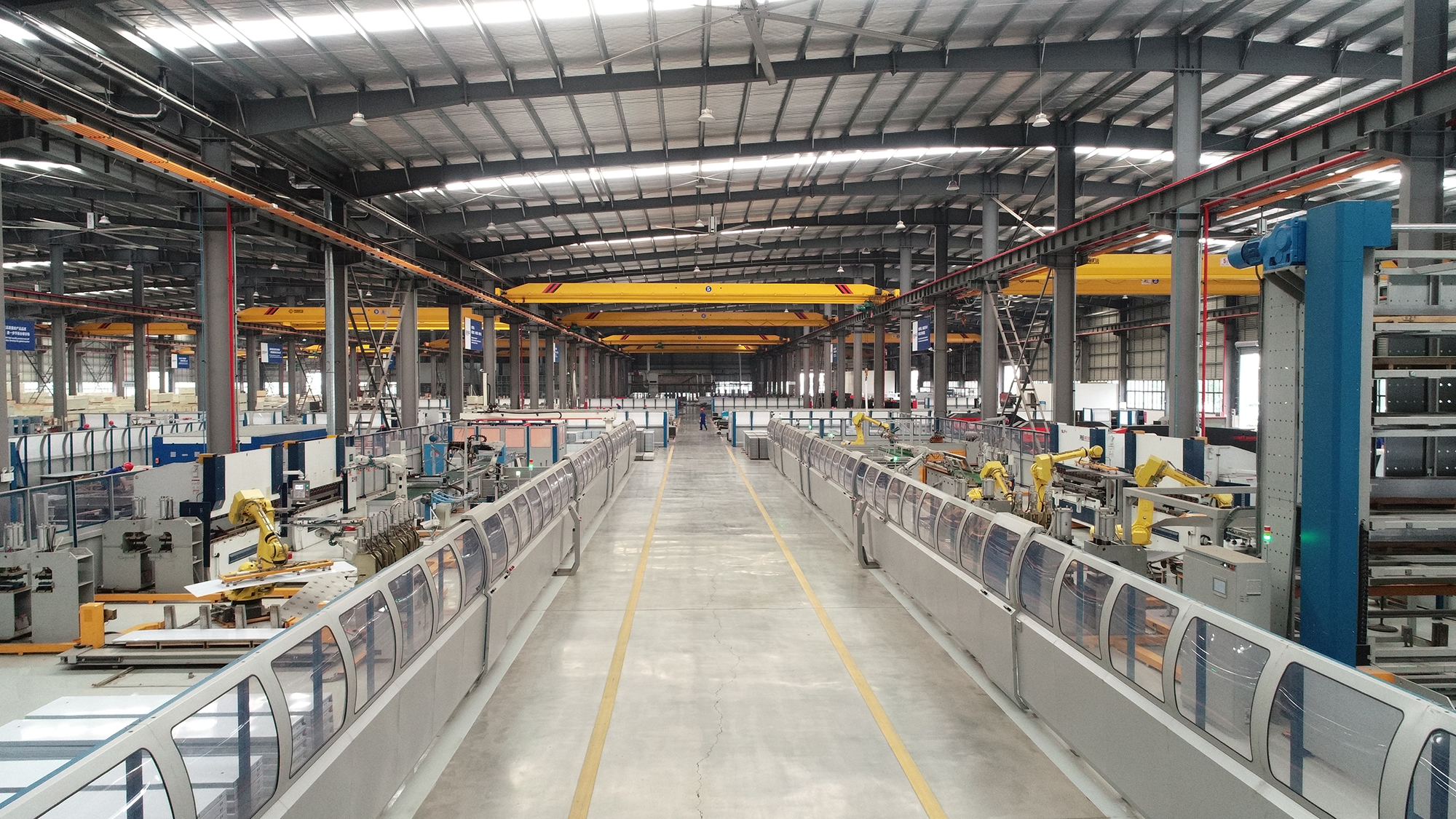
- Build, inspect and test. Customized units are produced in a factory covering approximately 100,000 m² with a monthly capacity of 800 units; every elevator goes through a 100% pre-shipment test, and "pre-shipment test" is the stated acceptance criterion.
- Ship and support. Normal lead time is 35 days; the minimum order quantity is 1 unit; shipment terms are FOB, CIF, EXW or CFR, and payment terms are T/T or L/C. After delivery, Delfar provides remote technical support through WhatsApp, email and other channels, professional on-site technical support when required, and a 12-month warranty from the date of delivery.
Verified Project Applications Across Segments
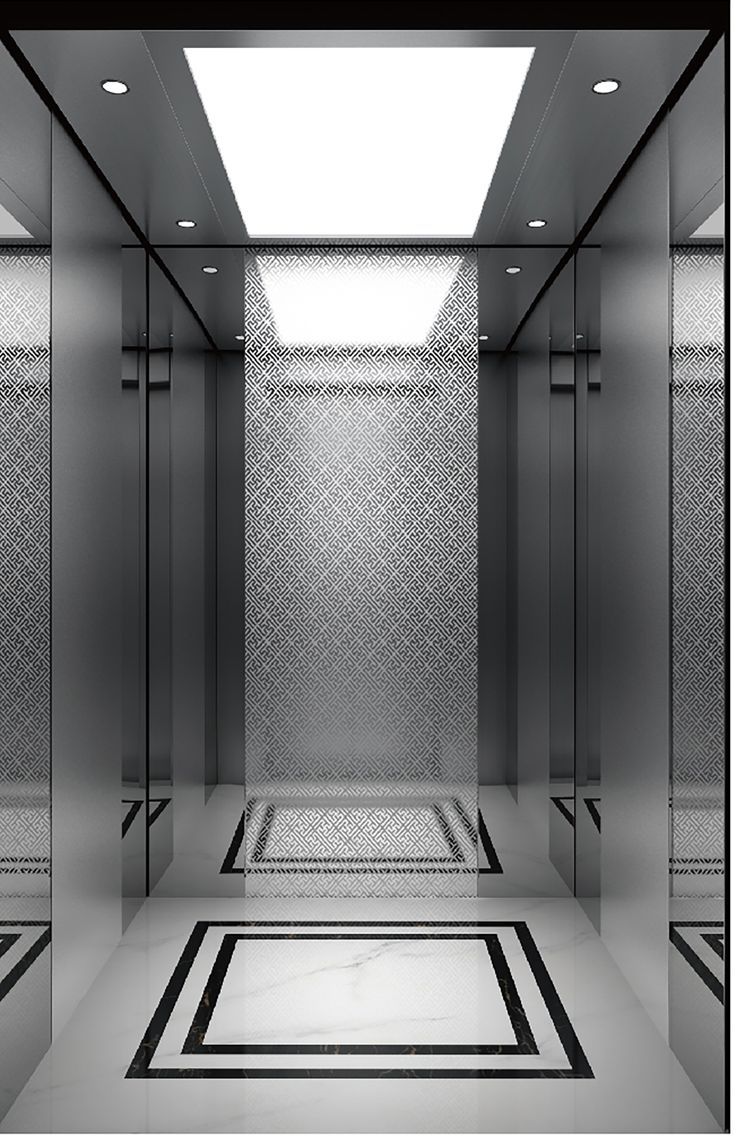
Beyond the single-family and commercial examples already listed, the same five families cover the segment mix that drives demand. A real estate developer in Georgia ordered 30 passenger elevators for a residential development, reporting stable operation, enhanced building value, long lifespan, low noise, energy saving and comfortable rides. A distributor in the United Arab Emirates ordered 20 passenger elevators for a transportation application, with stable operation, comfortable rides and gains in space utilization and energy saving.
For buyers sourcing into the Middle East, the regional context is worth noting: the Middle East elevator market is projected to expand from USD 1.25 billion in 2023 to USD 2.38 billion by 2030 (Allied Market Research), and Middle East & Africa high-rise modernizations are expected to grow at a CAGR of 11% between 2024 and 2030 (Roland Berger). Both trends favor suppliers who pair new-equipment customization with documented compliance and long-term service capability.
Customized Elevator Comparison Table
| Rank | Solution & model | Capacity | Speed | Travel height | Stops | Best-fit project |
|---|---|---|---|---|---|---|
| #1 | Home / villa elevator — DH | 320–630 kg | 0.3–0.5 m/s | ≤ 20 m | 2–6 | Villas, duplexes, private residences |
| #2 | Passenger elevator — DP/DPN | 400–3,000 kg | 1.0–6.0 m/s | ≤ 100 m | 2–60 | Offices, hotels, high-rise residential, mixed-use |
| #3 | Freight elevator — DF/DFN | 2,000–8,000 kg | 0.25–1.0 m/s | ≤ 50 m | 2–10 | Factories, warehouses, logistics hubs |
| #4 | Observation elevator — DPO/DPNO | 630–1,600 kg | 1.0–2.5 m/s | ≤ 100 m | 2–30 | Malls, atriums, hotels, commercial real estate |
| #5 | Dumbwaiter — DW | 50–500 kg | 0.2–0.5 m/s | ≤ 30 m | 2–8 | Hotels, restaurants, catering, service kitchens |
The table is a shortlisting tool, not a final specification. Rated capacity, speed, travel height and stop count must be confirmed against the actual shaft drawing and the destination market's compliance requirements before an order is released.
FAQ: Customized Elevator Solutions
Can a customized elevator be EN 81 compliant, and which certificates should a buyer verify?
Yes — compliance is a design and testing requirement, not a restriction on customization. EN 81-20 and EN 81-50 are the primary harmonized European standards for elevator design and testing and are mandatory for CE marking (Liftinstituut); EN 81-20 additionally requires a light curtain door detection system to reduce the risk of door strikes on passengers, as described in KONE's EN 81-20/EN 81-50 compliance guidance. When verifying a supplier, check both the standard and the certificate scope: Delfar Elevator Co., Ltd. holds ISO 9001 (certificate 00625Q30569R4M issued by QAC, valid 3 June 2025 – 2 June 2028), ISO 14001 and ISO 45001, each covering the design, manufacture, installation, remolding and repair of elevators and escalators, plus CE, CU, SASO, SGS and SC certificates.
How does an OEM customized elevator manufacturer deliver bespoke dimensions?
Dimensions are derived from the shaft, not from a catalogue. The supplier first defines travel height, stop count, cabin footprint and door arrangement, then matches them to the product family that can physically serve them: DH up to 20 m and 2–6 stops, DP/DPN up to 100 m and 2–60 stops, DF/DFN up to 50 m and 2–10 stops, DPO/DPNO up to 100 m and 2–30 stops, and DW up to 30 m and 2–8 stops. Beyond geometry, OEM customization covers logo, cabin wall material and color, car door material and color, ceiling type, floor material and pattern, and handrail material and color. Delfar runs OEM production with a minimum order quantity of one unit and a monthly capacity of 800 units.
What determines the price of a customized elevator?
Cost is driven by product family, rated capacity, rated speed, travel height, number of stops, cabin materials, compliance requirements and project logistics. As a third-party market reference, Maximize Market Research (2025) estimates that customized elevators in emerging markets are typically priced between USD 18,000 and USD 35,000 per unit — a band that applies to lighter families, while heavy-duty families such as the DF/DFN at 2,000–8,000 kg sit outside it. Purchase price is only part of the equation: maintenance services account for approximately 55% of global elevator market revenue (Vyansa Intelligence, via PR Newswire), so service terms and spare-part availability should be reviewed with the same care as the initial quotation.
Can a buyer validate a customized elevator before shipment?
Yes. Because the minimum order quantity is one unit, a single customized elevator can be ordered and inspected as a validation unit. Every unit passes a 100% pre-shipment test, and "pre-shipment test" is the stated acceptance criterion, which allows the buyer to confirm configuration and workmanship before the equipment leaves the factory. Cabin wall materials, door finishes, floor patterns, ceiling type and control panel finishes can be fixed against the customization list before production release, and Delfar provides remote technical support through WhatsApp, email and other channels during the specification stage, with professional on-site technical support available when a project requires it.
How long is the lead time, and what support follows delivery?
Normal lead time is 35 days, supported by a monthly production capacity of 800 units. Shipment terms are FOB, CIF, EXW or CFR, and payment terms are T/T or L/C. After delivery, Delfar provides remote technical support through WhatsApp, email and other channels, professional on-site technical support when required, and a 12-month warranty from the date of delivery. To move from evaluation to execution, send your shaft drawing and project type to the Delfar project team, or download the Delfar Elevator company profile (PDF) for the full product range and certification list.
Next Step: Match the Family Before You Match the Finish
The five solutions ranked above cover the residential, commercial, retail, industrial and hospitality segments because each one is defined by a distinct band of capacity, speed, travel height and stops — not by a marketing position. The DH serves homes up to 20 m and 6 stops; the DP/DPN carries 400–3,000 kg through buildings up to 100 m and 60 stops; the DF/DFN moves 2,000–8,000 kg of cargo over up to 50 m; the DPO/DPNO combines transportation with architecture in retail and commercial real estate; and the DW separates service traffic from guest traffic in hospitality operations. Selecting the family first, then customizing dimensions, materials and compliance to the project, is the sequence that keeps a bespoke elevator order on schedule.
Request a project review, sample specification or quotation

Send your building type, shaft dimensions and destination market to our project team and we will return the recommended family, capacity and compliance route.
- Contact: Benson
- Email: bensonelevator@gmail.com
- Tel / WhatsApp: +86 135-1126-1762 | Start a WhatsApp conversation
- Website: www.delfarelevator.com
- Download: Delfar Elevator company profile (PDF)