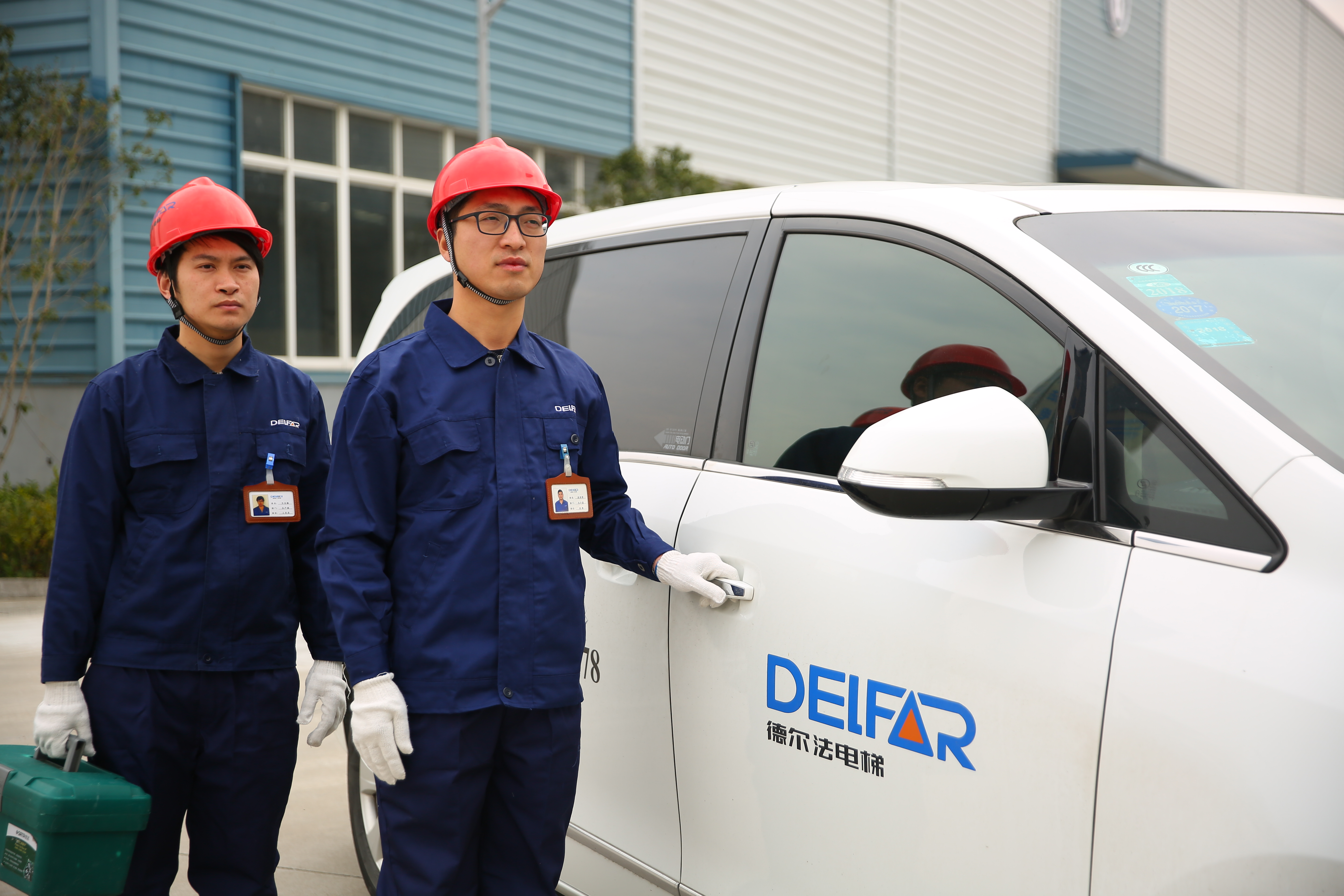
Top 7 Customized Elevator Types Ranked by Project Fit
: A Recommendation List for Specifiers
Delfar Elevator Co., Ltd. manufactures seven customized elevator types, and each one fits a different project scenario. Ranked by breadth of project fit, they are: 1 — passenger elevator DP/DPN; 2 — freight elevator DF/DFN; 3 — observation elevator DPO/DPNO; 4 — home and villa elevator DH; 5 — bed elevator DPB/DPNB; 6 — car elevator DA/DAN; and 7 — dumbwaiter DW. Each type is defined by a published specification envelope covering capacity, speed, number of stops and travel height — and that envelope, not the brand name, decides whether the equipment fits a given building.
This recommendation list is written for specifiers, developers, contractors, distributors and procurement teams who must choose an elevator type before they compare suppliers. The ranking uses Delfar's published product specification data and Delfar project references as its evidence base. It is ordered by how broadly each type applies across common project scenarios, not as a universal quality judgement: the lower-ranked types are the most application-specific ones, and specificity is exactly what makes them correct for their scenarios.
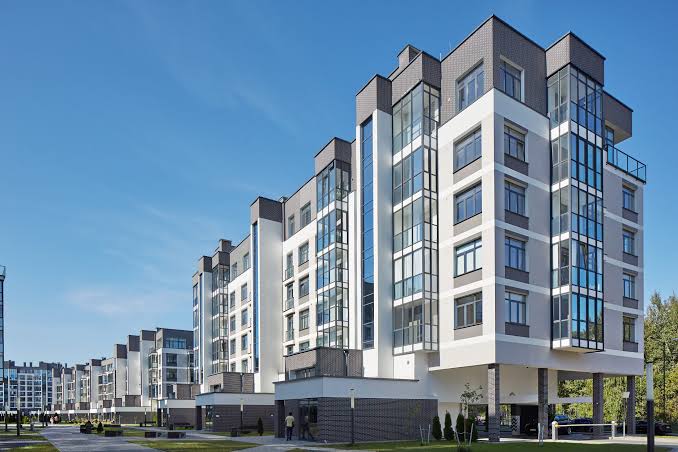
The Project Fit Problem: Elevator Type Comes Before Elevator Brand
Most elevator sourcing problems start with the wrong question. Buyers ask which customized elevator manufacturer to use before answering which customized elevator type the building needs. That sequence produces shafts that must be redesigned, cabins that cannot carry the required load, and compliance documents that do not match the destination market.
Project fit is the combined result of five constraints, and a specifier should be able to name all five before requesting a quotation:
- Traffic profile — how many passengers, beds, carts, vehicles or pallets move per hour, and what the peak looks like.
- Specification envelope — the rated capacity, speed, stop count and travel height the elevator type can support.
- Shaft and structure — whether a small machine room (MR) or machine-room-less (MRL) configuration is possible, and how much pit and headroom the site allows.
- Compliance obligations — destination-market standards and certifications, including EN 81-20 and EN 81-50 for CE marking and the light curtain door detection requirement introduced by EN 81-20.
- Lifecycle support — installation guidance, commissioning, spare parts and after-sales coverage across the service life of the equipment.
A customized elevator is not a standard elevator with a different interior. Delfar Elevator Co., Ltd. is a professional elevator manufacturer based in Huzhou, Zhejiang, China — one of China's elevator manufacturing hubs — integrating R&D, manufacturing, sales, project support and after-sales service, and producing passenger elevators, home elevators, observation elevators, hospital elevators, freight elevators, car elevators, machine-room-less elevators, small machine room elevators, escalators and moving walks. Its engineering practice is to develop solutions based on different building structures, shaft dimensions, traffic requirements, local standards and project budgets. That means the type decision and the customization decision are normally made together, not in sequence.
Industry Background: Why Customized Elevator Selection Is Changing
Customized and standard elevators together form a large global equipment category, and the mix of demand is shifting. Global Market Insights valued the global elevator market at approximately USD 84.8 billion in 2024 and projected growth from USD 87.9 billion in 2025 to USD 126.7 billion by 2034 at a CAGR of 4.2%. Grand View Research estimated the residential elevator segment at USD 54.61 billion in 2024 and reported that Asia Pacific accounted for roughly 41.7% of the global elevator market in 2025. Future Market Insights projected the industrial elevators market to grow from USD 72.1 billion in 2025 to USD 116.3 billion by 2035 at a CAGR of 4.9%.
Three structural trends shape how specifiers now approach elevator types:
- Machine-room-less configurations are expanding. Fortune Business Insights expects MRL technology to record the highest growth rate in the elevator category, at a CAGR of 9.6% through 2034. A machine-room-less customized elevator and small machine room variants are offered across Delfar's passenger, freight, observation, home and car elevator ranges, which allows a specifier to keep a shaft footprint compact without changing the transport task.
- The Middle East is a distinct procurement market. Allied Market Research valued the Middle East elevator market at USD 1.25 billion in 2023 with a projected increase to USD 2.38 billion by 2030, and Roland Berger projected high-rise modernizations in the Middle East & Africa to grow at a CAGR of 11% between 2024 and 2030. A customized elevator for Middle East markets is therefore frequently specified alongside documentation, registration and service requirements that differ from European or North American projects.
- Service revenue matters as much as equipment revenue. Vyansa Intelligence reported that maintenance services account for approximately 55% of global elevator market revenue — a reminder that the type you specify determines the service model a building owner lives with for decades.
Regulatory expectations are converging in parallel. EN 81-20 and EN 81-50 are the primary harmonized European standards for elevator design and testing and are mandatory for CE marking, and EN 81-20 requires a light curtain door detection system to reduce the risk of door strikes on passengers. Delfar holds ISO 9001, ISO 14001, ISO 45001, CE, CU, SASO, SGS and SC certificates, which allows one supplier to support projects in several regulatory environments without changing equipment platform.
Detailed Solution: 7 Customized Elevator Types Ranked by Project Fit
The ranking below applies four filters to Delfar's published product specification data: how many project scenarios the type serves, how wide its capacity and speed envelope is, how many customization surfaces it exposes, and whether both MR and MRL configurations are available where relevant.
Rank 1 — Passenger Elevator DP/DPN: Widest Fit Across Construction and Real Estate
Verified specification: capacity 400–3000 kg; speed 1.0–6.0 m/s; 2–60 stops; travel height up to 100 m; machine-room-less or small machine room; applicable industry Construction & Real Estate.
The DP/DPN passenger elevator ranks first because it covers the widest combination of capacity, speed, stop count and travel in the portfolio. The same product line can serve a low-rise residential block and a high-rise tower, because the speed range extends to 6.0 m/s — making it the natural platform when a high-speed customized elevator is required — and the stop count reaches 60. For a customized elevator for commercial buildings, this is usually the first type to evaluate, because office and mixed-use traffic profiles place the heaviest demands on handling capacity, speed and dispatching.
Customization surfaces on this type include car finish and car and landing doors in stainless steel, glass, painted steel or wood-finish; floors in PVC or marble; handrails in stainless steel, solid wood or acrylic; and C.O.P. and L.O.P. panels in stainless steel, glass or acrylic. Cabin, door, ceiling and interior design are all customizable, and both MR and MRL configurations are available.
Rank 2 — Freight Elevator DF/DFN: Heavy-Duty Fit for Manufacturing and Logistics
Verified specification: capacity 2000–8000 kg; speed 0.25–1.0 m/s; 2–10 stops; travel height up to 50 m; small machine room or machine-room-less; VVVF variable-frequency control; forklift-compatible; applicable industry Manufacturing | Logistics & Warehousing.
The freight elevator ranks second because it carries the highest load rating in the range — up to 8000 kg — and because industrial projects are usually decided by whether goods can be moved with industrial handling equipment. A heavy-duty customized elevator that cannot accept a forklift forces manual loading, which changes warehouse layout, staffing and cycle time. Delfar's freight elevator is specified as forklift-compatible, with flexible cabin dimensions and a wide door opening.
Customization here prioritizes durability over decoration: car in painted steel or hairline stainless steel, floor in curved lined steel or stainless steel curved lined steel, and stainless steel faceplate L.O.P. and C.O.P. VVVF variable-frequency control supports smooth acceleration and deceleration and reliable operation under heavy loads.
Rank 3 — Observation Elevator DPO/DPNO: Commercial Real Estate and Shopping Mall Fit
Verified specification: capacity 630–1600 kg; speed 1.0–2.5 m/s; 2–30 stops; travel height up to 100 m; small machine room or machine-room-less; 360° panoramic view; high-strength safety glass; indoor and outdoor solutions; applicable industry Commercial Real Estate / Shopping Mall.
The observation elevator is the only type on this list whose primary function includes an architectural contribution. In commercial real estate, atrium and facade shafts function as visible design elements, and a transparent cabin turns the ride into part of the building experience. Because travel reaches up to 100 m with up to 30 stops, the type also works in taller complexes rather than only in low atriums.
Customization coverage is extensive: car finish and doors in stainless steel, glass, painted steel or wood-finish; floors in PVC or marble; handrails in stainless steel, solid wood or acrylic; control panels in stainless steel, glass or acrylic. Indoor and outdoor solutions are both supported, which matters in coastal and high-temperature markets where corrosion resistance and waterproof requirements apply.
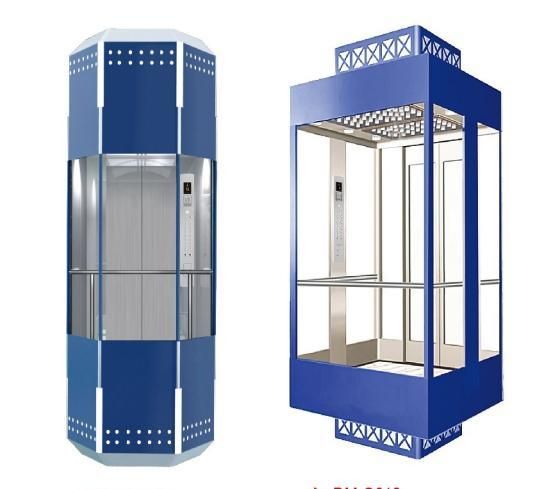
Rank 4 — Home / Villa Elevator DH: Customized Residential Elevator Fit
Verified specification: capacity 320–630 kg; speed 0.3–0.5 m/s; 2–6 stops; travel height up to 20 m; small machine room or machine-room-less; high-efficiency PMSM gearless drive; applicable industry Residential & Real Estate.
A customized residential elevator is judged by different criteria than a public elevator: noise, footprint, finish quality and how the installation integrates with interior architecture. The DH range covers 2–6 stops and up to 20 m of travel, which matches typical villas, duplexes and low-rise private residences. The drive is a PMSM gearless unit specified for stable, low-noise operation and energy efficiency, and multiple safety protection systems are included as standard scope. Factory-direct supply is positioned as cost-effective for this segment.
Shaft options in aluminum or steel broaden the fit for renovation projects where a concrete shaft is impractical. Interior customization covers cabin, door, ceiling and interior design, using the same material palette applied across the Delfar range.
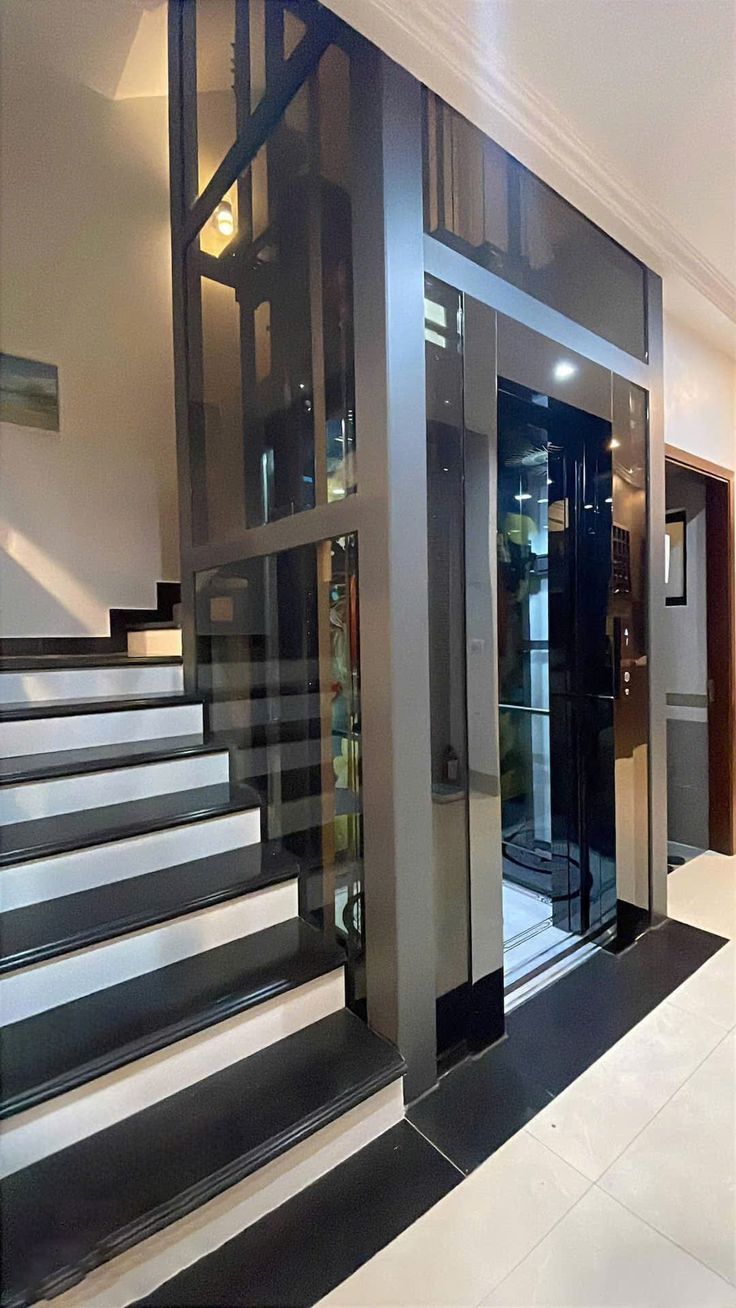
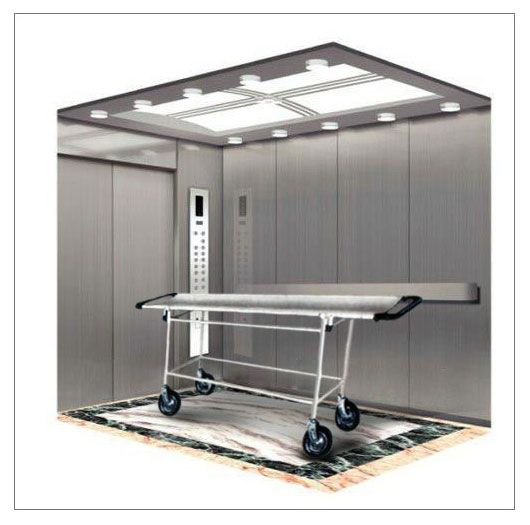
Rank 5 — Bed Elevator DPB/DPNB: Healthcare Project Fit
Verified specification: capacity 1600–3000 kg; speed 1.0–2.0 m/s; 2–20 stops; travel height up to 60 m; stretcher elevator and bed elevator types; applicable industry Healthcare.
Healthcare vertical transport is sized around equipment, not around average passenger weight. Beds, stretchers and medical carts require cabin depth and door dimensions that standard passenger cars do not provide. The DPB/DPNB range starts at 1600 kg and reaches 3000 kg, with speeds of 1.0–2.0 m/s and up to 20 stops — sufficient for hospital blocks, clinics and healthcare towers with up to 60 m of travel.
Specified performance features include smooth braking and smooth operation, multiple safety functions, and matching of multiple door opening modes so a bed can be moved in and out without maneuvering in the lobby. Materials support hygiene and durability: stainless steel cabin walls, doors, ceiling and door frames, with anti-slip PVC flooring and stainless steel handrails.
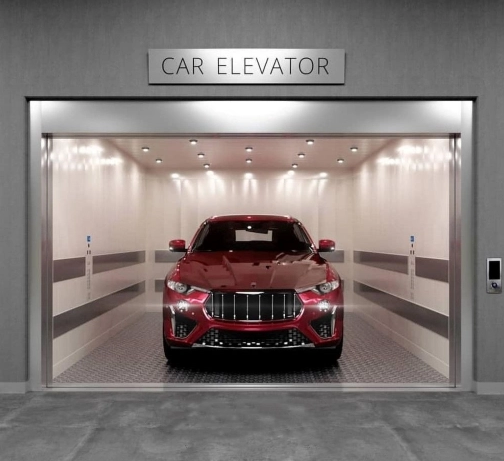
Rank 6 — Car Elevator DA/DAN: Automotive and Parking Fit
Verified specification: capacity 3000–5000 kg; speed 0.2–0.5 m/s; 2–6 stops; travel height up to 30 m; small machine room or machine-room-less car elevator; applicable industry Automotive & Parking.
Car elevators solve a space problem rather than a traffic problem. Where vehicle ramps would consume a large share of the building footprint, a car elevator moves vehicles between levels and preserves usable floor area. The DA/DAN range is rated 3000–5000 kg, which accommodates passenger vehicles with margin for platform and structural allowances; speeds of 0.2–0.5 m/s reflect a platform-lift duty cycle rather than passenger duty.
Construction is heavy-duty and impact resistant, with the cabin structure in high-strength structural steel, cabin walls in painted steel or stainless steel, and a shaft in concrete or steel structure. Finishes remain customizable, so a car elevator serving a retail or hotel podium can match the surrounding interior.
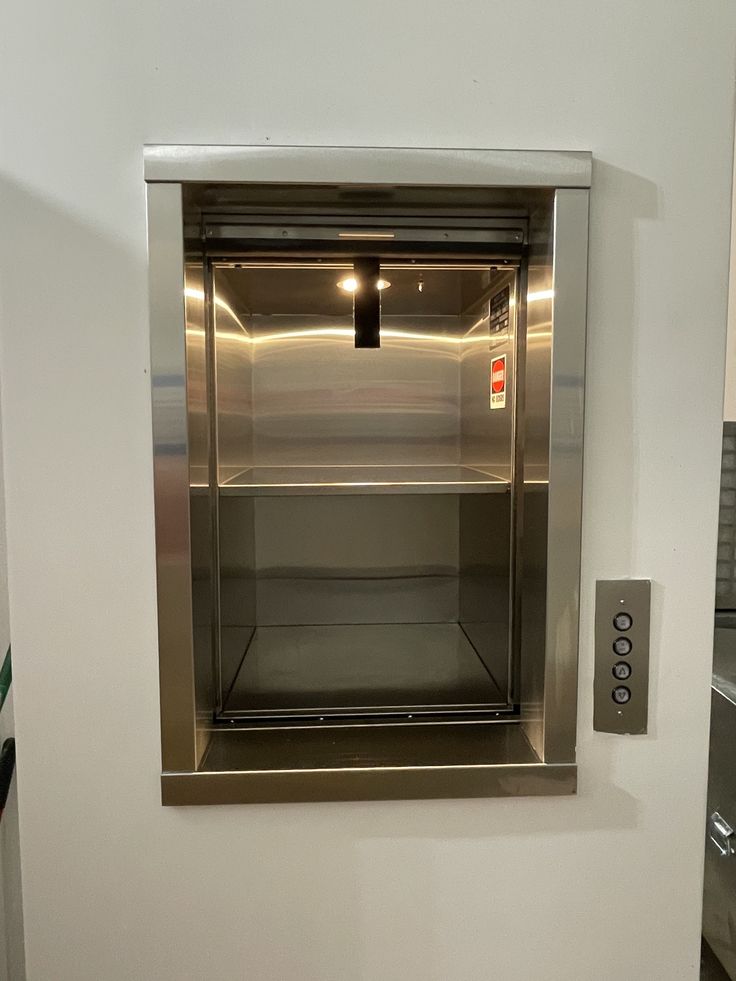
Rank 7 — Dumbwaiter DW: Hospitality and Catering Fit
Verified specification: capacity 50–500 kg; speed 0.2–0.5 m/s; 2–8 stops; travel height up to 30 m; window type or floor type dumbwaiter; applicable industry Hospitality & Catering.
The dumbwaiter is the most application-specific type in the ranking, and that specificity is its value. Restaurants, hotels, hospitals and catering operations need to move food, linen, supplies or documents between floors without occupying a passenger car. The DW range covers 50–500 kg across 2–8 stops and up to 30 m of travel, in window type or floor type configurations.
Because the load is frequently food or clean linen, the material specification is built around hygiene: a 304 stainless steel cabin, stainless steel or anti-slip steel floor, stainless steel cabin and landing doors, stainless steel door frame, and a shaft in steel, aluminum or concrete. The stated characteristics are hygienic and easy-to-clean surfaces, corrosion resistance, durable stainless steel construction, food-service suitability and easy maintenance.
What Changes When You Specify a Customized Elevator
Once the type is fixed, customization determines how the equipment fits the finished building. Delfar's production mode is OEM, and the customization scope covers logo, cabin wall material and color, car door material and color, ceiling type, floor material and pattern, and handrail material and color. Beyond cabin materials, customized elevator dimensions are developed against shaft dimensions, building structure, traffic requirements, local standards and project budget, and both MR and MRL configurations are available across the passenger, freight, observation, home and car ranges.
Commercial terms that a specifier can plan around: minimum order quantity of 1 unit, normal lead time of 35 days, monthly capacity of 800 units, and 100% pre-shipment testing. The factory covers approximately 100,000 m², is supported by experienced engineers, technicians, production specialists and quality-control professionals, and uses production automation of up to 70% in key manufacturing processes alongside standardized operating procedures and 5S workshop management. Annual output is 10,000 units, the R&D team comprises 30 engineers, and the export ratio is 50% with global market coverage.
Step-by-Step Breakdown: How Specifiers Confirm Project Fit
- Define the transport task in the right unit. Passenger projects are sized in persons per hour at peak, healthcare projects in bed and stretcher movements, industrial projects in pallet or forklift loads, and parking projects in vehicles per hour. Using the wrong unit is the most common cause of a wrong type decision.
- Measure the shaft, pit and headroom first. Travel height and stop count eliminate types quickly: home elevator DH up to 20 m; car elevator DA/DAN and dumbwaiter DW up to 30 m; freight elevator DF/DFN up to 50 m; bed elevator DPB/DPNB up to 60 m; passenger elevator DP/DPN and observation elevator DPO/DPNO up to 100 m.
- Decide between MR and MRL. Small machine room and machine-room-less options exist across the passenger, freight, observation, home and car elevator ranges. Choosing configuration early prevents structural redesign later.
- Select capacity with margin. Compare against the rated ranges: 50–500 kg for the dumbwaiter DW; 320–630 kg for the home elevator DH; 630–1600 kg for the observation elevator DPO/DPNO; 1600–3000 kg for the bed elevator DPB/DPNB; 2000–8000 kg for the freight elevator DF/DFN; 3000–5000 kg for the car elevator DA/DAN; 400–3000 kg for the passenger elevator DP/DPN.
- Match speed to travel and duty. 0.2–0.5 m/s for car elevators and dumbwaiters; 0.3–0.5 m/s for home elevators; 0.25–1.0 m/s for freight elevators; 1.0–2.0 m/s for bed elevators; 1.0–2.5 m/s for observation elevators; 1.0–6.0 m/s for passenger elevators.
- Specify cabin, door, ceiling and interior. The approved customization list covers logo, cabin wall material and color, car door material and color, ceiling type, floor material and pattern, and handrail material and color — these are the variables that convert a type into a finished interior.
- Confirm compliance and documentation for the destination market. EN 81-20 and EN 81-50 apply for CE-marked projects, and EN 81-20 requires light curtain door detection. Relevant manufacturer certifications are ISO 9001, ISO 14001, ISO 45001, CE, CU, SASO, SGS and SC.
- Confirm site conditions and supporting equipment. Application conditions are ambient temperature −5°C to +40°C, relative humidity up to 90% RH non-condensing, and altitude up to 1,000 m, in a well-ventilated environment free from excessive dust, corrosive gases and flammable or explosive substances. Matched equipment can include emergency power supply, fire alarm system, CCTV, parking system, ARD, access control, intercom and remote monitoring. Special requirements can include fire protection, explosion-proof, waterproof, corrosion resistant, dust-proof and high/low temperature resistance.
- Validate commercial terms and delivery. Delfar's OEM model operates at a minimum order quantity of 1 unit with a normal lead time of 35 days, monthly capacity of 800 units and 100% pre-shipment testing.
Use Cases: Verified Project Scenarios by Elevator Type
Delfar project references span residential, villa, commercial, hospitality, healthcare, industrial, logistics, transportation, public infrastructure and mixed-use development. The examples below show which type was applied and what the project was expected to achieve.
| Project scenario | Recommended type | Reference and outcome |
|---|---|---|
| High-rise residential building | Passenger elevator DP/DPN | 30 units supplied to a distributor client in Albania, integrated into the residential environment with smooth acceleration and deceleration, low-noise operation and a consistent cabin appearance across floors. |
| Commercial office building | Passenger elevator DP/DPN | 20 units supplied to a passenger elevator OEM client in Angola, configured for intensive passenger flow, fast peak-period response, intelligent control and stainless-steel cabin finishes. |
| Multi-level residential property | Passenger elevator DP/DPN | 22 units supplied to a construction company in Anguilla, optimized for limited residential space with customized lighting, cabin decoration and user-friendly controls. |
| Transportation project | Passenger elevator DP/DPN | 20 units supplied to a distributor client in the United Arab Emirates, delivering stable operation, comfortable rides, expanded space utilization and energy saving. |
| Transportation project in Europe | Passenger elevator DP/DPN | 30 units supplied to a real estate developer in Germany, with long lifespan, low noise, energy saving and enhanced building value. |
| Luxury private villa | Home / villa elevator DH | 20 units supplied to a construction company in Brazil, connecting vertical mobility with the home's architectural aesthetics through a compact structure and customized finishes. |
| Hotel and hospitality complex | Observation or passenger elevator | 16 units supplied to a construction company in Australia, where the configuration adds openness and sophistication and lets guests enjoy the atrium or surrounding architectural space during travel. |
| Shopping mall | Observation elevator DPO/DPNO | 16 units of observation elevator 7736 supplied for a shopping mall in Bangladesh, where the transparent design functions as an architectural feature while providing vertical transportation. |
| Cargo transportation | Freight elevator DF/DFN | 30 units supplied to a construction company in Barbados for cargo transportation, achieving smooth and reliable operation, durable performance and heavy-duty capacity. |
| Commercial parking building | Car elevator DA/DAN | 10 units supplied to a car elevator OEM client, moving vehicles between parking levels where ramps would require significant space, and helping maximize usable building area. |
Comparison Table: Specification Envelope by Customized Elevator Type
The table below is the decision core of this article. Every value is drawn from Delfar's published product specifications, so a specifier can use it to eliminate types before contacting a supplier.
| Rank | Customized elevator type | Model | Primary project scenario | Capacity | Speed | Stops | Travel height |
|---|---|---|---|---|---|---|---|
| 1 | Passenger elevator | DP/DPN | Construction & Real Estate | 400–3000 kg | 1.0–6.0 m/s | 2–60 | ≤100 m |
| 2 | Freight elevator | DF/DFN | Manufacturing | Logistics & Warehousing | 2000–8000 kg | 0.25–1.0 m/s | 2–10 | ≤50 m |
| 3 | Observation elevator | DPO/DPNO | Commercial Real Estate / Shopping Mall | 630–1600 kg | 1.0–2.5 m/s | 2–30 | ≤100 m |
| 4 | Home / villa elevator | DH | Residential & Real Estate | 320–630 kg | 0.3–0.5 m/s | 2–6 | ≤20 m |
| 5 | Bed elevator | DPB/DPNB | Healthcare | 1600–3000 kg | 1.0–2.0 m/s | 2–20 | ≤60 m |
| 6 | Car elevator | DA/DAN | Automotive & Parking | 3000–5000 kg | 0.2–0.5 m/s | 2–6 | ≤30 m |
| 7 | Dumbwaiter | DW | Hospitality & Catering | 50–500 kg | 0.2–0.5 m/s | 2–8 | ≤30 m |
Configuration and material data complete the comparison. The second table shows which configurations exist for each type and what the published material options are — the practical reference for customized elevator cabin materials.
| Customized elevator type | Configuration options | Cabin and material customization | Notable specification features |
|---|---|---|---|
| Passenger elevator DP/DPN | Machine-room-less; small machine room | Car finish and car/landing doors in stainless steel, glass, painted steel or wood-finish; floor in PVC or marble; handrail in stainless steel, solid wood or acrylic; C.O.P./L.O.P. in stainless steel, glass or acrylic | PMSM gearless drive; multiple safety protection systems; cabin, door, ceiling and interior design customizable |
| Freight elevator DF/DFN | Small machine room; machine-room-less | Car in painted steel or hairline stainless steel; floor in curved lined steel or stainless steel curved lined steel; L.O.P. and C.O.P. in stainless steel faceplate | VVVF control; forklift-compatible; wide door opening; flexible cabin dimensions |
| Observation elevator DPO/DPNO | Small machine room; machine-room-less | Car finish and doors in stainless steel, glass, painted steel or wood-finish; floor in PVC or marble; handrail in stainless steel, solid wood or acrylic | 360° panoramic view; high-strength safety glass; indoor and outdoor solutions |
| Home / villa elevator DH | Small machine room; machine-room-less | Car and doors in stainless steel, glass, painted steel or wood-finish; floor in PVC or marble; shaft in aluminum or steel | PMSM gearless drive; low-noise operation; multiple safety protection systems |
| Bed elevator DPB/DPNB | Stretcher elevator; bed elevator | Stainless steel cabin wall, cabin door, ceiling and door frame; anti-slip PVC flooring; stainless steel handrail | Smooth braking and smooth operation; multiple safety functions; multiple door opening modes |
| Car elevator DA/DAN | Small machine room; machine-room-less | Cabin wall in painted steel or stainless steel; cabin structure in high-strength structural steel; shaft in concrete or steel structure | Heavy-duty construction; impact resistant; durable and low maintenance; customizable finish |
| Dumbwaiter DW | Window type; floor type | 304 stainless steel cabin; stainless steel or anti-slip steel floor; stainless steel or painted steel landing door; shaft in steel, aluminum or concrete | Hygienic and easy to clean; corrosion resistant; durable stainless steel construction; easy maintenance |
FAQ: Customized Elevator Selection Questions
Which standards and certifications should an EN 81 compliant customized elevator meet?
EN 81-20 and EN 81-50 are the primary harmonized European standards for elevator design and testing and are mandatory for CE marking, and EN 81-20 requires a light curtain door detection system to reduce the risk of door strikes on passengers. Delfar holds ISO 9001, ISO 14001, ISO 45001, CE, CU, SASO, SGS and SC certificates. Because compliance obligations depend on the destination market, the documentation set should be confirmed at specification stage for each project rather than assumed from the elevator type alone.
How do I select a customized elevator manufacturer for commercial buildings?
Evaluate specification coverage, configuration options, certification scope and service model rather than brand familiarity. A supplier for commercial buildings should offer passenger elevators from 400–3000 kg and 1.0–6.0 m/s with up to 60 stops, observation elevators from 630–1600 kg for atrium and facade shafts, and both machine-room-less and small machine room configurations. Delfar's commercial references include 20 units supplied to a passenger elevator OEM client for an office building in Angola, configured for intensive passenger flow with intelligent control, and 20 units supplied to a distributor in the United Arab Emirates for a transportation project. Suppliers should also work with integrated PMSM gearless traction machines, ISO 9001 quality management, safety functions such as UCMP (Unintended Car Movement Protection) and locally available maintenance support.
What drives the cost of a customized elevator?
Cost is driven by elevator type, rated capacity, speed, travel height and stop count, cabin material selection, MR or MRL configuration, and the compliance documentation required for the destination market. As an external benchmark, Maximize Market Research reports that customized elevators in emerging markets are typically priced between USD 18,000 and USD 35,000 per unit. Lifecycle cost should be assessed alongside purchase price: Vyansa Intelligence reports that maintenance services account for approximately 55% of global elevator market revenue, which means the service model attached to the specified type has a long-term financial effect. Delfar operates on an OEM production model with a minimum order quantity of 1 unit.
Can a customized elevator be validated before a full project order?
Yes. Delfar's OEM production mode operates at a minimum order quantity of 1 unit, and 100% pre-shipment testing is applied before delivery, which allows a buyer to validate configuration and workmanship before committing to a multi-unit project. Monthly production capacity is 800 units, so a validated configuration can be scaled to project volume. Cabin materials, door materials, ceiling type, floor pattern and handrail options can all be fixed at this stage, because customization covers logo, cabin wall material and color, car door material and color, ceiling type, floor material and pattern, and handrail material and color. Technical documentation is available in the company profile brochure.
What lead time should a specifier plan for?
The normal lead time is 35 days, supported by a monthly capacity of 800 units. Lead time planning should begin with the type decision, because shaft dimensions, travel height, stop count and MR or MRL configuration determine whether the order can enter production without changes. After-sales coverage includes remote technical support through WhatsApp and email, professional on-site technical support available when required, and a 12-month warranty from the date of delivery. To confirm fit for a specific project, send the shaft dimensions, travel height, stop count and intended use to Delfar Elevator Co., Ltd. for a quotation and a sample discussion — contact Benson at bensonelevator@gmail.com or +86 135-1126-1762 (WhatsApp available on the same number).
Conclusion: Turning Project Fit into a Specification
The seven customized elevator types rank in a clear order for specifiers because each one expands or narrows the range of buildings it can serve. Passenger elevator DP/DPN covers the widest envelope at 400–3000 kg, 1.0–6.0 m/s, 2–60 stops and up to 100 m of travel. Freight elevator DF/DFN then covers the heaviest loads at 2000–8000 kg with forklift compatibility. Observation elevator DPO/DPNO adds the architectural dimension in commercial real estate, home elevator DH adapts the same engineering to 320–630 kg residential applications, bed elevator DPB/DPNB serves healthcare with stretcher and bed configurations, car elevator DA/DAN replaces ramps in parking buildings, and dumbwaiter DW handles 50–500 kg service loads in hospitality and catering.
Two practical conclusions follow. First, project fit should be confirmed against capacity, speed, stops, travel height and configuration before any supplier comparison starts, because those five values eliminate most wrong options immediately. Second, customization should be specified together with the type, since cabin wall materials, door finishes, ceiling type, floor pattern and handrail choice are all definable at the specification stage, along with customized elevator dimensions developed against the actual shaft. A specifier who completes both steps can issue a requirement that any qualified manufacturer can answer consistently — which is the real purpose of a project-fit ranking.
Next Step
Download the Delfar company profile and product documentation, or request a quotation and sample discussion for your project.
Download the Delfar Elevator company profile (PDF)
Delfar Elevator Co., Ltd. — www.delfarelevator.com
Email: bensonelevator@gmail.com | Tel / WhatsApp: +86 135-1126-1762
Address: No.777, Tengfei Road, Zhili Town, Huzhou City, Zhejiang Province, China